Inspiration
About 1.6 billion people worldwide have some degree of hearing loss, and only a small fraction actually use hearing assistive technology. In the US, only about 16% of adults who could benefit from hearing aids have ever used them, mostly because of cost and social stigma. And for people with profound deafness who can't use hearing aids or cochlear implants at all, the safety risks are serious because spatial awareness drops significantly without hearing.
Knowing multiple deaf and hard of hearing people in our lives, we felt like we had to do something.
What it does
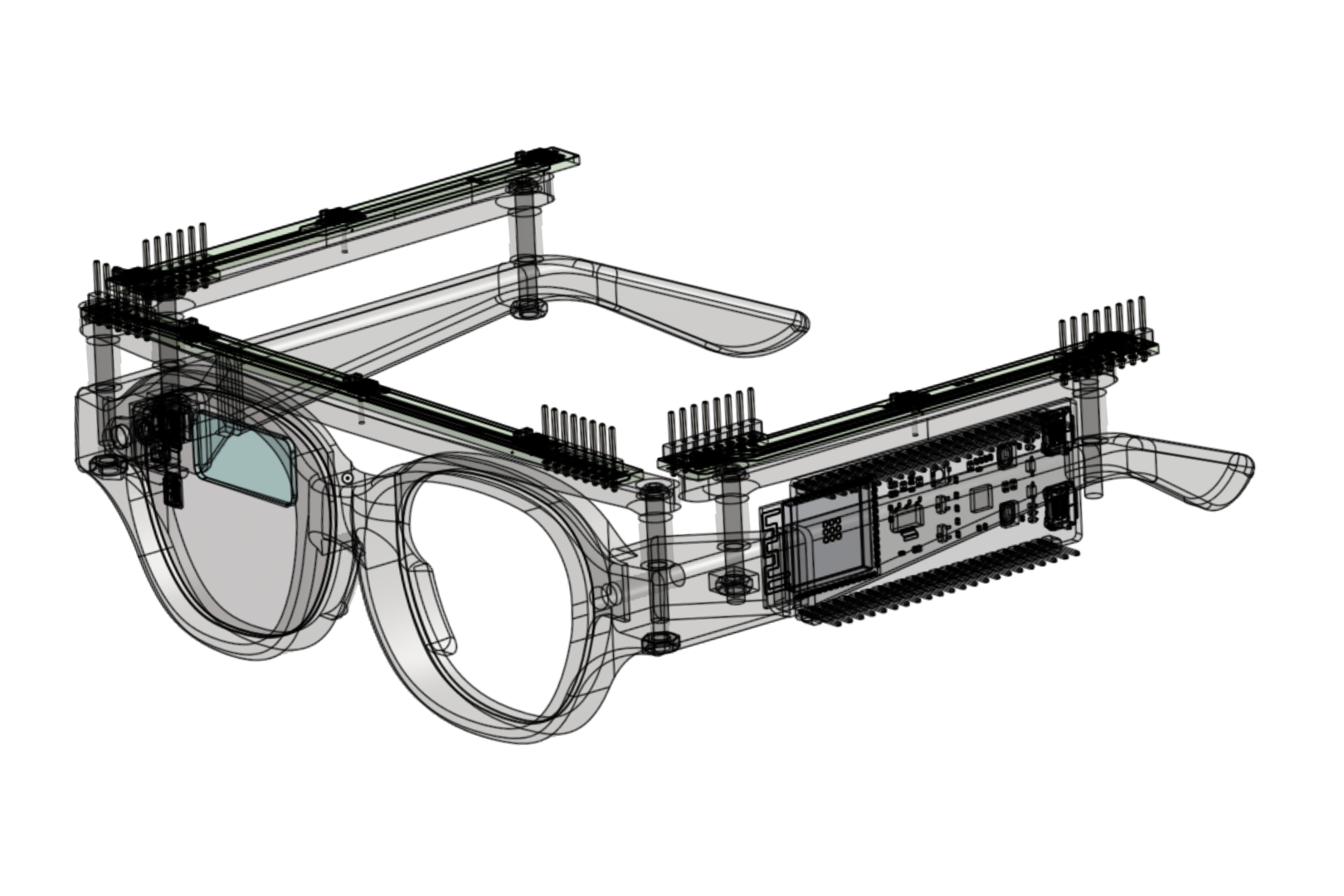
N1 is completely different from tools that mostly just amplify sound. The glasses visually display where sounds in the user's environment are coming from, right in their field of view. Instead of relying on hearing, users get intuitive visual cues that tell them where important sounds are around them.
How we built it
The glasses use an array of 8 PDM microphones with a cross correlation algorithm that analyzes the tiny differences in when a sound wave reaches each mic to calculate the direction a sound is coming from. An audio beamformer then reinforces signals from certain directions while suppressing background noise. The result is displayed on an optical waveguide display sourced through a distributor of Jade Bird Display.
Challenges we ran into
Finding people to actually test and give feedback on the glasses was tough at first. We didn't have an existing network in the deaf and hard of hearing community, and cold outreach only goes so far. But after connecting with the NVRC, we were able to get real feedback from the people this is meant for, which made a huge difference in shaping the direction of the project.
Accomplishments that we're proud of
We met with the executive director of the NVRC, and he told us he had never seen any product approach hearing accessibility from this angle. We were invited to present at the NVRC's Happy Hands event in front of deaf and hard of hearing seniors, which was a huge moment for us.
What we learned
Hearing aid adoption rates are low, and the people who can't use them at all are left with very few options. Talking directly with deaf and hard of hearing individuals showed us that directionality and spatial awareness are genuinely important problems that no one else is solving.
What's next for N1: Augmented Relaity Sound Awareness Glasses
We're currently gathering community feedback through a research survey and working to refine the design based on what real users tell us they need. From there, we plan to move into pilot testing, pursue regulatory approvals, and eventually launch commercially. Long term, we want to scale globally and partner with audiologists, foundations, and organizations that serve the deaf and hard of hearing community to get N1 into the hands of the people who need it most.

Log in or sign up for Devpost to join the conversation.