-
-
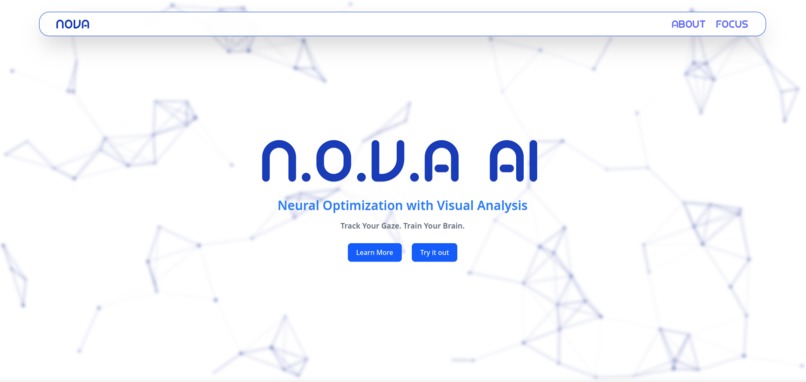
Neural Optimization with Visual Analysis. Track Your Gaze. Train Your Brain.
-
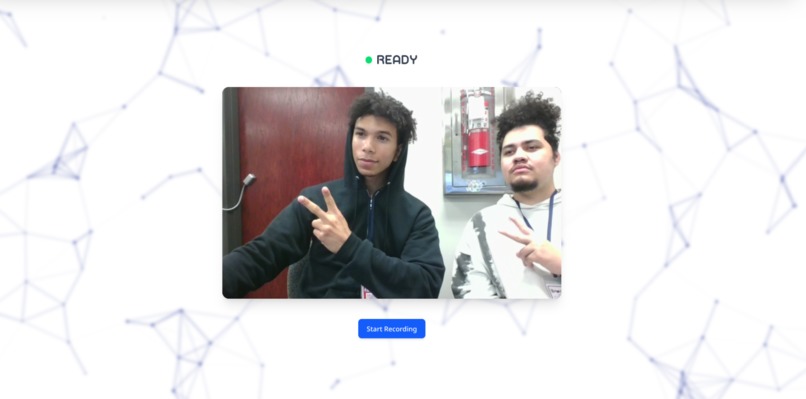
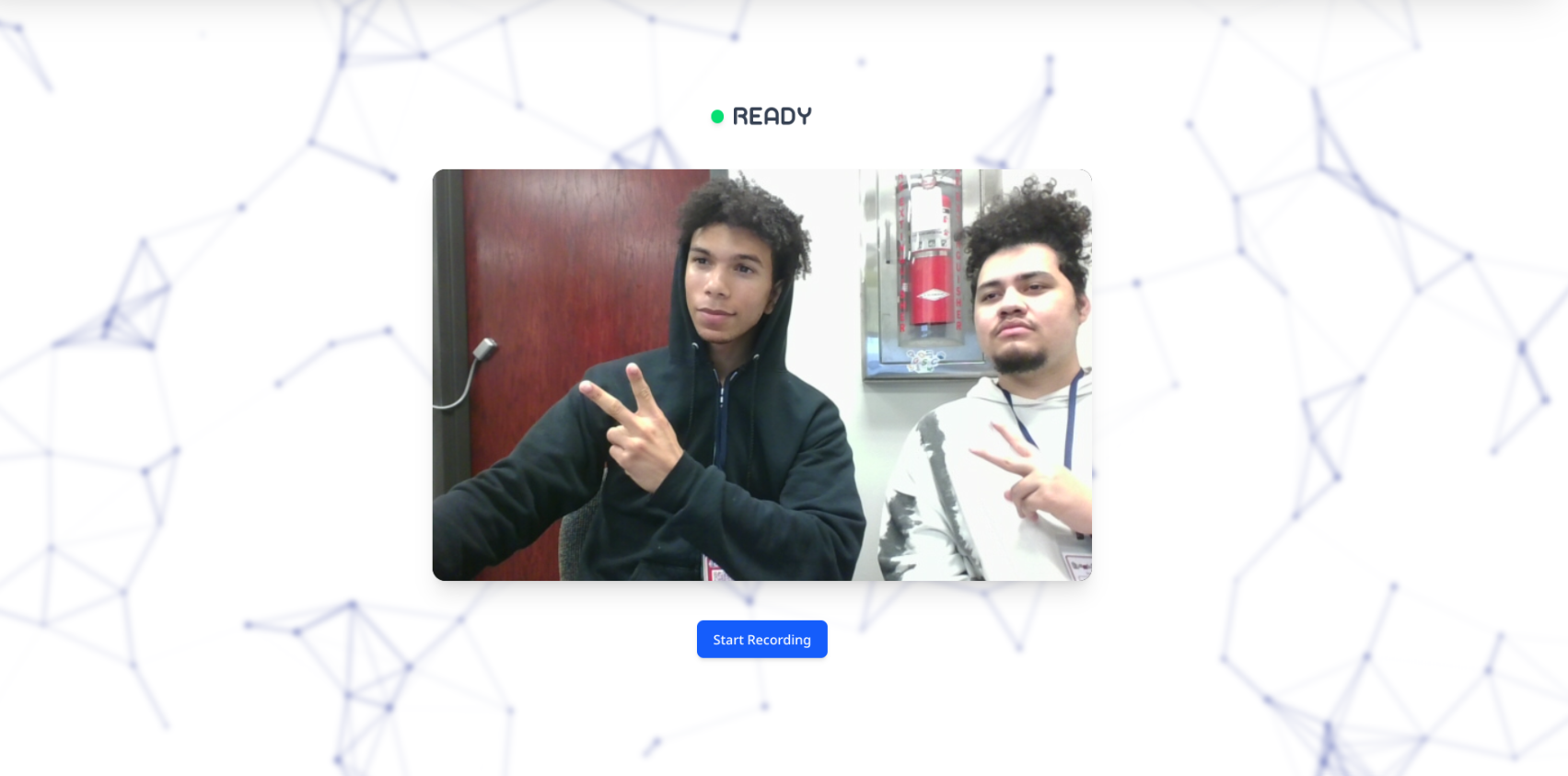
Capture live facecam footage to analyze facial expressions and eye movement, tracking user attention in real-time.
-
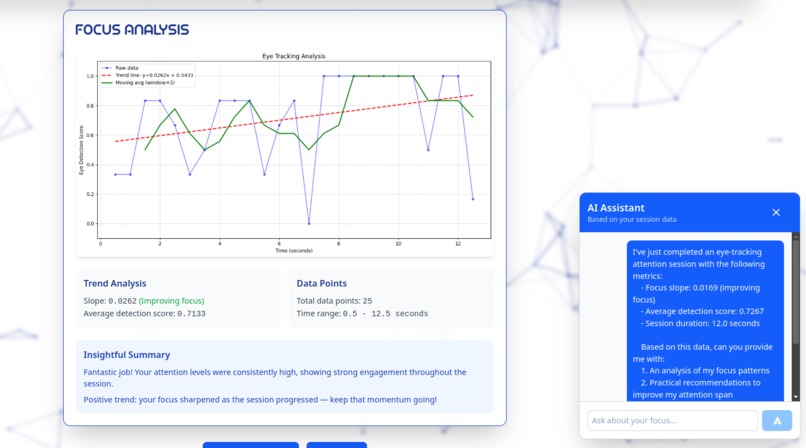
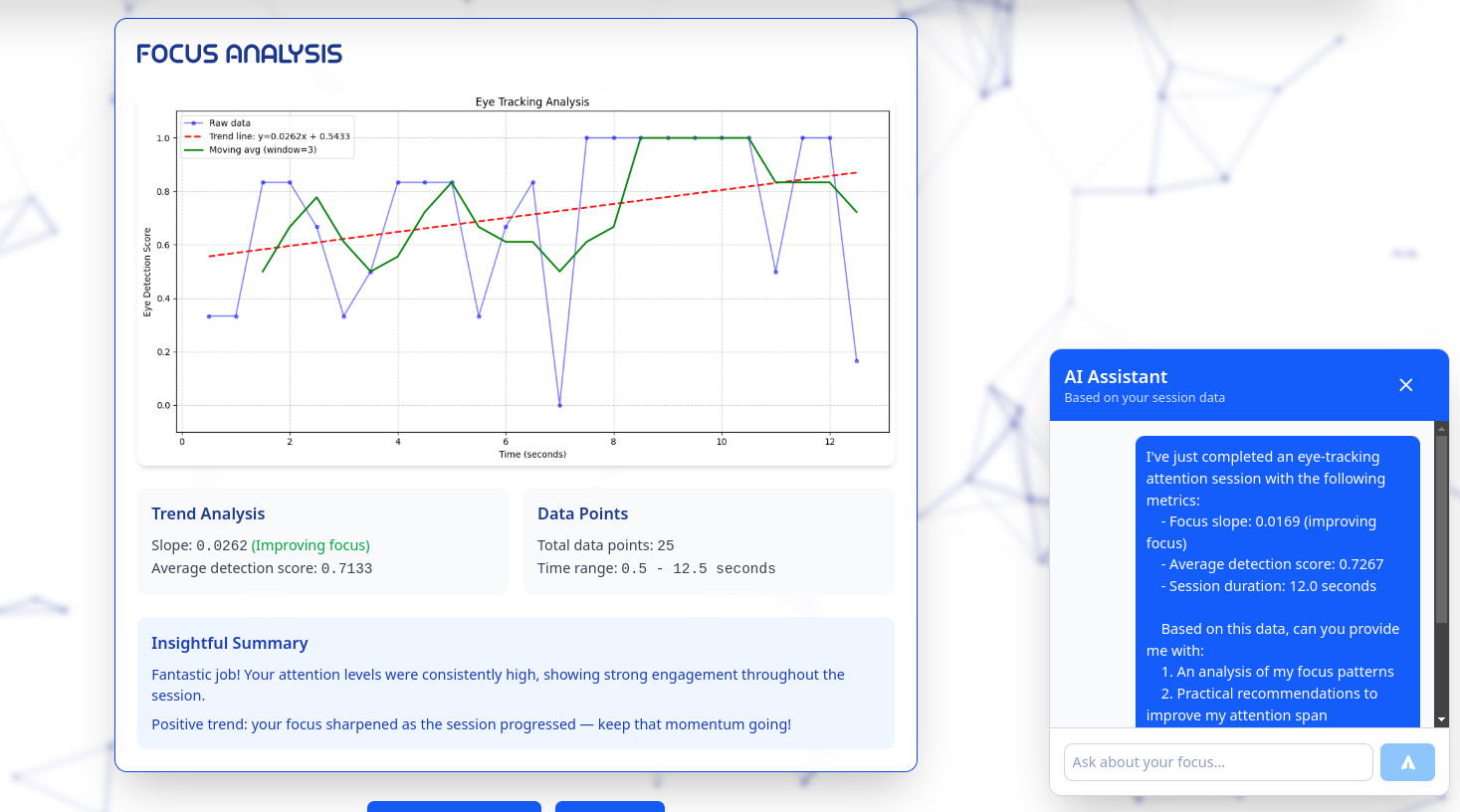
Visualize your attention trends with a dynamic dashboard. An AI chatbot offers personalized tips and real-time focus insights.
Inspiration
"Neural Optimization with Visual Analysis " AI stemmed from a deep understanding of the unique challenges faced by individuals who suffer from attention deficit, particularly in maintaining consistent focus and managing cognitive overload in a world designed for neurotypical minds. Many of us on the team have either personally experienced or closely witnessed the struggles that come with conditions like ADHD, autism, and anxiety, where traditional productivity tools often fall short.
We envisioned NOVA; we designed it with empathy and intention in mind. Drawing on psychological factors, user-centered design, and emerging technologies, NOVA was built to not only track facial expressions and attention patterns but to interpret them meaningfully, offering adaptive tools and gentle guidance. Our goal was to create a space where users feel they gain self-awareness and are empowered to build better habits that truly work for them, not against them.
What it does
N.O.V.A leverages cutting-edge in-browser technology to capture live facecam recordings, seamlessly transmitting the video to a robust backend for processing. Using advanced computer vision techniques powered by OpenCV, the system analyzes facial expressions and eye movements to generate a comprehensive report on user attention and engagement.
The process doesn't stop at data collection. NOVA employs Matplotlib to visualize key insights, revealing patterns in focus, distractions, and interruptions. The resulting analytical report, enriched with actionable insights, empowers users to understand their attention habits and receive real-time, AI-driven feedback to enhance their focus and overall cognitive performance.
How we built it
NOVA's tech stack is built on an in-browser facecam recording system that sends live video to a Flask backend. OpenCV handles facial tracking, while Matplotlib creates visual analytics, and the sleek React and Tailwind CSS frontend presents data and AI insights seamlessly!
Challenges we ran into
Throughout the development of NOVA, we faced a series of technical and logistical challenges that pushed us to grow and innovate. As first-time users of OpenCV, we navigated a steep learning curve to effectively integrate facial expression and eye-tracking analysis. Scaling the project introduced complexities, particularly in ensuring smooth communication between the APIs and the OpenCV processing engine, as well as in delivering accurate, real-time feedback through the front end. Managing a multitude of dependencies further complicated our build process, requiring meticulous coordination to maintain system stability.
Additionally, venturing into the realm of large language models (LLMs) for the first time posed its own set of hurdles, from understanding the intricacies of implementation to harnessing their potential for delivering insightful, personalized guidance. Although we weren't able to code up the full implementation in 24 hours, these challenges ultimately led to a very humbling development experience that will further grow as student developers.
Accomplishments that we're proud of
Our team significantly expanded both our technical toolkit and our understanding of real-world application development. We learned how to generate meaningful data visualizations by creating dynamic graphs and trend lines using Python libraries such as Matplotlib, allowing us to represent user attention data intuitively and insightfully. We dove into computer vision by learning how to track faces and eye movements using OpenCV, gaining valuable experience in real-time video processing and facial analysis.
On the backend, we developed and deployed a robust Flask server, which taught us how to handle API endpoints, manage asynchronous data flow between the frontend and backend, and coordinate video file processing in an efficient pipeline.
Simultaneously, we sharpened our front-end development skills by building a clean and responsive UI using React and Tailwind CSS. This hands-on experience taught us how to better structure component-based UIs and design user-centric interfaces that seamlessly integrate with complex backend processes. Altogether, NOVA was an incredible learning opportunity that helped us grow as full-stack developers.
What we learned
Our group learned how to create graphs and trend lines using Python, track faces using OpenCV, implement a backend using the Flask Python library, and improve our knowledge of React and Tailwind
What's next for N.O.V.A. AI
Our immediate goal is to provide a dashboard where users can log in and use OpenCV to track the faces live instead of uploading videos, as well as completing the full implementation of an LLM chatbot to analyze the data gathered from the videos of people to help them pay more attention. Once all of those goals have been reached, we may create a mobile app for this project, which may further benefit those who have trouble paying attention.


Log in or sign up for Devpost to join the conversation.