-

Project Logo
-
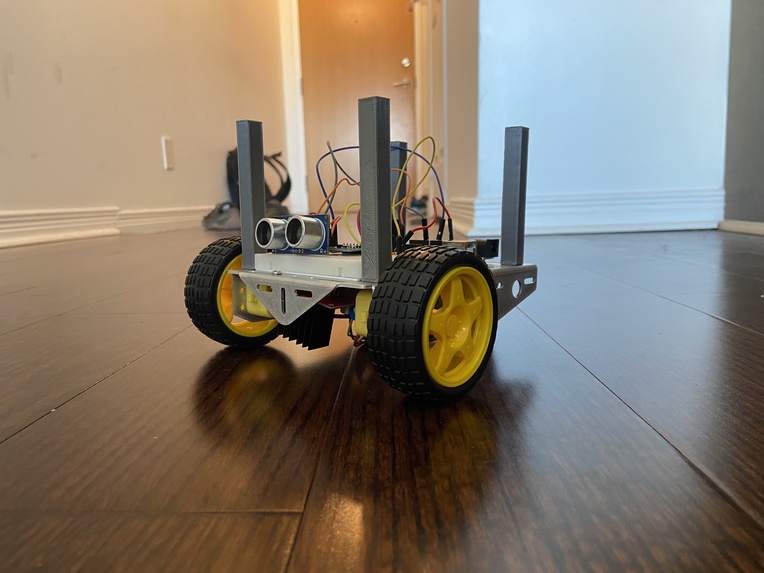
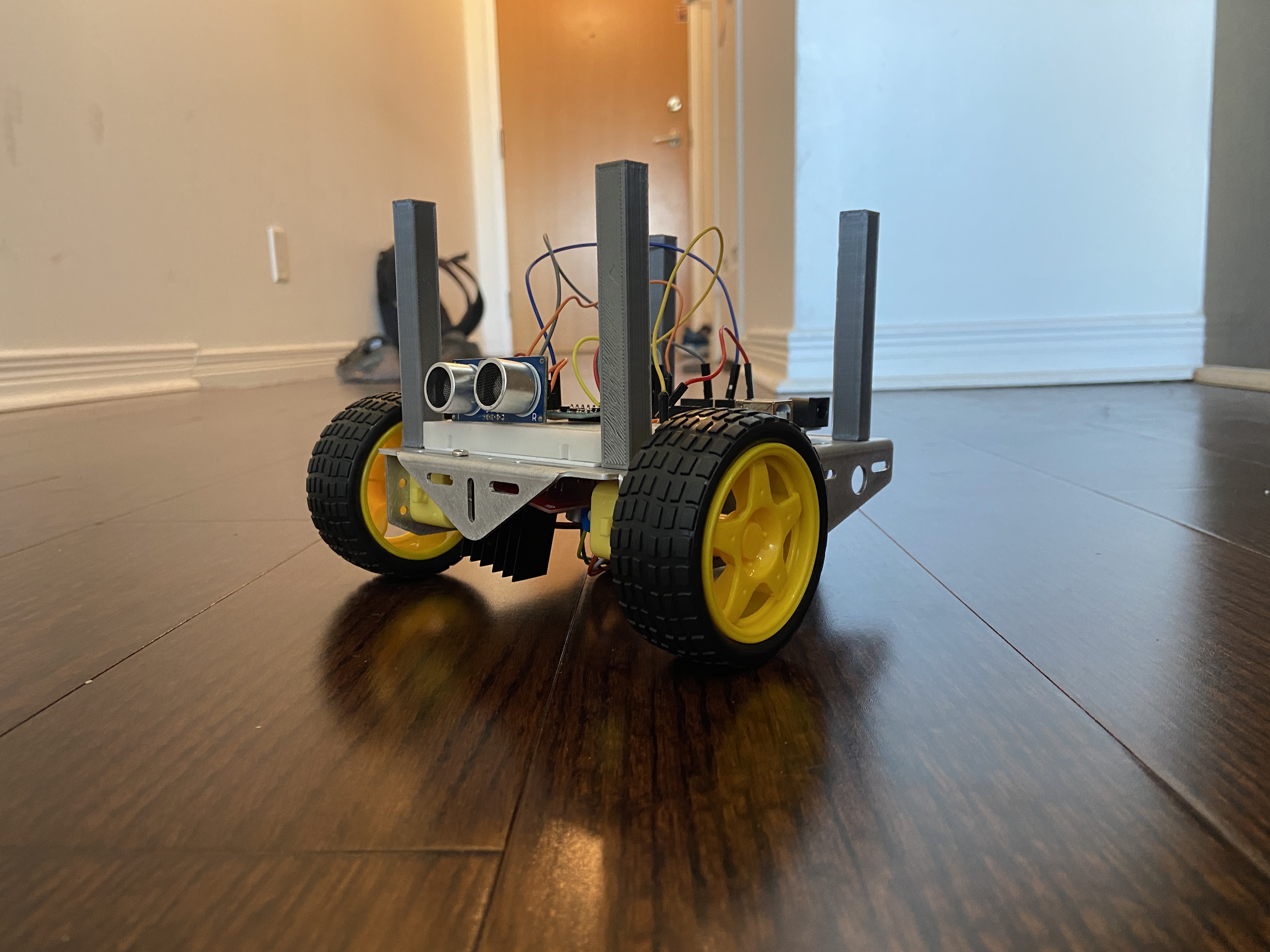
Image of bot without arm
-
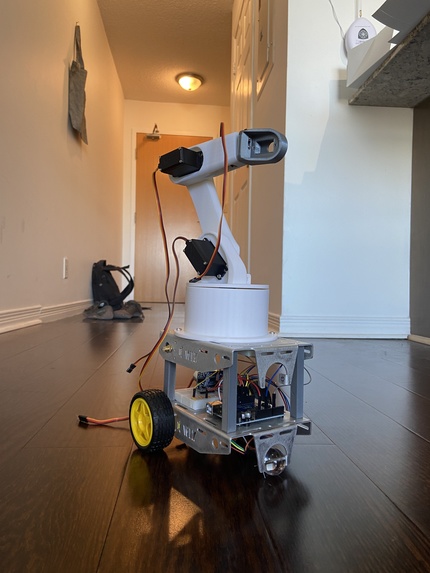
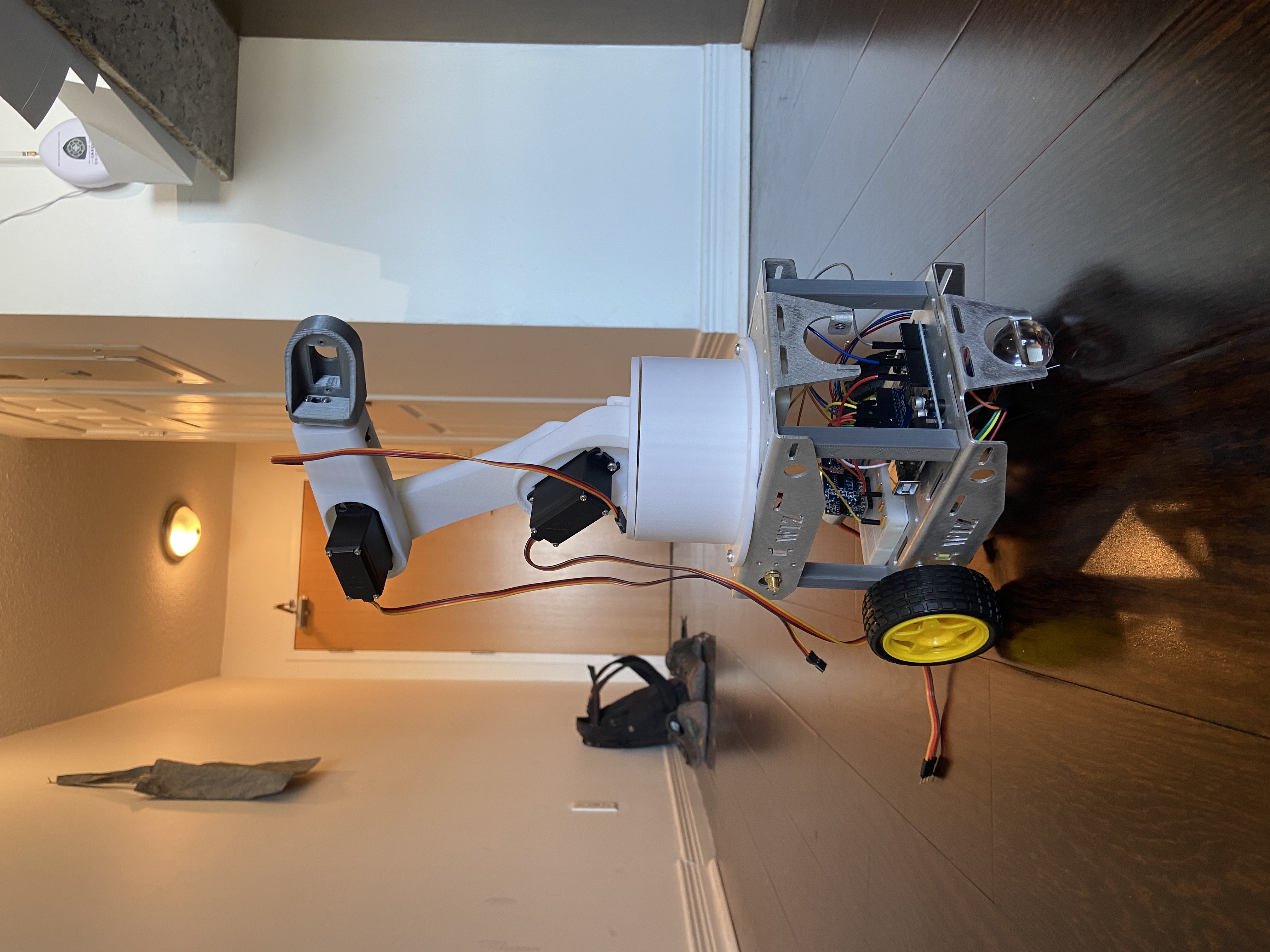
Image of bot with arm but no claw
Inspiration
Our team's connection with one another is that most of us are currently enrolled in or graduated from the University of Toronto Schools. Our inspiration came from one of our teacher's stories of traditional farming, which notably lacked modern soil analysis techniques. Realizing the potential impact of integrating technology into these practices, we developed an autonomous rover for efficient soil sampling and moisture testing. This project aims to blend the simplicity of traditional farming with advanced technology to enhance agricultural sustainability and optimize the utilization of Earth's precious resources, ultimately contributing to food security and ecological balance.
What it does
The Natural Observation Multiterrain Analysis Device (N.O.M.A.D.), our autonomous rover, represents a breakthrough in agricultural and environmental technology. It's ingeniously designed to perform two critical functions with precision and efficiency: collecting soil samples and conducting on-site soil moisture analysis.
How we built it
At first, we built a simple rover within the first 30 minutes of the hackathon. Then, reflecting on our consistent theme of sustainability in previous Satellite Campus projects, we expanded our concept. We focused on developing a robotic arm to enhance the rover's soil sampling capabilities. Realizing the environmental significance of our project, we spent a lot of time figuring out how to integrate the classic design of a 5-axis robotic arm with an easily implementable method for obtaining and transporting a soil sample.
Challenges we ran into
We efficiently completed the rover's drive train early in the project, which allowed us to dedicate most of our time to enhancing its features. Our team's crowning achievement was the successful completion of the robotic arm. We had a lot of parts to get 3D printed and were unsure how we were going to get them all ready.
Despite these time constraints and the intense pressure, our team rallied together, demonstrating our resilience and problem-solving skills to bring N.O.M.A.D. to life. We reached out to friends with 3D printers as well as a printing service and ran the different prints in parallel on multiple different printers.
A notable moment was our late-night visit to Proximity Printz at 11pm on Saturday. Ruzbeh Irani, the proprietor, was immensely supportive. His willingness to assist, coupled with a generous discount for us as students, was pivotal in our project's completion.
Accomplishments that we're proud of
The scope of our project, in retrospect, was quite ambitious, and even the implementation we have at the moment is something we’re all proud of. Implementing inverse kinematics, a 4-degree-of-freedom arm, a photovoltaic cell, and an ultrasonic sensor was something many of us had no prior experience with and took hours of troubleshooting. Sticking with the project, and getting to where we are right now is something to be proud of itself.
What we learned
Our team Satellite Campus has competed in a few hackathons before, but never with this specific group of people and never a hardware and robotics-centric hackathon. Although we had participated in hackathons before, this was our first time as this specific group, and our first venture into a hackathon with a focus on hardware and robotics. The challenges we faced and overcame together taught us invaluable lessons in teamwork and innovation.
What's next for N.O.M.A.D.
We plan on implementing N.O.M.A.D. in the University of Toronto Schools garden. N.O.M.A.D.'s ability to provide accurate, real-time soil moisture data can help sustainably maintain the garden. By optimizing watering schedules and understanding soil health better, the garden can be maintained with minimal waste of resources, aligning with sustainable environmental practices.
Acknowledgements
Thank you to our families for supporting us through this process. Thank you to Ruzbeh Irani for all your assistance with 3D printing. Thank you to Bella Semeniuk for your general consultation on our soil extraction mechanism. Lastly, thank you to the organizers at UTRA for giving us the opportunity to compete in this incredible hackathon. You're all legends!
Built With
- 3dprinting
- arduino
- c
- c++
- cad
- python
- sensor

Log in or sign up for Devpost to join the conversation.