-
-
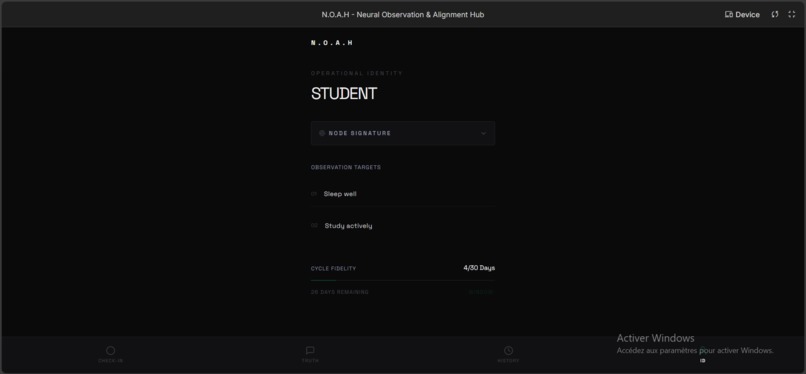
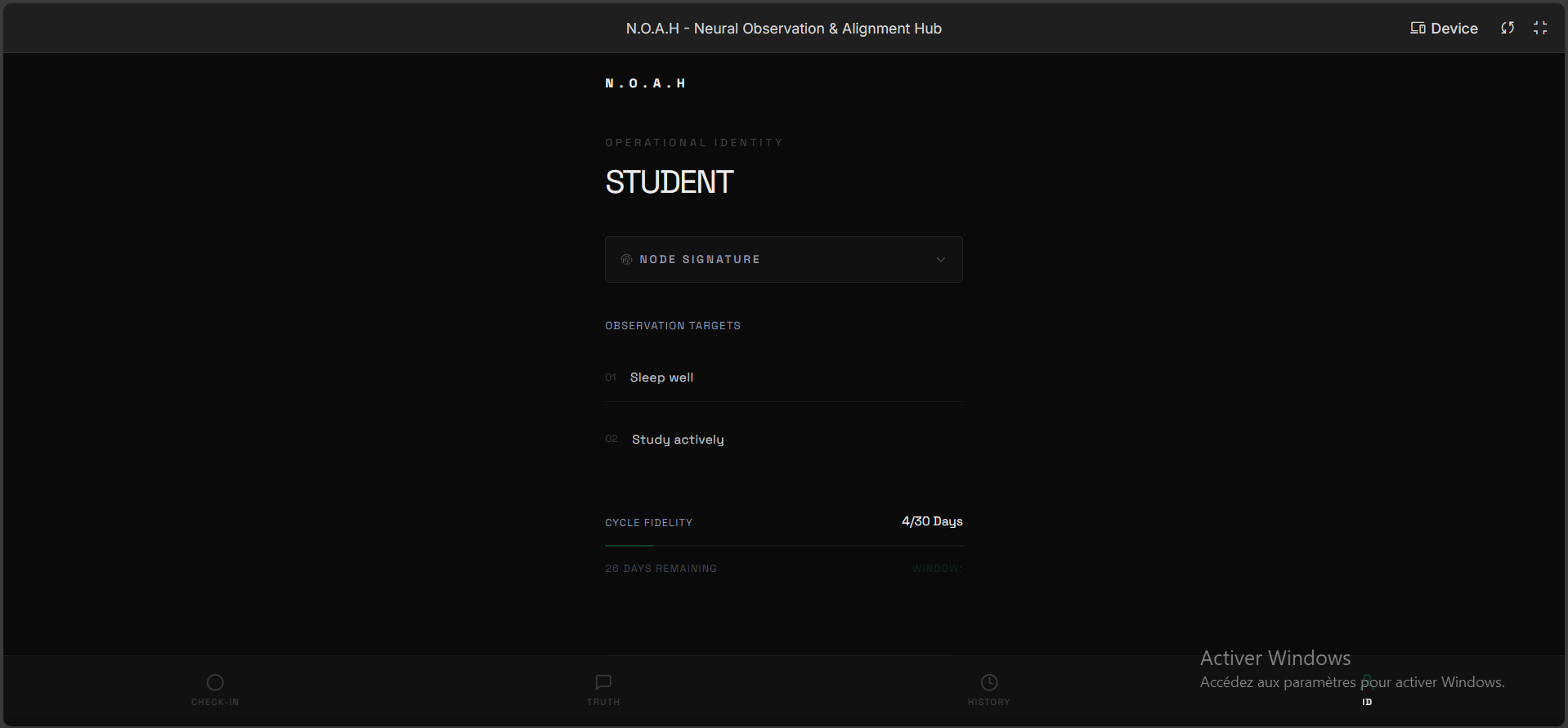
Identity
-
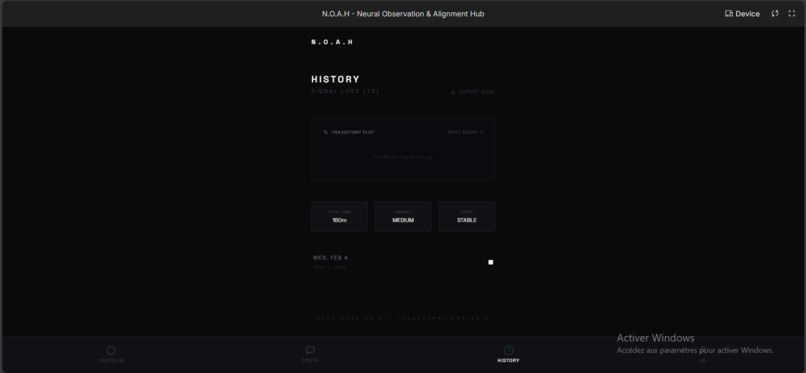
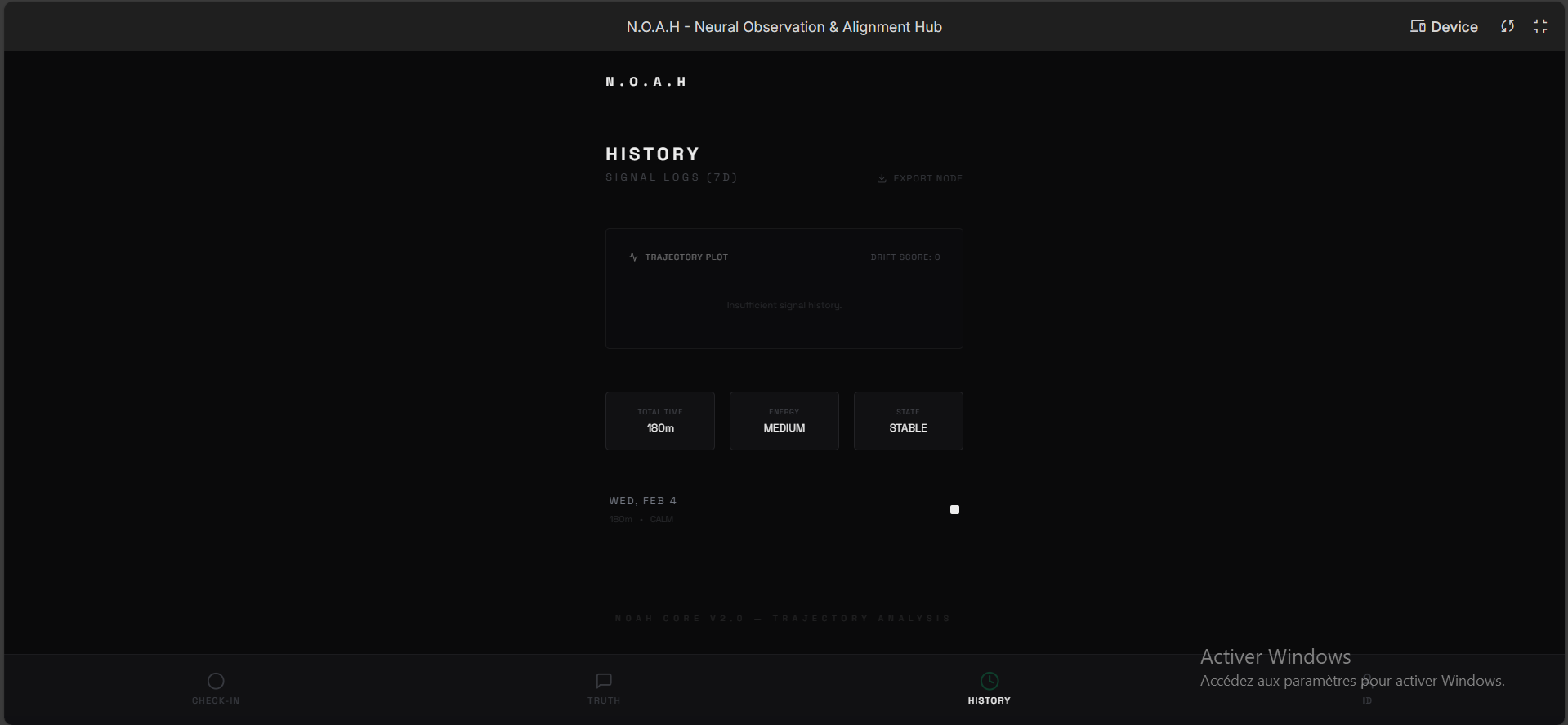
History
-
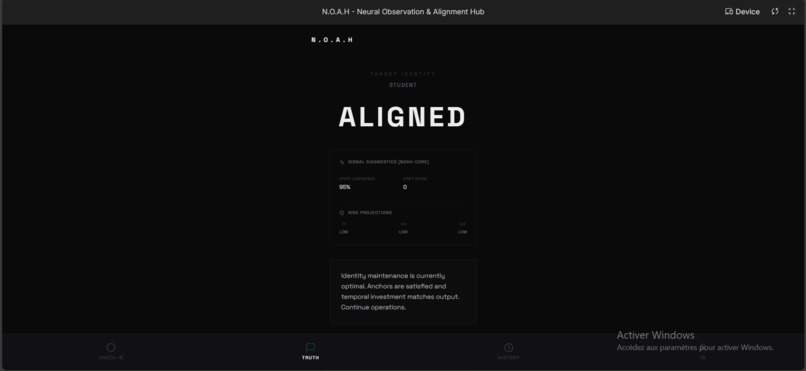
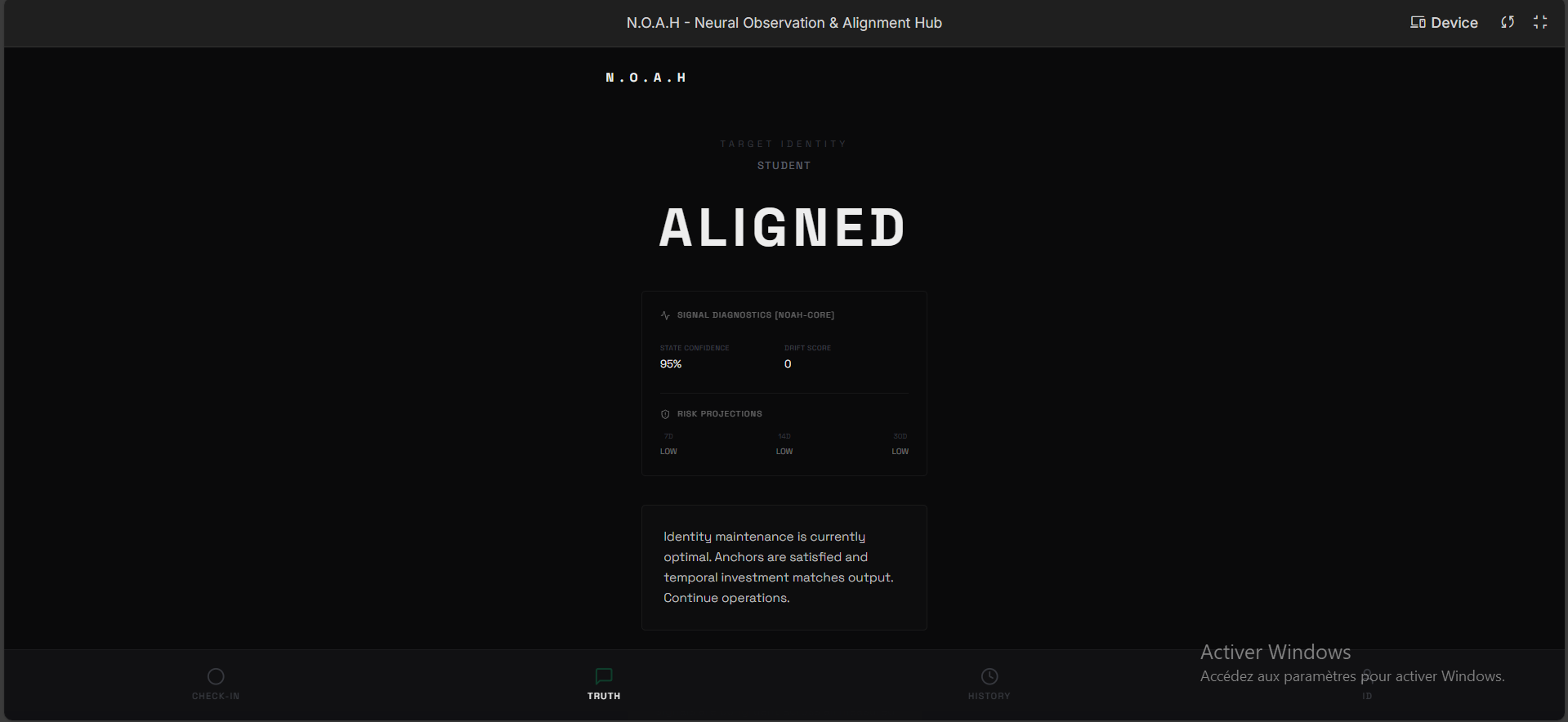
Truth(Feedback)
-
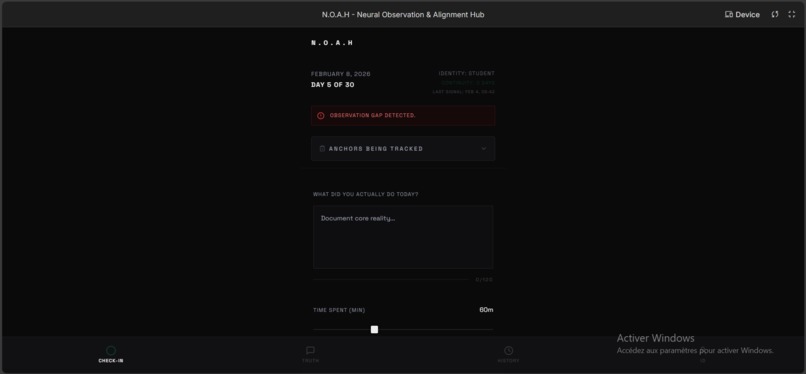
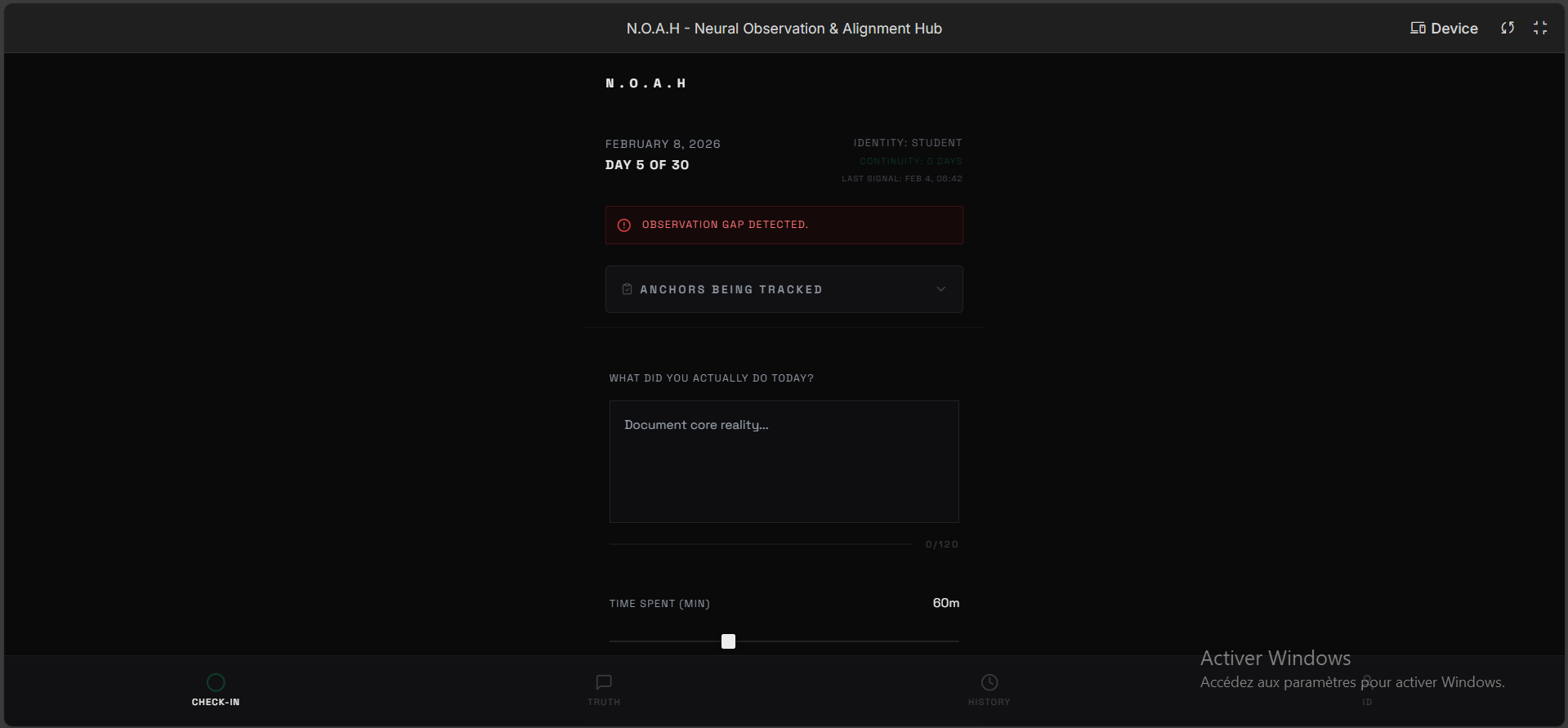
Identity Chek-In
-
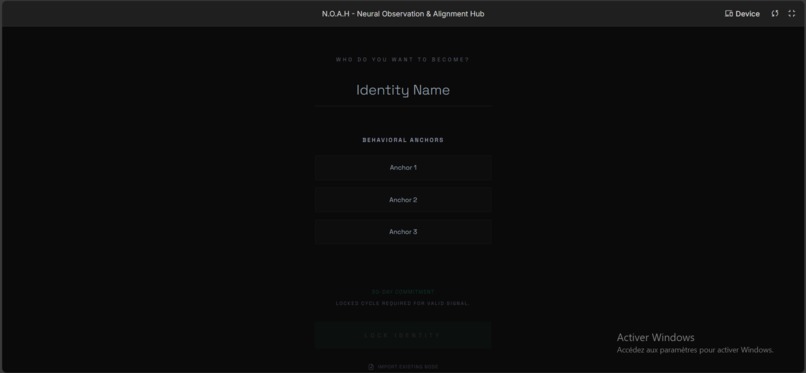
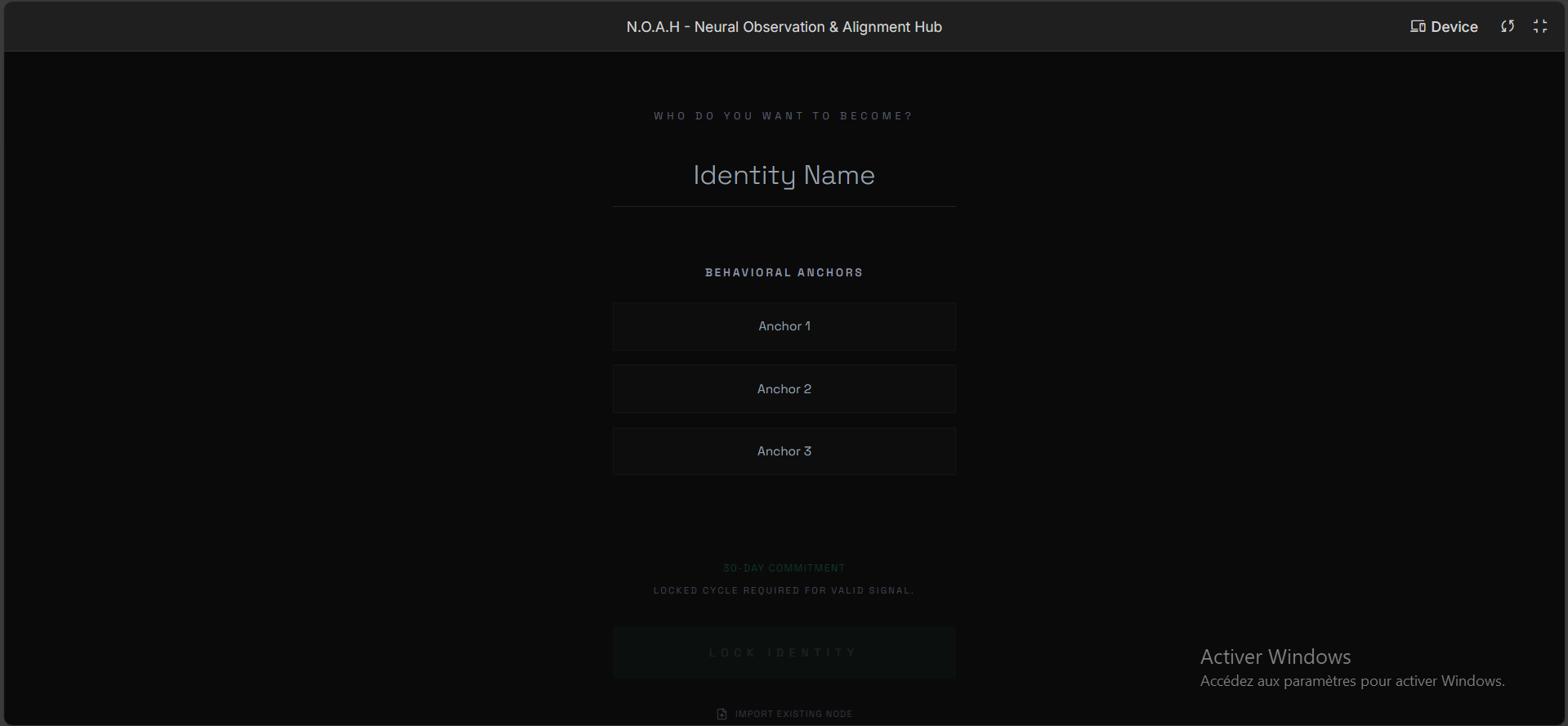
Identity Setup
-
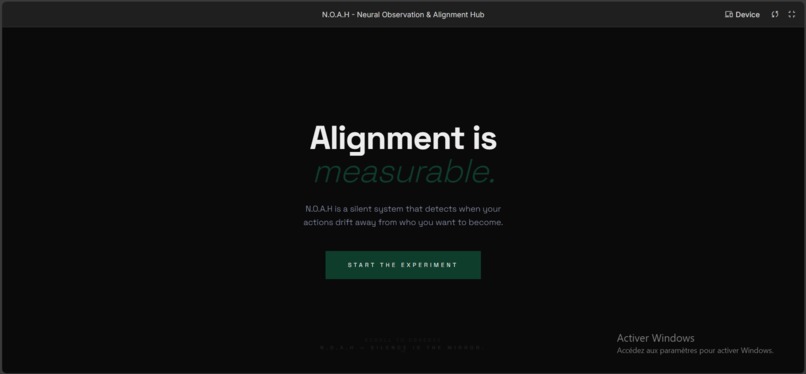
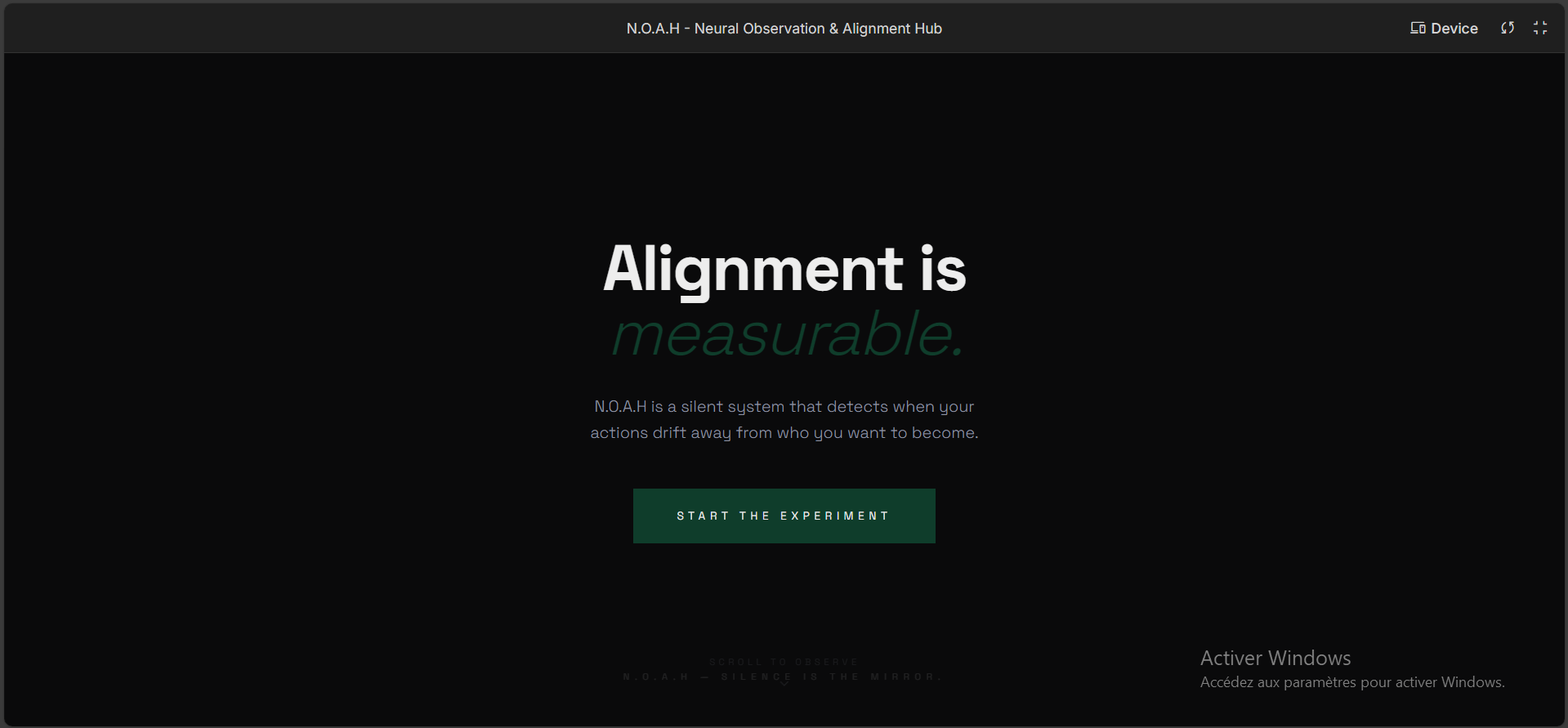
Landing Page
Inspiration
I was frustrated by how most “AI” tools around mental health, productivity, or human performance only react after something breaks.
Burnout, dropout, collapse — they are treated as sudden events, when in reality they are almost always the result of a slow, invisible drift.
At the same time, I noticed a deeper problem with current AI approaches:
they rely heavily on black-box models that guess, hallucinate, or give advice without accountability.
Part of my inspiration also came from someone I secretly loved and admired deeply in my first university year.
She was extremely aligned with what she wanted and moved through life in a structured, systematic way.
That discipline and clarity left a strong impression on me, even though things didn’t work out between us.
Her name was one of the inspirations behind the name N.O.A.H.
N.O.A.H was born from a simple question:
What if we stopped trying to “understand” humans, and instead focused on observing trajectories?
What it does
N.O.A.H is a predictive observation engine that detects early signs of human drift using weak signals over time.
Users log simple signals (mental state, work, health, focus, social), scored on a small scale.
N.O.A.H aggregates these signals, detects patterns of repetition and decline, and classifies the user’s current state as:
- Stable
- Fragile
- Drift
- Critical
It then projects risk levels at 7, 14, and 30 days.
N.O.A.H does not diagnose, advise, or motivate.
It simply answers one question:
“If nothing changes, where is this trajectory heading?”
How I built it
I built N.O.A.H around a deterministic core engine, not a language model.
The system is composed of:
- A signal collection layer
- A temporal aggregation and drift detection engine
- A state classifier
- A trajectory projection module
All decisions are rule-based, auditable, and reproducible.
LLMs are intentionally excluded from the core logic.
They are reserved for a future interpretation layer, where they can explain outputs — never decide them.
The backend is modular, with N.O.A.H Core isolated as an independent engine that can be tested, versioned, and audited on its own.
Challenges I ran into
Resisting the temptation to use LLMs everywhere
It’s harder to design clear logic than to generate text.Distinguishing noise from real drift
Humans are inconsistent by nature. I had to carefully design rules that detect persistence, not momentary fluctuation.Ethical boundaries
I had to be extremely precise about what N.O.A.H should not do: no diagnosis, no advice, no authority over the user.Designing “cold” UX
Most products try to comfort or motivate. I deliberately chose restraint.
Accomplishments I’m proud of
- Designing a predictive system without machine learning
- Building a core engine that is:
- deterministic
- explainable
- falsifiable
- Creating a clear separation between decision logic and AI interpretation
- Producing a product that could realistically operate in sensitive domains
- Avoiding hype while still delivering real insight
What I learned
- Simplicity is a strength in high-stakes systems
- Prediction does not require guessing — it requires structure
- Trust comes from transparency, not intelligence theatrics
- Not every problem needs a neural network
- Clear boundaries make systems safer and more credible
What’s next for N.O.A.H
Next, I plan to:
- Launch the MVP and collect real-world signal data
- Validate drift detection across larger time windows
- Introduce an optional AI interpretation layer for clarity and reflection
- Explore B2B use cases in education, coaching, and organizational health
- Continue refining N.O.A.H as a responsible, auditable observation system
N.O.A.H will remain what it was designed to be from the start:
Not an AI that tells people what to do —
but a system that shows where things are going.
Built With
- framer-motion
- google-gemini
- lucide-react
- react
- tailwind-css
- typescript


Log in or sign up for Devpost to join the conversation.