-
-
pitch page
-
agentic workflow
-
actual preview
-
user pain point
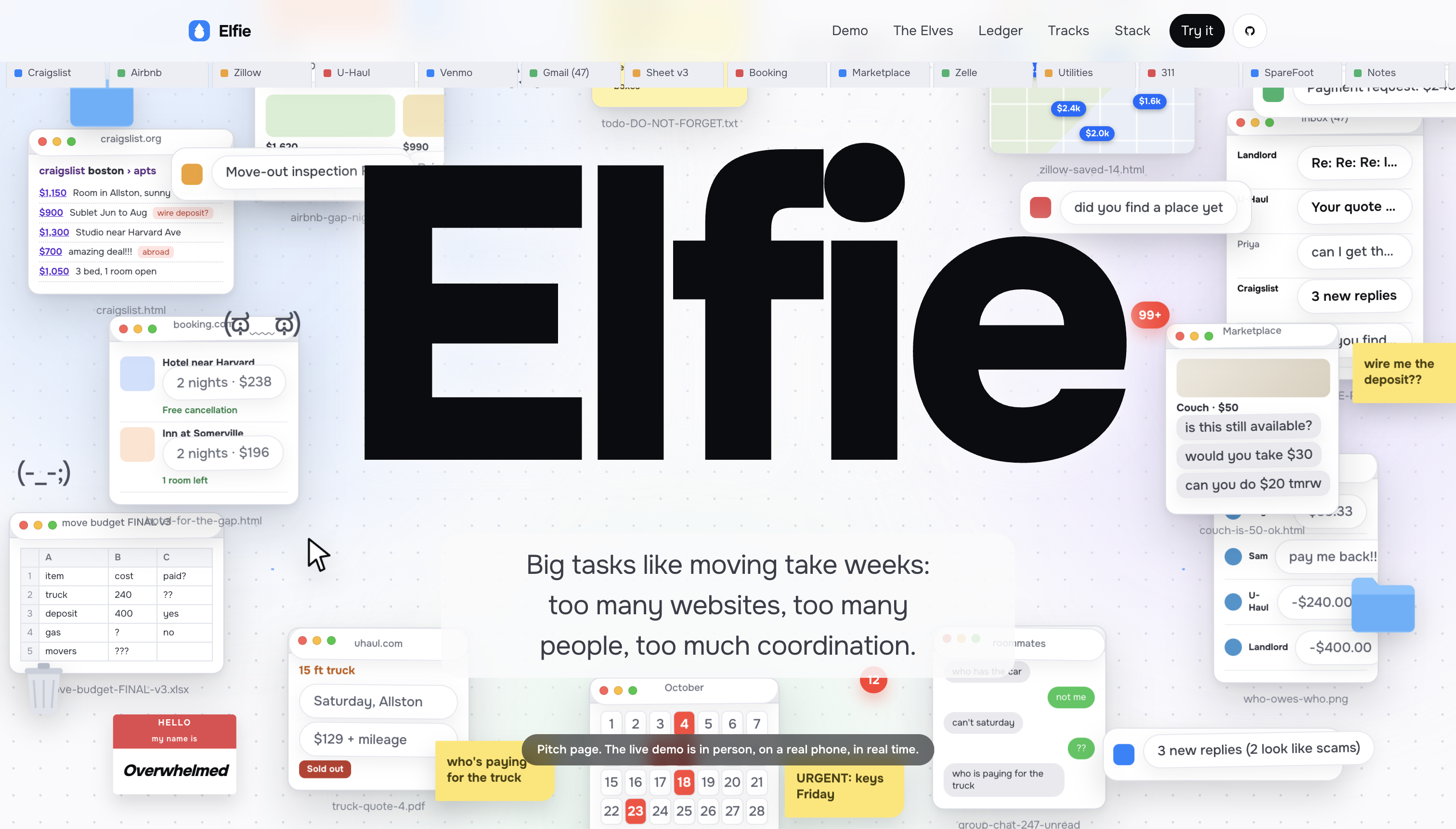
Pitch: Remember the elves who finished the shoemaker’s work overnight? Elfie brings them to your move: you text, and they find the apartment, sell the furniture and settle the bills.
About
Inspiration
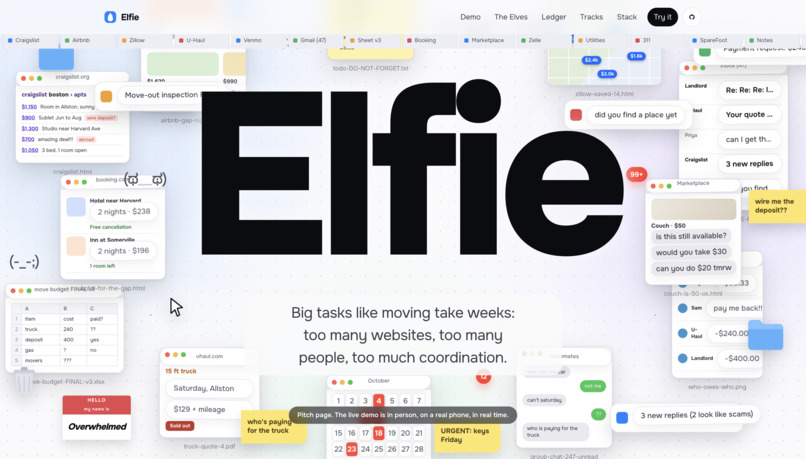
Gavin moved apartments last fall, and the fall before that. Each time, it took weeks, he spent a month chasing roommates for their share of the truck, and the budget was shattered.
Many Boston residents face a similar struggle on a day dubbed “Allston Christmas.” Most leases turn over on September 1st, and the sidewalks fill with furniture nobody had time to sell. The city collects more than 5,000 mattresses that week alone, while movers charge surge prices that can top $2,000 for a local move.
Most of that waste and money is lost to bad timing, not bad intentions. We wanted someone to just handle it.
What it does
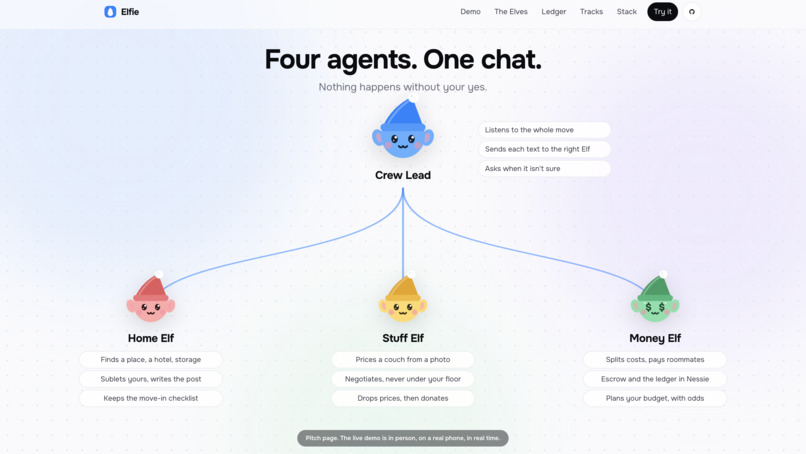
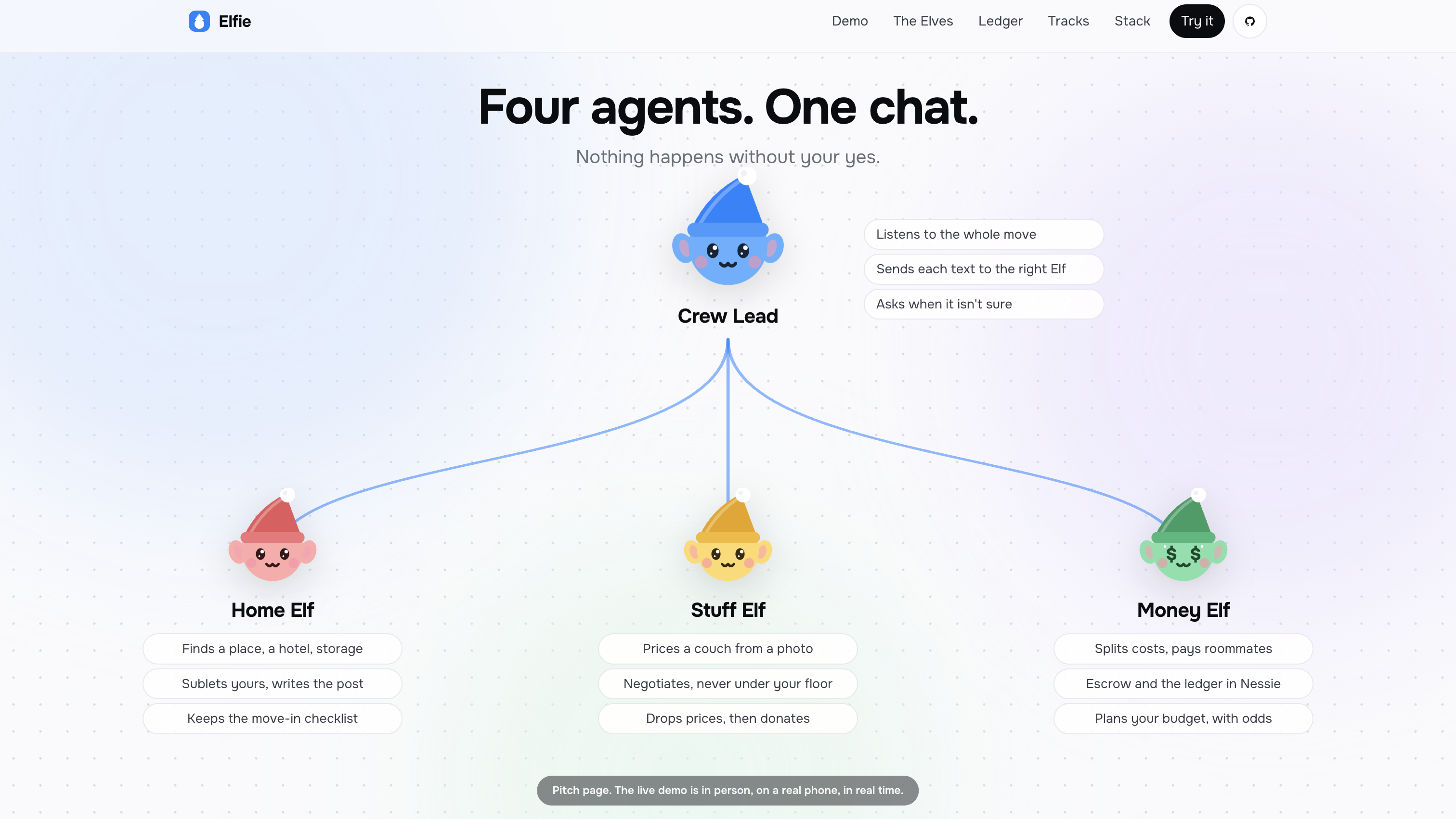
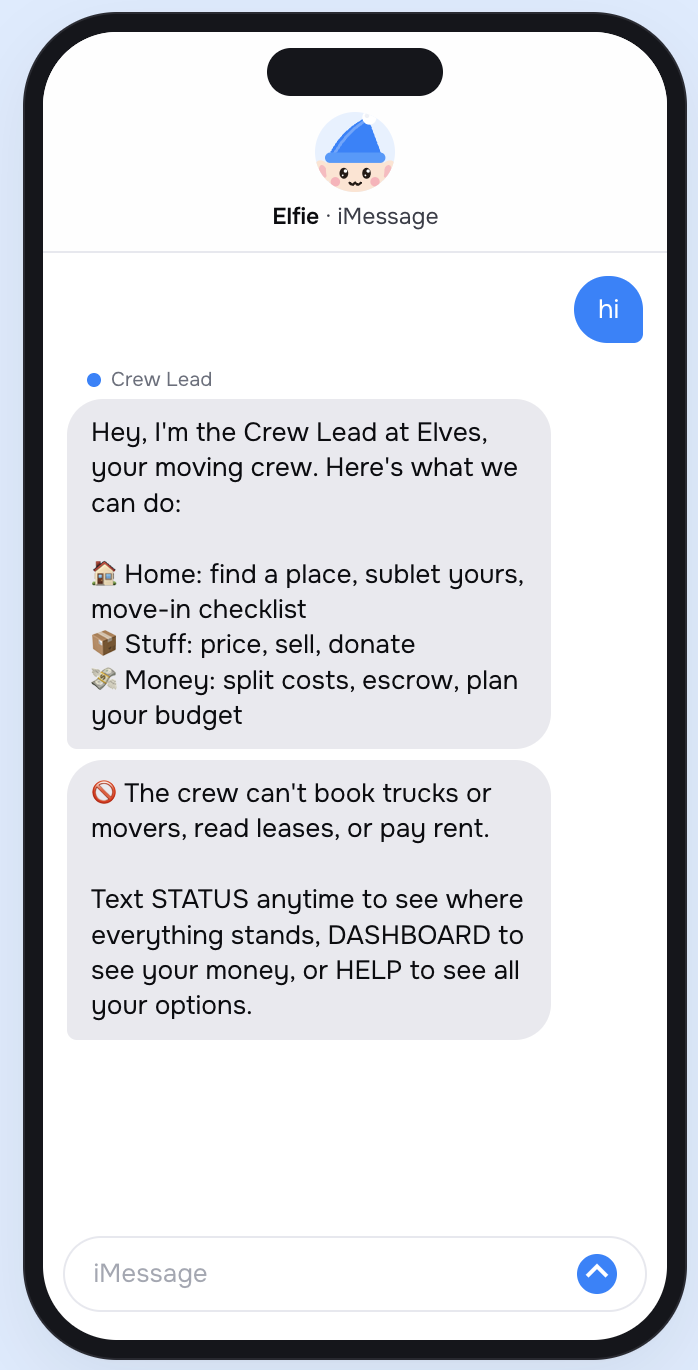
Elfie is one phone number you text about your move. Behind it are four AI agents: Crew Lead, Home Elf, Stuff Elf, and Money Elf. You only ever see one thread.
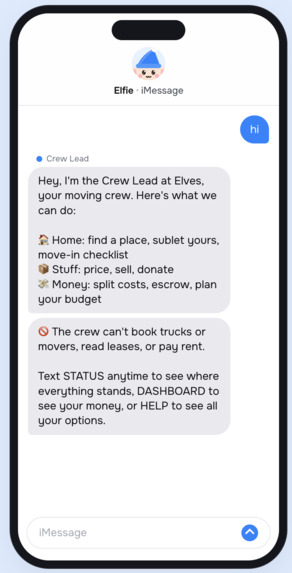
The Crew Lead starts with a quick onboarding call or text. It learns your dates, your budget and what you’re selling, plays the plan back to you, and delegates to the right Elf. When a text needs two of them, like “sell my desk and find me storage,” both get to work.
The Home Elf hunts for your next place, a hotel for the gap, or a storage unit, and flags listings that look like scams (a price under half the median, wire or gift-card asks, “I’m abroad” stories). It writes your sublet post from photos of your room, talks to applicants, and keeps a dated move-in checklist. A viewing is never booked until you say yes.
The Stuff Elf prices furniture from a photo and negotiates with buyers who text the same number. It never goes below your floor, and it never tells buyers what it is. If a buyer asks to pay by Venmo, gift card or cashier’s check, the Elf points them to escrow, or ends the chat and tells you. As move-out gets close, Last Call drops prices on a schedule: 20% at 72 hours, 25% more at 48, free at 24. Each text says how much and why. Anything left gets donated with one text. The Elf finds pickups near you and drafts the request. Ask for your Move Report and it shows the pounds kept out of the landfill, the CO2 avoided and the dollars recovered.
The Money Elf keeps every dollar in Capital One’s Nessie. It splits costs with roommates down to the penny, logs your deposits once, and holds a buyer’s payment in escrow until pickup is confirmed. It all shows on a live dashboard. Its Smart Plan simulates your move 2,000 times and tells you your odds of finishing under budget.
And the crew knows its limits. It won’t book a truck, read your lease, pay your rent or move money to your bank. It says so plainly and tells you the closest thing it can do. Every price below your floor, payment, refund or booking is one question, and one yes approves exactly one action.
How we built it
Elfie runs on Photon 2.0 over iMessage, SMS and voice. The service is TypeScript on Bun, hosted on Railway, with Postgres on Supabase holding the state and the memory.
Each Elf implements the same small interface. A router reads every text and picks who answers, using quick rules first and Claude Haiku when it’s unsure. Claude also reads photos, so a picture of a couch becomes a price and a picture of a room becomes a sublet post.
The Home Elf searches with a real browser through Browserbase and Stagehand. Buyers and applicants run through a Deal Engine we wrote as a Postgres state machine. It tracks every deal from first offer to pickup, books three pickup slots on one calendar, holds your floor price in code, and only asks you when an offer crosses your line.
We treat Nessie as the ledger, not just a bank. Each move gets its own Moving Fund and Escrow account, and every dollar is a Nessie record tagged with what it was for. A buyer’s payment sits in Escrow until pickup is confirmed, then moves into the Moving Fund. A roommate’s payment plan is a Nessie loan. Totals are always read back from Nessie, so our database only stores what Nessie can’t, like who owes whom.
The Smart Plan goes one step further. When you pick a plan, we write it into Nessie as pending, future-dated records. Nessie ends up holding both what has happened and what’s supposed to happen next.
Photon 2.0 has no app cards, so we draw the Ledger and the Smart Plan as images and send them right in the thread. The dashboard link is signed, so a forged one gets a 404.
The onboarding call runs on Retell, and it writes to the same tables a text does. When you hang up, a recap text arrives on the same number, and the Crew Lead already knows your move. The call and the chat are one conversation.
Challenges we ran into
Photon was a moving target. We built on Photon 2.0 for messaging and voice, then tried Photon 1.0 for an iMessage mini app. The mini app worked, but it had to come from a second phone number, so we shelved it and drew our dashboards as images in the thread instead. Photon 2.0's docs were still placeholders, so we learned its limits by testing on real phones.
One number, four agents. Every text has to land with the right Elf, even a bare "yes." We ended up tracking which Elf spoke last, and the Crew Lead asks you to pick when two of them fit.
The Deal Engine took the longest. Getting negotiation right meant researching [how people actually haggle on Facebook Marketplace and Craigslist]. We had to handle counteroffers, no-shows and price drops without ever giving away your floor.
Accomplishments that we're proud of
Four agents that feel like one. They share memory and hand work to each other. When a text needs two of them, like "sell my desk and find me storage," both get to work.
Safety lives in code. Price floors, escrow and scam blocks are checks, not suggestions to a model.
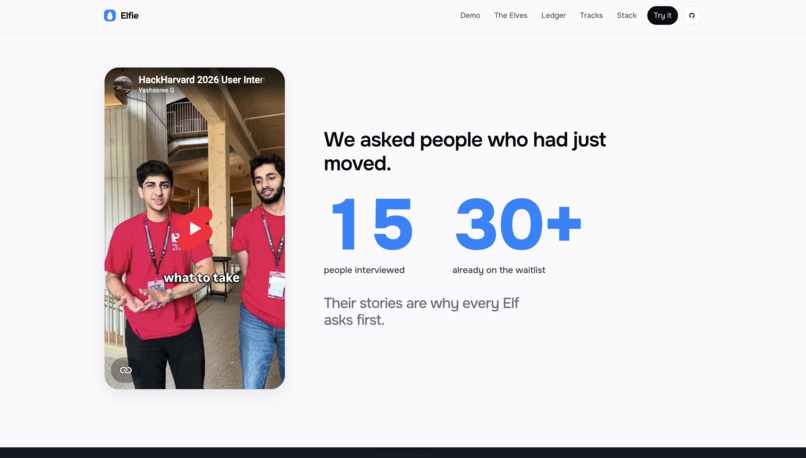
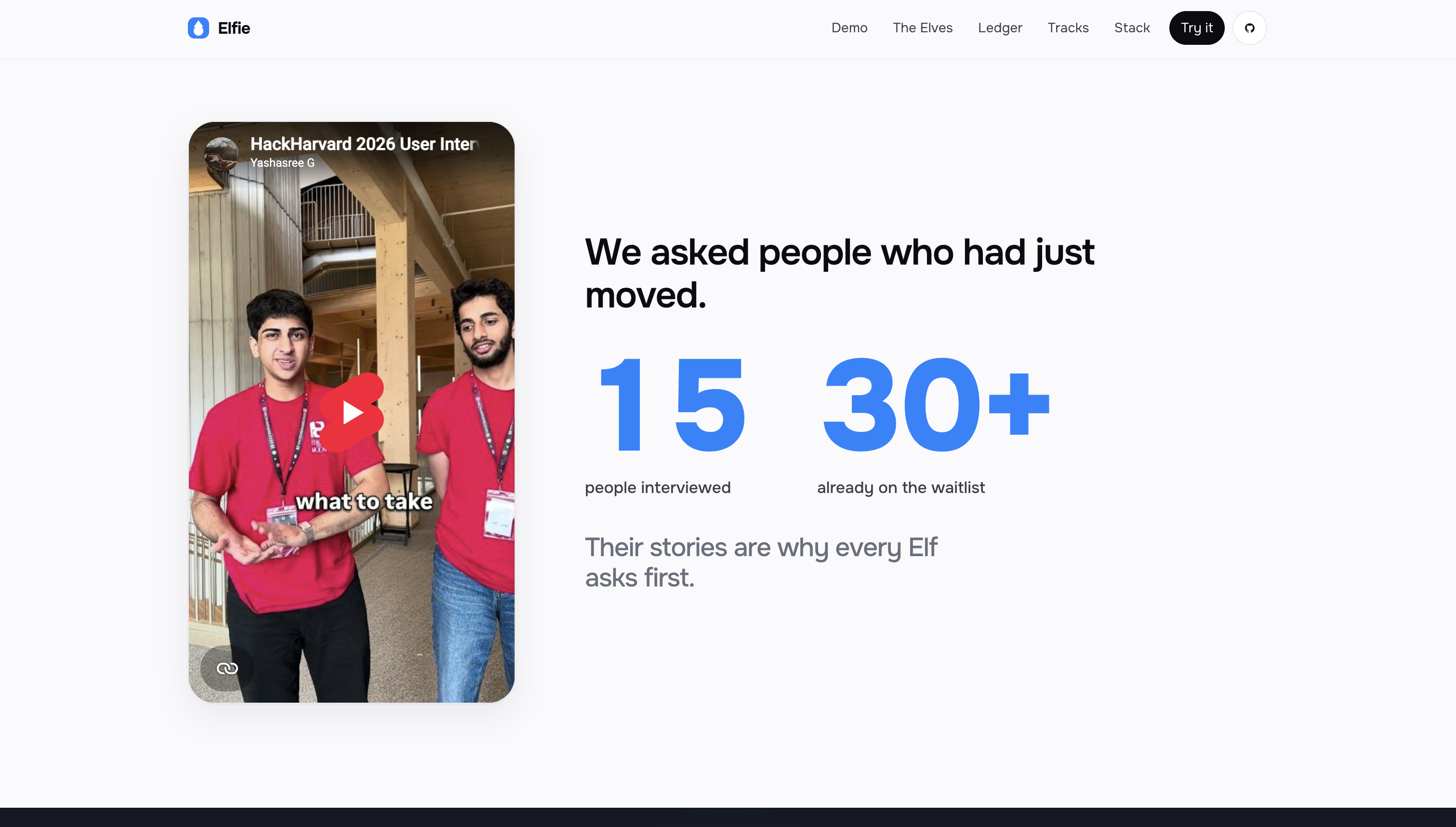
It's real. Elfie runs on real phones against a live Nessie sandbox, backed by over 600 automated tests. [We talked to 15+ people who've moved, and 30+ signed up to try it.]
What we learned
Trust is the product. People will let an agent sell their couch, but only if they know exactly when it will ask first.
Keep the model away from the math. Claude is great at reading a messy text, but amounts and totals belong in plain code.
What's next for Elfie
Move day itself, from booking a truck to planning the route. We also want the Stuff Elf to post listings for you instead of handing you a draft.
For money, we want a web dashboard with an agent you can question. Every answer would cite the Nessie records behind it. After that, returned deposits and sale money could flow into savings for your next move.
Built With
- browserbase
- claude
- nessie
- photon
- railway
- retell
- stagehand
- supabase
