Inspiration
We were inspired by how emotionally overwhelming breakups can feel, especially after the relationship has already ended. There are many apps for productivity, self-care, or journaling, but very few are designed specifically for heartbreak recovery in a way that feels gentle, structured, and emotionally safe. We wanted to explore how design could support people through that in-between stage of healing, when emotions are messy, progress is hard to see, and even small tasks can feel overwhelming.
We were also interested in the idea that healing is not always dramatic. Often, it happens through small moments: resisting the urge to text, writing down one honest thought, or doing one thing for yourself. That inspired us to create Patch, a breakup recovery app that turns healing into a soft daily ritual rather than a pressure-filled process.
What it does
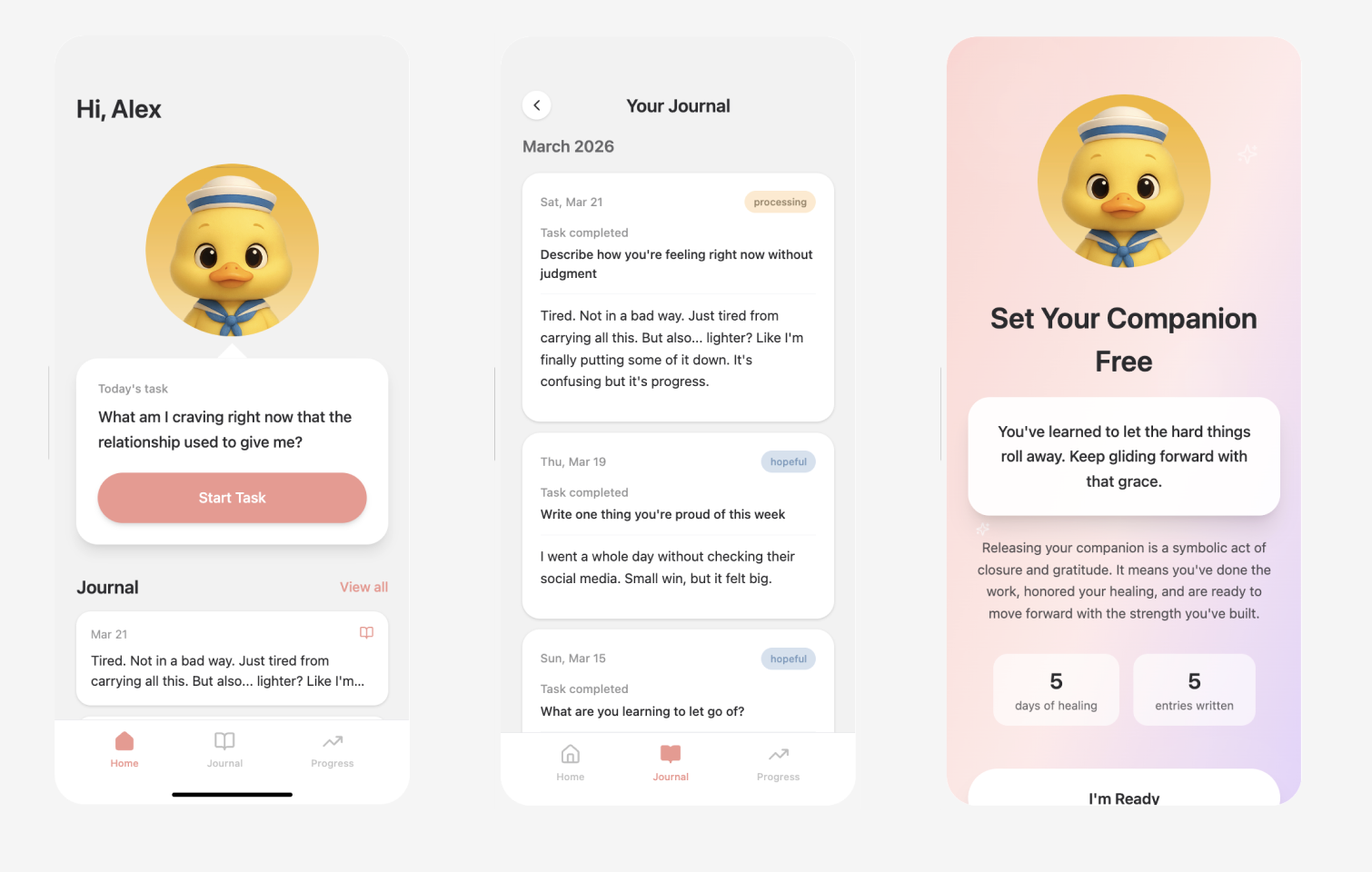
Patch is a breakup recovery app that helps users heal through daily guided tasks, a customizable healing pet, and a journal archive that tracks their emotional progress over time.
The app begins with a short onboarding flow where users create an account and set preferences based on what they are moving through, what kind of support they need, their preferred healing pace, and how often they want reminders.
From there, users land on the main dashboard, which includes:
- a personalized greeting
- a healing pet in the center that they can customize
- a daily task presented in a speech bubble
- a journal archive that stores reflections, writing, and completed tasks
- a progress area where users can view their healing journey, edit their timeline, modify preferences, and eventually set their pet free when they feel ready to close that chapter
Patch is meant to make healing feel more manageable, more visible, and less lonely.
How we built it
We started by identifying the emotional pain points of breakup recovery: loneliness, rumination, urges to reconnect, loss of routine, and the difficulty of seeing progress when healing feels nonlinear. From there, we brainstormed ways to make emotional recovery feel more supportive and interactive.
We mapped out the user flow first:
- Welcome
- Create account
- Preferences
- Main dashboard
- Journal
- Progress / profile / modify preferences
After defining the structure, we focused on the three core parts of the app:
- daily healing tasks to give users one manageable action at a time
- a healing pet to create emotional warmth and symbolize growth through care
- a journal archive to make recovery visible through writing, images, and completed reflections
We then worked on the tone, visual direction, and interactions to make sure the experience felt soft and comforting instead of clinical or productivity-driven. Our design choices centered around emotional safety, gentle language, and a cozy UI that users would want to return to daily.
Challenges we ran into
One of our biggest challenges was designing for emotional healing without making the app feel too heavy. Breakups are deeply personal, so we had to think carefully about tone, wording, and interface choices. We wanted Patch to feel supportive and meaningful, but not sad in a way that would overwhelm the user.
Another challenge was figuring out how to represent healing progress. We did not want users to feel like they were being graded on their recovery, since heartbreak is not something that can be measured in a strict or linear way. Instead, we tried to frame progress more gently, as a journey users can revisit and adjust over time.
We also spent a lot of time refining the role of the pet. At first, it risked feeling like just a cute feature, but we pushed it further so that it became central to the concept. The pet now acts as a symbolic companion that reflects consistency, self-care, and emotional growth.
Accomplishments that we're proud of
We are proud of creating a concept that feels emotionally specific and thoughtful rather than generic. Instead of making just another wellness or journaling app, we designed Patch around a real emotional experience that many people go through but that is rarely treated as a design opportunity.
We are also proud of the app’s core structure. The combination of daily tasks, a healing pet, and a journal archive gives Patch a clear identity and makes the experience feel both nurturing and interactive. The “set pet free” feature is another part we are especially proud of because it gives the app a meaningful sense of closure rather than just endless tracking.
Overall, we are proud that Patch feels like a cohesive product concept with a clear emotional purpose, a strong user flow, and a design direction that supports the problem we wanted to solve.
What we learned
We learned that designing for emotional experiences requires a different mindset than designing for efficiency or convenience alone. It is not just about making something functional or visually appealing. It is about making people feel safe, understood, and not pressured while they use it.
We also learned how important framing is. The same feature can feel supportive or stressful depending on how it is presented. That pushed us to think more carefully about microcopy, progress design, and the emotional meaning behind the pet and journal features.
Most of all, we learned that some of the strongest design opportunities come from everyday human experiences that are often overlooked. Breakup recovery is common, but it is rarely supported in a way that feels intentional, personal, and compassionate.
What's next for Patch
If we continued developing Patch, we would want to expand the app with more adaptive features based on healing stage and user preferences. For example, we would build out more personalized journal prompts, more pet customization options, and a stronger “hard day mode” for moments when users need extra gentle support.
We would also want to test the app with real users to better understand what kinds of tasks, prompts, and progress visuals feel most helpful during heartbreak recovery. That feedback would help us refine both the emotional tone and the practical usability of the app.
In the future, Patch could potentially grow beyond breakup recovery into a broader platform for navigating emotional transitions, but for now, we see its strength in staying focused, intentional, and deeply supportive for this one specific experience.
Built With
- figma

Log in or sign up for Devpost to join the conversation.