Inspiration
The devastating wildfires that have ravaged California in recent years have left huge mark on how we manage disasters. One of our team members witnessed the chaos firsthand during the Oakland Hills Fire, where hundreds were forced to evacuate their homes with little warning. The sight of families frantically packing their belongings, the sound of sirens piercing the air, and the thick smoke obscuring familiar landmarks created a scene of unimaginable urgency and fear.
Emotional Impact: The panic and confusion during evacuation attempts is scary, with gridlocked streets trapping people.
Urgency for Action: We realized the critical need for a more efficient, technology-driven evacuation system to guide people to safety and prevent tragic losses.
Community Resilience: The aftermath revealed how ill-prepared many communities were for such large-scale evacuations, highlighting the importance of proactive planning.
What it does
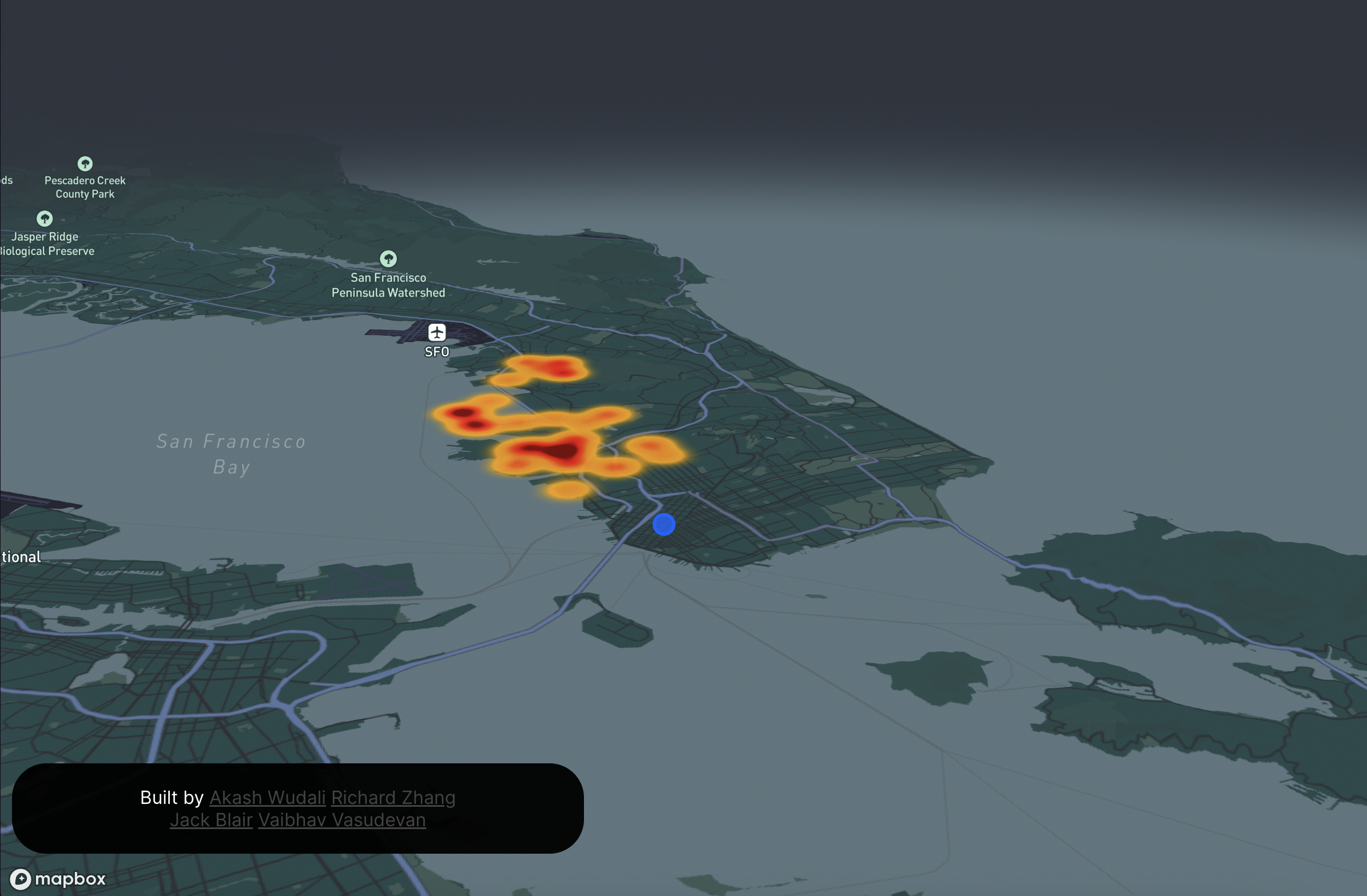
Ember Evac gives the most optimal directions to safety based on real-time data.
1.) We first determine the resident’s location to the nearest point to the fire.
2.) The platform calculates the most efficient and safest evacuation routes for individuals and communities by analyzing factors including…
- live traffic data
- road capacities
- current road closures
- fire growth
3.) Ember Evac proactively sends outbound calls to residents, delivering personalized evacuation instructions and updates.
How we built it
- Frontend: React.js
- Map Display: MapBox for interactive maps
- Location Data: JavaScript and MapBox API to integrate real-time location tracking
- Evacuation Outbound Assistant: Vapi for efficient evacuation guidance
- Voice Processing: Deepgram for voice recognition and transcription
- Language Model: OpenAI for powering the voice assistant’s natural language understanding
- Hosting & Database: Firebase for scalable hosting and database management
Challenges we ran into
- Animating the forest fire: Making the forest fire look realistic with a method that is not too computationally intensive was a big challenge. Ultimately, we used mathematical modeling to speed up the process
- Integrating Voice agent with location data: One of the biggest challenges was making sure our voice agent accurately interprets the location data and directions we are giving the user
Accomplishments that we're proud of
- Technical Skills: We strengthened are JavaScript and React.js skills while gaining experience with new APIs such as VAPI and MapBox
- Project Management: Improved our communication, teamwork and version control skills, utilizing github significantly
- Impact: Created a tool that can significantly improve public safety during natural disasters and other emergency event
What we learned
- Combine various technologies to build a platform capable of handling complex tasks such as real-time mapping and voice-assisted evacuation guidance
- Realized the potential of coding experience in tackling real-world problems with interdisciplinary solutions
What's next for Ember Evac
- Integrate more complex fire prediction models that consider wind patterns, terrain, and vegetation, along with ML algorithms for real-time traffic analysis
- Expand our comms channels by adding social media alerts and offer multi-language support to serve diverse communities
- Adapt Ember Evac to assist with other types of natural disasters like hurricanes and floods, all while ensuring data privacy and security is secure
Built With
- css
- deepgram
- html
- javascript
- mapbox
- openai
- react.js
- vapi


Log in or sign up for Devpost to join the conversation.