-
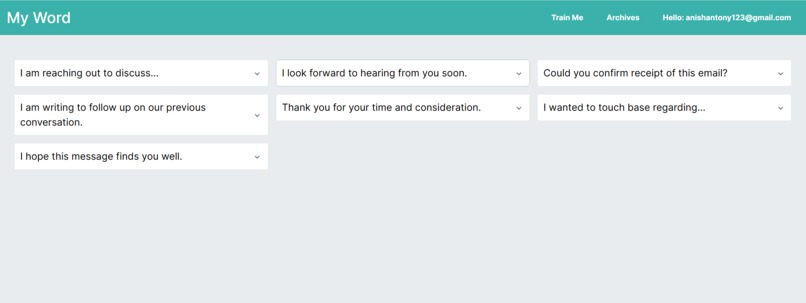
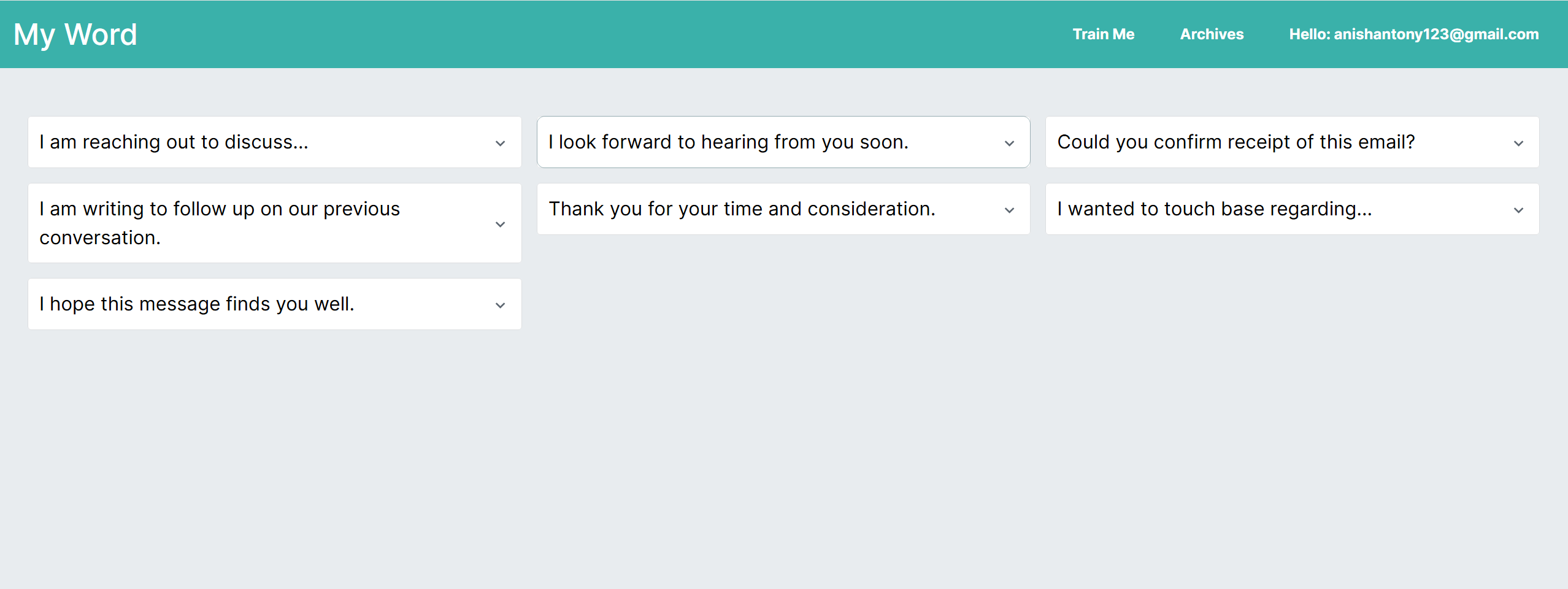
Card categorized View
-
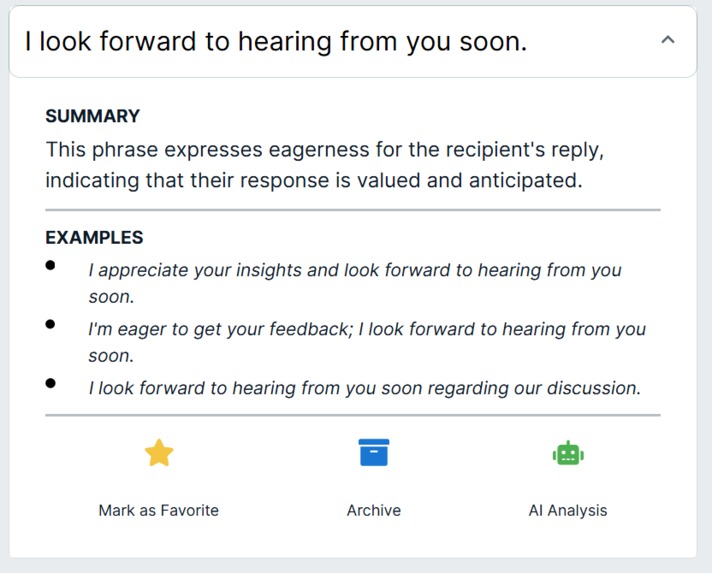
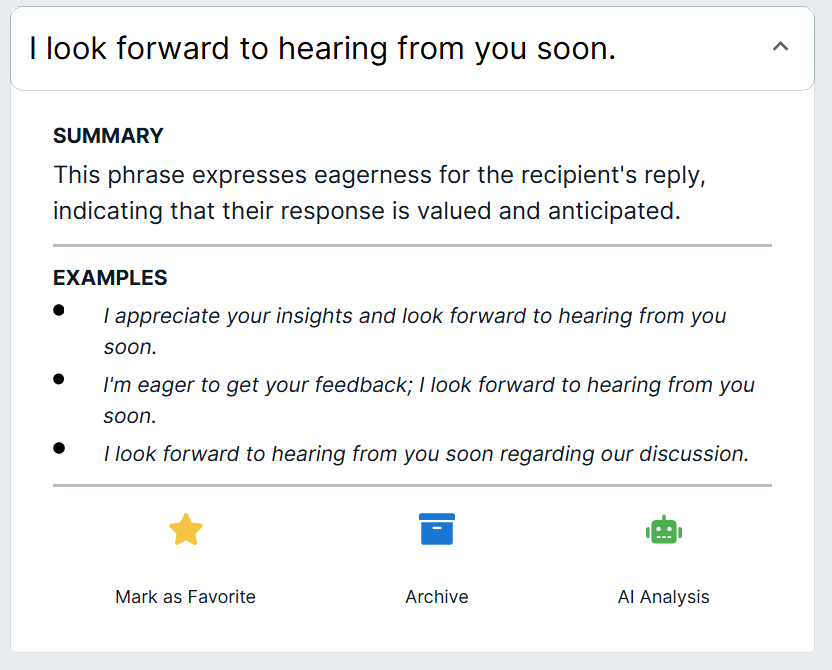
Card Detail View
-
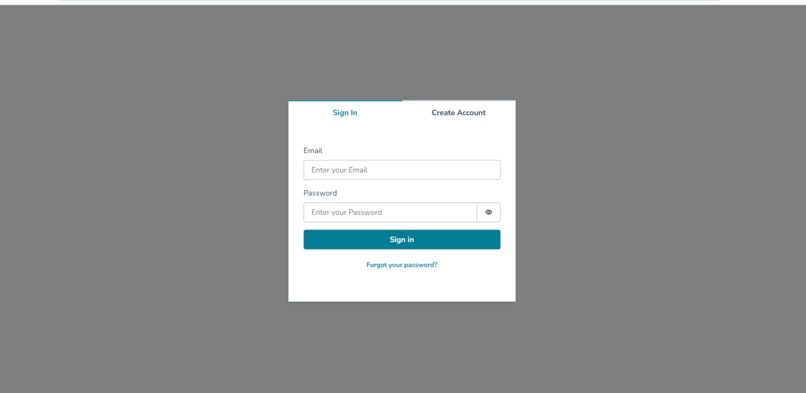
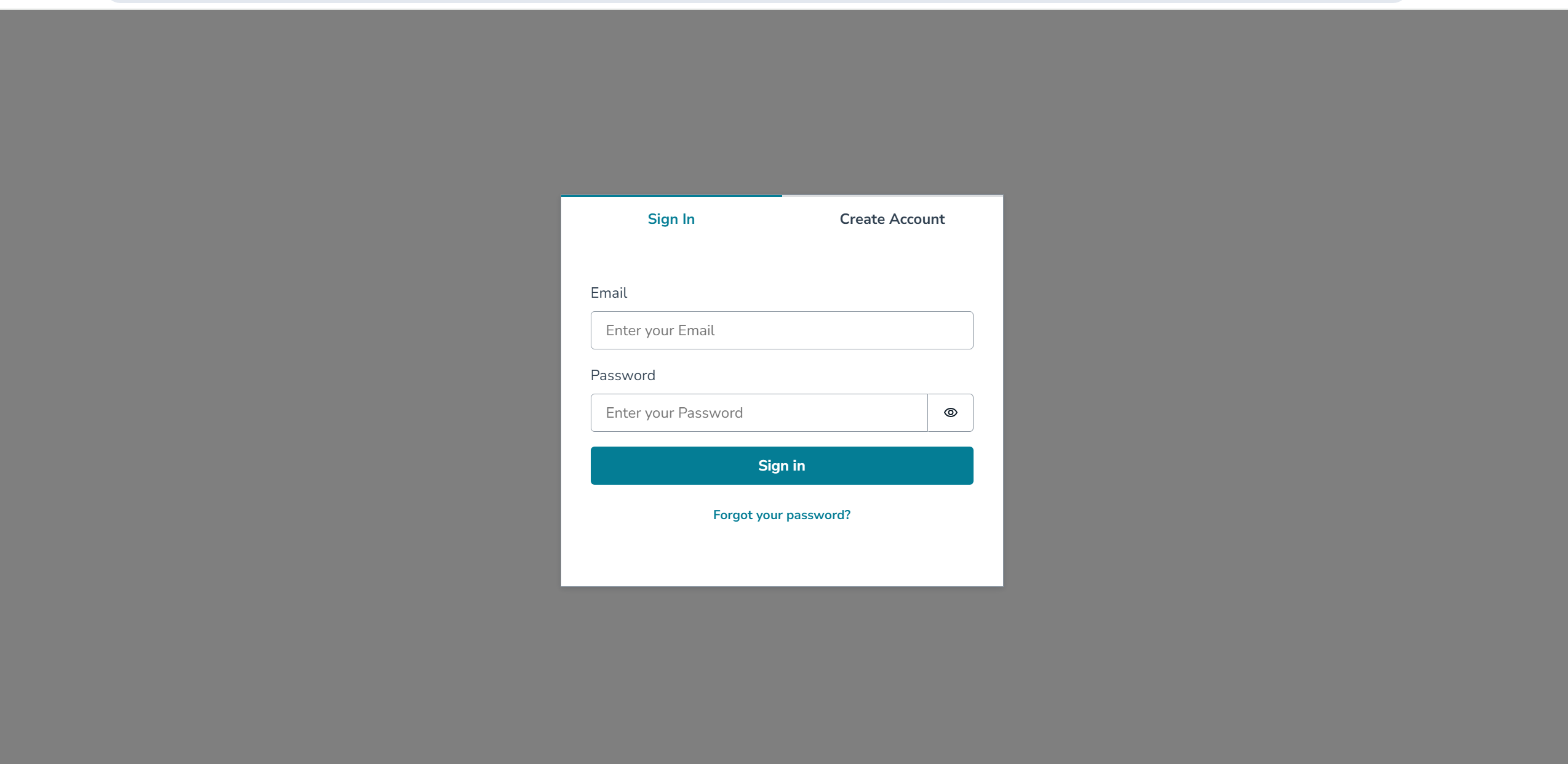
Login Page
-
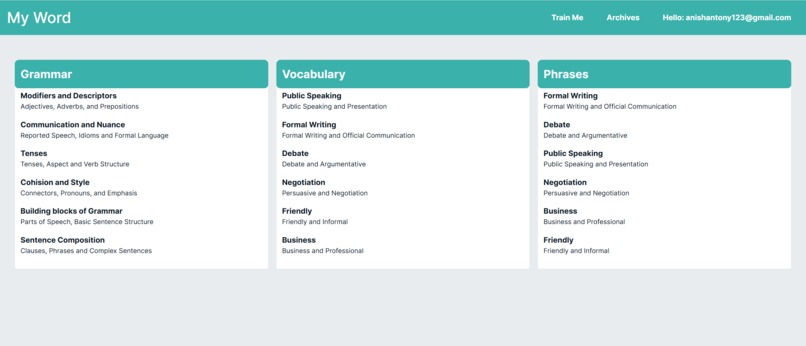
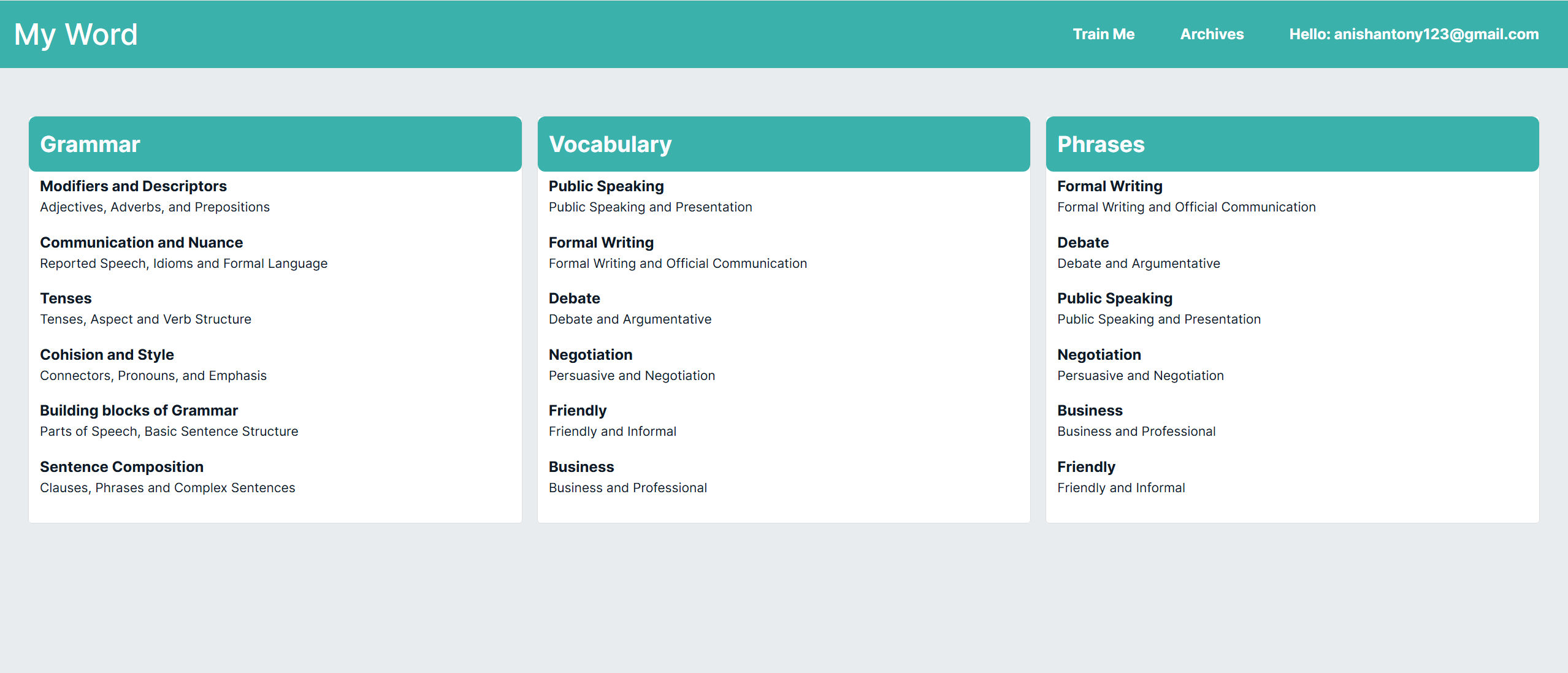
Home Page
Inspiration
MyWord was born out of a personal struggle to improve my English communication skills, particularly vocabulary and grammar. Over the years, I tried reading grammar books, storybooks, and watching movies, but these methods presented challenges:
- Lost notes: Often, the vocabulary and phrases I noted down were misplaced.
- Context loss: Revisiting the notes later, I struggled to recall the specific use cases of the phrases or vocabulary.
- Portability: Carrying physical notes everywhere was inconvenient.
To overcome these hurdles, I envisioned a solution where users could effortlessly organize and access their vocabulary, grammar, and phrases from any device—be it a mobile phone or a computer.
Additionally, with the integration of AI assistance, MyWord enables users to create conversations using their chosen vocabulary, grammar, and phrases. The app even learns user preferences and recommends content tailored to their needs.
What it does
MyWord is an AI-powered platform designed to enhance English learning through a structured, interactive, and personalized approach:
- Content Organization: Users can categorize and access vocabulary, grammar, and phrases seamlessly.
- Interactive Learning: With collapsible panels, users can focus on specific topics of interest. The app tracks user interactions to provide customized suggestions.
- AI Assistant: Enables users to simulate conversations using their selected vocabulary or grammar, making learning practical and engaging.
- Cross-Device Access: Accessible on mobile, desktop, and other devices for consistent learning on the go.
How we built it
This solution was crafted using a combination of AWS services and modern frameworks:
- AWS Amplify: For hosting and UI components integration.
- DynamoDB: To store user data efficiently.
- AWS Lambda: To call the remote AI engine for generating conversations.
- AWS Cognito: For secure user authentication.
- AWS API Gateway: To handle URL redirections.
- AWS AppSync: For GraphQL integration with DynamoDB.
- IAM: To manage access controls and permissions.
Challenges we ran into
Building MyWord came with its share of challenges:
- UI Limitations: Amplify's UI components seemed less feature-rich compared to Material UI, requiring additional customization and learning.
- Reverse Engineering: I designed the app starting from the database structure gave me better control but occasionally led to confusion due to unclear documentation.
- Gen1 vs. Gen2 Confusion: Amplify documentation often mixes Gen1 and Gen2 content, making it challenging to find the right solutions quickly.
Accomplishments that we're proud of
In just two days, I made significant progress on this project. MyWord is not just a hackathon submission but a meaningful solution for those striving to improve their English skills. Thanks to AWS services, the development process was accelerated, and I aim to make the app public soon.
What we learned
This project taught me the power of AWS services in rapidly building scalable applications. I also learned to navigate and integrate multiple services effectively, from hosting to database management and AI integration.
What's next for MyWord
- Go Live: I plan to make MyWord publicly accessible within a week or two.
- Gather Feedback: Once live, I’ll identify real-world challenges and refine the application.
- Enhancements: Continuously improve features and expand the app's capabilities based on user feedback.
Built With
- amazon-dynamodb
- amazon-web-services
- amplify
- cognito
- lambda
- react


Log in or sign up for Devpost to join the conversation.