-
-

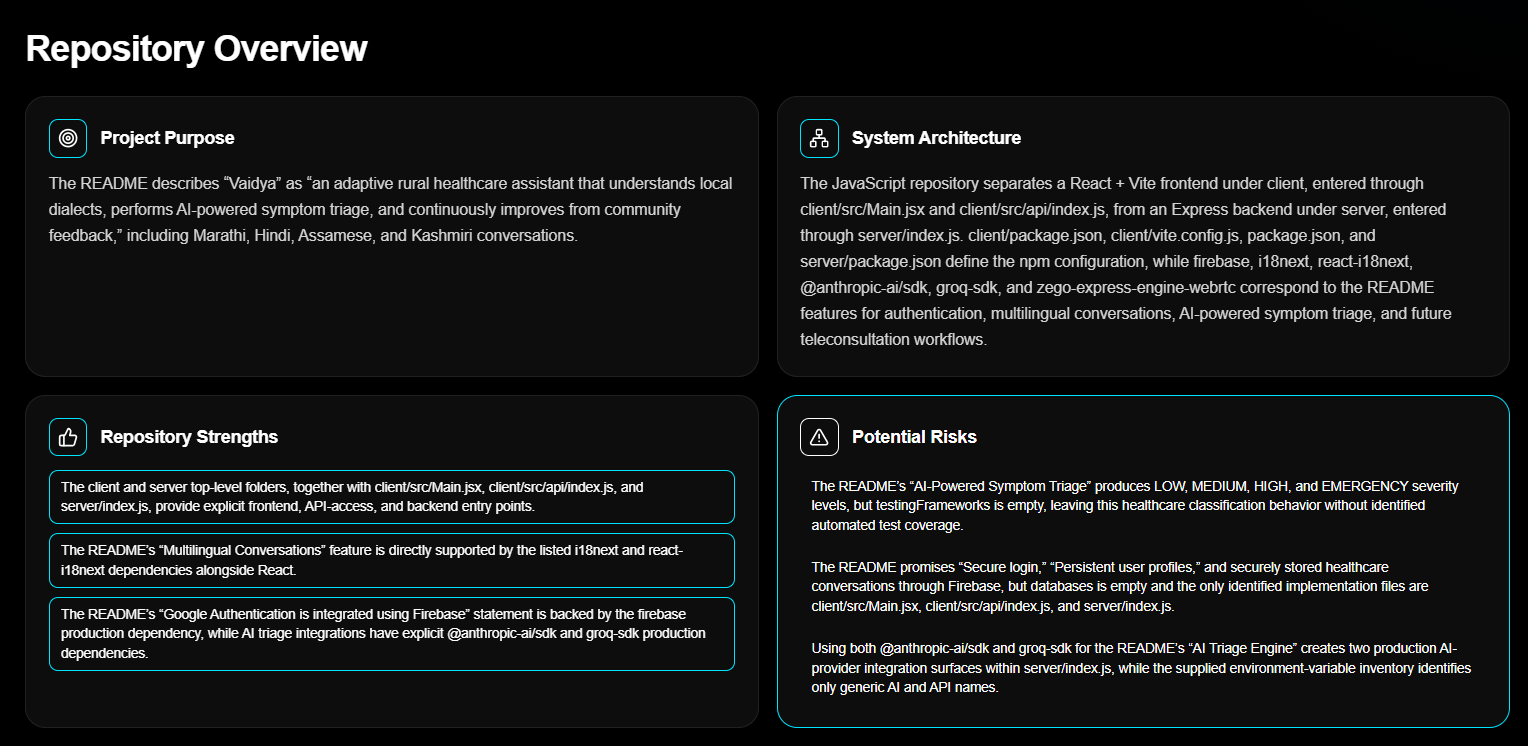
Health Of the repo analyzed by gpt 5.6
-
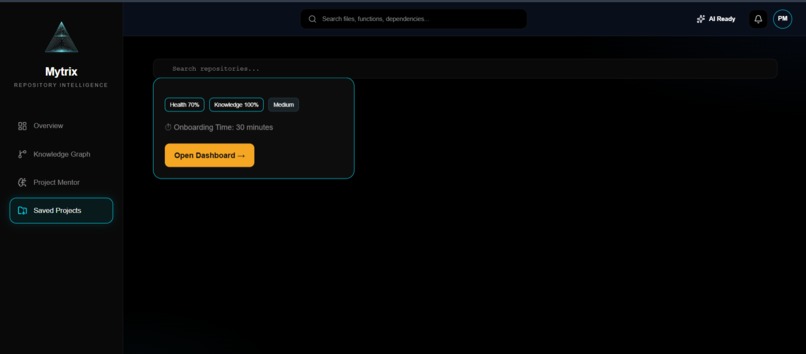
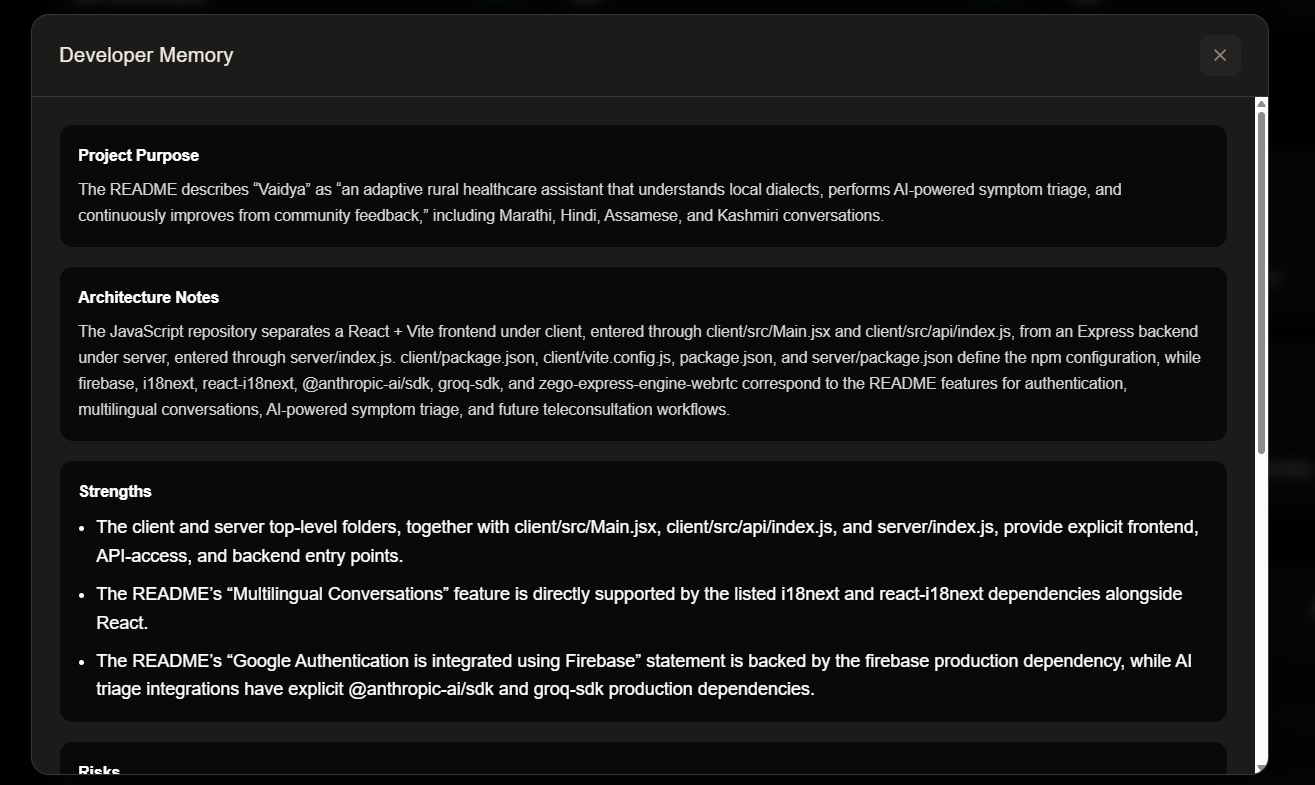
If the another glance of the repo is needed , easy to open whenever needed
-
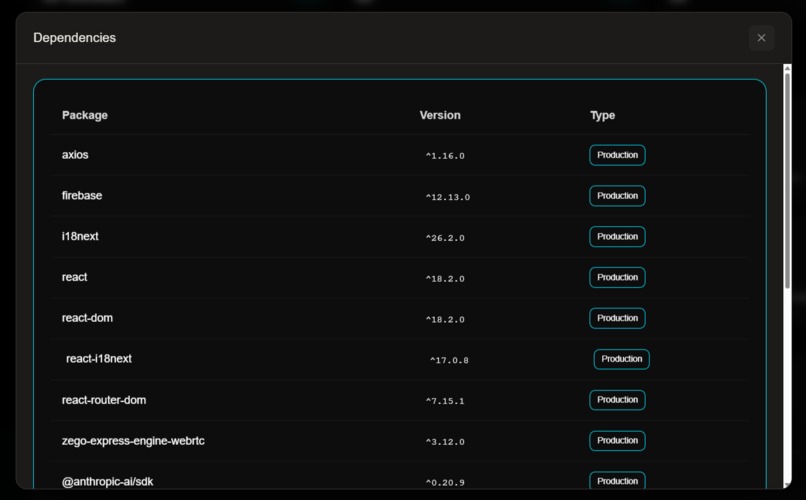
Thorough Information
-
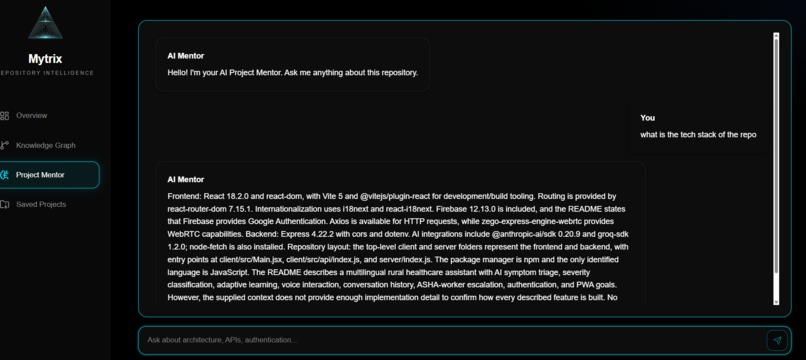
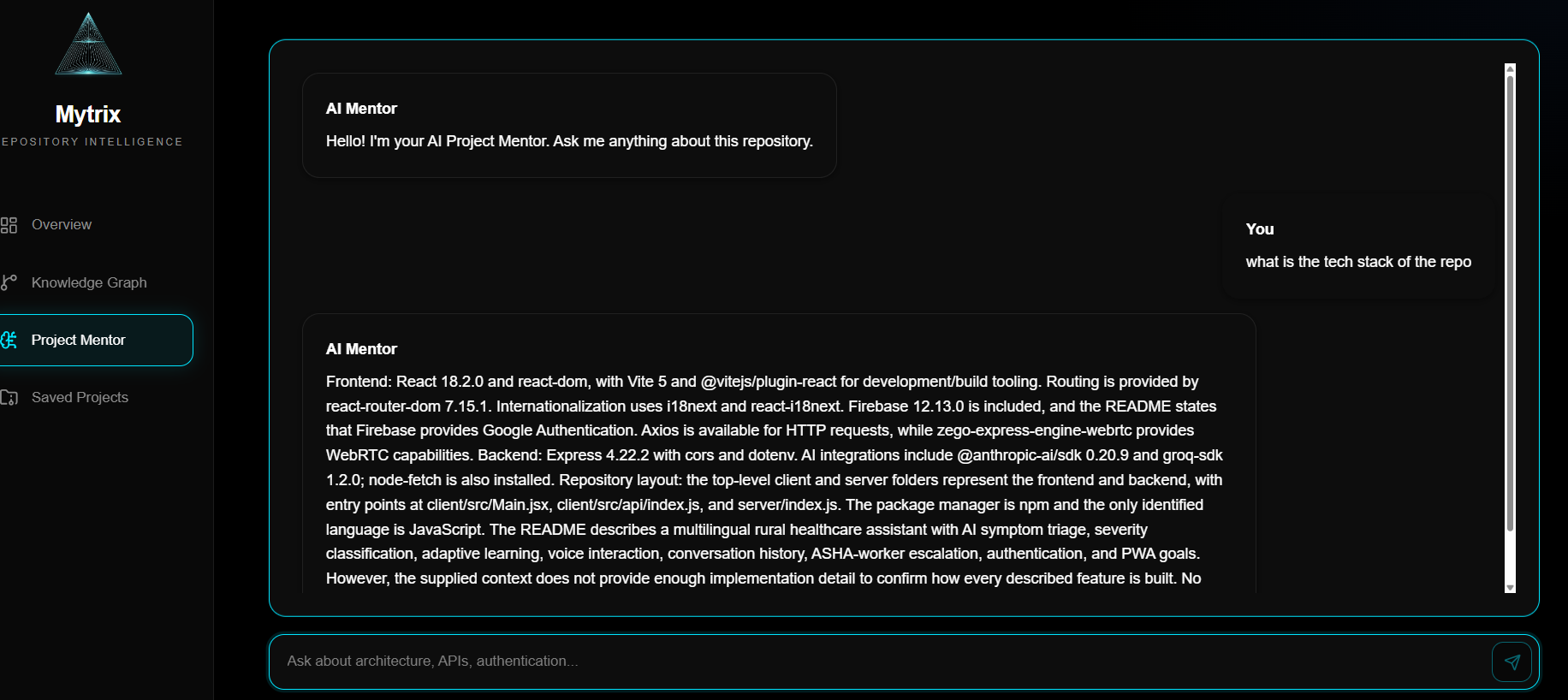
Ask AI mentor(gpt 5.6) for guidance throughout , about the repo
-
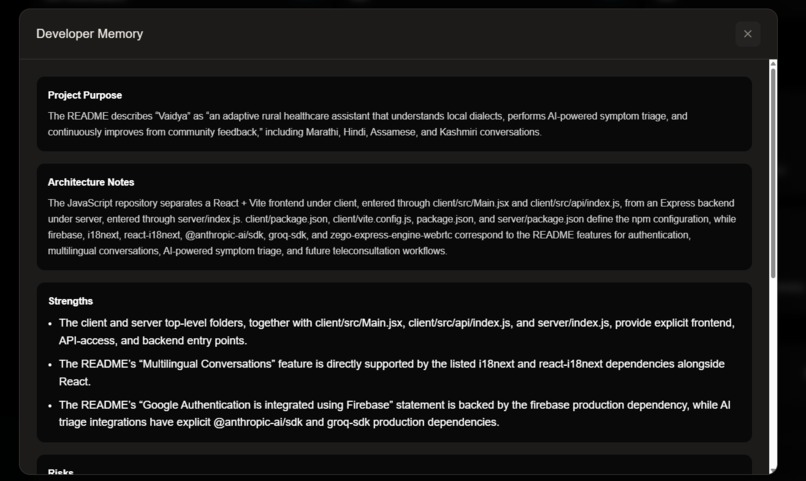
Clear understanding of the developer of the repo saves the onboarding time for them
-
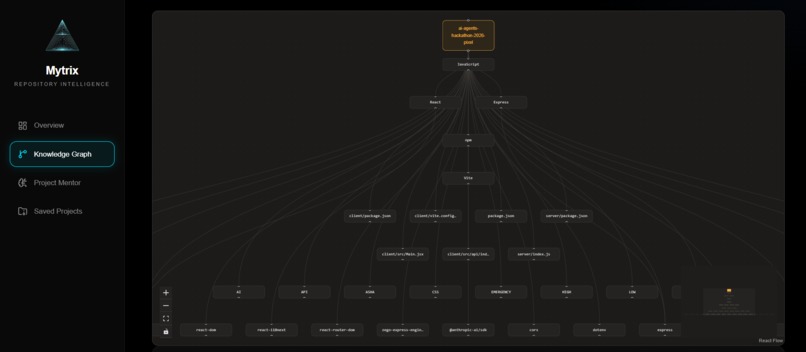
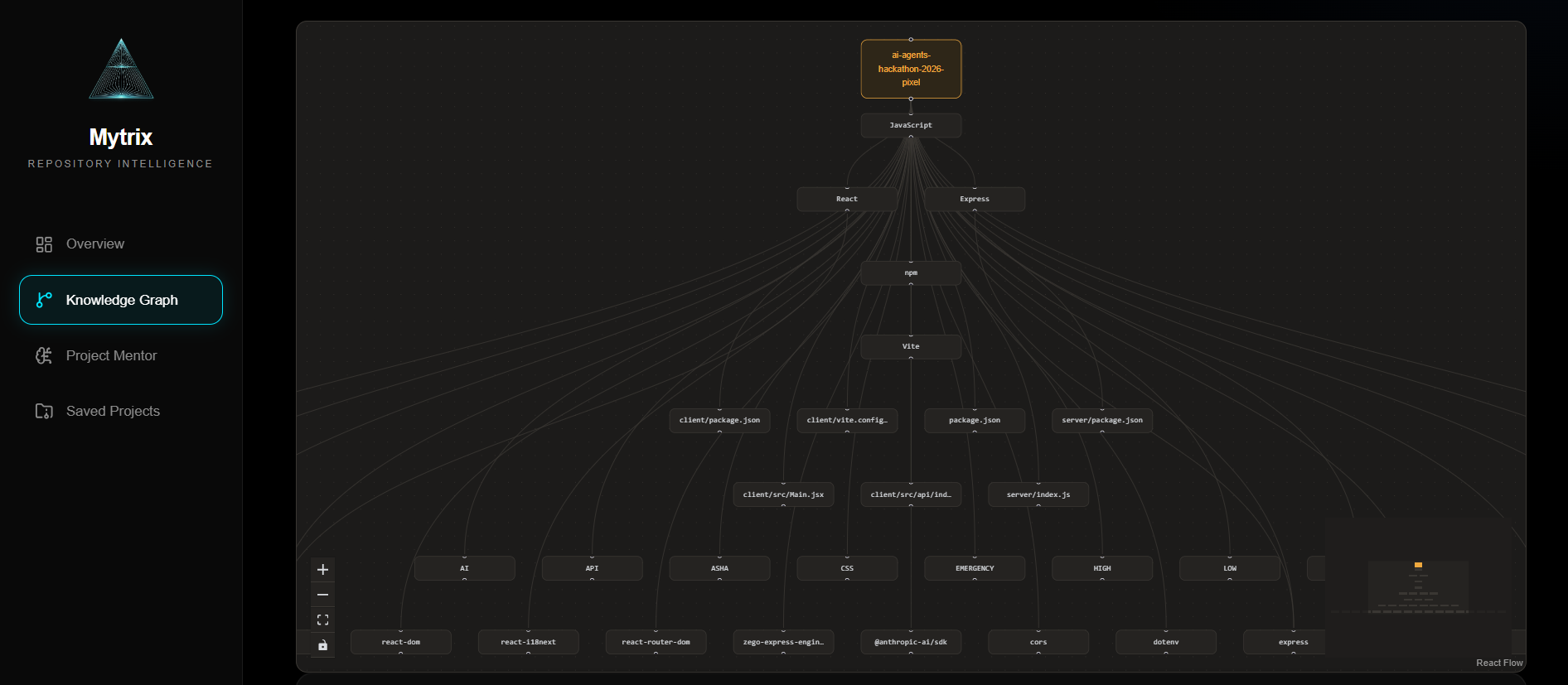
Architecture of the repo
-
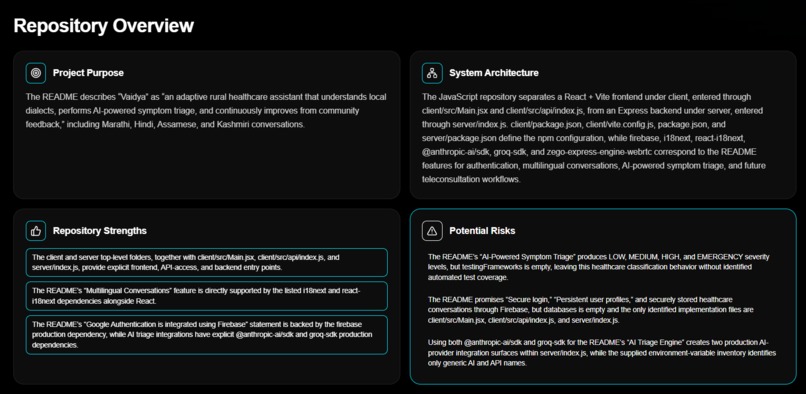
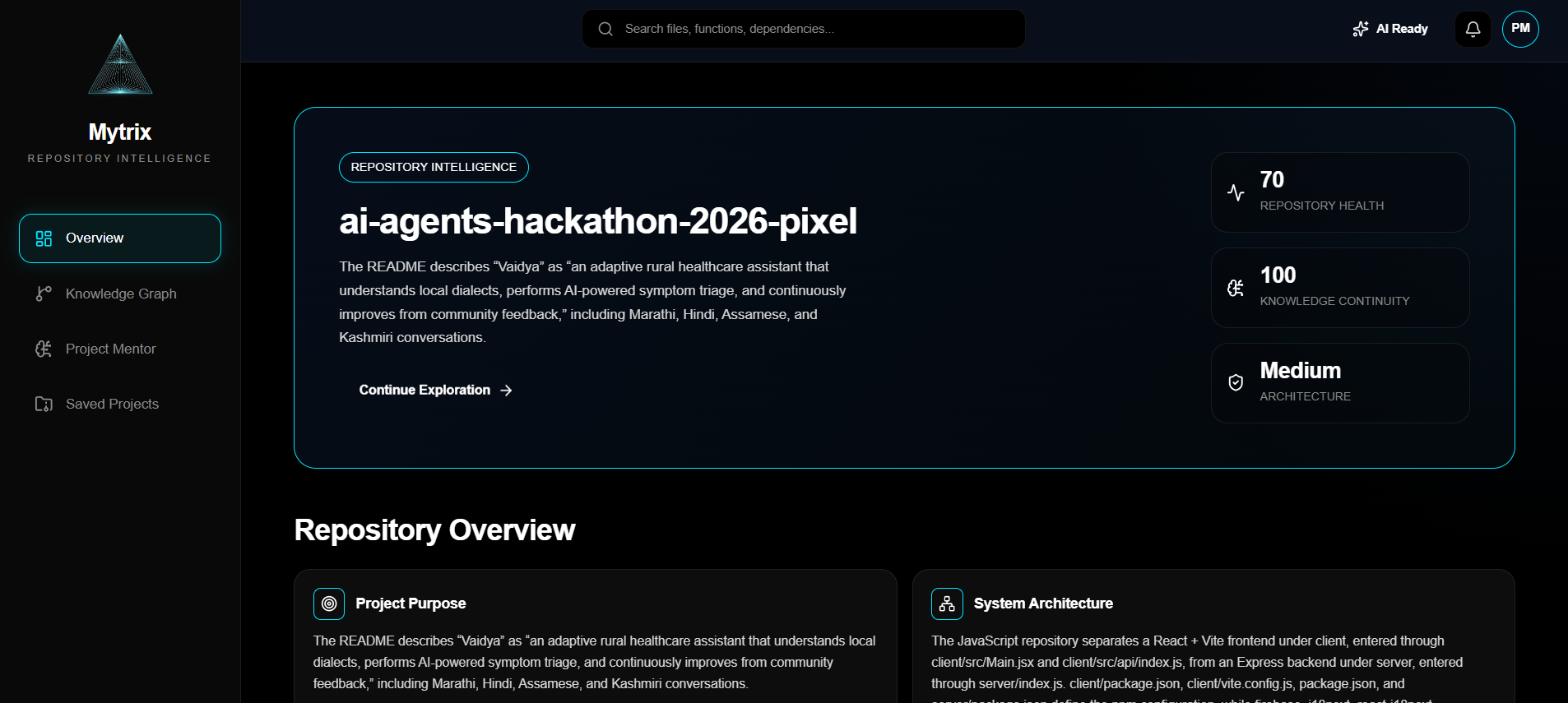
Repository Overview : Summary analyzed and gathered by gpt 5.6
-

Splash Screen : Welcome to Mytrix
-

Analyze Repo : Enter the livk of the repo to be analyzed
-
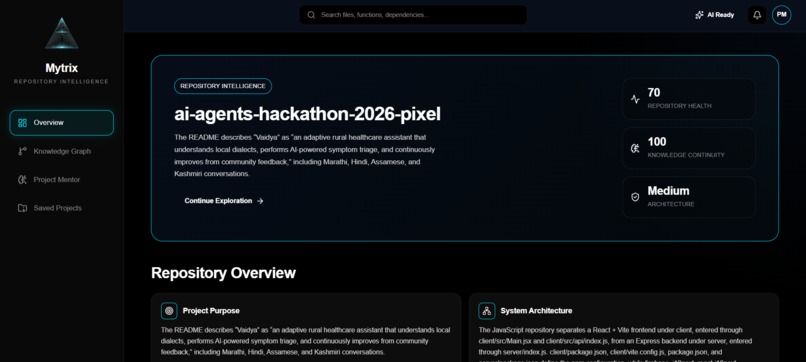
Dashboard : The basic overview of the repo




Inspiration
Modern codebases suffer from knowledge fragmentation. Documentation becomes stale, architecture exists only in developers' heads, and AI assistants repeatedly lose project context. We built Mytrix to solve this by creating a persistent semantic understanding of any GitHub repository.
What it does
Mytrix transforms any GitHub repository into a Repository Intelligence Model. It automatically performs repository analysis, architecture inference, dependency discovery, technology detection, and documentation extraction to generate:
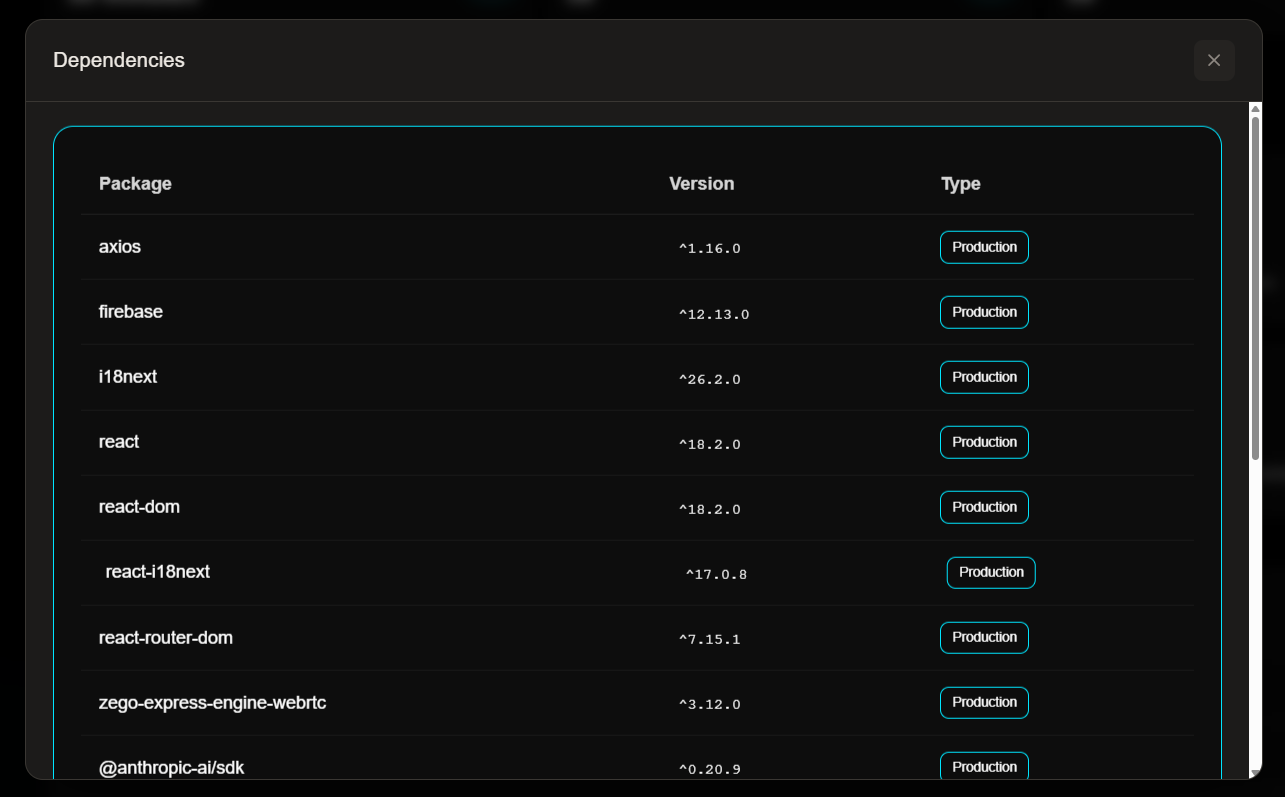
Repository Overview Architecture Insights Dependency Explorer Knowledge Graph Developer Memory AI-ready project context Instead of re-explaining projects, developers get a reusable intelligence layer.
How we built it
Frontend: React, Vite, React Router Backend: Node.js, Express, simple-git AI: OpenAI Codex & GPT-5 Pipeline: Repository Cloning → Static Analysis → Metadata Extraction → Semantic Processing → Knowledge Generation
We designed a modular analysis pipeline that converts raw repositories into structured knowledge consumable by both humans and AI agents.
Challenges we ran into
Inferring project architecture from raw source code. Preventing AI hallucinations with repository-grounded outputs. Handling repositories with diverse structures and frameworks. Balancing technical depth with a minimal user experience. Preventing AI hallucinations by grounding outputs in repository data.
Accomplishments that we're proud of
Built a complete Repository Intelligence Engine. Created a reusable Developer Memory layer. Designed a modular repository analysis pipeline. Generated AI-ready repository context from a single analysis. Reduced repository onboarding from hours to minutes.
What we learned
We learned that context is more valuable than code generation. AI becomes significantly more effective when backed by structured repository knowledge rather than raw source files. We also learned how to integrate Codex into a real software engineering workflow for rapid iteration without compromising design decisions.
What's next for Mytrix
Build an MCP-powered integration for OpenAI Codex, enabling AI agents to consume Mytrix's repository intelligence. DE extensions for real-time repository context Multi-repository Knowledge Graphs Architecture-aware code generation assistance Repository RAG APIs for AI applications AI-powered developer onboarding Organization-wide repository intelligence
Built With
- codex
- devtool
- express.js
- github
- gpt5.6
- node.js
- nodemon
- openai
- react.js
- reactrouter
- vite


Log in or sign up for Devpost to join the conversation.