Inspiration
Creators often have strong static work but no fast, approachable way to make it move. Traditional motion tools begin with a blank timeline and require decisions about layers, keyframes, easing, looping, and export before the creator can even judge the result. Template-based tools are faster, but they often hide the controls that make motion feel personal.
We built MYTION to close that gap: package motion expertise into reusable systems while keeping the creator in control of the media, timing, geometry, pacing, and final output.
What it does
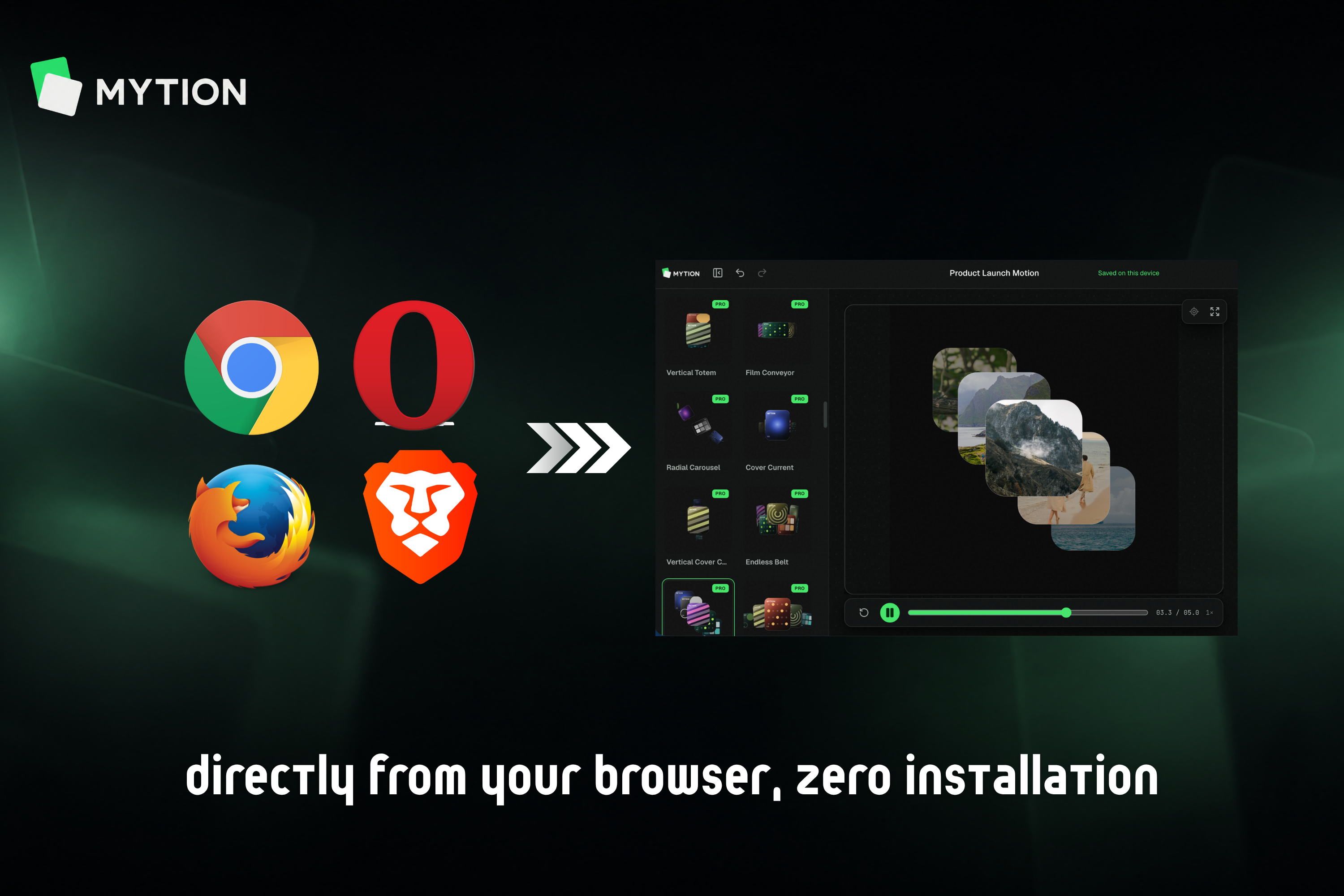
MYTION is a local-first browser motion studio that turns static designs, images, product visuals into polished motion.
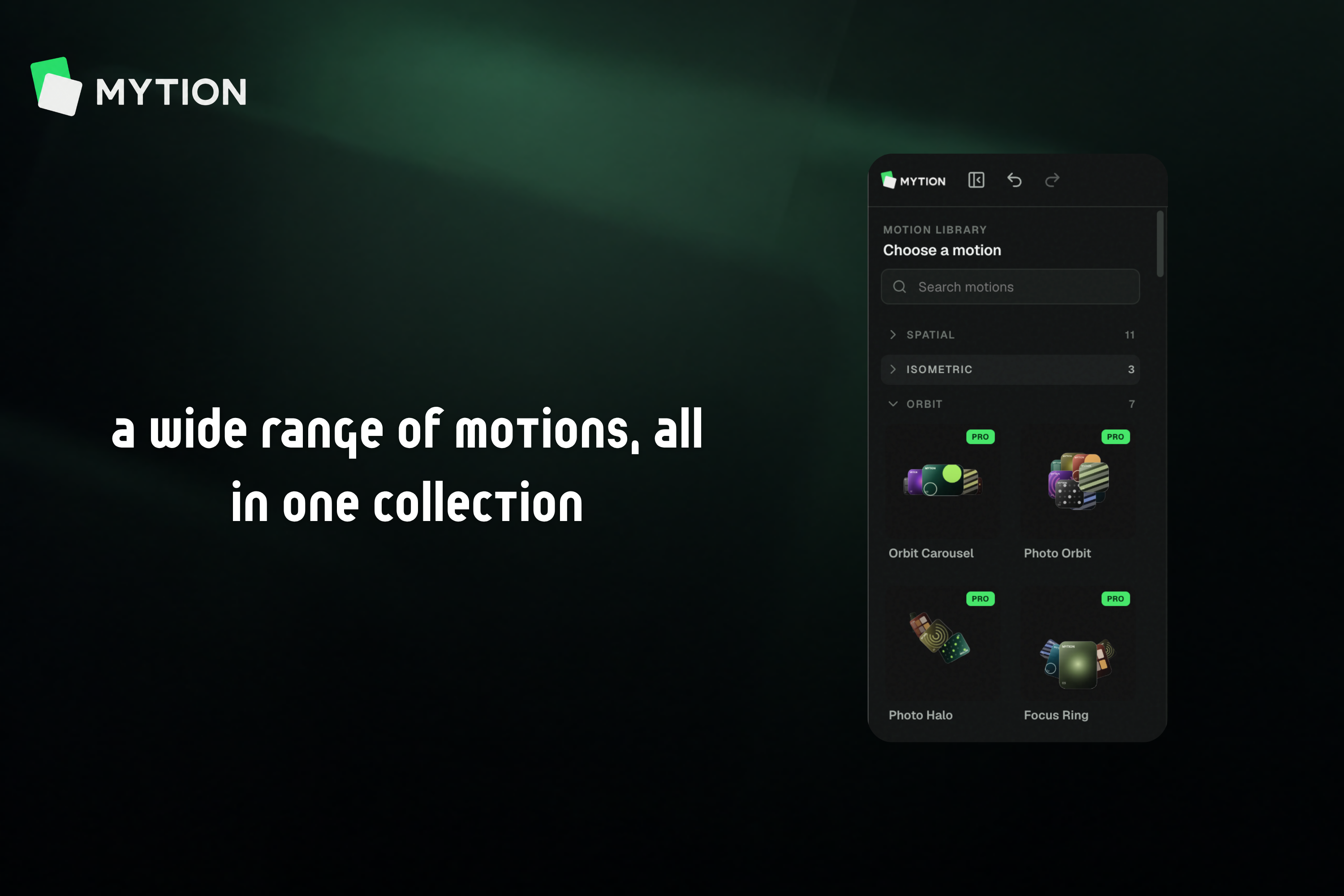
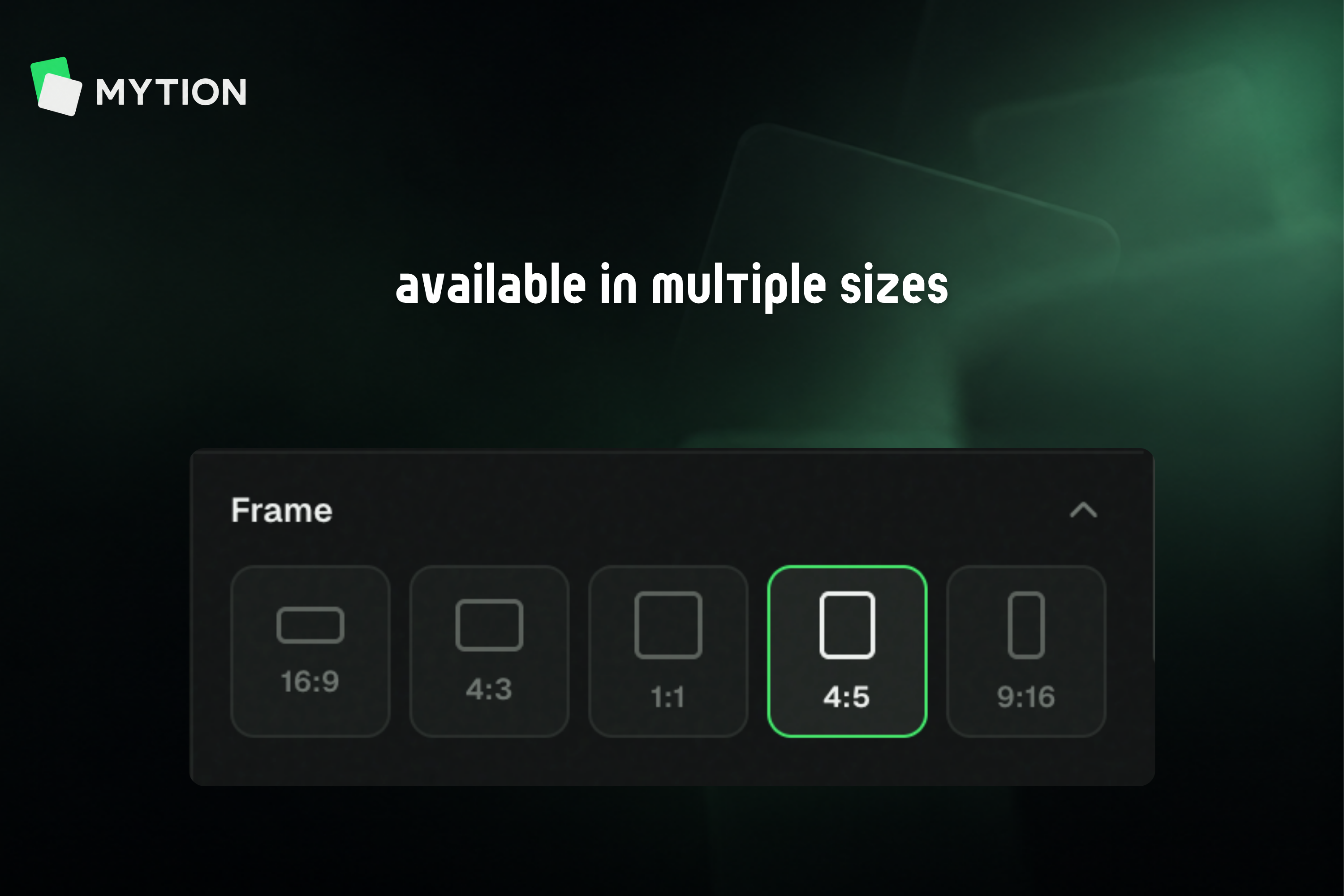
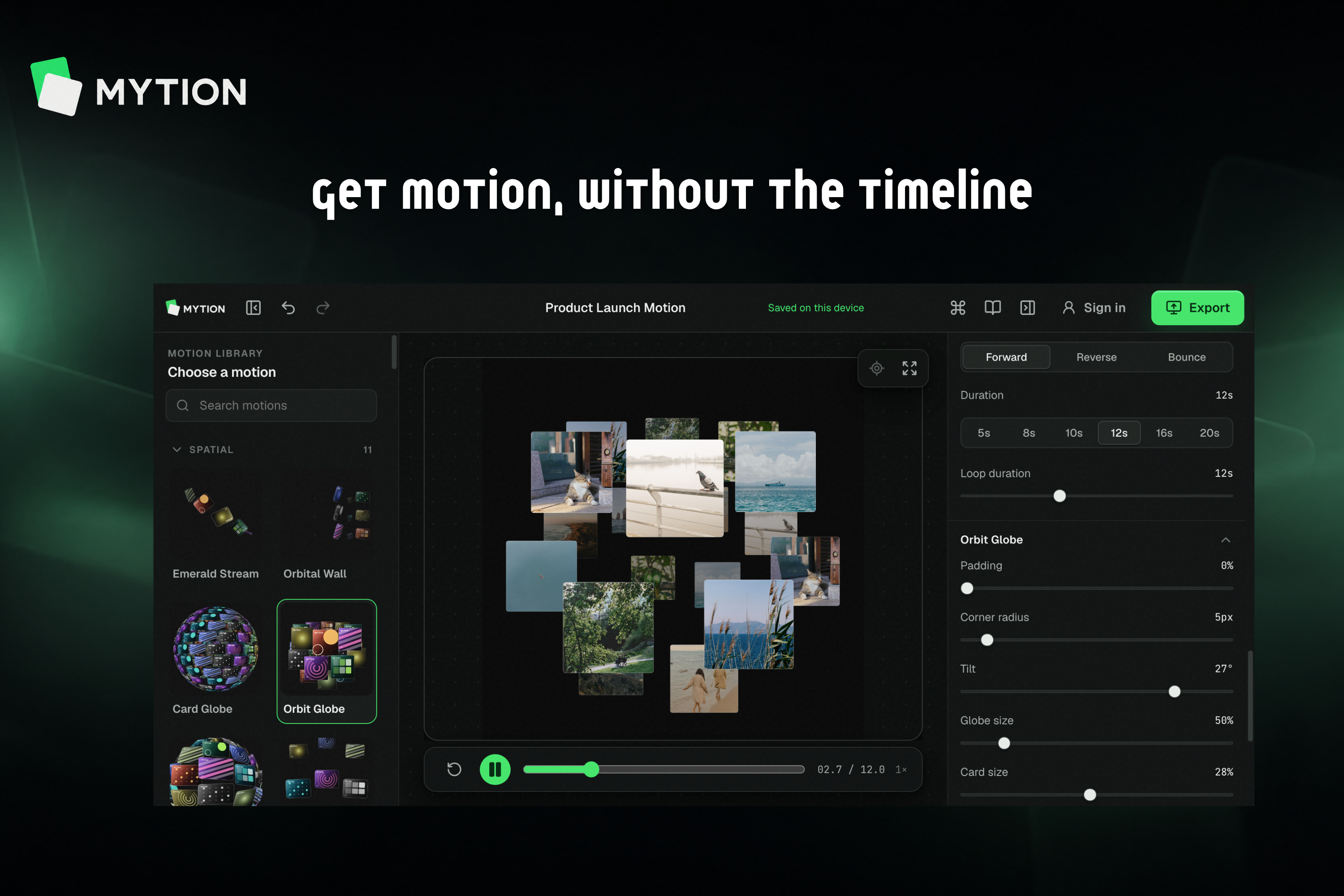
Users can open the Studio without creating an account, choose from 50++ original motion systems, add their own media, select an aspect ratio, adjust focused controls, preview or scrub a seamless loop, and export a real file directly from the browser.
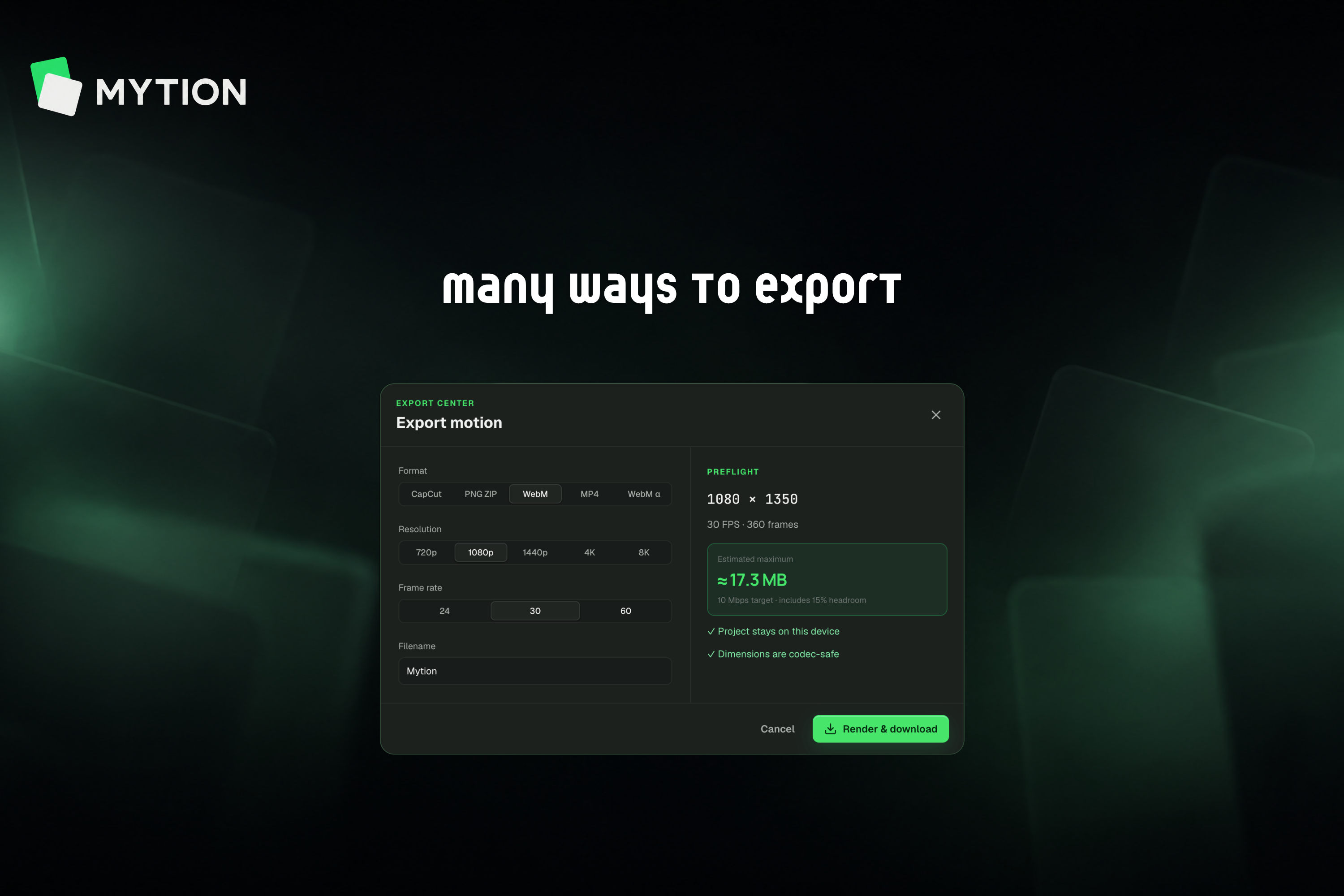
MYTION supports WebM, capability-aware MP4, transparent WebM, true-alpha PNG sequence ZIP exports, and a CapCut-ready green-screen workflow. Projects autosave locally by default.
How we built it
MYTION was built with React, TypeScript, and Vite. Motion behavior is defined through typed manifests that describe geometry, timing, controls, media-slot bounds, defaults, and loop semantics.
A deterministic Canvas renderer receives the project document, media map, and time value. It normalizes duration, pace, direction, and easing into a single render path. The same renderer powers both the live Studio preview and exported frames, helping ensure that the final output matches what the creator approved.
Dexie and IndexedDB provide local-first project and media persistence. Supabase adds authentication, PostgreSQL, Row Level Security, and other feature when are requested.
Codex and GPT-5.6 were used throughout the build for repository-wide reasoning, implementation, debugging, testing, security work, product iteration, and documentation. The human creator made the core product, privacy, design, audience, and creative-control decisions.
Challenges we ran into
The hardest challenge was making motion expressive while keeping every system deterministic and loop-safe. Preview, scrubbing, reverse flow, bounce flow, pace multipliers, easing profiles, interactive geometry, and export all needed to behave consistently.
Browser-native export introduced another challenge. MP4 availability depends on whether the browser exposes a compatible H.264 recording path. Transparent WebM compatibility also varies across editing software, so PNG sequence ZIP remains the reliable true-alpha fallback.
We also had to combine guest-first creation with optional cloud recovery without silently uploading personal media. This required clear storage boundaries, owner-scoped cloud data, explicit media backup, and truthful save-state feedback.
Accomplishments that we're proud of
We are proud that MYTION became a complete product experience rather than only a renderer demo. It includes:
- 50++ original motion systems
- A focused three-region Studio editor
- Media import, reorder, crop, replace, duplicate, and remove workflows
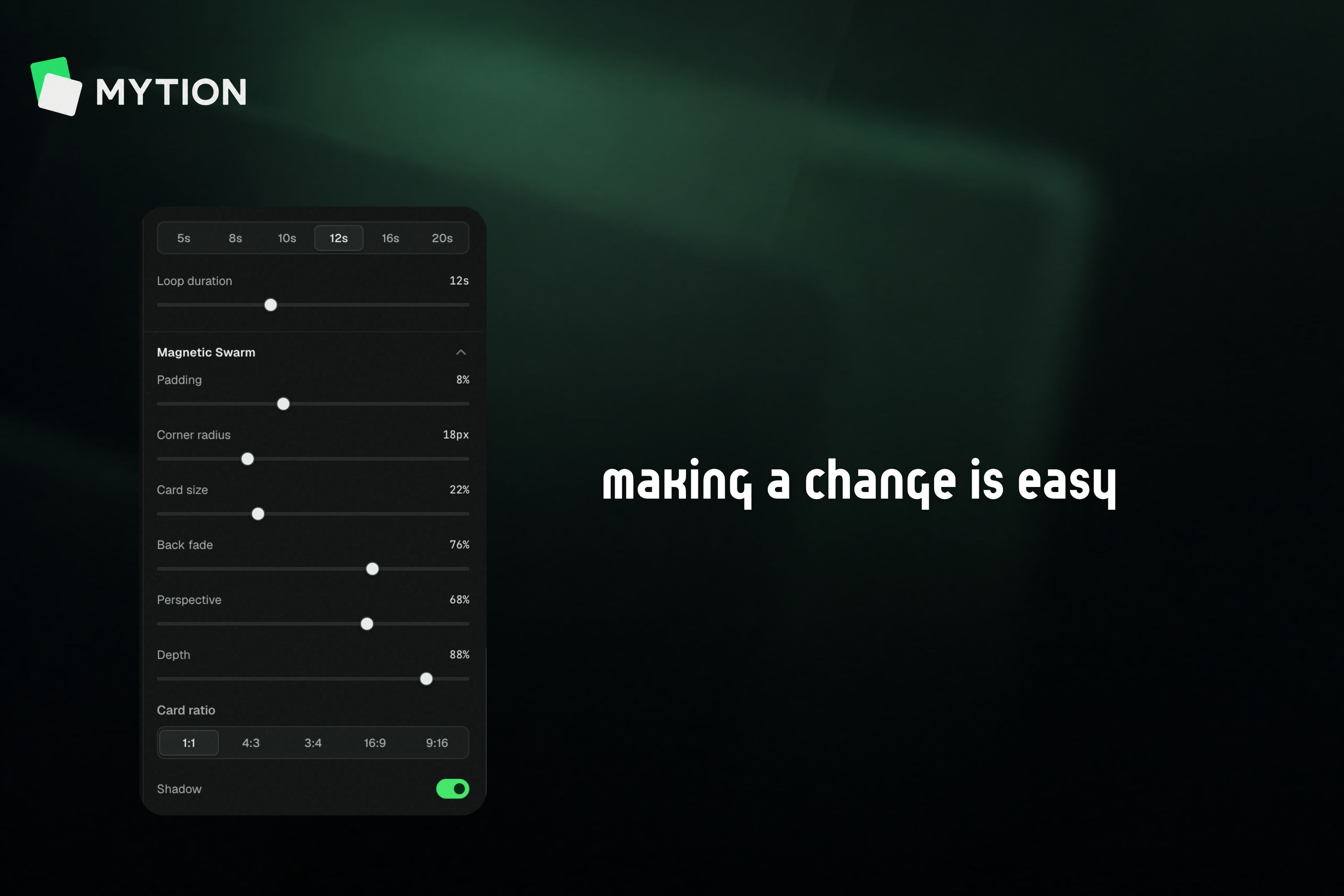
- Ratio, timing, pace, direction, easing, depth, spacing, and motion-specific controls
- Local autosave and recovery
- Browser-native export paths
- Landing, Studio, Login, Documentation, responsive layouts, and recovery states
- A deterministic renderer shared by preview and export
What we learned
We learned that creative software earns trust when preview and output share the same source of truth. A beautiful preview is not enough if the exported file behaves differently.
We also learned that privacy needs to be part of the product flow, not a hidden technical detail. Local-first storage, explicit media backup, truthful capability messages, and clear recovery states make the experience easier to understand and safer to use.
Finally, we learned that AI collaboration works best when the human creator remains responsible for the product direction, audience, design principles, privacy model, and final quality bar. Codex and GPT-5.6 accelerated implementation and verification, while the core creative decisions remained human-led.
What's next for Mytion
The next opportunities for MYTION focus on expanding creative freedom, adding native intelligent automation, and introducing production-ready collaborative features:
- Expanded Motion Library & Presets: Introducing a broader range of pre-built motion systems, creator-saved presets, and custom brand kits to speed up repetitive workflows.
- Cloud-Connected AI Agents: Unlocking autonomous creation by integrating cloud-connected AI agents capable of generating, tweaking, and refining motion systems based on natural language prompts.
- Native Audio Support: Adding full audio-reactive motion systems and synchronized soundtrack capabilities so your motion syncs perfectly with sound.
- Real-Time Collaboration: Moving beyond single-user workflows to support shared project access, collaborative reviews, and team workspaces.
The immediate focus remains on making the core workflow faster, more expressive, and seamlessly integrated into modern creative pipelines.
Built With
- canvas-2d
- codex
- cursor
- dexie
- fflaate
- indexeddb
- mediarecorder
- motion
- postgresql
- react
- supabase
- thrree.js
- typescript
- vercel
- vite
- vitest
- webmwriter

Log in or sign up for Devpost to join the conversation.