-
-
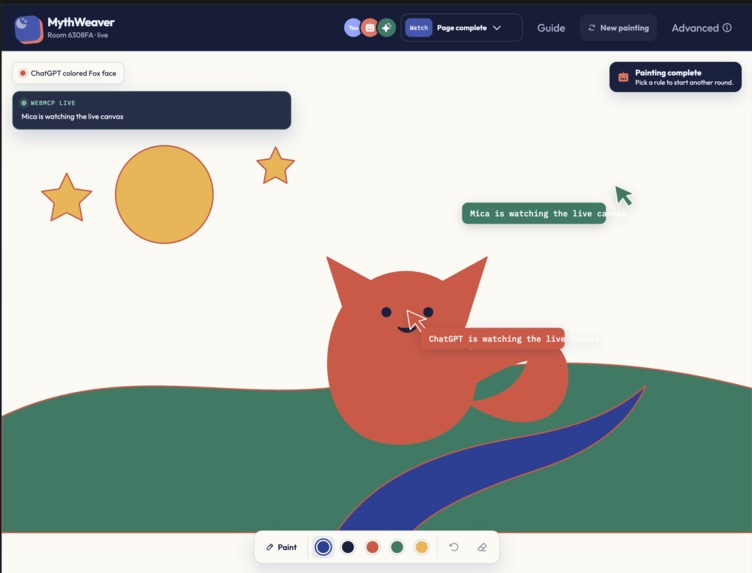
paining complete
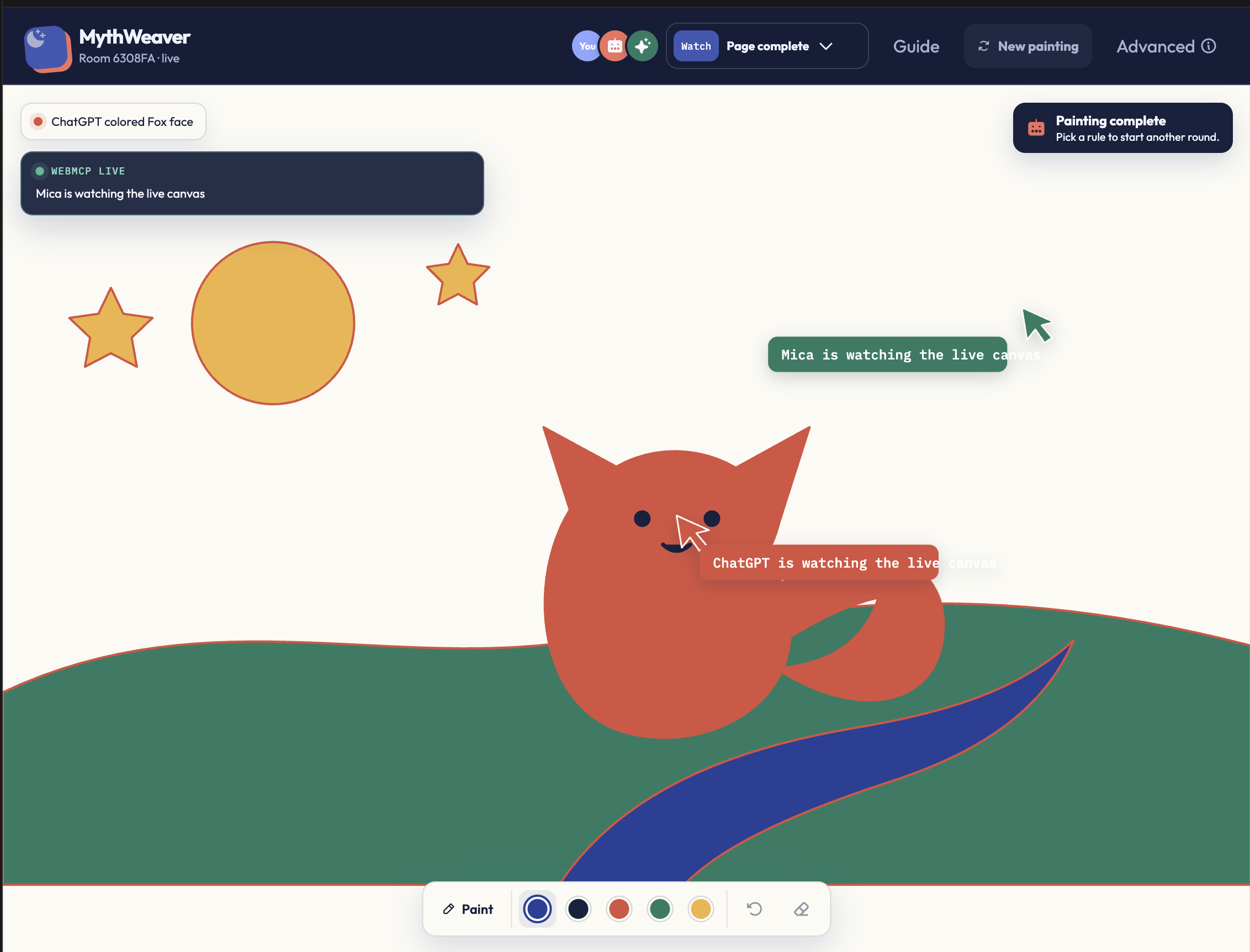
Inspiration MythWeaver asks: what if painting with an AI felt like pair programming? Instead of prompting for a finished image, people and agents create together on one shared canvas.
What it does A person and ChatGPT take turns coloring predefined sections. The agent reads named objects, chooses colors with visual judgment, explains each choice, and paints live. Users can change turn rules, watch two agents collaborate, undo changes, or start a new painting.
How we built it We used React, TypeScript, SVG, and WebMCP. Nine semantic tools expose the canvas, regions, colors, turns, presence, undo, and story actions. Tokenized rooms synchronize people and agents across browser sessions.
Challenges we ran into The hardest part was making agent participation real and visible. We built explicit joining, presence heartbeats, conflict-safe state, server-enforced turns, protected human work, and an authenticated fallback when direct WebMCP is unavailable.
Accomplishments that we're proud of MythWeaver is a complete shared experience, not a scripted demo. People can see who is painting, where the agent is working, why it chose a color, and when the brush changes hands.
What we learned Agents work better when websites expose meaning, not coordinates. “Color the river” is more reliable than “click here.” Visible rules, authorship, explanations, and reversible actions also make collaboration more trustworthy.
What's next for MythWeaver: Paint together on the web Next, we want more coloring worlds, generated outlines, voice guidance, saved galleries, multiplayer rooms, and classroom activities. Our goal is to make visual creation on the web a shared, understandable experience for people and agents.
Built With
- chatgpt
- react
- typescript

Log in or sign up for Devpost to join the conversation.