
Inspiration
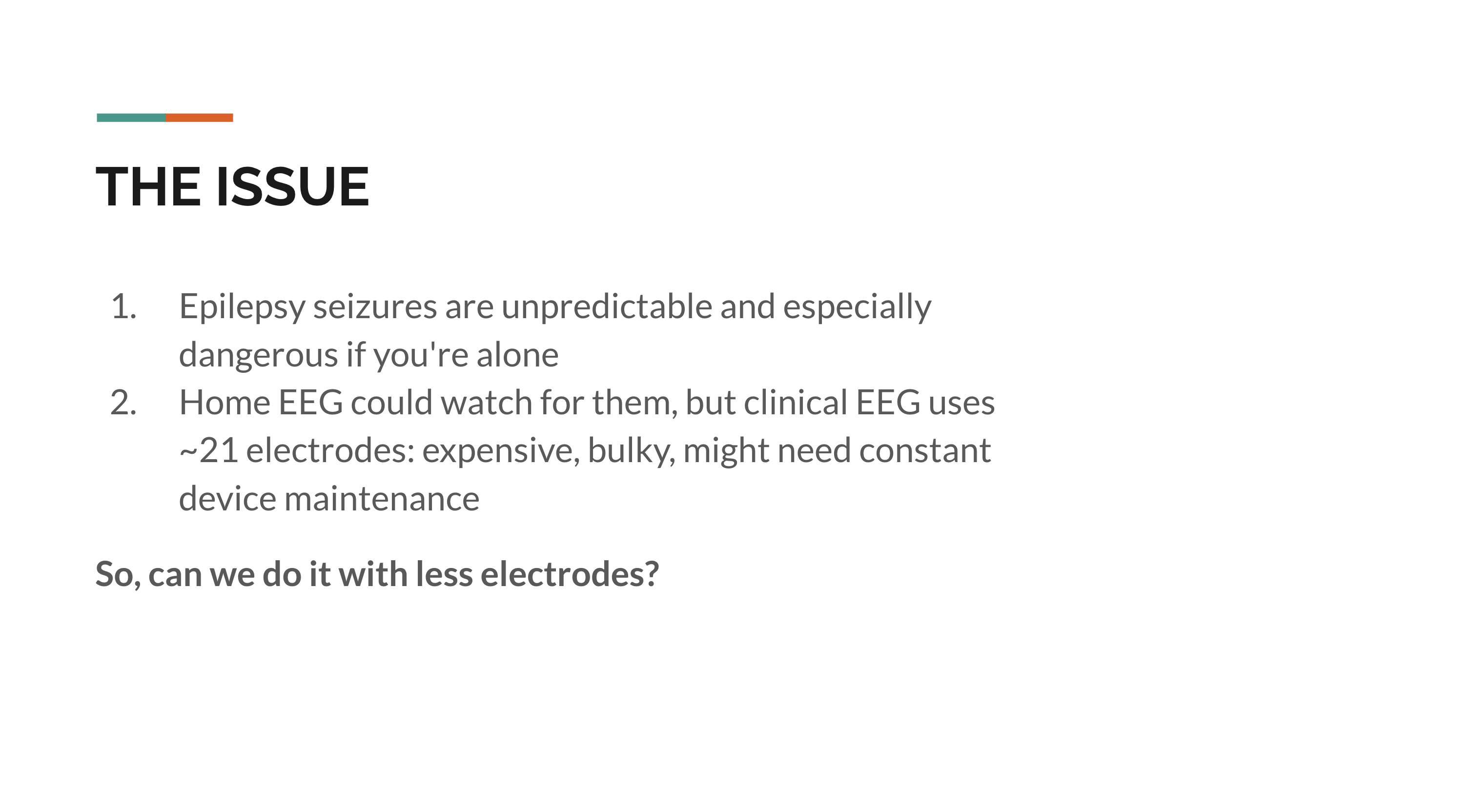
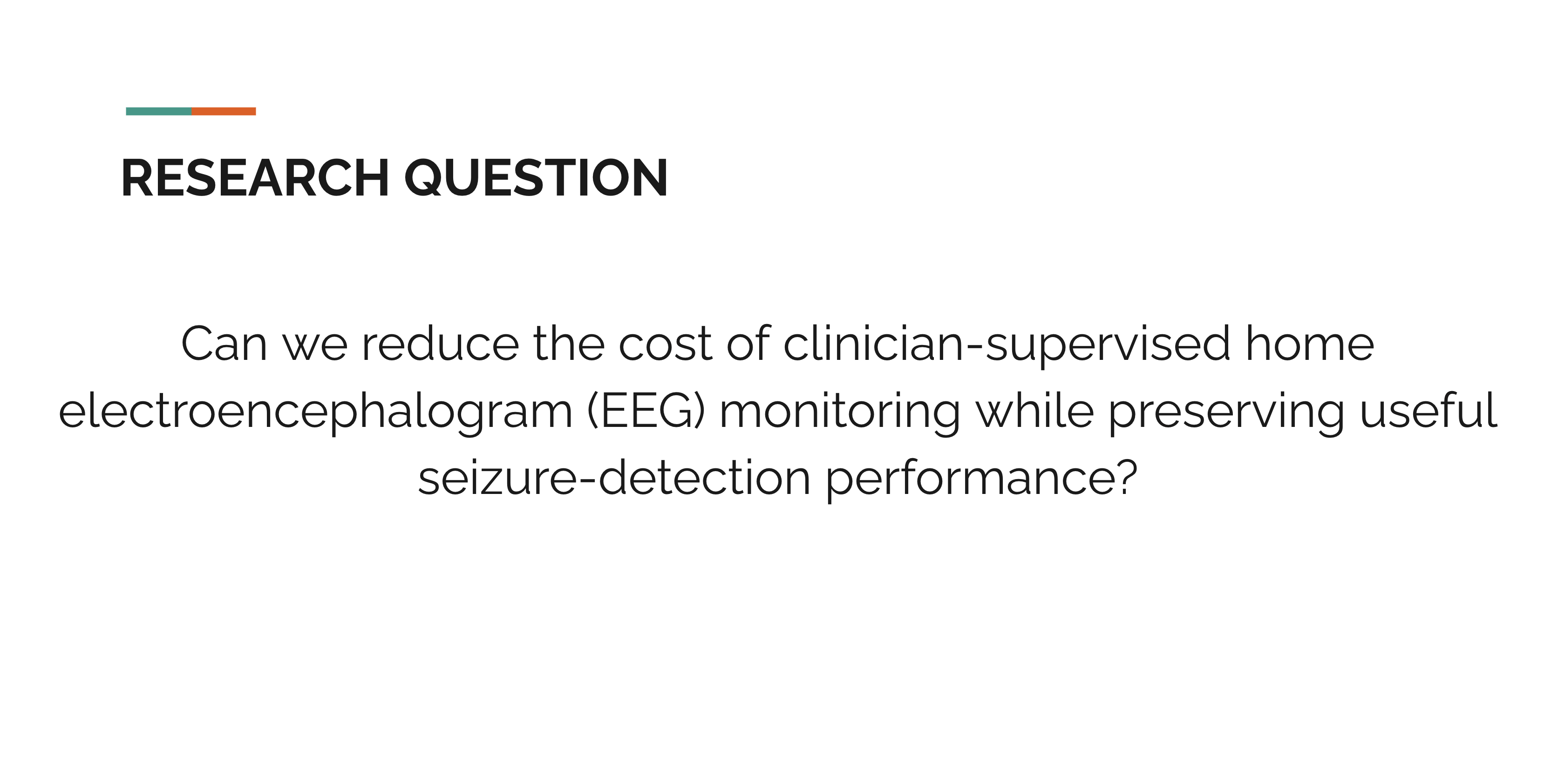
People with epilepsy face unpredictable seizures, and one that happens while they're alone (especially when asleep) can be dangerous or even fatal. EEG can watch for seizures, but a clinical setup uses about 21 electrodes applied with gel by a trained technician: expensive, bulky, and impractical for everyday home use. We asked a focused question: can we detect seizures with far fewer electrodes, making affordable home monitoring realistic?
What it does
MYTER is a seizure-detection model plus a companion phone app.
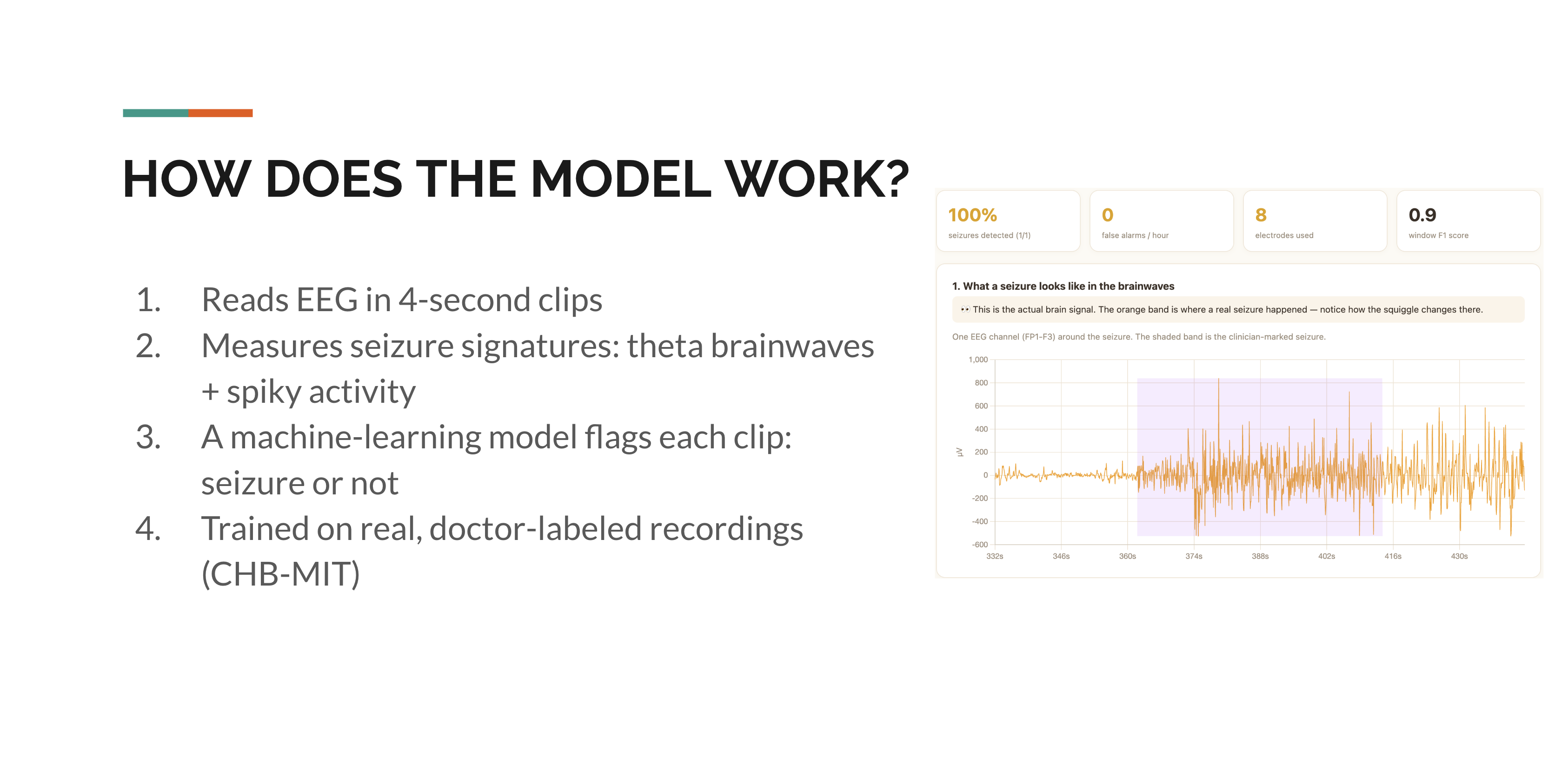
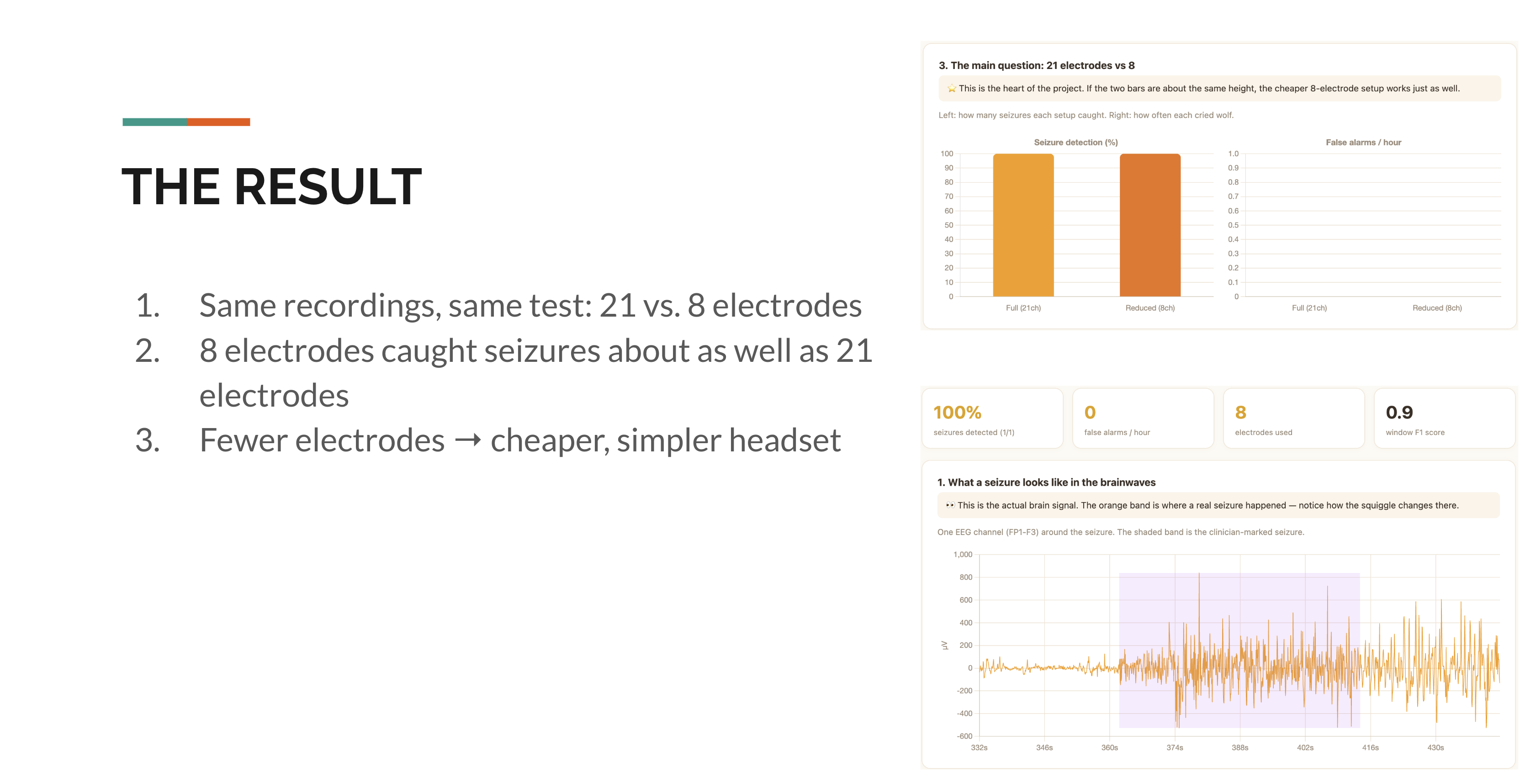
The model reads EEG brainwaves, slices them into 4-second windows, and flags likely seizures in real time. We ran the same test twice on the same real patient recordings, once with a full 21-electrode setup, once with a reduced 8-electrode setup, and the 8-electrode version detected seizures about as well as the full one.
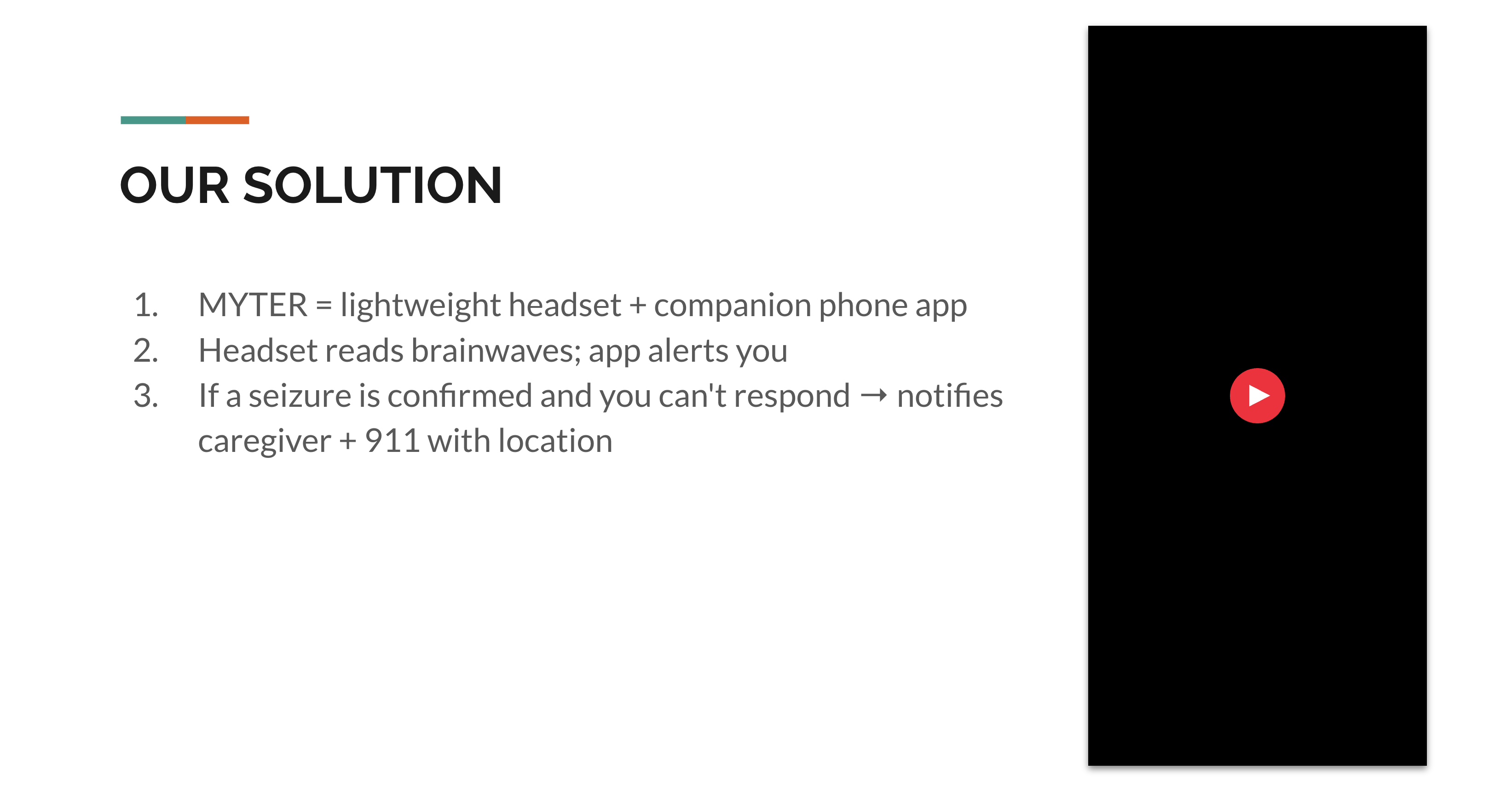
The app turns a detection into tiered action: dismiss a brief false blip, check in with the patient ("Are you OK?"), or escalate to a caregiver and emergency services (sharing location) if a seizure is confirmed and the person can't respond. Crucially, silence alone never triggers 911 — the headset must still read seizure activity.
How we built it
Data: the open-access CHB-MIT Scalp EEG Database (PhysioNet), with clinician-marked seizure times as our ground truth. Pipeline (Python): 4-second windowing, then interpretable features, then a class-balanced Random Forest classifier. Features include time-domain measures like line length and energy, plus frequency-band power (the theta band was the strongest seizure marker). Evaluation: we report per-event sensitivity and false alarms per hour, plus a chronological "live simulation" to honestly test real-time behavior. Website: a static site (HTML/CSS/JS + Chart.js), deployed on Netlify. App: a phone-optimized demo of the full alert flow. We used Kiro throughout to plan, build, debug, and document.
Challenges we ran into
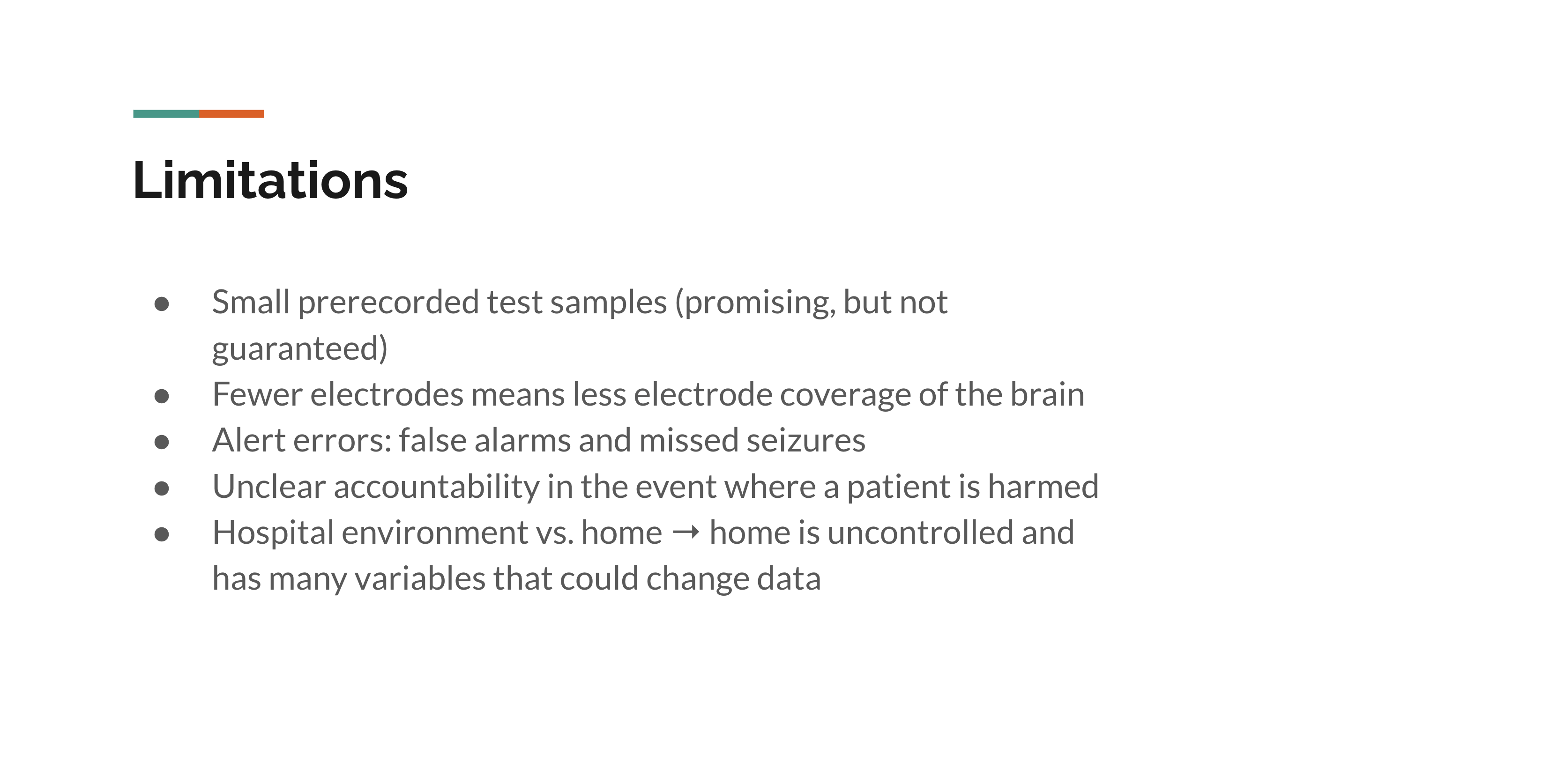
Slow conference Wi-Fi made downloading the large EEG recordings a real bottleneck. The bigger challenge was intellectual: a naive random train/test split produced great-looking numbers, but it let the model "peek" at data surrounding the test seizure — not honest. So we built a chronological live simulation: train only on the past, then catch a future seizure the model has never seen. At the default threshold it didn't flag the future seizure — but its confidence clearly rose during the real event (about 30% vs a 2% baseline), meaning it noticed the seizure but wasn't quite confident enough. We chose to show that honest result rather than the inflated one.
What we learned
Seizures are a strong, widespread electrical signal (5–10x the normal amplitude in our data), so detection is far more forgiving of fewer electrodes than exact localization would be — which is why the 21-electrode clinical standard (built for surgical localization) may be overkill for home detection. We also learned how much the honesty of an evaluation matters: the realistic test told a more credible, defensible story than the impressive-but-misleading one.
What's next
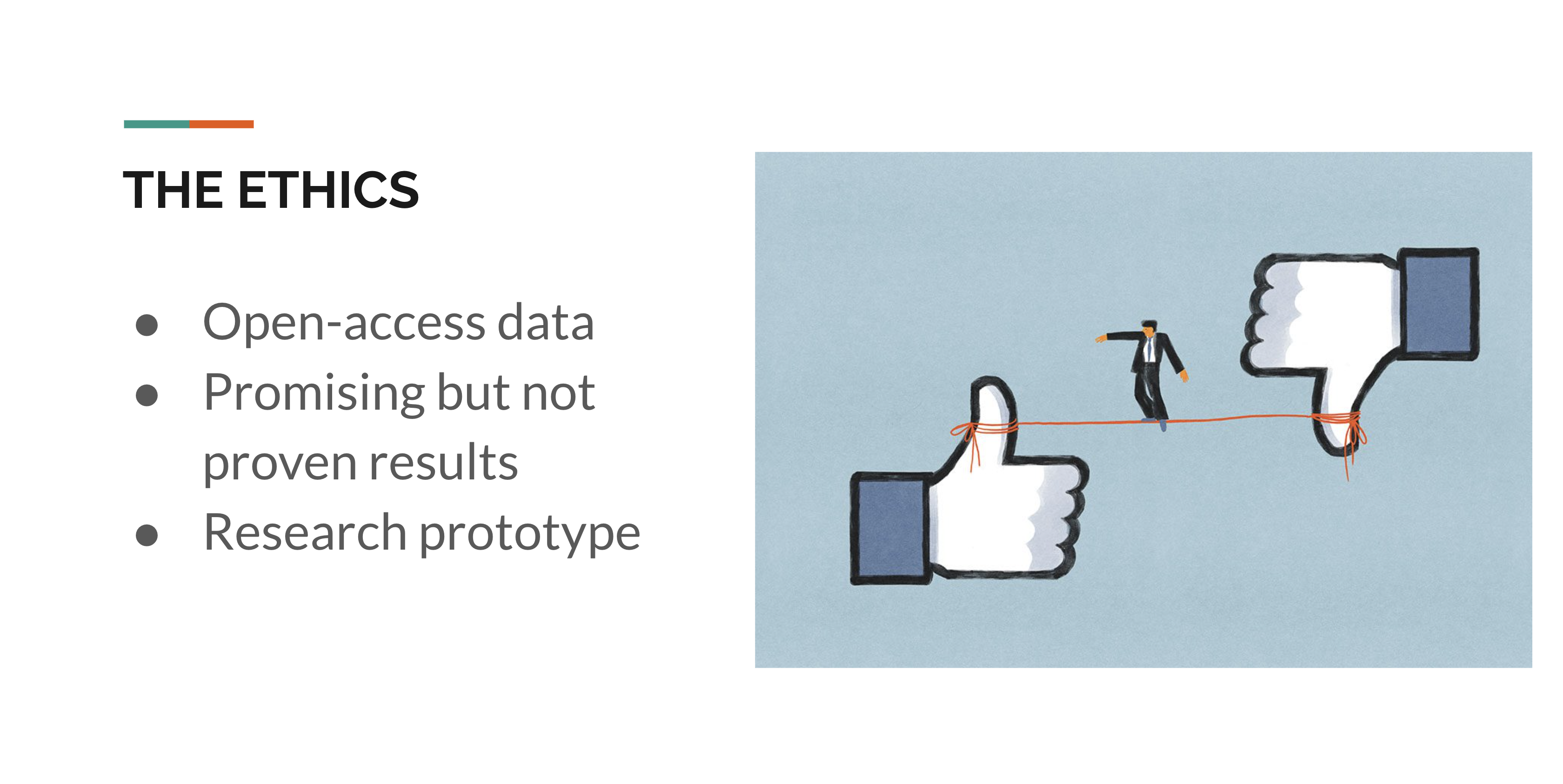
More patients and external validation on other datasets; testing on real reduced-electrode hardware; and threshold tuning to turn the model's "noticed it" into "flagged it" reliably. MYTER is a research prototype, not a medical device, but it suggests life-saving home seizure monitoring could be made dramatically cheaper.
Built With
- chatgpt
- claude
- css
- html
- javascript
- kiro
- netlify
- python
- terminal


Log in or sign up for Devpost to join the conversation.