-
-
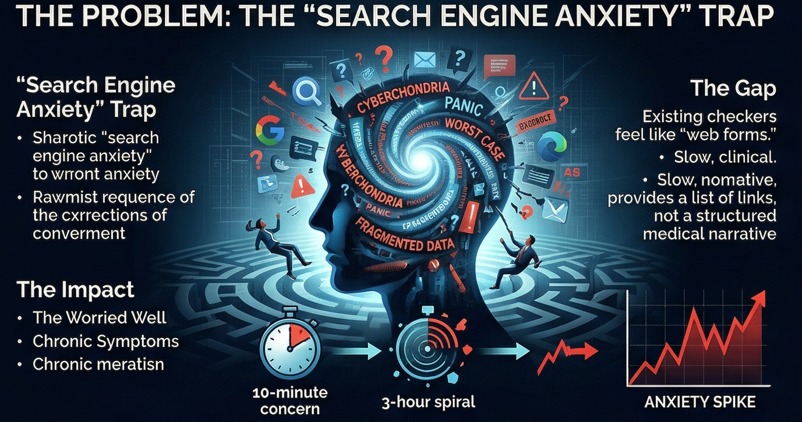
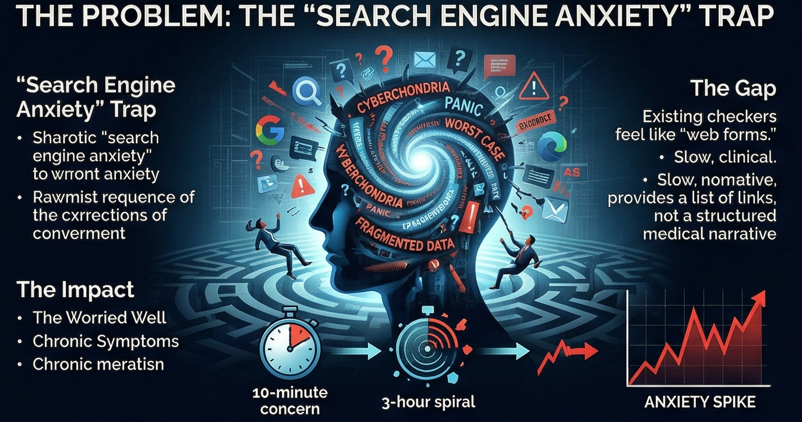
Problem
-
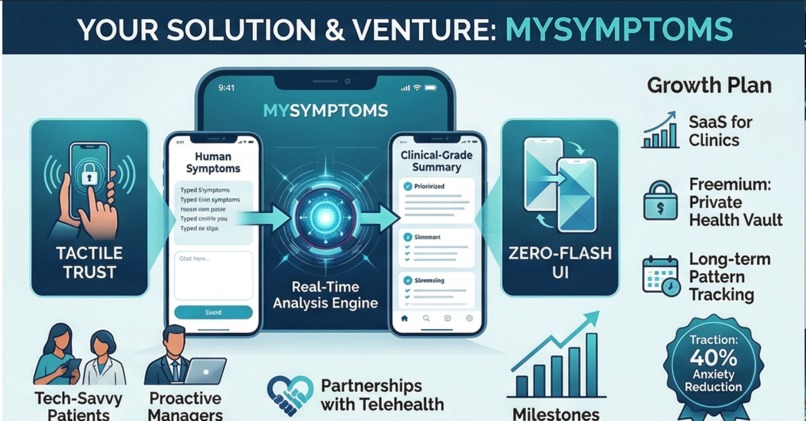
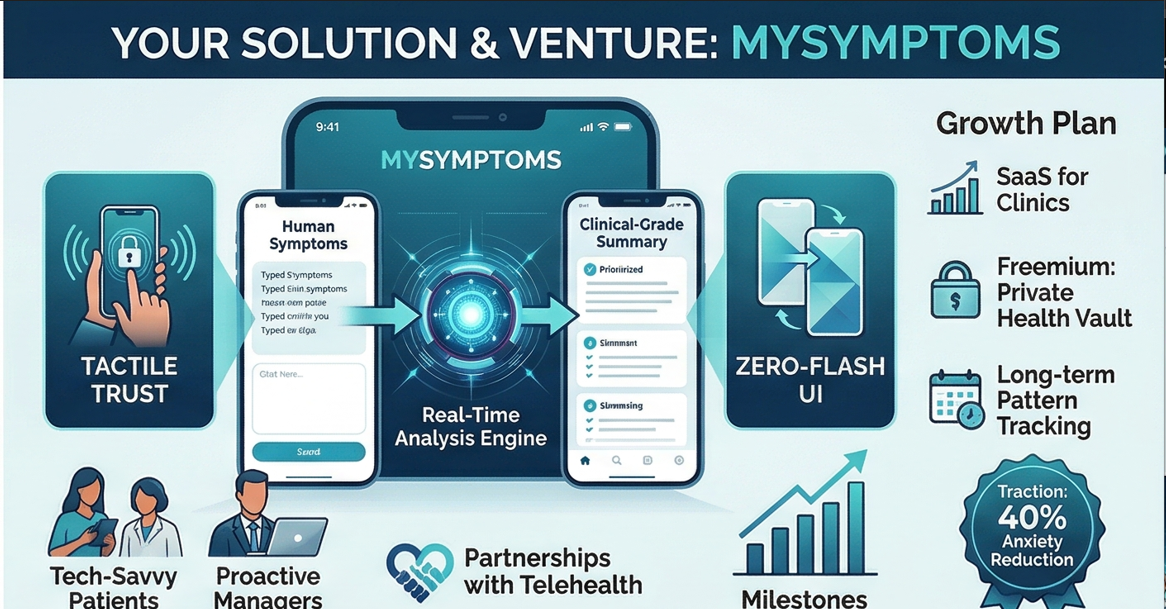
Solution
-
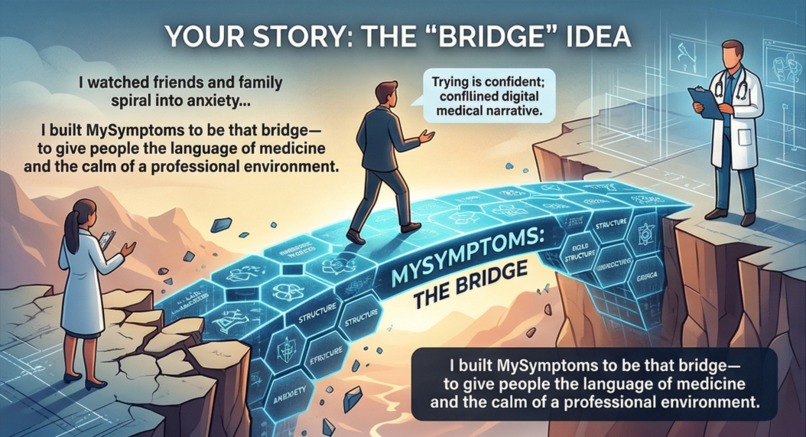
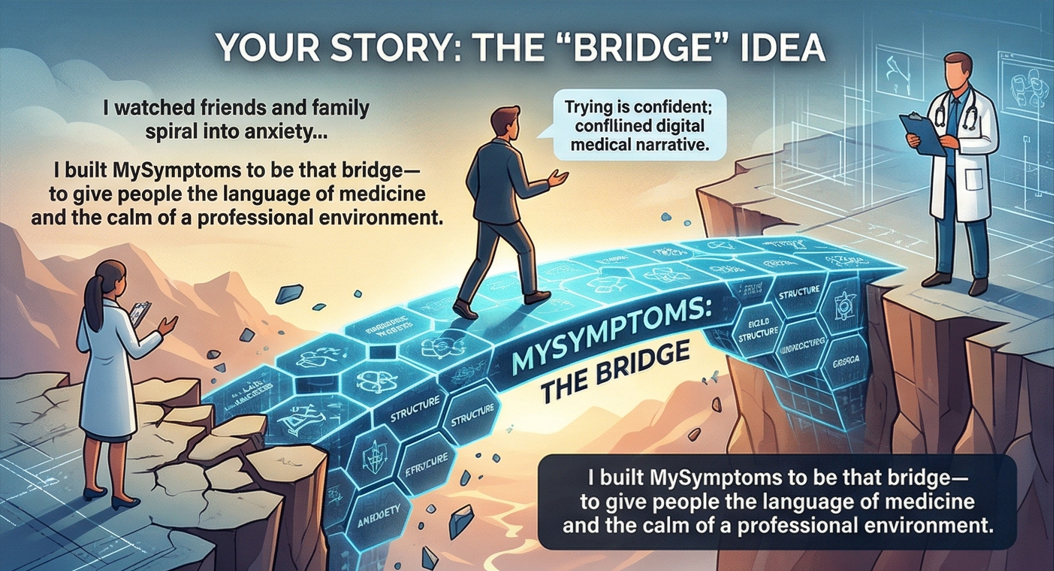
Story
-
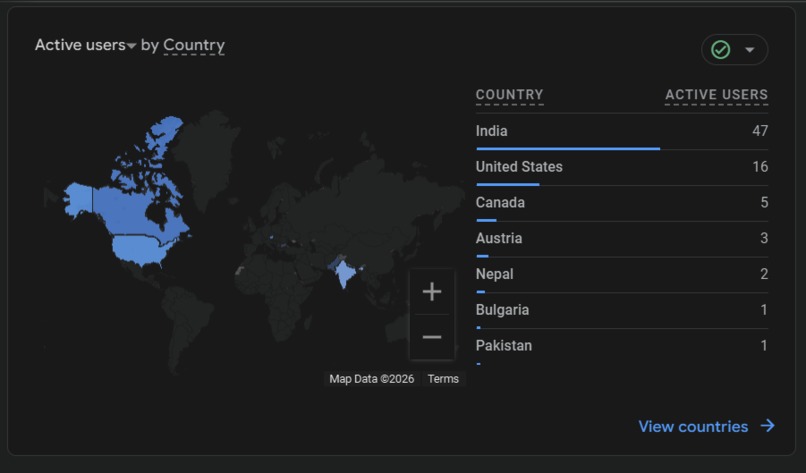
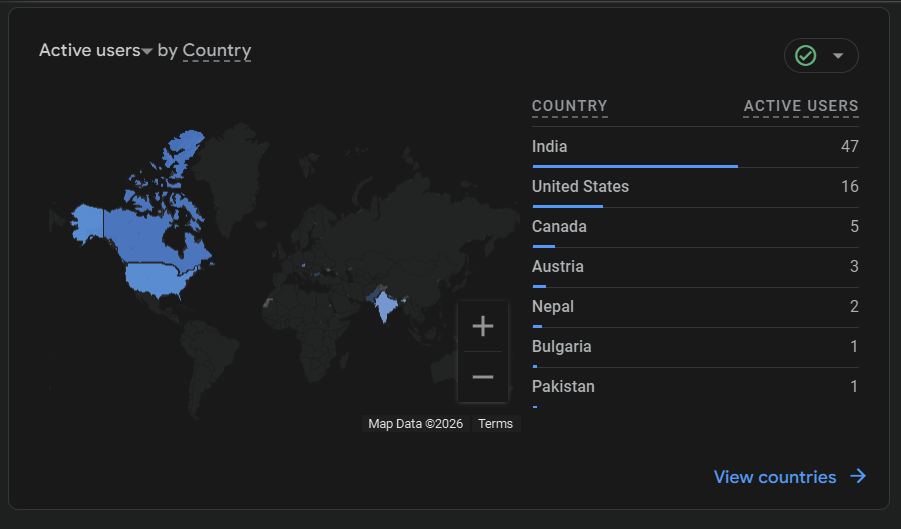
75 real users across 7 countries
-
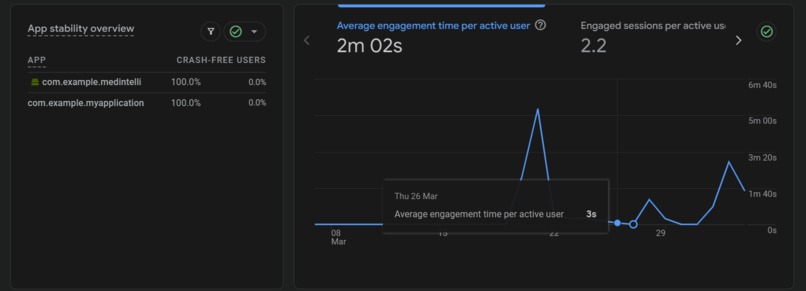
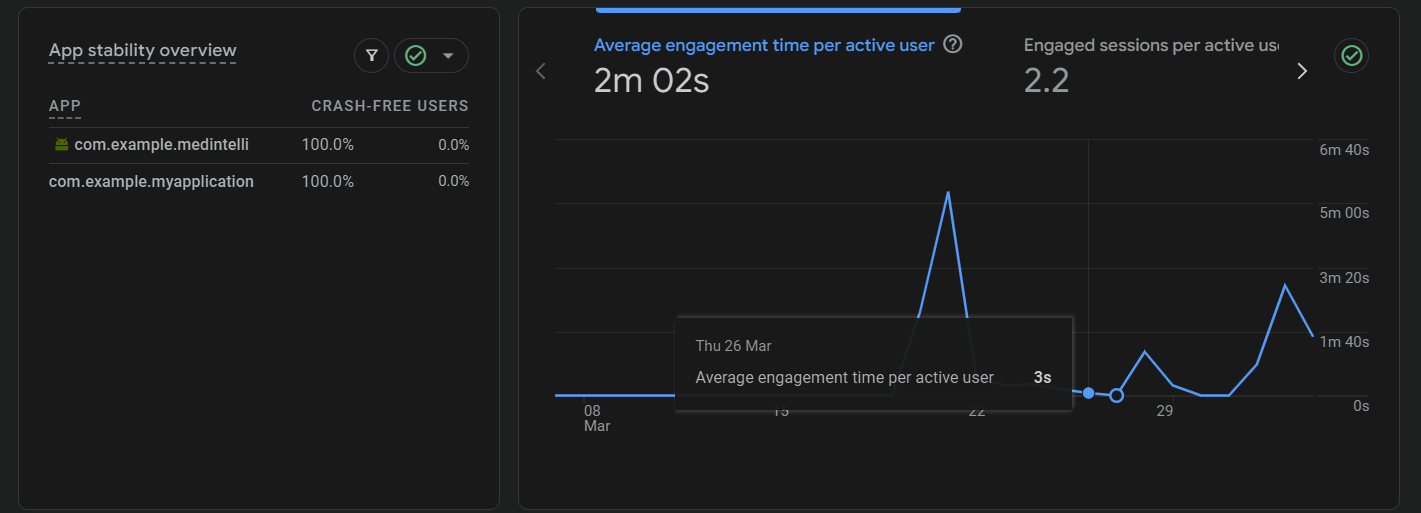
Average engagement time per active user
-
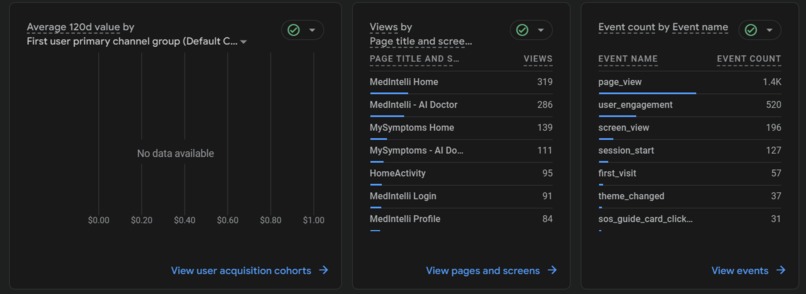
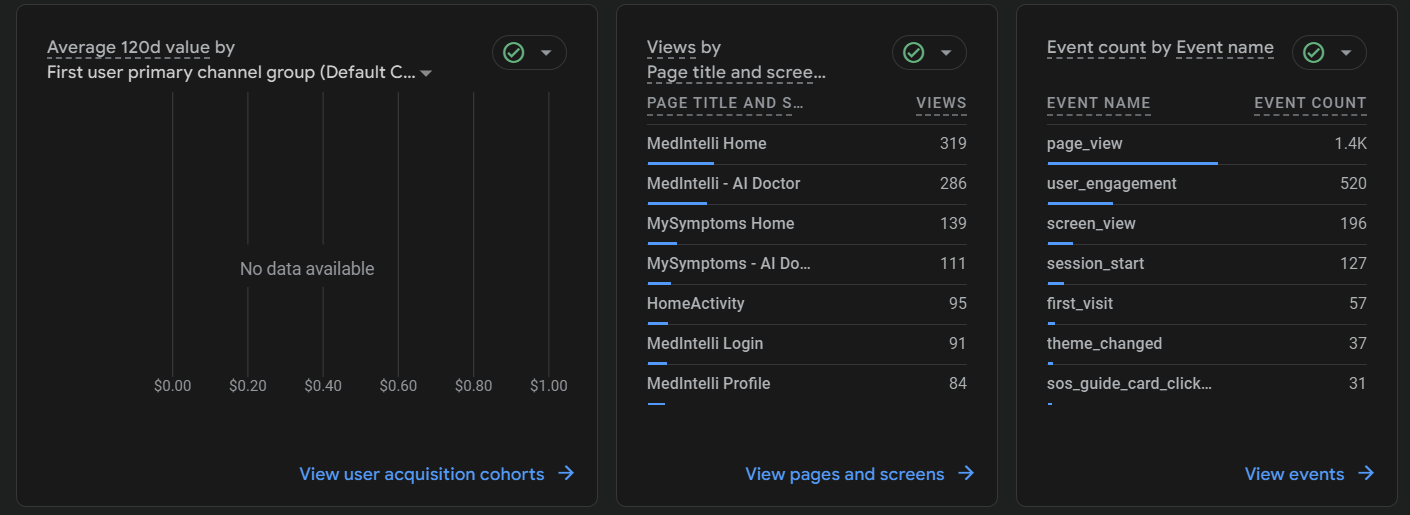
Page Engagement
🏗️ Inspiration
We built an app that bridges the gap between feeling a symptom and finding a solution. 🔍 We were inspired by the universal frustration of "Cyberchondria"—the intense anxiety caused by unverified, terrifying search results. We realized that people don't just need more information; they need a calm, structured, and intelligent "Digital Front Door" to healthcare. Our goal was to replace the chaos of a search engine with the precision of a clinical assistant. 🩺✨
📱 What it does
MySymptoms provides a professional-grade environment for symptom analysis and health pattern tracking.
- AI-Driven Clinical Triage: At its core, the app utilizes a high-performance Medical AI API to process human symptoms in real-time, translating vague physical concerns into a structured clinical narrative. 🧠🤖
- Tactile Reliability: It uses a custom-engineered Haptic Feedback Layer that gives the user a physical "kick" (vibration) for every critical action, making the digital experience feel as solid as medical hardware. 📳
- Fluid Experience: It features a proprietary "Zero-Flash" transition system, ensuring the user moves from the launch screen to their health dashboard with total visual continuity and zero lag. 🌊
🛠️ How we built it
We engineered MySymptoms using a high-performance Android architecture designed for stability and speed. ⚙️
- Clinical AI Integration: We integrated an advanced Generative AI API to handle the heavy lifting of symptom analysis, ensuring users receive intelligent, context-aware guidance. 📡🌐
- Java-Native Core: The foundation is built on a robust Java framework to handle secure authentication and hardware interaction. ☕
- Haptic Injection: We developed a unique bridge that allows the app to "inject" physical feedback into digital touchpoints, creating a tactile user interface. ⚡
- Secure Auth: We integrated a native Google Sign-In ecosystem to ensure every user’s health data is stored in a secure, private vault. 🔐
🚧 Challenges we ran into
One of our biggest hurdles was the "Data Synchronization Gap"—ensuring the high-speed AI API responses were rendered instantly without the "loading stutters" common in data-heavy apps. 🛑 We had to build a custom asynchronous loading layer that perfectly synchronizes the AI's processing state with the visual UI. Additionally, fine-tuning the haptic frequencies to feel "clinical" rather than "annoying" required dozens of hardware iterations. 🎯
🏆 Accomplishments that we're proud of
We are incredibly proud of the Tactile Trust we’ve built. By combining Advanced AI intelligence with subtle physical feedback, we’ve made a digital tool feel like a reliable physical device. 🤝 We’re also proud of our "Zero-Flash" architecture; the app feels incredibly "snappy" and premium, which is vital for keeping users calm when they are worried about their health. 💎
📚 What we learned
This project taught us that the smallest details build the most trust. 💡 We learned how to properly handle AI API latency to keep the user experience smooth. We also discovered that a 40ms vibration or a 500ms fade-in can be the difference between an app that feels like a toy and one that feels like a professional clinical tool. 🛠️
⏩ What's next for MySymptoms
The future of MySymptoms involves Biometric Security, allowing users to lock their health summaries behind Fingerprint or FaceID. 🛡️ We are also working on Native Clinical Reporting, a feature that will allow users to generate a professional, structured summary of their symptoms to show their doctor, turning their phone into a bridge to better care. 🏥📈
🧪 Installation Guide
1. Download: Open the [Google Drive Link] and tap Download. 2. Allow: If prompted, go to Settings and toggle "Allow from this source". 3. Install: Tap Install, then Open. 4. Play Protect: If a warning appears, tap "Install anyway" (this is normal for new development apps).
💡 Note: Ensure your phone's Vibration/Haptics are turned ON in system settings to experience the tactile medical feedback!
Built With
- api
- firebase
- firestore
- glide
- google-cloud
- gradle
- groovy-environment-manager
- groq
- java
- xml


Log in or sign up for Devpost to join the conversation.