-
-
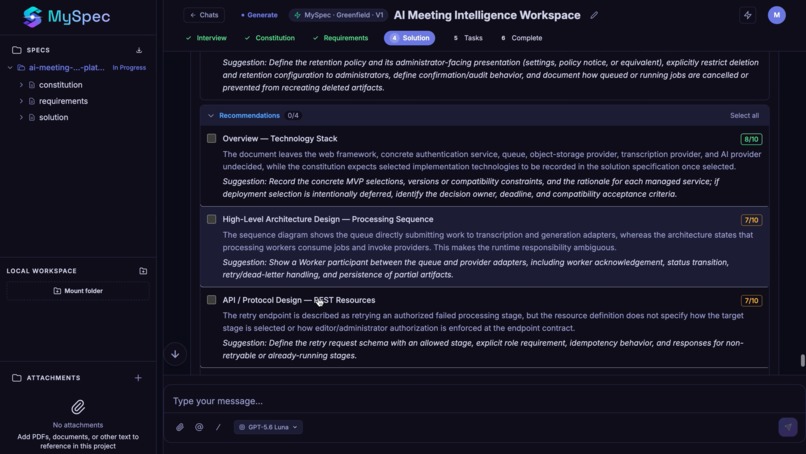
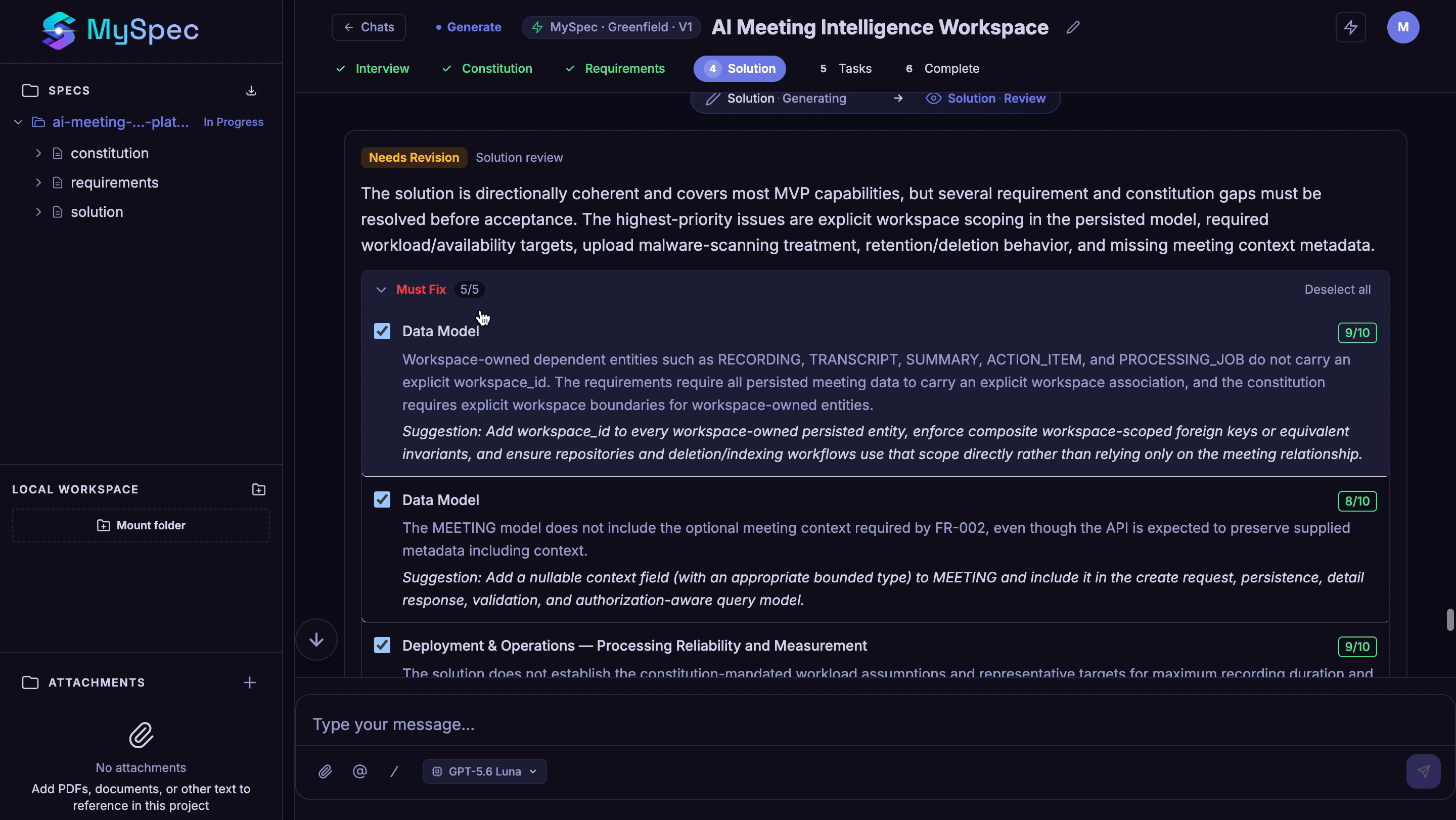
AI Review Recommendations
-
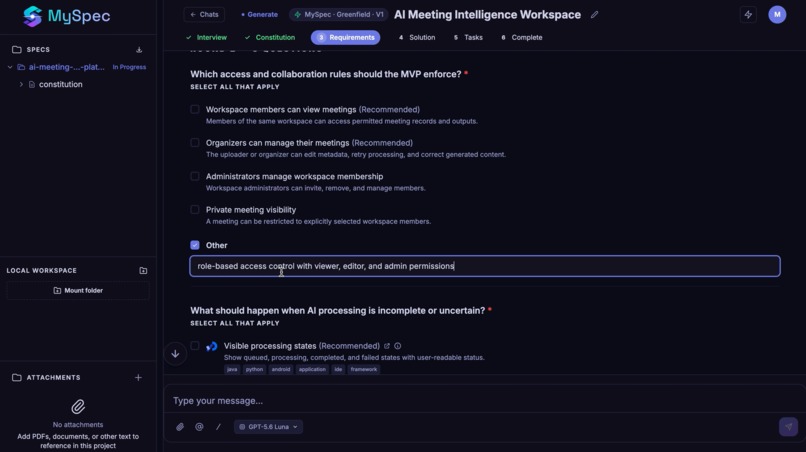
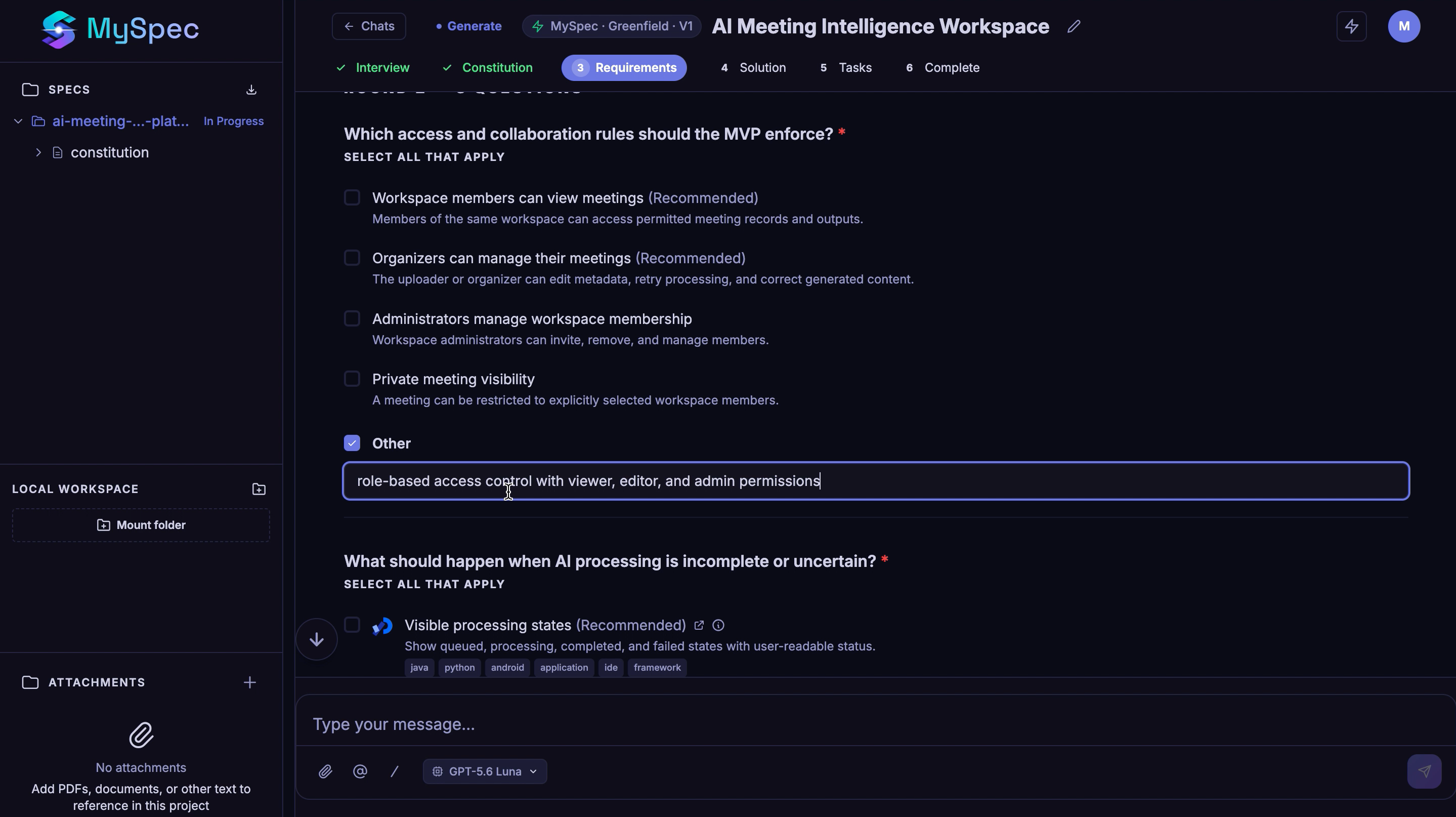
Interview Flow
-
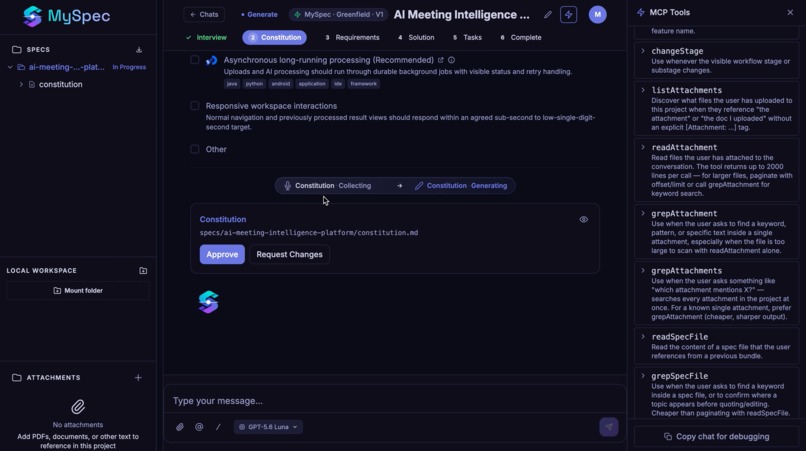
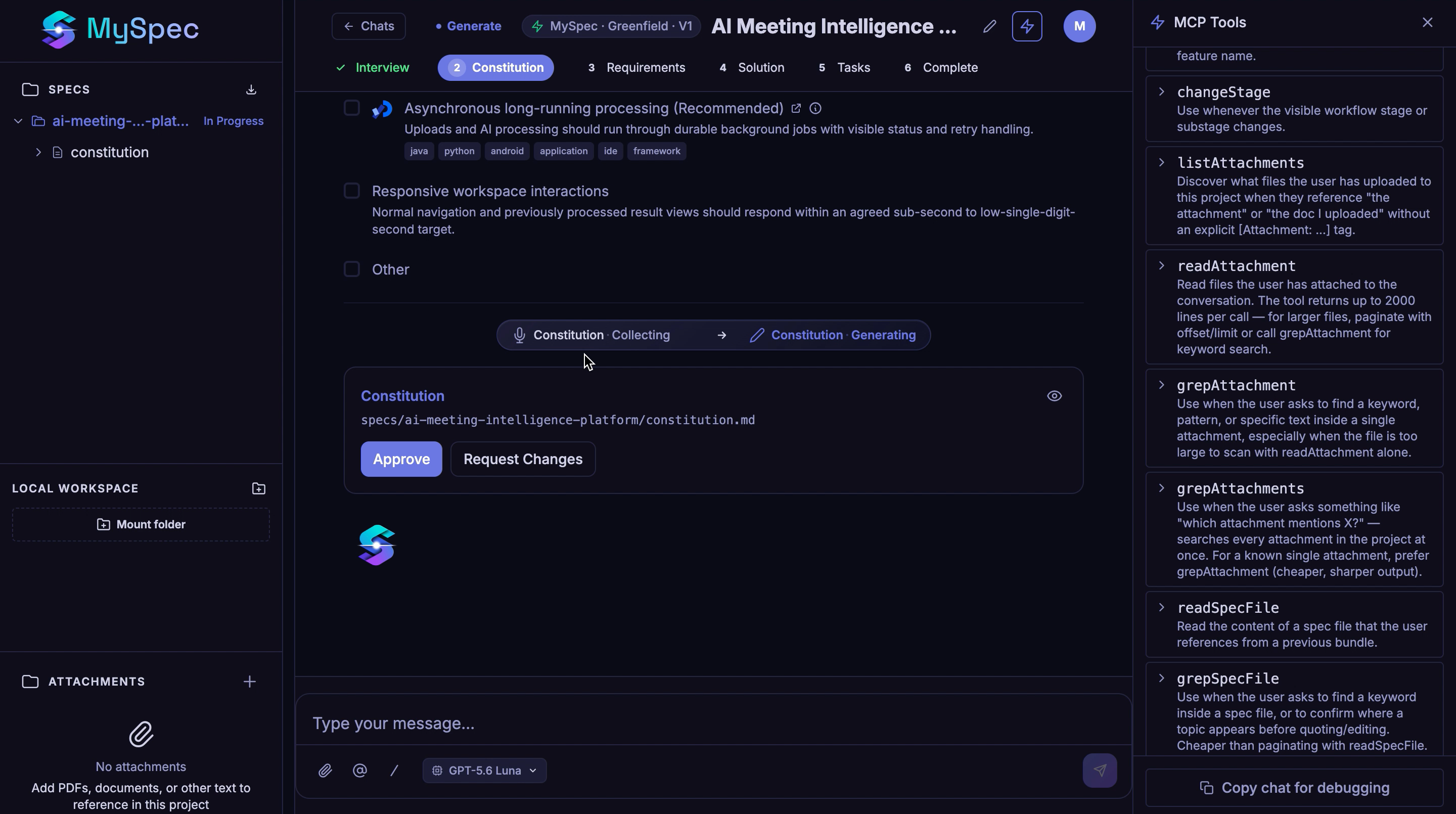
MCP Tool Integration
-
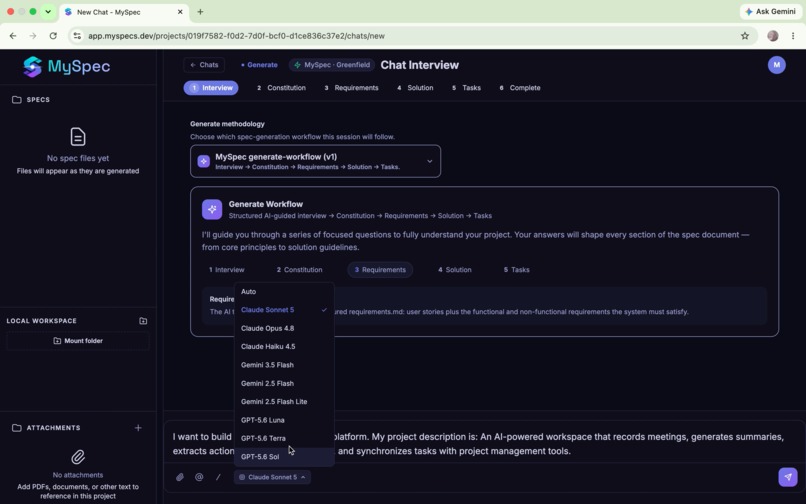
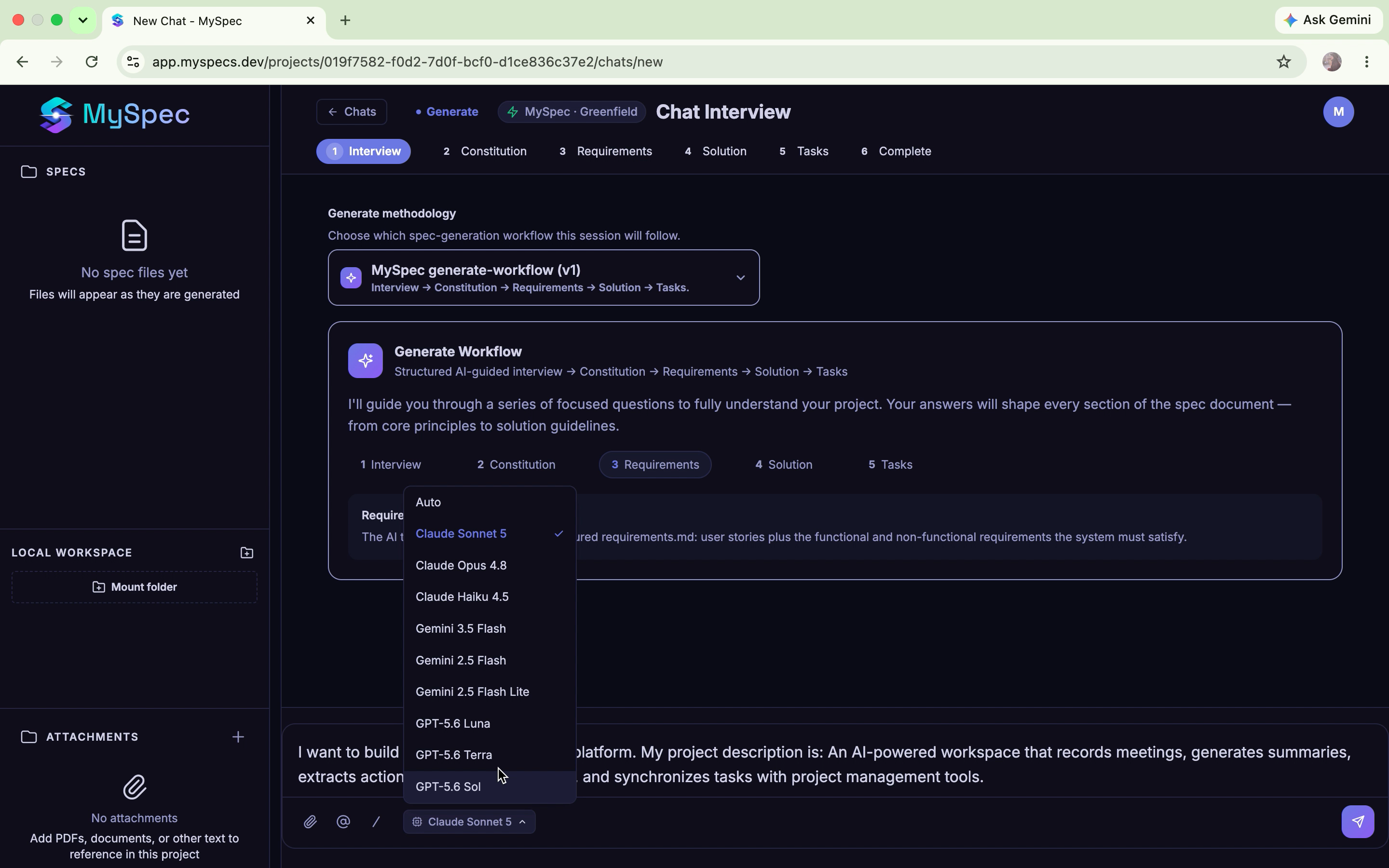
Model Selection
-
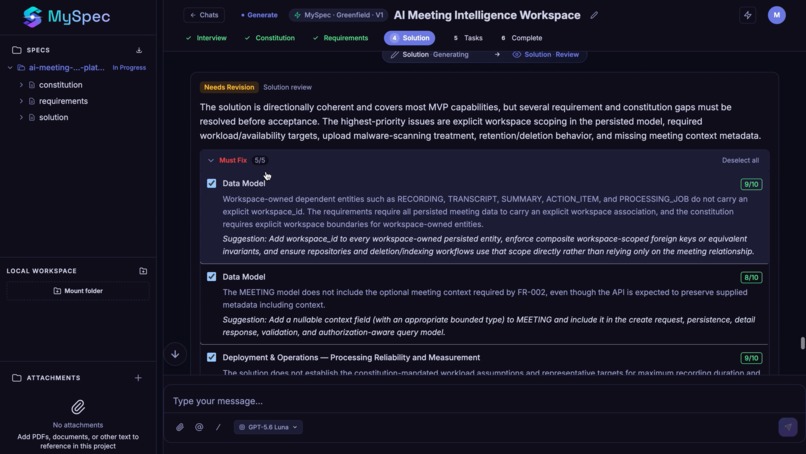
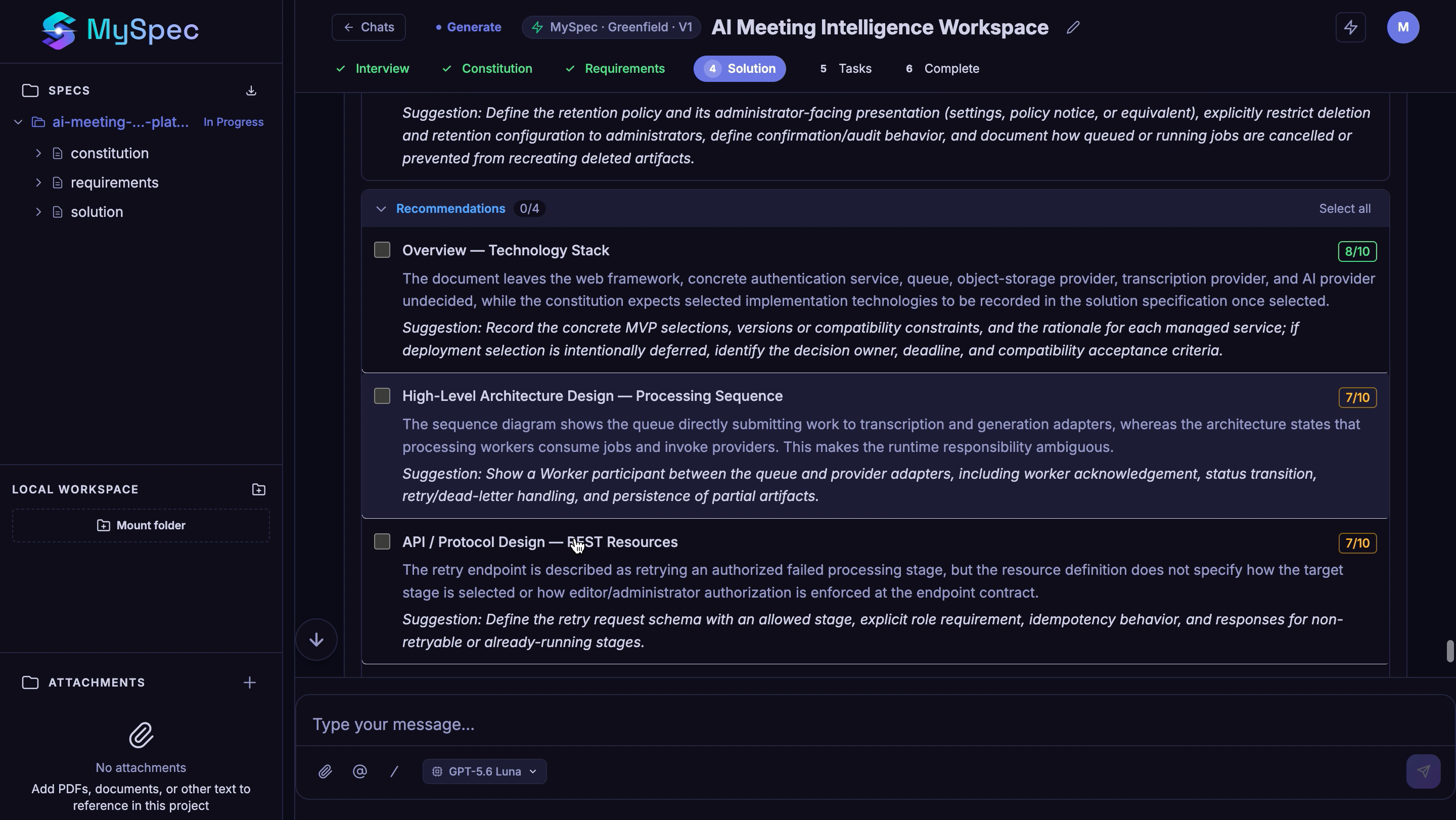
Prioritized Review Findings
-
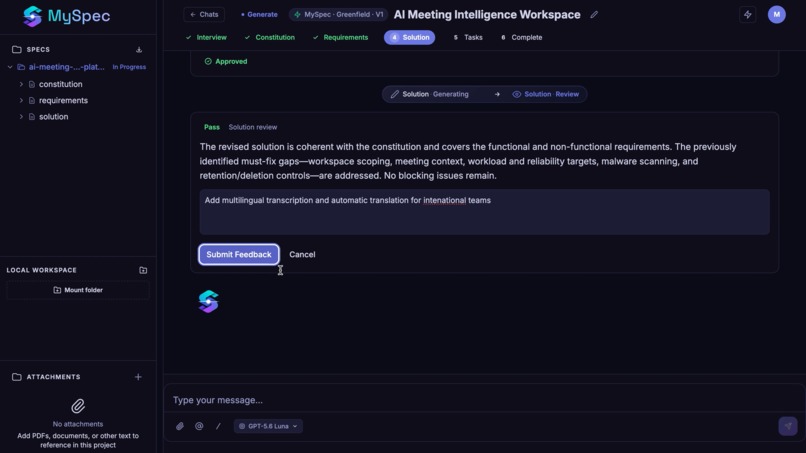
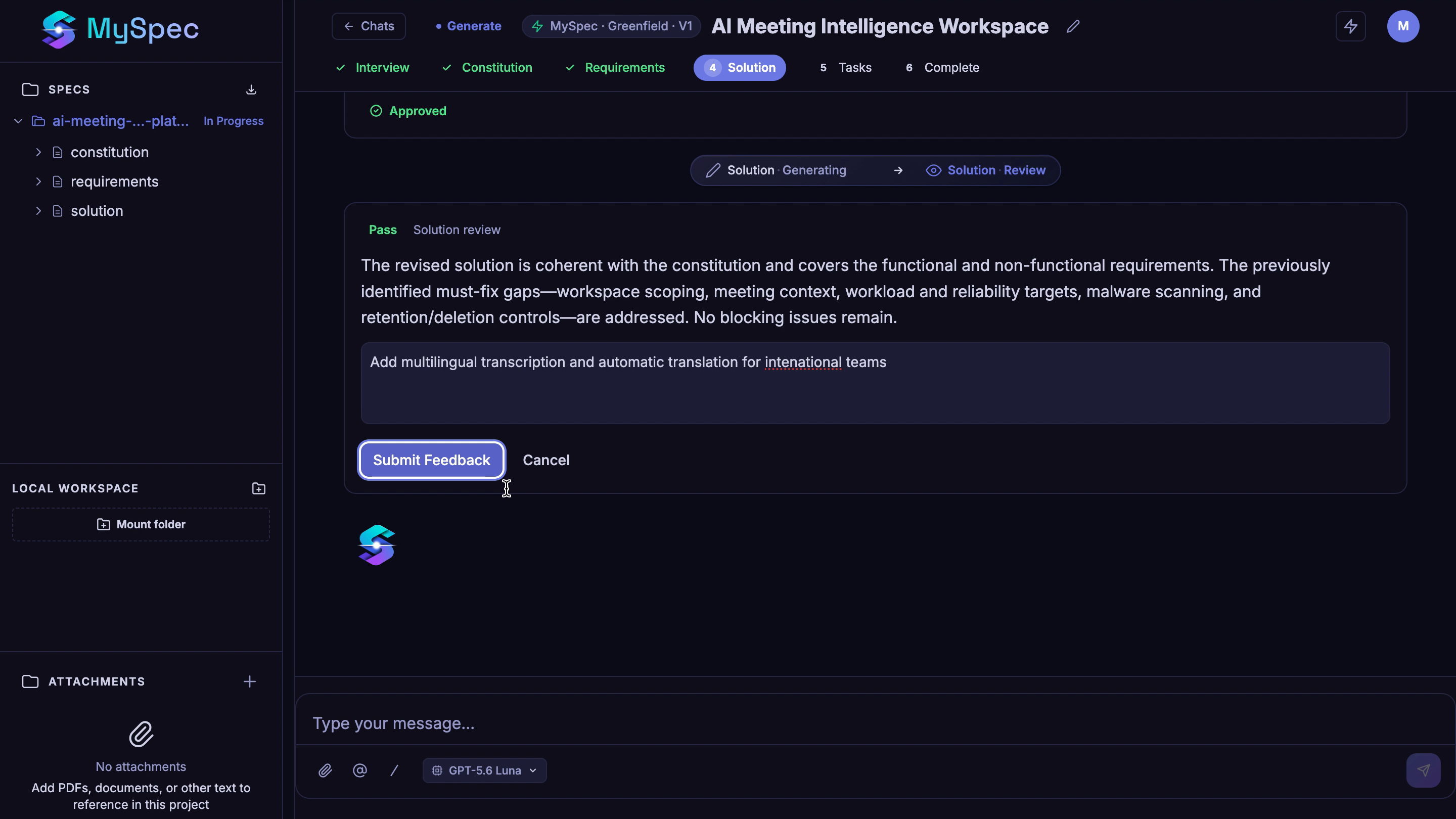
Review & Regenerate
-
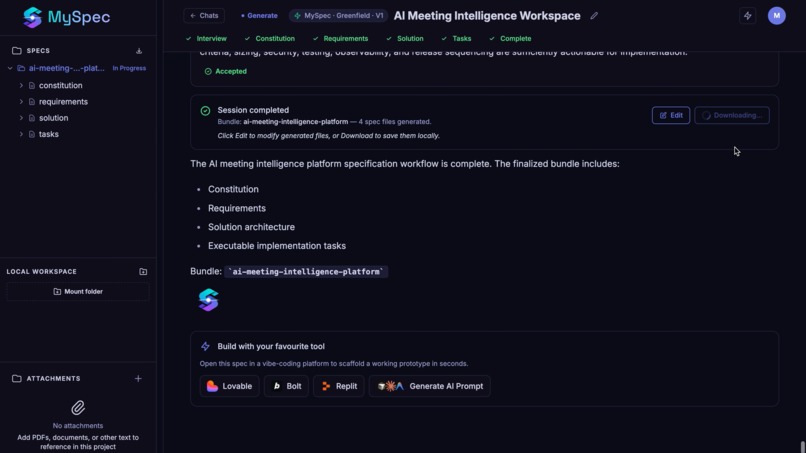
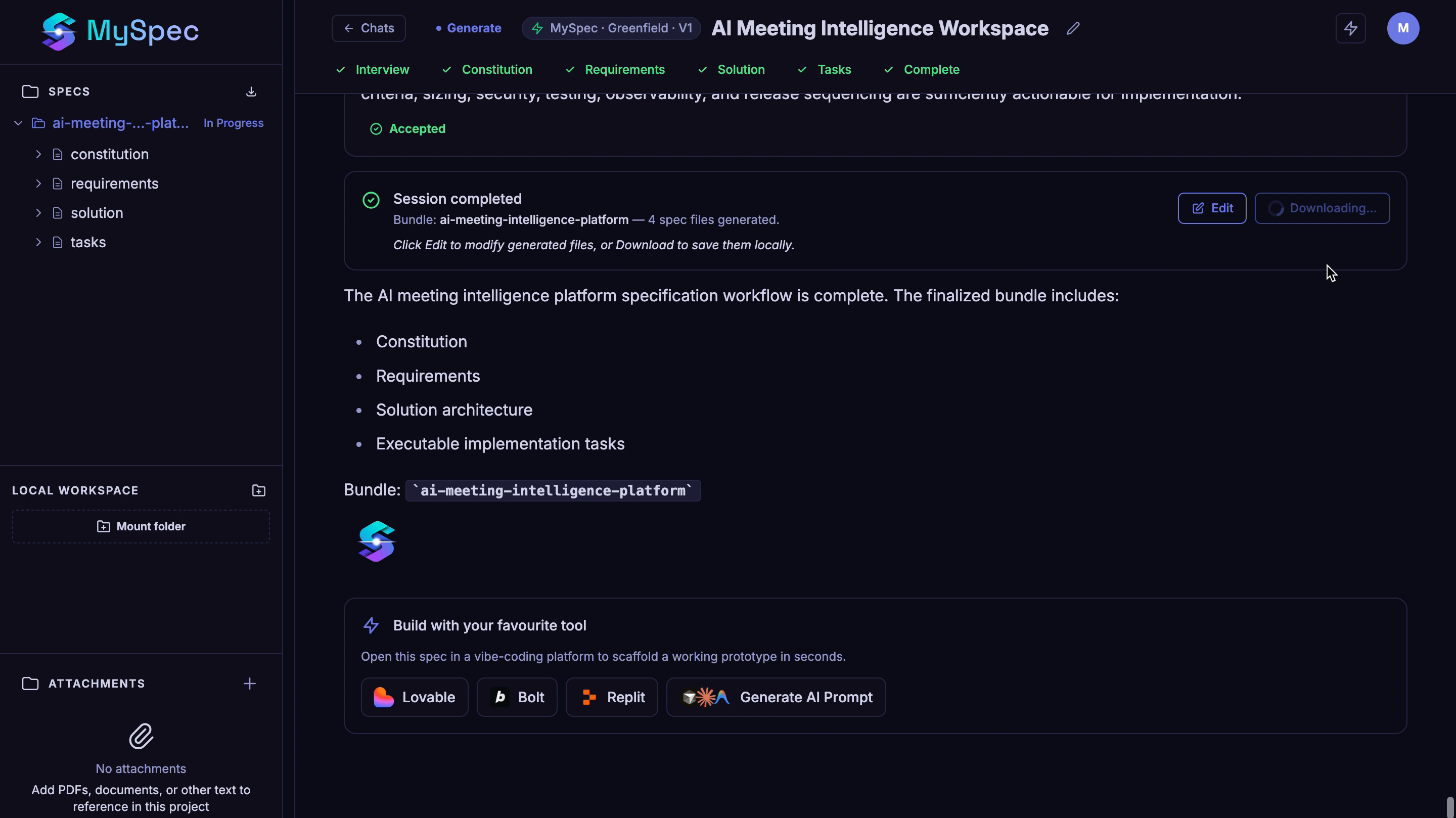
Session completed summary
-
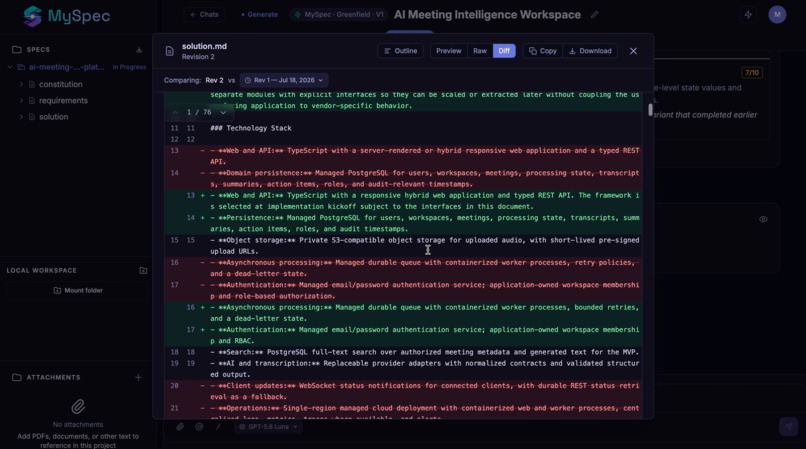
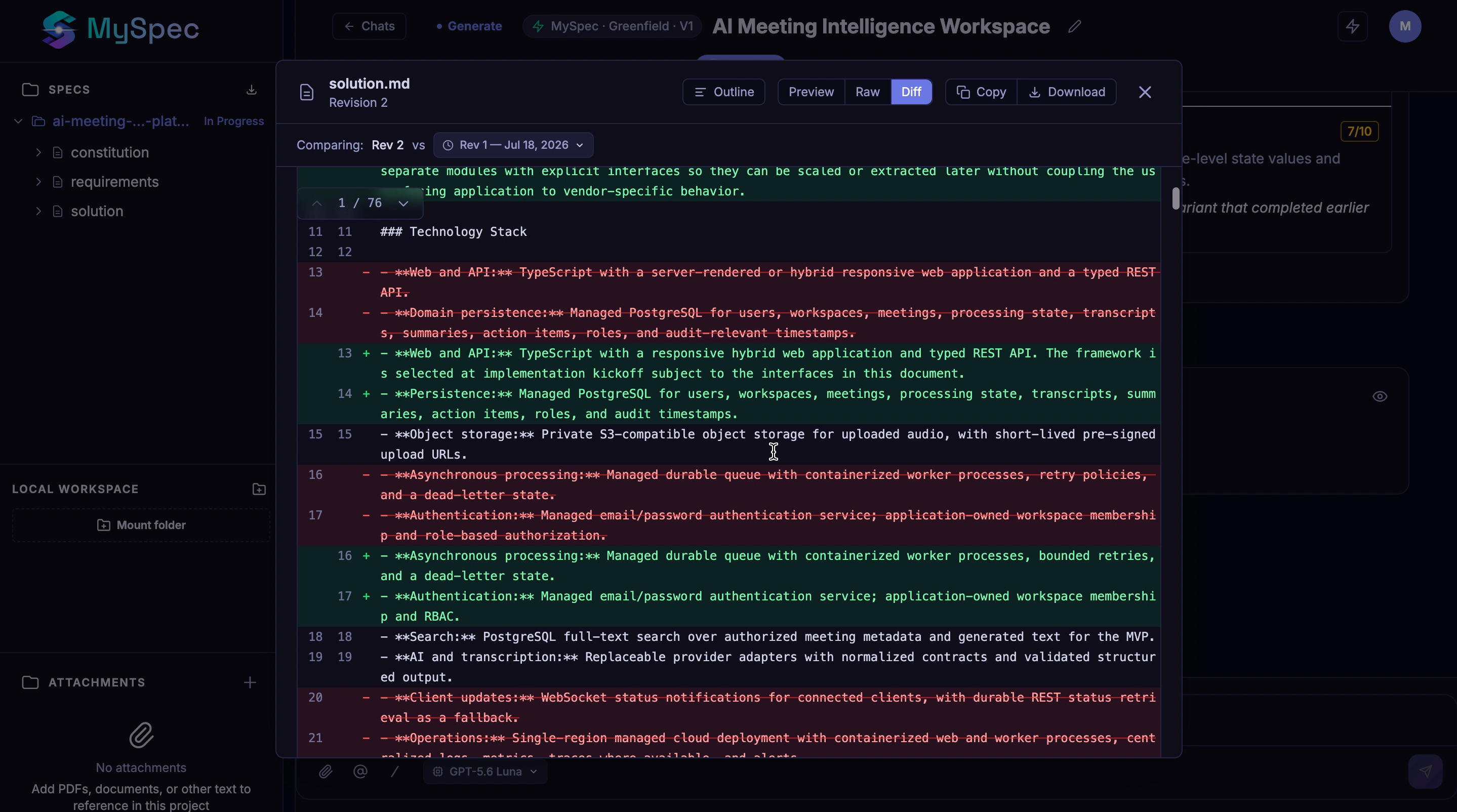
Spec Document Viewer
-
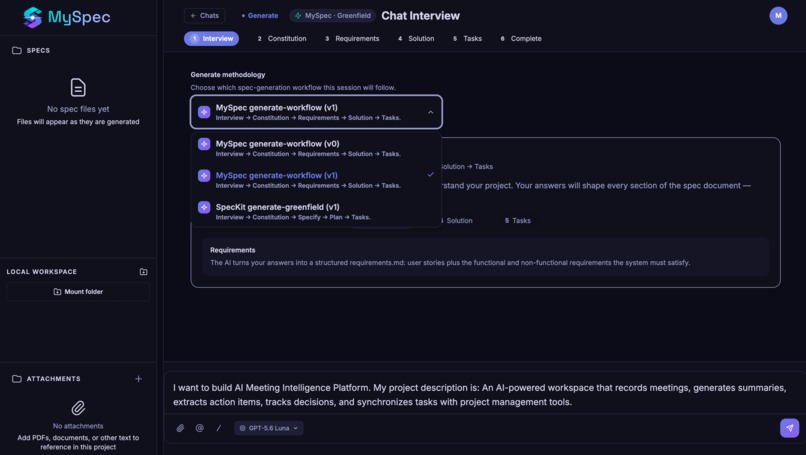
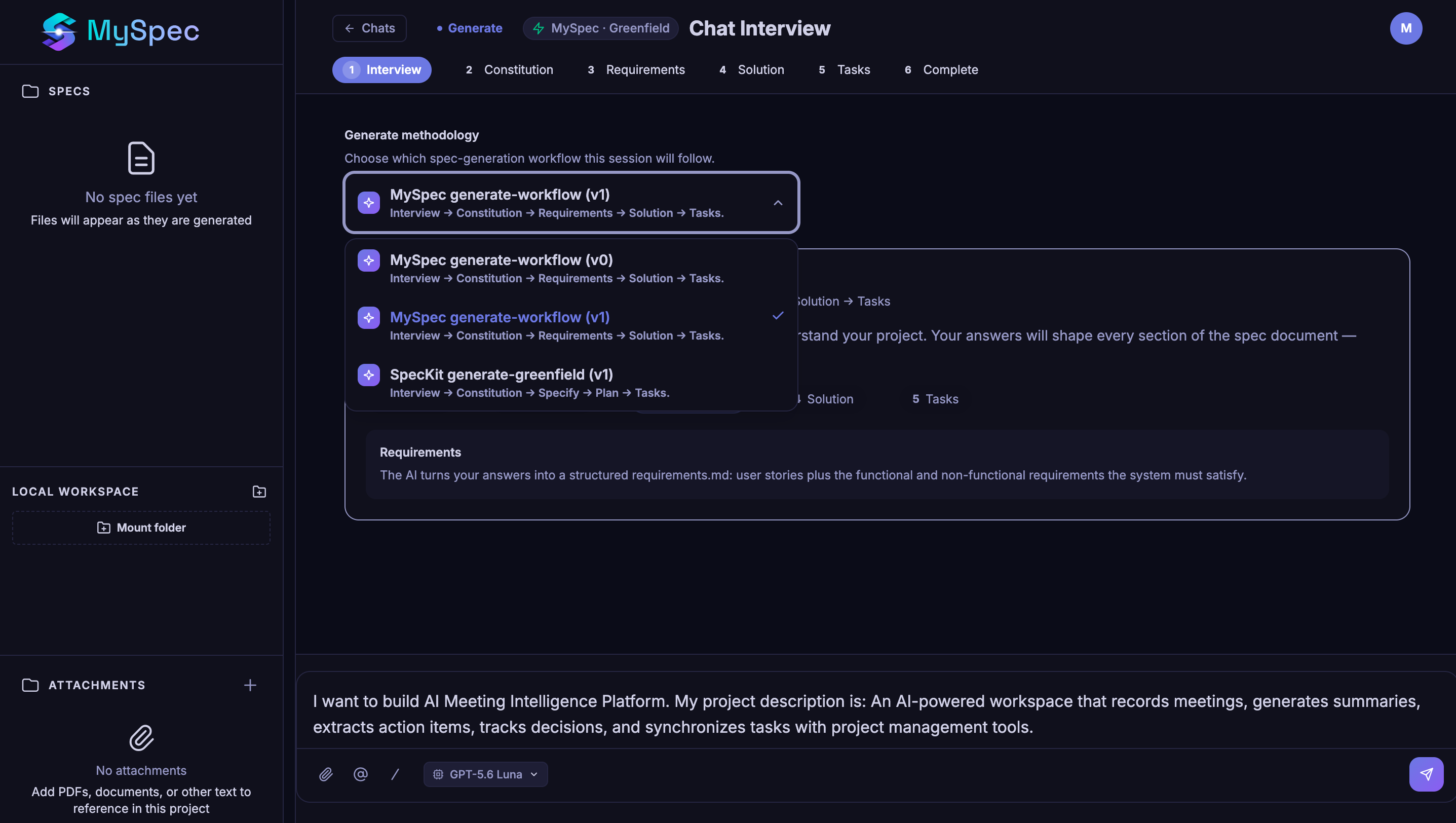
Custom Workflow selection (MySpec/SpecKit/OpenSpec)
MySpec: Bringing Spec-Driven Development to the Era of AI Coding
The Problem
AI has fundamentally changed how software is built. Today, developers can generate production-ready code in minutes using powerful coding agents like Codex. Yet one problem hasn't changed. Builders still spend countless hours fixing misunderstood requirements, clarifying product decisions, discovering missing edge cases, and rewriting prompts because the original context wasn't clear enough. AI can write code remarkably well, but it cannot reliably infer product intent that was never defined. As AI accelerates implementation, the cost of unclear planning becomes even greater. We believe the future of software development isn't just about generating code faster. It's about creating better context before a single line of code is written. That's the problem MySpec was built to solve.
Our Inspiration
Over the past year, we spoke with founders, developers, product managers, and engineering teams who were increasingly relying on AI to build software. Almost everyone shared a similar experience. They loved how quickly AI could generate code, but they often found themselves rebuilding features after realizing important requirements had been missed. Product decisions lived across conversations, prompts became longer and harder to maintain, and every new AI session required re-explaining the same project context. The bottleneck was no longer writing code. The bottleneck was deciding what should be built. That inspired us to rethink the planning phase of software development. Instead of treating specifications as static documents that quickly become outdated, we wanted to create a collaborative workflow where AI helps teams discover requirements, identify gaps, review technical decisions, and produce implementation-ready specifications before development begins. This vision became MySpec and our approach to Spec-Driven Development.
What MySpec Does
MySpec helps Devs, Builders, Founders, and also teams transform product ideas and existing software projects into structured, implementation-ready specifications. For new products, the Greenfield workflow guides users through an AI-powered discovery process that asks thoughtful questions, uncovers missing requirements, and generates proposals, requirements, architecture, and implementation tasks. For existing applications, the Brownfield workflow analyzes the current codebase before guiding users through the same structured planning process, allowing teams to evolve software with a clear understanding of what already exists. Instead of jumping directly into code generation, MySpec encourages review and collaboration at every stage. Teams can inspect generated specifications, request revisions, compare changes, and approve documents before moving into implementation. Once approved, these specifications become reusable context that developers can hand off to AI coding agents such as Codex, giving them significantly better guidance than a single prompt.
What We Built During OpenAI Build Week
MySpec is an actively evolving product, and OpenAI Build Week gave us the opportunity to further strengthen the connection between specification-driven planning and AI-assisted implementation. During the event, we focused on improving how GPT-5.6 and Codex fit into the planning workflow. GPT-5.6 powers our guided requirement discovery process, helping teams explore product goals, identify ambiguities, surface missing requirements, and generate structured specifications that are ready for review. We also improved the workflow for handing approved specifications to Codex, making it easier for developers to move from planning into implementation with richer, more consistent context. Rather than replacing developers, these improvements help AI collaborate more effectively with human teams by ensuring implementation begins with shared understanding instead of assumptions.
How We Built It
MySpec combines structured software engineering practices with modern AI reasoning. GPT-5.6 is used throughout the planning workflow to facilitate requirement discovery, organize product knowledge, generate structured proposals, produce detailed requirements, and support iterative refinement through natural language feedback. Once specifications have been reviewed and approved, they provide clear implementation context that developers can use with Codex and other AI coding tools. Instead of relying on isolated prompts, AI receives structured information about product goals, functional requirements, architecture, and implementation details. Behind the scenes, MySpec organises project knowledge into reusable specification bundles, allowing teams to continuously review, refine, and evolve their software planning process as projects grow.
Challenges We Faced
One of the biggest challenges wasn't generating specifications. It was generating specifications that teams could actually trust. Software requirements are rarely complete when a project begins. Different stakeholders describe the same feature in different ways, important edge cases often emerge late, and technical decisions constantly evolve as development progresses. Finding the right balance between AI assistance and human judgment became one of our biggest design goals. Rather than allowing AI to make every decision automatically, MySpec keeps people involved through structured review, revision requests, and approval workflows before implementation begins. Another challenge was making planning useful for both brand-new ideas and mature codebases. These workflows require very different contexts, yet teams expect a consistent experience across both.
What We Learned
Build Week reinforced something we had already begun to observe. The better AI becomes at writing code, the more valuable clear specifications become. Fast implementation does not eliminate planning. It makes planning more important than ever. We also learned that developers don't necessarily want AI to make every decision for them. They want AI to help them think more clearly, uncover blind spots, organize complexity, and provide better context for implementation. That insight continues to shape the future of MySpec.
What's Next
We're continuing to expand MySpec as a complete planning workspace for AI-assisted software development. Our roadmap includes deeper integrations with AI coding tools, richer Brownfield capabilities, stronger collaboration workflows, and even better ways to keep specifications synchronized as software evolves. We believe AI will continue to transform software engineering. Our goal is to ensure every project starts with the clarity needed for both humans and AI to build the right software together.
Built With
- anthropic
- chatgpt
- cloudflare-third-party:-gemini
- codex
- fiber
- go
- go-frameworks:-go-monolith-libraries
- packages:-fiber
- postgresql
- typescript
- vercel-ai-sdk-database:-postgresql-hosting-&-infrastructure:-hetzner


Log in or sign up for Devpost to join the conversation.