-
-
mysenii
-
Team
-
Product
-
multidimensional screening
-
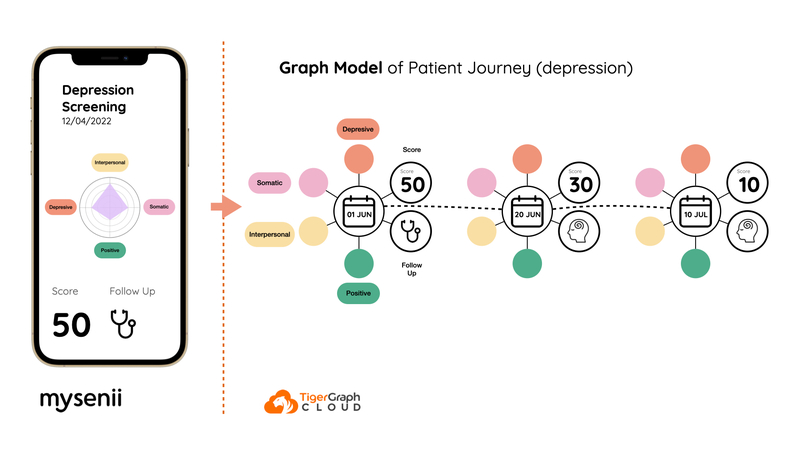
multi-layer outcome
-
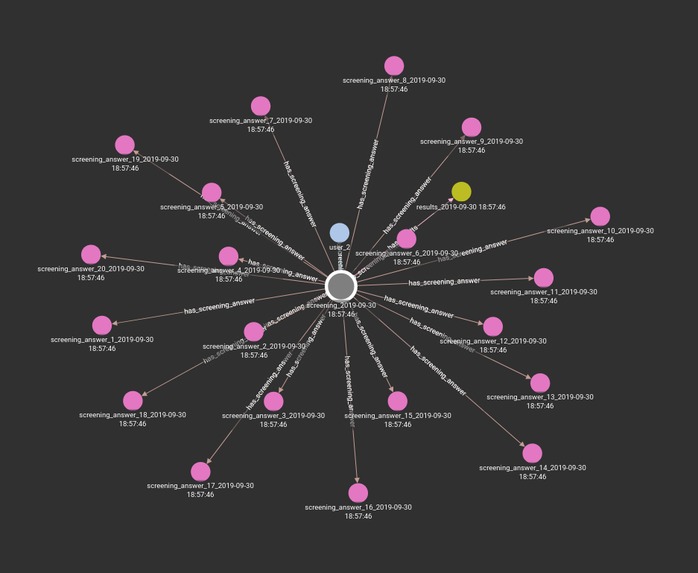
TigerGraph implementation
-
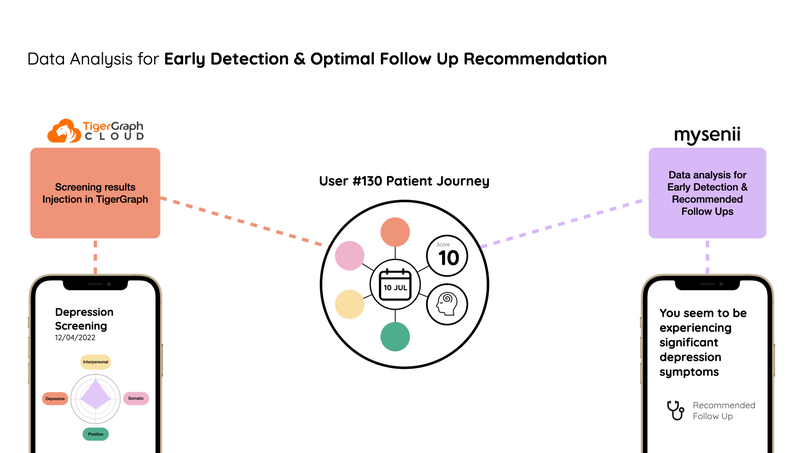
Data Analysis
-
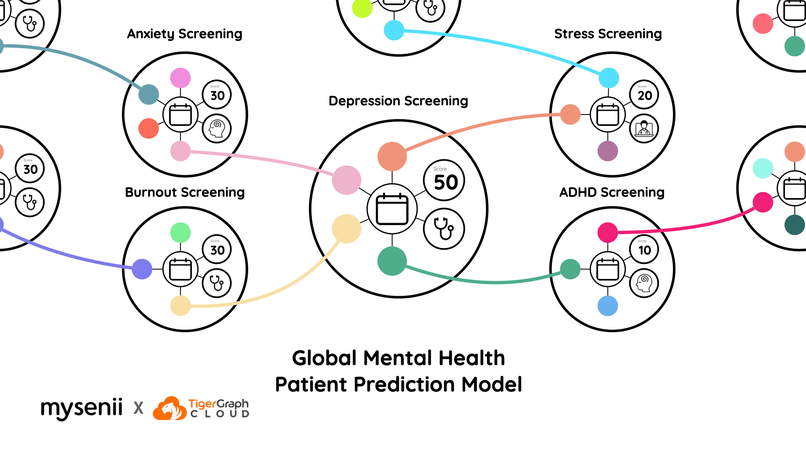
Predictive Modeling
-
Benefits
Inspiration
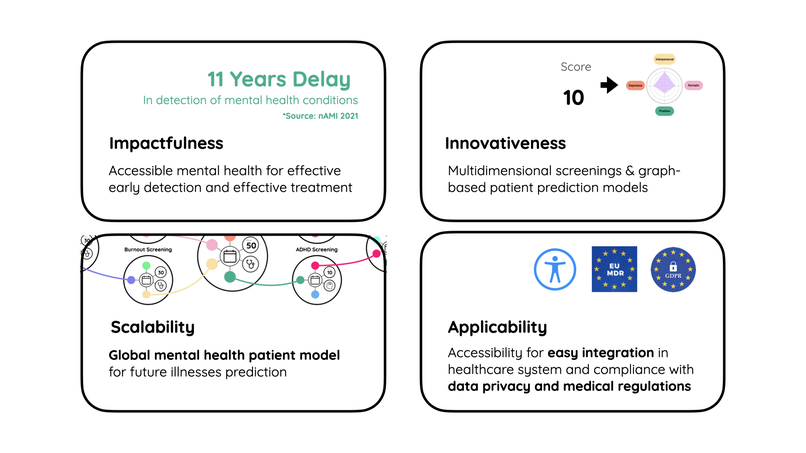
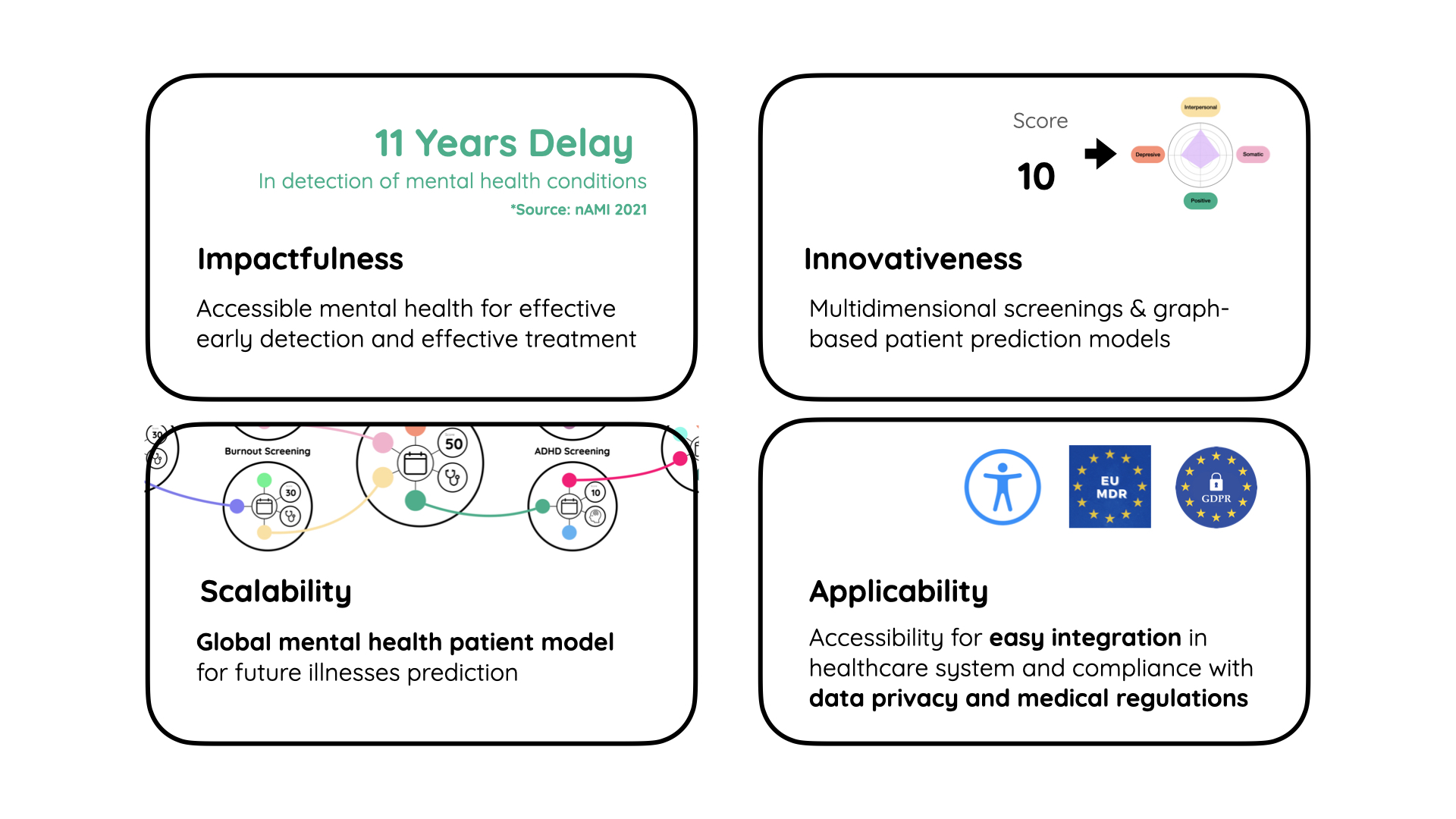
We at mysenii have experienced the obstacles of mental healthcare either as mental health professionals or as a user. The horror of social stigma, lengthy and tedious psychological tests, unclear test results, and the feeling of helplessness are no secrets (1). That's why the delay between the first occurrence of mental health symptoms and intervention averages 11 years (4). Most affected people also have additional difficulties such as learning disabilities but must fill out lengthy, hard-to-understand questionnaires. This way, a person or child who already has problems with reading and writing is put into a highly stressful situation. These incidences have carved us, and we want to transform and revolutionize the mental health system with our expertise in neuropsychology, software engineering, holistic design, and data science by providing the state-of-the-art graphical interface to facilitate precision and predictive mental health for more flexible and efficient care for everyone.
What it does
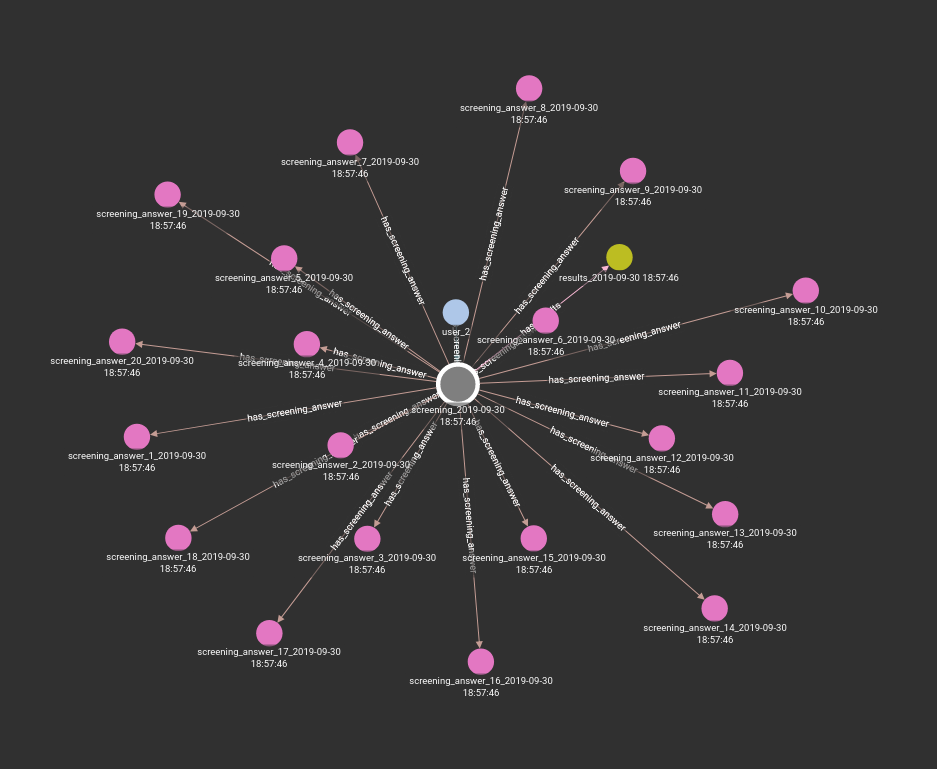
We transform the traditional way of self-reported psychological testing by providing easy, intuitive, accessible, and engaging gamified graphical interface solutions. This gamified graphical environment will encourage the affected person to answer more honestly and accurately than in a clinical or a lab setting. Furthermore, using a graph-based schema, we intuitively model the data acquired during the psychological screening and the associations between different screening data points, incorporating the benefits of fast querying and easy scalability for better user outcomes and adherence with personalized follow-ups. By combining gamification, visualization, and UX design, we provide an integrated experience that accommodates the needs of everyone for better mental healthcare.
How we built it
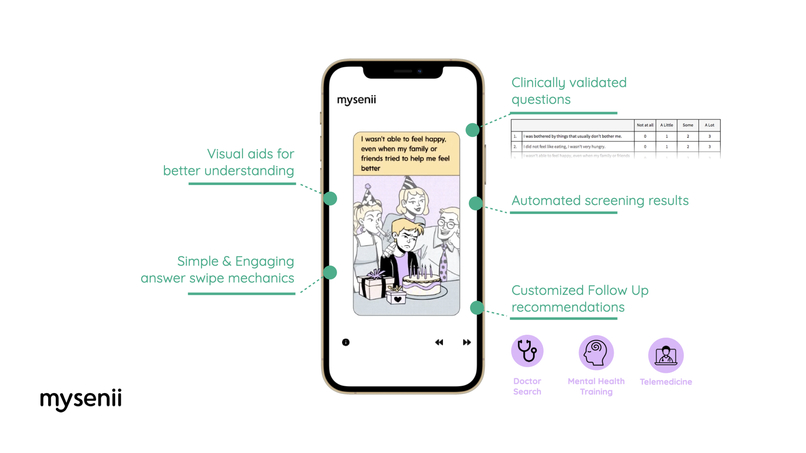
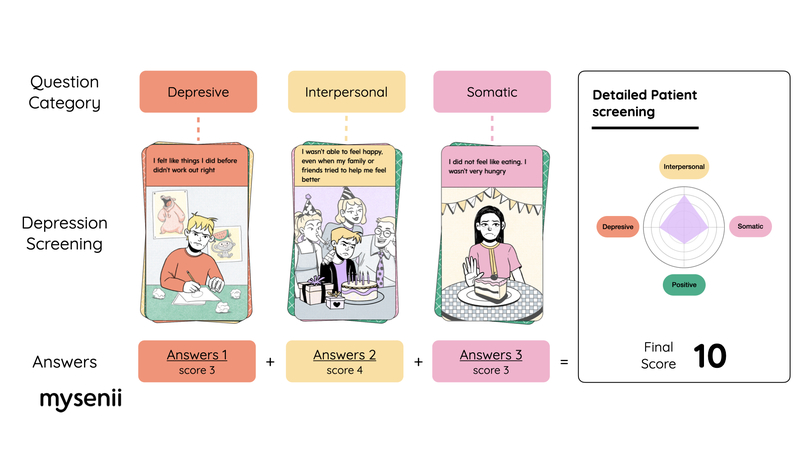
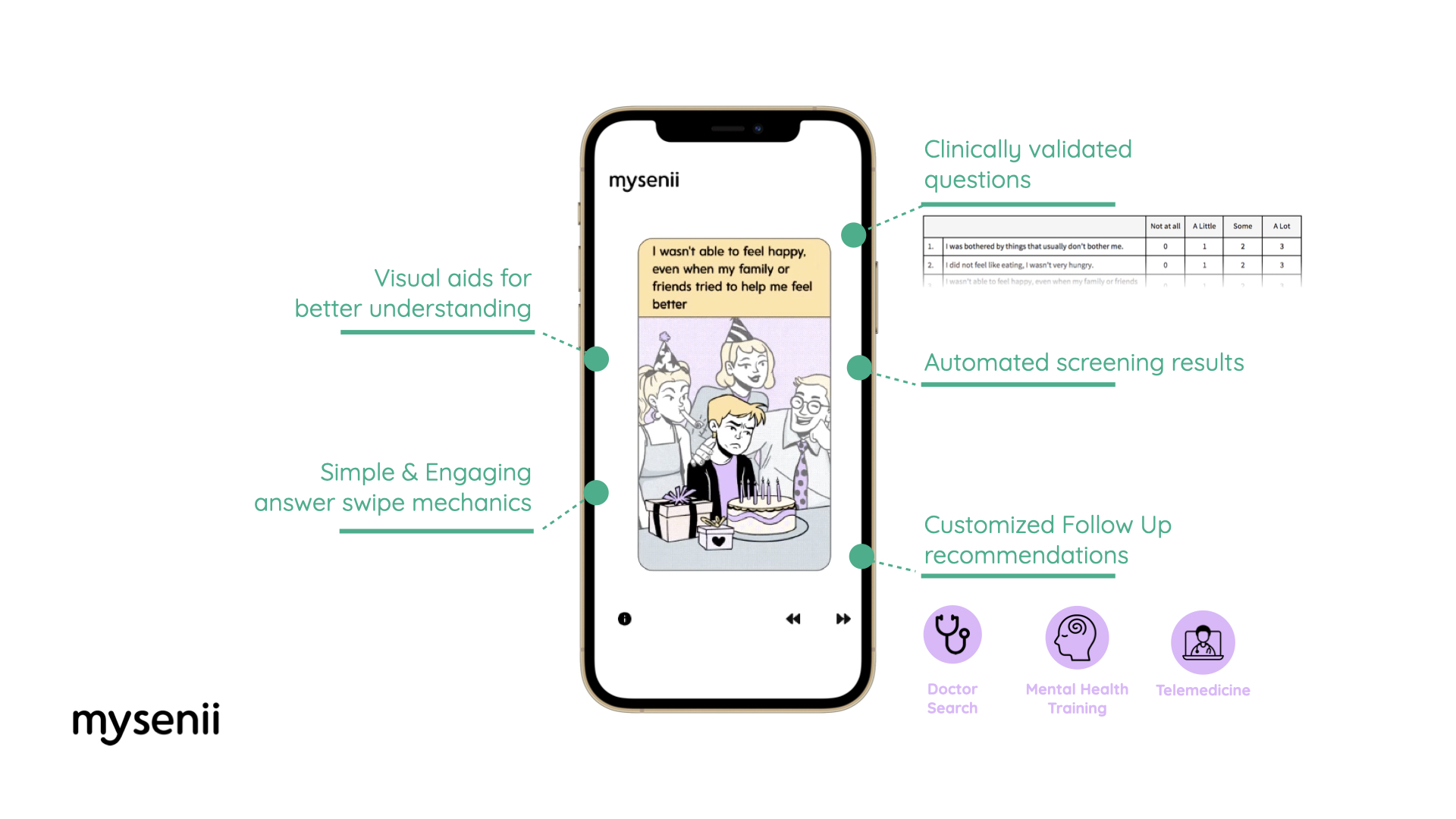
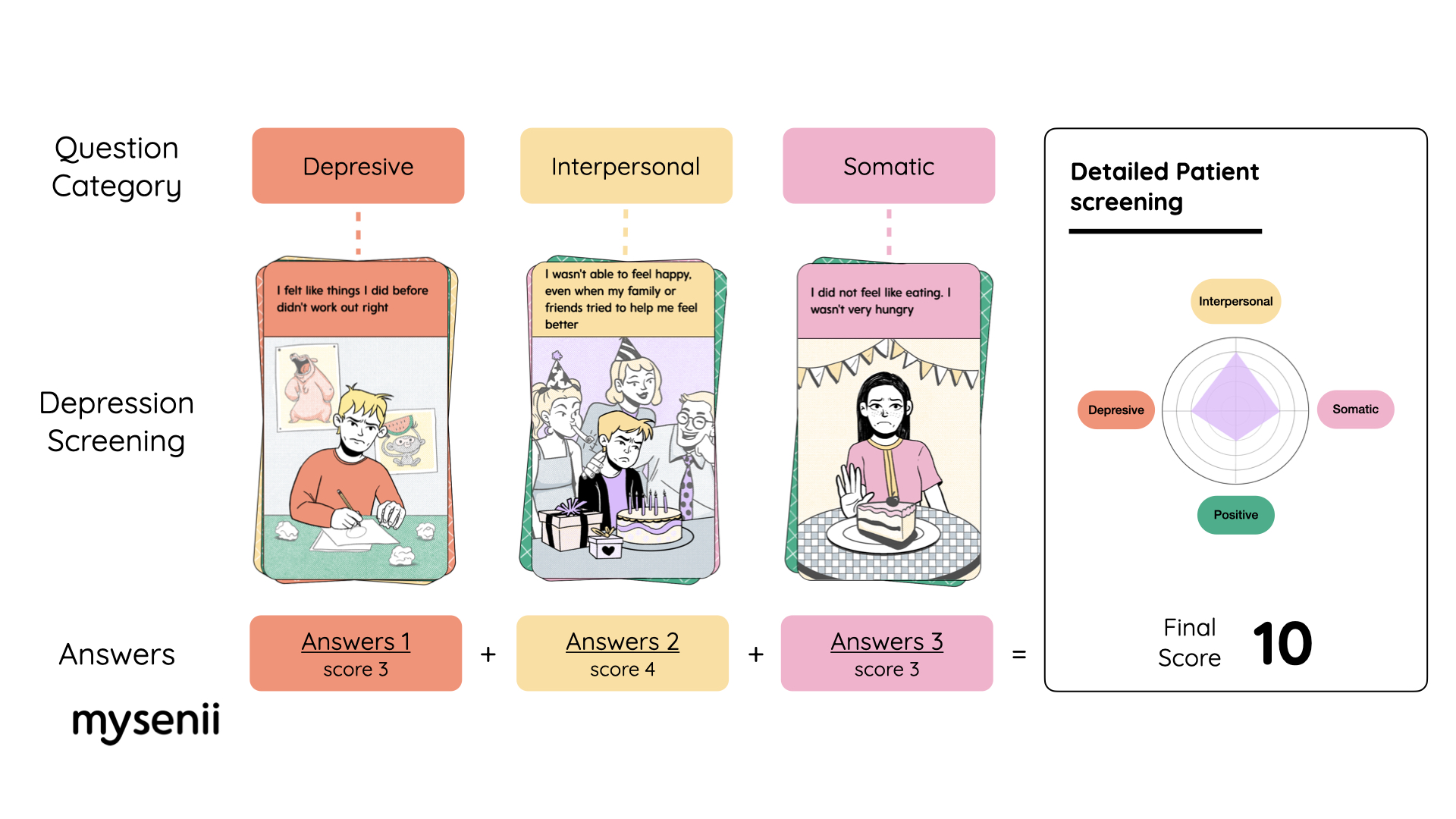
The scientifically validated psychological screenings are transformed into a game consisting of a card deck. Each card has a personalized graphical translation of a psychological test question for a sensitive resonation with the user's current state of mind. The visual aid also helps users with learning disabilities.
The screening cards are played by swiping to select the relevant responses. The simple swipe mechanics can be used with different hardware interfaces (e.g., touch screen, mouse, game controllers, remote controllers, etc.), making screening distribution accessible to a wide range of electronic devices.
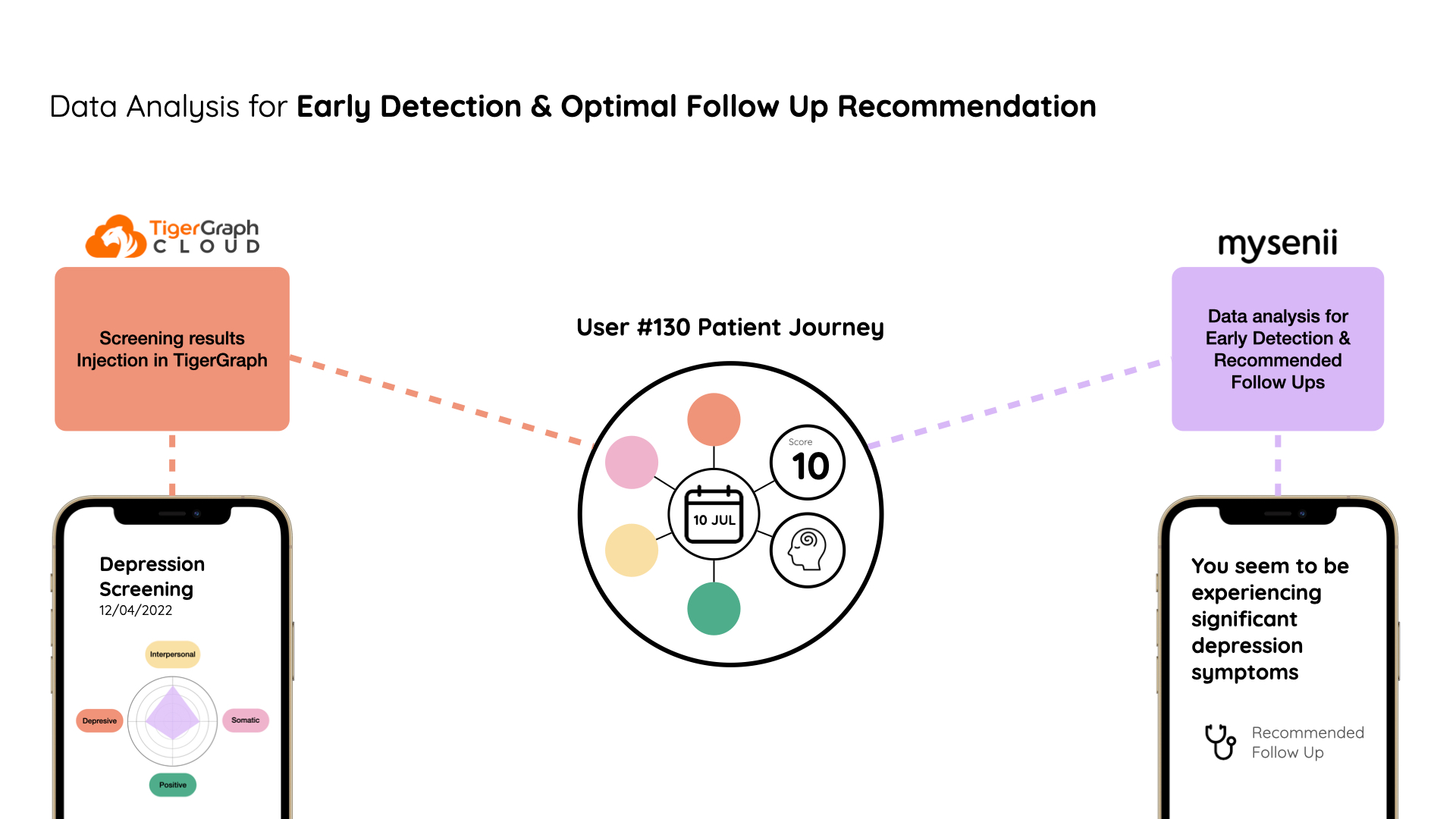
Once all the cards are played, automated screening results are calculated based on user responses. We further integrate the TigerGraph approach for clear visualization and precise interpretation of mental health outcomes.
TigerGraph Integration Proposal
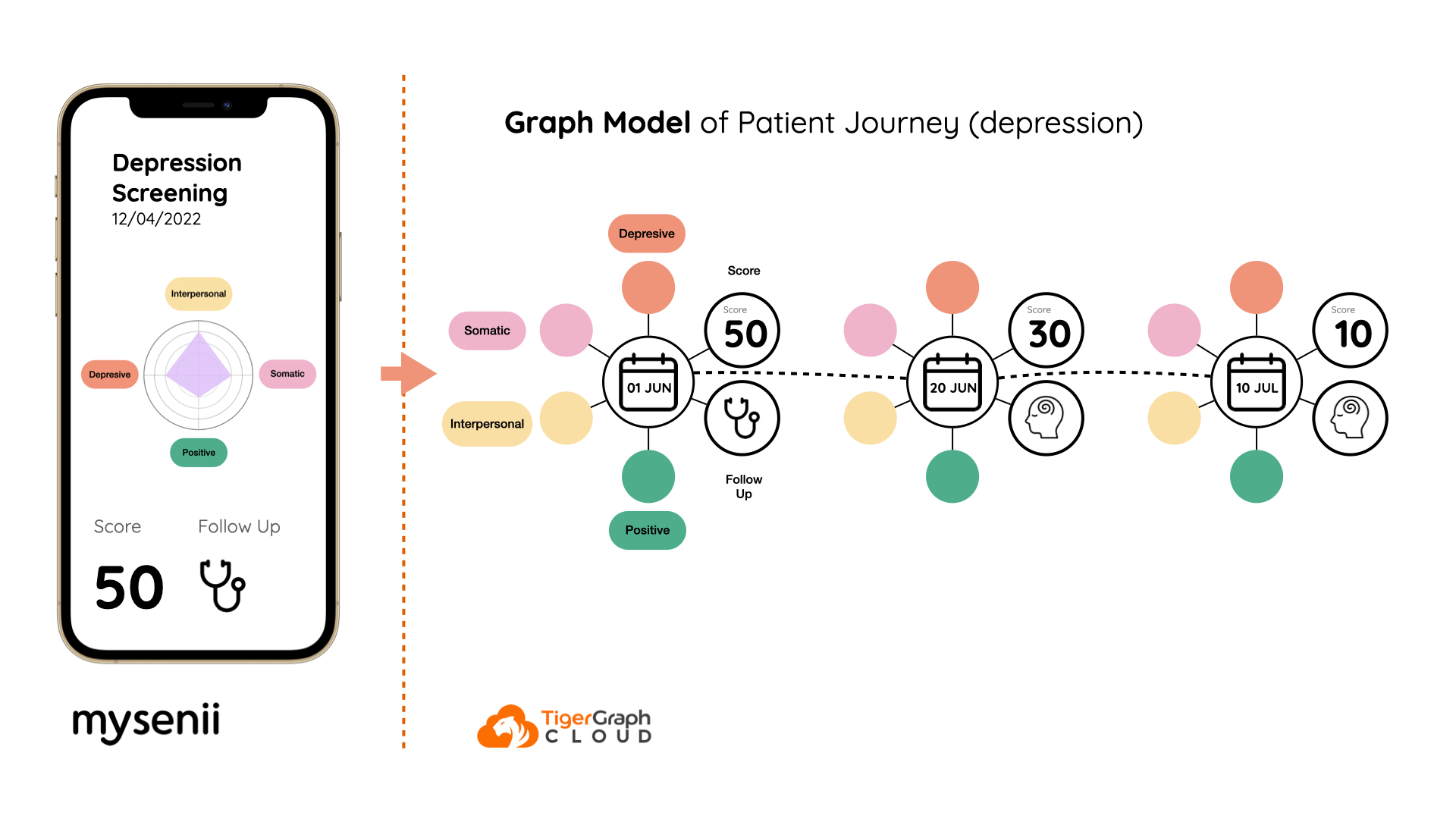
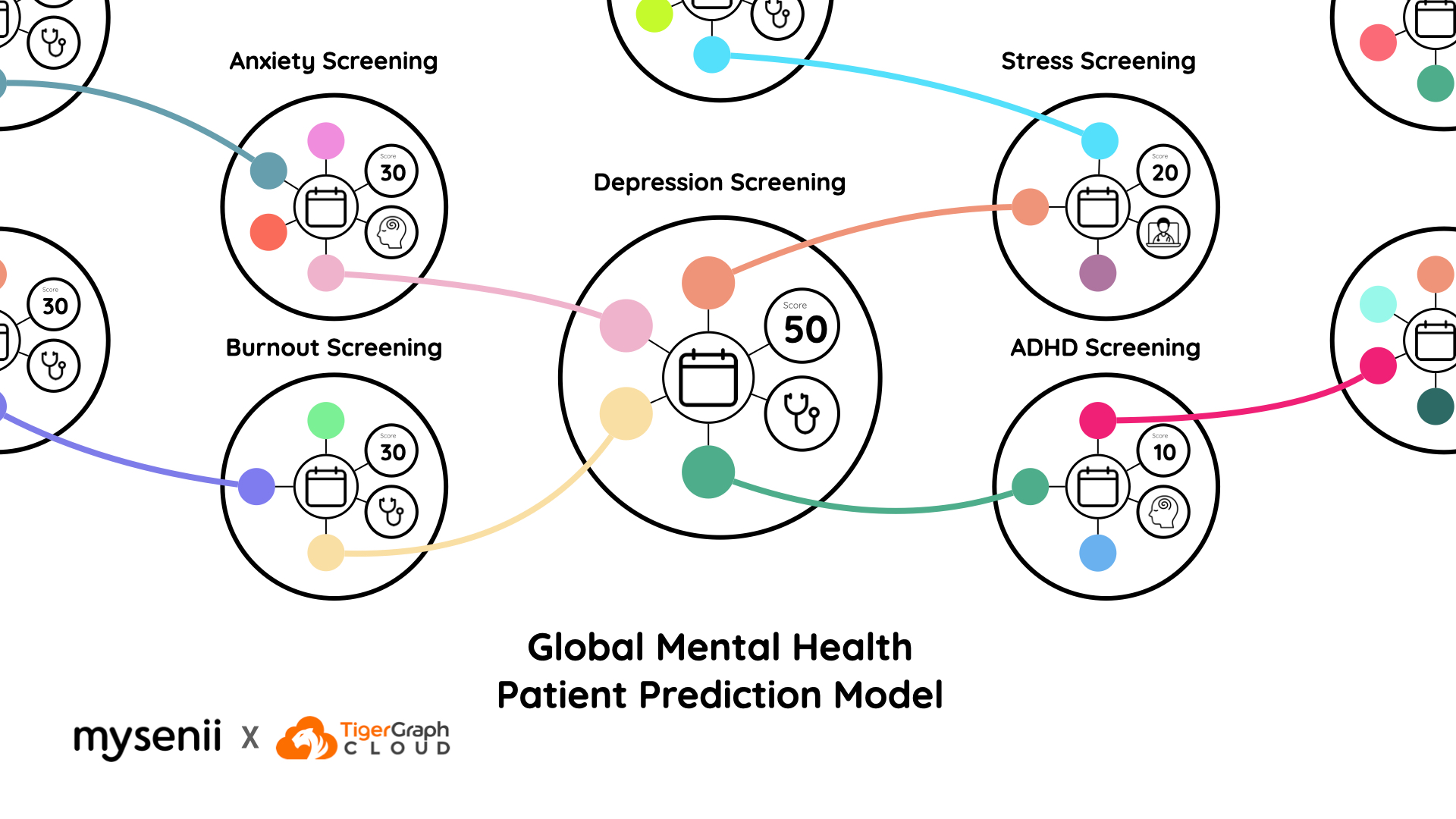
Current psychological screenings usually present only absolute screening scores to describe the mental health state of the user, which doesn't consider the relation between past and present scores or the fluctuations between responses or observation of trends. The lack of these considerations creates unilateral mental state assessment, which is always biased. Therefore, the TigerGraph-based approach would be powerful to represent the data with a multidimensional point of view and details.
The graph analysis approach by TigerGraph will enable the possibility of applying an efficient and extensive time series analysis over a period of time. It will provide deeper insights into the influence of fluctuations in the multidimensional user response on the linearized final result. The mysenii gamified experience, in combination with TigerGraph Integration, will gather the data points (such as average answer time, user answer preselection, time in between question reading and answer selection, etc.). This data can be modeled to identify fluctuations in the user response over time and determine a trend in which direction the user's mental state is expected to develop. Hence, we propose that with the use of TigerGraph, we consider users' well-being while helping healthcare professionals to optimize their resources in the best possible way.
Challenges we ran into
Breaking through the glass ceiling is always difficult for creative minds. Digital acceptance of healthcare, especially in Germany, was the most significant barrier we were facing. However, the current pandemic has proven the importance of shattering digital obstacles and helped us uplift.
In addition to that, the team had struggled to find a technical solution for the effective and efficient processing of user data while presented with transparency and future prediction modeling, finding in TigerGraph a potential solution that successfully provides the tool to overcome these requirements.
Accomplishments that we're proud of
- "Best innovation" award at a hackathon by WIG2 Institute
- "Engaging Mental Health Solution" award by PostCovid Hack 2020
- Winner of "COVID-19 Global Hackathon 2.0: Social & Mental Health"
- Winner of "Tech Takes On Mental Health Hackathon"
- Winner of "Health Hack 2020"
- Winner of "COVID-19 Healthcare App Challenge: Microsoft"
- Winner of "NFT Vision Hack 2021"
- Winner of "Hack & Heal Hackathon 2022"
- Testing and Clinical Validation of the solution
What we learned
- Mental Health always comes at the cost of collateral damage; thus, if it is not detected in an early stage, it has a long-lasting impact on the affected person and his family, social environment, and society.
- There is a massive need to revolutionize the mental health space and how we talk about it. We need to make mental well-being accessible for everyone with easy, intuitive, and accessible solutions if we thrive for a better future.
- This motivates us to pursue our mission of creating an innovation that is accessible and engaging in mental health care solutions.
What's next for mysenii
Our following milestones are:
- Test validation in different scenarios (e.g., in schools and educational institutions, at home, in the clinic, research institutes..)
- Clinical Evaluation of the test and reliability measurement.
- Connecting the test experience with follow-up resources - for example, partnerships with experts and services that support mental well-being.
- Implementation of the most relevant tests for society.
- Creating a comprehensive, intuitive, and easy experience for the user from the beginning to the end.
- Finding partners interested in supporting mental health for their customers, employees, or individuals to implement our solution.
References: (Following are references for all the sections presented below)
Digital health market size 2020-2026, Global market insights 2021.
Liu H, Zhang L, Wang W, Huang Y, Li S, Ren Z and Zhou Z (2022) Prediction of Online Psychological Help-Seeking Behavior During the COVID-19 Pandemic: An Interpretable Machine Learning Method. Front. Public Health 10:814366. doi: 10.3389/fpubh.2022.814366
Bradway, M., Joakimsen, R.M., Grøttland, A., & Årsand, E. (2016). The potential use of patient-gathered data from mHealth tools: suggestions based on an RCT-study. International Journal of Integrated Care, 16, 8.
Prince, M.J., Patel, V., Saxena, S., Maj, M., Maselko, J., Phillips, M.R., & Rahman, A. (2007). No health without mental health. The Lancet, 370, 859-877.
Rosenfeld, A., Benrimoh, D.A., Armstrong, C., Mirchi, N., Langlois-Therrien, T., Rollins, C., Tanguay-Sela, M., Mehltretter, J., Fratila, R., Israel, S., Snook, E., Perlman, K., Kleinerman, A., Saab, B.J., Thoburn, M., Gabbay, C., & Yaniv-Rosenfeld, A. (2019). Big Data Analytics and AI in Mental Healthcare. ArXiv, abs/1903.12071.
Built With
- css
- ember.js
- html
- jupyter
- python
- tigergraph
- tigergraph-cloud


Log in or sign up for Devpost to join the conversation.