-
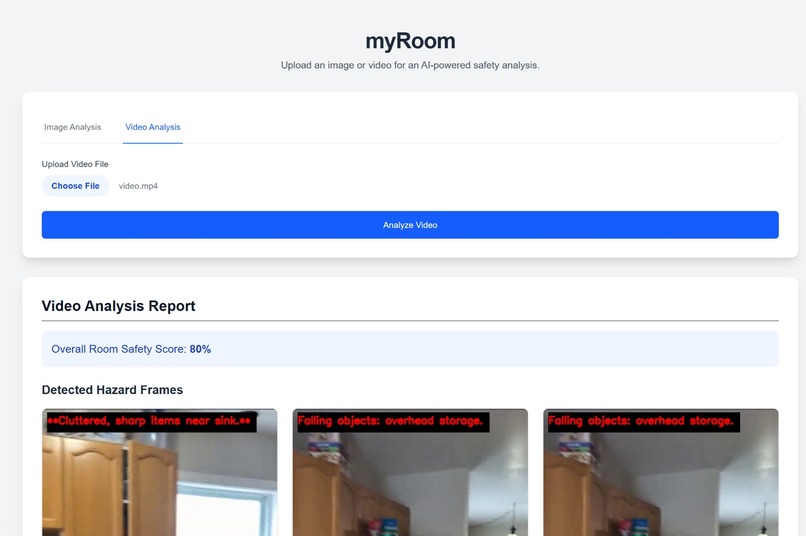
upload screen
-
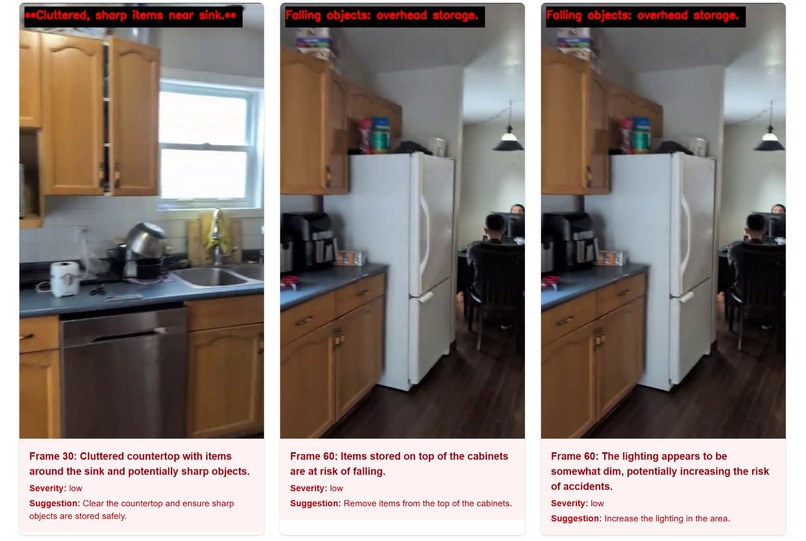
room evaluation
Inspiration
While helping my parents remodel their basement, I saw the amount of safety checking needed for renovation. Capturing the space with my phone felt so much faster—I wondered why we couldn’t automate the whole audit.
What it does
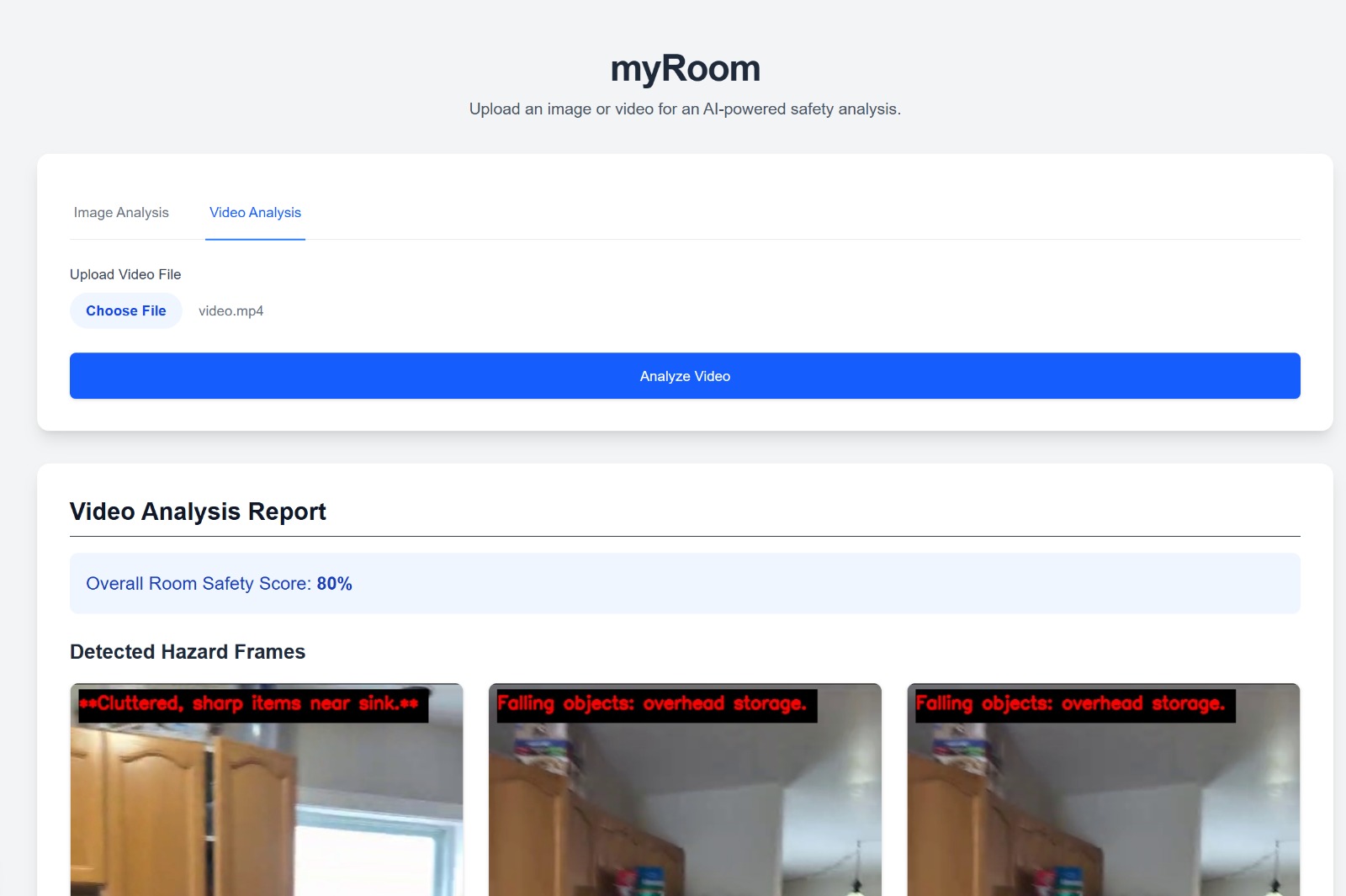
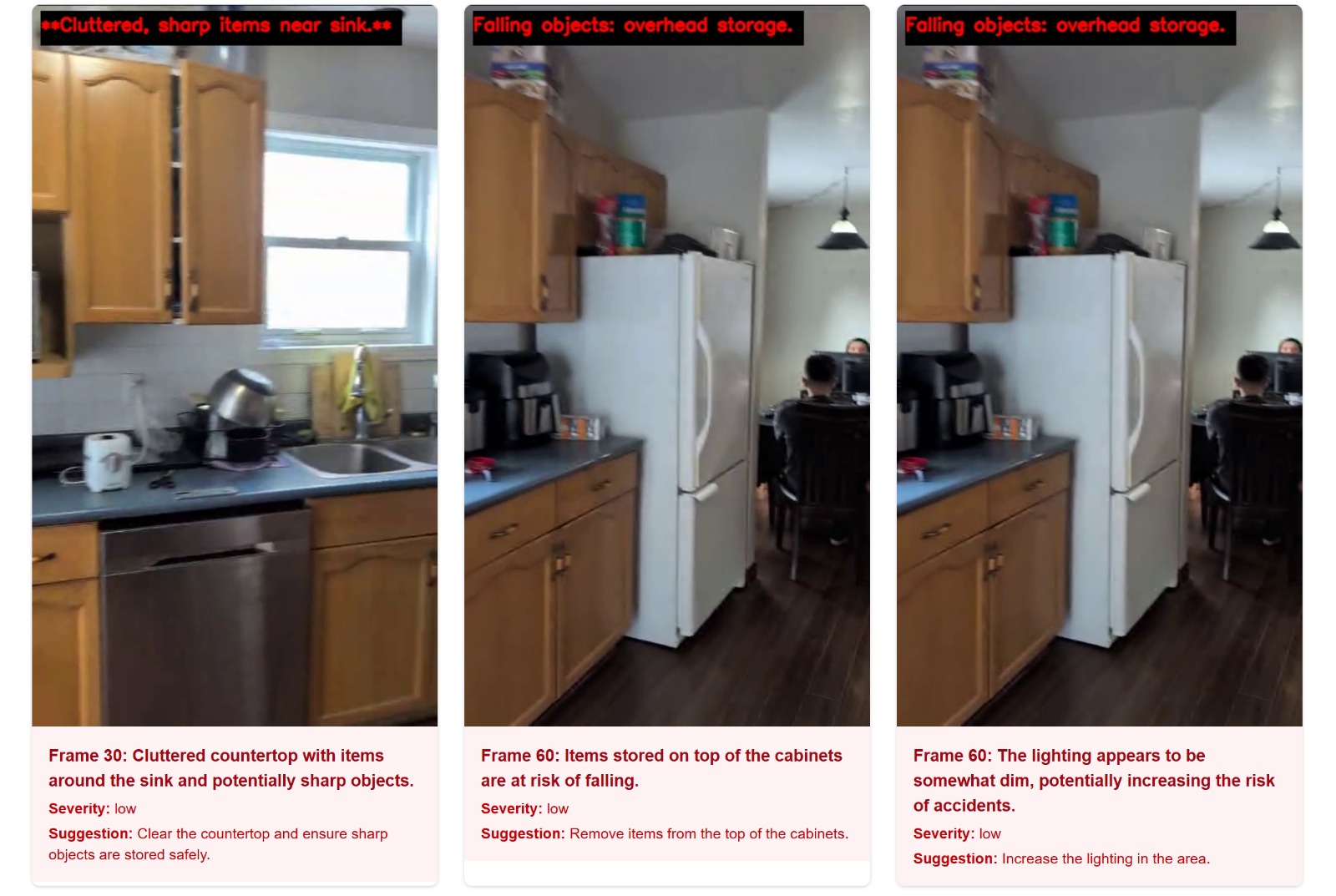
myRoom converts scans or high-resolution photos and videos into a comprehensive safety report. It automatically:
- Detects hazards (trip risks, exposed wiring, obstructed exits, hanging objects, missing PPE signage)
- Maps each finding to the relevant OSHA clause
- Assigns category scores (0–100) and an overall safety rating
- Provides with “solution tips” for every flagged issue
How we built it
Data & Models
- Collected and labeled images/point clouds for common indoor hazards
- Trained a YOLOv5-based detector, then pipelined outputs through Google Gemini for natural-language descriptions
- Collected and labeled images/point clouds for common indoor hazards
Scoring Engine
- Developed a rubric that weights accordingly to your customization and normalizes scores to a 0–100 scale
- Developed a rubric that weights accordingly to your customization and normalizes scores to a 0–100 scale
Frontend & Viewer
- Used react to render scans/photos with clickable hazard boxes
- Added custom safety filters (e.g., trip hazards only) and fun insights like “Safest spot if an earthquake strikes”
- Used react to render scans/photos with clickable hazard boxes
Deployment
- Containerized services in Docker, orchestrated on AWS Fargate for on-demand scaling
- Containerized services in Docker, orchestrated on AWS Fargate for on-demand scaling
Challenges we ran into
Scan Quality Variance between different object recognition models: Different models showed different result on difference confidence levels which kinda made it hard to pick.
Performance vs. Accuracy: Pruned and quantized models to deliver sub-5s results without losing detection reliability.
Regulation Ambiguity: Since we use AI to find the dangers it could highlight unnecessary non-dangerous everyday items as dangerous
Accomplishments that we're proud of
- 1-minute Audits on typical room scans while maintaining high detection precision
- Positive Beta Feedback: 85% of testers said they’d use myRoom for routine facility checks
What we learned
- Real-world data is messy, and augmentation and class weighting were essential for balanced training.
- UI details make or break user adoption.
- Translating legal text into code requires domain expertise and iterative validation.
What's next for myRoom
- Mobile Apps: On-device inference for iOS/Android to blur sensitive content before upload
- Customizable Models: Let users train their own hazard classes (e.g., lab-specific equipment)
- Video Stream Analysis: Real-time scanning of security cams or handheld video feeds

Log in or sign up for Devpost to join the conversation.