Inspiration
COVID-19 is a pandemic which devastated the world. Although there was much emphasis on physical health, it is imperative not to neglect the mental health of the people, especially during turbulent times. Thus, COVID-19 pandemic has forced us as a team to take a deeper look into the mental wellness of our fellow Singaporeans. In particular, we will be looking into how to help curb suicide rates and will be tackling some of the key problems that we believe Samaritans of Singapore (SOS) faces during this COVID-19 pandemic. These problems include the following: Increased calls Limited “productivity” as compared to working in call centres
Even before the pandemic, mental illness has been steadily rising such that the suicide rate increased from 7.74 per 100,000 residents in 2017 to 8.36 in 2018 [1]. The current COVID-19 Circuit Breaker measures can further affect the mental well-being of people [2] and exacerbates the situation. This pandemic lead to people having Feelings of isolation Forced interaction between broken families Fear and worry about your own health and the health of your loved ones Changes in sleep or eating patterns Difficulty sleeping or concentrating Worsening of mental health conditions Increased use of alcohol, tobacco, or other drugs This is coupled with the fact that pandemics are becoming more frequent due to increased global connectivity [3], it is paramount that we come up with a solution to help.
To solve these issues, we have come up with MyPal, a mental wellness app to aid SOS volunteers to impact more people.
[1] https://www.channelnewsasia.com/news/singapore/suicides-number-2018-teenagers-boys-highest-11761480 [2] https://www.channelnewsasia.com/news/singapore/covid-19-fear-toll-mental-health-hotline-anxiety-singapore-12631710 [3] https://www.weforum.org/agenda/2020/03/coronavirus-global-epidemics-health-pandemic-covid-19/
What it does
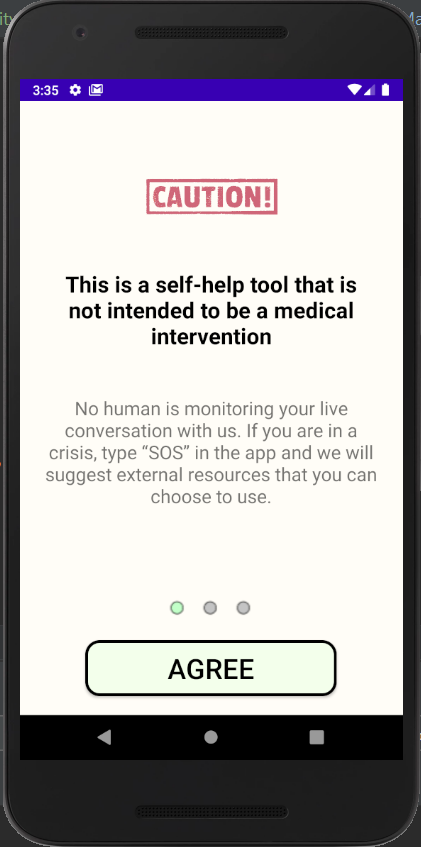
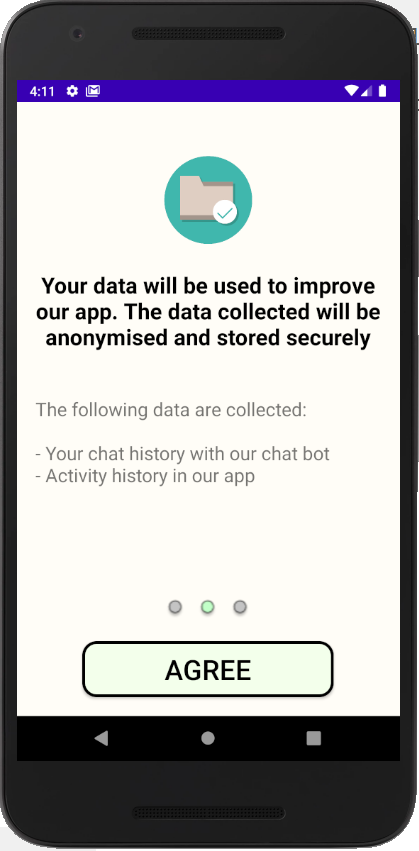
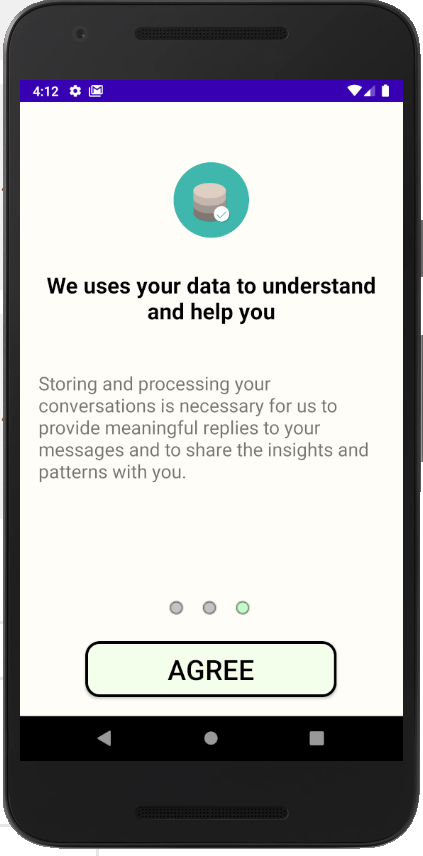
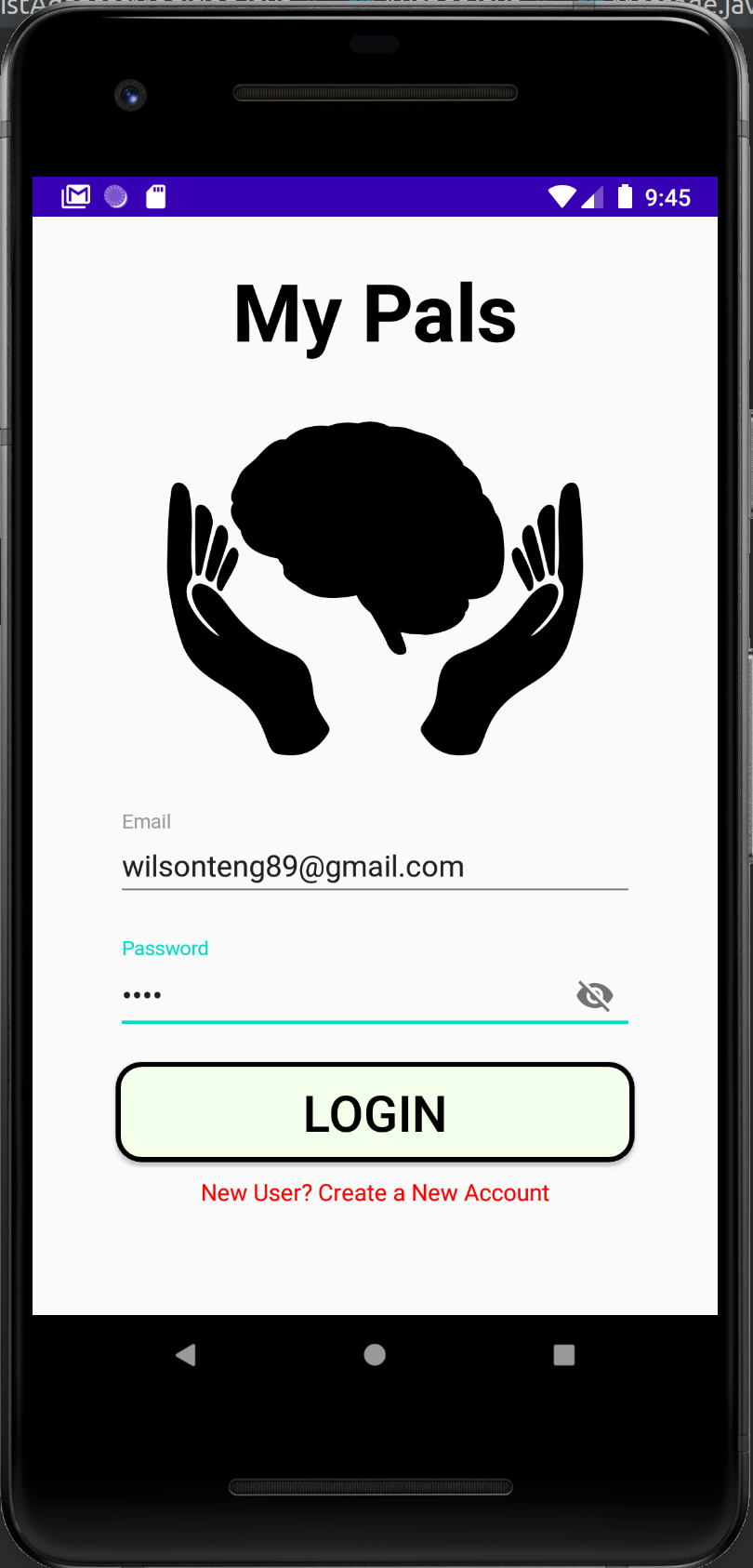
MyPal is an Android Mobile Application that has two target groups, the users and SOS professional volunteers. It is designed to mainly serve as a listening ear to users and provide attention to the users in need of mental help. By having conversations with the app, MyPal allows SOS volunteers to aid people in a more efficient manner.
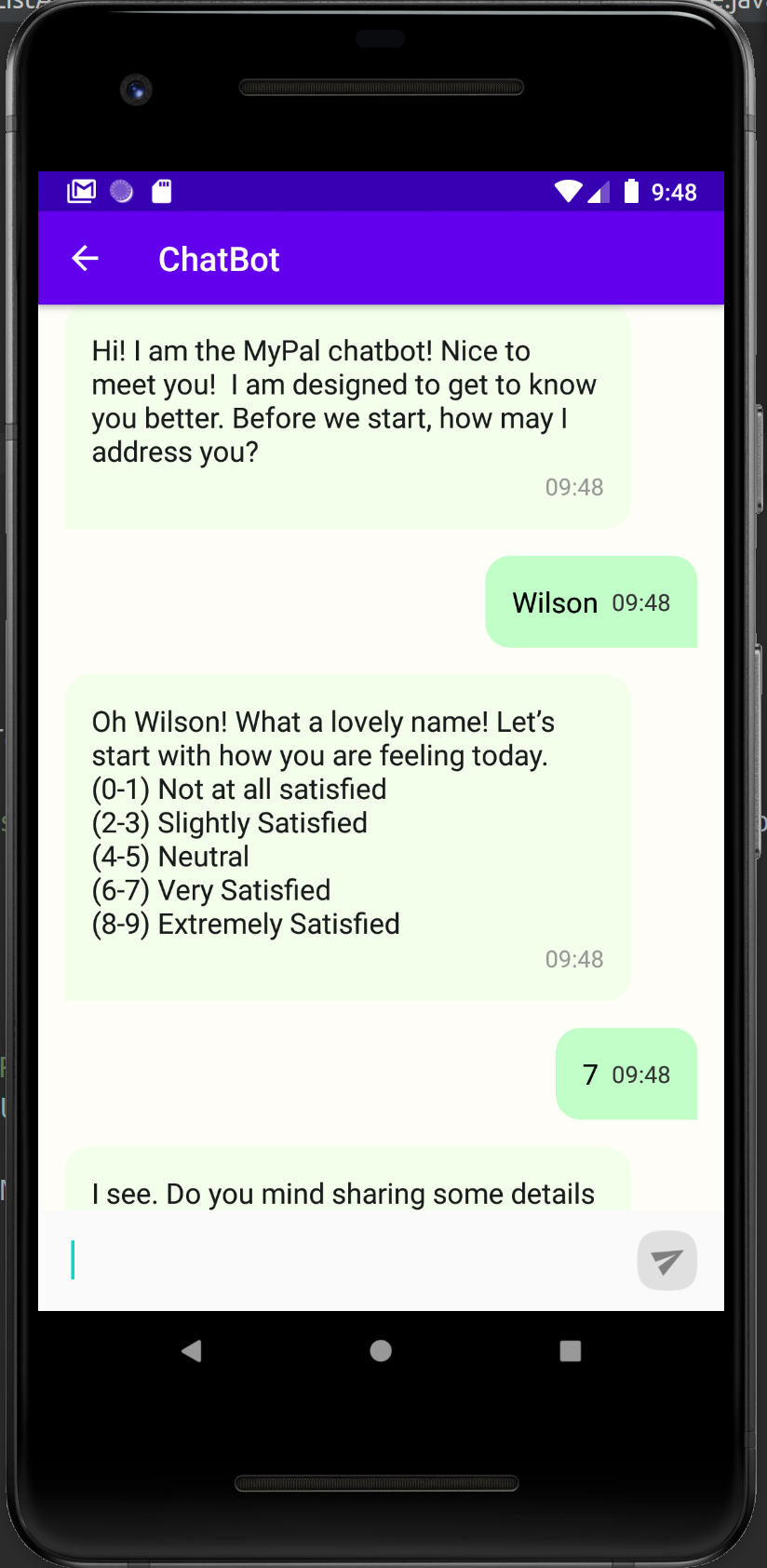
Firstly the user in need of help registers for an account and communicates with the chatbot. Registration is mandatory to keep track of the progress of each user and generate reports for each individual for volunteers to use to assess the historical data. The chatbot is programmed to get to know more about the problems users face by asking them questions like: How are you feeling? Or Why are you feeling this way? Our chatbot works by extracting important information from the user’s chat history and performs sentiment and emotion analysis on selected messages to find out the urgency and emotions the user is facing. At the end, the ChatBot also facilitates to book an appointment with volunteers.
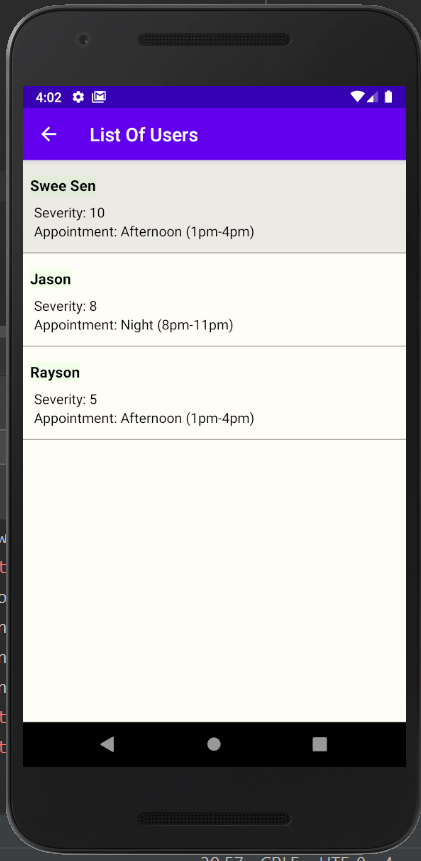
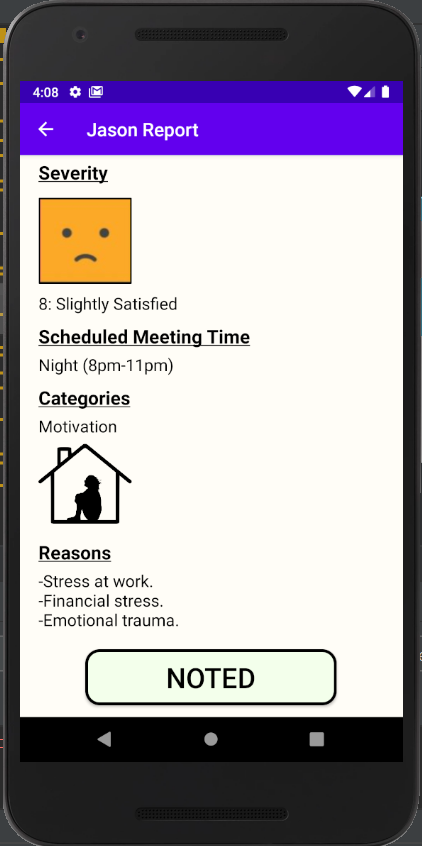
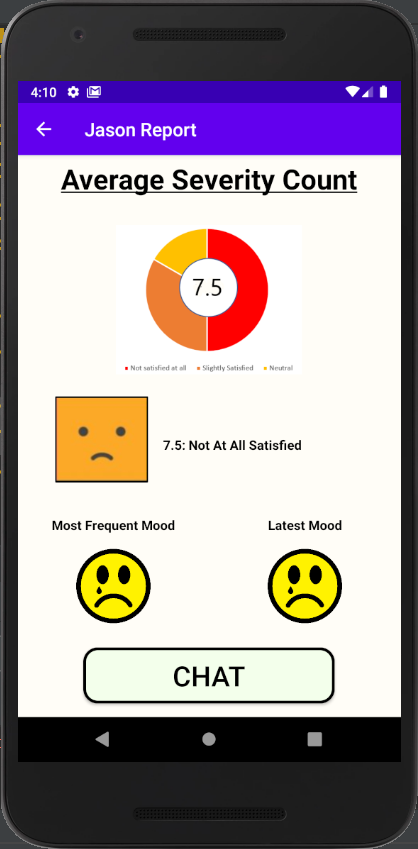
Afterwhich, the outcomes from the analysis are organised to a dashboard for the SOS volunteer to access and assess the user. This dashboard allows the volunteers to understand the user better even before chatting with them. They would be able to tune their conversation later based results on the dashboard. As the dashboard helps to summarise all problems the user faces, it saves time for the volunteers. Time from asking the common questions can be placed to what really matters — Understanding the user and connecting with them. Furthermore, it also allows the volunteer to serve more users in need as time is saved from the use of ChatBot.
After the volunteer reads through the dashboard, then he/she can start a conversation with the user at the appointed time. Talking with the volunteers can then help users better cope with mental issues during this pandemic. For the design of the application, MyPal utilises calming colours in its colour palette so that users can feel at ease and hence will be more willing to express their feelings.
How we built it
To impact the most people, we believe a mobile platform would be the most appropriate, as the user would tend to use the mobile most often. The application’s main functionalities and design of the layout are written on the Android (java) platform. The NodeJS platform is then used to generate a RESTful API interface to link to the backend Python scripts, which the Python scripts run the machine-learning models. For emotional analysis, we used BERT, which trained the Transformer language model bidirectionally. Bidirectional training enables a deeper sense of language context and flow which helps in the emotional analysis. For sentiment analysis, we used Keras neural networks to train the text predictors to predict a binary outcome of positive or negative.
Challenges we ran into
Initially, we had planned to run our machine learning models on an AWS EC2 instance but could not due to the 1GB memory limit for the free tier. We overcame this problem by using NodeJS to link to the machine learning models as explained above. Issues with dependencies of Python modules for machine learning.
Accomplishments that we're proud of
Completing a functional prototype in 1 day! Got closer to the team! Build our first chatbot app! Learning more about Keras and TensorFlow.
What we learned
The app-building process is an iterative one. How to split work to efficiently finish software development. Understood the importance of mental health in the society and well-being of the people. Machine learning of sentiment and emotion analysis to train on data of reactions written by people.
What's next for MyPal
Moving the machine learning to an online server. Expand our Machine Learning model to “feel” more emotions. The Machine Learning model is currently only able to differentiate between 6 emotions due to lack of data. Using machine learning to provide mental help to users
Built With
- amazon-web-services
- android
- bert
- keras
- node.js


Log in or sign up for Devpost to join the conversation.