-
-
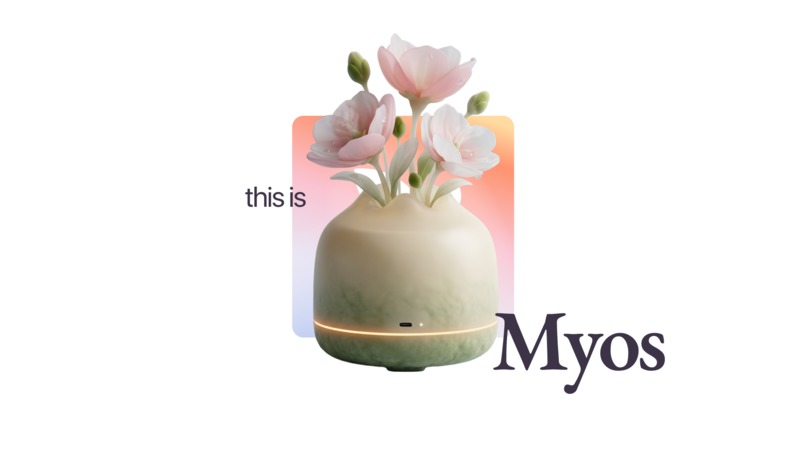
Myos Product
-
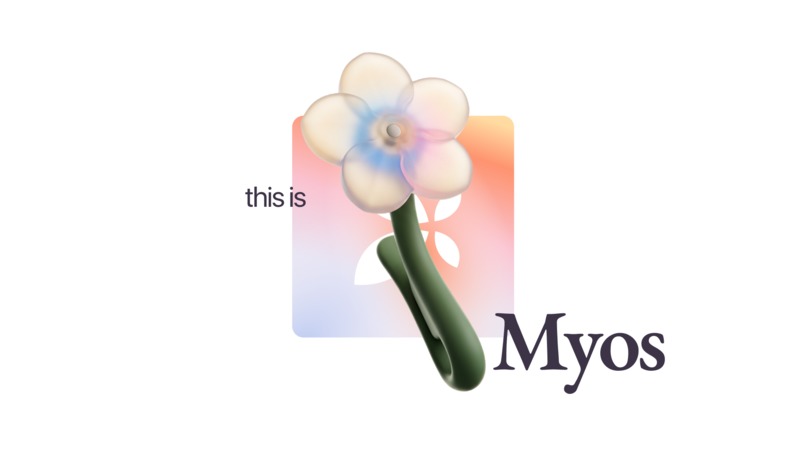
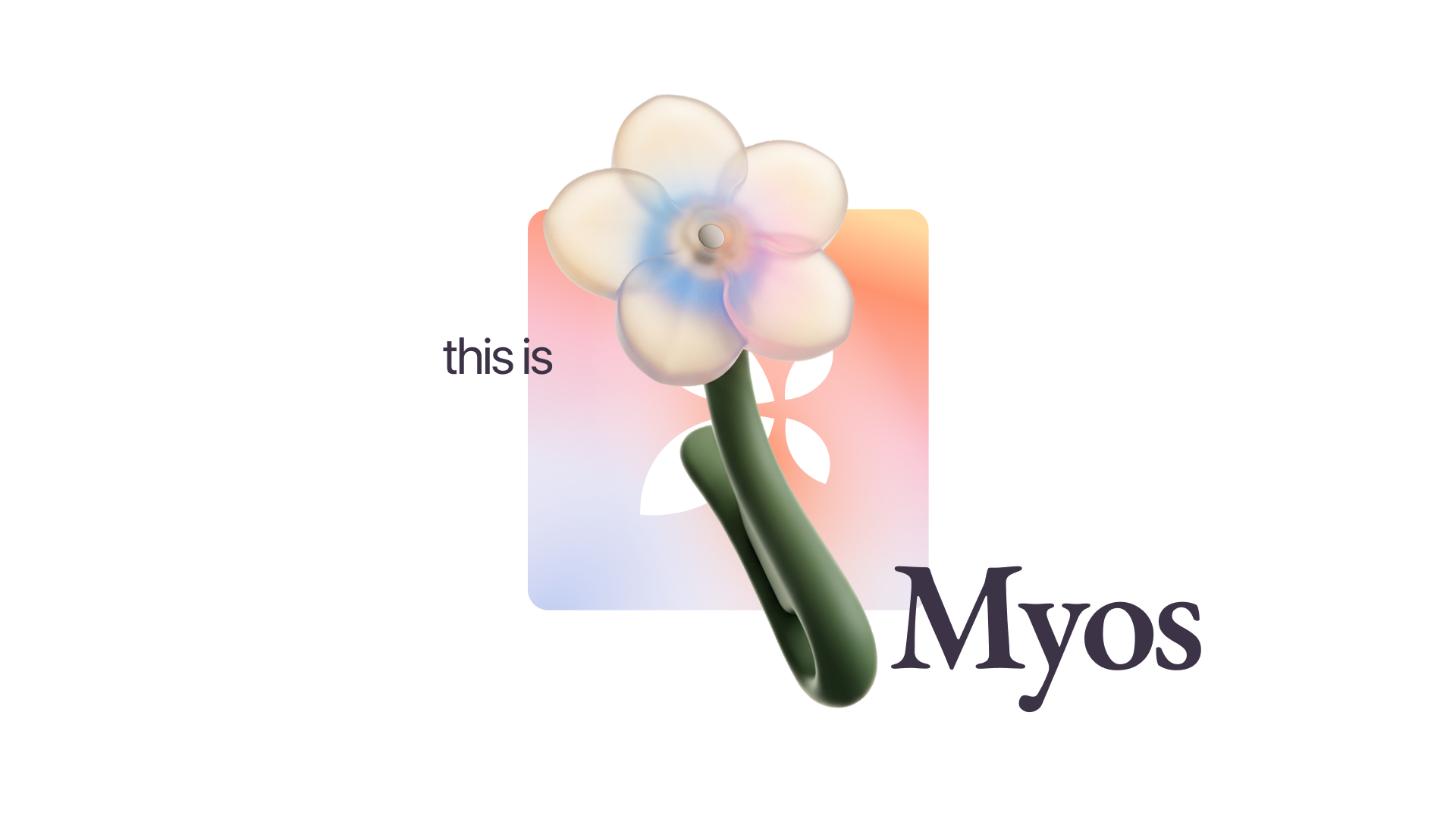
Myos Forget-me-not Clip-On
-
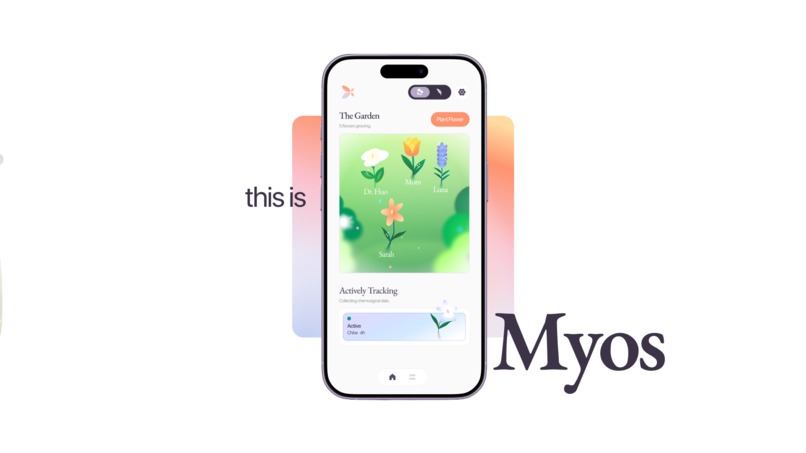
Myos App
Inspiration
We started with a question that felt personal before it felt like a design problem.
What do you do when the person you love is still here, but can no longer hold onto the fact that you were?
Dementia doesn't take people all at once. It takes them slowly, visit by visit, recognition by recognition. Families show up every week, hold hands, say I love you, and watch the recognition fade within minutes of leaving.
Every tool that exists tries to solve this by reaching the mind. Photos. Voice messages. Video calls. But dementia destroys the mind. We kept asking: what's still intact? What does dementia reach last?
The answer was the emotional body. And the pathway to it was scent.
What It Does
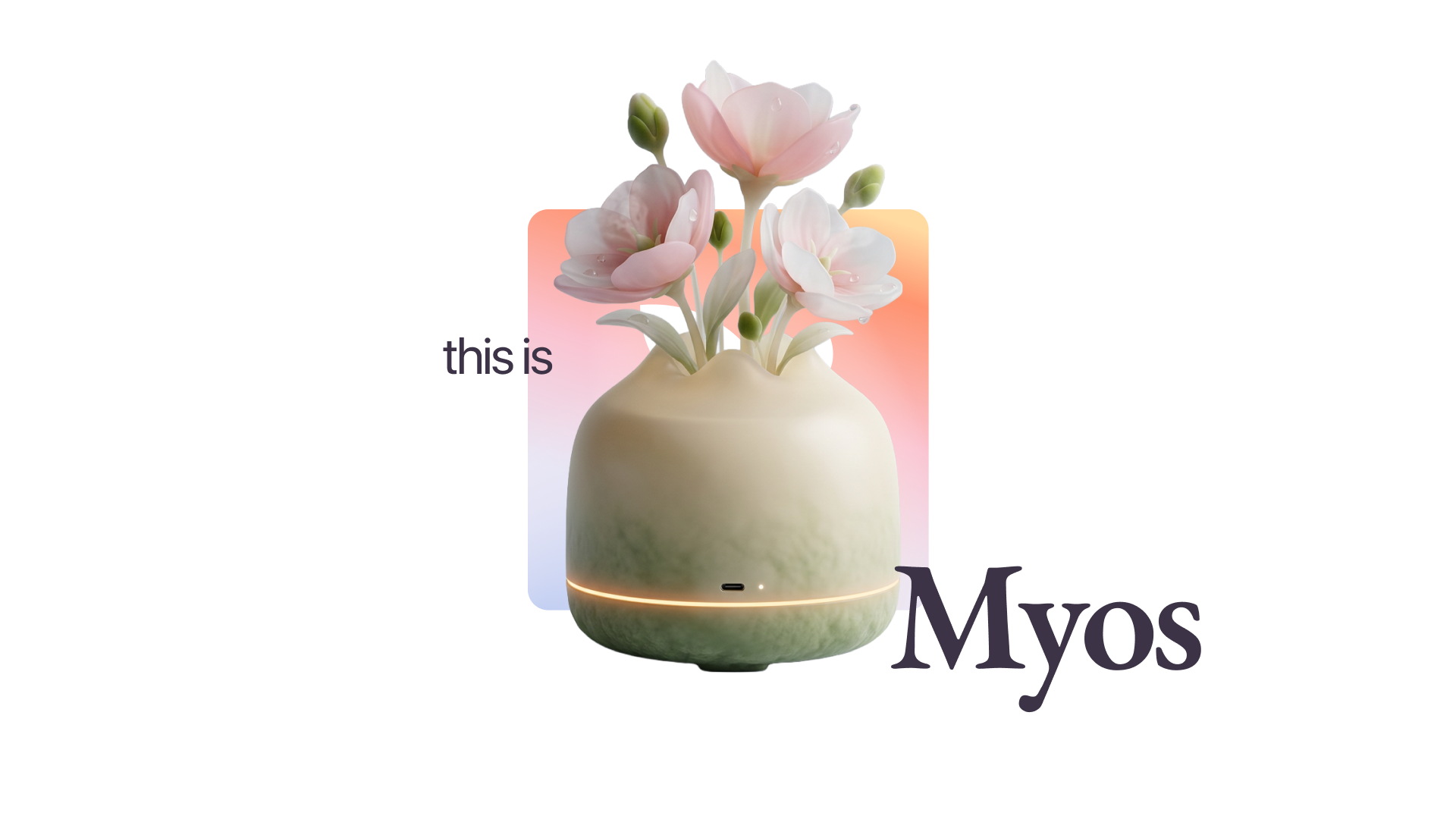
Myos is a chemosignal preservation system for dementia care. It captures how a loved one chooses to be perceived, the scent they carry intentionally, the presence they bring into a room, and keeps that presence alive long after they've gone.
A small clip called the Forget-Me-Not is worn during visits. It builds a presence profile over time, not a record of body odor, but a signature of how that person chooses to show up.
A device called the Myos lives in the patient's room. It releases two things into the environment: a curated scent that reflects the person's identity, and their chemosignal, the invisible chemical signature the body already knows how to read. Together they create something the patient can feel without being able to name. They simply feel calmer, safer, more held, without knowing why.
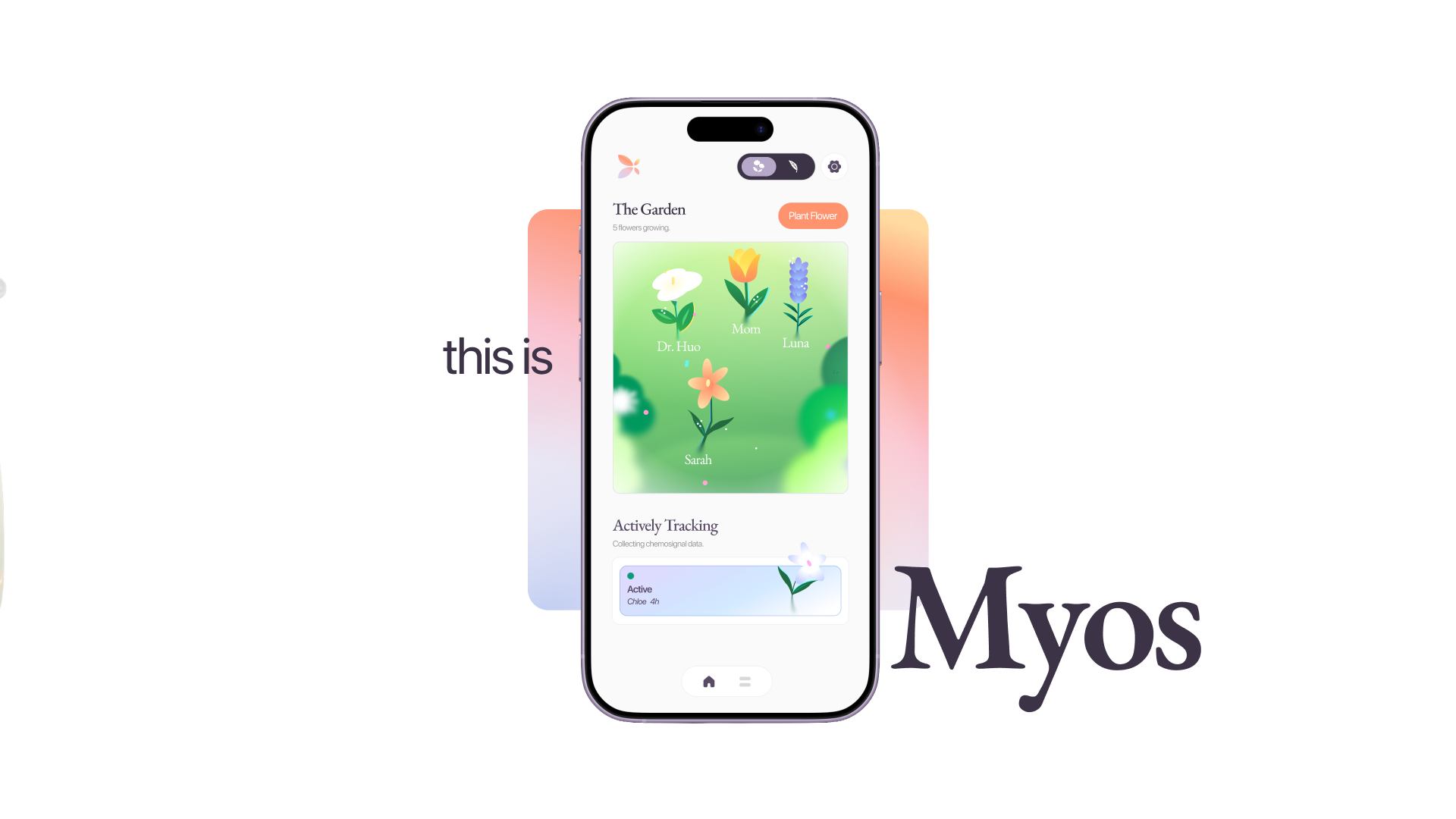
The app, for caregivers and family only, uses a garden metaphor. Each preserved person becomes a flower. Growth reflects signature strength. An insights layer surfaces patterns weekly, telling caregivers not just what is working, but when and how.
The patient never sees the app. Myos asks nothing of them.
How We Built It
We started with a philosophy before we touched an interface. The person at the center of this system cannot operate a phone, cannot follow instructions, cannot initiate anything. So the first decision was the most important one: she would never be asked to.
Every part of the system that touches her is passive, ambient, invisible. The app uses a garden because caregivers don't need another dashboard. They need something that communicates without demanding attention. A wilting flower says more than a percentage ever could.
Challenges We Ran Into
Restraint. Every time we added something, we asked the same question: does this serve the person, or does it just serve the product? Most things didn't survive that question.
We also had to decide what exactly to preserve. We didn't want to reduce a person to their body chemistry. So the Forget-Me-Not captures how someone chooses to present themselves, and the Myos pairs that with a scent that reflects who they are. That distinction, between extraction and expression, changed the ethical weight of the whole system.
What We Learned
The most important design constraints are human ones. Deciding early that Myos would never feel clinical, never alert constantly, never ask anything of the patient, those decisions didn't limit the product. They defined it.
We also learned that naming something invisible is half the work. Once we had the language of affective chemoreception, everything else had a foundation to stand on.
What's Next for Myos
Expanding to other contexts where presence matters across distance, end of life care, long-distance families, grief. Clinical validation with care facilities to measure real outcomes. And community signatures, preserving the presence of nurses, volunteers, and familiar faces, not just family.
Every visit leaves memories. Now the scent of them never fades.
Built With
- figma


Log in or sign up for Devpost to join the conversation.