Introduction
When a person becomes, paralyzed, or is born paralyzed, they are denied a lot of things that the rest of us take for granted. Range of motion, independence, and privacy are all compromised. We believe there is great opportunity to increase the quality of life for those who require the use of a wheelchair.
Our Inspiration
One of our team members has watched a close friend go through the struggle of adjusting to life in a wheelchair after an unfortunate accident in her last year of high school. She had said that the hardest thing for her to adjust to was her sudden lack of independence. This is what inspired our team to work on a solution to help those in similar situations regain at least some of the independence they once had.
Current Solutions
The current solution for wheelchair users who are not able to operate a manual chair is for them to purchase an electric one. While these give users easy access to a full range of motion in open spaces, there are still struggles they face in their everyday lives; getting in and out of bed and opening doors becomes a daily hardship. Thus far, no technology has been able to elegantly solve these problems, so the most common solution is to get an aide or a family member to act as a caretaker. Alternatively, users may install systems in their homes to avoid hiring a caretaker, an often convoluted process involving multiple providers.
Our Solution
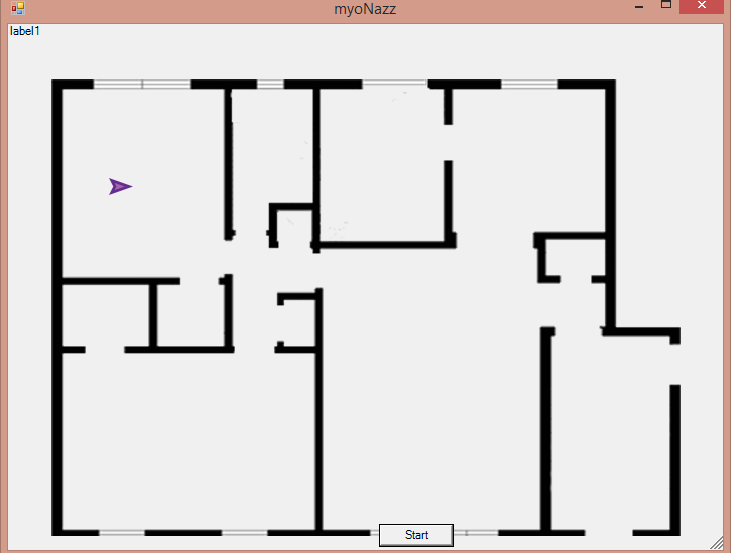
We are proposing a solution for all of these issues in one amazing device: the Myo armband. Myo has so many different features contained within it that it is able to perform a wide and diverse range of tasks. Currently, the basic functionality of moving the chair around the home similar to the way an electric wheelchair would has been prototyped and is functioning in a small top-down demo. The next steps are to add support for arbitrary angles of movement, and to add secondary functionality in order to open doors and assist with getting in and out of bed. This would require the use of more of the Myo's functions to implement hydraulics within the wheelchair to lift it to the height of the bed so that the person can easily slide into the wheelchair (or vice-versa). The same approach would be used to open doors. This would allow wheelchair users to regain privacy and independence with a simple, all-in-one solution. Our solution uses one small, but amazing device to help ease daily challenges faced by wheelchair users in their home.

Log in or sign up for Devpost to join the conversation.