-
-
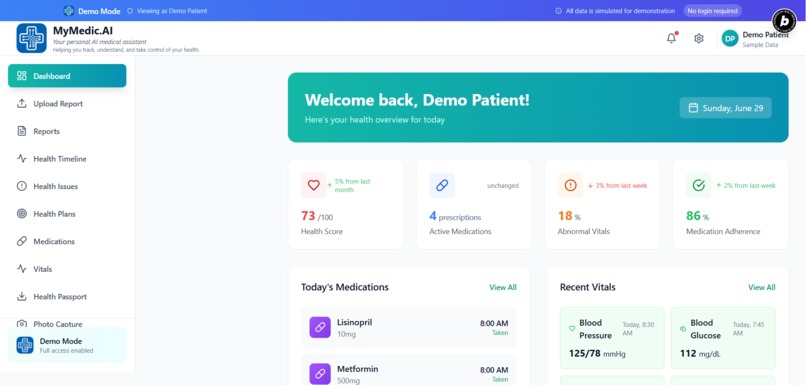
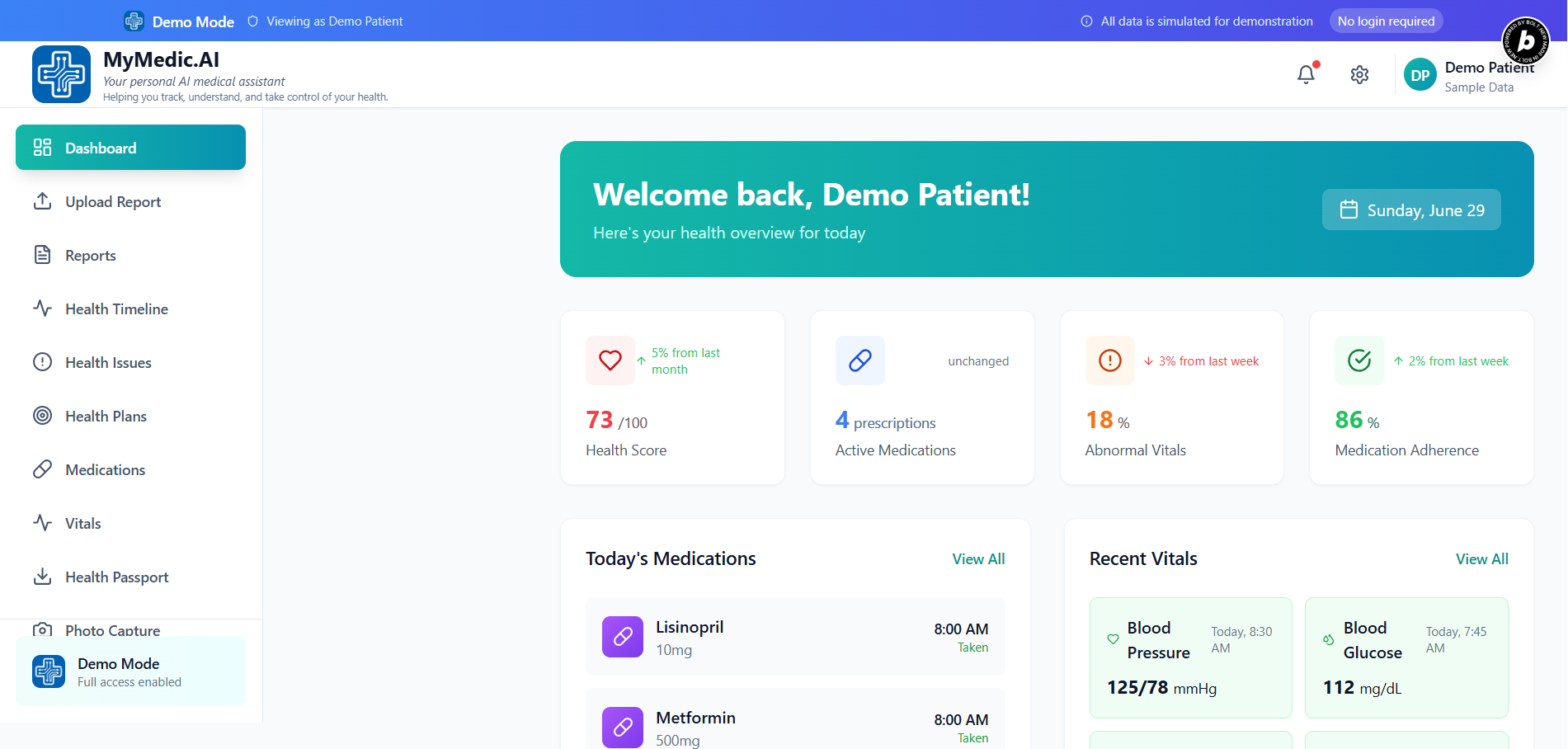
Dashboard — your personalized health command center
-
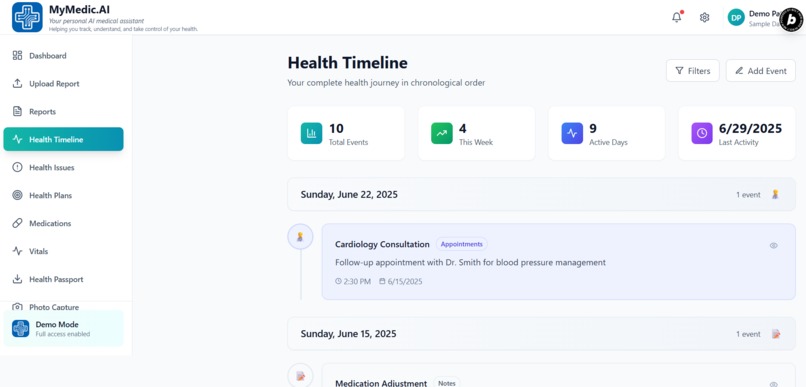
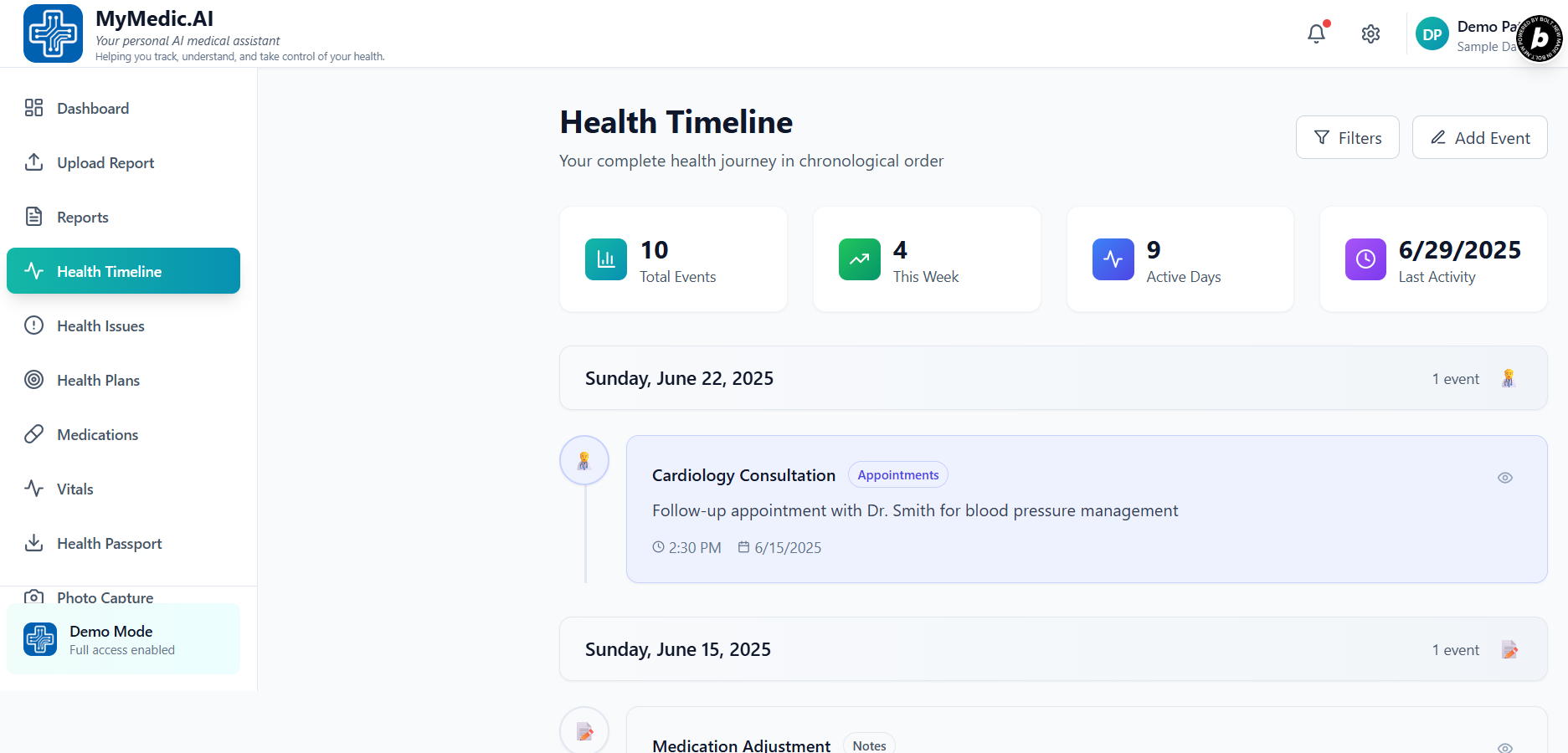
Health_Timeline: Chronological view combining reports, meds, vitals, and plans
-
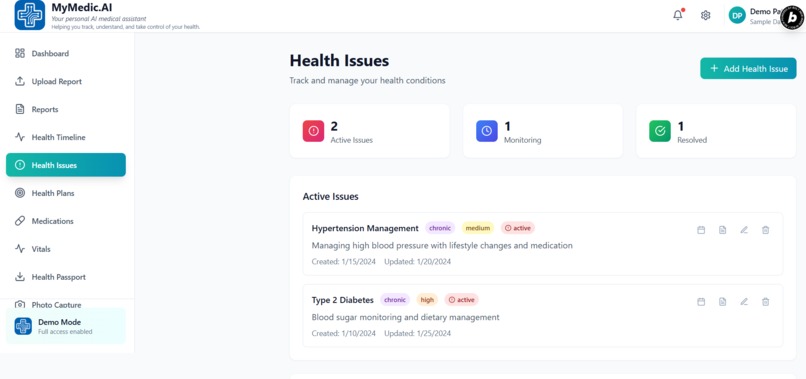
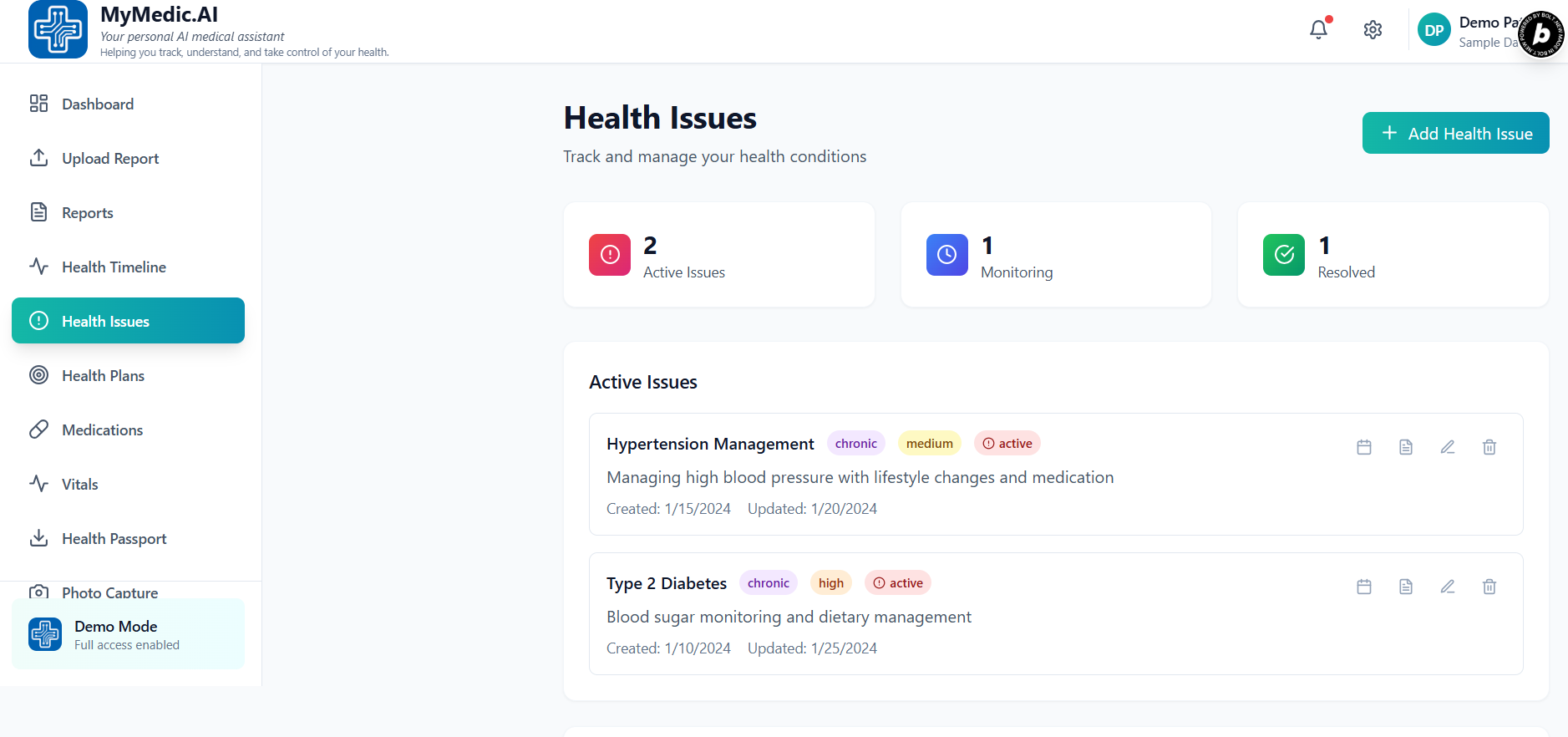
Health_issue: Register your current health issue for effective communication with your doctor
-
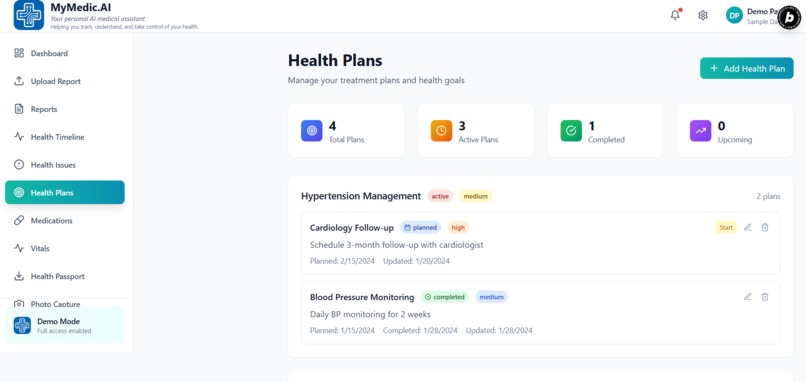
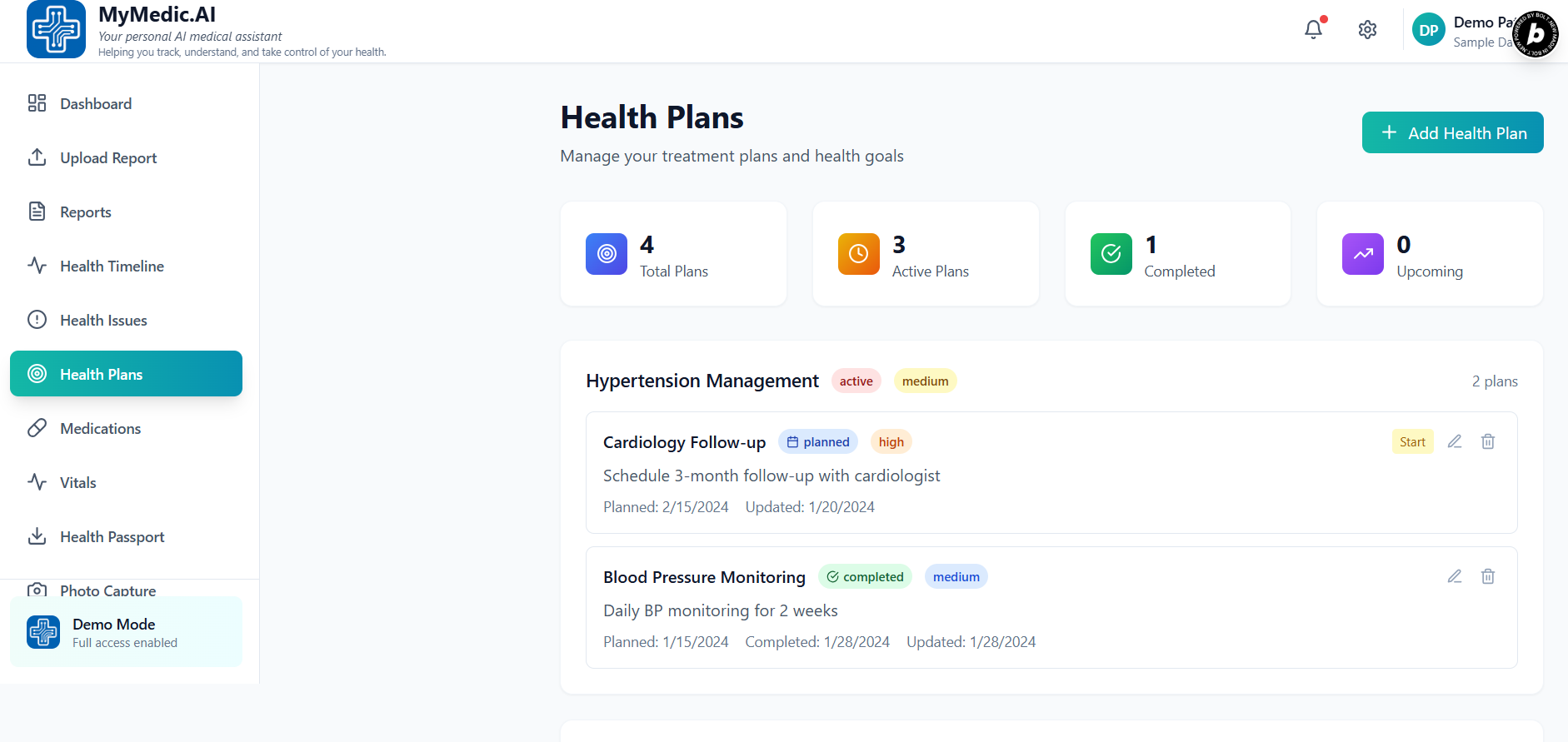
Health_Plan: patients can add, track, and prioritize conditions and their treatments
-
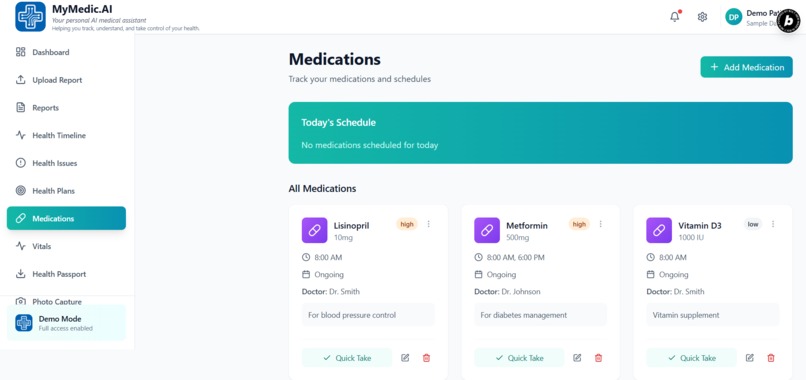
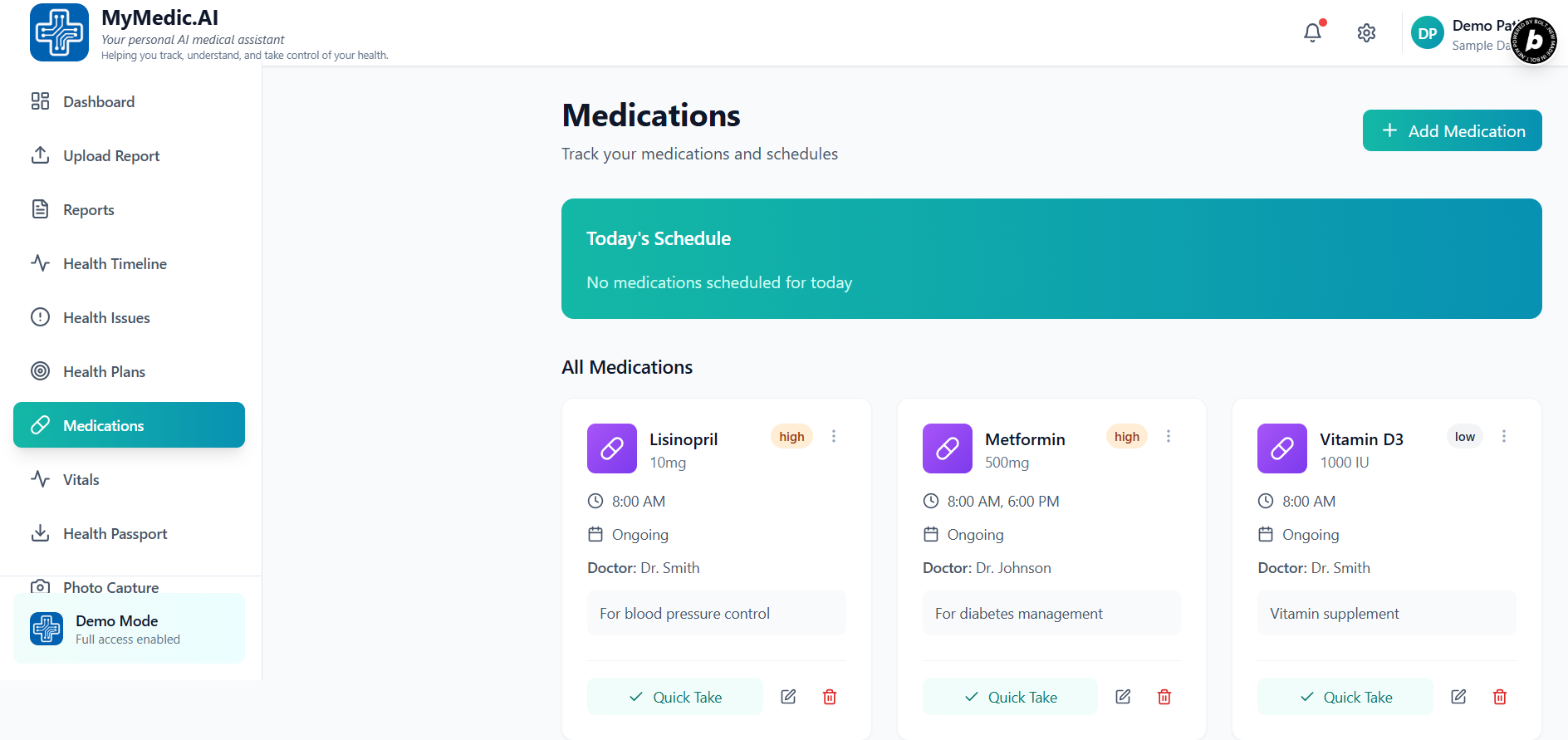
Medication tracker
-
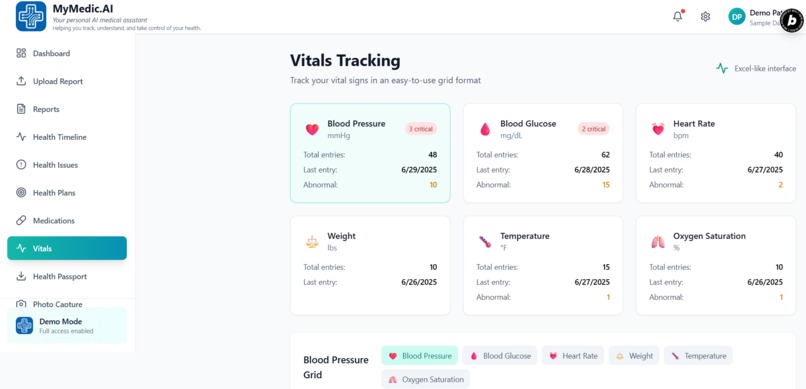
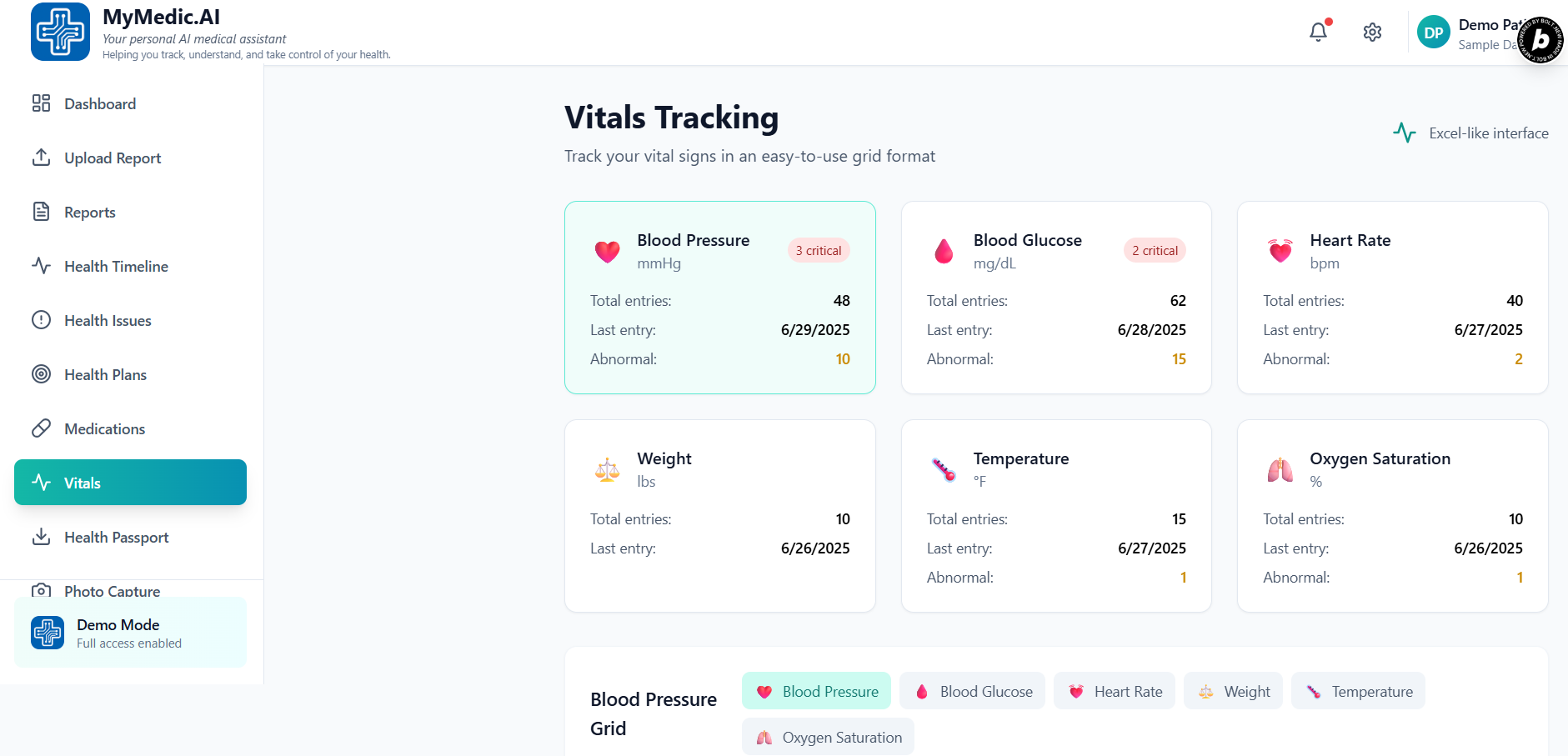
Track all your vitals and monitor trends
-
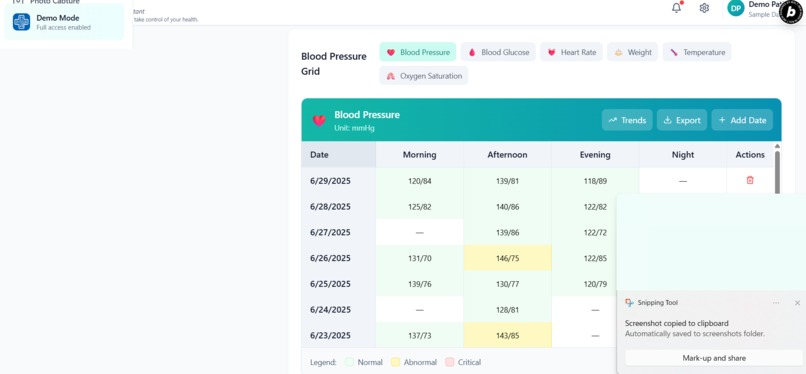
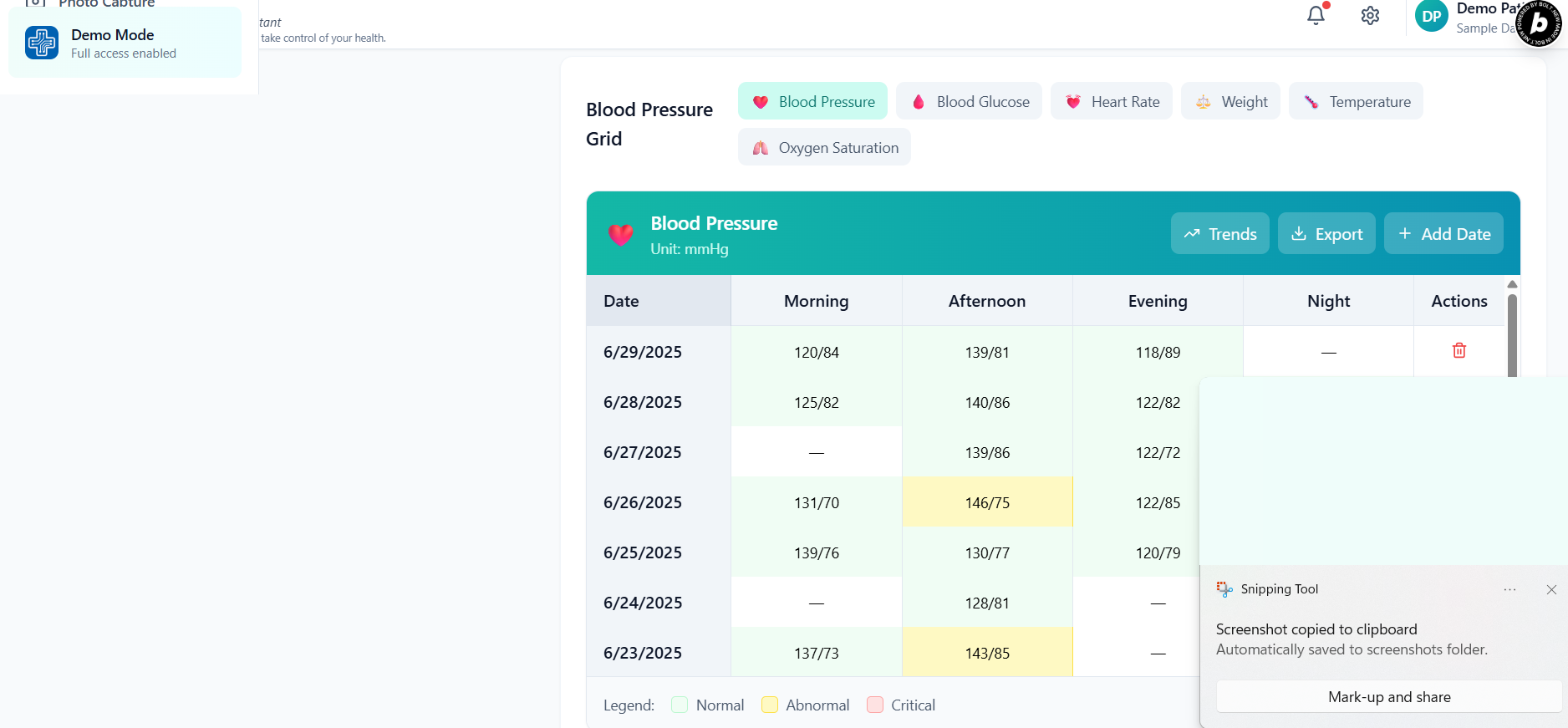
Vitals charting
-
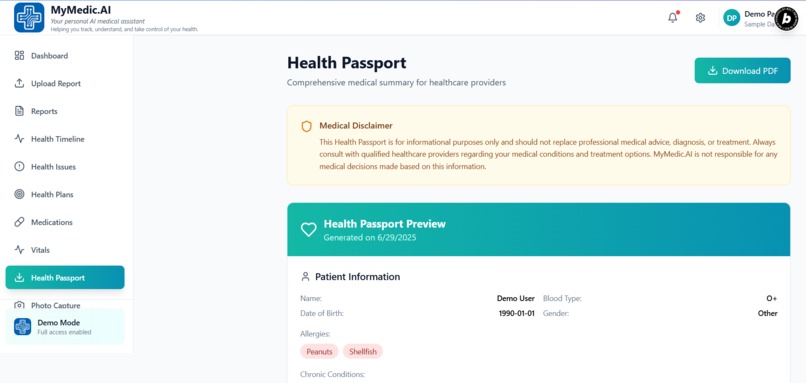
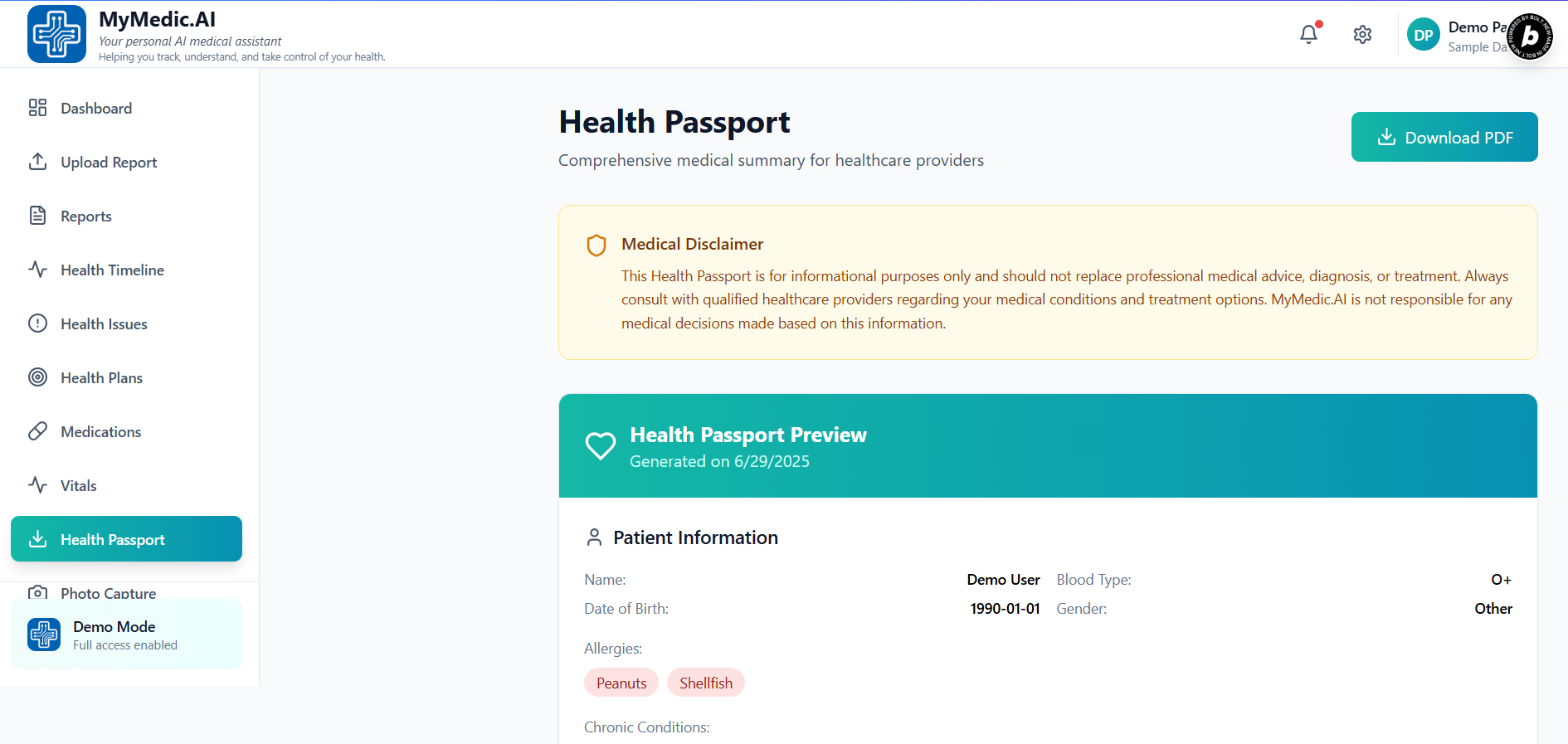
Health_Passport: a smart, auto-generated summary that brings together the patient’s complete medical history: current and past
Inspiration
As a practicing surgical oncologist, I’ve repeatedly seen patients struggle with a hidden crisis—disorganized and incomplete medical histories. Many arrive with worn-out prescriptions, lost test reports, or no clear timeline of their treatments. They often consult multiple specialists but have no unified record of medications, diagnoses, or follow-ups. This isn’t just inconvenient—it’s dangerous. Patients end up on duplicate medications, miss critical follow-up steps, or receive incomplete or inappropriate care due to missing context.
The situation is even more dire in developing countries, where national-level electronic health records are either nonexistent or fragmented. If a patient loses their physical copies, they risk losing their entire medical history. And because hospital-based record systems are fragmented and owned by institutions, patients have little power or visibility into their own care journey.
MyMedic.AI was born to solve this problem—not from theory, but from real-world medical experience. It’s a patient-first, AI-powered platform designed to unify medical history, treatment plans, reports, vitals, and medications into a simple, visual, and secure tool. Unlike institutional systems, it puts ownership back in the patient’s hands—making it easier for both patients and doctors to make informed, safe, and coordinated decisions. Thanks to Bolt.new, even non-tech professionals like me can now build real solutions to the everyday problems we face in our practice—without waiting for someone else to do it. MyMedic.AI is just the beginning.
What it does
MyMedic.AI is a complete AI-powered health tracking platform for patients. It allows users to:
- 📋 Maintain health issues & treatment plans
- 💊 Track medications and see adherence in real-time
- 🏥 Log vitals in an Excel-like grid interface with visual trend analysis
- 📄 Upload medical reports (PDFs/images), extract text with OCR, and generate AI-powered summaries
- 📆 See a unified health timeline of all health events across medications, vitals, plans, and reports
- 📊 View a dynamic health dashboard with personalized stats
- 🔒 Keep data private—owned and managed by the patient, not locked in hospital systems
- 🌐 Support both real data and mock demo data for testing and education
- 🧾 Generate a Health Passport: a concise, structured summary of the patient's complete medical history (past and present), ideal for sharing with new doctors during consultations
Everything is designed with a patient-first mindset and made simple for real-world use, even by those with limited tech literacy.
How we built it
We used:
- Bolt.new as the core low-code/no-code platform
- Supabase as our database with Row Level Security to protect user data
- React (via Bolt) for building beautiful, responsive UI
- Chart.js for vital trends and adherence graphs
- OpenAI GPT-4o / Claude Sonnet 4 for AI-powered medical summary generation
- OCR for extracting text from reports
- Responsive design to work on mobile and desktop
We structured our app into modules:
- Vitals Grid → editable spreadsheet-like tracking + graphing
- Medication Manager → tracking, scheduling, adherence stats
- Health Issues & Plans → problem-based care planning
- Reports → upload → OCR → AI summary → timeline
- Unified Timeline → chronological health log
- Dashboard → all health info in one glance
Challenges we ran into
- Getting the Vitals form submission to work properly was tricky—we debugged event handlers, forms, button states, and grid design
- Designing a clean UI that shows complex health data but stays user-friendly took iteration
- Managing Supabase triggers, functions, and RLS policies without breaking migrations
- OCR + AI summary required tuning prompt format to make summaries useful but non-technical
- Keeping it all token-efficient in Bolt, while adding smart features like color-coded zones, trend graphs, and health statistics
Accomplishments that we're proud of
- Replacing a standard form-based vitals input with an Excel-style grid with editable cells and color-coded zones for normal/critical values
- Creating a unified timeline that displays reports, meds, vitals, and health events in a doctor-friendly chronological format
- Enabling OCR + AI summarization for medical reports so patients (and even non-medical family members) can understand what a report means
- Keeping patient data ownership & privacy central to the app design
- Doing all of this inside Bolt in a token-efficient and beautifully designed way!
What we learned
- How to build a real-world clinical-grade health app using Bolt efficiently
- How to combine Supabase triggers, RLS, functions, and frontend services in a privacy-first way
- Learned React design patterns (via Bolt) to build reusable, responsive components
- Improved our understanding of UX in healthcare, especially for older and rural patients
- Learned how to debug complex Bolt flows with limited token budgets, and still deliver a polished app
What's next for MyMedic.AI
- ✅ Deploy the app to our custom domain with Netlify for real-world use
- 🌐 Add support for multiple patient profiles (e.g. family members) under one login
- 📱 Build a mobile-first PWA version for offline tracking and syncing
- 📤 Enable doctor access with patient permission for collaborative care
- 🧠 Add AI-based alerts for dangerous medication combinations or abnormal trends
- 🗃️ Enable exporting full medical records in formats like PDF for use during consultations
- 🇮🇳 Translate interface into local languages (Hindi, Tamil, Bengali, etc.)
- 👩⚕️ Partner with rural clinics to use it as an offline EMR alternative
Built With
- bolt.new
- chart.js
- claude-sonnet-4
- ocr-(tesseract-via-supabase-functions)
- openai-gpt-4o
- postgresql
- react
- supabase
- tailwind-css
- typescript

Log in or sign up for Devpost to join the conversation.