Inspiration
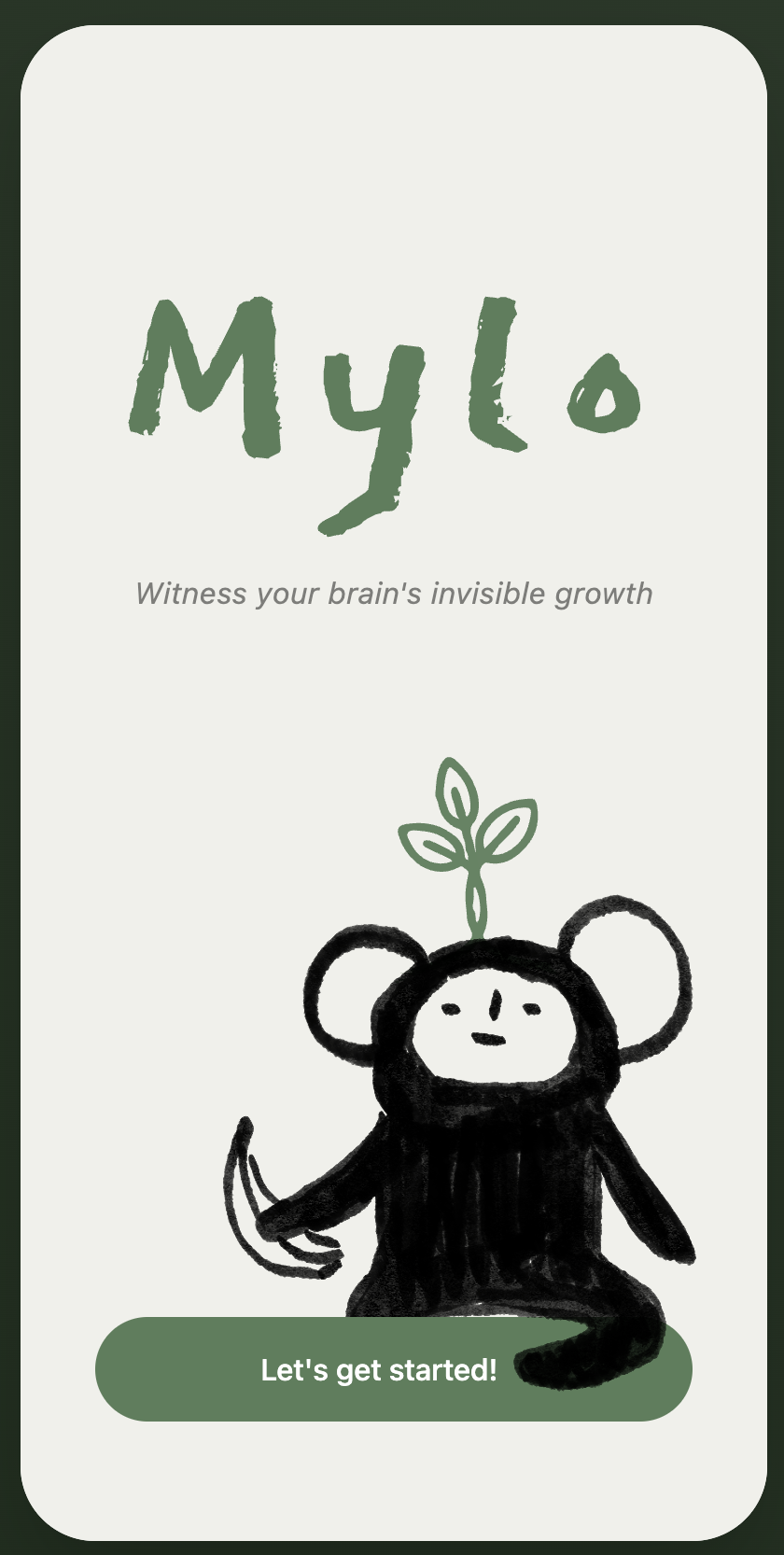
We found inspiration in the name Mylo from myelin sheath, the protective layer that boosts a neuron’s firing. As we considered a new sense that would better human self understanding, we thought we would look within. Neuroplasticity has always been something we found fascinating – being able to rewire your brain. We thought it would be interesting to enhance this sense of interoception by visualizing the effects of neuroplasticity in real-time.
What it does
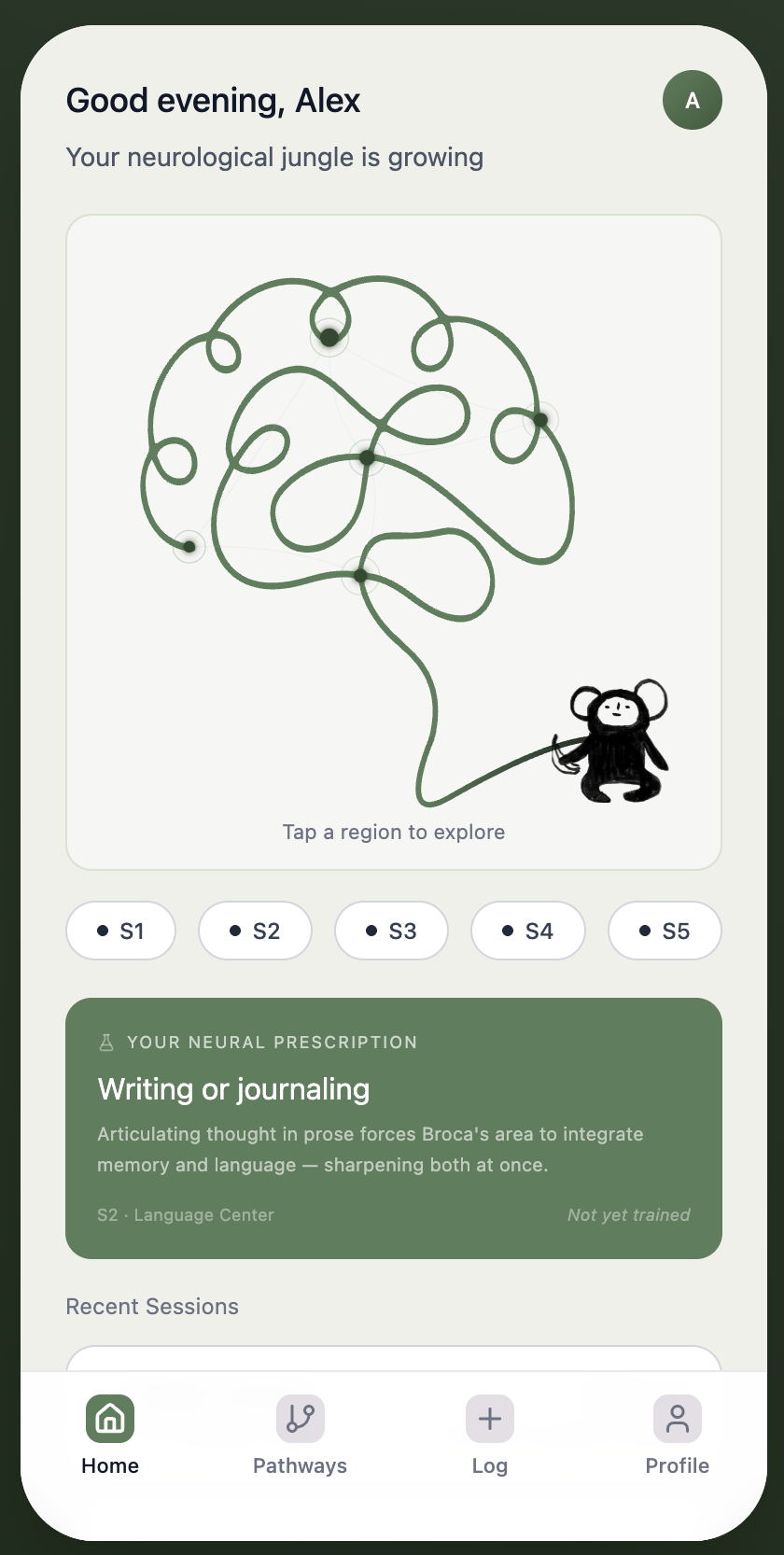
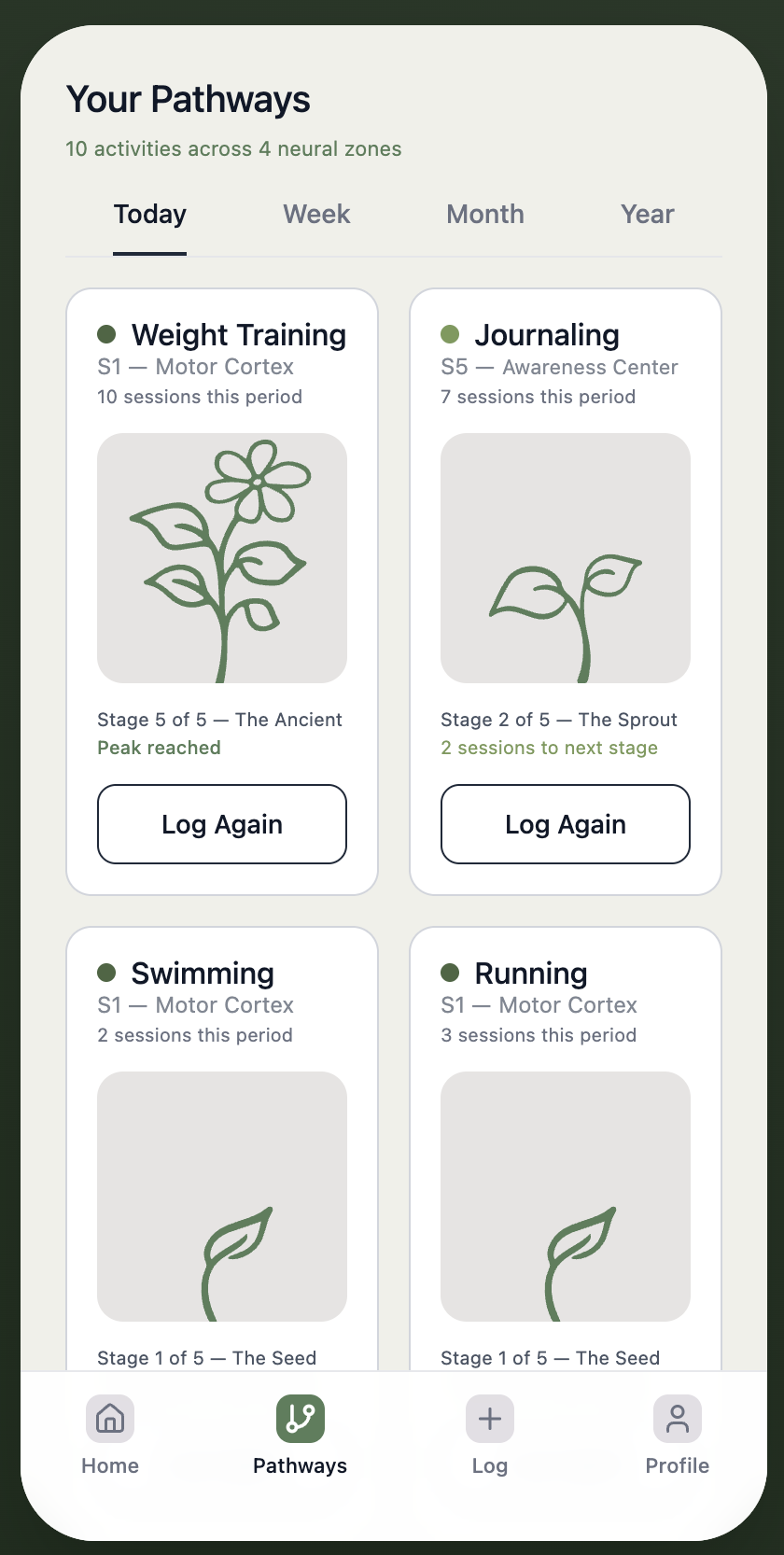
Each person has a unique and identifiable “neural fingerprint” based on their brain structure and typical neural patterns. Unlike a regular fingerprint, though, our “neural fingerprint” is constantly evolving due to neuroplasticity. Factors like external environment, stress, genetics, aging, and more can affect what our neural structure looks like from day to day, and it can be trained. That’s where Mylo comes in. Upon logging into our app, users’ unique “neural fingerprints” will be linked to the app. From there, a set of questions assess users’ daily habits like age, sleep, and physical activity to determine typical neural patterns. Users can then choose to specify a goal, such as learning a new skill, better physical performance, and more. Daily activities and a routine strengthens users’ neuro-connections. Mylo lets users see neuroplasticity in action, visualizing each neuro-pathway as a seed that grows into a full-bloomed flower as their connections strengthen and evolve.
How we built it
Upon deciding on the sense of neuroplasticity, we curated a survey to see what it is people wish they knew about themselves to decide what to implement in our project. After, we went onto affinity mapping, where we grouped common ideas together to narrow down the specific topics we wanted to focus on. For instance, we focused on brain cortexes versus brain regions as they are more specific and offered less overlap. From there, we began drawing sketches of how to visualize the brain, what we were going to name these regions in relation to our idea, and came to our final decision of relating the brain as a jungle environment. Then, we started a lo-fis in Figma, creating a design system to settle on typefaces, color schemes, and components to incorporate in the hi-fis. We transitioned into Figma Make to begin prototyping the usability of our app, to which we continued to reiterate designs until we were satisfied with the user interface.
Challenges we ran into
This was our team's first time using Figma and Figma Make, so the learning curve was steeper than expected. Transitioning components generated by Figma Make into our main design file was occasionally inconsistent, as elements wouldn't always carry over cleanly, requiring manual adjustments that added time to our workflow. One of our bigger friction points was working with imported images. When we brought assets from our design file into Figma Make, the tool didn't always wire them the way we intended. Interactions would break, images would fail to render in context, or the output would drift from the original design vision entirely. More broadly, we realized quickly that Figma Make is only as effective as the prompts you feed it. Vague or loosely structured prompts produced outputs that missed the mark, which meant we had to iterate heavily by refining our language, being more explicit about layout and behavior, and learning to think in terms of what the tool could parse rather than what we could imagine. Developing those prompt engineering skills mid-designathon, under time pressure, was a challenge in itself. Working through these limitations gave us a much clearer understanding of how to use AI-assisted design tools more intentionally, especially with the 3000 credit limit that we are given.
Accomplishments that we're proud of
Overall, we are incredibly proud of the time and effort we have put into this entire app. From the entire ideation process that was full of ideas to narrowing down into understanding one’s own neuroplasticity better, our first designathon is a success, no matter the outcome. What stands out most is the range of people this app could genuinely serve. The use cases span different ages, different needs, and different contexts — from creative exploration to mental health support — all grounded in the same core idea of helping someone understand themselves a little better.
Our brains are a jungle, an environment that has so much to be explored and so much to be understood.
What we learned
We learned a lot about neuroplasticity and neurobiology throughout this process. In our research process, we learned the various brain regions and their primary functions, as well as interactions between the different brain cortexes. Neuroplasticity is such an interesting phenomenon because anyone has the ability to reshape who they want to be simply through what they repeatedly do and experience is something we found genuinely exciting. Throughout the design process, we learned about writing neutral and open-ended survey questions to avoid guiding respondents towards a certain outcome. We also learned about the importance of user research in assessing the issue and enhancing accessibility for a wide range of users. We also learned that these tools work best when you treat them as a starting point rather than a final output. Almost everything Figma Make generated required refinement — adjusting how components translated into the design file, fixing broken interactions, and manually correcting image wiring that didn't behave as expected. The biggest takeaway was learning to work with the tool's limitations rather than against them. Understanding what Figma Make could and couldn't parse changed how we prompted it, how we structured our design files, and how we divided work as a team.
What's next for Mylo
We are excited to see where Mylo can take us as a next step toward human self understanding as technology designed to scan users’ brain structures and track neural activity looms on the horizon.
Built With
- figma
- react
- supabase
- tailwindcss


Log in or sign up for Devpost to join the conversation.