-
-
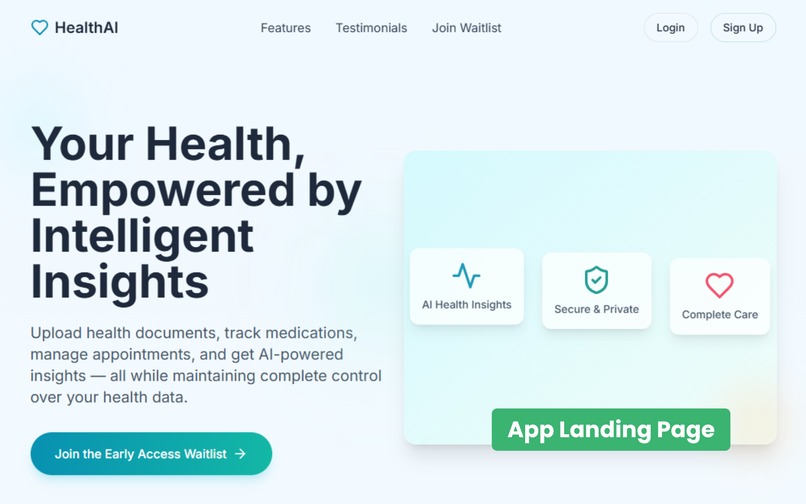
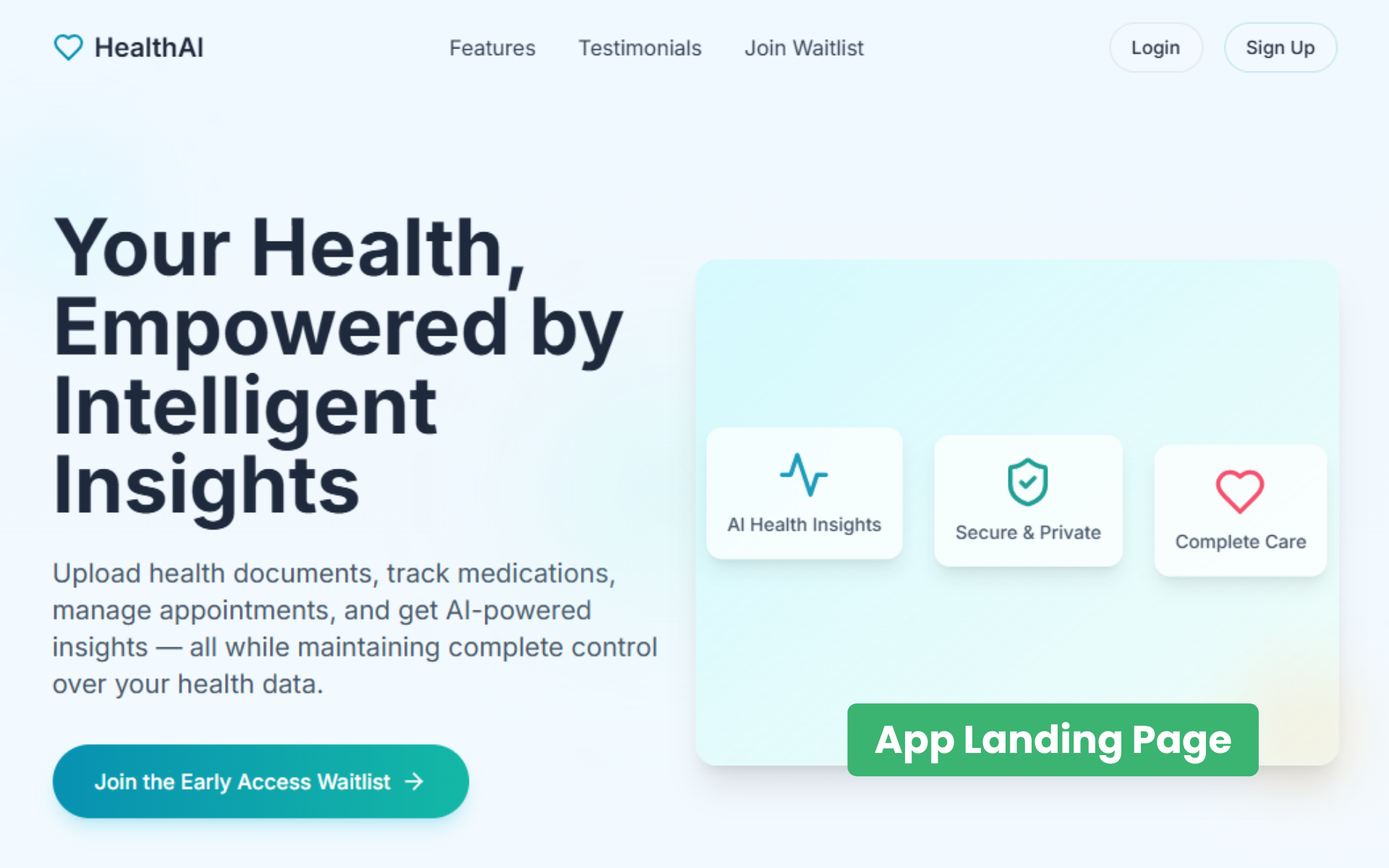
App landing page
-
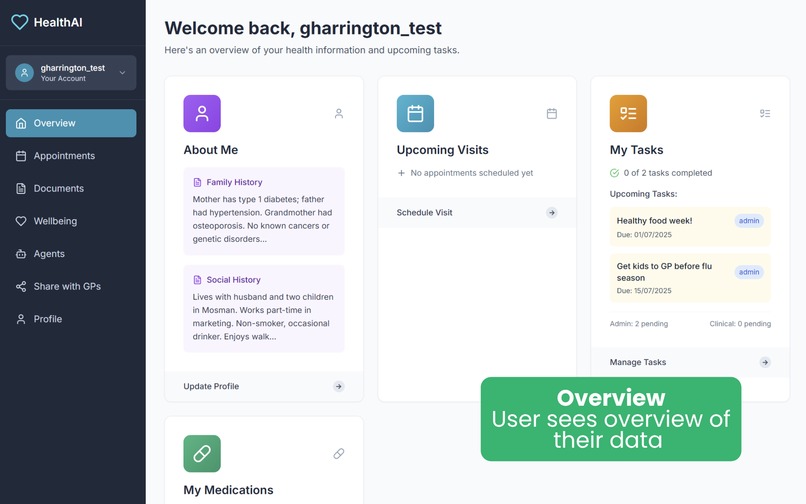
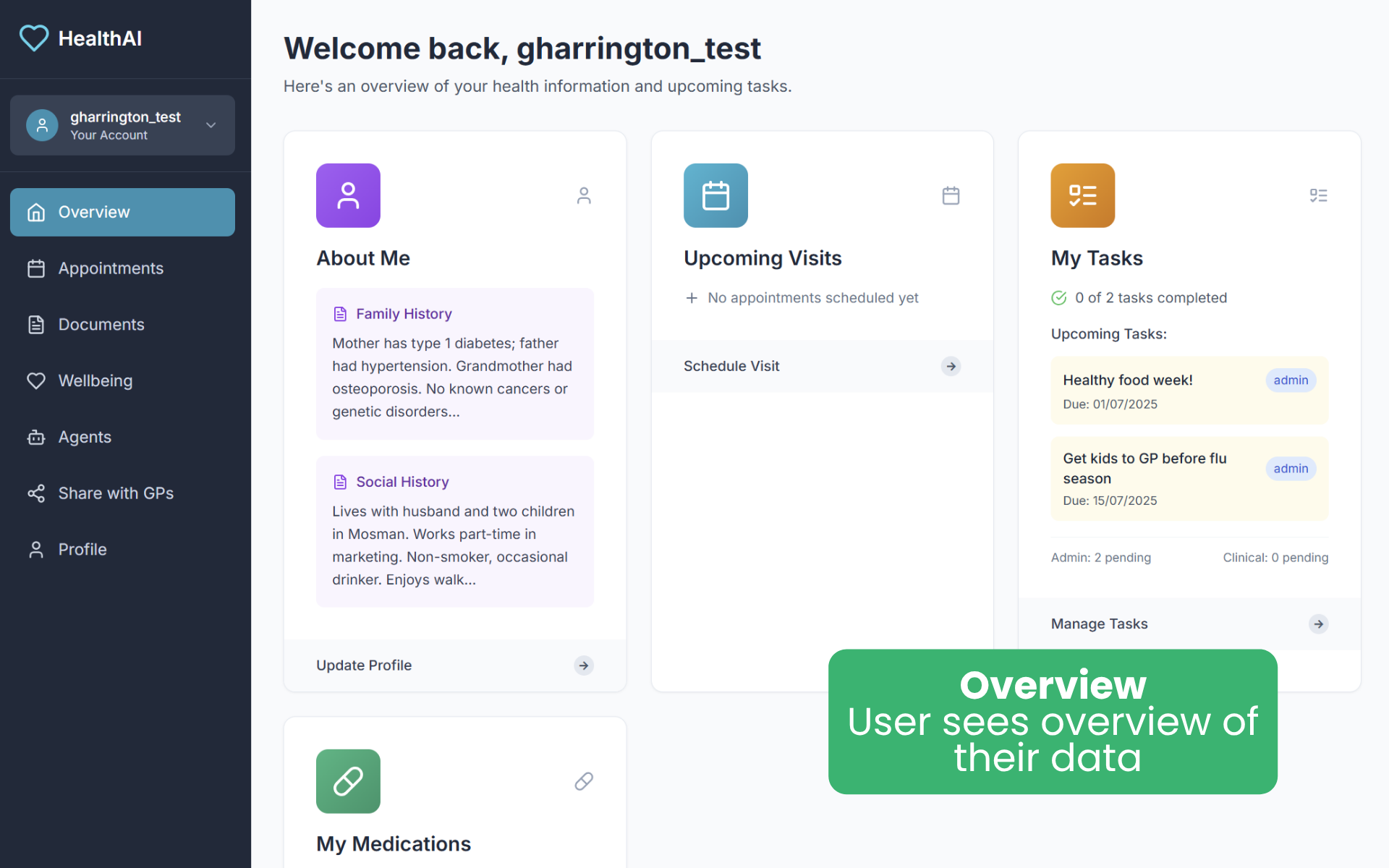
Overview: User sees overview of their data
-
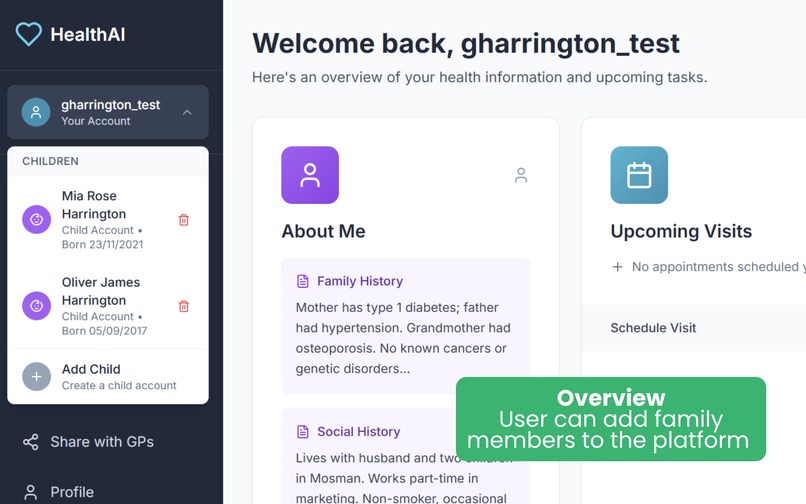
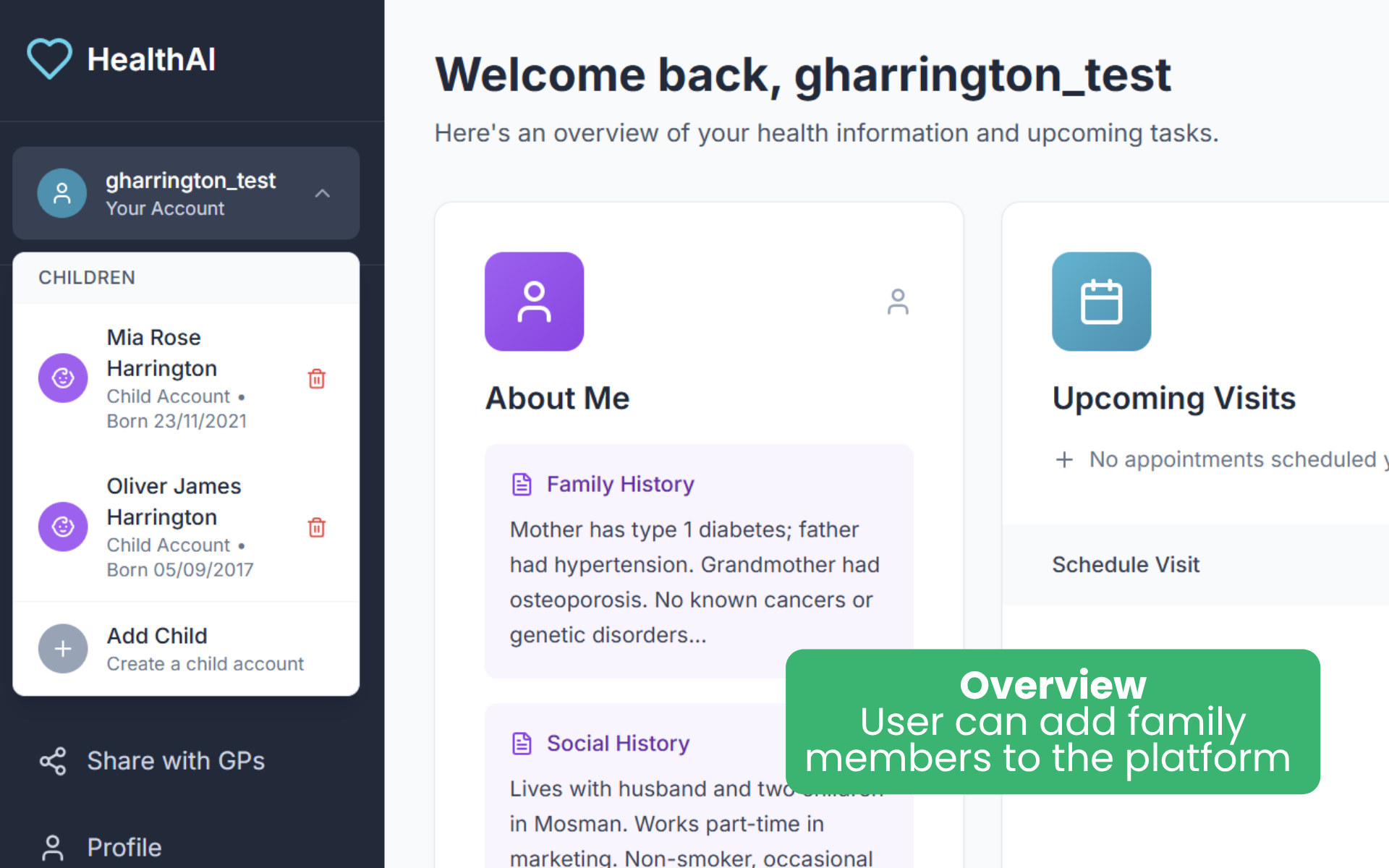
Overview: User can add family members to the platform
-
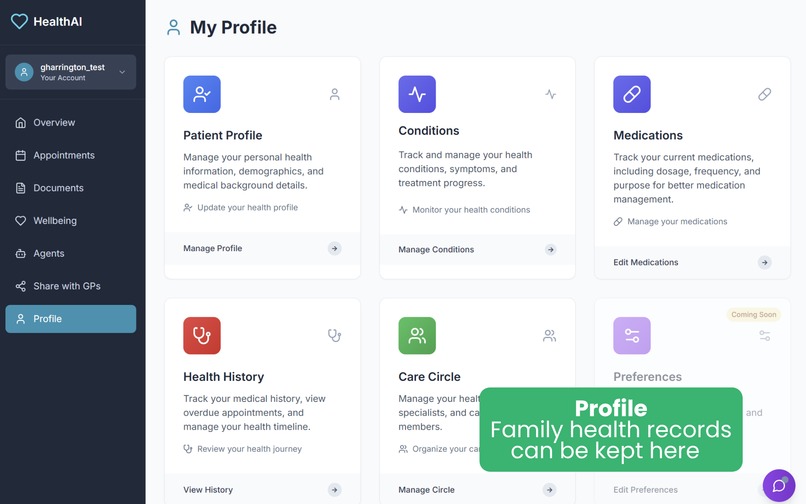
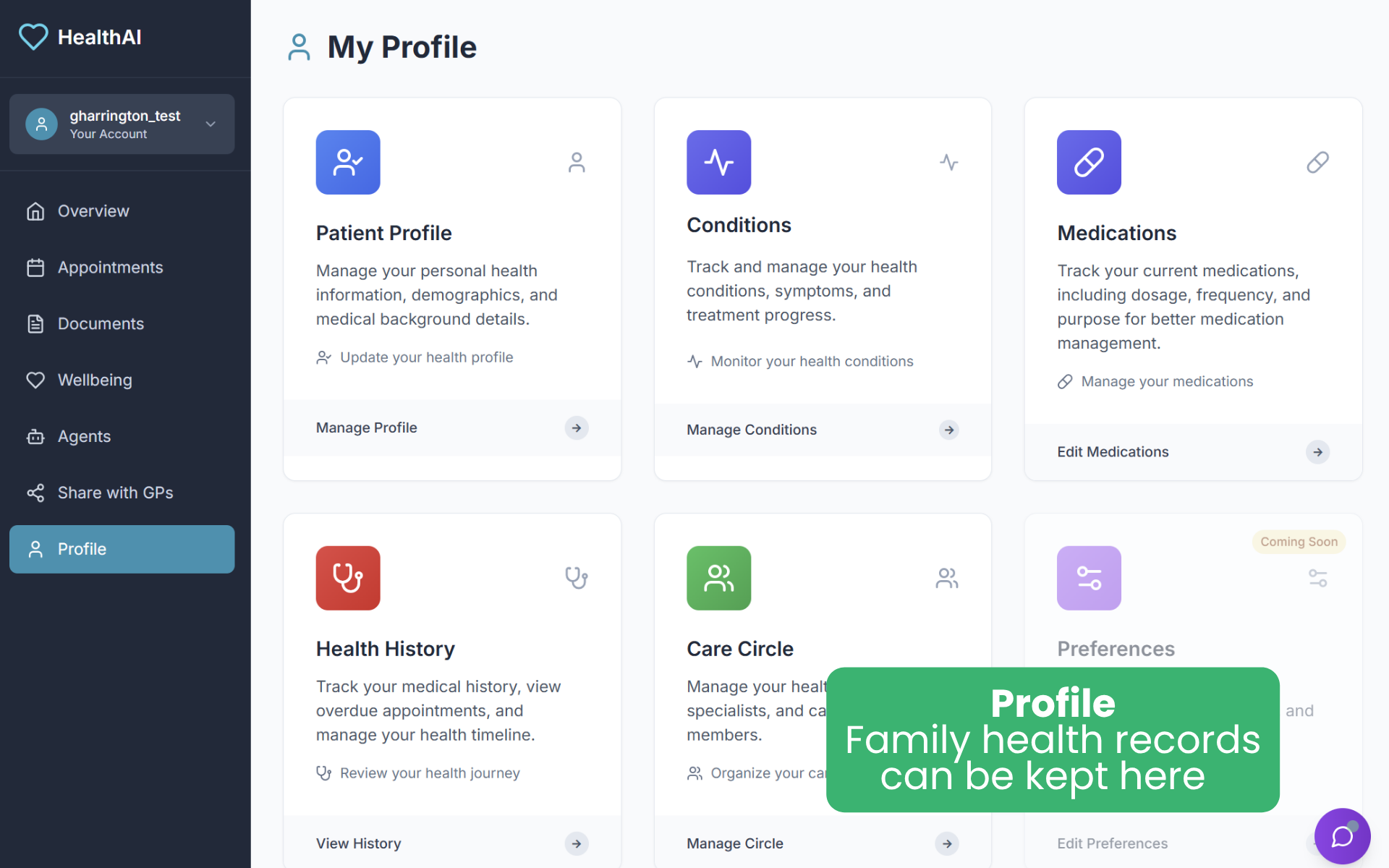
Overview: Family health records can be kept here
-
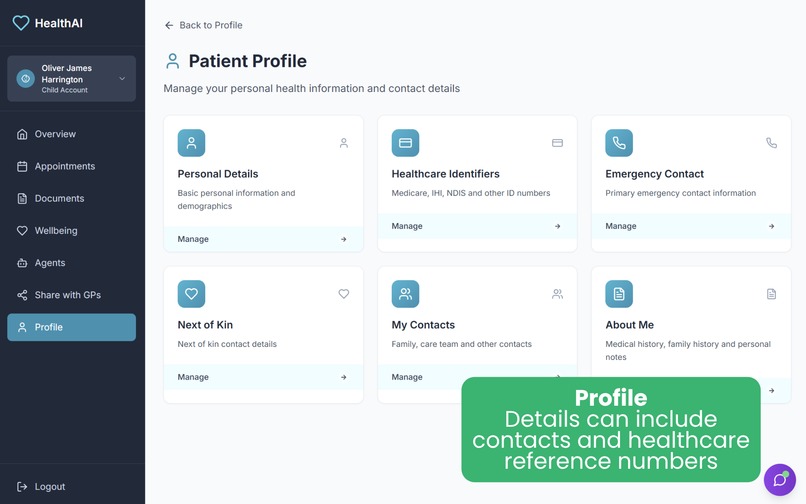
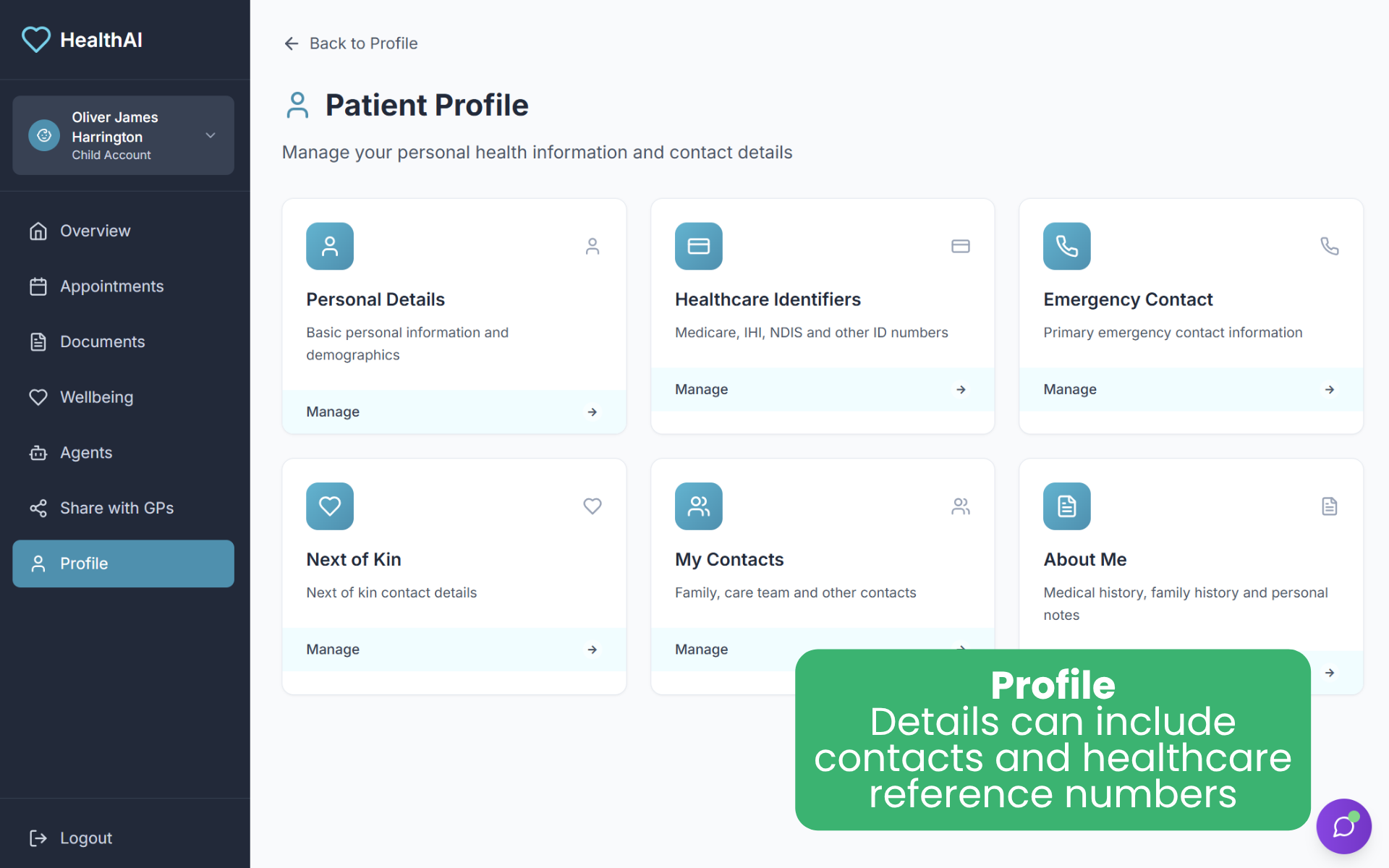
Profile: Details can include contacts and healthcare reference numbers
-
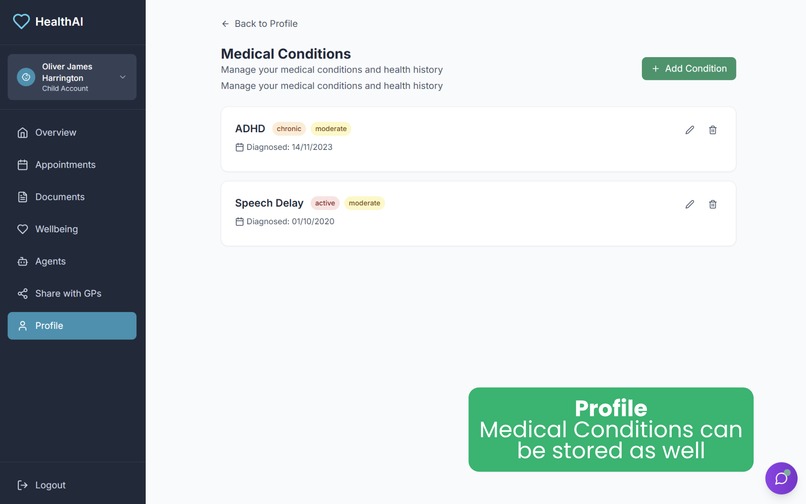
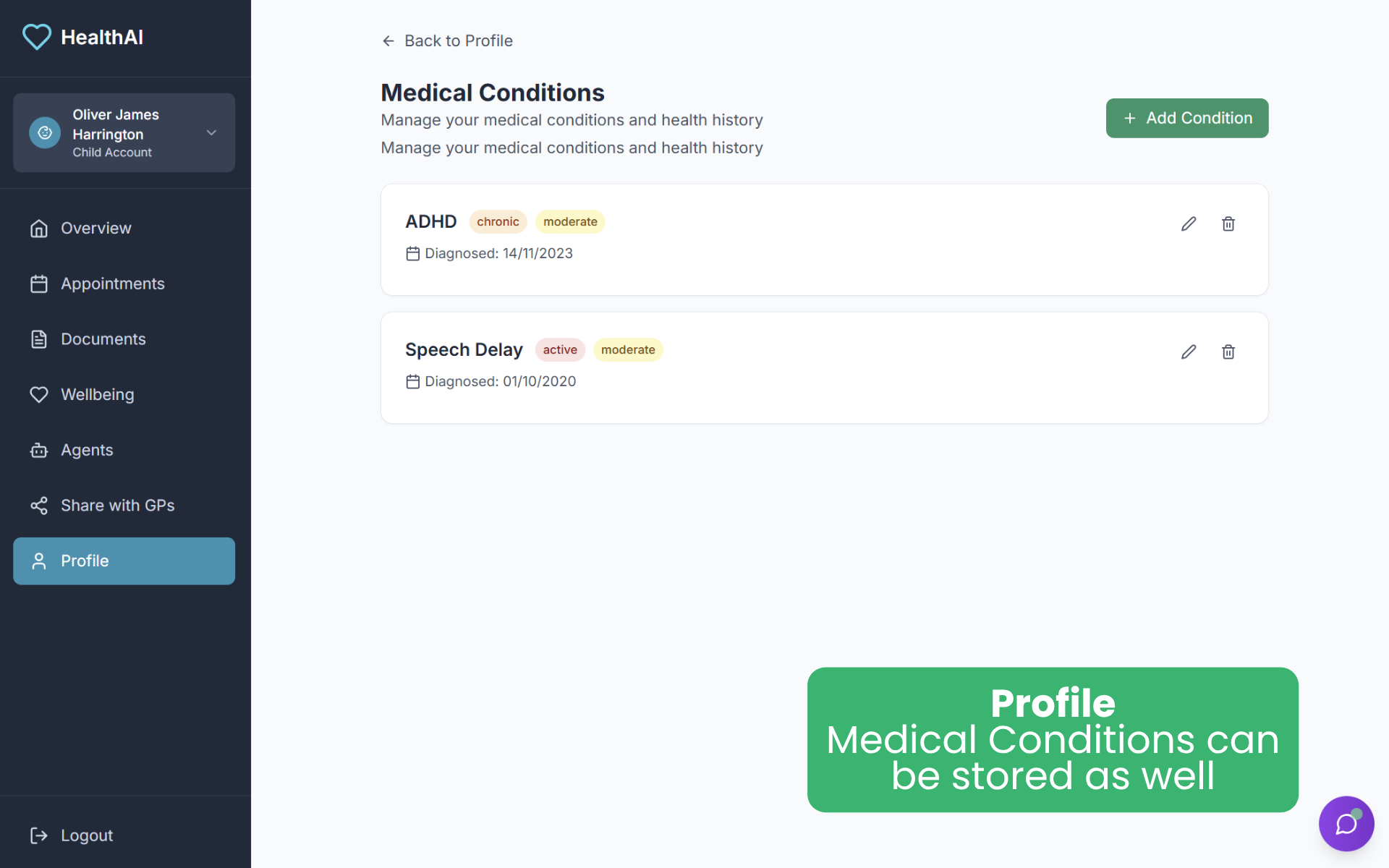
Profile: Medical conditions can be stored as well
-
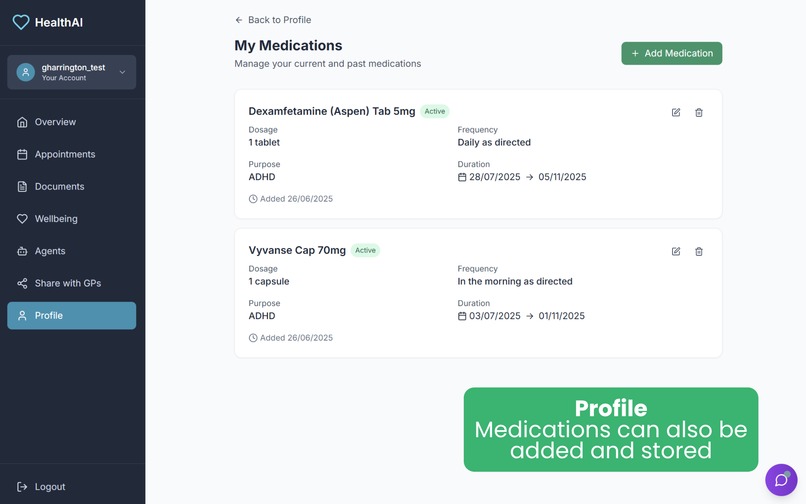
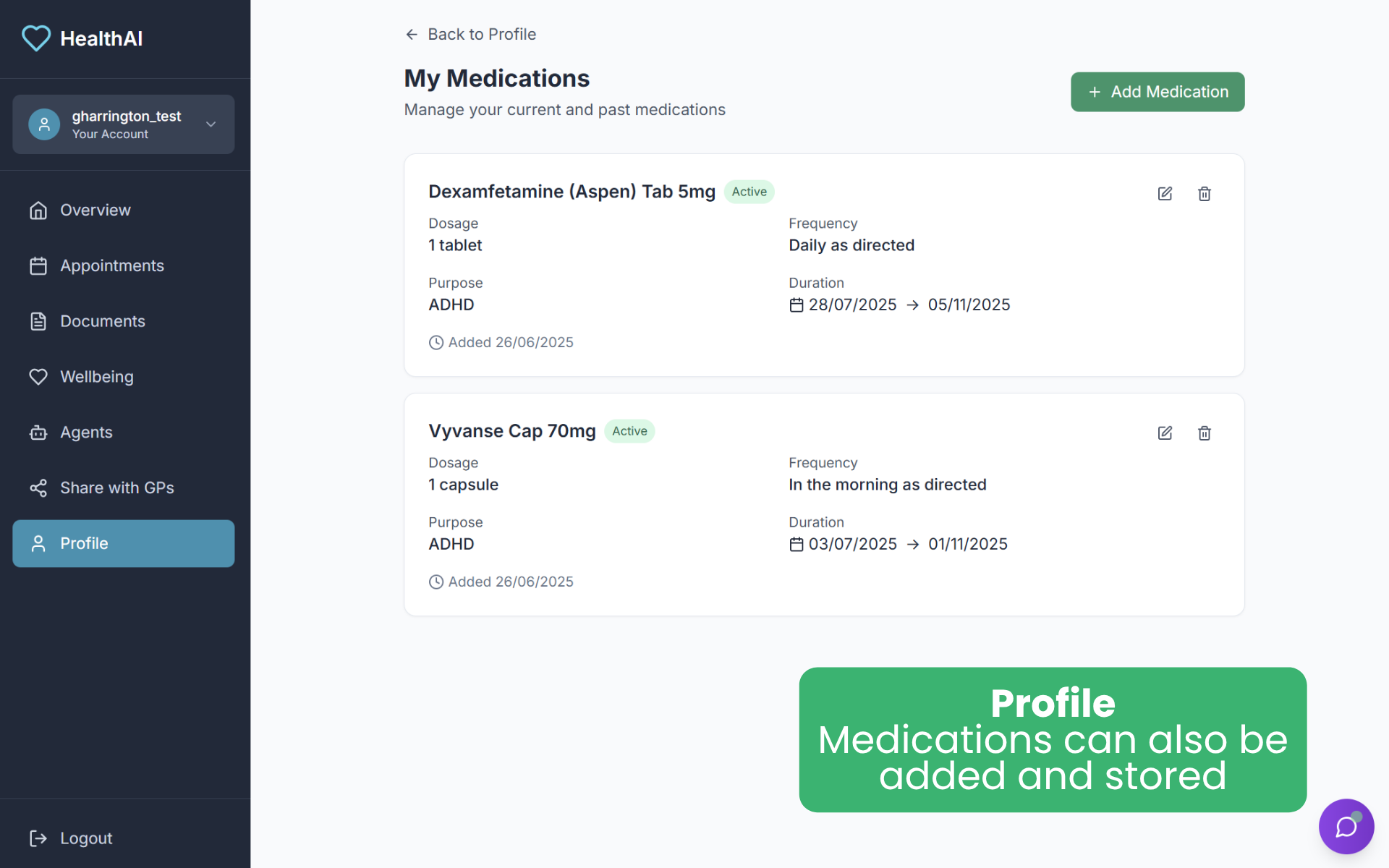
Profile: Medications can also be added and shared
-
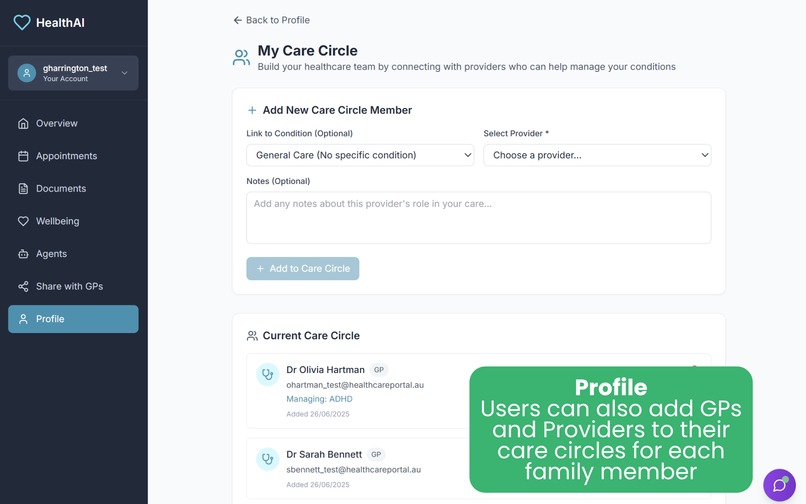
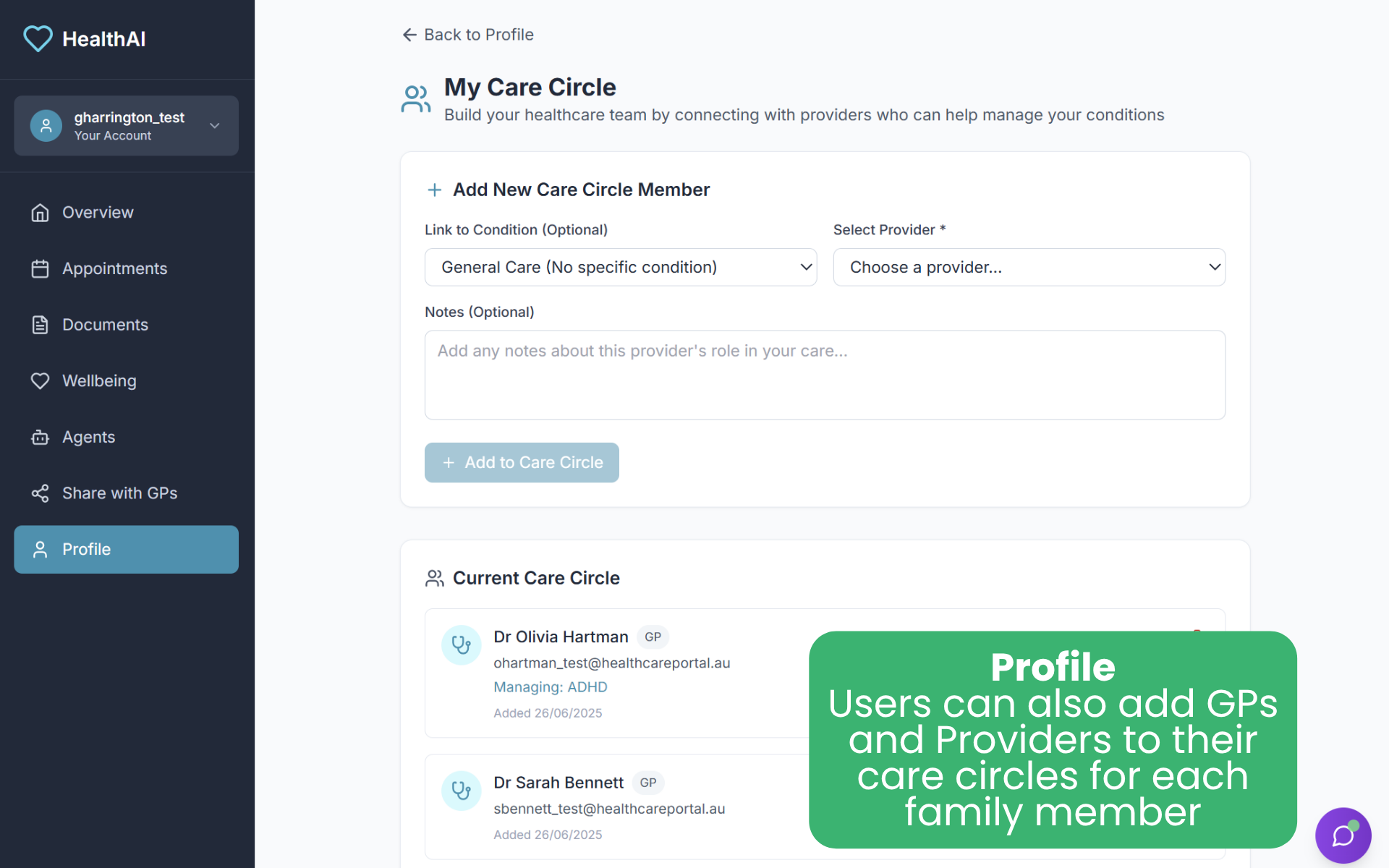
Profile: Users can add GPs and Providers to their care circles for each family member
-
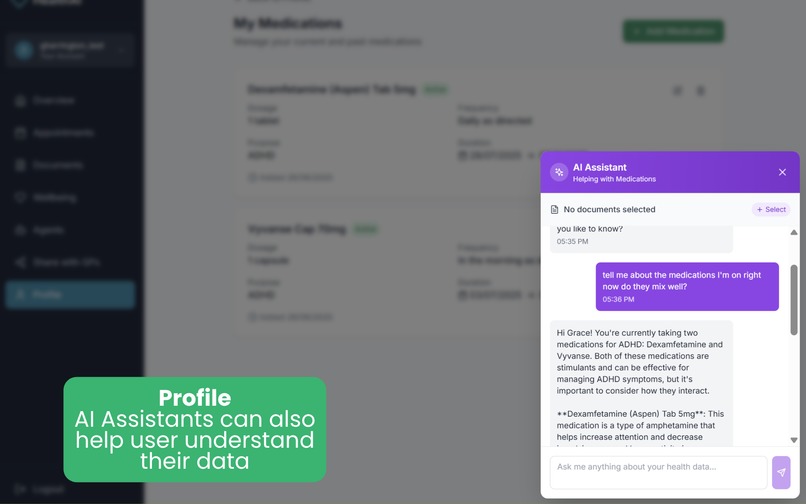
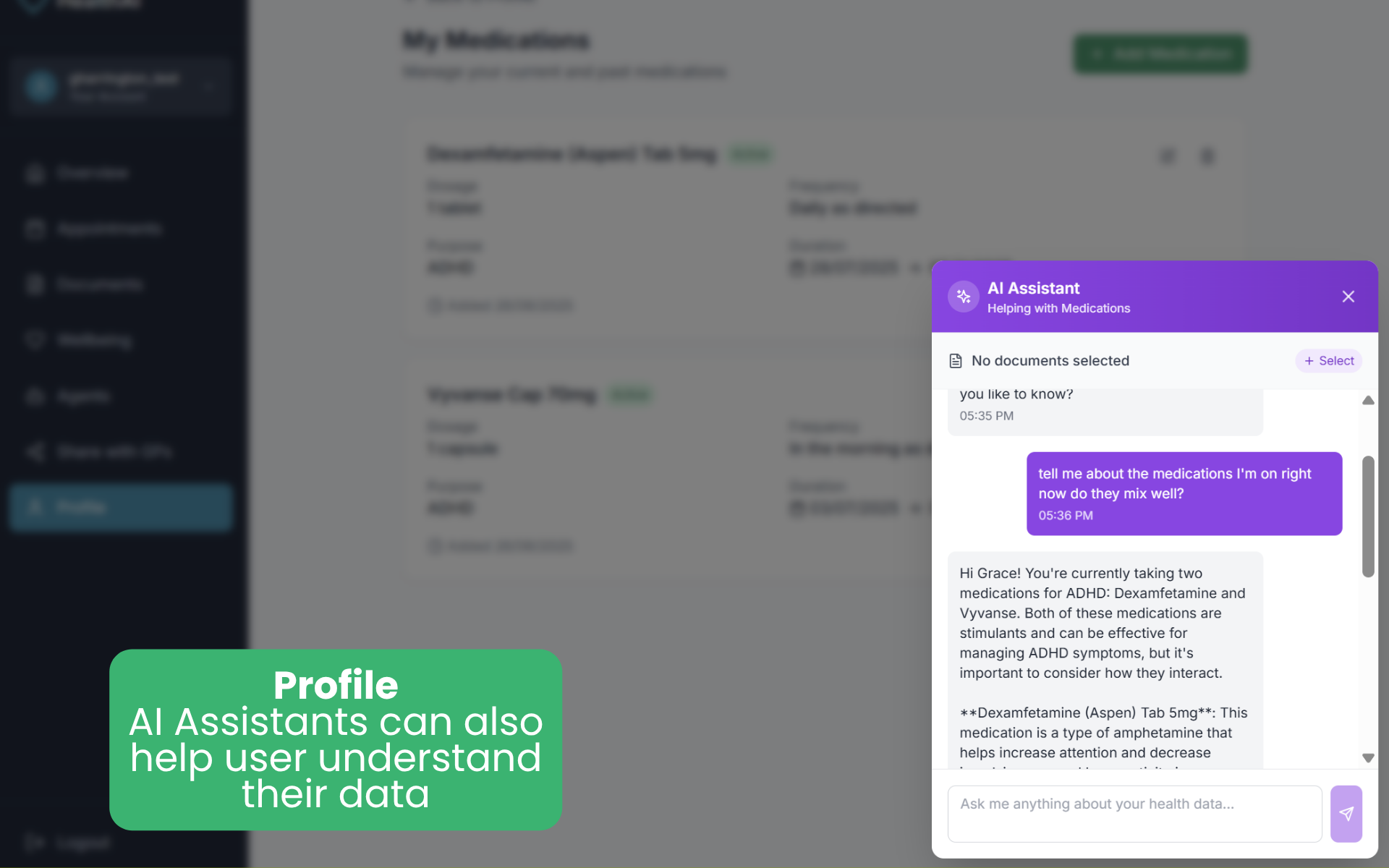
Profile: AI Assistant can also help users understand their data
-
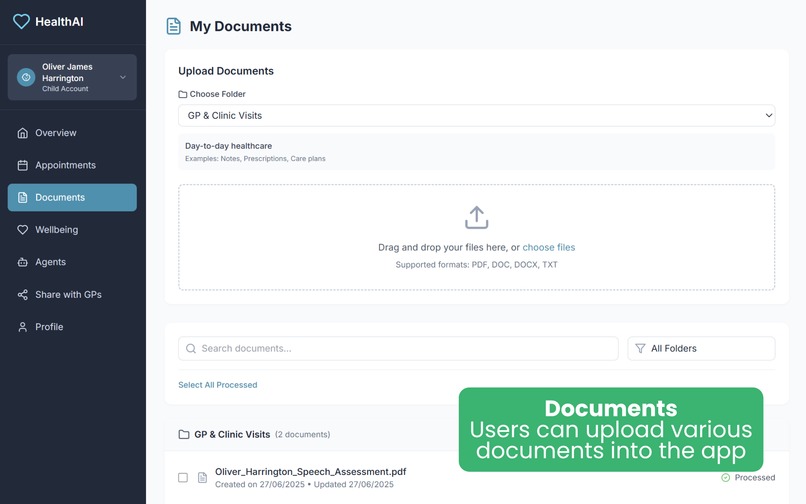
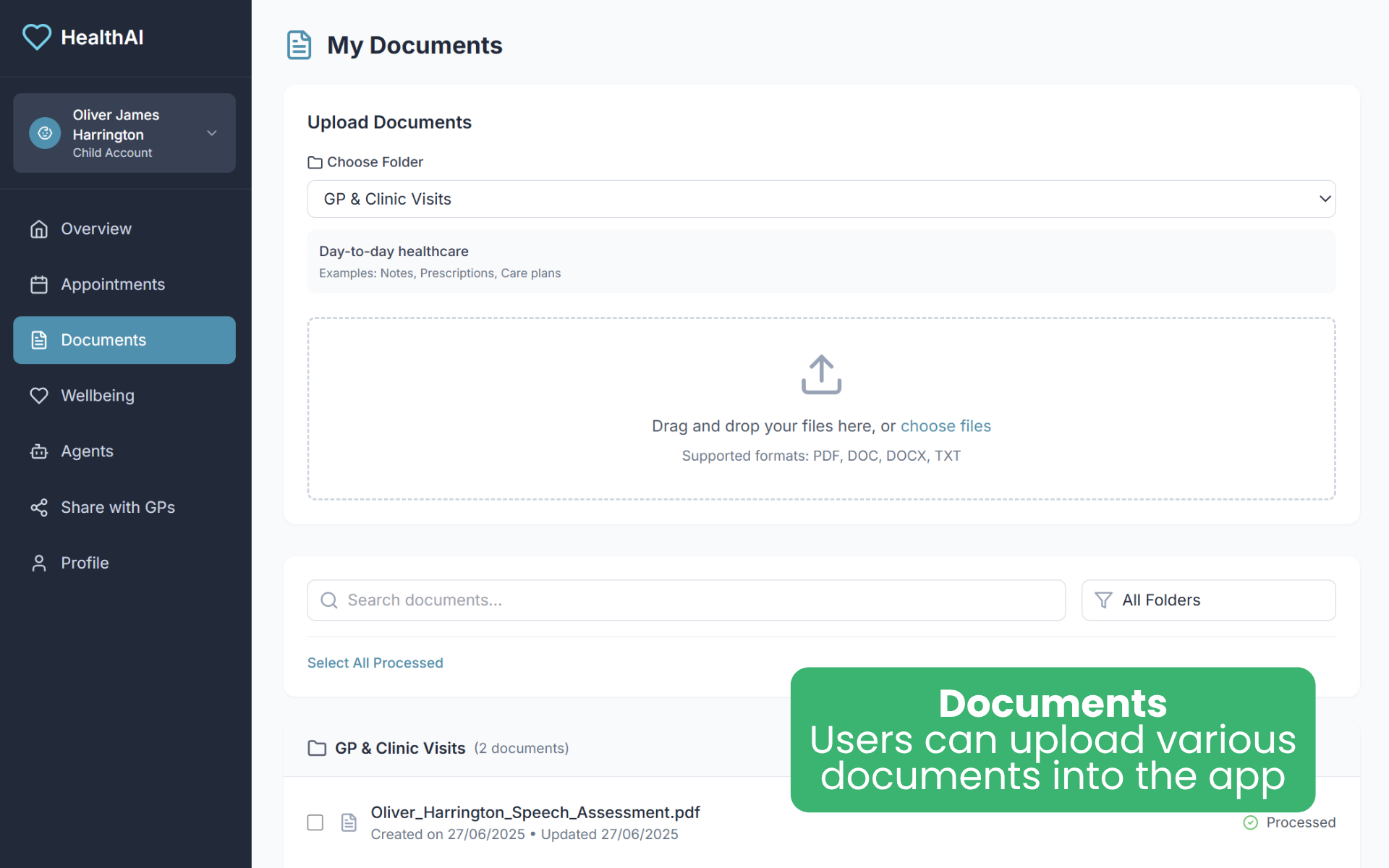
Documents: Users can upload various documents into the app
-
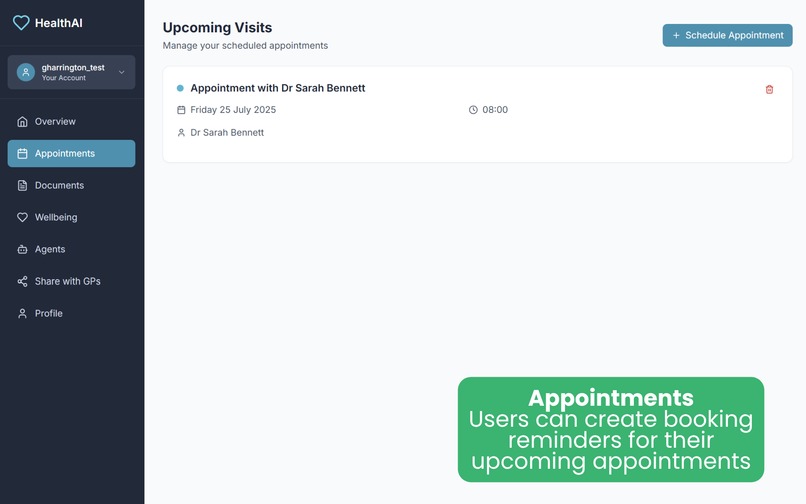
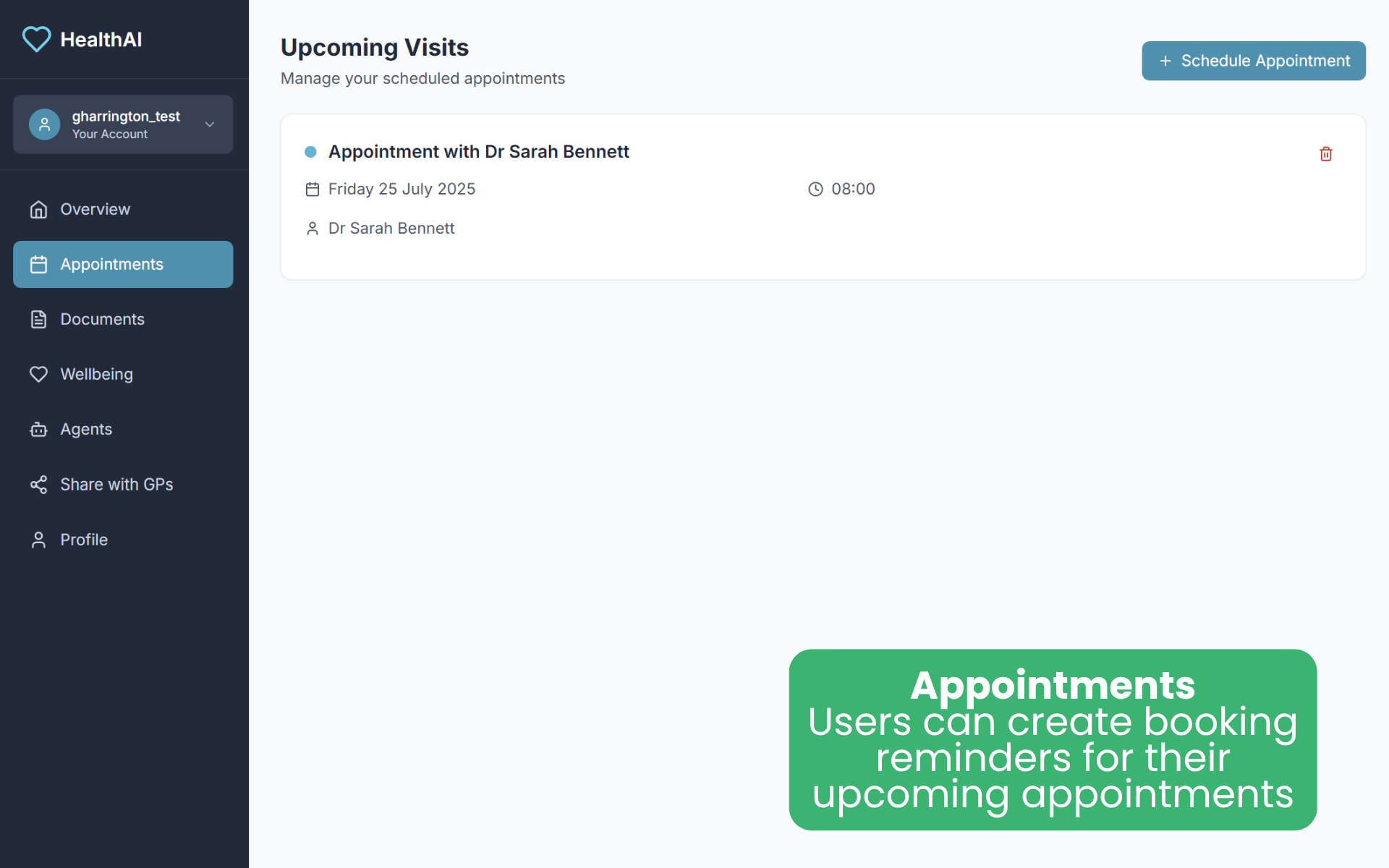
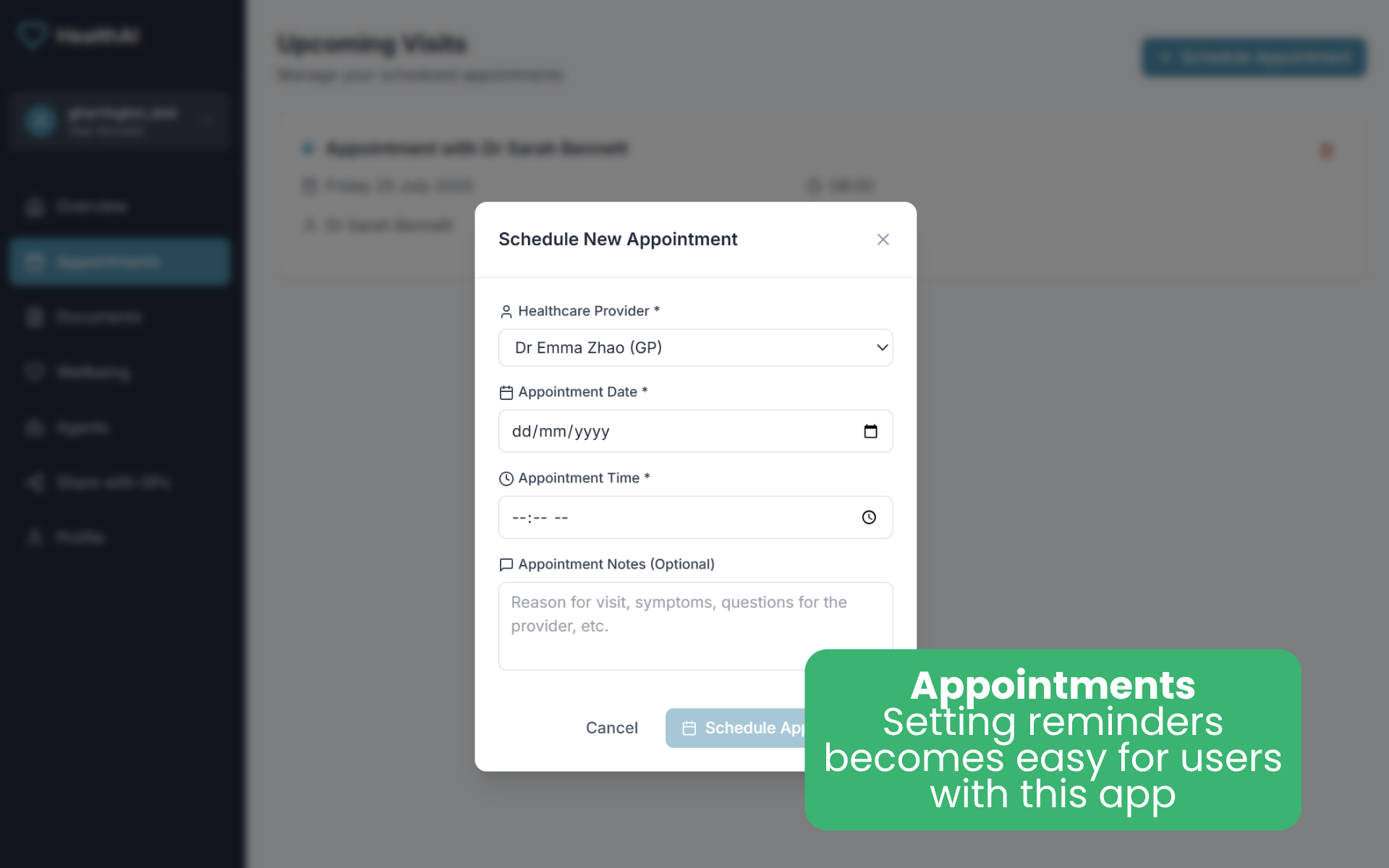
Appointments: Users can create booking reminders for their upcoming appointments
-
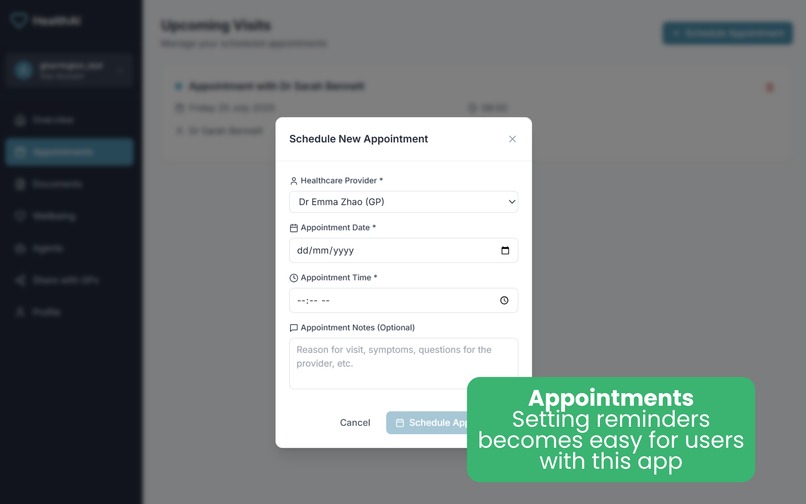
Appointments: Setting reminders becomes easy for users with this app
-
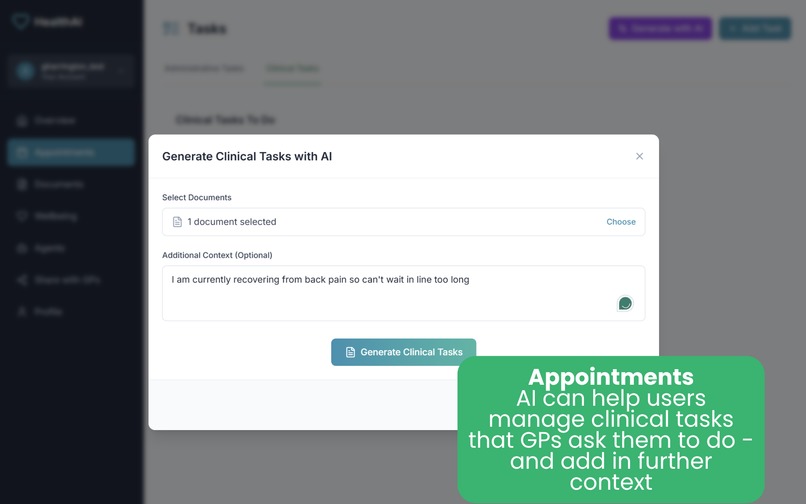
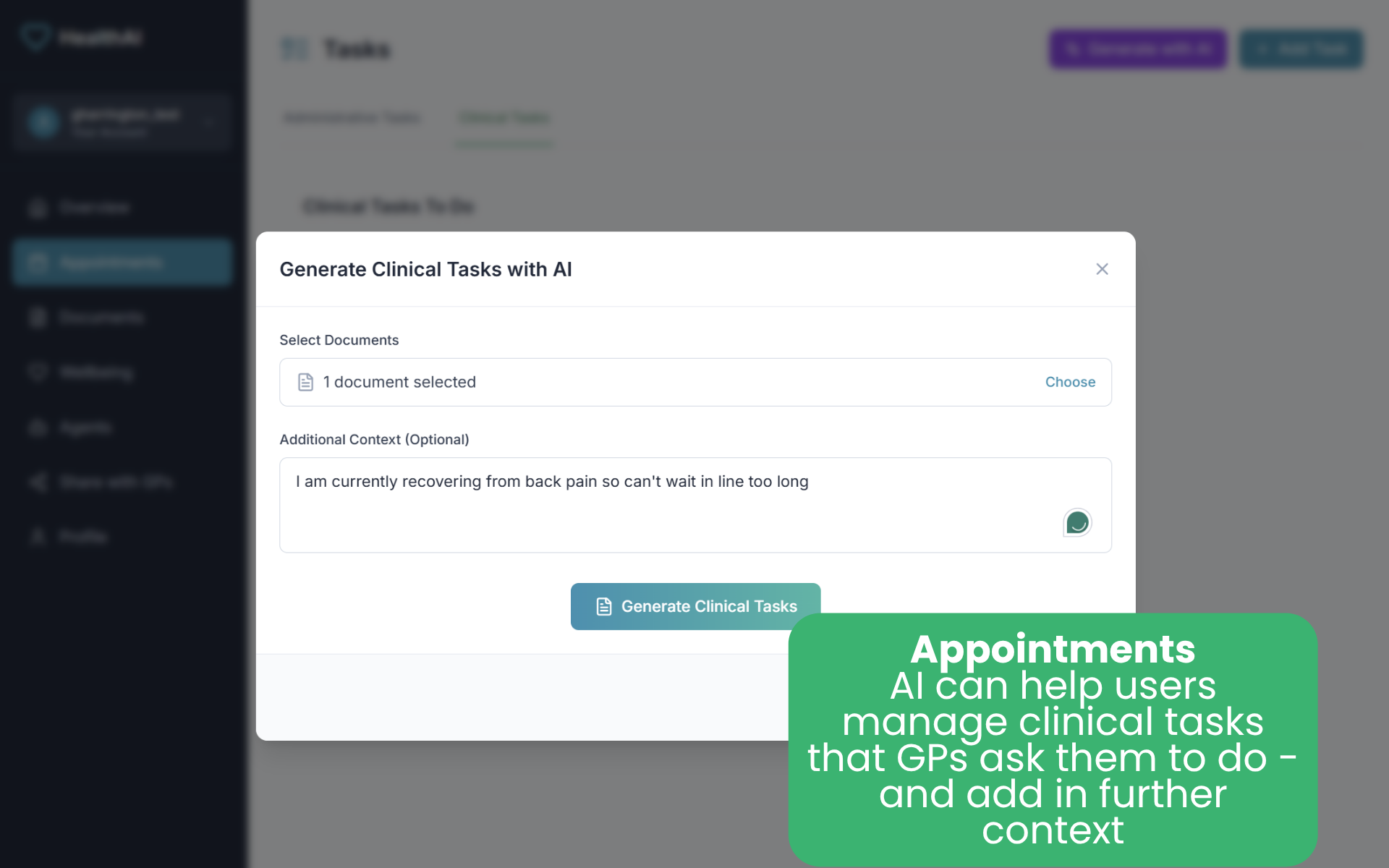
Appointments: AI can help users manage clinical tasks that GPs ask them to do - and add in further context
-
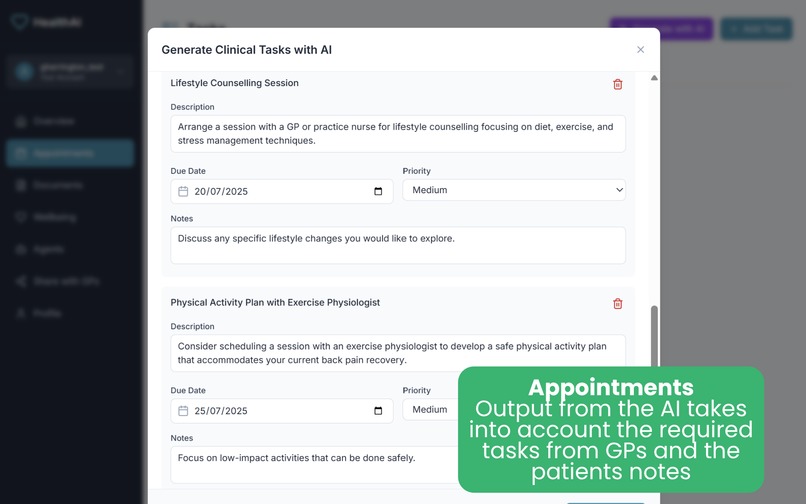
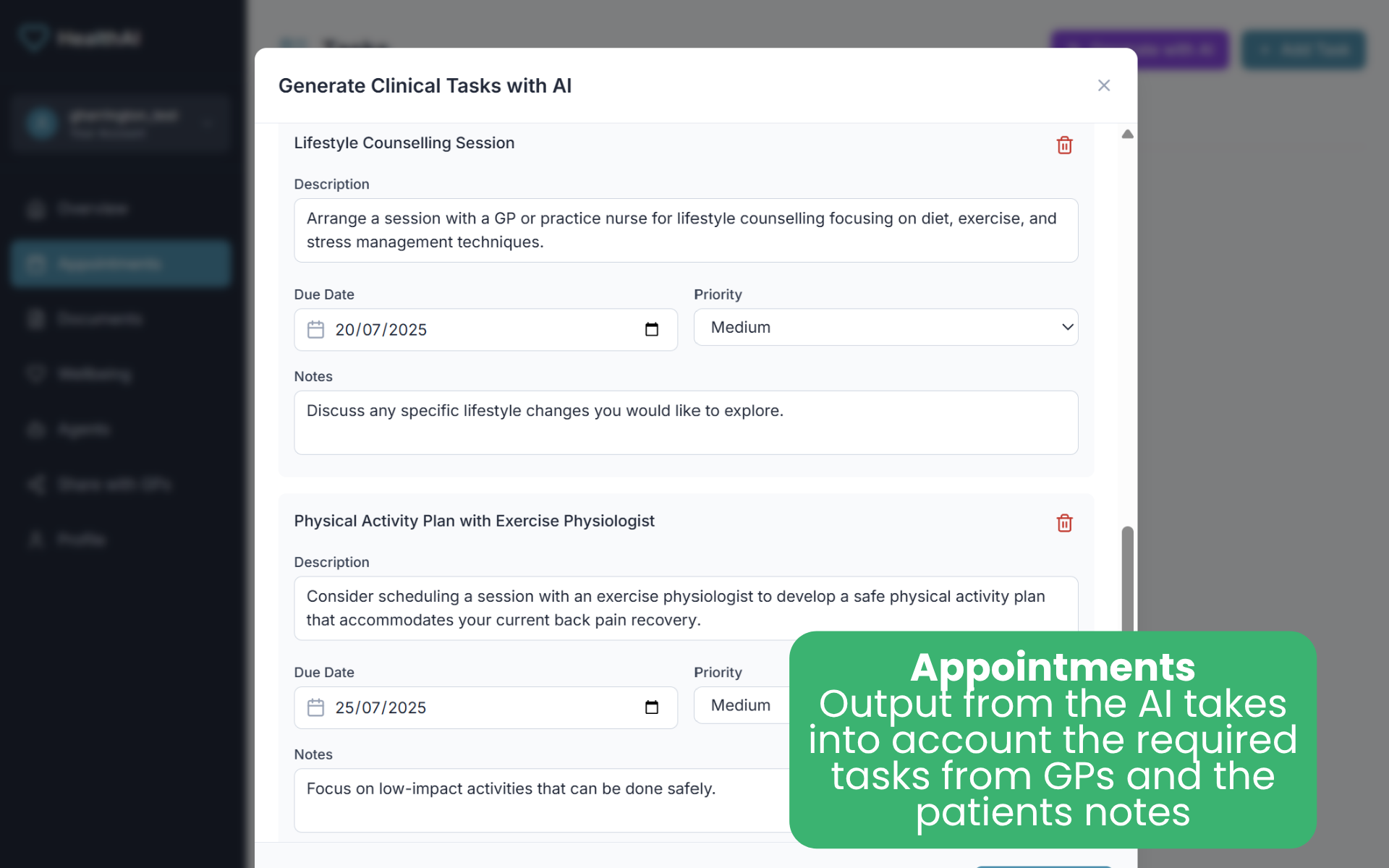
Appointments: Output from the AI takes into account the required tasks from GPs and the patients notes
-
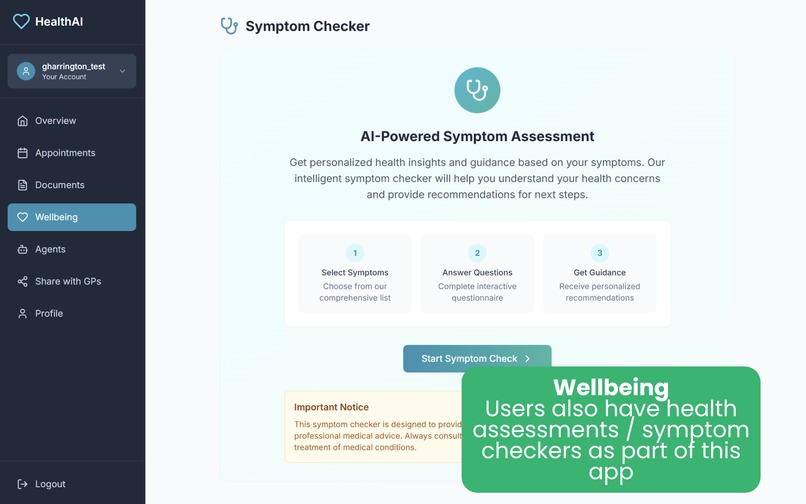
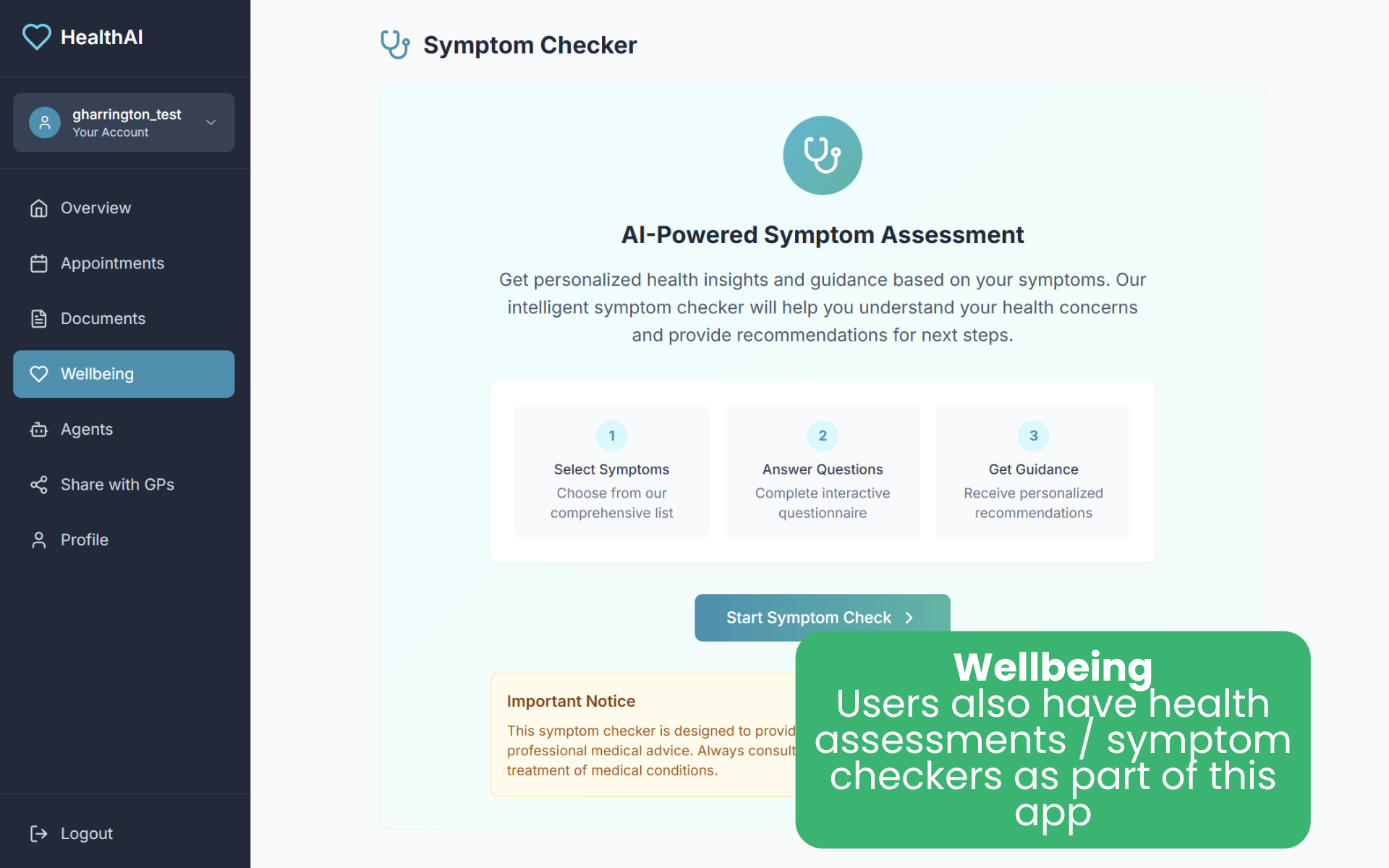
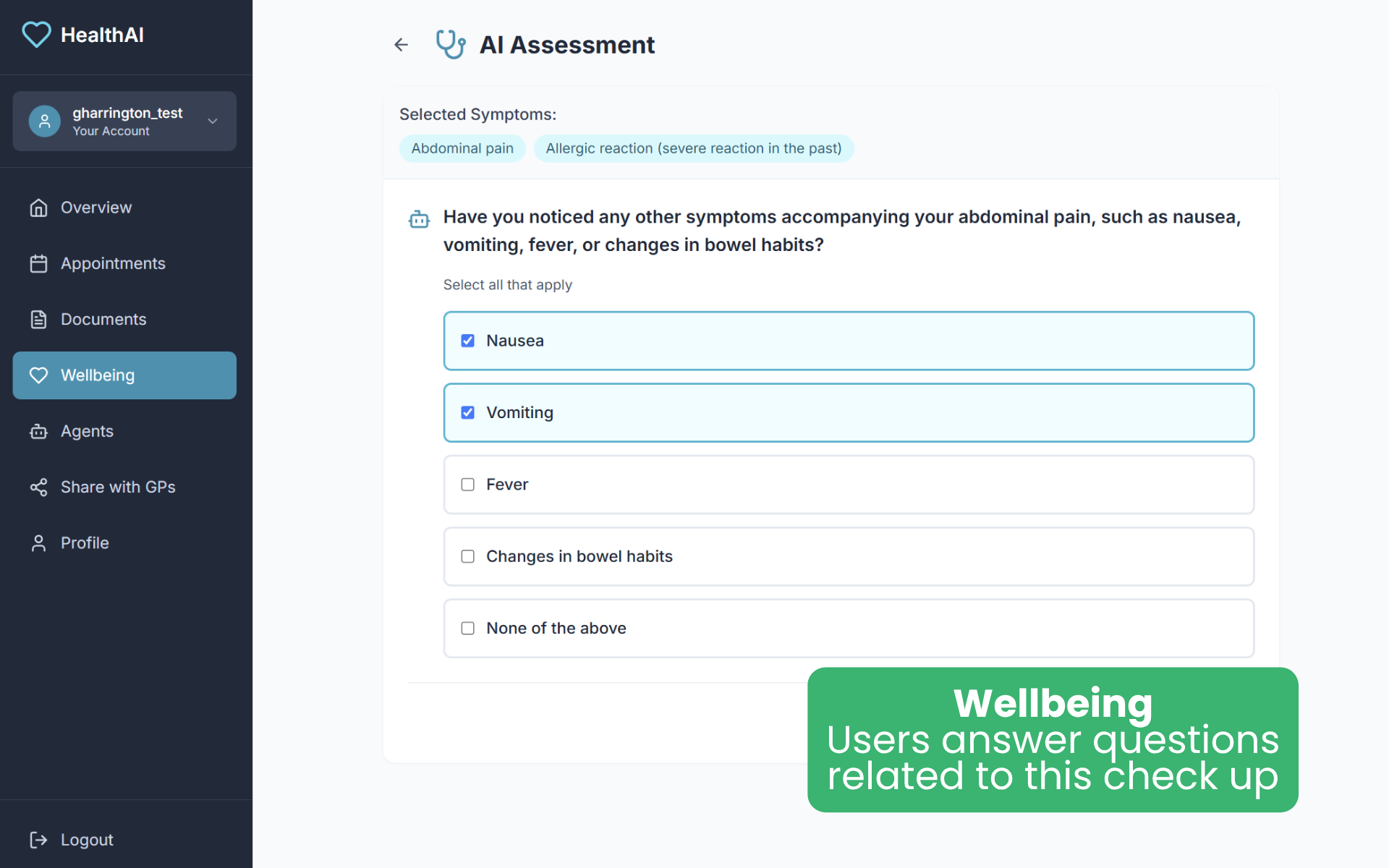
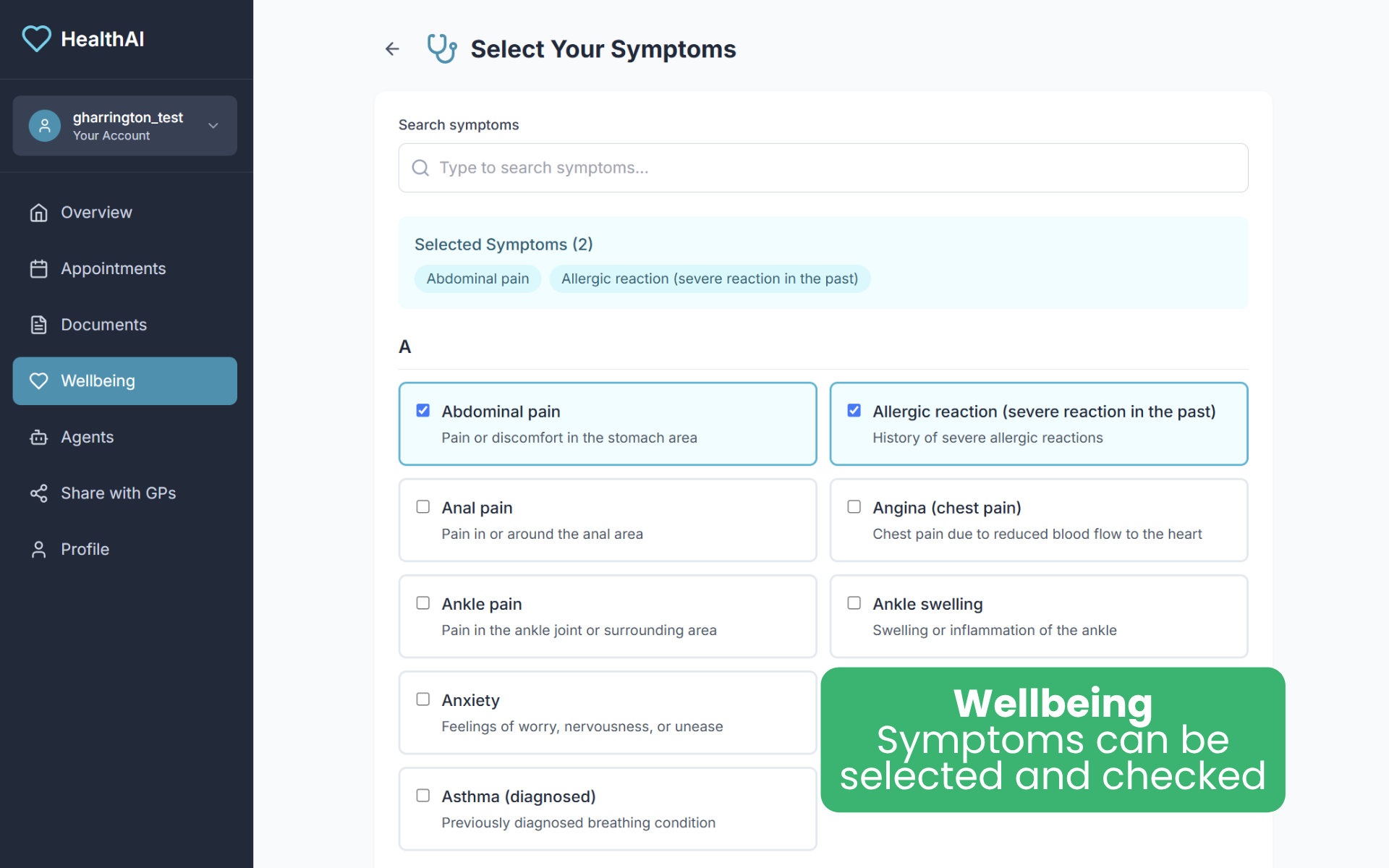
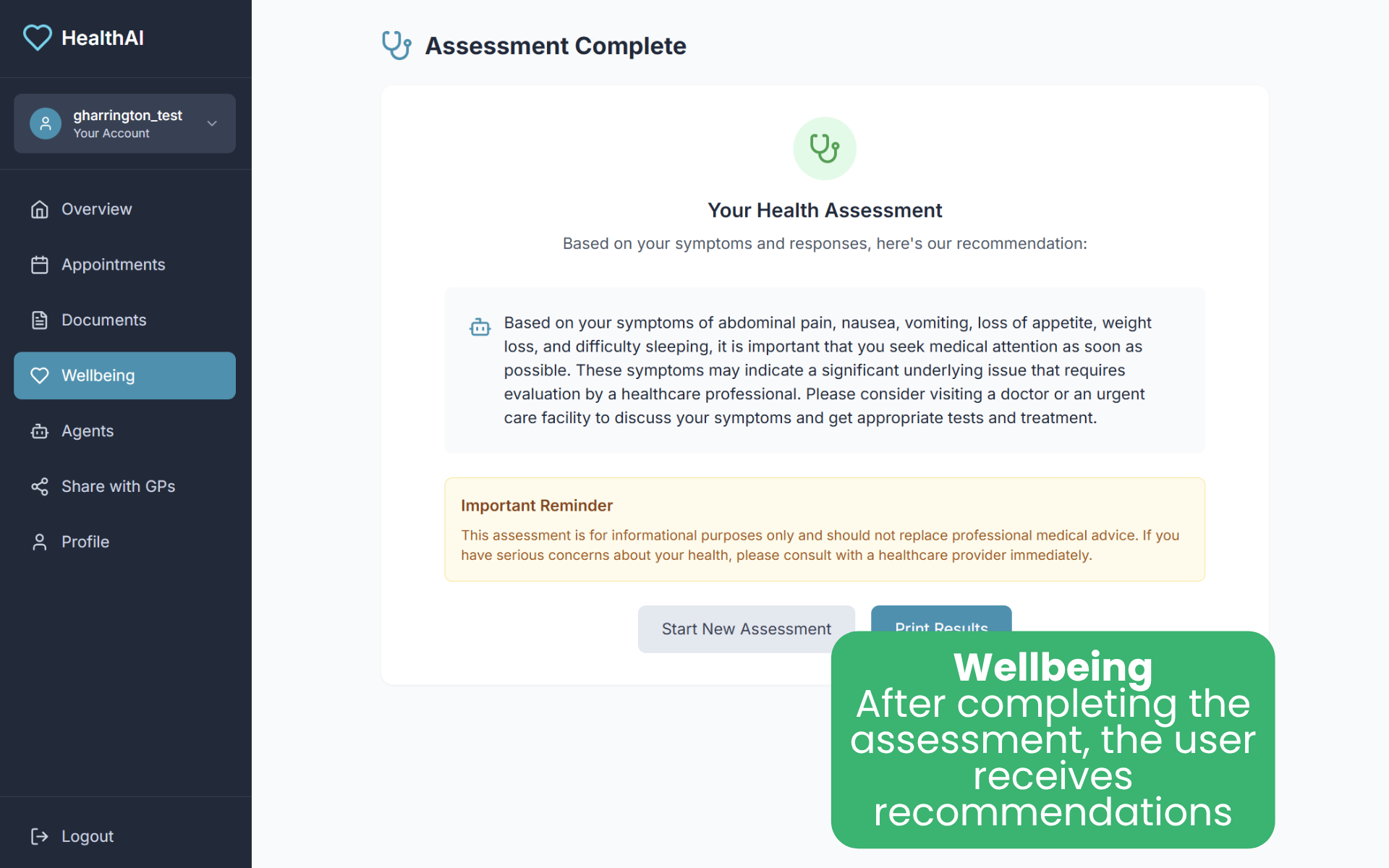
Wellbeing: Users also have health assessments / symptom checkers as part of this app
-
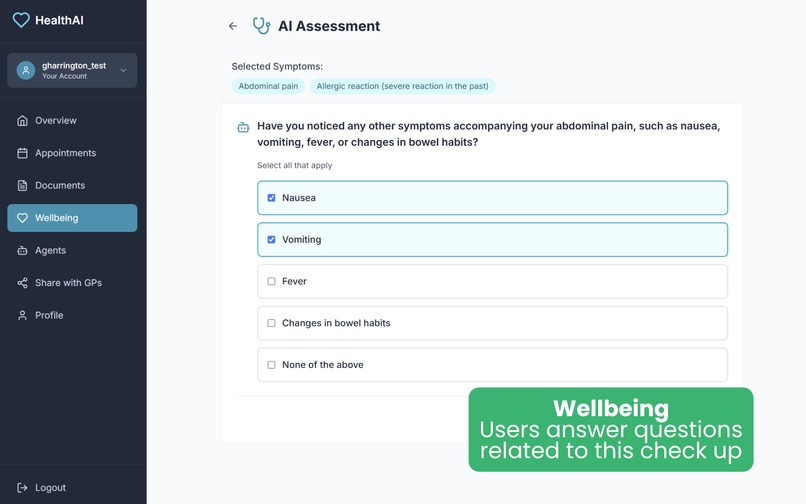
Wellbeing: User answer questions related to this check up
-
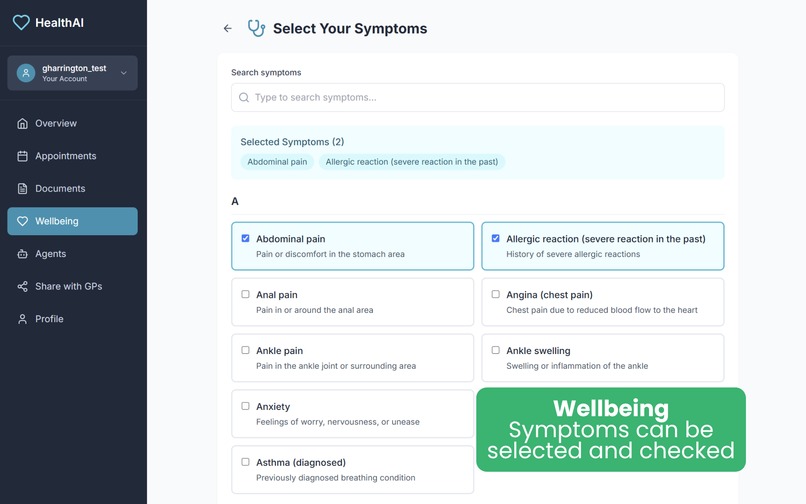
Wellbeing: Symptoms can be selected and checked
-
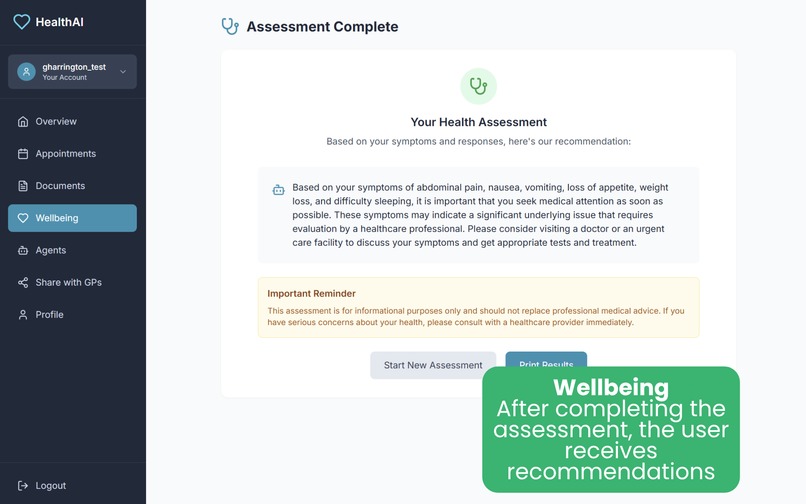
Wellbeing: After completing the assessment, the user receives recommendations
-
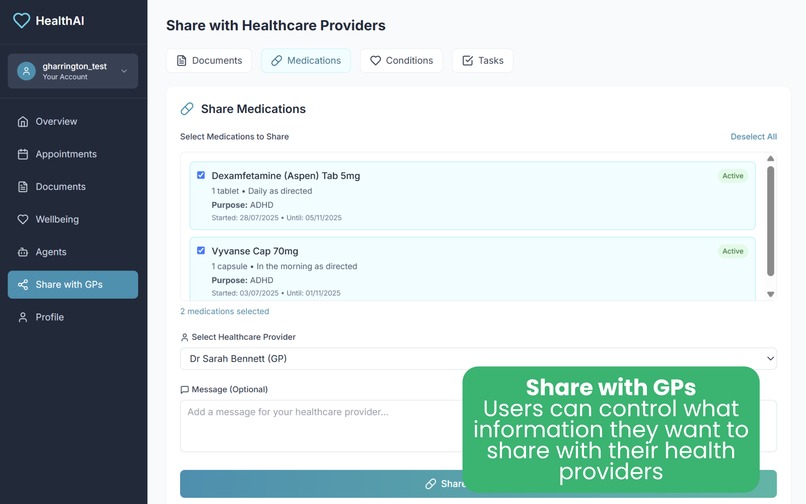
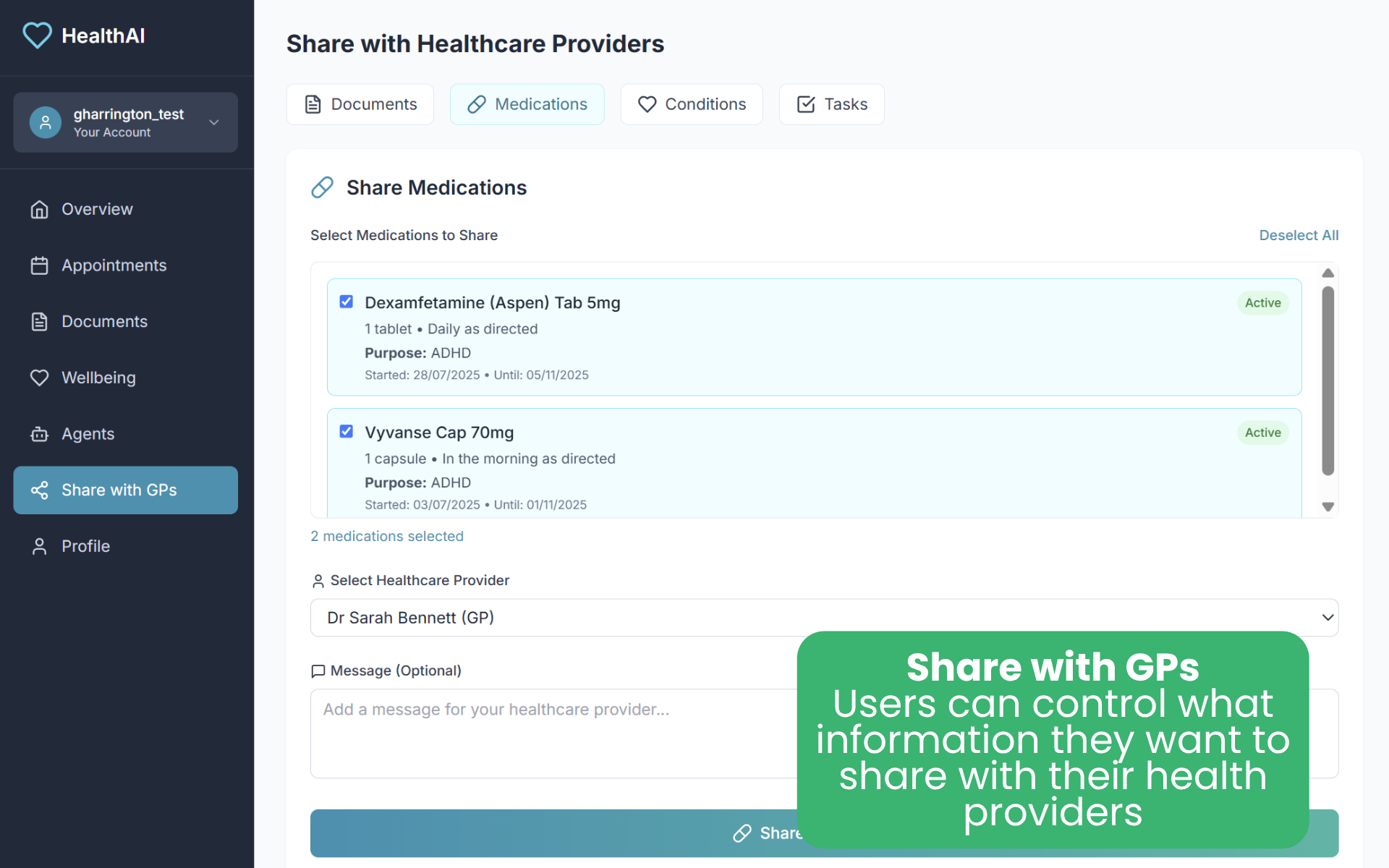
Share with GPs: User can control what information they want to share with their health providers
-
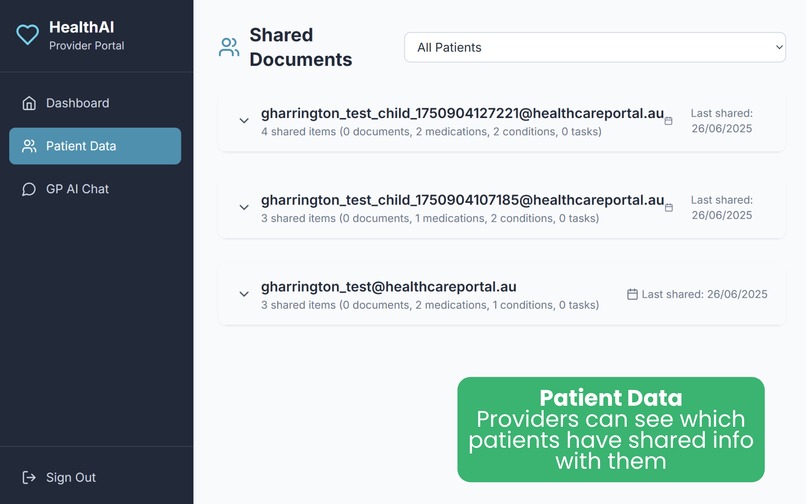
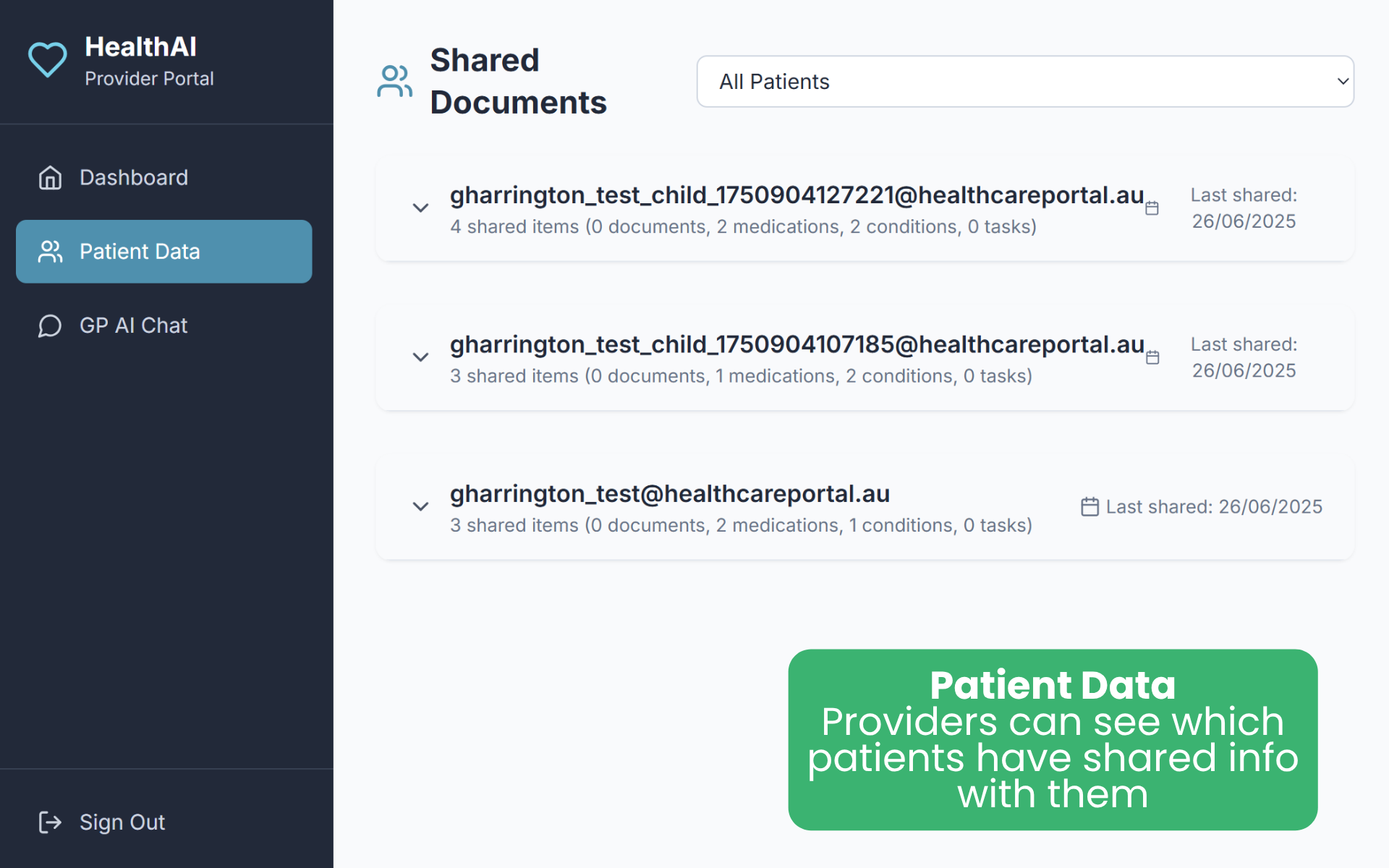
Patient Data: Providers can see which patient have shared info with them
-
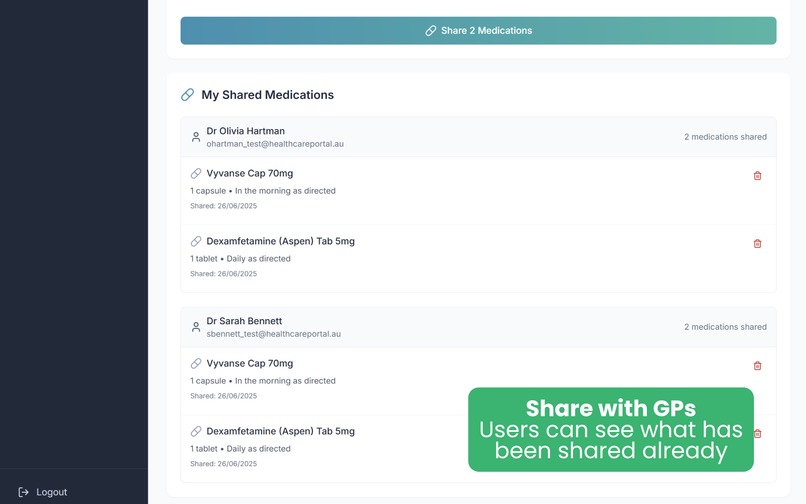
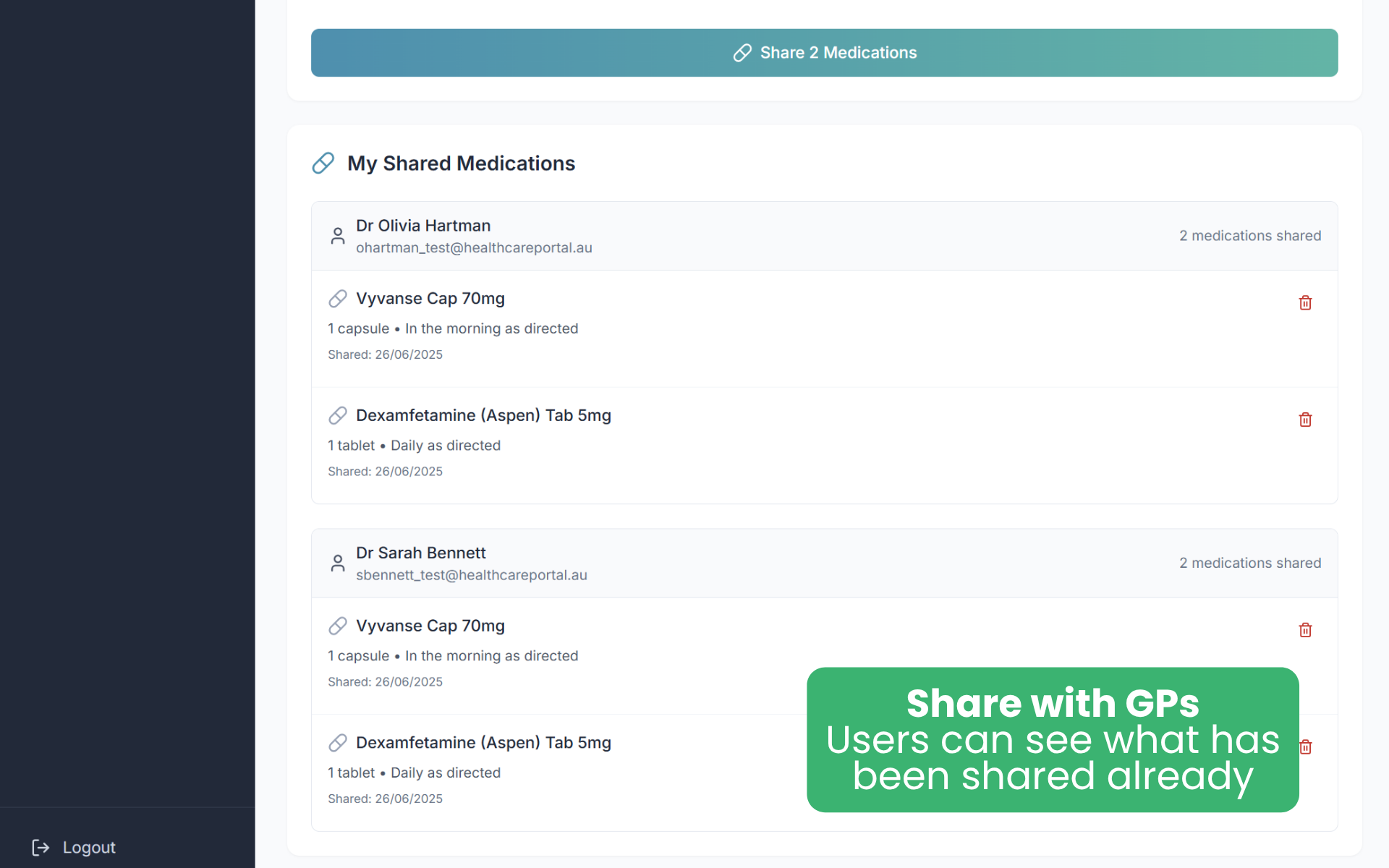
Share with GPs: Users can see what has been shared already
-
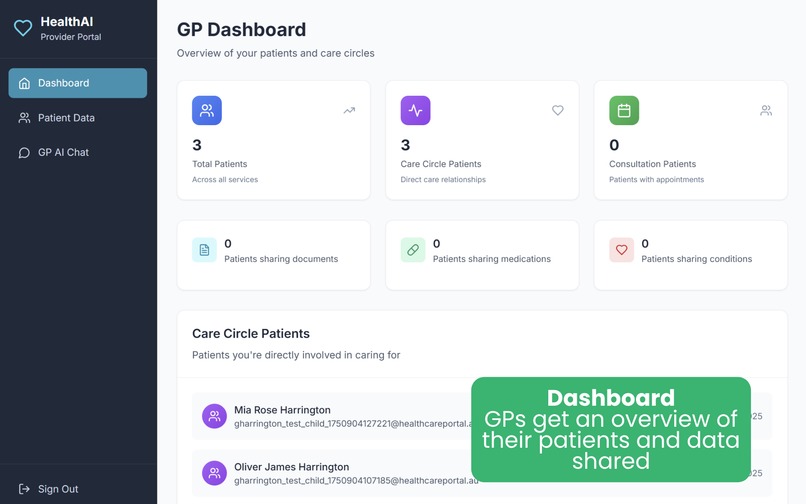
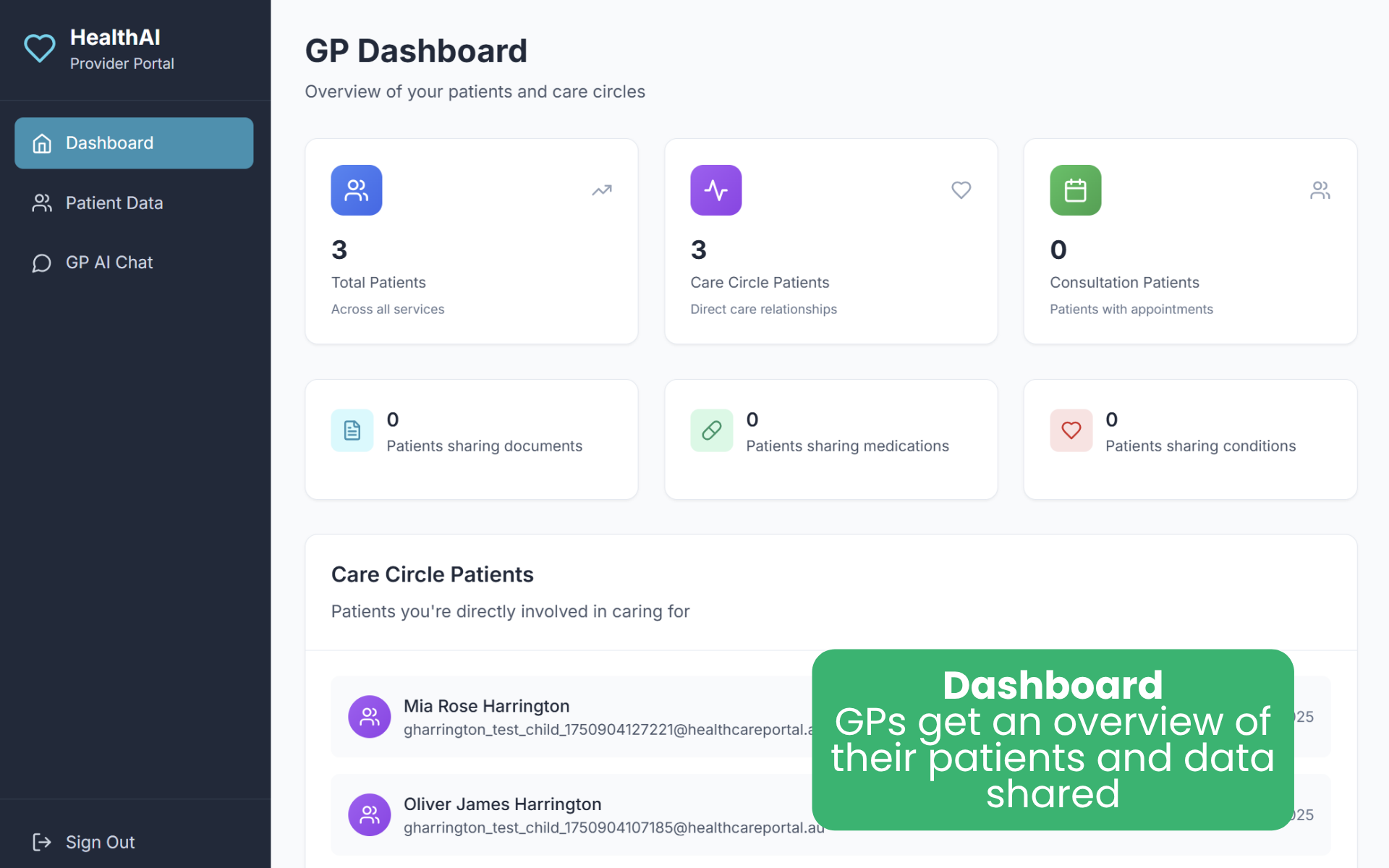
Dashboard: GPs get an overview of their patient and data shared
-
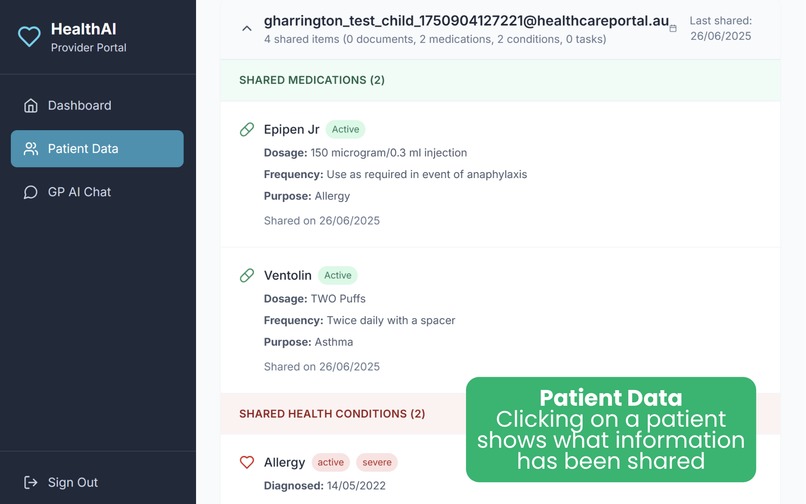
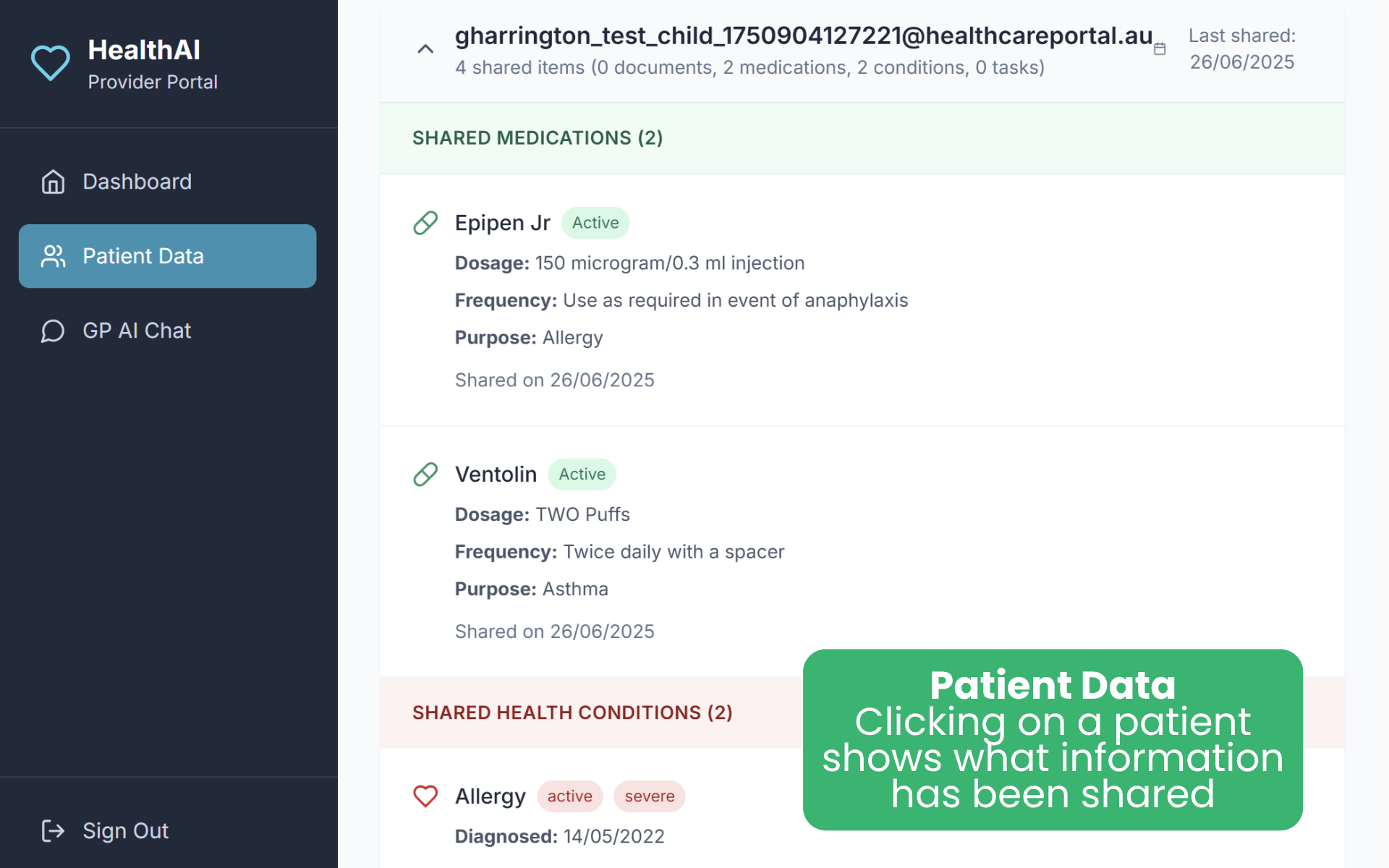
Patient Data: Clicking on a patient shows what information has been shared
-
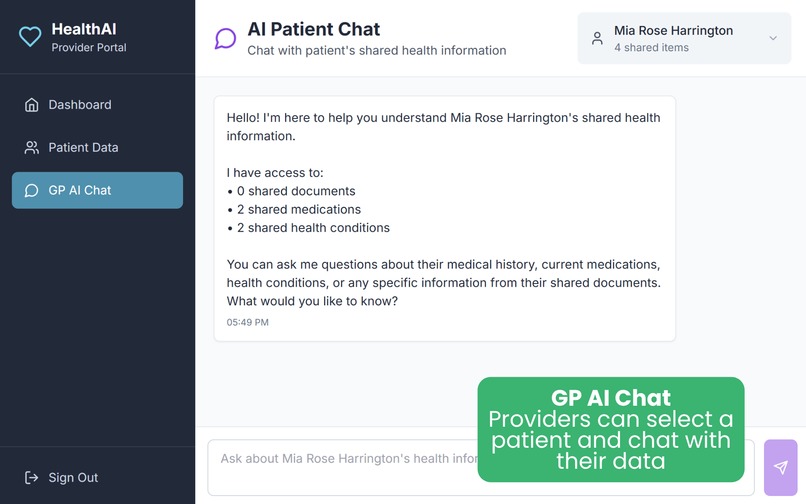
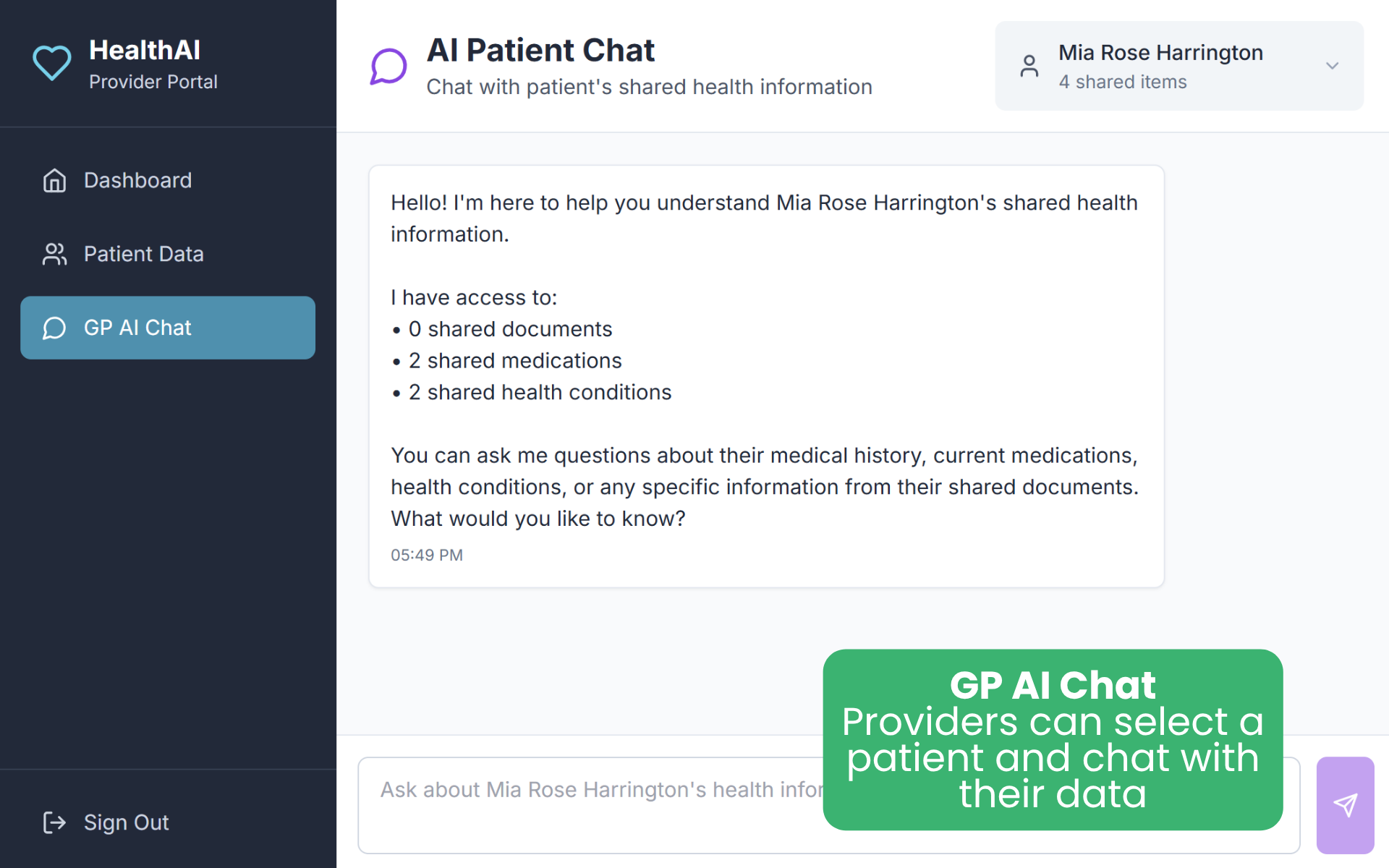
GP AI Chat: Providers can select a patient and chat with their data
-
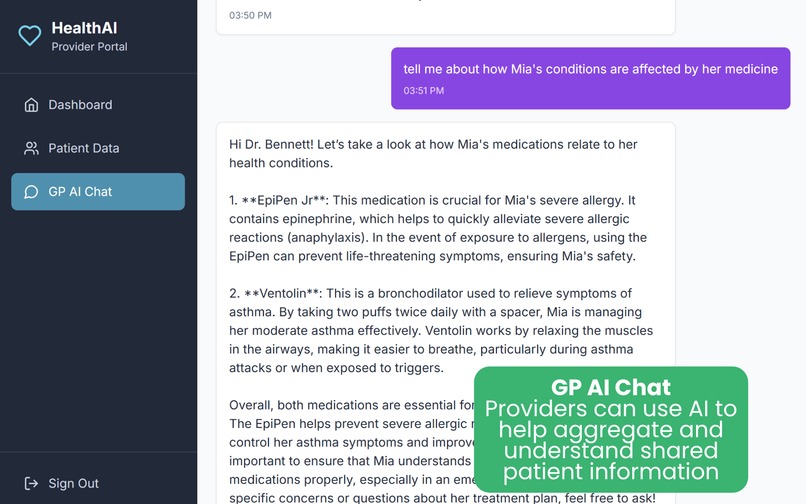
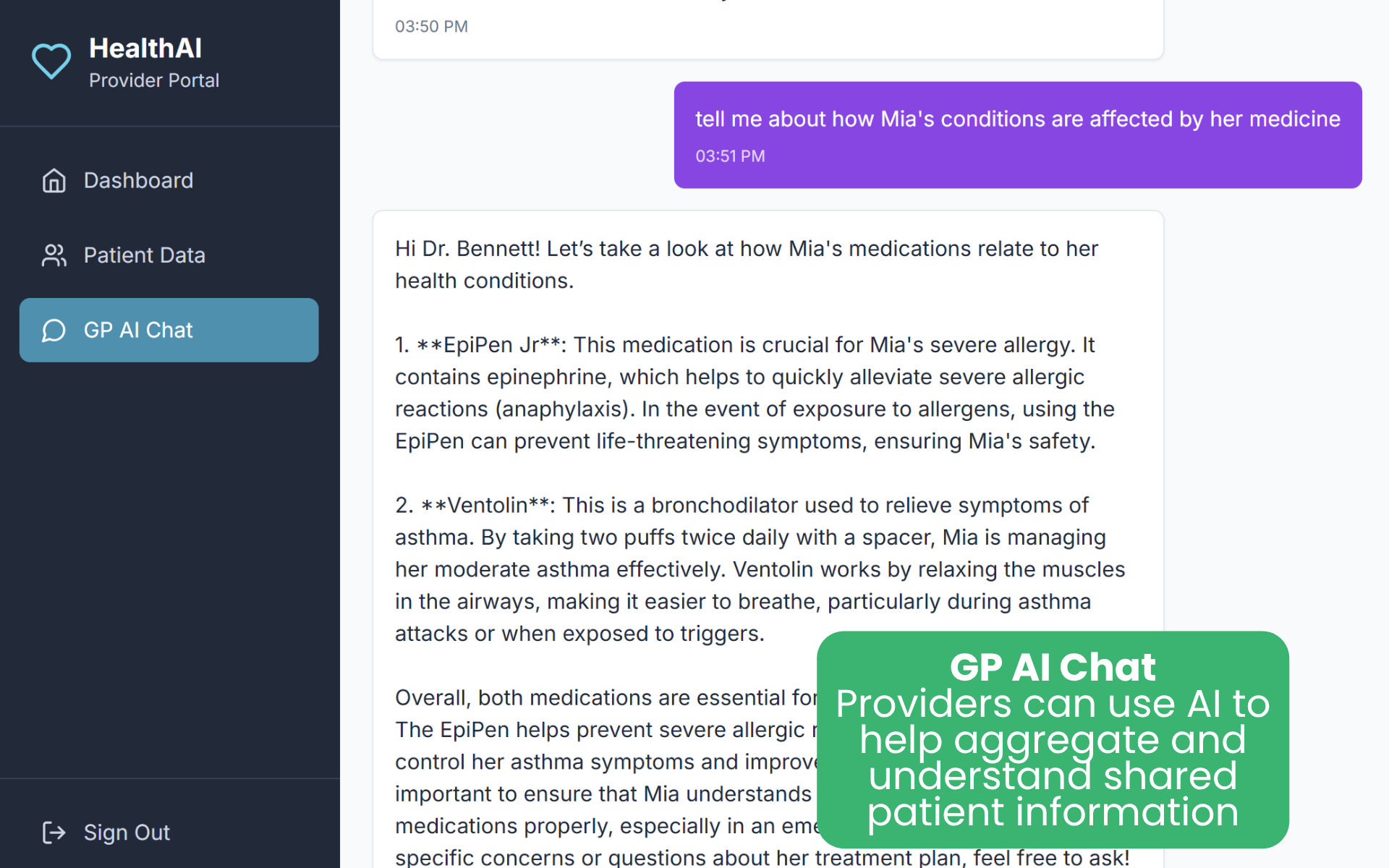
GP AI Chat: Providers can use AI to help aggregate and understand shared patient information
Inspiration
Health technology has traditionally been designed for providers to support provider-centric episodic models of care that focus on disease treatment. This approach has placed significant burden on consumers as they navigate a fragmented system while trying to manage their health and the health of their loved ones. Providers are also struggling with vast amounts of information hastily pulled together from various systems, which is difficult to use and often leads to decisions being made based on subsets of information.
Consumer expectations are changing, and the demand for healthcare to focus on prevention and wellness, through consumer-centric continuous models of care continues to grow in a healthcare system that is increasingly more complex. Consumers need technology that helps them manage all aspects of their healthcare, all in one place.
A truly consumer-centric healthcare system should be built on empathy, with consumers treated as a whole person, not just a clinical problem to solve. A healthcare platform built for consumers, powered by AI, will enable providers to engage in stories that give them the insight they need to treat every consumer with empathy, improving healthcare experiences for consumers and providers.
We were inspired by a vision to fundamentally transform interactions between consumers, healthcare providers, and health data Through smart and safe use of AI, our platform aims to provide a seamless, trustworthy, and empathetic experience for both consumers and healthcare providers, while significantly simplifying administrative overhead and enhancing consumer-provider communication.**
*There is no healthcare platform designed by consumers, for consumers, that integrates with existing digital health tools and is action-oriented, allowing consumers to use it to navigate and manage their healthcare journey. *
What it does
HealthAI is a consumer-centric healthcare app that helps consumers:
- Track appointments, medications, documentation, and tasks related to their healthcare
- Connect their family members to their account to view and manage the healthcare of their loved ones
- Organise and share health-related documentation with healthcare providers and other key contacts such as their child’s teacher or school
- Use AI to summarise documents, generate tasks from documents, and collate their health history for sharing with providers
- Share key details about themselves or their loved ones, only when they choose, to enable providers to understand more about them to provide more empathetic healthcare
- View AI outputs that have been reviewed and signed off by a clinician (with a blue tick, backed by blockchain metadata)
- Bridge the gap between provider systems that will never have all the information relevant to a consumers healthcare journey, the only person that has that is the consumer!
How we built it
We used Bolt.new to design and develop the front-end of the application, with backend integration via Supabase for authentication, user data storage, and consent-based document access.
Key components:
- Single platform for consumer healthcare data and management tasks
- AI document assistant powered by retrieval-augmented generation (RAG)
- Role-based access controls for patient-provider document sharing
- Post-visit checklist system generated from provider reports and care plans
- Blockchain-based signing layer for clinician approvals on clinical content
Challenges we ran into
- Designing a clean UX that supports health-literate and non-health-literate users equally
- Balancing AI freedom with clinical safety — especially for summarising sensitive documents
- Simulating interoperability with existing systems - which is on our future roadmap
- Structuring unformatted PDFs into usable content
- Creating workflows that support providers without adding to their admin load
Accomplishments that we're proud of
- Delivering a functional app with secure document upload, smart categorisation, and AI summaries
- Building a workflow where patients remain in control and providers stay involved — without either being overwhelmed
- Introducing a provider sign-off mechanism for AI outputs to build trust
What we learned
- Consumers crave clarity, not just data — and AI can play a major role in making clinical consultations and reports understandable and actionable
- Consumers have so many things to keep track of related to their healthcare and there is no single place they can do this from
- Providers are open to innovation, but it has to reduce overhead and respect their clinical role
- Empowering people with their own health data isn’t just a feature — it’s a shift in philosophy
- Privacy-first architecture isn’t just a safeguard — it’s a differentiator when dealing with real-world health data
What's next for HealthAI
- Piloting with early adopters both consumers, and providers
- Integrating with existing digital health solutions
- Enhancing functionality for carers and families
- Expanding the AI assistant to offer smart next steps and reduce the administrative burden for consumers
- Embedding standardised care plans, localised services and referral pathways
We believe HealthAI can become the platform of choice for consumers coordinating care for themselves and their loved ones — and a valuable ally for providers.
Built With
- openai
- react
- supabase
- tailwind
- typescript

Log in or sign up for Devpost to join the conversation.