Inspiration
I wanted a finance app that made everyday money tracking feel clear and approachable. The visual direction came from this finance management UI kit on Figma (https://www.figma.com/community/file/1358180178353418071/finance-management-mobile-app-ui-ux-kit-for-budget-tracker-financial-prototype-design?q_id=ead012be-1e0c-4b98-a63f-217c5bd66f2b), while the practical expense tracking in My Finance on Google Play (https://play.google.com/store/apps/details?id=ru.innim.my_finance&hl=es) helped shape the product idea. My goal was to build my own experience around a simple question: How much can I still spend?
What it does
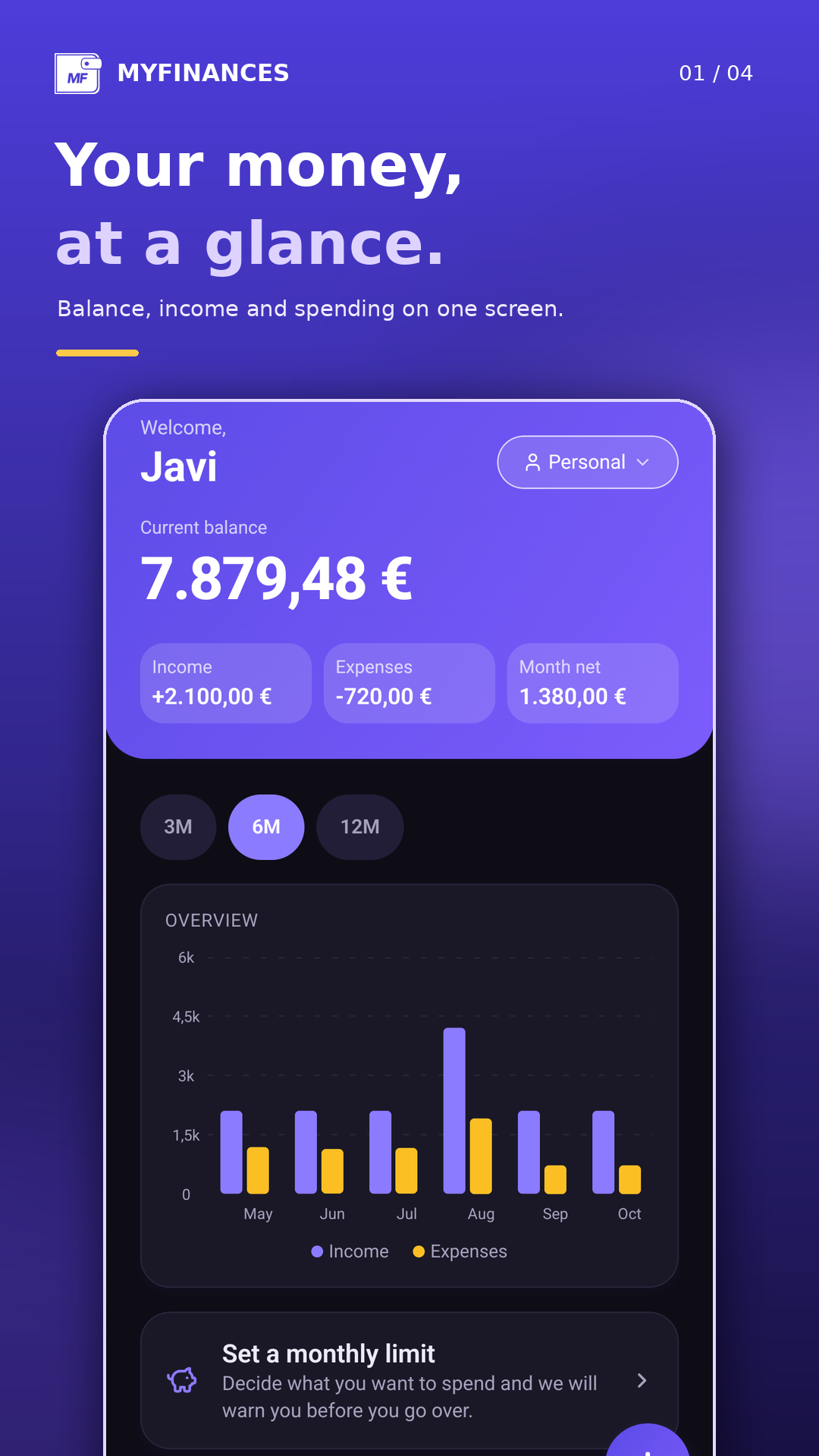
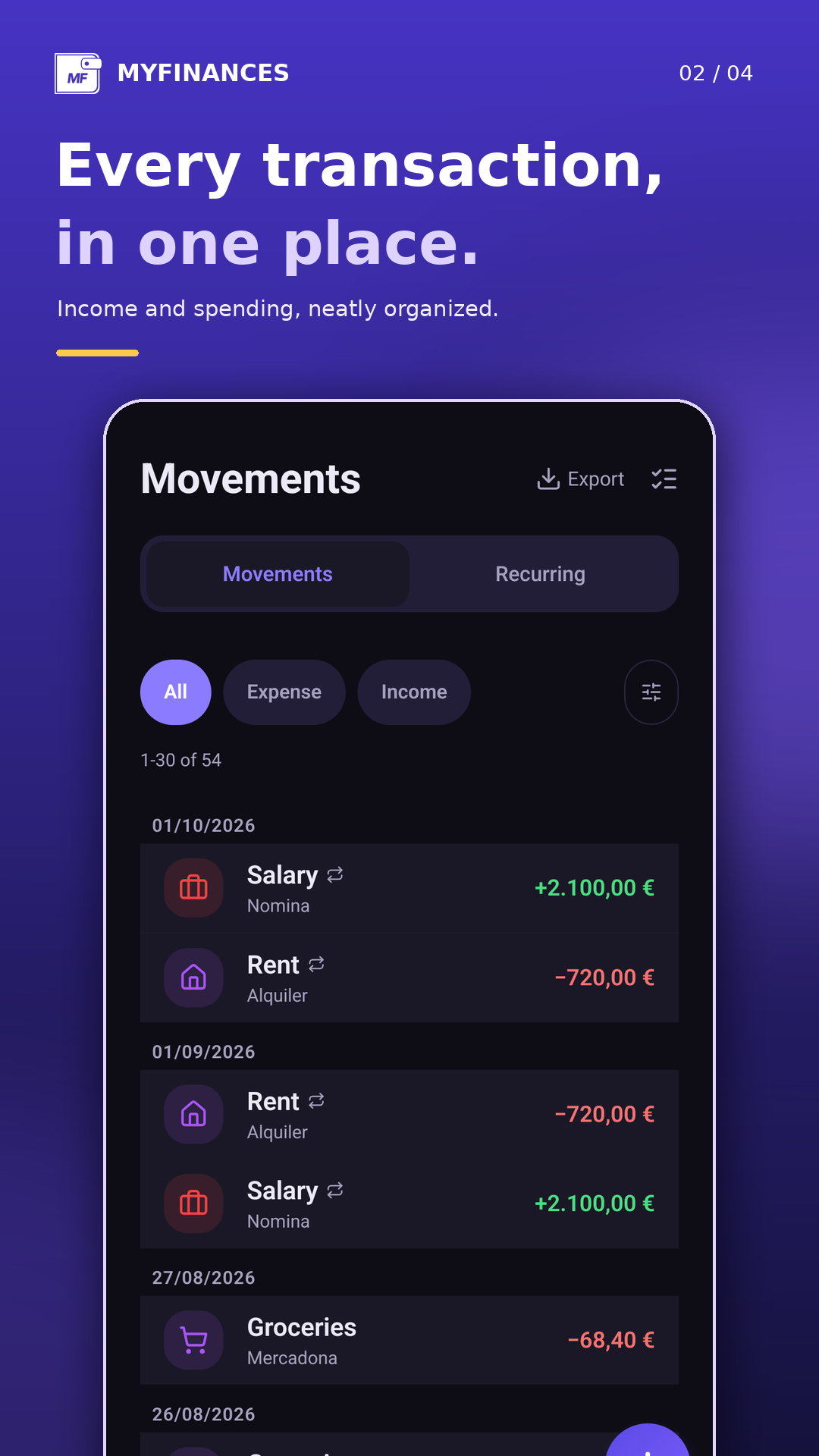
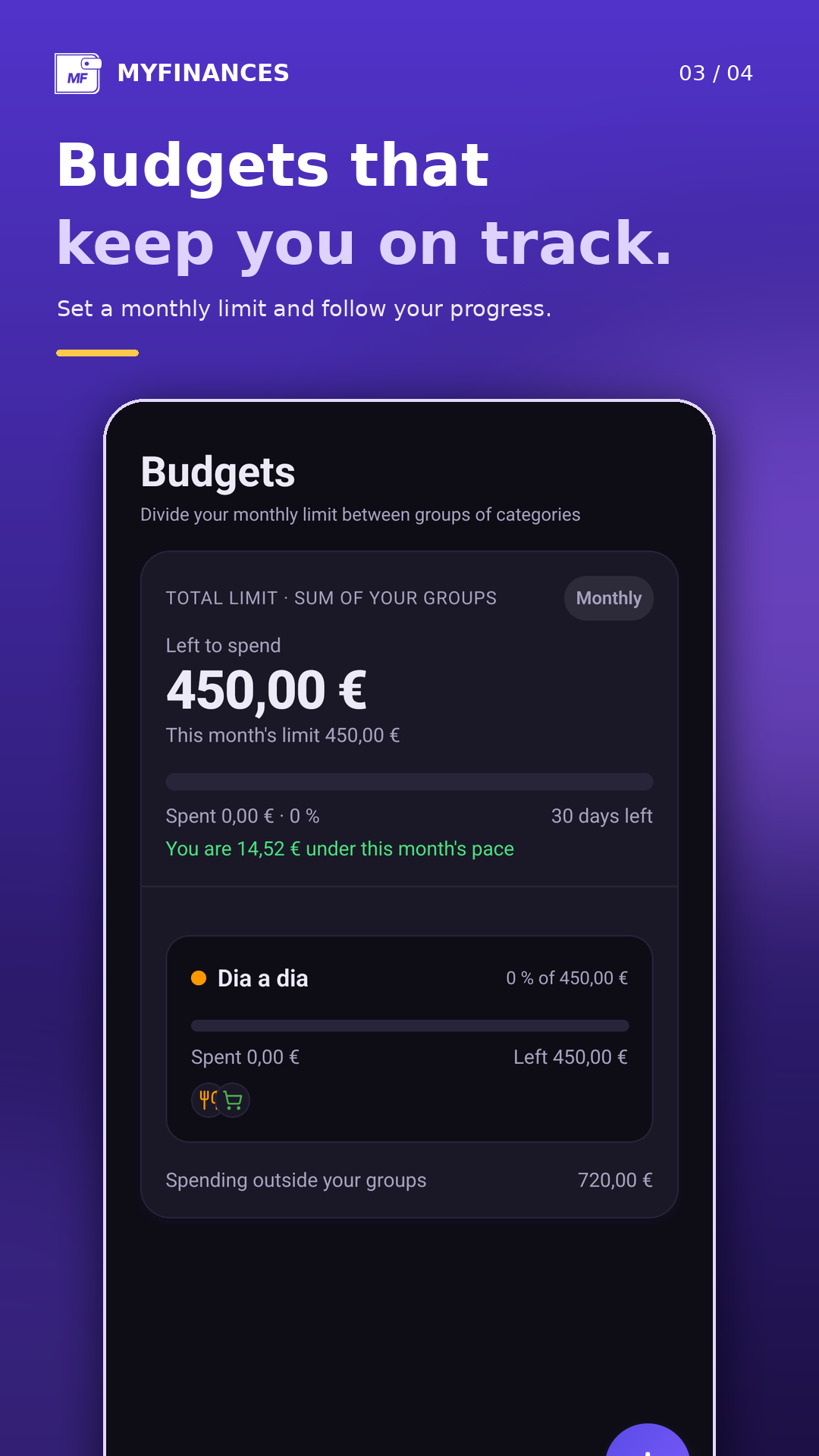
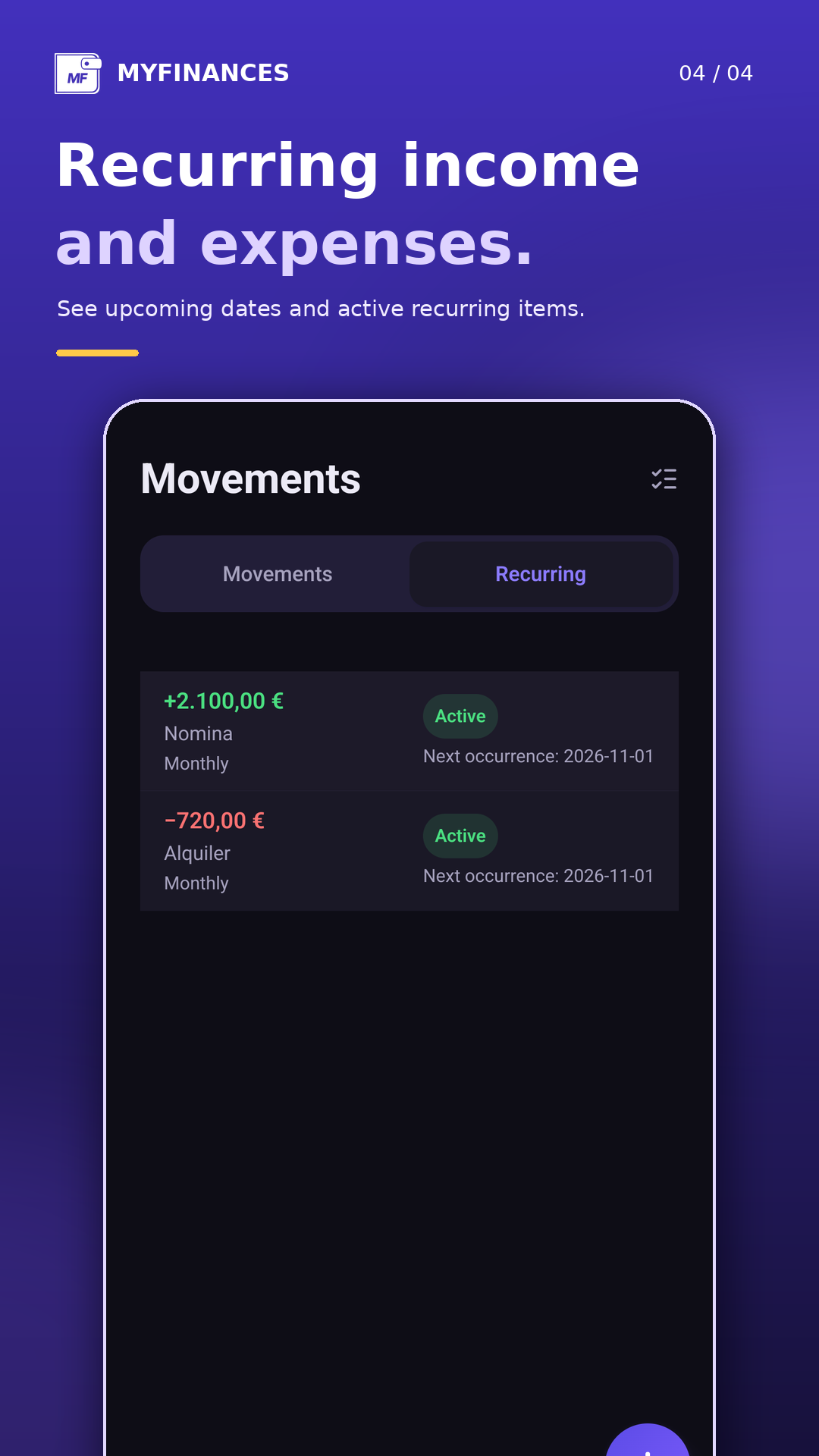
MyFinances lets people record income and expenses, see where their money goes, and set budgets that warn them when they reach a limit. Users can scan receipts to fill in transactions, automate recurring entries such as rent or salary, and organize finances into separate ledgers that they can share with others. The app also offers charts, a calendar view, and CSV or Excel exports.
How we built it
Development started in July 2026. I planned features and built the app with help from Claude Code, using Claude Opus 4.6 and Sonnet 4.6. Both models were available by then. Opus 4.6 (https://www.anthropic.com/news/claude-opus-4-6) and Sonnet 4.6 (https://www.anthropic.com/news/claude-sonnet-4-6) were released in February 2026.
The mobile app uses React Native, Expo, Expo Router, TypeScript, Zustand, TanStack Query, NativeWind, React Hook Form, and Zod. The API uses Python, FastAPI, SQLModel, SQLAlchemy, and asyncpg. Supabase provides PostgreSQL hosting and authentication, including OAuth sign-in; Redis caches API data. RevenueCat handles premium purchases, and receipt scanning uses Tesseract OCR, OpenCV, and Pillow. Docker supports deployment.
Challenges we ran into
One of the hardest challenges was making receipt scanning reliable. The first version of the Tesseract OCR module often failed on paper receipts and screenshots, so I had to improve image preprocessing and how the app identifies the transaction amount. I also worked on making a feature rich finance app easy to navigate, designing clear email confirmation flows with Resend and Supabase Auth, and configuring Google Play products and RevenueCat while deciding how to monetize the app.
Accomplishments that we're proud of
I built a functional finance app and, with help from coding agents, configured its premium products and purchase flow. I’m especially proud of a major change made during closed testing: I reworked the data model to support multiple ledgers. That made it possible to keep different areas of life separate and share a ledger with someone else.
What we learned
This project taught me React Native and Expo through building a real app. It also taught me not to be afraid of changing scope when testing reveals a better direction. Refactoring the ledger model was significant work, but it left the code clearer and gave the app a stronger foundation.
What's next for MyFinances
Next, I want to release MyFinances on the Apple App Store, improve it based on feature requests from users, and explore secure, direct synchronization with bank accounts.
Built With
- expo.io
- fastapi
- oauth
- postgresql
- python
- react-native
- supabase
- typescript

Log in or sign up for Devpost to join the conversation.