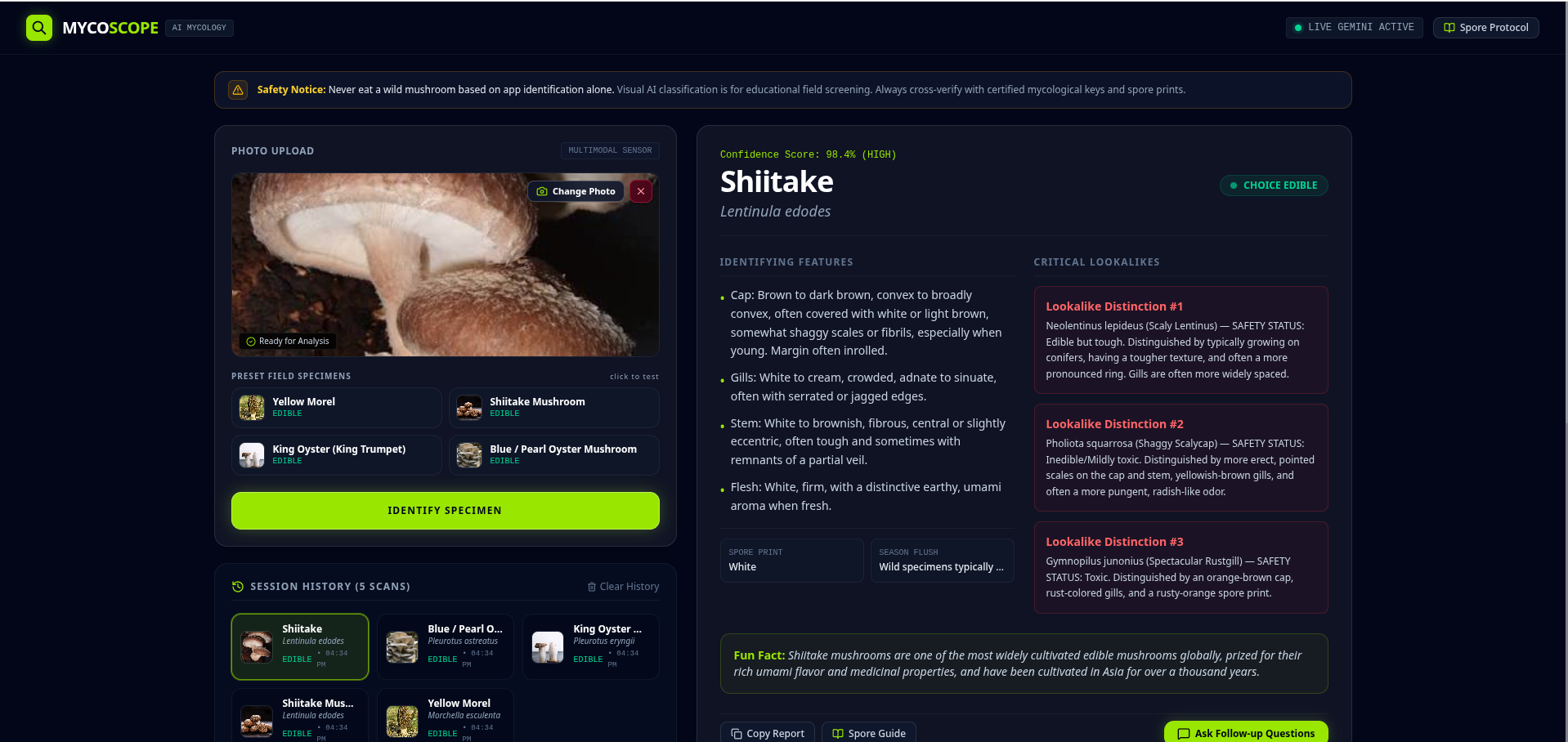
The Problem: Wild mushroom foraging is growing in popularity, but misidentification kills and hospitalizes people every year. Toxic species often look nearly identical to edible ones (e.g., death cap vs. edible puffballs), and reliable identification traditionally requires expert knowledge, field guides, or spore-print tests that casual foragers don't have or won't do. Existing resources are either too technical, too slow (posting photos to forums and waiting hours for an expert reply), or too generic. There's no fast, accessible tool that gives an instant, confidence-rated identification along with the critical safety context — what toxic lookalikes exist and how to tell them apart.
Solution: A web app that identifies mushroom species from a photo using Google's Gemini multimodal API. The user uploads a photo (plus optional context like habitat and region), and Gemini returns a structured identification: common and Latin names, confidence level, edibility rating, key identifying features, and — most importantly — toxic lookalikes with instructions on how to distinguish them. A persistent "never eat a wild mushroom based on an app" disclaimer and prominent warning banners for toxic results keep safety front and center. Users can then continue a conversation with Gemini about the identified species (habitat, season, preparation if edible). This showcases Gemini's vision and conversational strengths while delivering real, immediate value: turning hours of uncertain research into a 5-second safety check.
Built With
- ai
- css
- gemini
- html
- javascript
- studio
