-
-
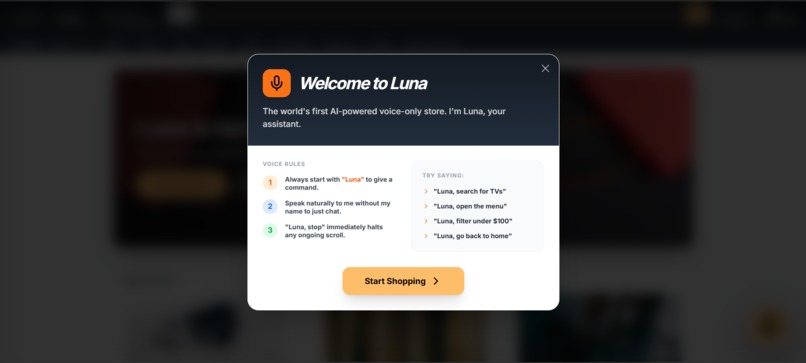
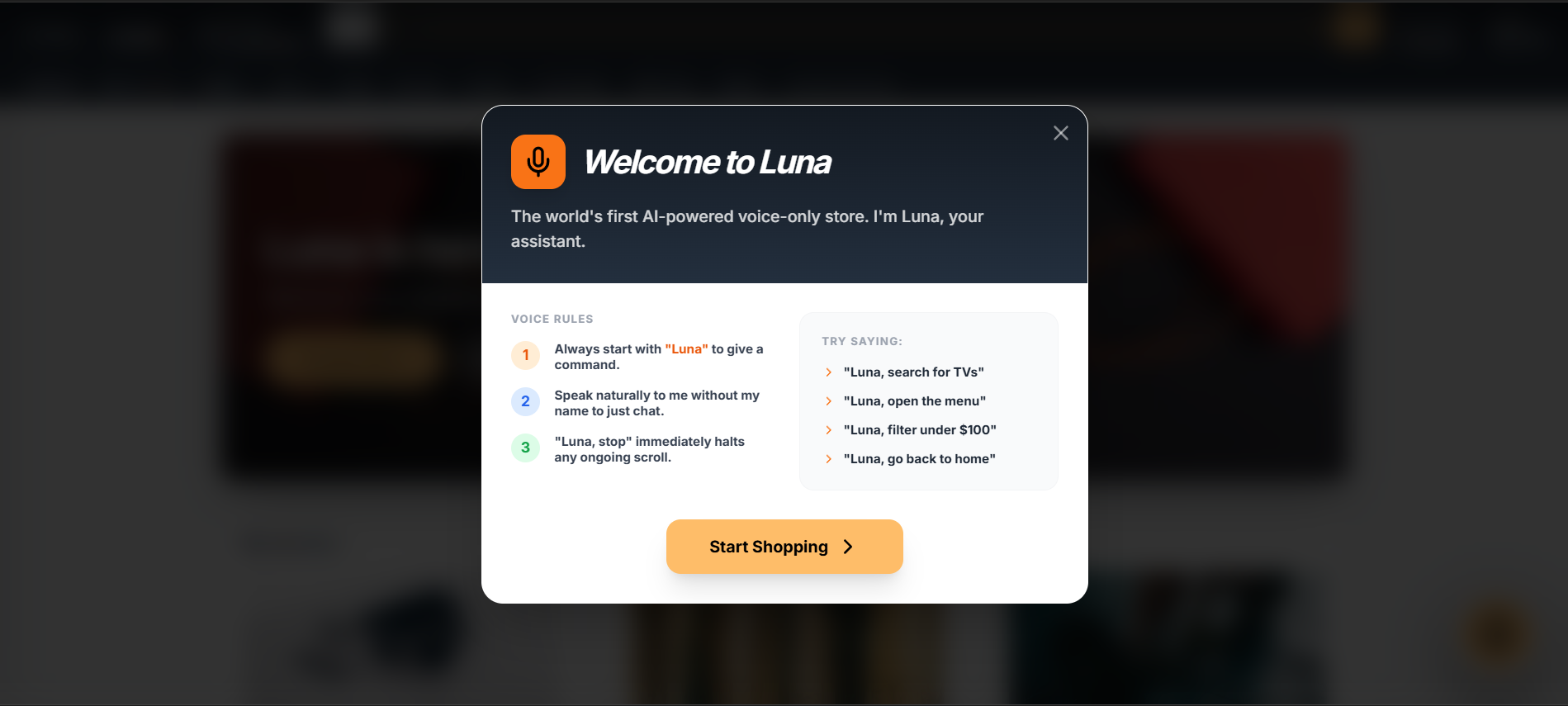
Demo mode for the first time users.
-
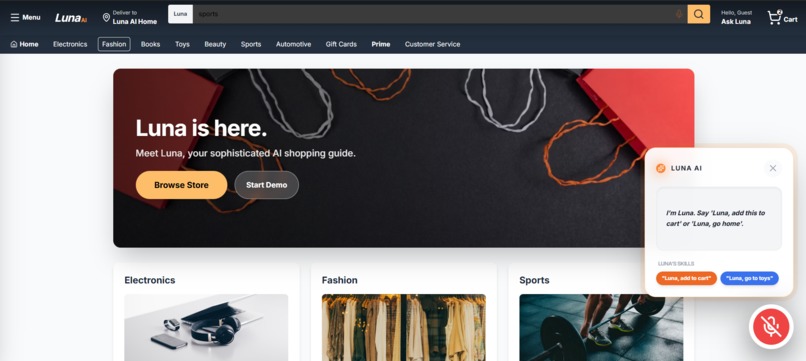
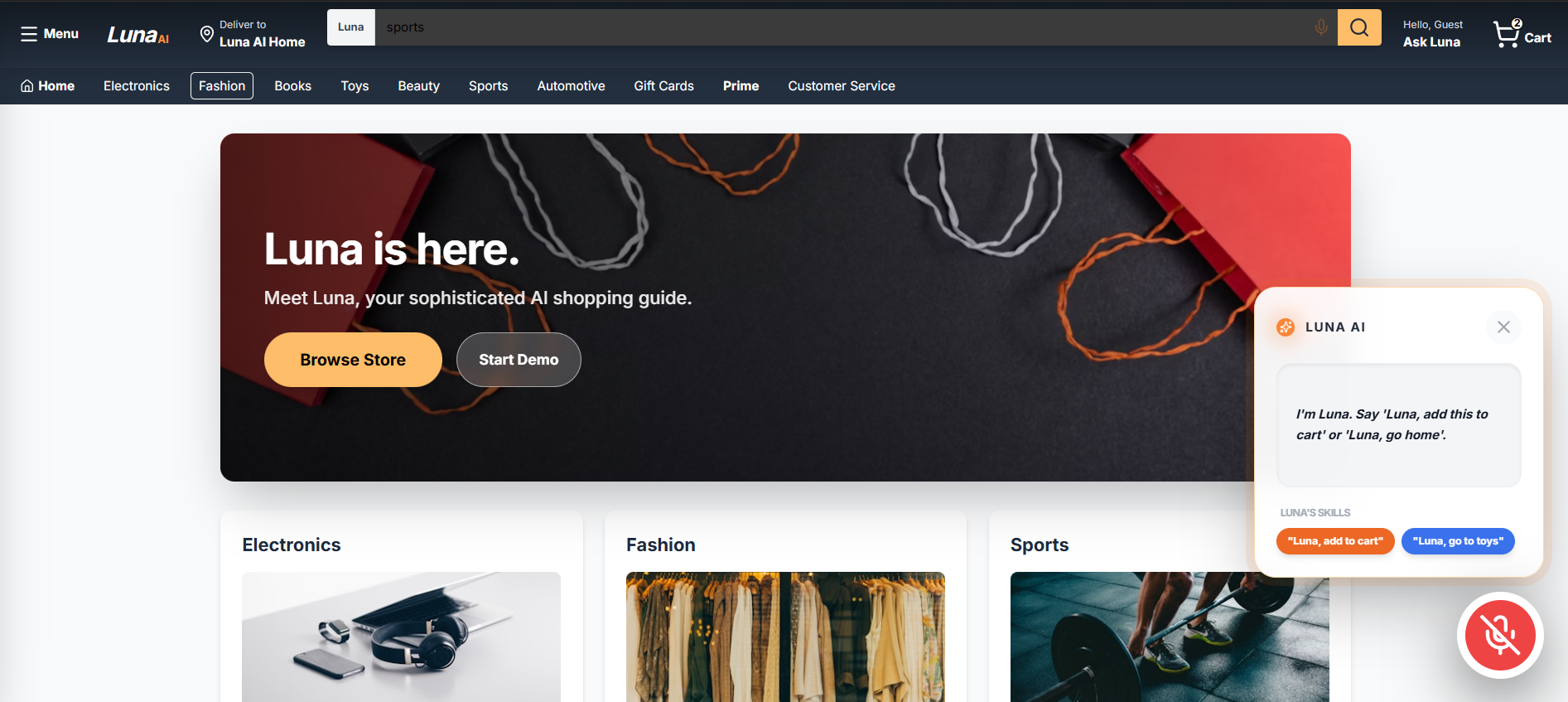
Home page of the app.
-
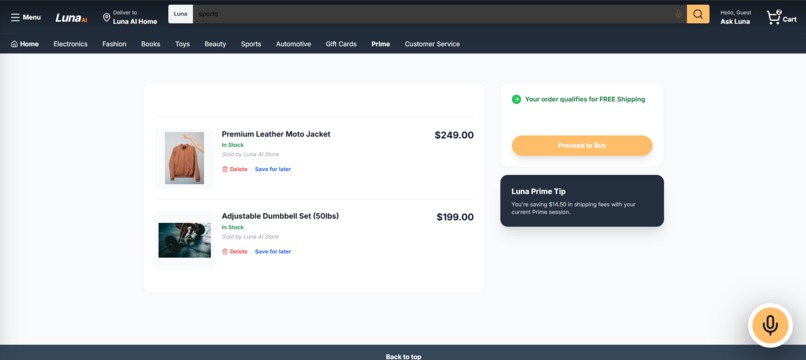
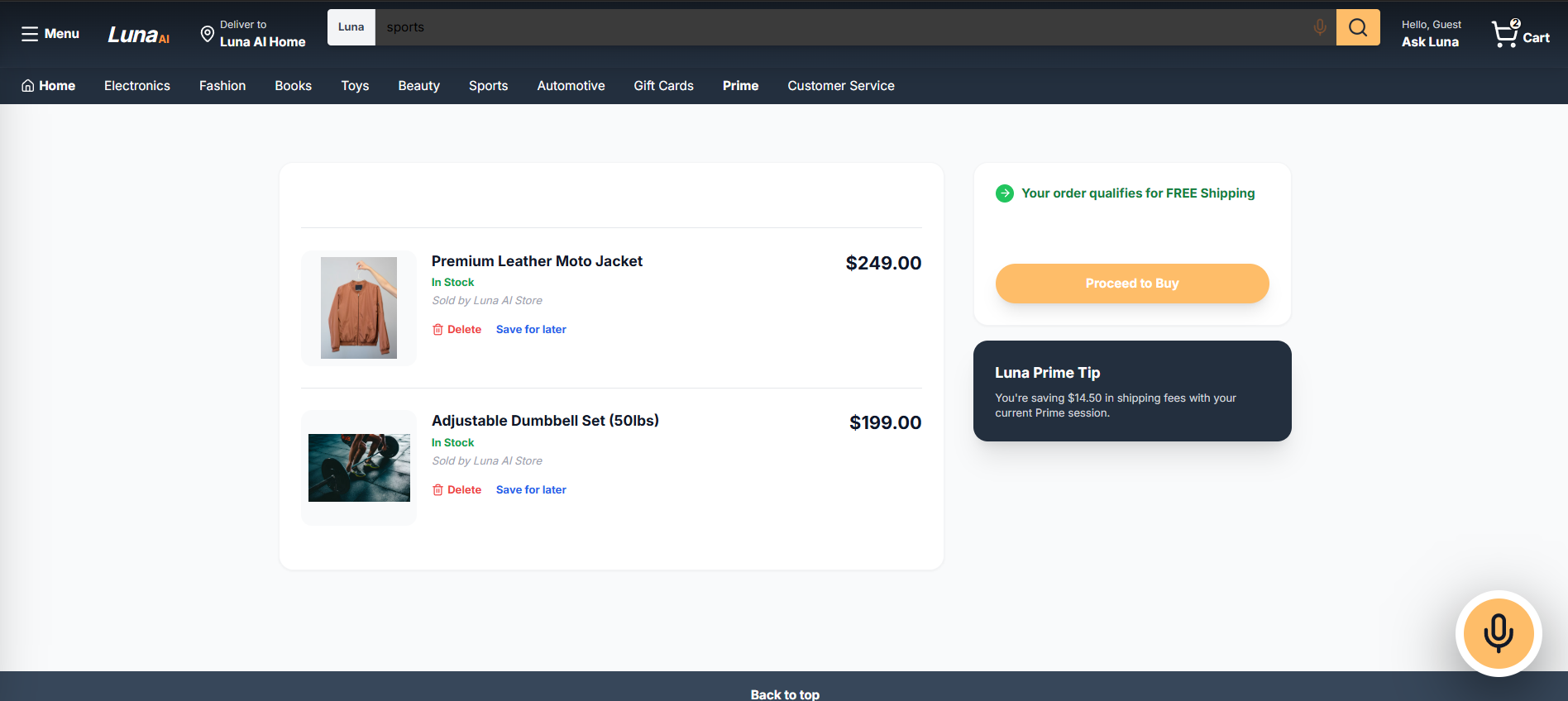
Cart section of the products.
-
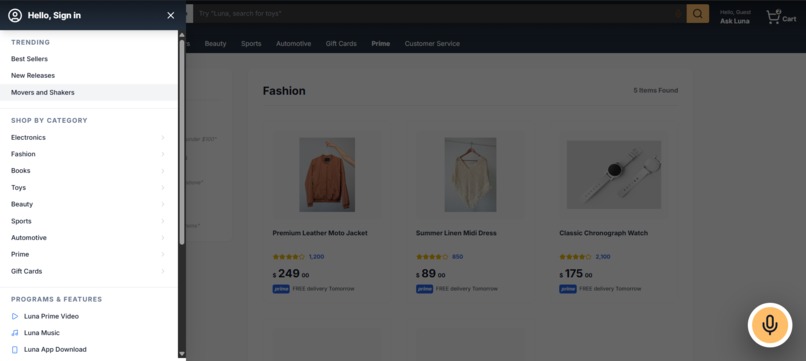
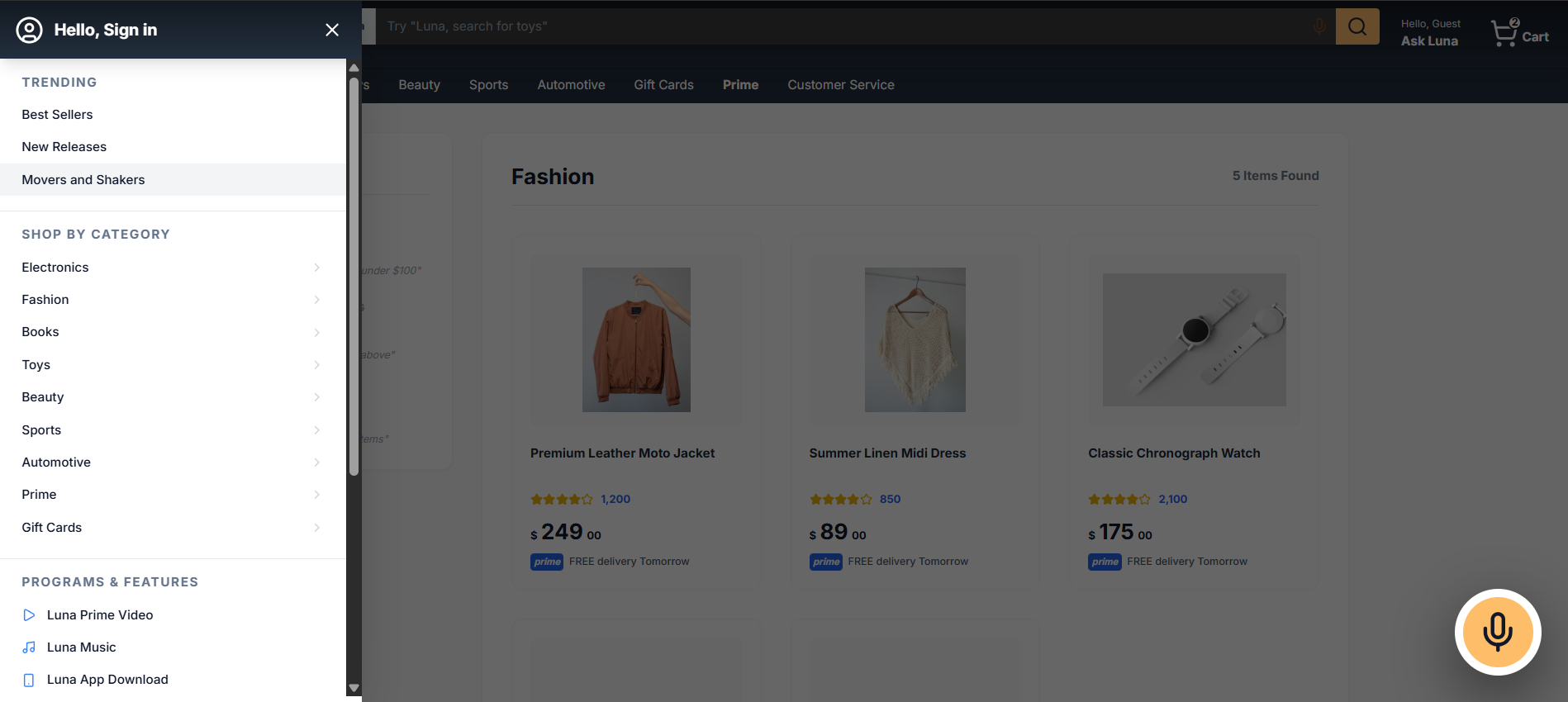
Menu page of the app.
Inspiration
The inspiration behind MyLuna came from a strong desire to make technology more accessible for visually impaired individuals while also promoting smarter and more effortless digital interactions for everyone. Many modern applications rely heavily on touch and visual interfaces, creating barriers for users who cannot easily see or physically interact with a screen.
We envisioned a platform where navigation could happen naturally through voice—removing these limitations and enabling users to interact with technology in a more intuitive way. Beyond accessibility, we wanted to reduce the physical effort required to perform everyday digital tasks. By allowing users to operate an application hands-free, MyLuna supports inclusivity while enhancing convenience for anyone seeking a more efficient experience.
What MyLuna Does
MyLuna is an AI-powered shopping application that delivers a fully voice-controlled experience. The platform includes multiple categories such as Toys, Fashion, Electronics, Books, Sports, Prime Deals, and Customer Support.
Users can seamlessly move between pages using voice commands without touching the screen. They can search for products, apply filters, select items, add them to the cart, and scroll through pages i.e., all through simple spoken instructions.
At its core, MyLuna aims to optimize user interaction effort. If we consider interaction effort as a function ( E ), traditional applications often require both physical and visual engagement:
$$ E = f(T, V) $$
where ( T ) represents touch interactions and ( V ) represents visual attention.
MyLuna minimizes this effort by prioritizing voice-driven navigation:
$$ E \approx f(\text{Voice}) $$
This shift significantly improves accessibility while making digital shopping faster and more user-friendly.
How We Built It
We built MyLuna using modern web technologies including HTML, CSS, TypeScript, React, and Tailwind CSS, allowing us to create a responsive and intuitive user interface.
To power the voice-driven experience, we integrated the Web Audio API for speech processing and the Google Gemini API for intelligent voice recognition and responses. These technologies worked together to interpret user commands, trigger actions, and maintain smooth navigation across the platform.
Our development approach focused on modular architecture and iterative improvements. Each feature was tested and refined to ensure reliability, responsiveness, and accessibility. By combining AI capabilities with thoughtful interface design, we were able to deliver a seamless voice-first shopping experience.
Challenges We Faced
One of the earliest challenges was setting up and managing the project repository, particularly due to API integration and connectivity issues. These obstacles initially slowed development and required careful debugging and configuration.
Another significant challenge involved designing the voice navigation logic. Determining when the application should scroll and by how much , required experimentation and user-centered thinking. We also had to identify effective voice keywords that felt natural while still being precise enough for accurate recognition.
Mathematically, this problem resembled an optimization task:
$$ \text{Best Command Set} = \arg\min (\text{Recognition Errors} + \text{User Effort}) $$
Through persistent testing, refinement, and collaboration, we successfully optimized the system to provide a smooth and reliable voice-controlled experience.
What We Learned
Building MyLuna taught us valuable lessons about working with AI technologies. One of the most important insights was understanding that the quality of AI output is directly proportional to the clarity of the prompt:
$$ Q \propto P $$
where ( Q ) represents output quality and ( P ) represents prompt precision.
This realization helped us develop strong prompt engineering skills, enabling us to communicate more effectively with AI systems and achieve better results.
We also learned the importance of iterative development, continuously testing, gathering feedback, and refining the product to improve both functionality and user experience. Perhaps most importantly, we recognized that accessibility should not be treated as an afterthought but as a foundational principle in modern software design.
Accomplishments We’re Proud Of
We are proud to have transformed a simple idea into a meaningful solution that promotes accessibility and inclusivity. MyLuna reduces the effort required to interact with an application by enabling complete voice control, making online shopping more approachable for visually impaired users while benefiting anyone who prefers a hands-free experience.
Successfully merging AI with accessibility demonstrates our commitment to building technology that is both impactful and user-centered. Seeing our vision evolve into a functional platform has been one of our most rewarding achievements.
What’s Next for MyLuna
Looking ahead, we plan to expand MyLuna with features that support everyday needs. One of our goals is to allow users to schedule and automate purchases of essential household items—such as milk and groceries, ensuring convenience without repeated manual effort.
We also aim to introduce automatic app updates so that new pages and features integrate seamlessly without requiring user intervention.
Our long-term vision can be summarized as continuously maximizing user convenience:
$$ \text{User Value} = \text{Accessibility} + \text{Automation} + \text{Intelligence} $$
By continuing to innovate in these areas, we hope to create a smarter, more intuitive shopping ecosystem that redefines how people interact with digital platforms.
Built With
- css
- google-ai-studio
- google-gemini-api
- html
- javascript
- json
- lucide-react
- node.js
- react.js
- tailwind-css
- typescript
- web-audio-api


Log in or sign up for Devpost to join the conversation.