
Inspiration
Stress is something many individuals face on a day-to-day basis. As college students, it is important to recognize when our stress levels become unhealthy and it's time for us to take a break.
What it does
Although a healthy amount of stress can lead to increased productivity, the ability for stress to exponentially increase can become extremely damaging for people's health. On top of that, stress can become difficult to notice as it continuously compounding into a high levels. Our product helps detect when your stress levels exceed a healthy amount and gives 2 visual signals for you to destress.
How we built it
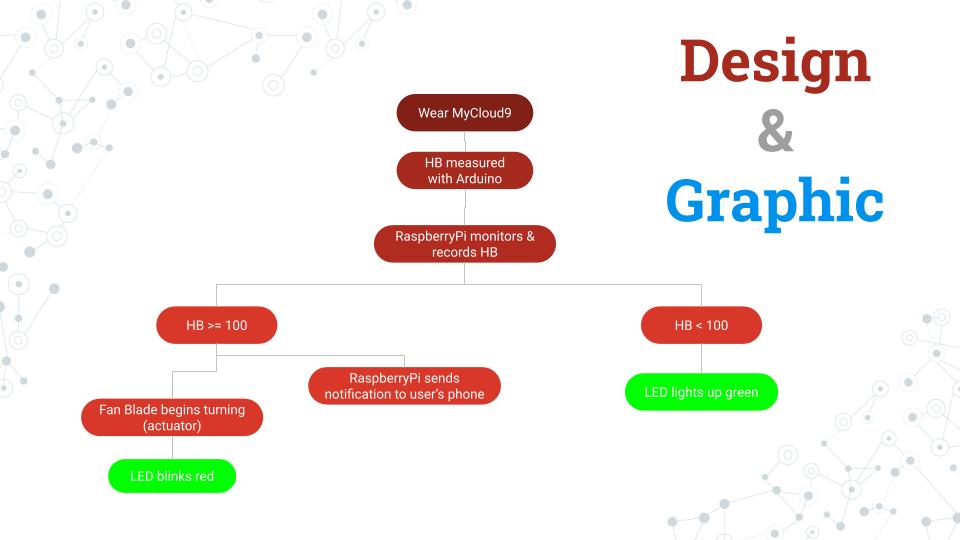
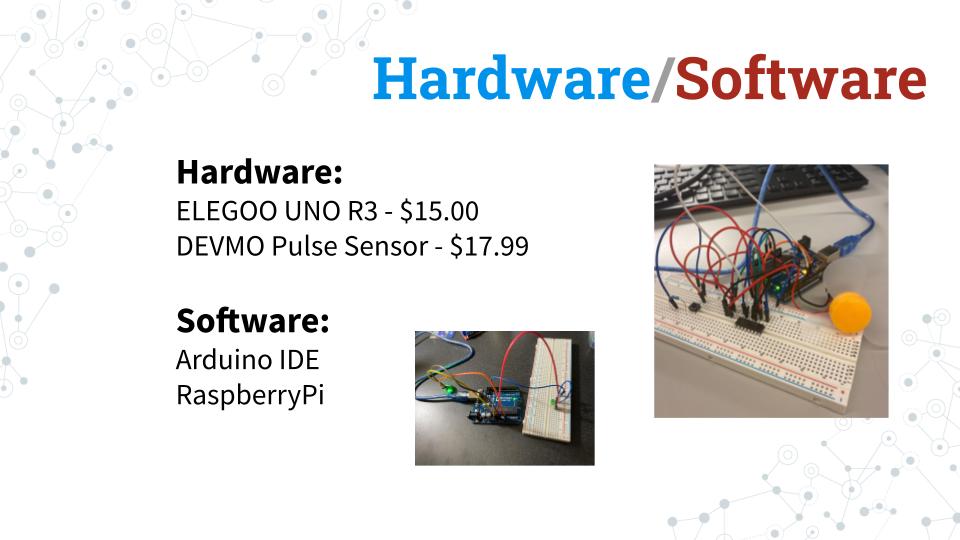
We first wired a simple LED circuit and saudered heartrate sensor to the Arduino. In the Arduino IDE, we set the LED to light up when the heartrate exceeded 100 bpm. Our next step was integrating the motor / fan in the circuit and writing the code for it. Lastly, we learned how to stream the heartrate data to Adafruit so users can view their historical bpm and identify patterns to make informed decisions about stress-management.
Challenges we ran into
- Our first challenge was getting the heartrate sensor wired with the Arduino and detecting a heartrate.
- The circuitry of our initial actuator didn't integrate well with the code we had written for the LED and heartrate sensor.
- We were having difficulties with wiring the sensor to the nodeMCU and streaming the data on Adafruit.
Accomplishments that we're proud of
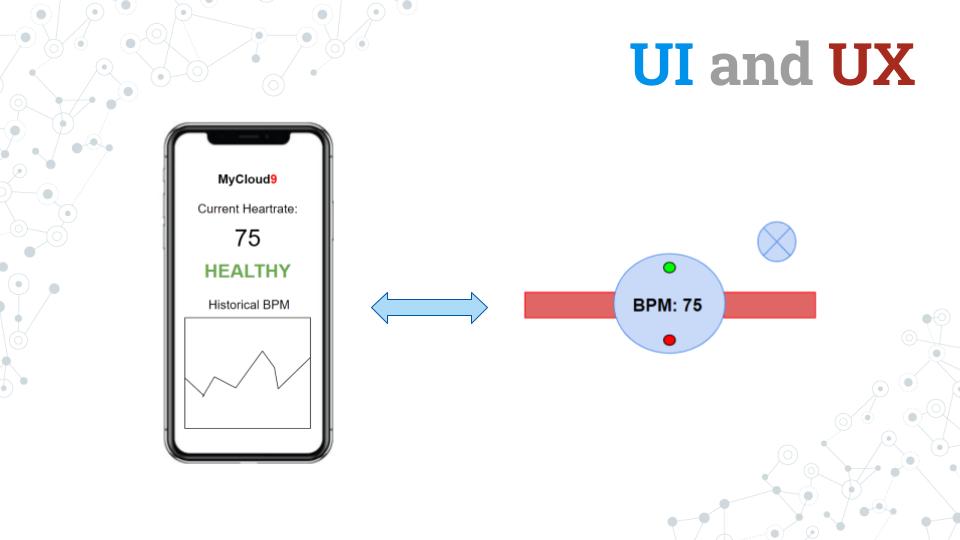
We were very happy with the way that our product is able to record historical heartrate data and display this information to the user in a more user-friendly way. We particularly were thrilled when IOT properly functioned (our sensor data was being sent to the NodeMCU seamlessly). Ultimately, we are proud that our team was able to build this product from scratch using a sensor that required a lot of resetting/testing due to its finicky nature.
What we learned
We learned how to build an MVP with our basic circuitry and coding experience. While overcoming our first challenge, we learned about how to access open source code to test our sensor and which resources to refer to while problem-solving. For our second challenge, we had to simplify the complexity of our hardware and focusing our logic in the software. Finally, for the IOT component, we learned about the logic behind the communication between our local hardware and the cloud.
What's next for MyCloud9
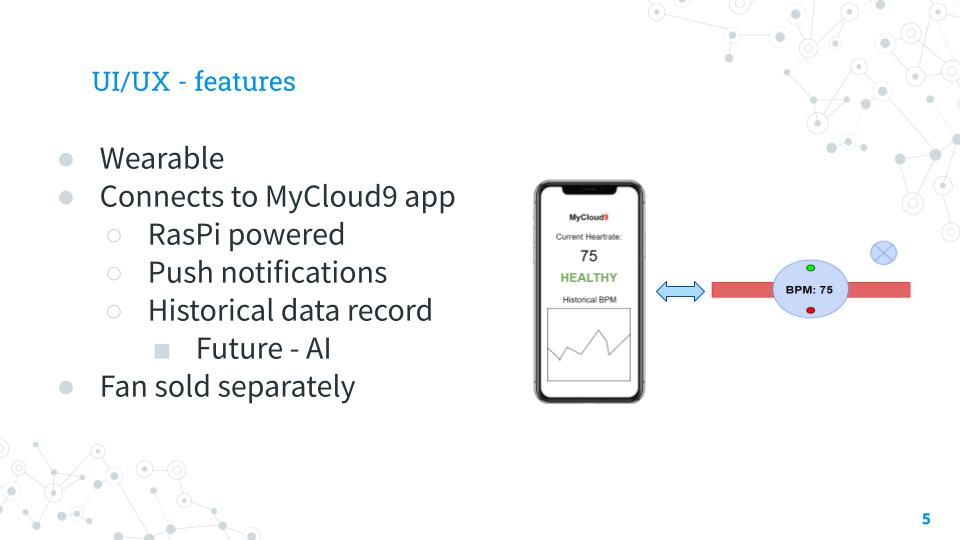
In the future iterations of this project, we are eager to develop the functionality of text message alerts for users when their heartbeat exceeds a healthy amount. While such a notification feature was originally intended to be the main feature of our project, time limitations and sensor difficulties deterred this from coming to fruition. In addition to text alerts, our team is excited to explore other forms of biometric data that better indicate stress and build sensors that pick up on such functions to improve the accuracy of the stress sensor currently in use. Finally, we also want to make our product wearable and incorporate AI/ML to analyze historical heartrate patterns and provide meaningful suggestions.


Log in or sign up for Devpost to join the conversation.