Mycelium Market
*The planet is the trader
Inspiration
Modern financial markets are often seen as cold, sterile and disconnected from the physical world. We wanted to flip that script. Inspired by the way mycelium networks reallocate nutrients, we built Mycelium Market, a trading platform where the "market" isn't a spreadsheet, but a living, breathing biological system. We asked: What if market liquidity was literally tied to soil moisture? (which obviously should never be implemented in real life).
What it does
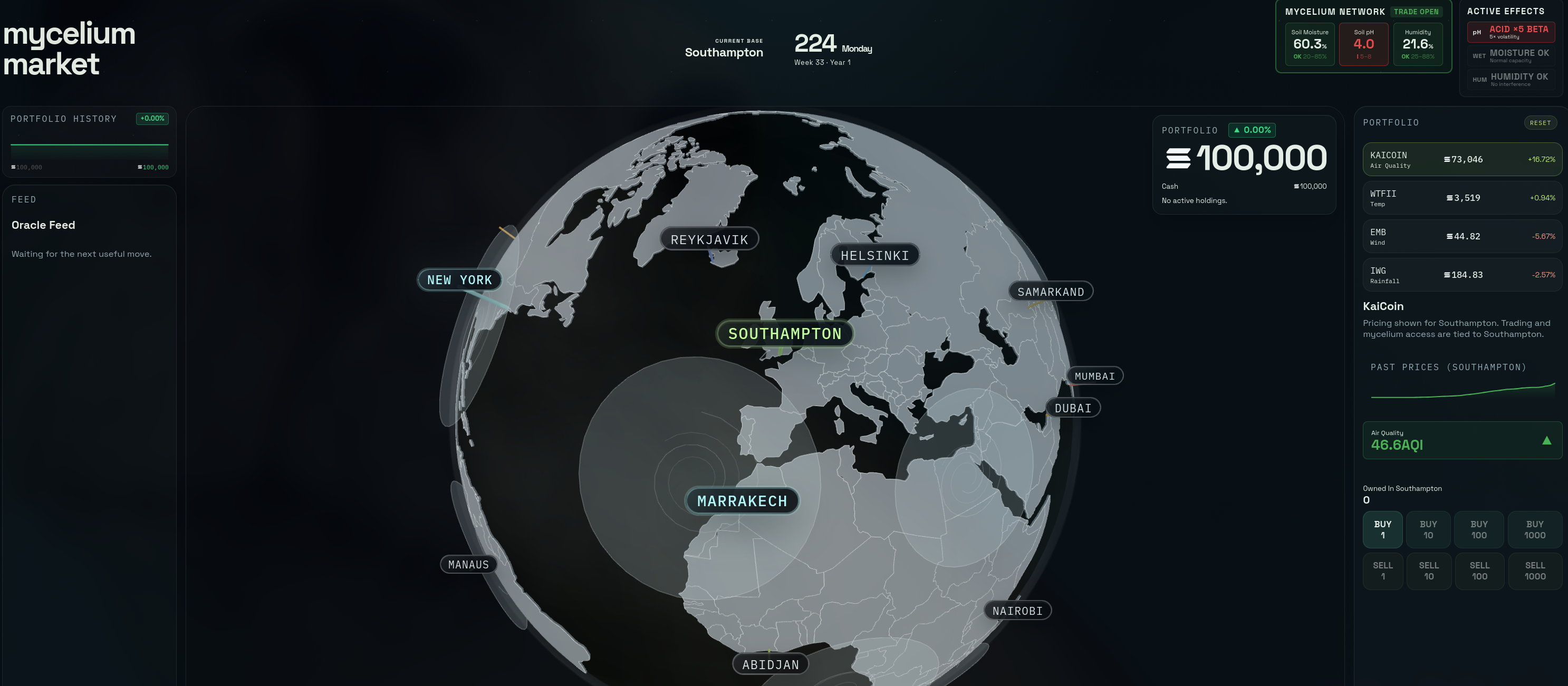
Mycelium Market is a planetary dashboard that maps environmental data to financial market mechanics:
- The Translation Layer: We use three code biological variables to dictate trading logic:
- Humidity (Processing Stability): High humidity makes the market "sticky", introducing processing delays as the mycelium thickens. Low humidity makes it "brittle" causing transactions to occasionally void.
- Soil pH (Volatility Catalyst): Acidic cities create hyper-volatile price swings, while Alkaline cities act as "stabilisers" for your capital.
- Soil Moisture (Network Capacity): Determines trade limits. Saturated soil allows for high-leverage trades; "wilting" soil restricts liquidity to protect the network
- Market Pricing: Each different currency is affected by one ecological variable (rain, air quality, temperature and wind) causing prices to increase or decrease dependent on the weather at a specific location.
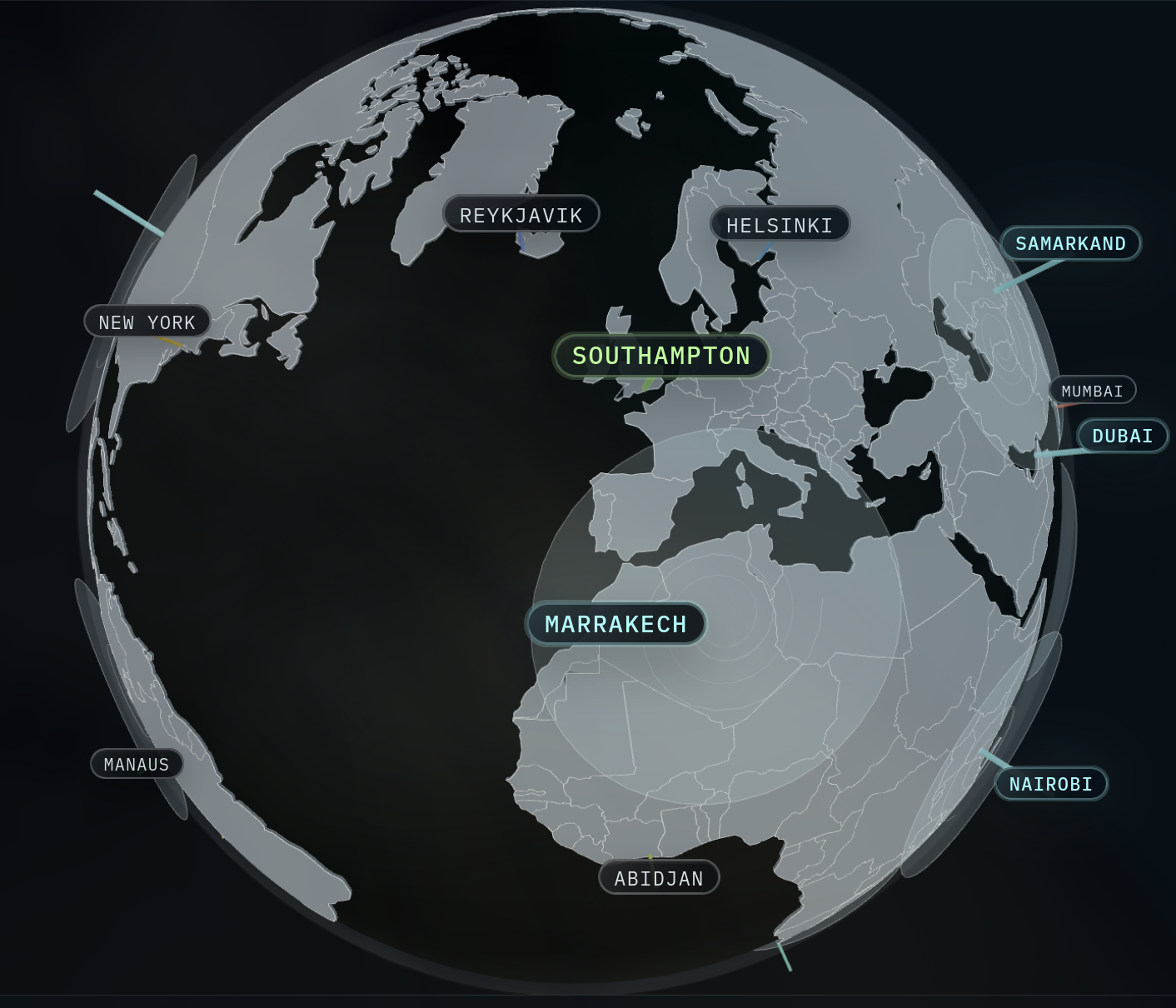
- Storms: Storms circle the earth, when in a city that has a storm, you will be unable to travel. You are also not able to visit a country that has a storm. If your plane flies into a storm on the journey you are returned to your start destination.
- The Audio Oracle: Powered by ElevenLabs, a fungal consciousness whispers market insights and warnings directly to the user.
- Spore Cloud Events: When all three core biological variables are in danger zones, trading is blocked for the user.
How we built it
- Frontend: A high-performance React and Vite architecture using Framer Motion for fungal glitch effects and Zustand for state management
- Planetary Engine: A custom 3D GlobeScene (Three.js/React Three Fiber) that visualises data density and regional signals.
- The Voice: A backend that streams raw audio from the ElevenLabsAPI directly to the client as a binary stream for low-latency Oracle warnings.
- Data Layer: TanStack Query handles the high-frequency polling of weather signals and market tickers, ensuring the biological and financial data are always in sync.
Challenges we ran into
- Binary Audio Streaming: We initially struggled with the audioStream not being a function due to Web Stream vs. Node Stream mismatches. We solved this by using for await...of loops to iterate over chunks and write them directly to the Express responss.
- The "Demo Speed" Problem: Real-world weather changes slowly. We had to build a "Time-Acceleration Layer" to ensure judges could see a city go from "Lush" to "Rotten" within a 120-second window.
Accomplishments that we're proud of
- Visceral Feedback: We successfully turned "boring" market data into a sensory experience. When the Spore Cloud hits, you feel the urgency through the inability to trade.
- Biological Logic: Creating a consistent mapping where environment variable actually make sense as financial constraints.
What we learned
- Streaming Architecture: We mastered the nuances of streaming binary data from a TTS engine to a frontend Audio object.
- Atmospheric UI: We learned how to use CSS filters and SVG displacement maps to create a clean but "fungal" aesthetic that feels alive.
What's next for Mycelium Market
- Multiplayer Symbiosis: A mode where multiple traders must cooperate to "water" a specific market to maintain liquidity.

Log in or sign up for Devpost to join the conversation.