
Inspiration
We’re excited to present our hackathon project designed to support kids in rehabilitation with a fresh and engaging approach! Inspired by the impactful work of organizations like the Alberta Children’s Hospital Foundation, our goal is to blend technology with compassionate care to make a real difference.
Imagine an app that helps kids manage their rehab journey while having fun. By incorporating cutting-edge tech and interactive features, we aim to turn the rehabilitation process into an engaging experience that supports both physical recovery and emotional well-being.
This project is all about harnessing innovative solutions to create a tool that’s not only effective but also enjoyable for kids. We’re passionate about making rehabilitation easier and more interactive, and we can’t wait to see how our idea can make a positive impact!
What it does
MyBuddy is a web application designed to help kids feel more comfortable expressing their feelings. By gamifying the experience of reporting their emotions, we aim to make the process enjoyable and engaging. This approach is particularly beneficial for children undergoing rehabilitation, as it encourages them to be open and honest about their emotions. Ultimately, this helps reintegrate kids into society by teaching them essential communication skills such as everyday skills, emotional intelligence, self awareness,stress management and friend-making. Furthermore, we aim to teach them skills that will keep them safe on the internet, such as managing screen time and taking breaks to exercise.
How we built it
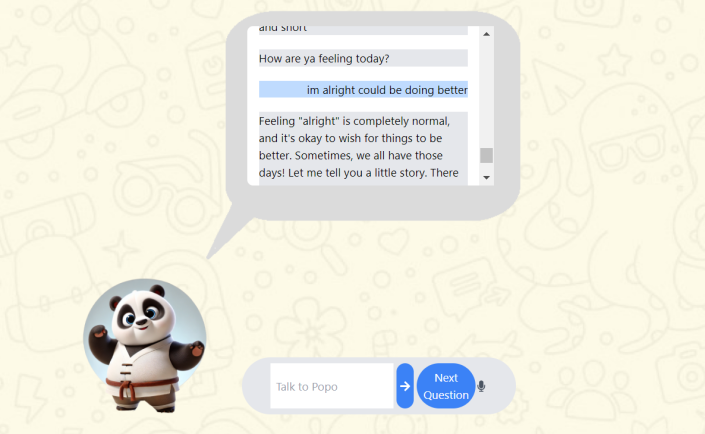
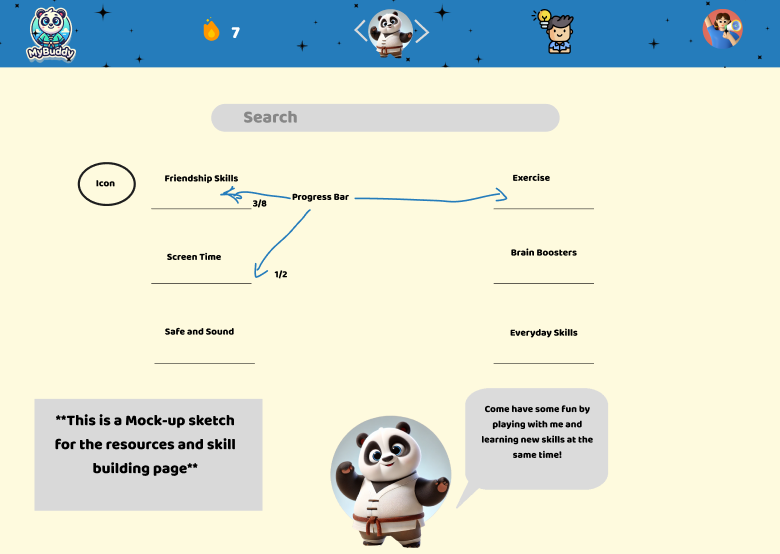
First, we designed our web application using Figma. We designed our images, including our beloved PoPo, using DALL·E 2. Then, we developed it with React.js and Node.js, creating various pages composed of different components. Additionally, we integrated the OpenAI GPT-4 model, using the API, to implement our chat feature.
Challenges we ran into
One of the challenges we encountered was integrating the OpenAI API into our web app, which included not only connecting the API but also training the model to generate prompts that were appropriate and engaging for our target audience. This process required careful tuning and testing to ensure that the outputs met our expectations.
Additionally, we faced several UI and UX issues, particularly in how we incorporated the text generated by the GPT-4 model into our React application. This involved aligning the text with the existing design, splitting it into manageable components, and ensuring that these components were responsive across different devices and screen sizes. Each of these tasks took considerable time and effort to implement effectively, as we needed to ensure a seamless and intuitive user experience.
Accomplishments that we're proud of
An accomplishment that we are proud of is the successful development of our app, which is now fully operational and has the potential to assist many children across Alberta in developing effective communication skills. This app represents a significant step forward in providing valuable resources to support children’s growth and learning in an engaging and accessible way.
What we learned
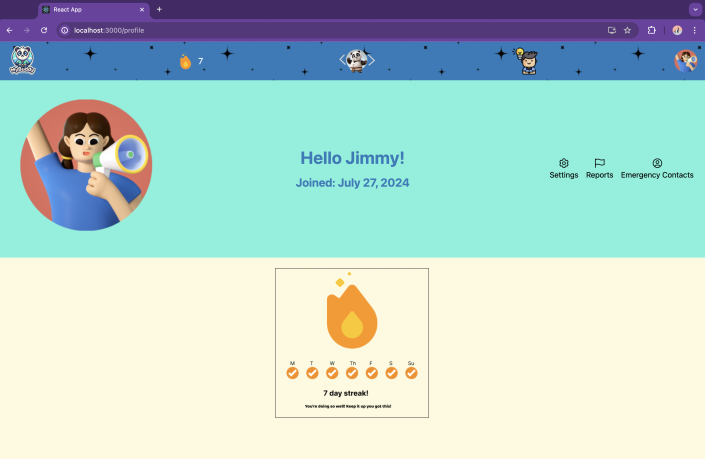
We learned how to create a React application that uses routing, which allows for seamless navigation between different pages and components within the app. Additionally, we integrated the OpenAI API into a React application. This included setting up API calls, handling responses, and utilizing the API to enhance our application's functionality.
What's next for MyBuddy
- Adding a resources page having links and phone numbers for children to access
- AI-Generated Forms: Uses AI to generate a form that gets sent to pediatricians.
- Speech Feature: Includes a speech feature for kids who don't know what to type, with some open-ended questions.
- Doctor's Graphs: Provides graphs for doctors to visualize the child's progress and data.
- Character Selection: Allows kids to choose their character, with voice options based on the chosen character.
- Pain Reporting: Enables kids to select body parts to indicate where they are experiencing pain.
- Hardware: Using perhaps a wearable or computer vision (eg: OpenCV) to help children better report their pain
Built With
- ai
- css
- dalle
- figma
- html
- javascript
- machine-learning
- mongodb
- node.js
- openai
- postman
- react
- tailwind-css
- visual-studio


Log in or sign up for Devpost to join the conversation.