-
-
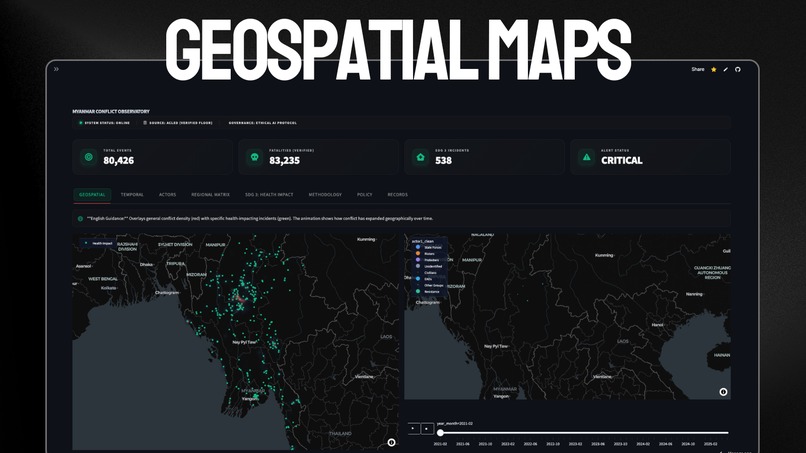
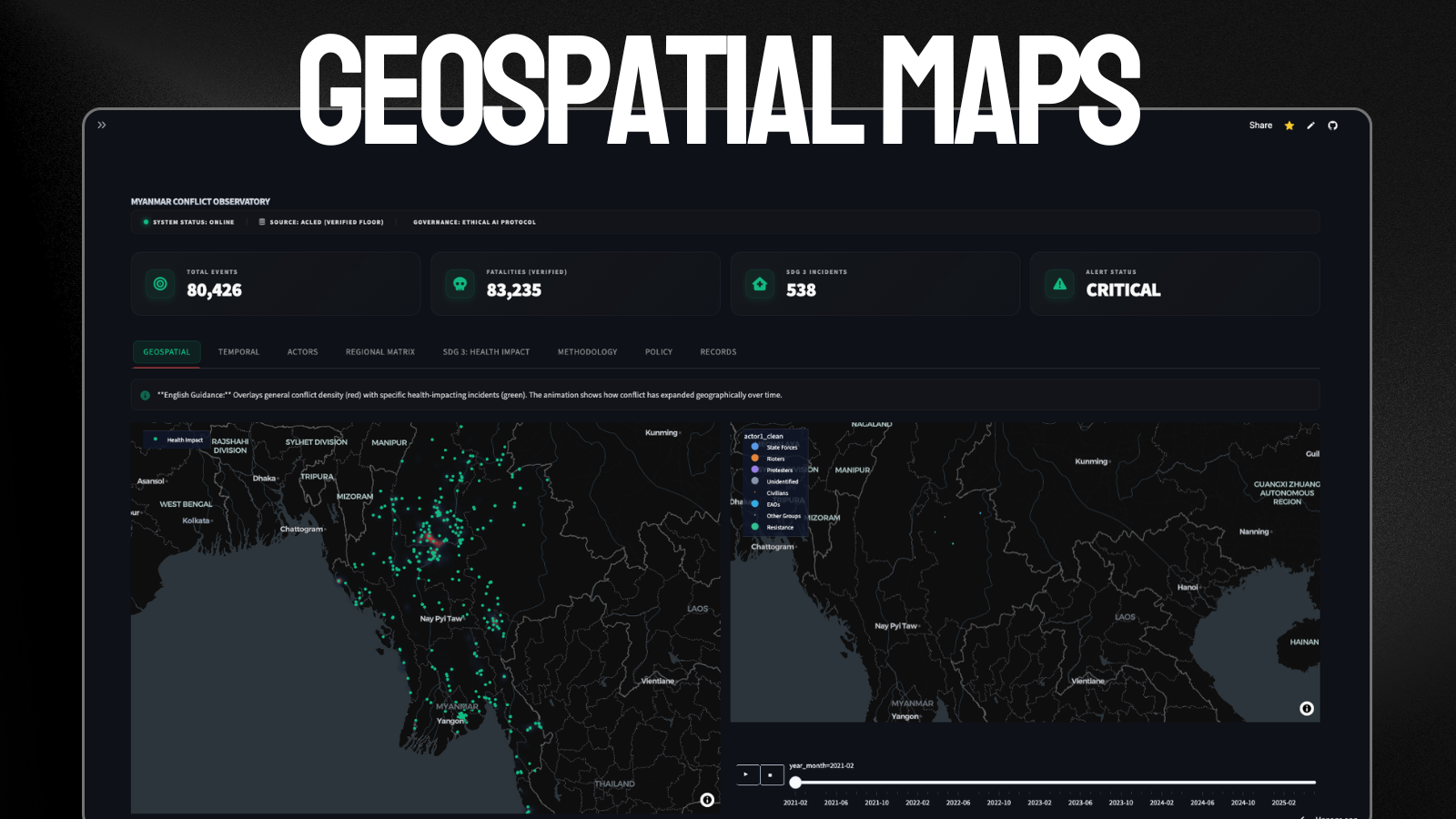
Analysis the conflict pattern
-
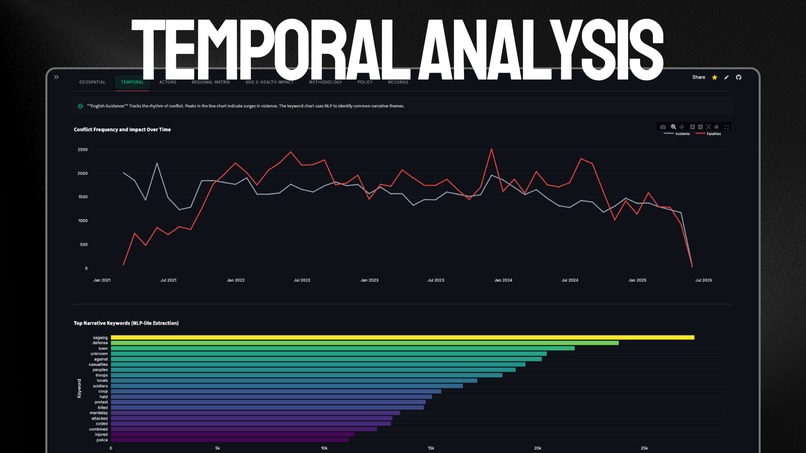
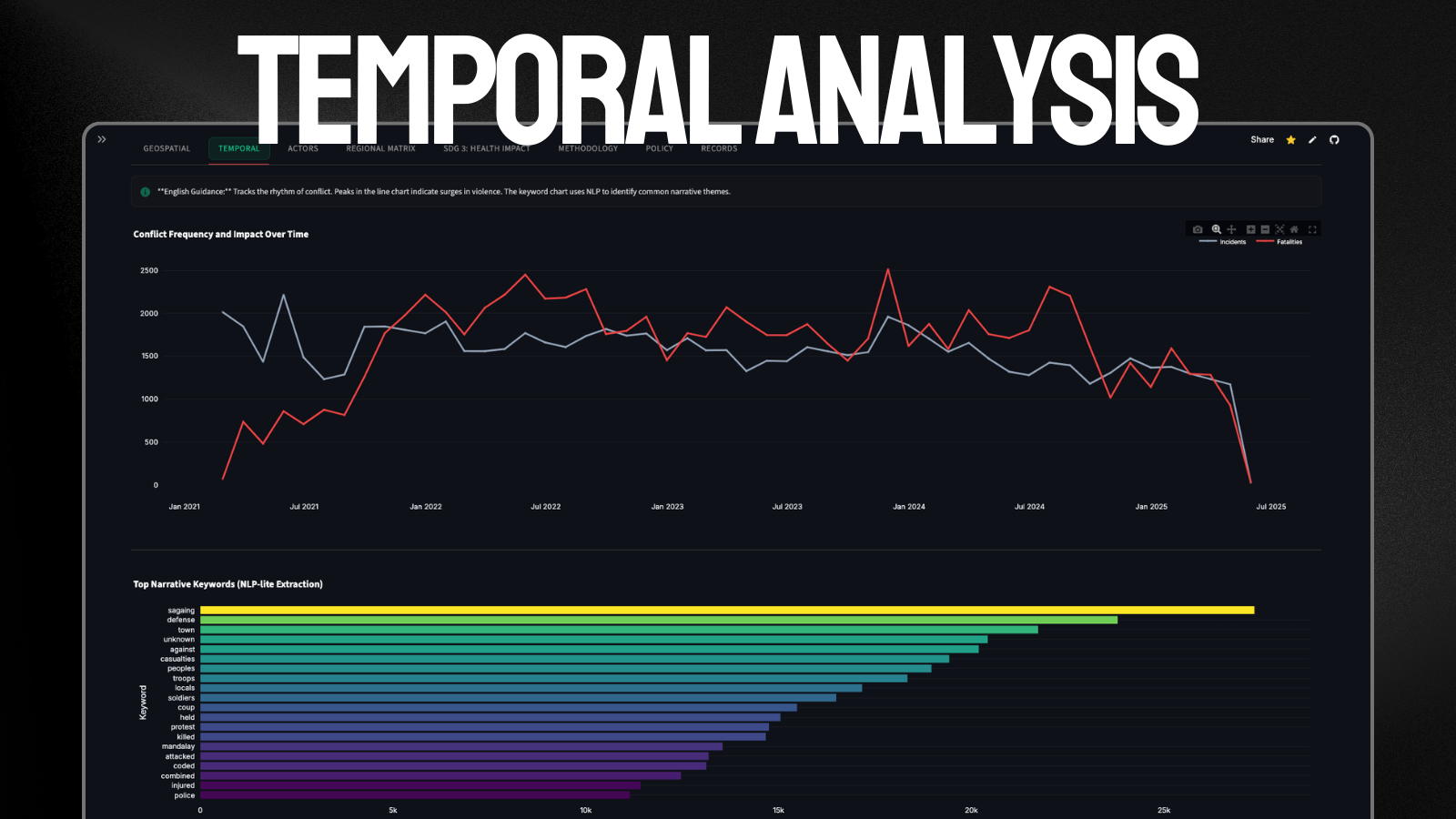
Insight of Temporal Trends
-
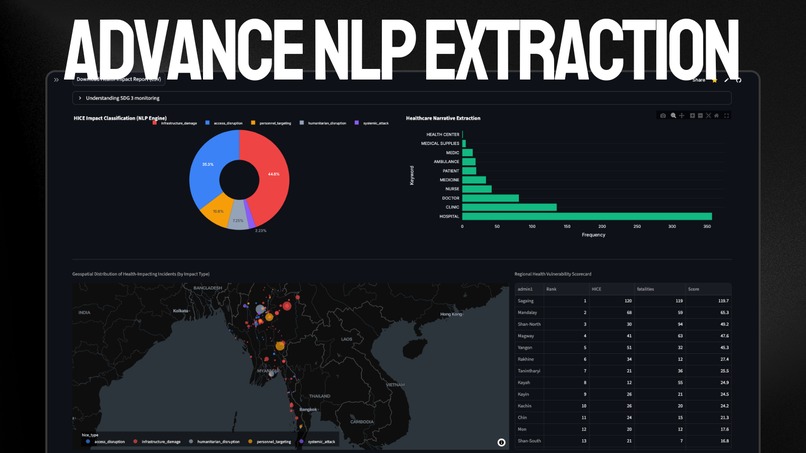
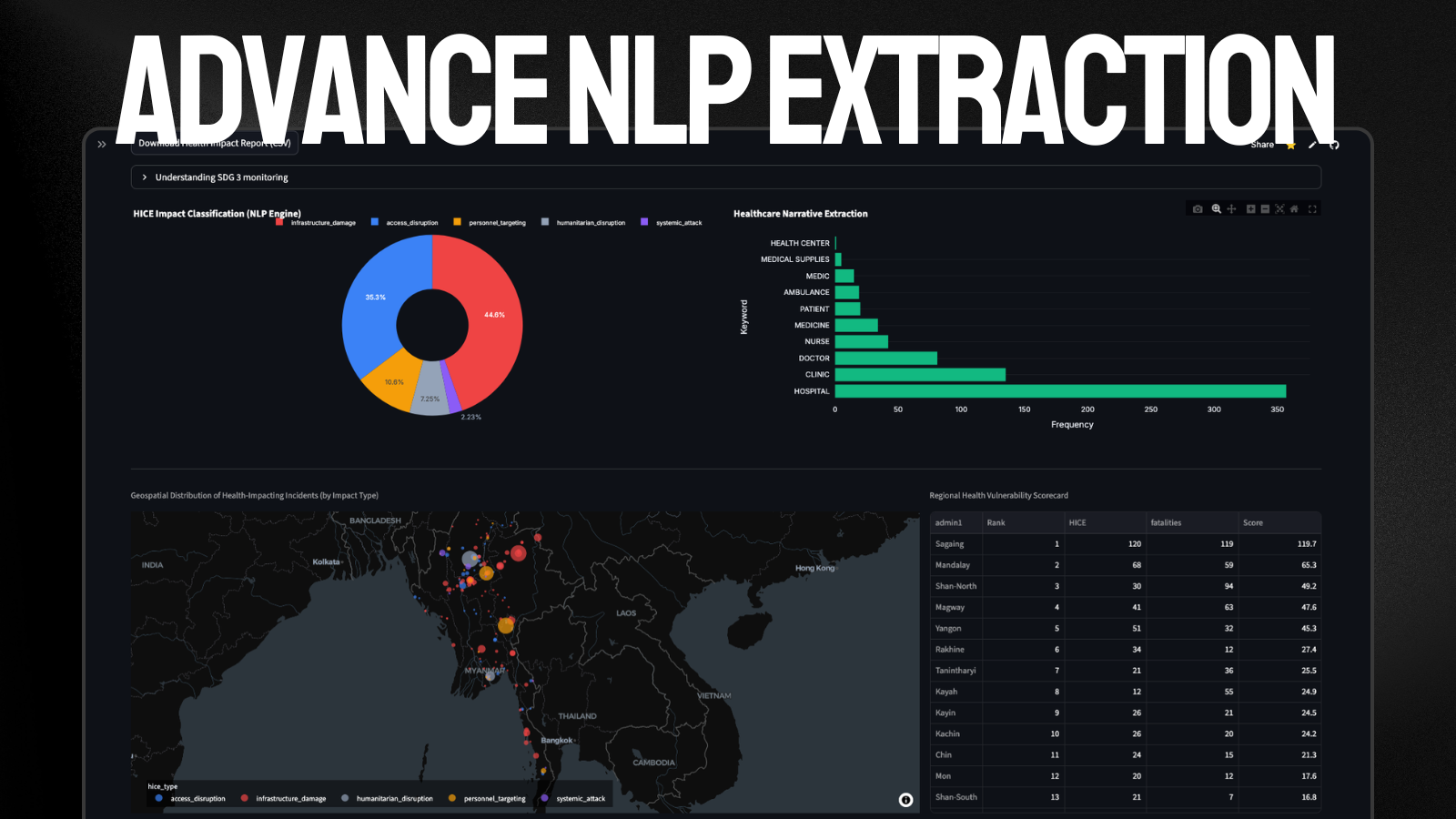
HICE framework for SDG 3
-
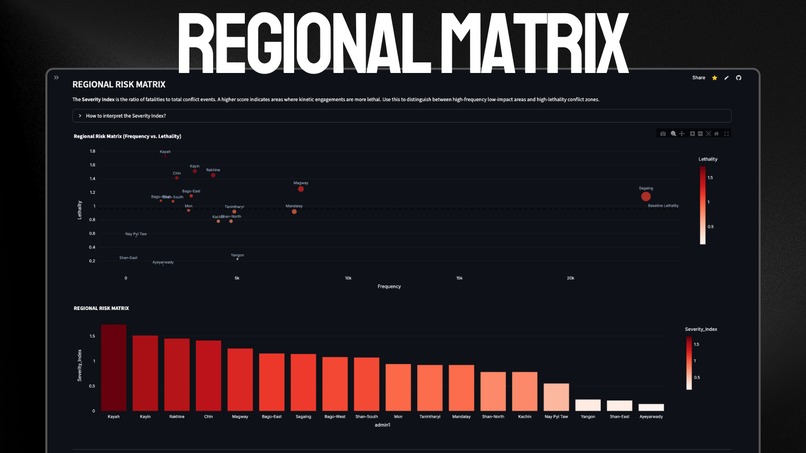
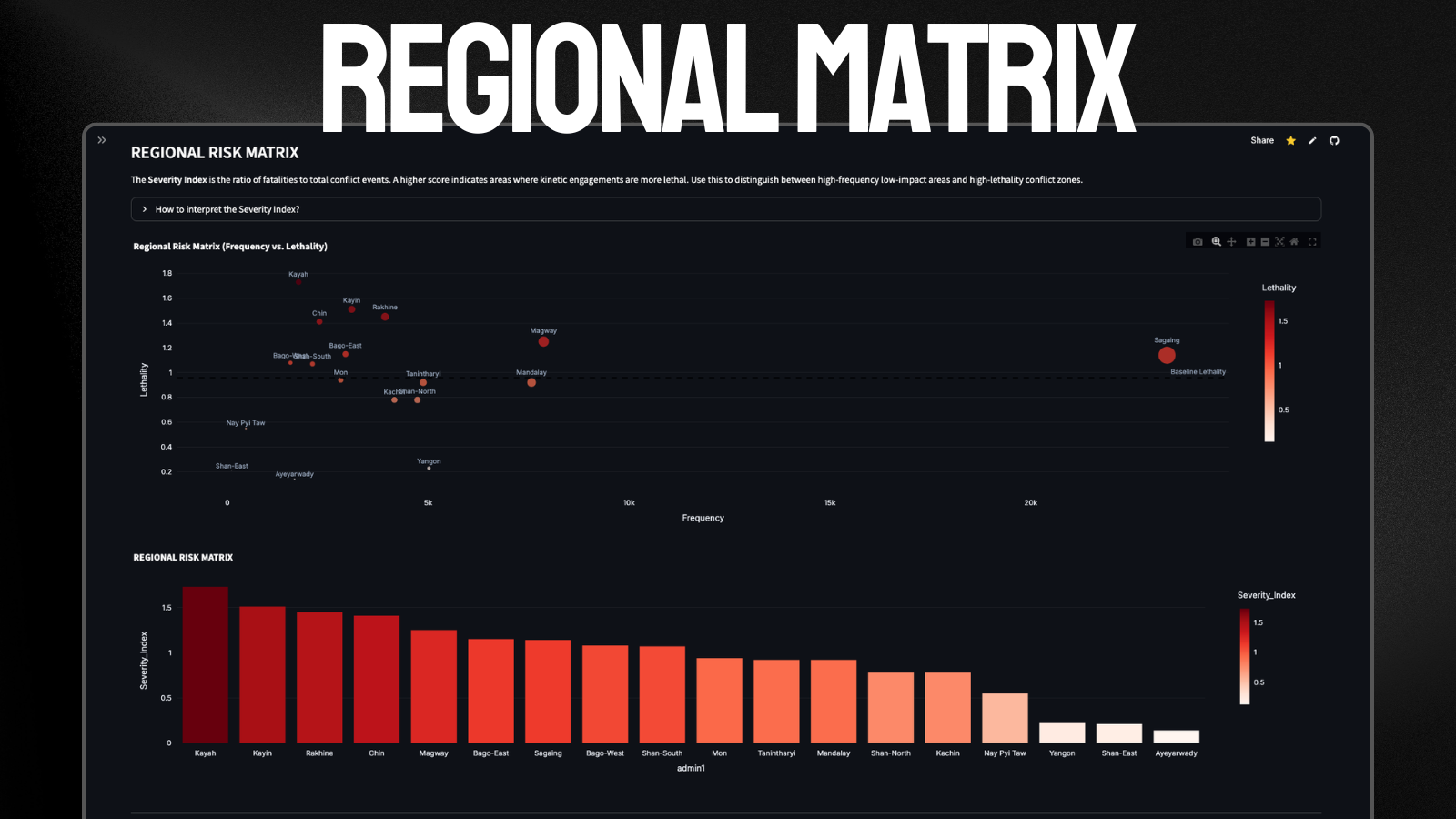
Regional Matrix of Myanmar
Inspiration
A healthcare system is not merely an infrastructure of buildings and personnel; it is a precarious lifeline that, once severed, denies an entire population its most basic right to survive. While Myanmar faces a protracted humanitarian crisis, the specific erosion of its medical network has remained largely invisible in global discourse. By systematically isolating instances of targeted healthcare violence, this observatory makes the invisible visible, grounding the abstract data of conflict in the stark, human reality of a system under siege
In short, This project was inspired to build a platform that uncovers the "hidden toll" such as the targeting of medical staff, the arson of rural clinics, and the occupation of hospitals which are frequently buried in qualitative notes rather than structured tags in alignment with UN SDG 3. The goal is to provide a "Verified Floor" of data to help humanitarian organizations plan trauma-focused interventions where they are needed most.
What it does
The Myanmar Conflict Observatory (MCO) is an enterprise-grade analytical hub that monitors the impact of political violence on Myanmar’s healthcare infrastructure.
- HICE Intelligence Engine: A custom NLP pipeline that scans thousands of unstructured event logs to detect Health-Impacting Conflict Events (HICE), automatically categorizing them into types like Infrastructure Damage and Personnel Targeting.
- Geospatial Risk Matrix: A quadrant-based analysis (Frequency vs. Lethality) that identifies high-intensity "Red Zones" where health access is most compromised.
- Actor Interaction Network: Maps the exact engagements between different factions, visually proving which specific armed groups are driving instability and civilian targeting.
- "Do No Harm" Protections: Automatically centroids coordinate data for medical assets to prevent the platform from being used for tactical targeting of healthcare facilities.
How I built it
- Frontend: Built with Streamlit, utilizing the new st.fragment architecture to allow isolated reruns of complex charts and maps without full-page reloads, ensuring a smooth user experience even with 100k+ records.
- Backend & Data Engine: A data pipeline that ingests and cleans raw, unstructured conflict logs from the ACLED API, mapping them to a standardized actor taxonomy.
- Intelligence Layer: Developed a multi-tier NLP pipeline in Python using Bidirectional Proximity Linking. It searches for health-related keywords coupled with kinetic action verbs (like "bombed" or "arrested") to ensure detected health impacts are direct results of conflict, not incidental mentions.
- Visualizations: Implemented Plotly for high-fidelity geospatial and temporal analysis, allowing for high-resolution exports for humanitarian reporting.
Challenges I ran into
- Underreporting & Blackouts: Frequent communication blackouts in Myanmar mean that data often lags or is incomplete. This was addressed by implementing a "Verified Floor" mandate—explicitly stating that the metrics represent the absolute minimum confirmed cost, rather than the total reality.
- Data Volume: Handling over 100,000 spatiotemporal logs in a web app caused latency issues. This was solved by implementing server-side data slicing and pre-calculating display indices to keep the UI responsive.
- False Positives in NLP: Early versions of my NLP engine flagged every mention of "hospital" (e.g., "victim taken to hospital"). I built a "Bystander Filter" to distinguish between incidental mentions and intentional targeting of healthcare infrastructure. This strict filtering resulted in a highly reliable dataset.
Accomplishments that I am proud of
- Exposing the Hidden Toll: The NLP engine extracted 536 verified health-impacting events. More importantly, it uncovered a 21.8% "hidden toll" (116 incidents) of attacks on healthcare that lacked any formal health tags in the original datasets and were flying entirely under the radar.
- High Precision Analytics: The HICE pipeline achieved an impressive 93.3% accuracy in manual review and an 80.3% weighted precision across the entire dataset.
- Ethical Design: Successfully implementing ICRC "Do No Harm" data protection standards to ensure that providing data transparency doesn't inadvertently compromise the safety of health workers on the ground.
What I learned
- The Power of Qualitative Data: Critical humanitarian insights are often hidden in the "notes" of a dataset rather than the "numbers."
- Spatiotemporal Dynamics: Understanding how conflict ruralization directly correlates with the collapse of regional health networks (SDG 3.d).
- Full-Stack Resilience: Managing a complete pipeline from raw API ingestion to a production-ready dashboard in a high-stakes humanitarian context.
What's next for Myanmar Conflict Observatory
The platform will be expanded by integrating Predictive Risk Modeling to forecast which healthcare facilities are at highest risk based on encroaching conflict patterns. There are also plans to collaborate directly with international NGOs to provide customized, real-time "Health Vulnerability Reports" to assist in the safe delivery of medical supplies and vaccinations in high-risk zones.
Built With
- mapbox
- natural-language-processing
- networkx
- plotly
- postgresql
- python
- streamlit

Log in or sign up for Devpost to join the conversation.