-
-
-
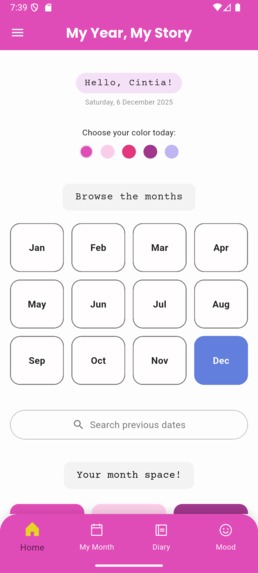
Dashbord
-
-
-
-
-
-
-
-
Inspiration
My Year, My Story was born from a personal need to create a space for reflection without pressure or performance.
Before becoming an app, it existed as a guided journal that I wrote and published, created to help adolescents reflect on emotions, daily experiences, and personal growth in a gentle and creative way.
As I observed how the journal was used, I realized that reflection becomes more meaningful when it is continuous, visual, and free from social comparison. Over time, the idea evolved into a digital product that could accompany the user across months — not as a productivity tool, but as a companion for self-awareness and personal memory.
What the project does
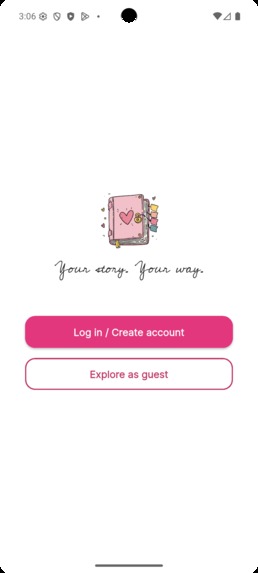
My Year, My Story is a mobile app focused on self-discovery for adolescents and young adults.
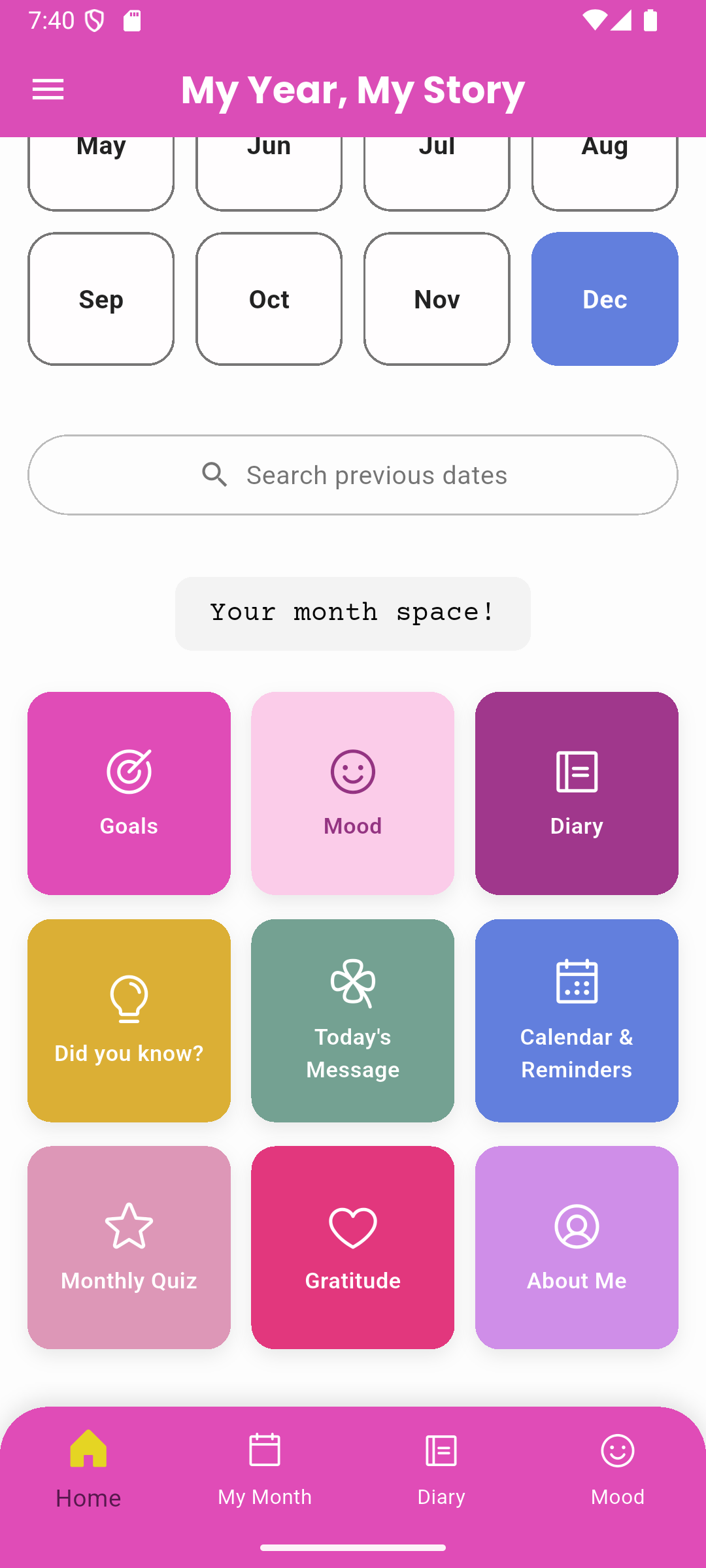
It offers a safe, creative space to explore emotions, register daily moments, set monthly goals, and build a personal memory over time. The experience is private, non-competitive, and centered on the user’s inner journey.
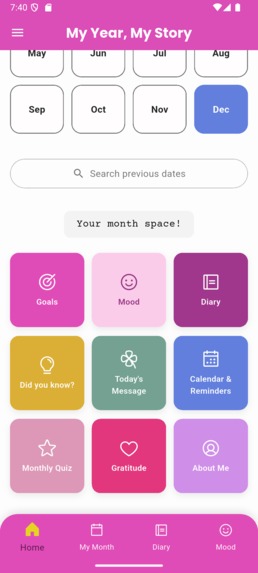
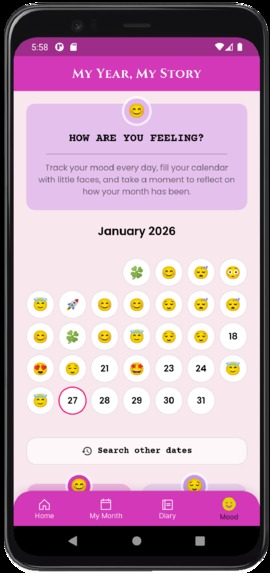
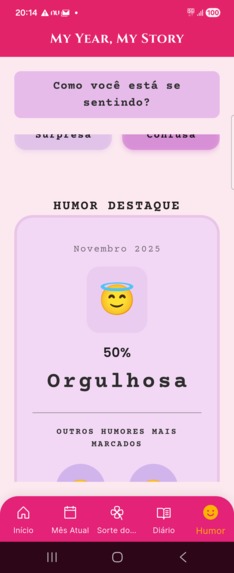
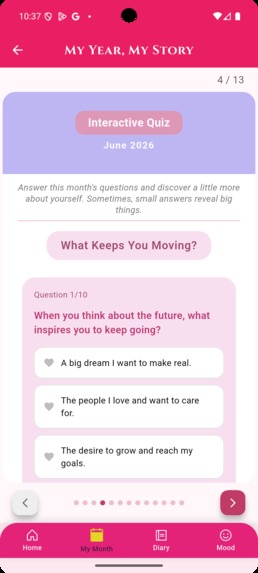
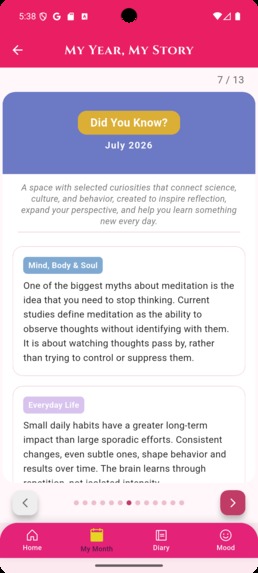
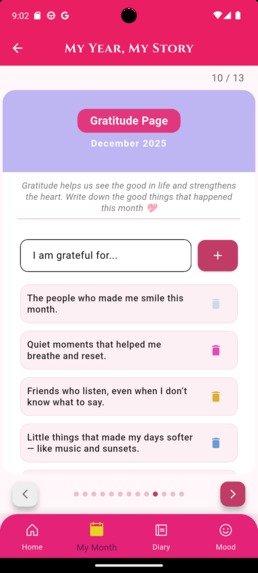
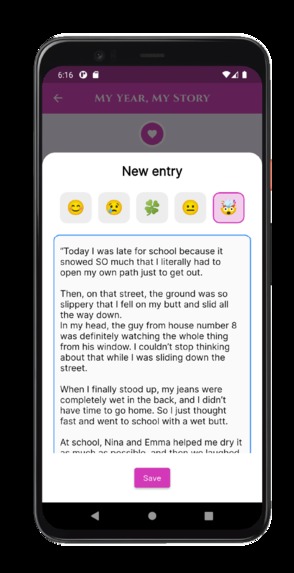
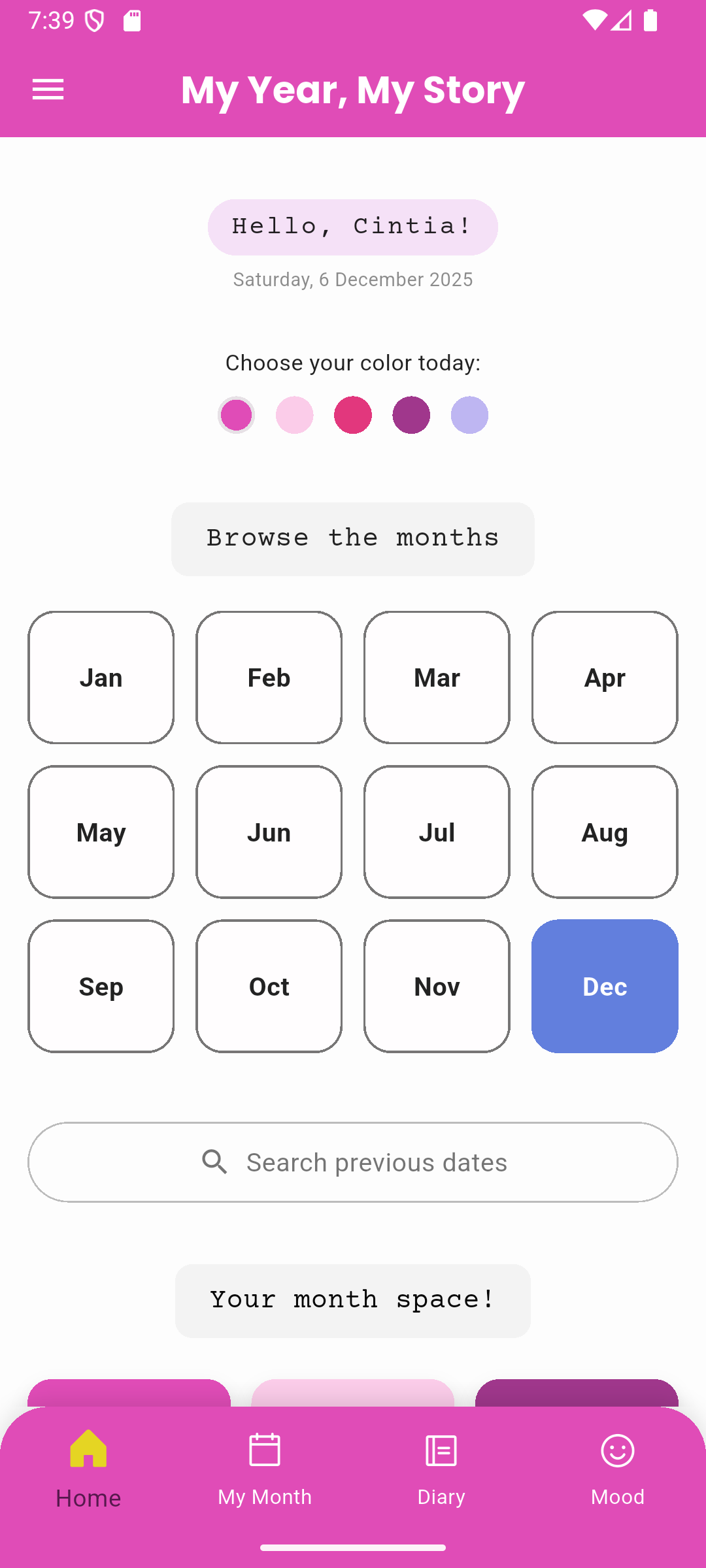
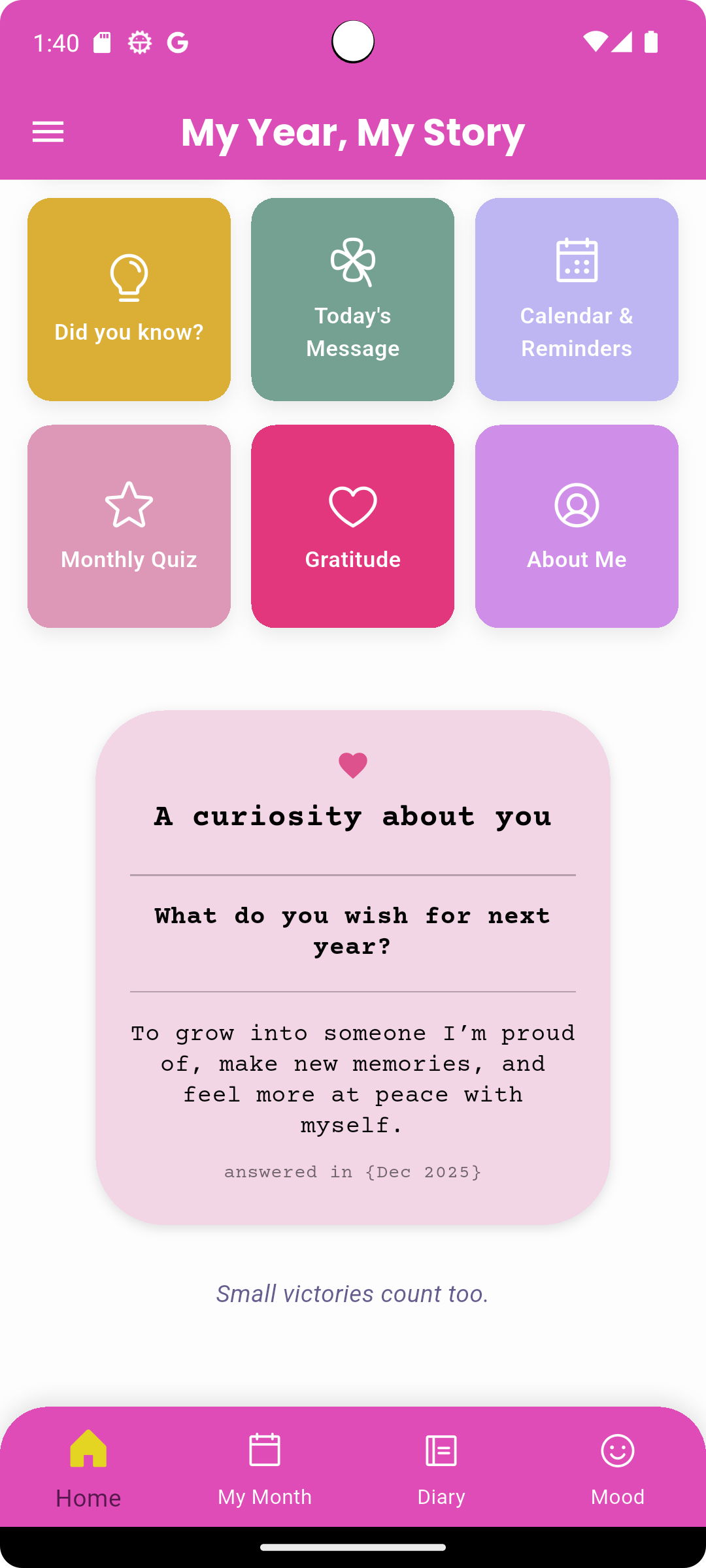
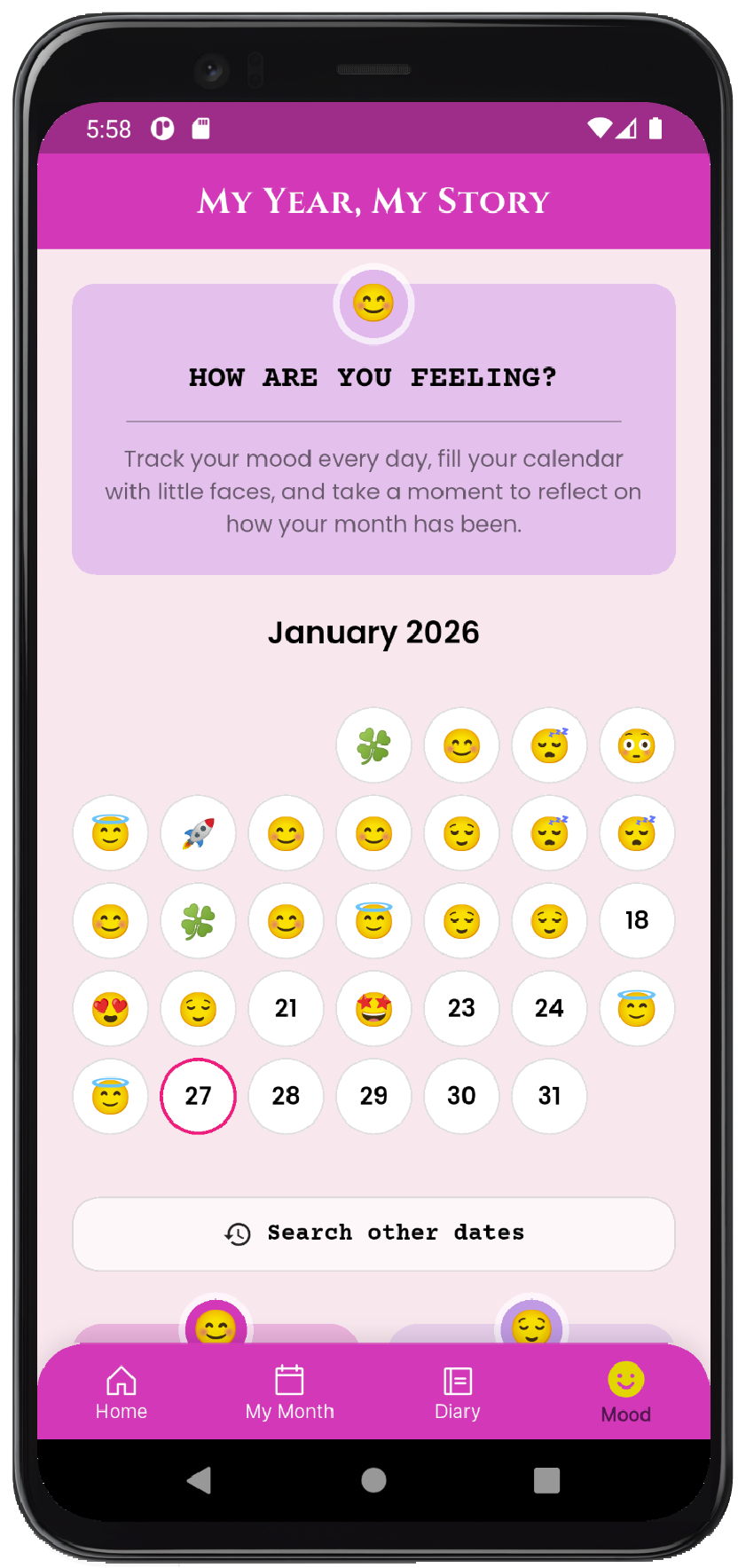
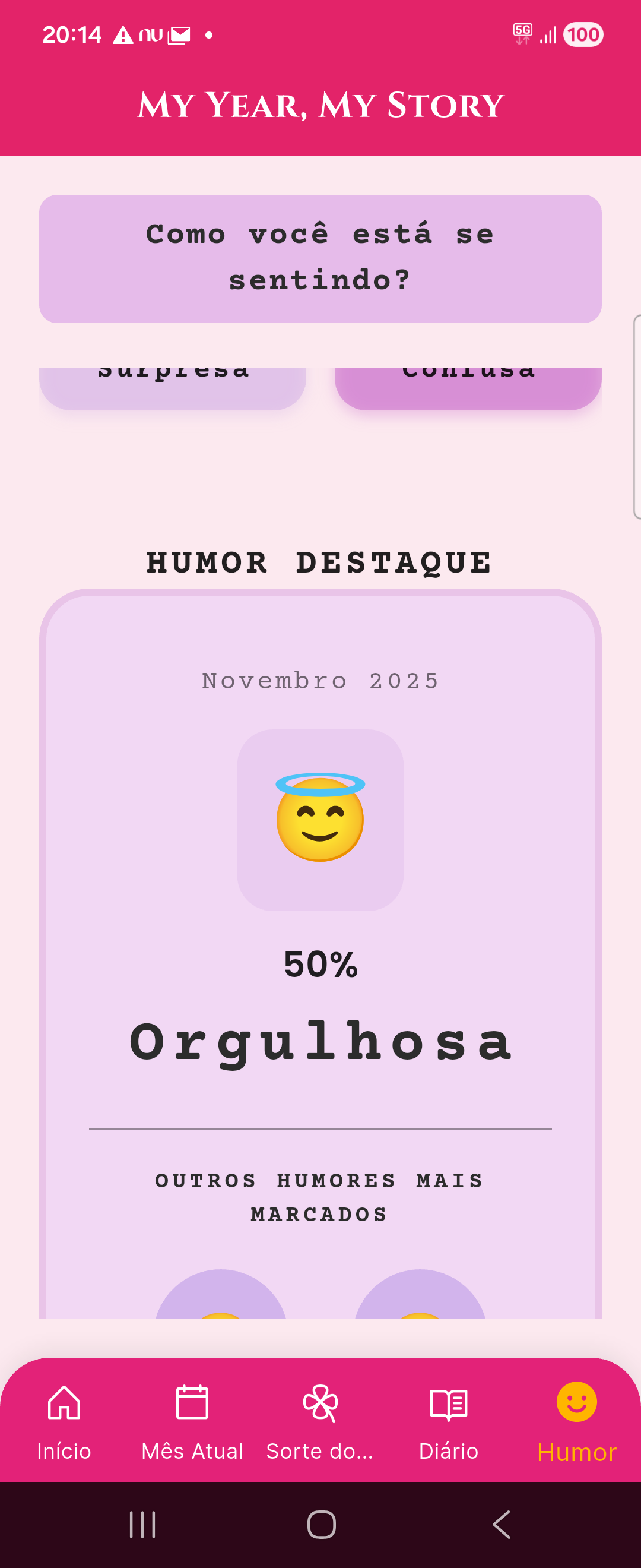
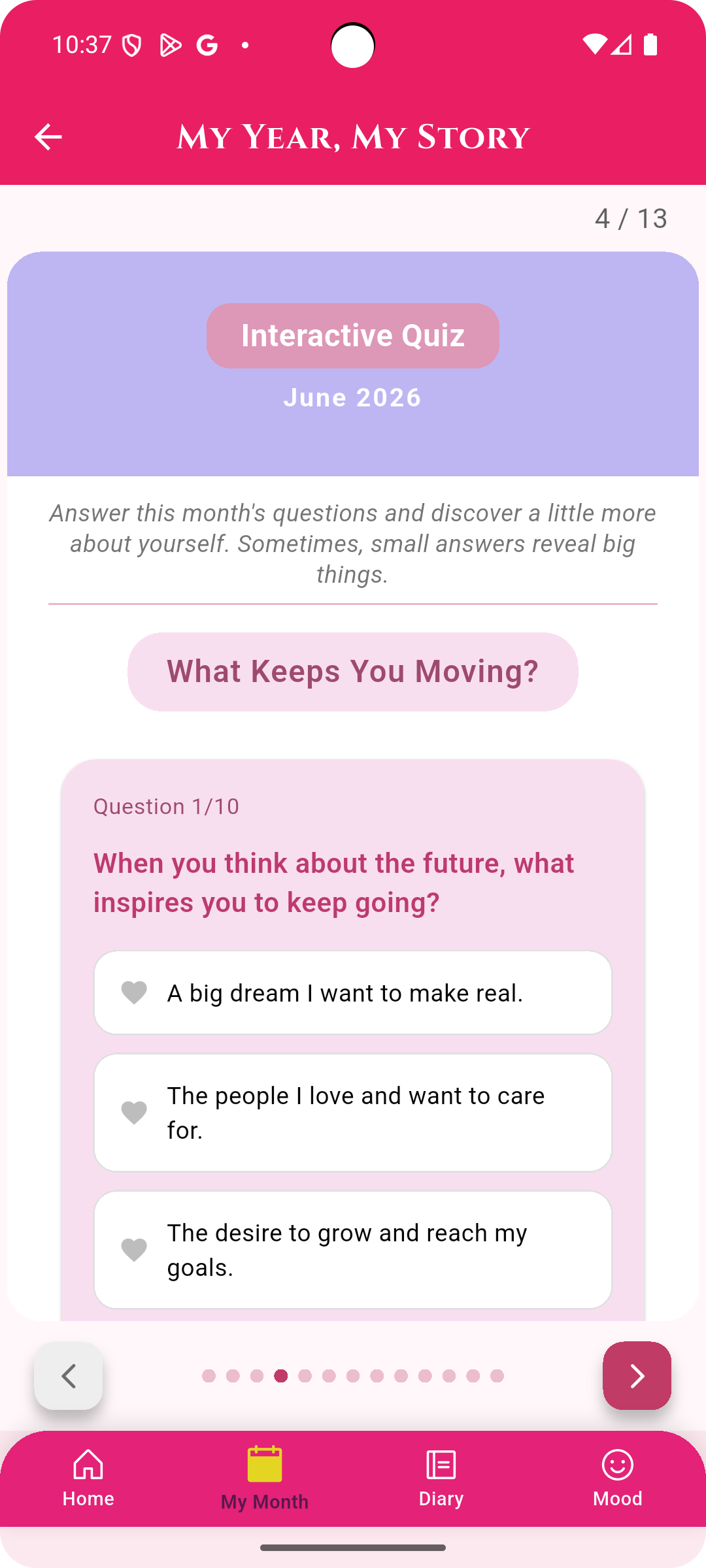
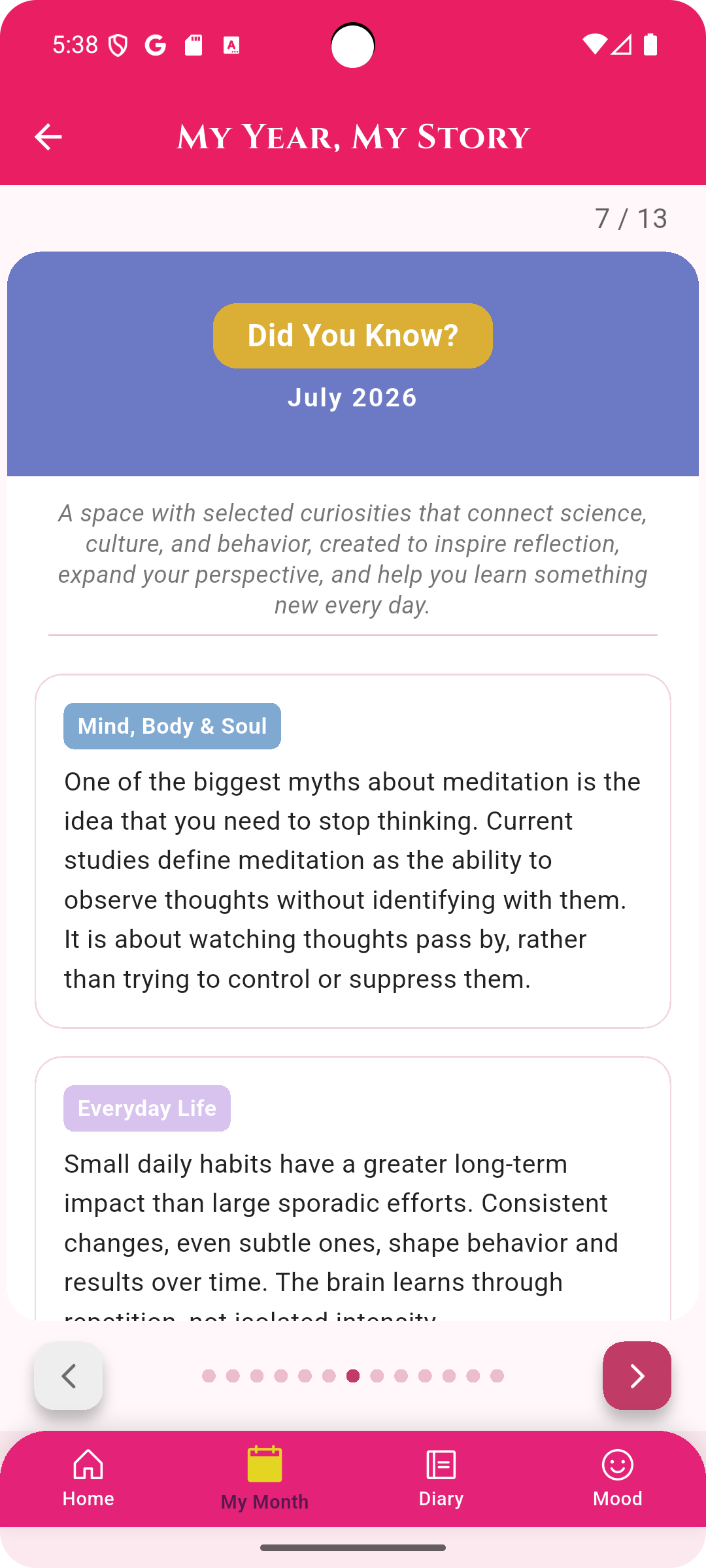
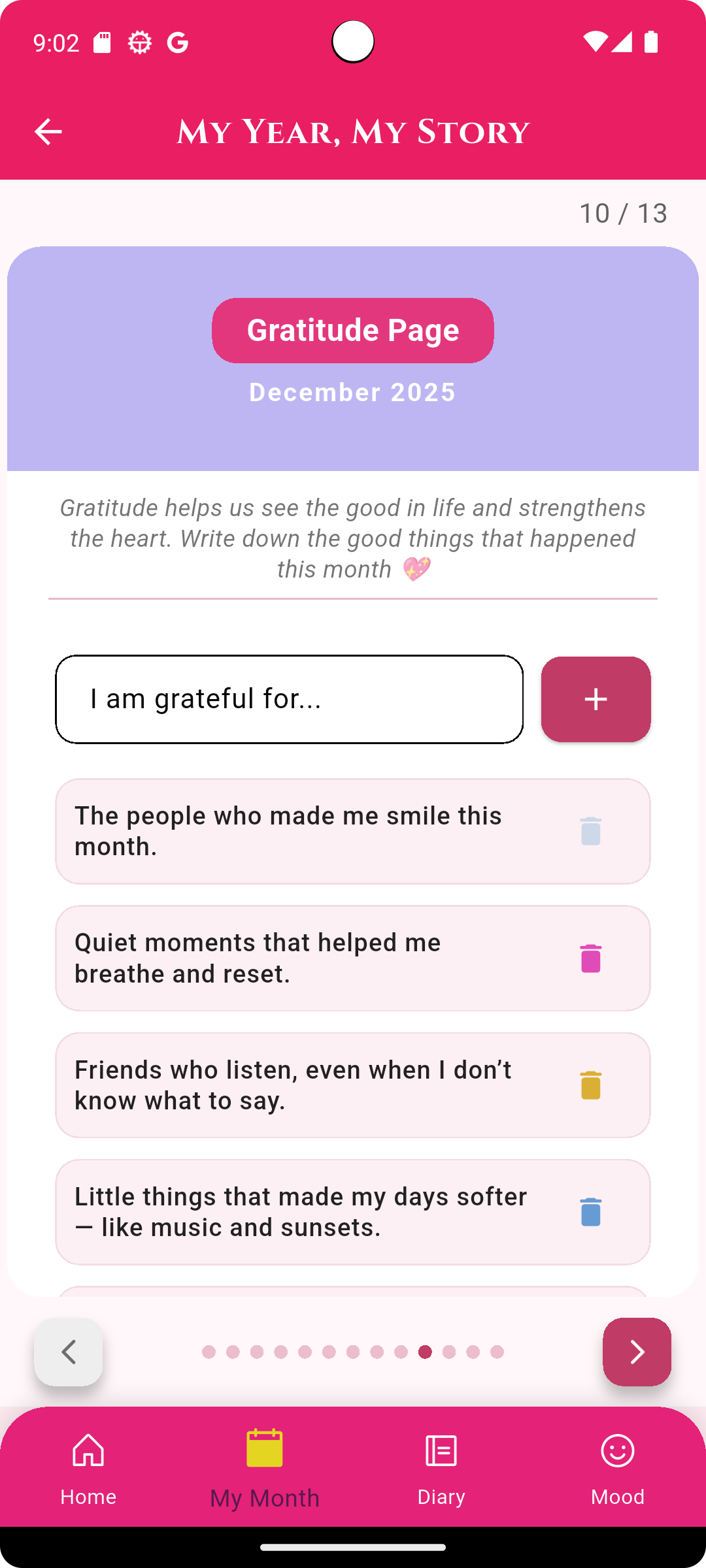
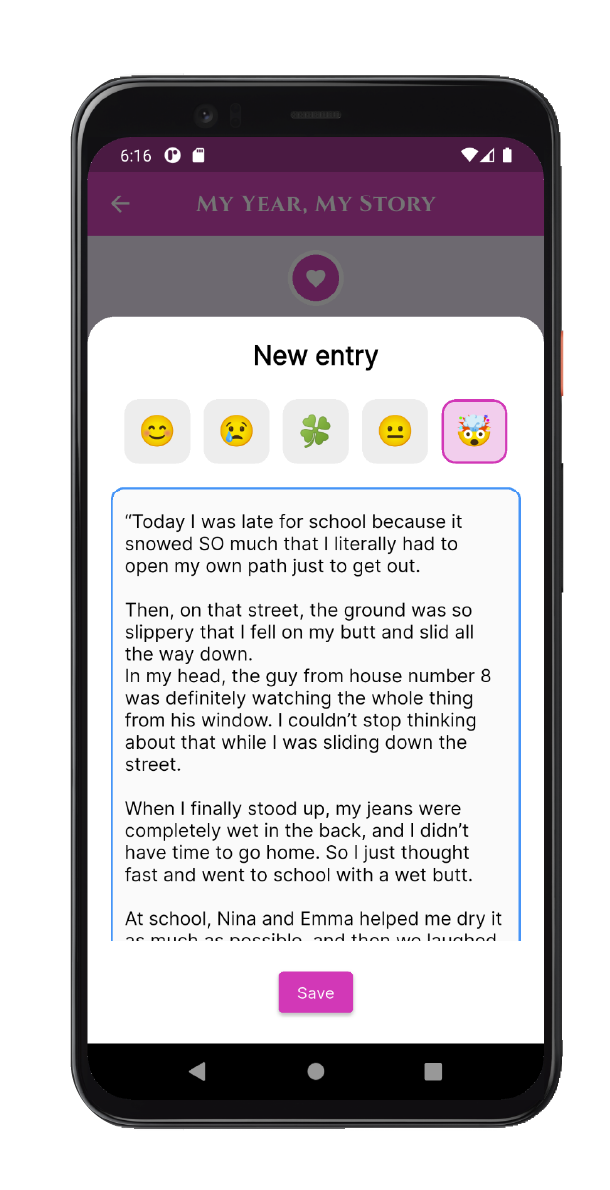
The app combines features such as mood tracking, daily reflections, self-knowledge quizzes, gratitude, monthly photos, and personalized lists. Each month becomes a small capsule of lived experiences, allowing users to look back, revisit moments, and recognize their own growth.
How we built it
The project was built with a strong focus on UX, emotional safety, and presence.
Experience design decisions were guided by human-centered design principles, prioritizing clarity, lightness, and non-judgment. The goal was to create an experience that feels supportive rather than directive.
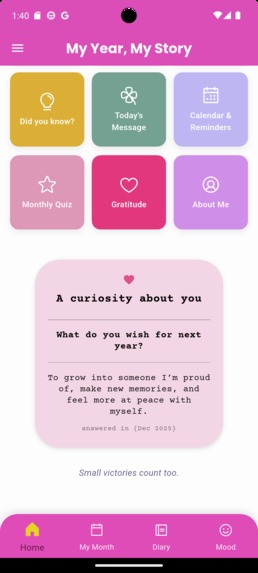
The app was developed using Flutter and integrates Google’s Gemini model to generate personalized reflective messages. The AI works exclusively with the user’s own records, creating subtle reflections based on weekly entries, recurring patterns, and the overall emotional atmosphere — without advising, labeling emotions, or directing behavior.
Challenges we ran into
One of the main challenges was defining clear ethical boundaries for AI usage in an emotionally sensitive context.
Strict prompt rules were designed to ensure the AI does not give advice, interpret emotions directly, or tell the user what to do. Maintaining a reflective tone without becoming instructional or clinical required careful iteration.
Another challenge was translating a physical guided journal into a continuous digital experience, while preserving its sense of emotional care, slowness, and intentionality.
Accomplishments that we’re proud of
Creating an AI-supported reflection experience that respects emotional autonomy
Designing a space free from social comparison and performance pressure
Combining memory, writing, and technology into a sensitive and meaningful experience
What we learned
This project deepened my skills in UX, product design, and mobile development.
It also provided valuable insights into ethical AI usage, emotional language, and how technology can support reflection and self-awareness without replacing human experience.
What’s next for My Year, My Story
One of the next steps for the project is to deepen the use of AI as a way to navigate personal memory over time.
The goal is to allow users to revisit their records more intuitively, asking reflective questions such as: “what was I feeling on that day?” or “what was the overall emotional landscape of a specific month?”
In this process, the AI does not act autonomously. It functions as a layer of synthesis and organization, helping reveal patterns, mood shifts, and emotional atmospheres across time — always without judgment, diagnosis, or clinical interpretation.
The user remains at the center of the experience. Technology exists to expand understanding, not to replace lived experience.
The long-term vision is to evolve the app into a space where memory, reflection, and technology meet to help each person recognize their own story with greater clarity and awareness.
Built With
- dart
- flutter
- gemin
- google-cloud
- supabase

Log in or sign up for Devpost to join the conversation.