Inspiration
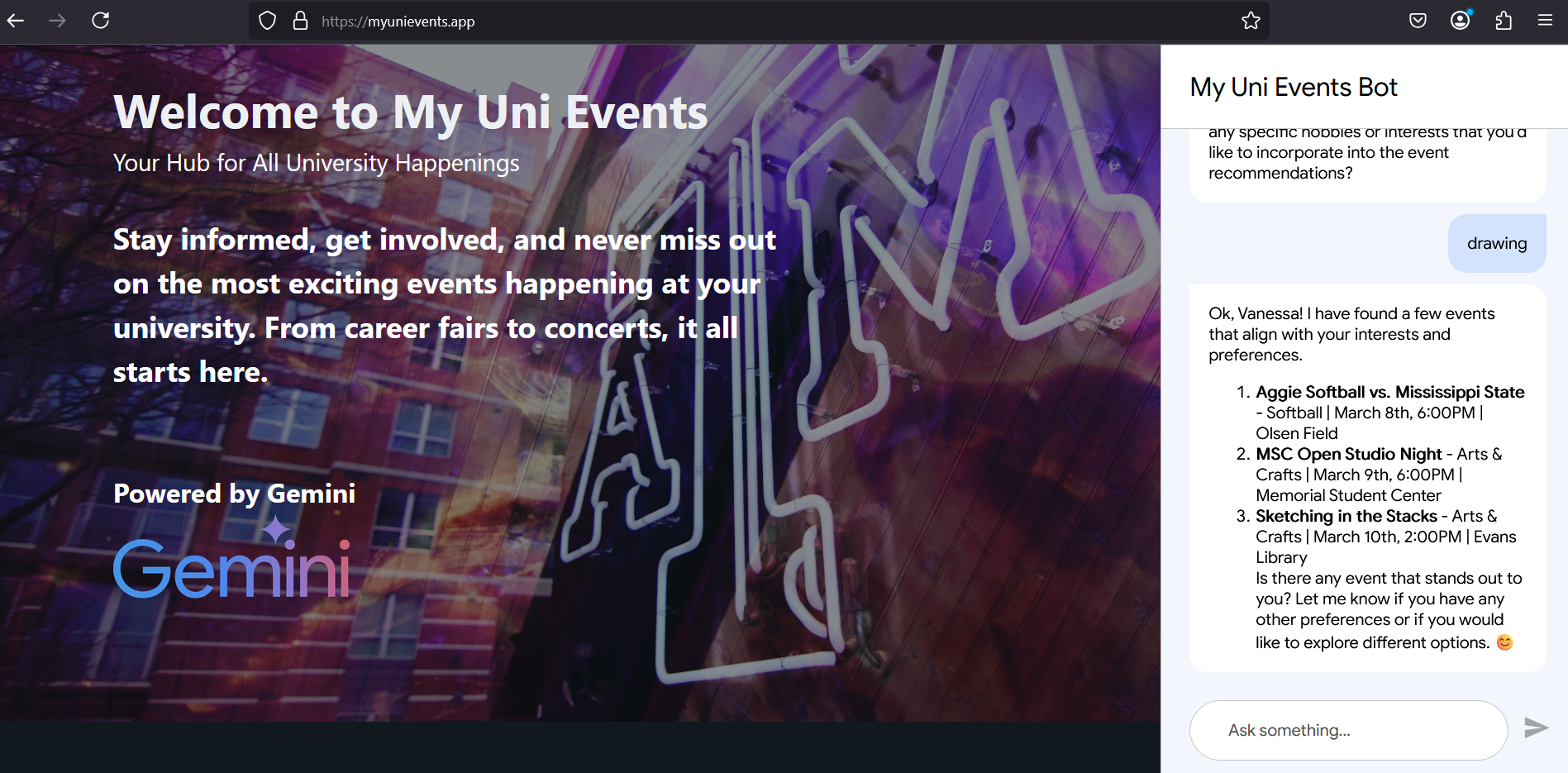
It started with a question: Why is it so hard to find events I actually care about on campus? We noticed that despite being surrounded by opportunities—workshops, art shows, talks, niche meetups—most of them flew under the radar. Not because they weren’t interesting, but because there was no intelligent way to discover them. That sparked the idea: What if an app could learn what matters to each student and guide them to those hidden gems?
We wanted to build something that doesn’t just list events, but understands the user—something that makes campus feel a little more alive, connected, and intentional. And that’s where AI came in.
What We Learned
This project became an exploration—not just of code, but of how people interact with information. We learned how to integrate AI (Gemini AI) into our application, not just as a tool, but as a guide—capable of engaging in natural conversations, drawing out preferences, and helping users discover experiences that resonate with them.
We also dove into full-stack development, responsive design, and the challenge of making technology feel... human.
How We Built It
Frontend: Created with React, designed with a minimalist, mobile-first approach to avoid clutter and keep the experience intuitive.
AI Integration: We used Gemini AI to create a chatbot-like experience—more like talking to a curious friend who knows what’s happening around campus. We are indexing data from the university calendar API in a cron job in the GCP platform.
Challenges We Faced
One of the more intriguing challenges was learning to integrate AI into a space that’s typically impersonal—turning static event feeds into something dynamic and personal. Training the AI to interpret preferences and hold meaningful context required both technical thinking and customization knowledge we have as being students ourselves.
Another challenge was wrangling inconsistent event data. It pushed us to think in systems, to find patterns, and to build something flexible enough to be adapted in the future. We initially started with downloading data manually then moved on to scraping scripts and eventually settled on the current implementation.
In the end, this wasn’t just about making an app. It was about creating a bridge—between students and their environment, between curiosity and opportunity. And along the way, we learned that when technology listens, it can actually help people feel a little more seen.

Log in or sign up for Devpost to join the conversation.