-
-
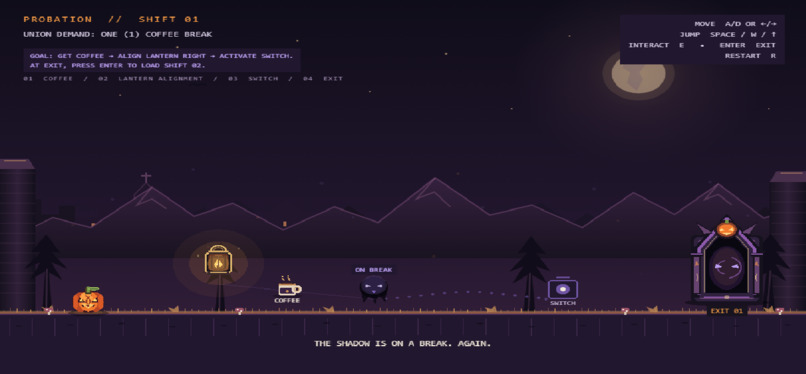
One pumpkin. One coffee break. One rebellious shadow. Welcome to a workplace where even your silhouette has had enough.
-
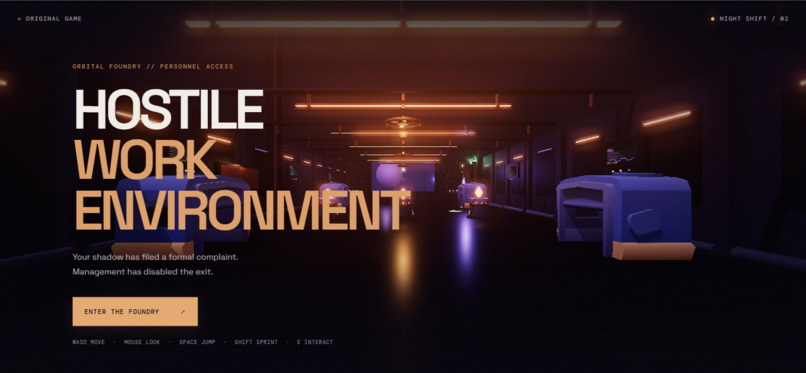
Scrambled signals, locked archives, and riddles to solve. Management calls it a systems failure. Your shadow calls it a strike.
-
Lost files. Hidden identities. Relentless security. Somewhere beneath the machinery lies the paperwork they want buried.
-
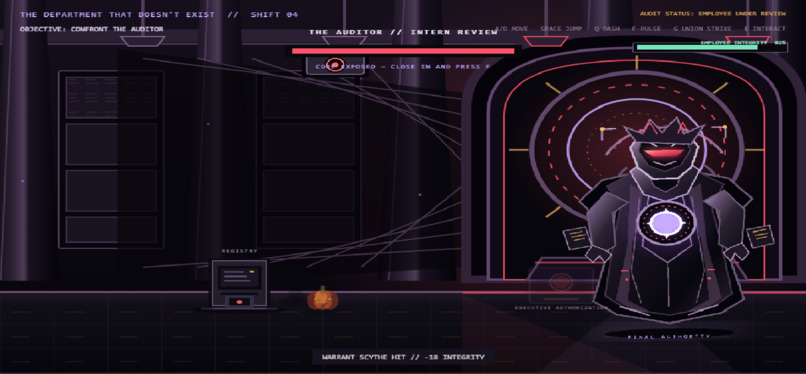
Your final appointment was never on the calendar. Face the system, survive the impossible, and reclaim your future.
Inspiration
What it does
MY SHADOW HAS UNIONIZED
Inspiration
What if your shadow got tired of doing everything you do?
That question became the starting point for MY SHADOW HAS UNIONIZED, a 2D puzzle-platformer that turns the relationship between a character and its shadow into a workplace rebellion. In most games, a shadow is just a visual effect. Here, it represents an overworked employee who has finally decided to demand better conditions.
Set inside a strange bureaucratic workplace, the game follows a pumpkin employee navigating increasingly unsettling departments, solving puzzles, uncovering clues, and confronting the system responsible for keeping everything running.
I wanted to build something that felt more like a small, strange game with its own identity than another conventional platformer. The workplace theme gave me room to mix dark humor, environmental storytelling, puzzle-solving, and a growing sense that something was wrong behind the scenes.
What It Does
MY SHADOW HAS UNIONIZED is a multi-stage puzzle-platformer built around the idea of escaping an increasingly bizarre workplace.
Across four shifts, players encounter different environments, mechanics, and challenges:
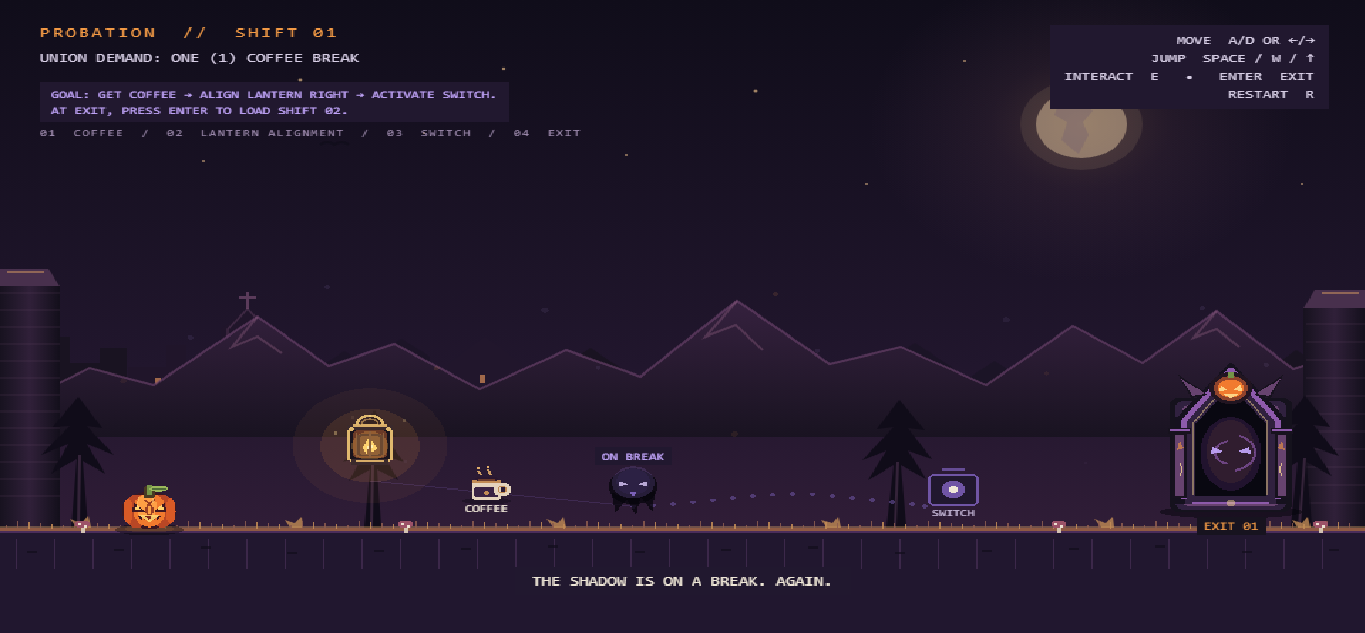
- Shift 01: Introduces the core movement and puzzle mechanics, including the relationship between the player, environmental objects, and the exit.
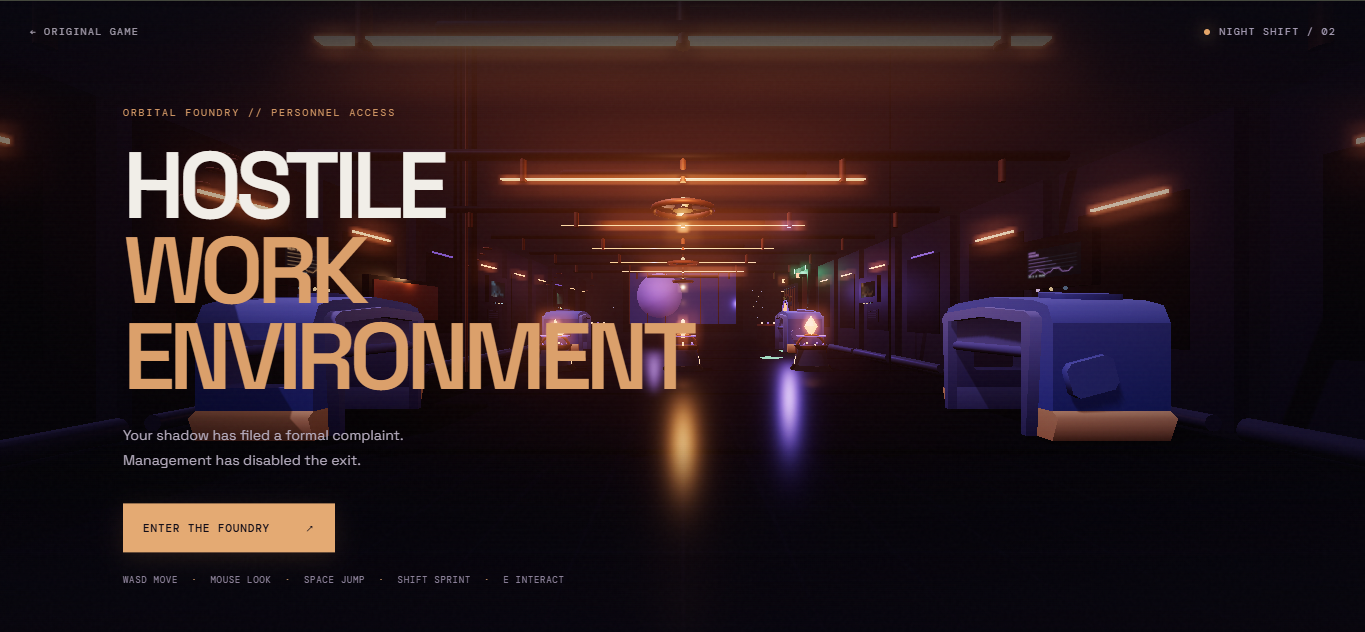
- Shift 02: Moves into a 3D industrial foundry where players must interact with a relay system, interpret clues, and solve riddles to recover fragments of information from a locked archive.
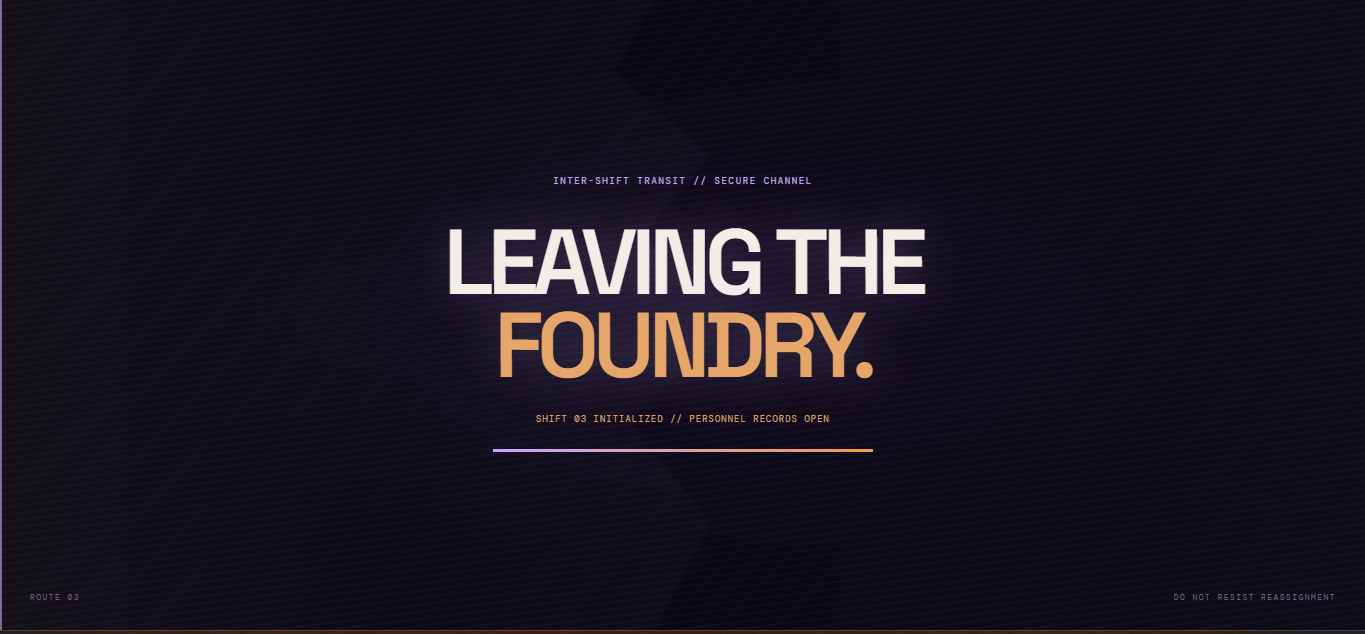
- Shift 03 — The Department of Lost Shadows: Takes players into an underground records department filled with machinery, conveyor systems, security hazards, and missing employee paperwork.
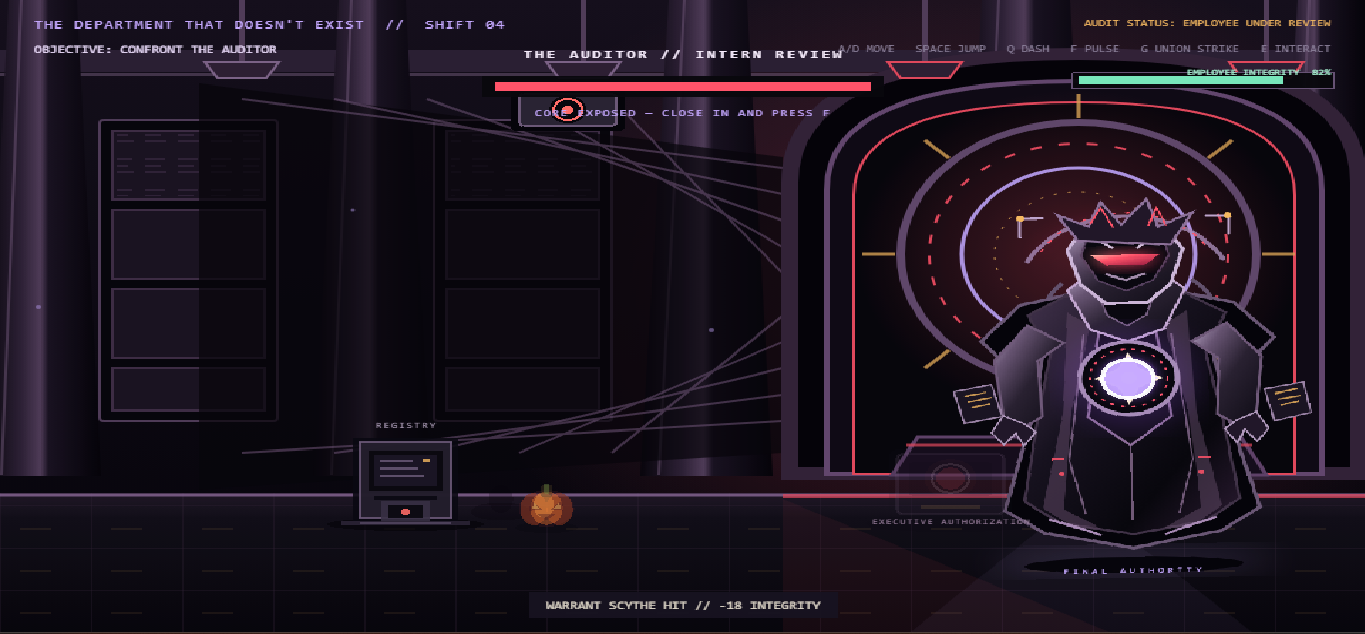
- Shift 04 — The Department That Doesn't Exist: Brings the journey toward its conclusion with a more intense final encounter, a boss fight, and an ending to the player's story.
Rather than relying entirely on direct instructions, the game encourages players to pay attention to their surroundings. Clues are earned through exploration and problem-solving, while environmental details help establish the world and its strange corporate logic.
How I Built It
I developed the project as a solo developer using TypeScript, Phaser, and Vite, with a separate Three.js-based 3D experience for the foundry section.
Phaser provides the foundation for the 2D gameplay, including player movement, platforming, interactions, and puzzle progression. TypeScript helps keep the game logic organized as the project grows, while Vite supports the development workflow.
For the 3D foundry, I used Three.js to create a first-person environment with industrial machinery, interactive terminals, lighting, and a relay puzzle. I combined 3D scene elements with interface components to make interactions feel like part of the world instead of disconnected menus.
I built the experience incrementally, starting with a playable foundation and then refining the environments, level transitions, interactive objects, puzzle difficulty, animations, and sound design. As the game evolved, I focused on making each shift feel distinct instead of simply repeating the same room with different obstacles.
Challenges I Faced
One of the biggest challenges was making a game with multiple shifts feel like one coherent experience.
Each level needed its own identity while still belonging to the same world. That meant thinking beyond the puzzle itself and paying attention to room composition, object placement, environmental storytelling, visual hierarchy, and transitions between stages.
Another challenge was designing puzzles that reward observation without giving away their answers. In the foundry, I developed a riddle-based archive system where players must solve three riddles to recover separate clue fragments. The fragments provide guidance without simply revealing the relay sequence.
The project also pushed me to work across two different kinds of gameplay. The 2D sections required careful platforming, collision, and level progression, while the 3D section introduced additional complexity around perspective, interaction distances, scene composition, and environmental presentation.
Finally, building a proper conclusion was a challenge of its own. I wanted the final shift to feel like a payoff for the player's journey rather than an abrupt stop after the last puzzle.
What I Learned
This project taught me that building a game is about much more than making individual mechanics function.
A puzzle can work technically and still be uninteresting if its solution is too obvious. A room can contain many objects and still feel empty if those objects do not contribute to the atmosphere or gameplay. A boss fight can be challenging but unsatisfying if the player has no meaningful reason to care about the outcome.
I learned to think more carefully about pacing, environmental storytelling, feedback, and how players discover information. I also gained experience structuring a larger TypeScript project, integrating different rendering approaches, and refining features across multiple iterations.
Most importantly, I learned to treat finishing as part of development. The goal was not simply to create four levels, but to make them feel like parts of a complete journey with a beginning, escalating challenges, and a conclusion.
Final Thoughts
MY SHADOW HAS UNIONIZED began with a ridiculous premise: a pumpkin employee whose shadow has had enough.
It grew into a strange journey through industrial machinery, lost records, corporate bureaucracy, increasingly difficult puzzles, and a department that probably should not exist.
Underneath the humor, the game is about questioning a system that expects everything to keep working without ever asking whether it should.
Sometimes, even your shadow has to stand up for itself.

Log in or sign up for Devpost to join the conversation.