Inspiration
What inspired me to develop my portfolio website was the need to showcase my projects, skills, and achievements in a more interactive and professional way. As a developer, I believe a portfolio is not just a digital résumé — it’s a reflection of creativity, problem-solving ability, and growth.
I wanted a platform that represents my personal brand, highlights my technical journey, and allows potential collaborators or employers to explore my work easily. Building it also gave me the chance to experiment with new technologies, improve my UI/UX skills, and demonstrate what I can create from scratch.
What it does
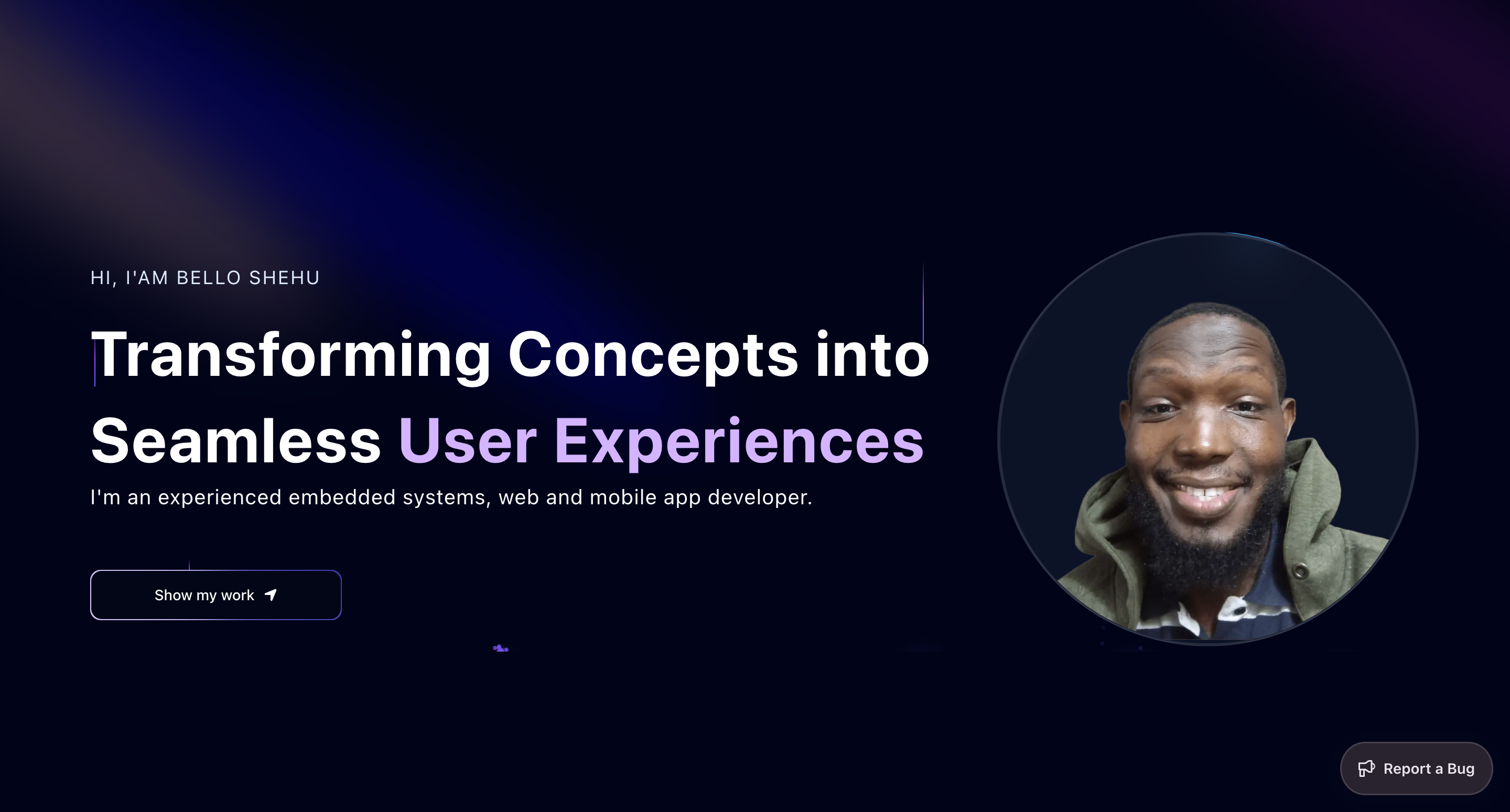
My portfolio website serves as a personal showcase of my professional journey as a developer. It’s designed to give visitors a clear picture of who I am, what I do, and the kind of projects I’ve worked on.
The website is divided into key sections — it highlights my skills and tech stack, provides a timeline of my experiences, and displays my projects with detailed descriptions and links for anyone who wants to explore them further. It also includes a contact section where potential clients, employers, or collaborators can easily reach me.
Overall, the website is a digital representation of my growth, capabilities, and creativity — making it easier for people to understand my work and connect with me professionally.
How I built it
I built the website using Next.js for performance and scalability, Tailwind CSS and the Aceternity UI library for a sleek, modern interface, and Framer Motion to add smooth animations that enhance user experience. To ensure quality and reliability, I integrated Sentry to monitor and report errors and performance issues, as well as collect feedback from users.
Overall, the portfolio isn’t just a digital résumé — it’s a live example of my technical ability and design sense, reflecting how I combine aesthetics, functionality, and performance in real-world applications.
Challenges I ran into
While integrating Sentry into my portfolio website, I encountered a tricky issue where the “Report Bug” button kept flashing briefly and disappearing right after the page finished loading. At first, I wasn’t sure what was causing the behavior, but after some debugging, I discovered that it was related to React hydration errors — inconsistencies between the server-rendered HTML and the client-side rendering in Next.js.
Fixing this required carefully reviewing the component structure and ensuring that all client-side interactive elements were properly wrapped and initialized after hydration. Once I resolved the hydration mismatch, the Sentry report feature worked seamlessly, allowing users to submit feedback and bug reports without issues.
Accomplishments that I am proud of
One accomplishment I’m proud of in my portfolio website project is successfully implementing an interactive timeline and smooth animations that showcase my skills, experiences, and projects in a visually engaging way.
I used Framer Motion for animations and Aceternity UI components to create a sleek, professional look. Integrating the timeline section was a particularly rewarding challenge — it required combining dynamic data rendering with responsive design to ensure it looked great on all devices.
Adding animations brought the website to life, improving user engagement and making navigation feel more fluid. It gave me a deep sense of satisfaction to see how design, motion, and code can come together to communicate my professional journey effectively.
What I learned
From developing my portfolio website, I learned how to structure and deploy a modern web application while improving both my technical and design skills. I gained hands-on experience with Next.js, TailwindCSS, and Framer Motion for creating smooth animations and responsive layouts, and I also learned to use the Aceternity UI library to design a sleek, modern user interface.
Additionally, integrating Sentry taught me about real-world performance monitoring and error tracking. Fixing issues such as the dehydration error deepened my understanding of React’s rendering lifecycle and component hierarchy.
Overall, this project taught me how to combine good design with functionality, strengthened my problem-solving skills, and helped me build a professional platform to showcase my skills, experience, and projects.
What's next for My portfolio website
I plan to enhance my portfolio website by adding more interactive and engaging features. These include a client testimonials section to showcase feedback, a project filter that allows visitors to sort projects by category, and a detailed project modal or page for in-depth project descriptions. I also intend to display more projects to reflect my growing experience and skill set. These updates will make the site more dynamic, user-friendly, and representative of my professional journey.
Built With
- aceternity-ui
- framer-motio
- nextjs
- react
- sentry
- tailwindcss
- vercel


Log in or sign up for Devpost to join the conversation.