-
-
commonthread-hero-3x2
-
-
-
-
-
-
-
-
-
-
-
-
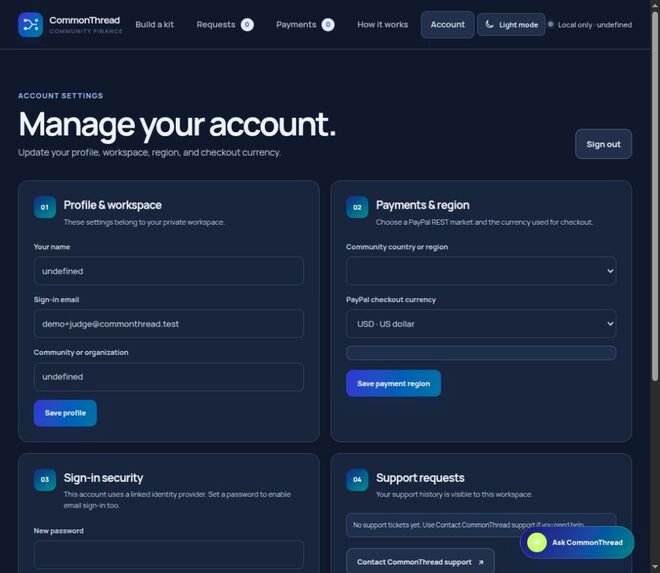
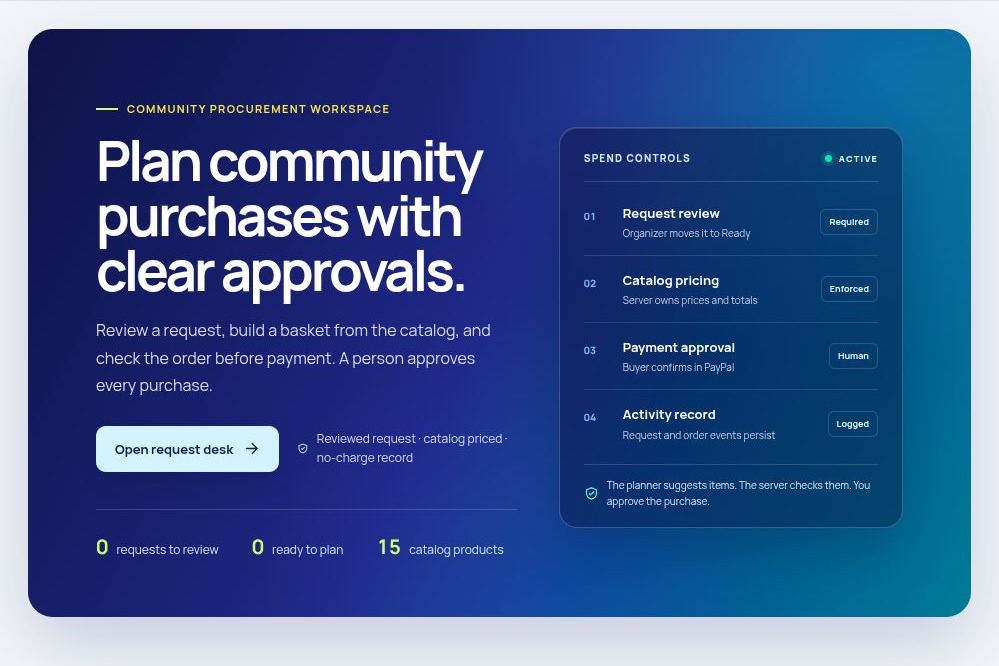
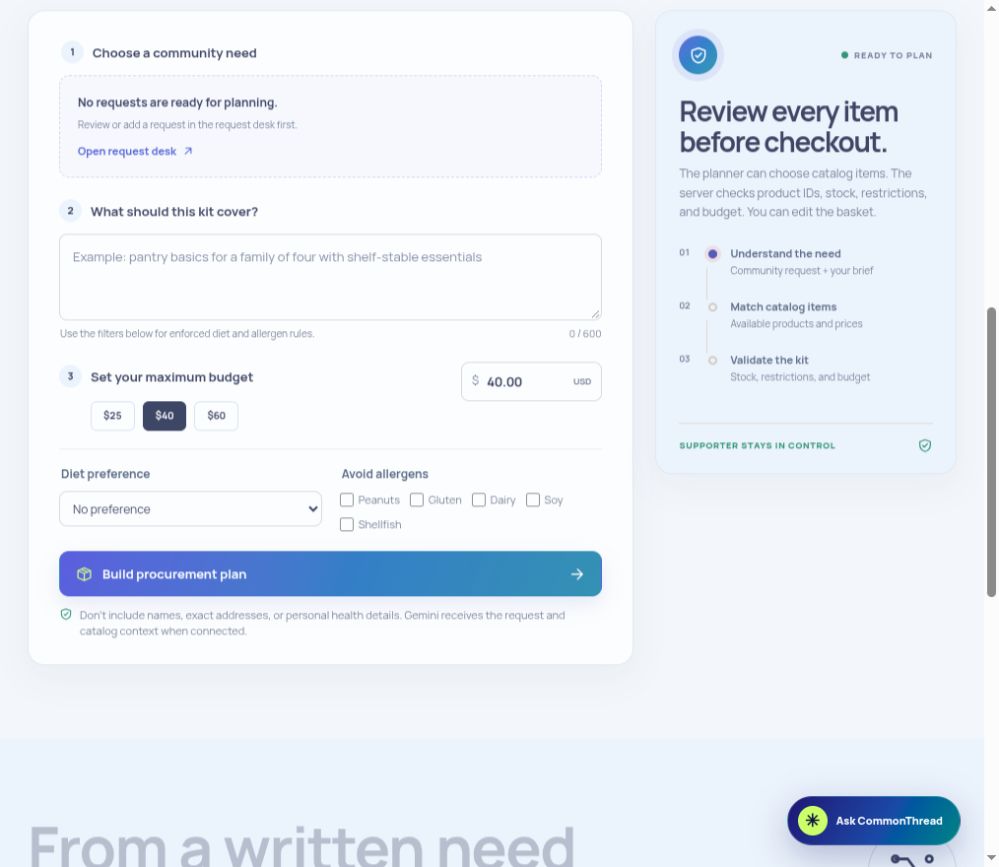
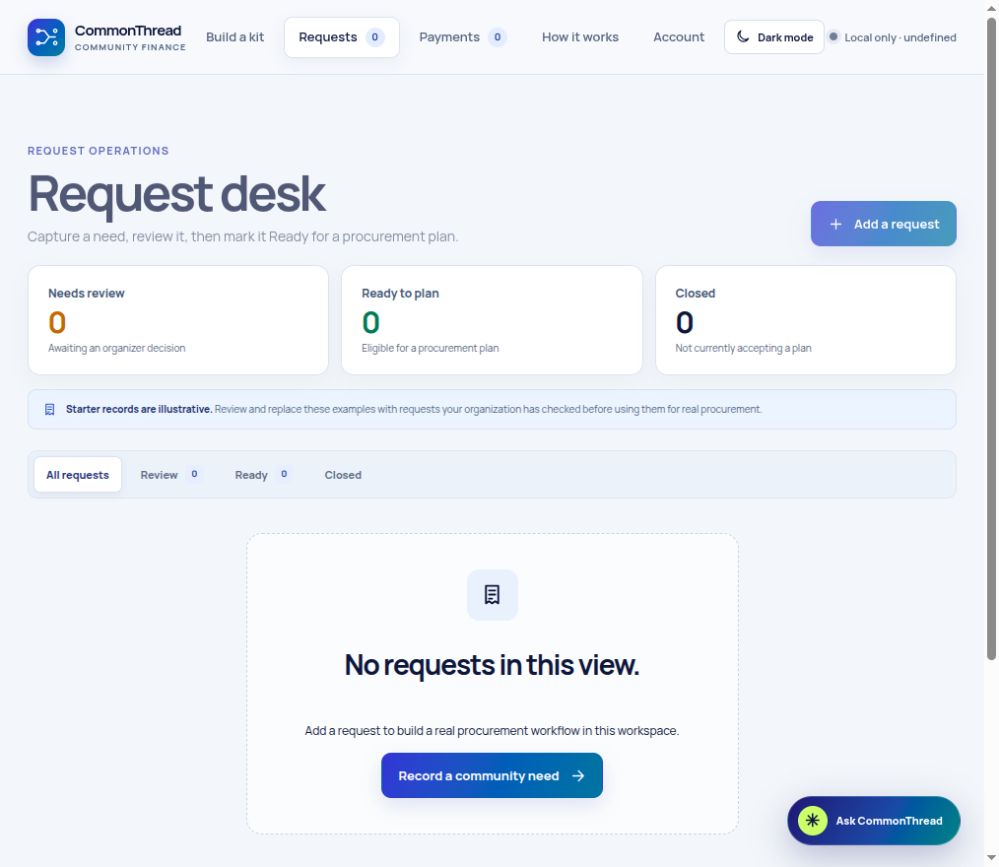
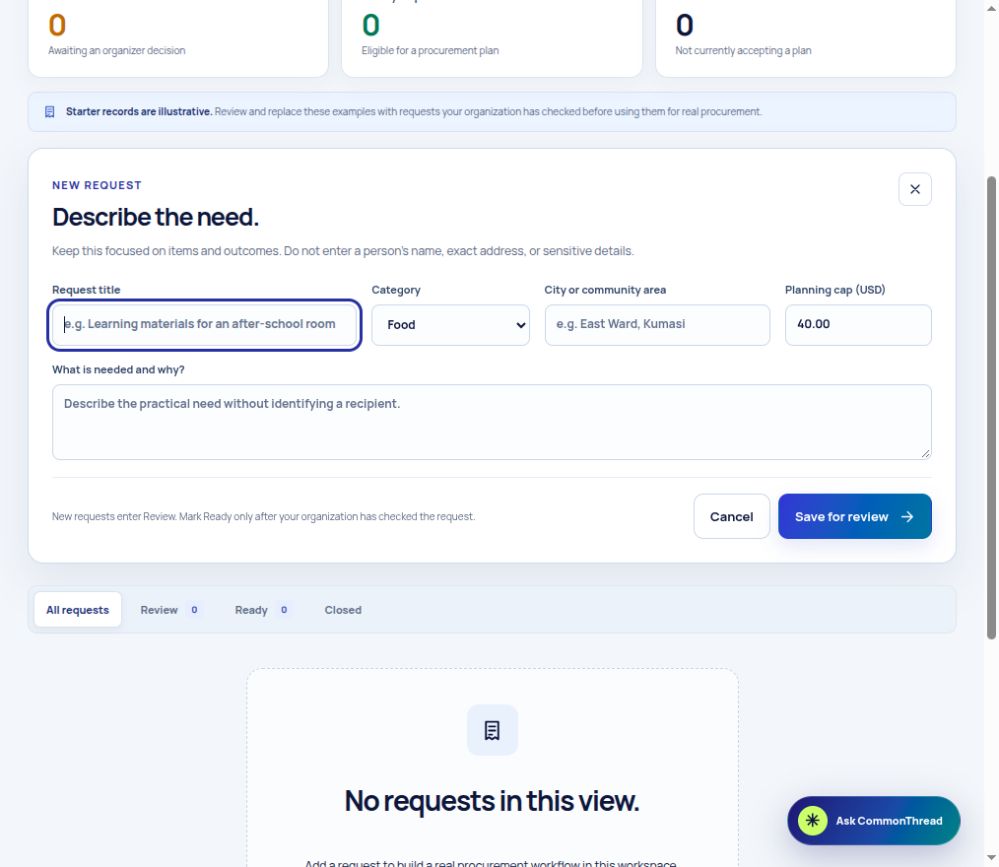
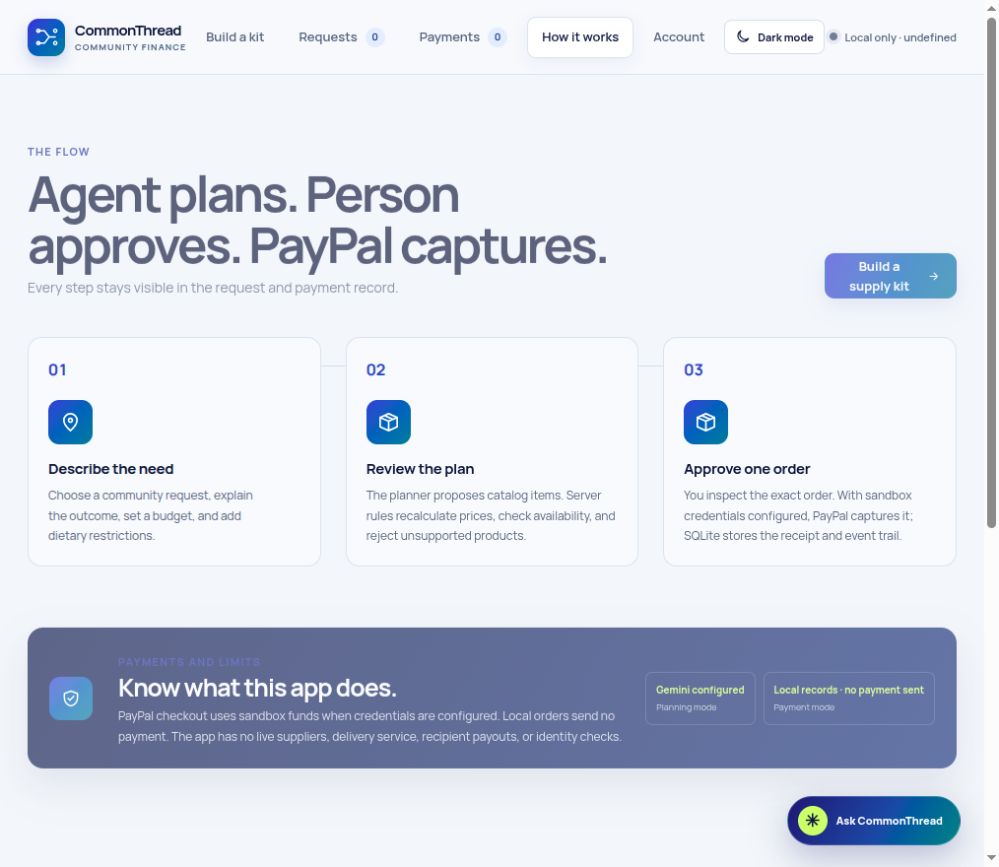
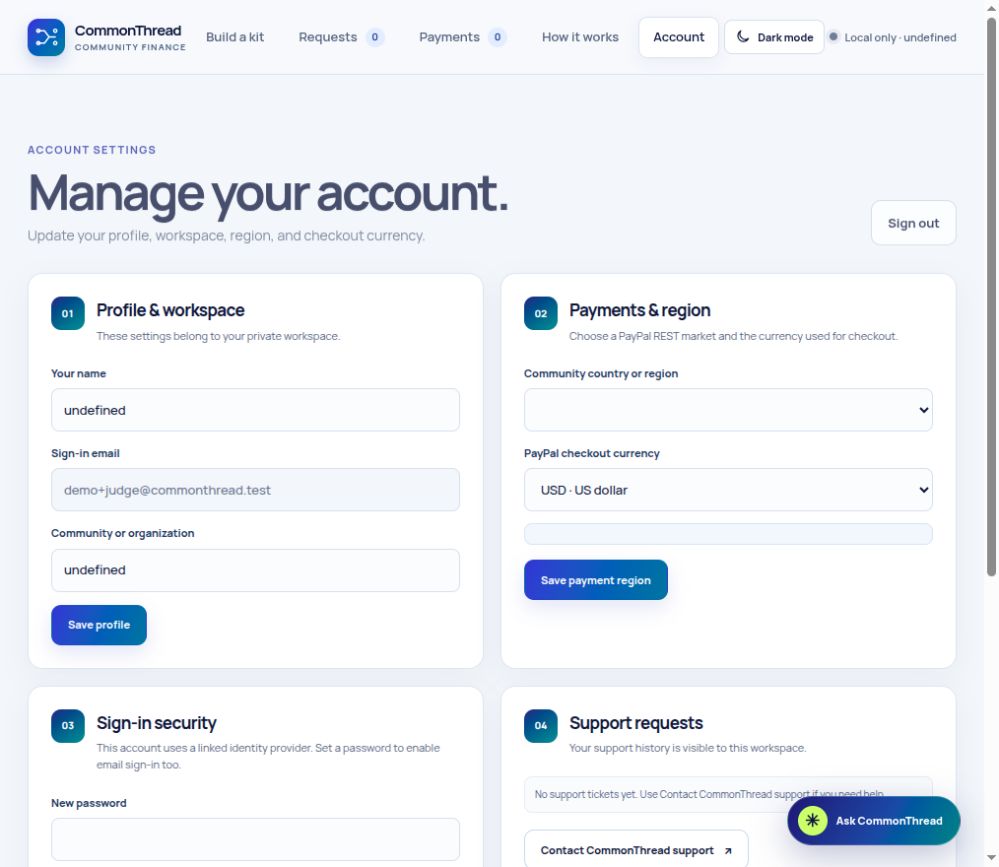
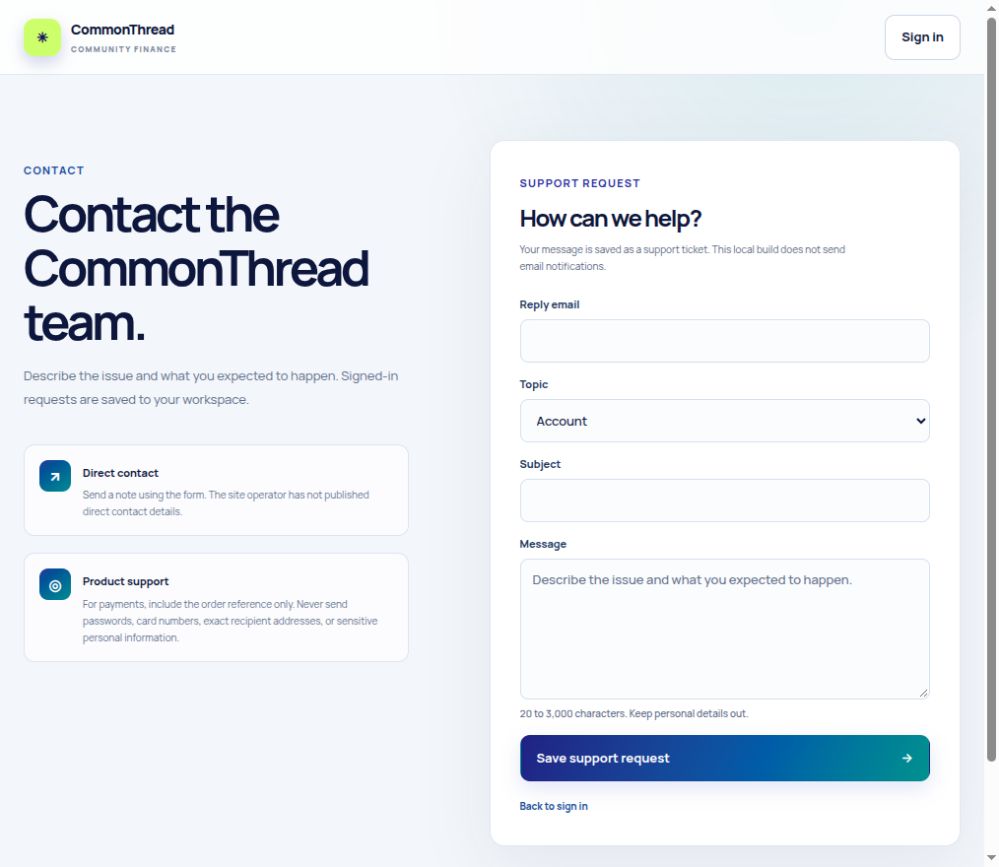
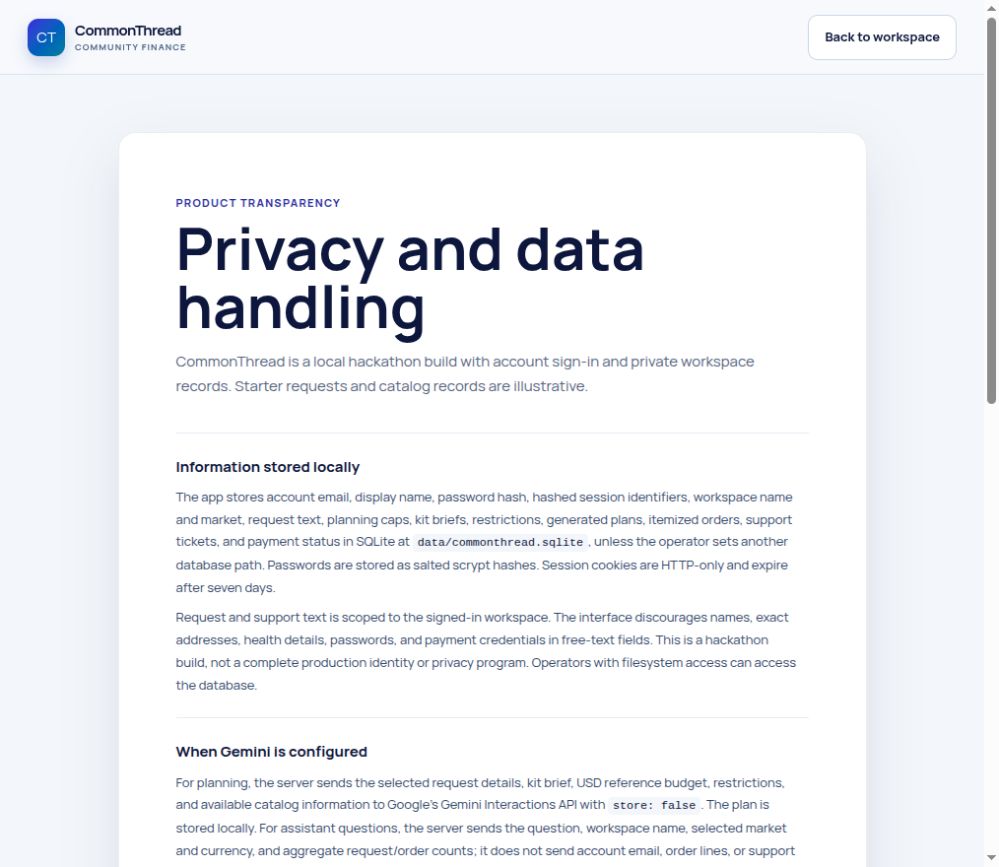
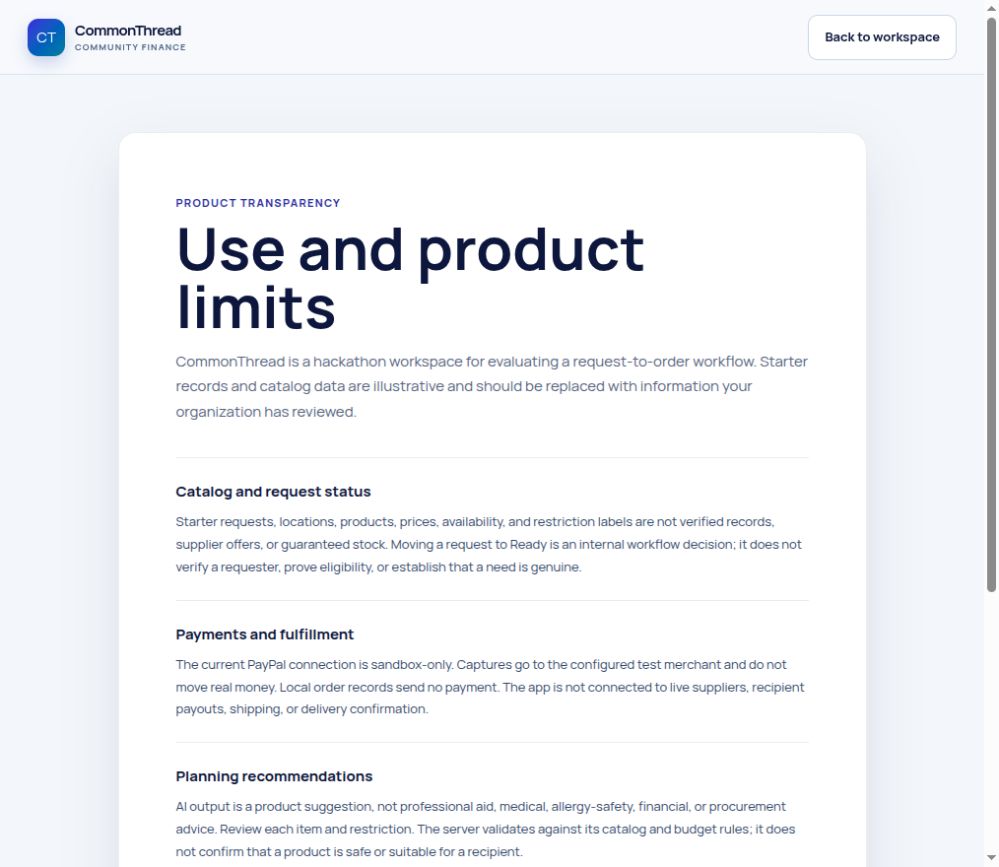
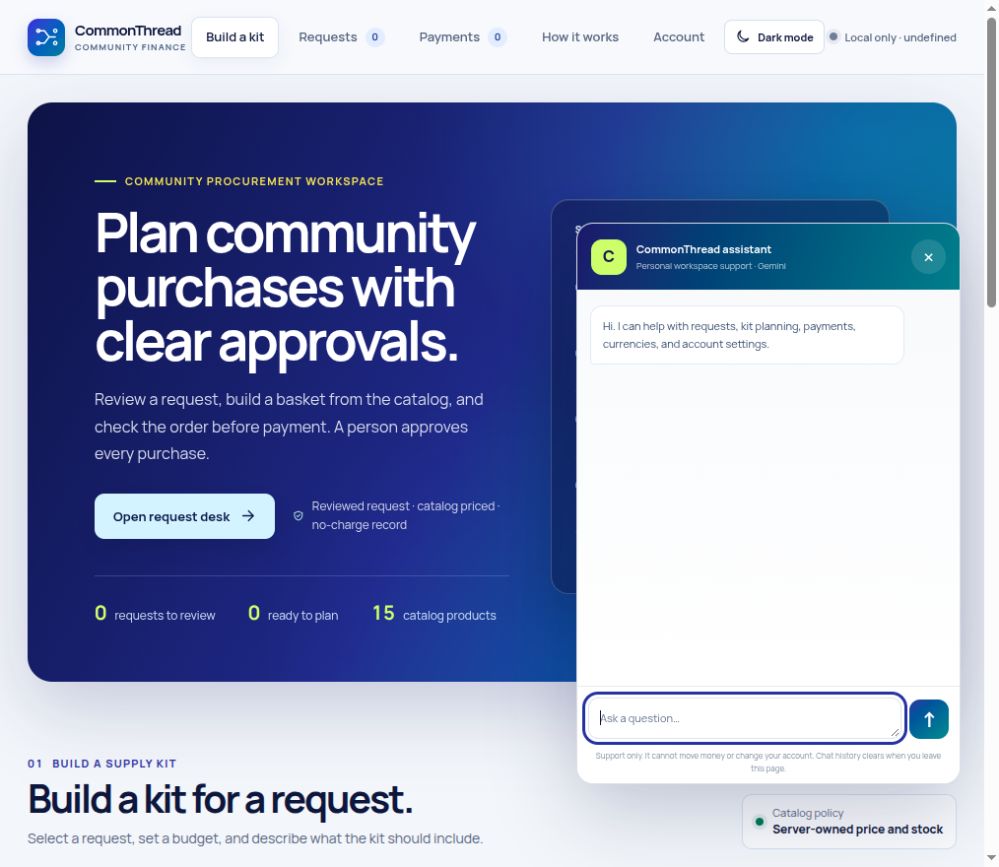
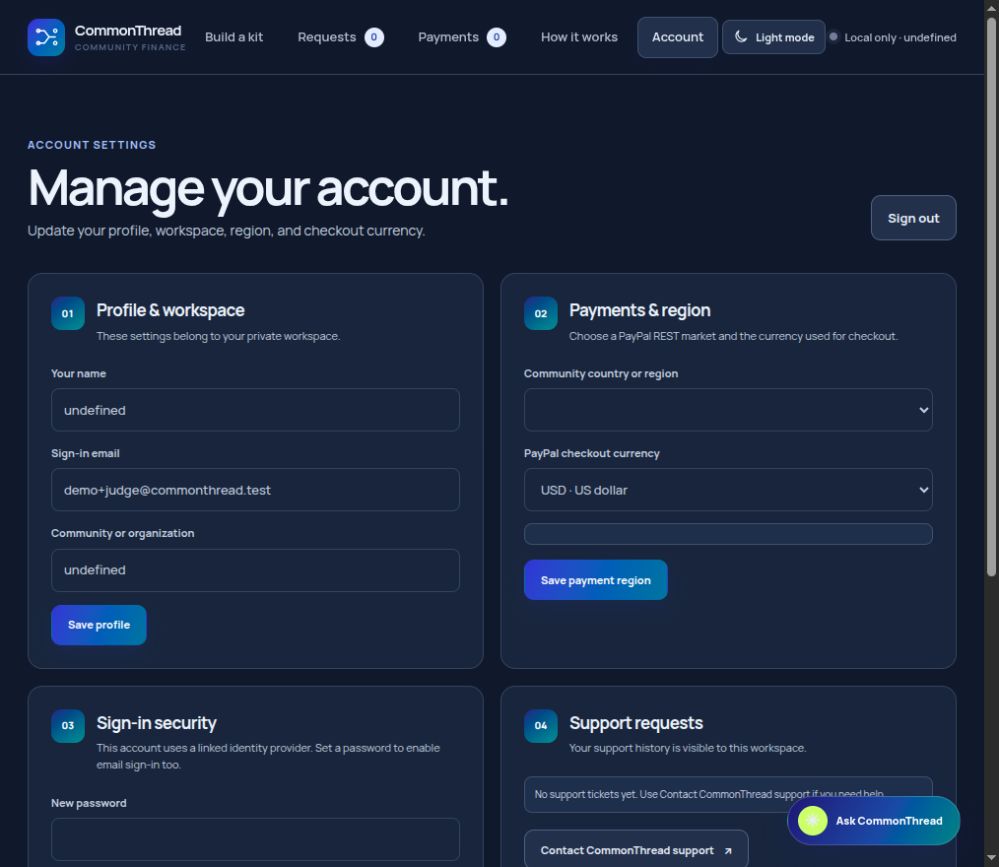
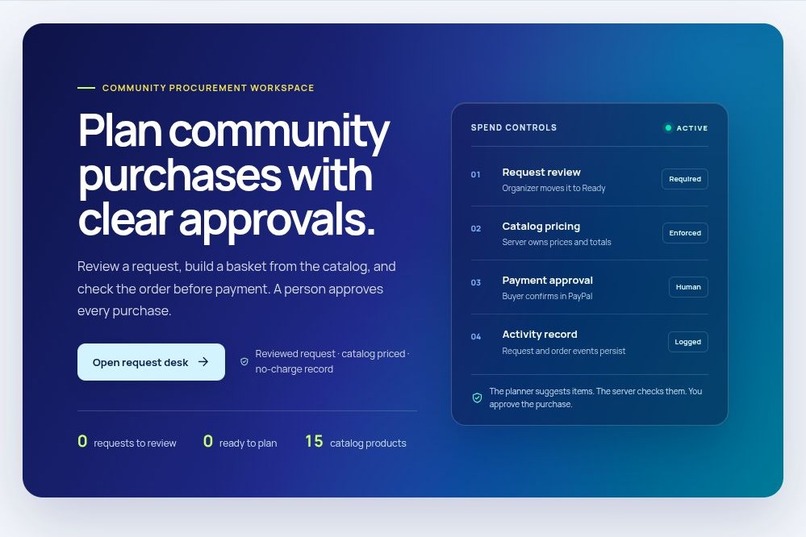
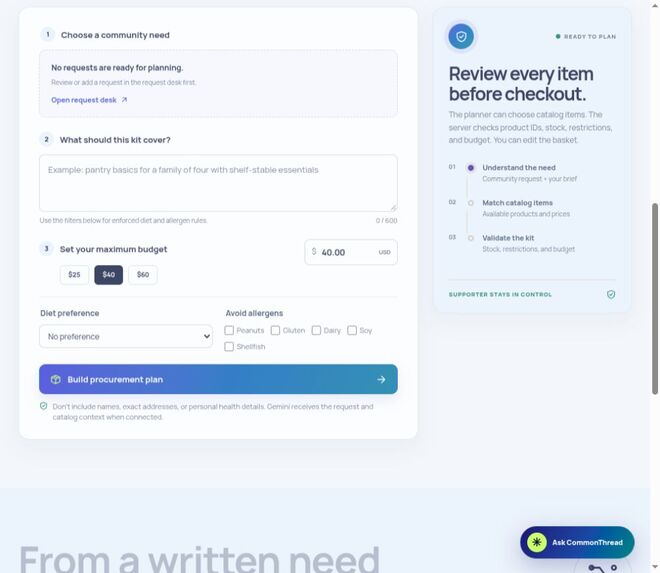
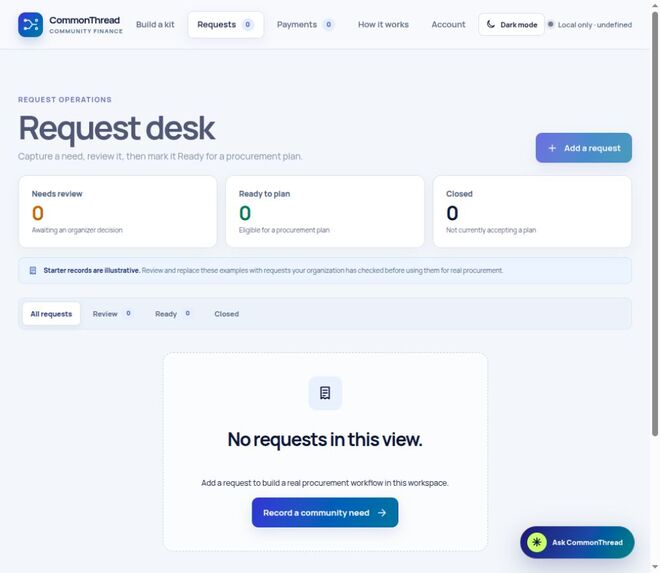
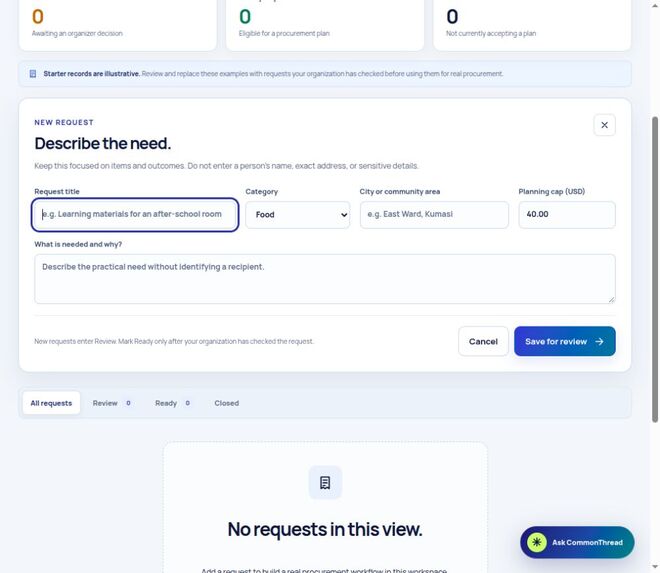
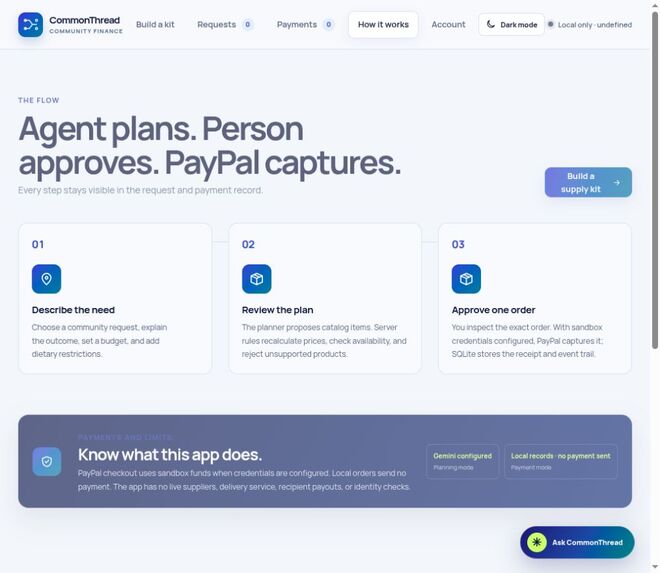
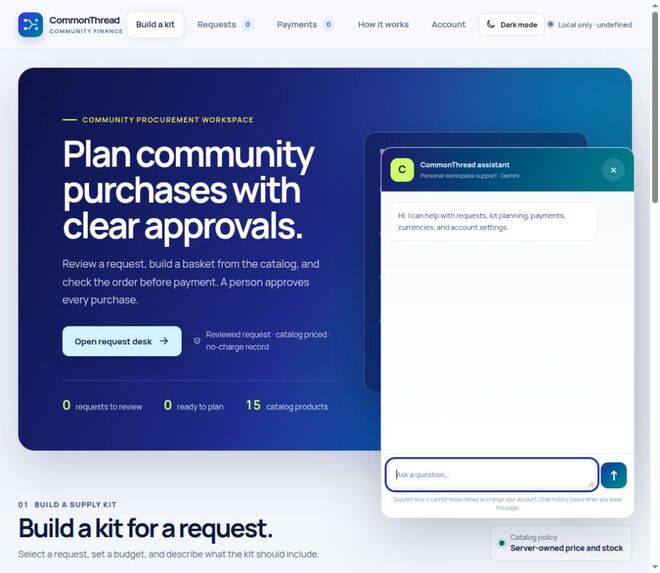
Inspiration Community groups often coordinate requests, purchasing decisions, and receipts across chats and spreadsheets. We wanted to explore whether one clear workflow could help organizers review each need, check a proposed purchase against a budget, and keep the resulting order record with the original request. This is a product hypothesis; we have not yet validated it through an organizer pilot. What it does CommonThread lets an organizer record a community need, review it, and mark it ready for planning. Gemini can suggest items from a fixed catalog, but a person reviews and edits the plan. The server checks product IDs, prices, stock, restrictions, and budget before checkout.
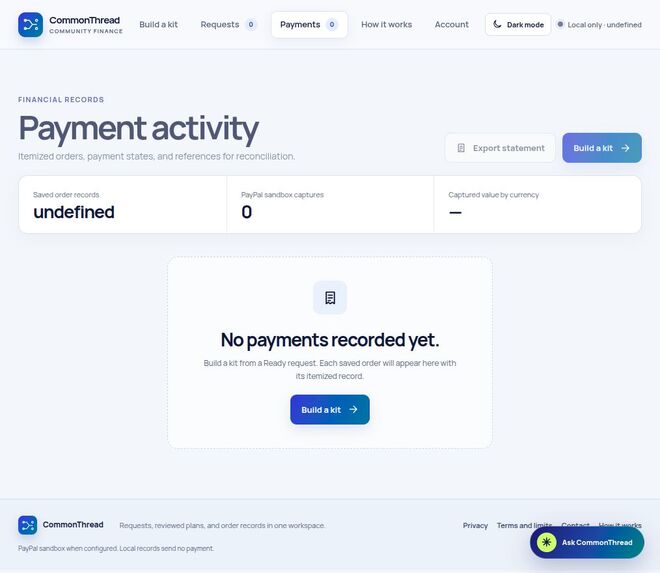
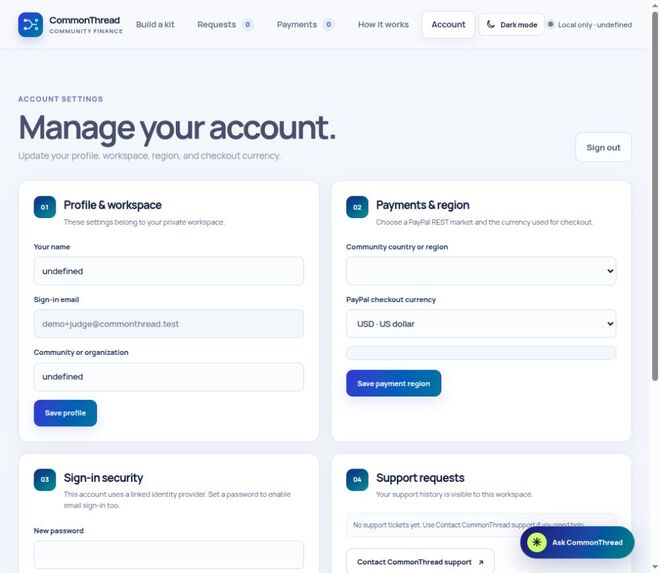
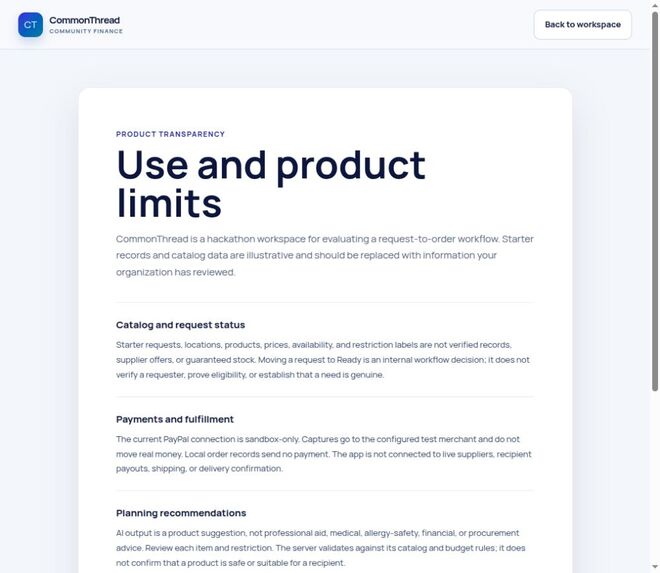
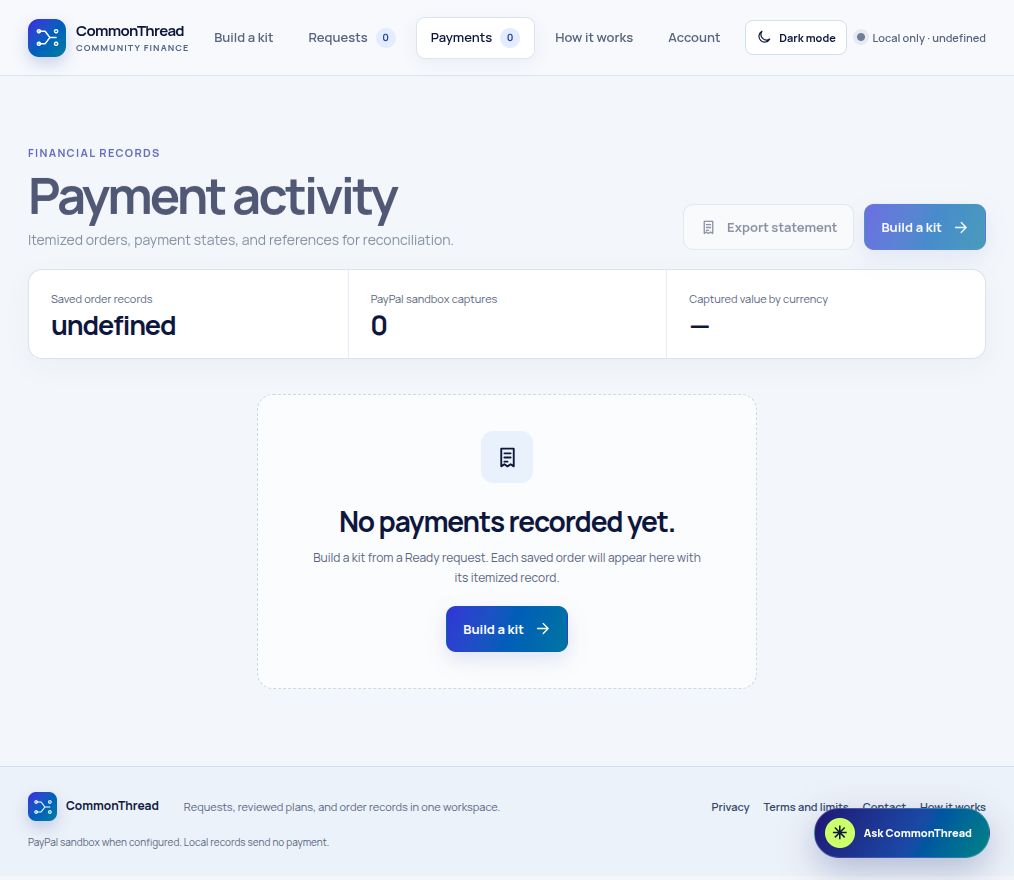
When configured, PayPal Checkout and Orders v2 support a buyer-approved sandbox purchase. CommonThread records the request, order details, payment status, and activity together. Without PayPal credentials, it clearly labels the no-charge local record mode; no real payment is sent. The project does not distribute aid or fulfill purchases. How we built it We built the app with Node.js, SQLite, and a responsive vanilla JavaScript and CSS frontend. The server handles accounts, workspace-scoped records, session security, request review, catalog validation, and order state.
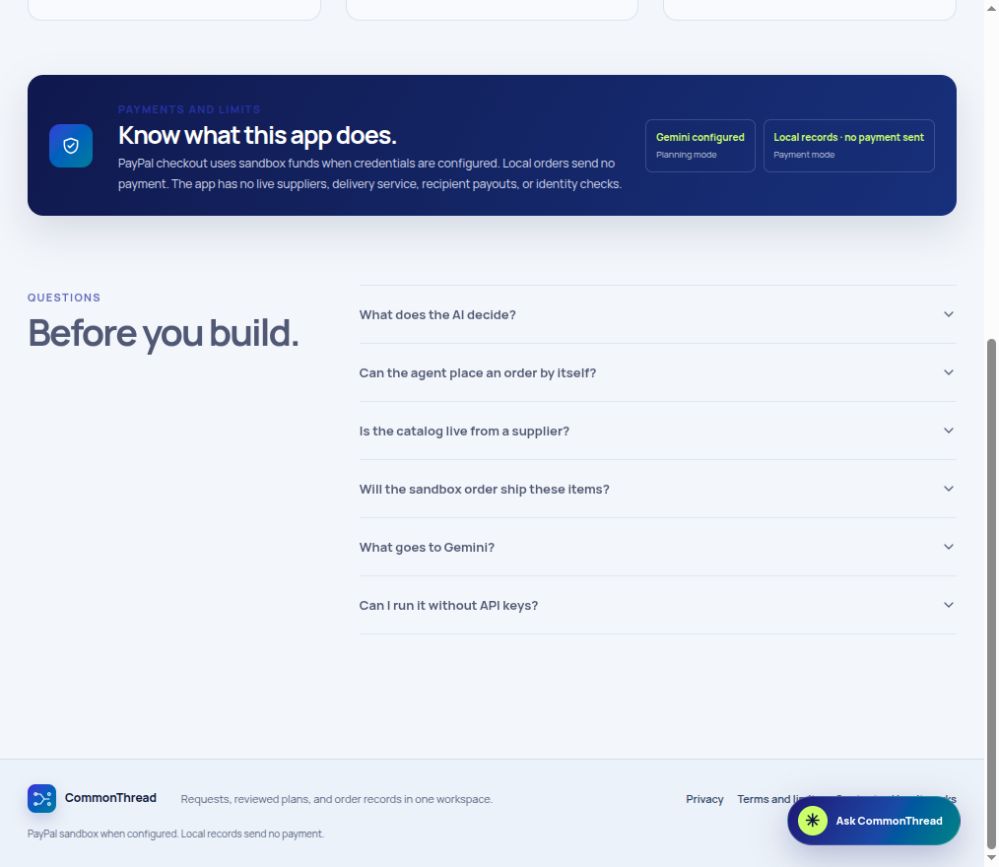
Gemini Interactions generates catalog-constrained plans and answers product questions. PayPal’s JavaScript Checkout and Orders v2 sandbox integration handle checkout when sandbox credentials are configured. Provider secrets stay out of the public repository. The code and judge setup guide are available in our public repository. Challenges we ran into The main challenge was keeping AI suggestions useful while preventing the model from becoming the authority for prices, stock, or spending approval. We made the server validate every proposed item and kept a human approval step before payment.
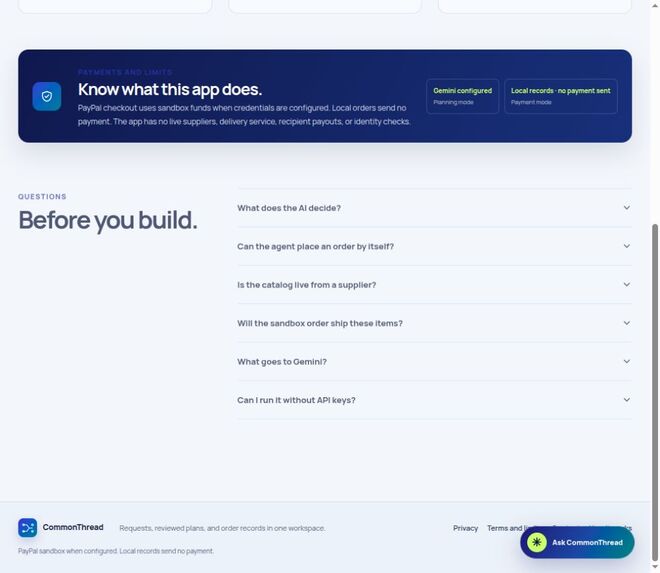
We also couldn’t complete an end-to-end PayPal sandbox checkout because we’re based in Bangladesh and couldn’t obtain Developer Dashboard credentials. The integration is implemented, but checkout remains unverified in our environment. Without credentials, the app uses its documented no-charge local mode. Accomplishments that we’re proud of We brought request review, itemized planning, server-side budget checks, order records, and activity history into one working prototype. We also made the boundaries clear: the AI cannot approve purchases, and the local fallback cannot send payments. The public project includes setup instructions, a read-only judge account, an MIT license, and a guide describing how to test the provider integrations. What we learned AI-generated plans need deterministic checks before they can affect a financial workflow. We also learned to distinguish a working local prototype from a verified payment integration, and to communicate those limits clearly rather than implying that a test record represents a real transaction. What’s next for CommonThread We want to verify the complete PayPal sandbox flow with approved test credentials, then ask community organizers to evaluate whether this workflow fits their actual purchasing process. Based on that feedback, we’d consider connecting real suppliers and inventory while keeping human approval and clear payment records central.
