-
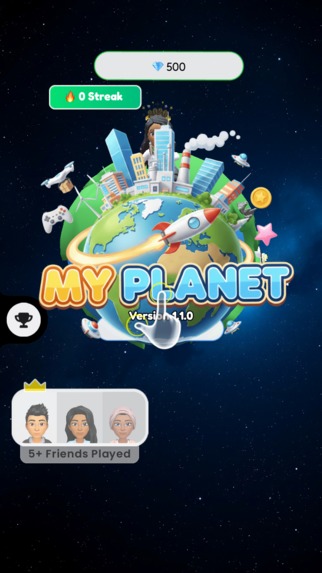
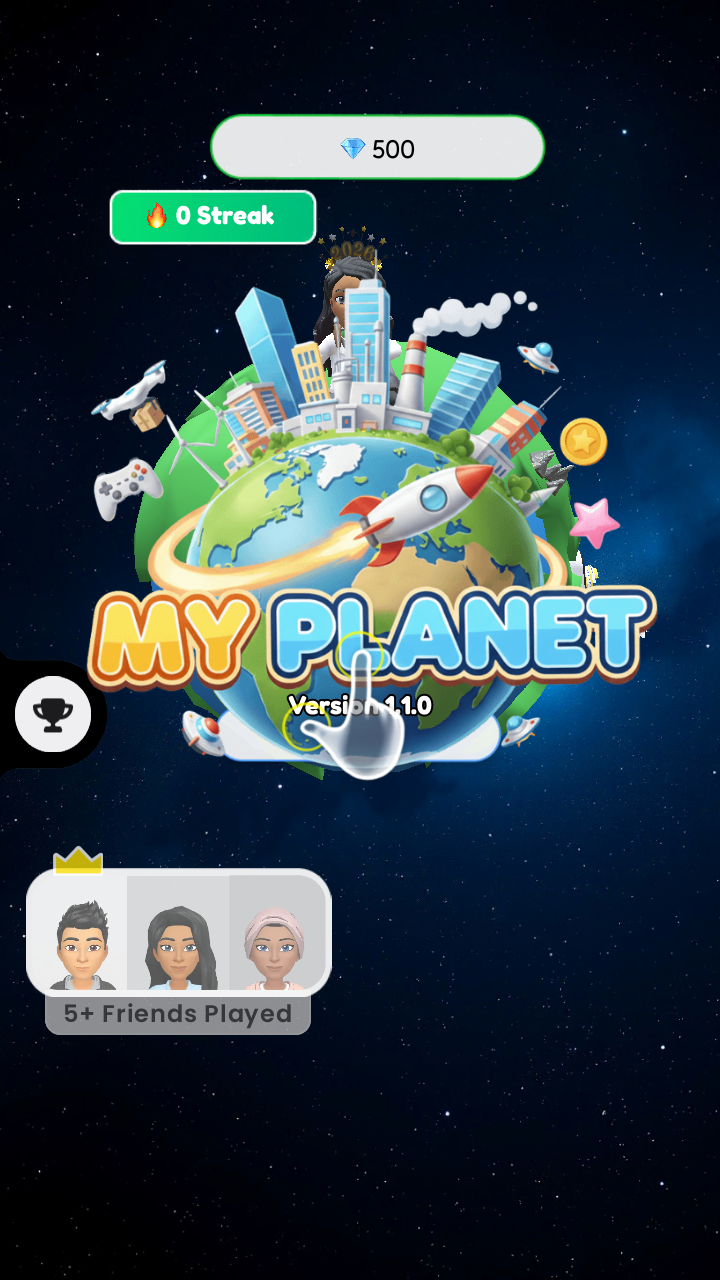
My Planet - Loading Screen.
-
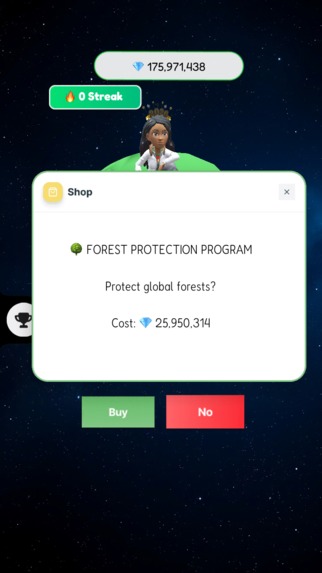
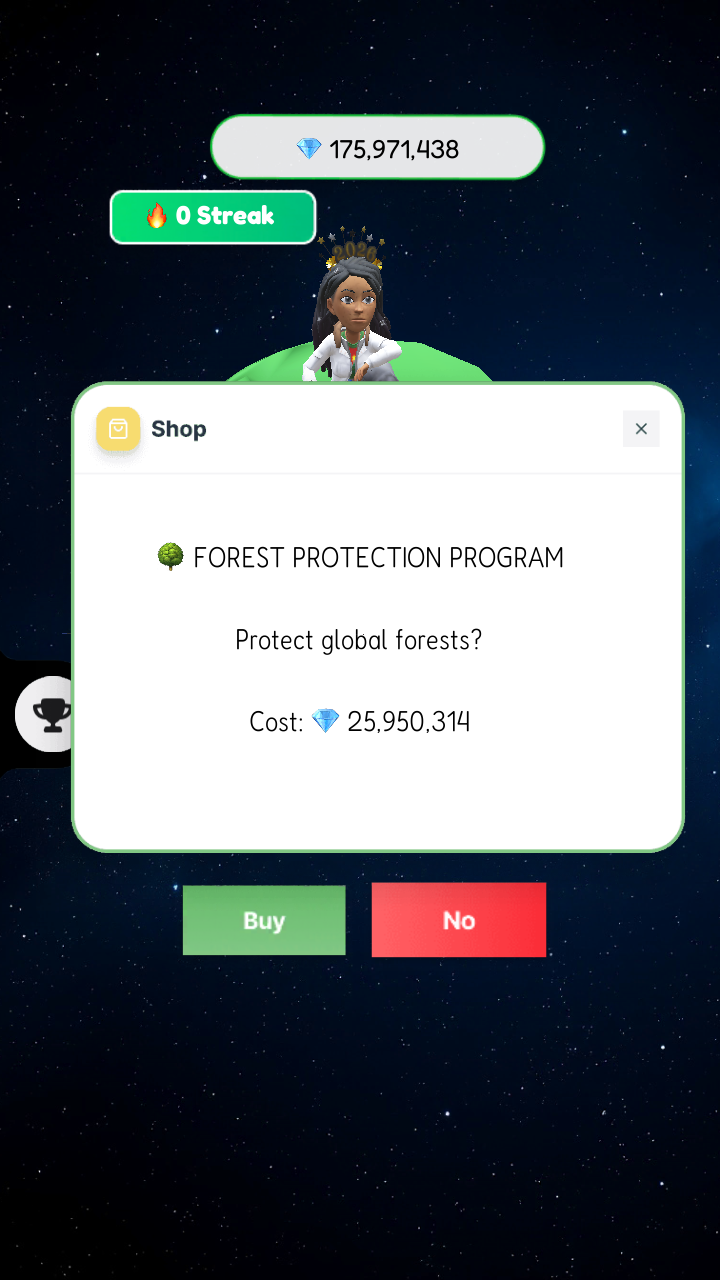
Each session has a capped number of updates, combining unavoidable global events with player decisions.
⸻
Inspiration
With a love for strategy games—especially those that reward long-term thinking over quick wins—I wanted to create a game where progress feels permanent, where actions matter not just in the moment, but across time.
That idea led to My Planet, a persistence-based strategy game where every tap becomes part of your planet’s history.
I was inspired by management games I played as a child, but I wanted to push the genre further by introducing real consequences, uncertainty, and moral trade-offs—especially around climate and global decision-making.
⸻
What it does
My Planet is a living strategy game where players manage a global economy over time. Players collect resources staying active, and maintaining daily streaks.
As the planet grows, it faces random global events such as:
• Infrastructure and economic challenges
• Policy decisions that cost money but shape the planet’s future
Some events force immediate consequences, while others give the player a choice. Every decision affects:
• Daily budgets
• The visual state of the planet itself
Over time, the planet can recover, stabilize, or deteriorate, depending on how risk is managed.
⸻
How I built it
My Planet was built as a persistent, system-driven strategy game rather than a traditional level-based experience. The core design principle was simple: the planet should remember everything.
I used persistent storage to track long-term values, login streaks, daily income, active playtime choices. This allows the game to evolve across days instead of resetting each session.
The game loop is event-driven: • Players collect resources through taps and active engagement • Global scenarios trigger over time, mixing forced events and player-choice decisions • Each scenario applies economic and environmental consequences • The planet’s visual state updates dynamically based on those impacts
To ensure stability, I avoided excessive timers and instead used a single update loop for UI refreshes and reward checks. Delayed callbacks were used only for controlled events such as popups and cooldowns.
I also used subtle but meaningful feedback to reinforce player decisions: • Color-shifting planet materials to reflect environmental state • Emoji-driven global events for clarity and emotion • Animated reward pop-ups scaled by impact • UI cues for streaks and active time
The goal was to make the planet feel alive—not just like a score counter.
⸻
Challenges I ran into
One of the biggest challenges was balancing randomness with fairness. Too many forced events can feel punishing, while too many rewards remove tension. I addressed this by: • Capping the number of scenarios per session • Mixing forced events with player-choice scenarios • Adding financial recovery paths
Another challenge was making persistence meaningful without overwhelming the player. Tracking active time, streaks, and daily income required careful handling of edge cases such as missed days, session restarts, and first-time players.
⸻
Accomplishments I’m proud of • A fully persistent economy that carries across sessions • A strategy loop that unfolds over real-world time instead of levels • A dynamic planet that visually reflects global conditions • A scalable scenario system capable of supporting dozens of events
⸻
What I learned
This project taught me the value of long-term thinking in game design. I learned how to: • Build meaningful persistence without overwhelming the player • Design economic systems that reward consistency, not just speed • Balance risk, recovery, and reward over extended play
I also learned that simple mechanics—when combined with time and consequence—can create deep and engaging strategy.
⸻
What’s next for My Planet
The current 3D planet design was limited by file size constraints. My next goal is to rebuild the planet model with more decorative and dynamic elements to increase motion and visual feedback.
I want the planet to feel even more alive and responsive—reacting more visibly to player activity, environmental states, and long-term progress. This will help strengthen the connection between player decisions and the world they’re shaping. I plan to add more gameplay rewards to encourage players to share their progress on Spotlight and stories. This includes visually rewarding players with personalized planet appearances and metrics that reflect how well they’ve managed their world over time.
Built With
- audio-components
- custom-game-logic
- gaming
- javascript
- leaderboard
- lens-studio
- persistent-storage-(device)
- social-gaming-network

Log in or sign up for Devpost to join the conversation.