-
-
Calendar page
-
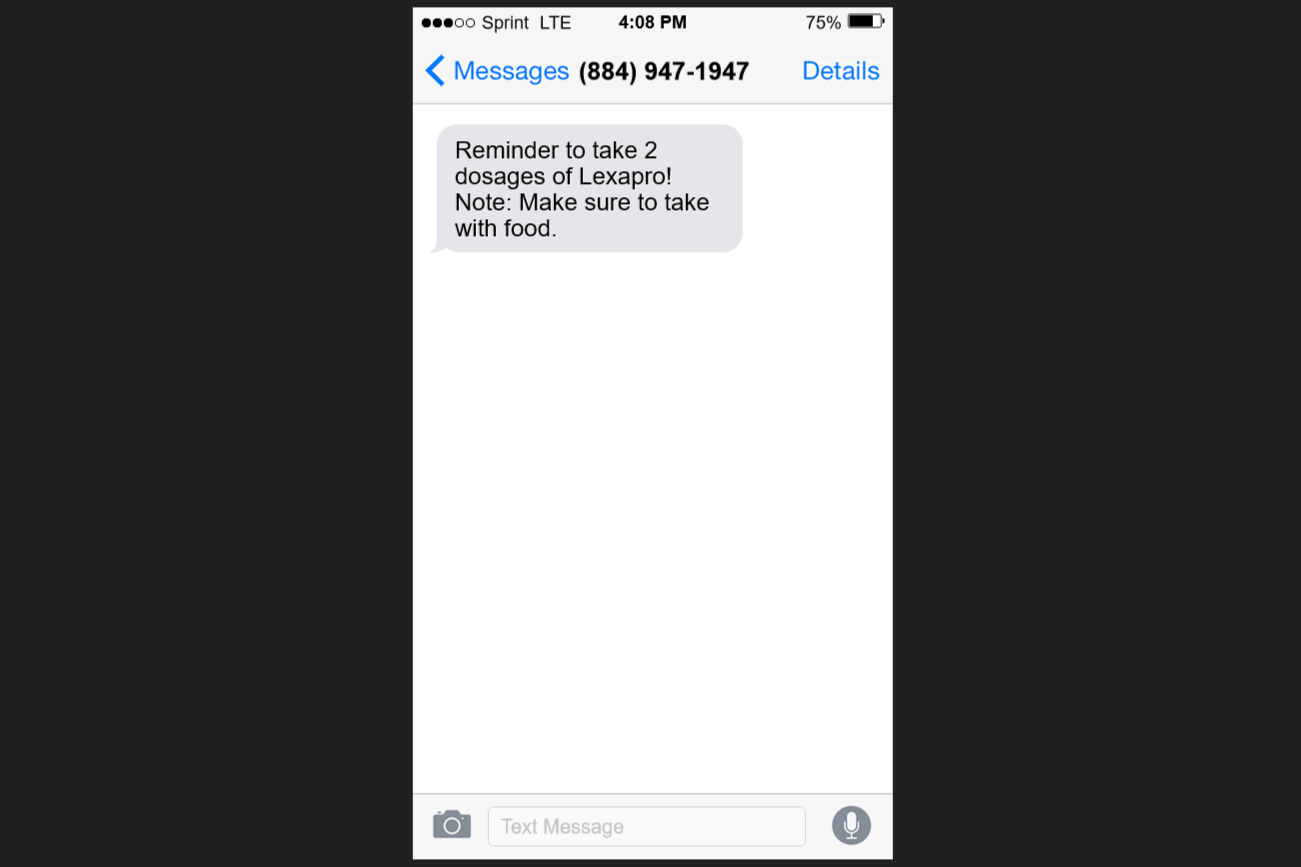
Text message reminder
-
Add medication page
-
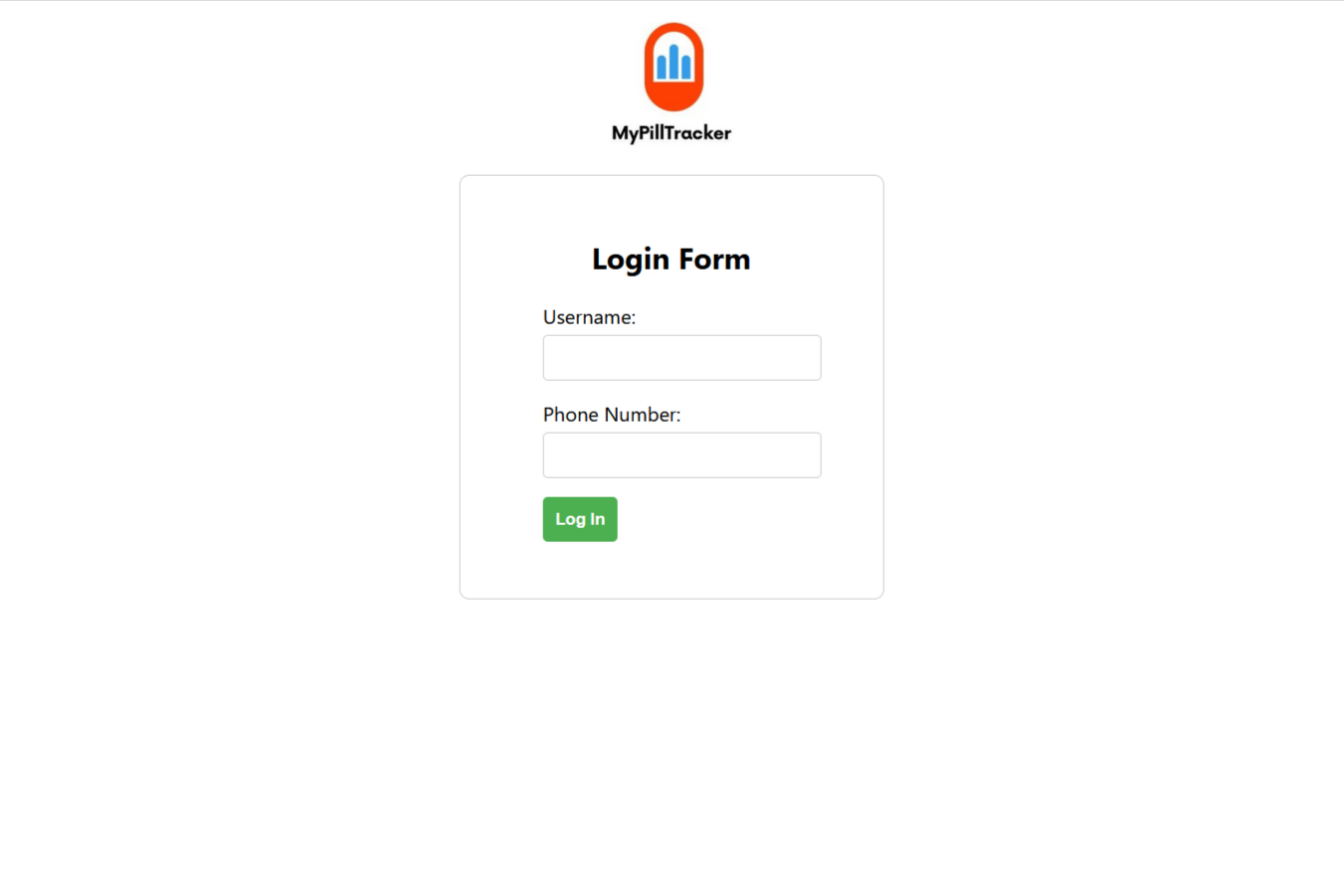
Login page
-
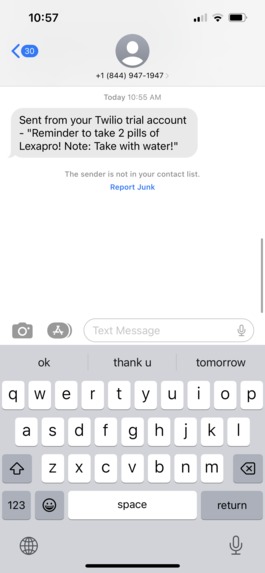
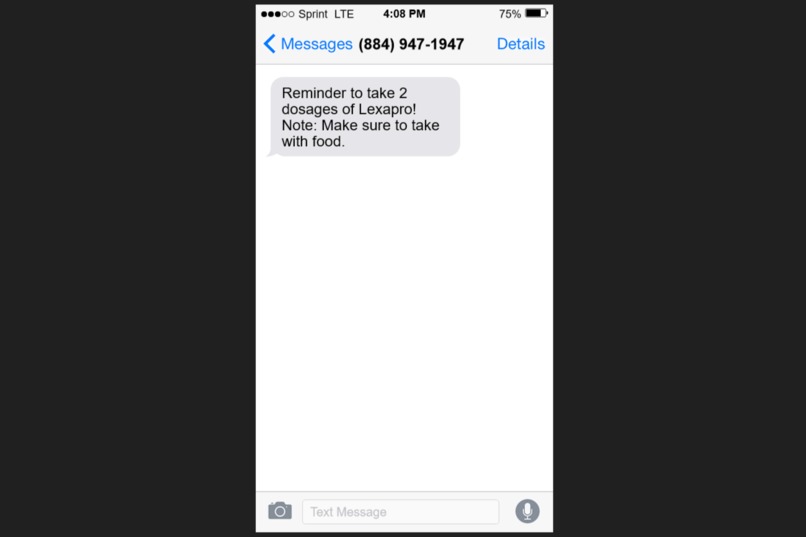
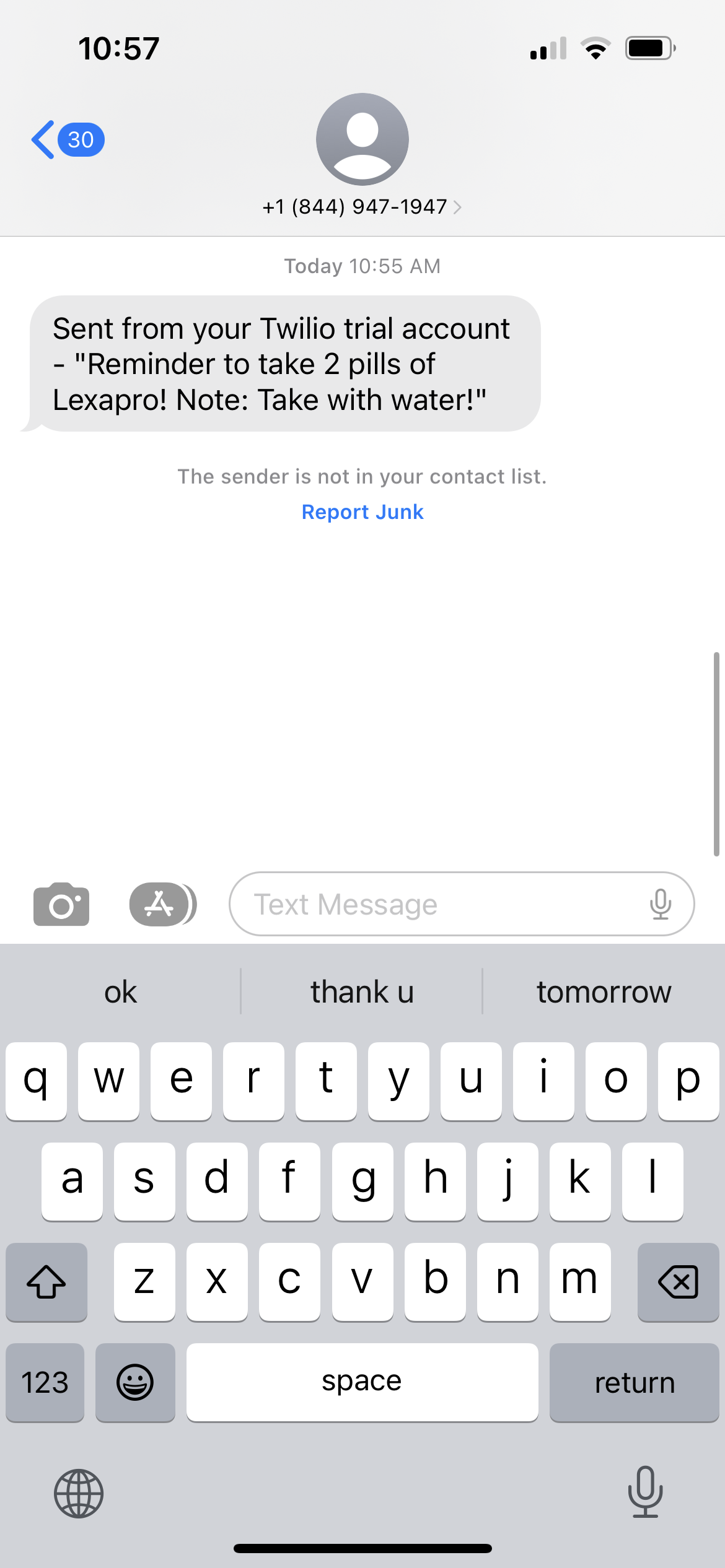
Text message reminder example


Inspiration
Taking medication correctly and on time is a daily challenge for many people. A missed dosage, incorrect timing, or negative food interaction could be life-threatening.
Doctors place immense trust in patients to set alarms, download reminder apps, and read medication instructions carefully before taking them. This current process is stressful for doctors and patients alike. Patients worry that they may miss an instruction, and doctors worry that patients may not follow their plans properly.
Having seen these problems with present-day medication tracking, we decided to create an innovative solution to this problem.
What it does
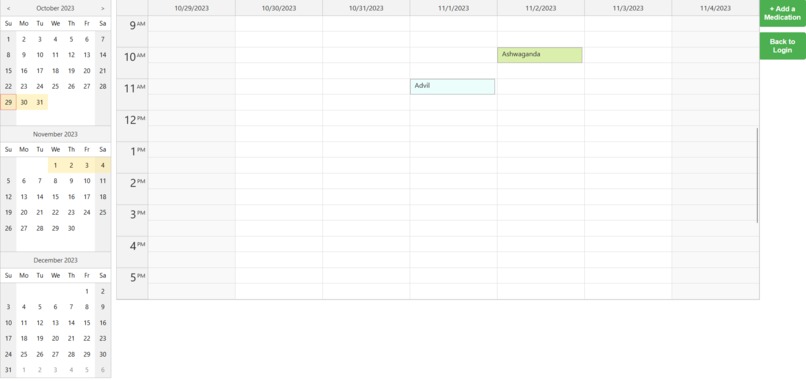
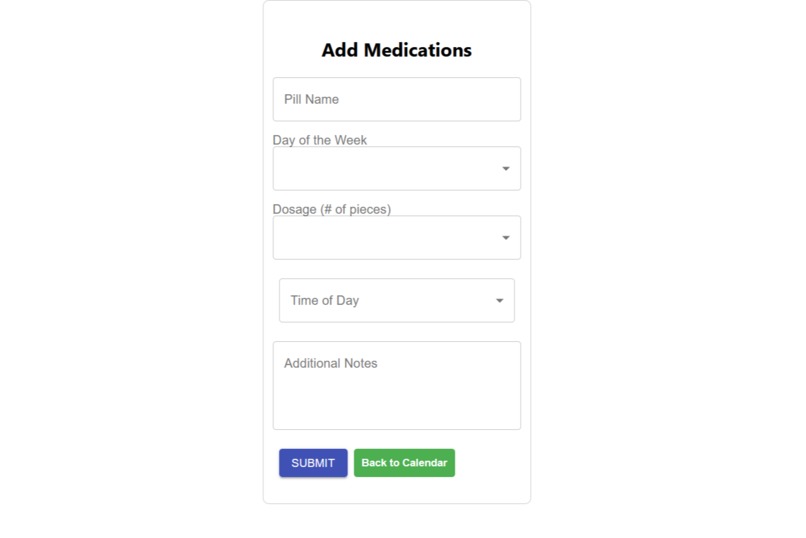
MyPillTracker is a simple, yet powerful tool to keep patients on top of their medication. It can be used by patients themselves, but what sets it apart from other medication tracking apps, is the ability to be used by doctors. Doctors can simply enter a patient, their phone number, and information about their medications (such as frequency, days of the week, dosage, and additional notes), and MyPillTracker will automatically generate a calendar to view the medication plan. This intuitive UI approach will give a clear understanding of when to take medication to ensure that plans are not misinterpreted. Additionally, MyPillTracker will send automatic text reminders to take medications along with relevant safety and dosage information (inputted by the doctor) to ensure that patients adhere to their plans correctly.
How we built it
We built MyPillTracker using JavaScript, React, HTML, CSS, Firestore, and Twilio. Our calendar was built using React, and our functionality was implemented using JavaScript. We stored our user and medication data in a custom schema created in the Firestore database. Twilio was used to send text reminders based on the data in the database.
Challenges we ran into
Throughout our process, we focused on using technology that we weren’t as familiar with. This was a challenge, but it allowed us to grow our skills and problem-solve. Our main issues focused on reading information from our database and converting it to data that we could use on our calendar object. This involved lots of data manipulation with software and languages that we were unfamiliar with.
In addition, creating the database schema itself was a challenge as we had to critically think about the appropriate way to store all the information so the data could be processed for our purposes. For example, associating users with specific notification triggers, times of day, and phone numbers was a challenge as we had never used Firestore in such a way before.
Accomplishments that we're proud of
We were able to design an application that successfully stores inputted user data on their medications and automatically populates a weekly calendar based on this data. This may sound simple, but taking in user data, storing it in the database, re-reading it, and then manipulating it to display on a unique calendar object was a difficult feat that we are proud to have accomplished.
What we learned
Through this project, we were able to further our project development skills. We were able to create a project from the bottom up, create a back-end component, create a front-end component, and integrate all the pieces with a database to create one cohesive application. We were also able to learn some of the nuances of React as well as how it works alongside JavaScript.
What's next for MyPillTracker
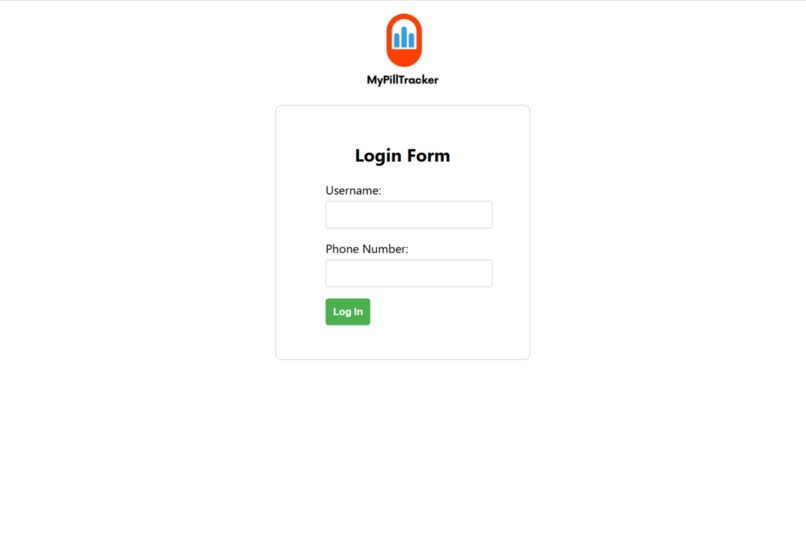
MyPillTracker is a very simple form of what it could be in the future. First and foremost, we hope to integrate a secure login feature to protect patient data. Next, we aim to improve any shortcomings of our project right now and add additional functionalities such as family member notifications. This is especially important in terms of children or grandchildren receiving alerts for their elders to take their medications.


Log in or sign up for Devpost to join the conversation.