-
-
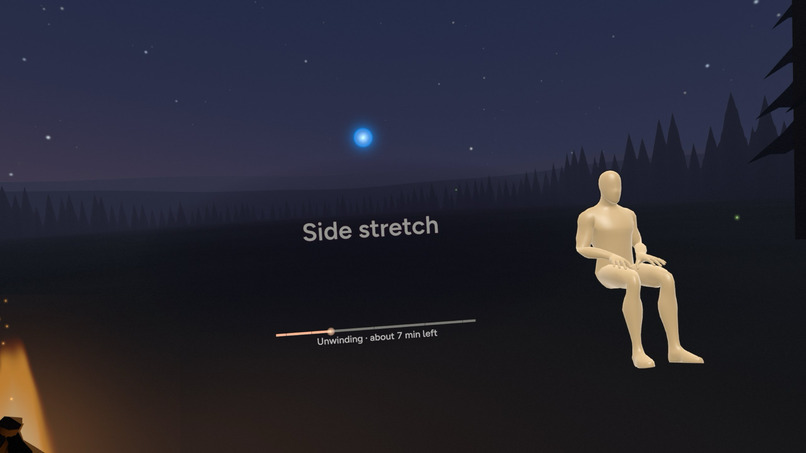
earlier version of the app
-
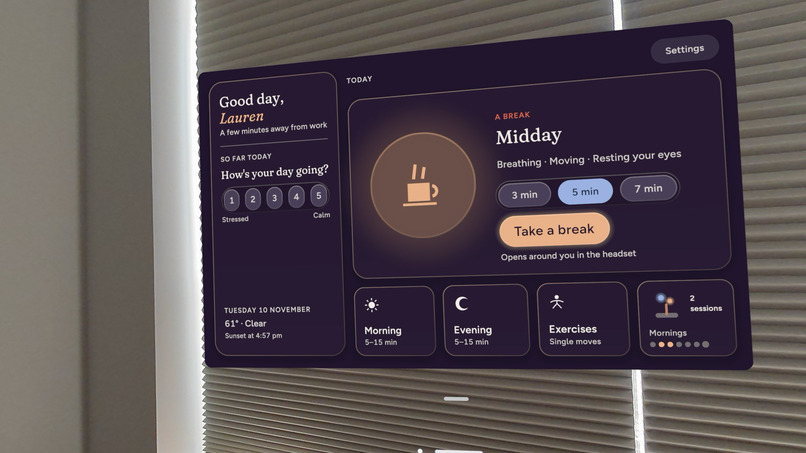
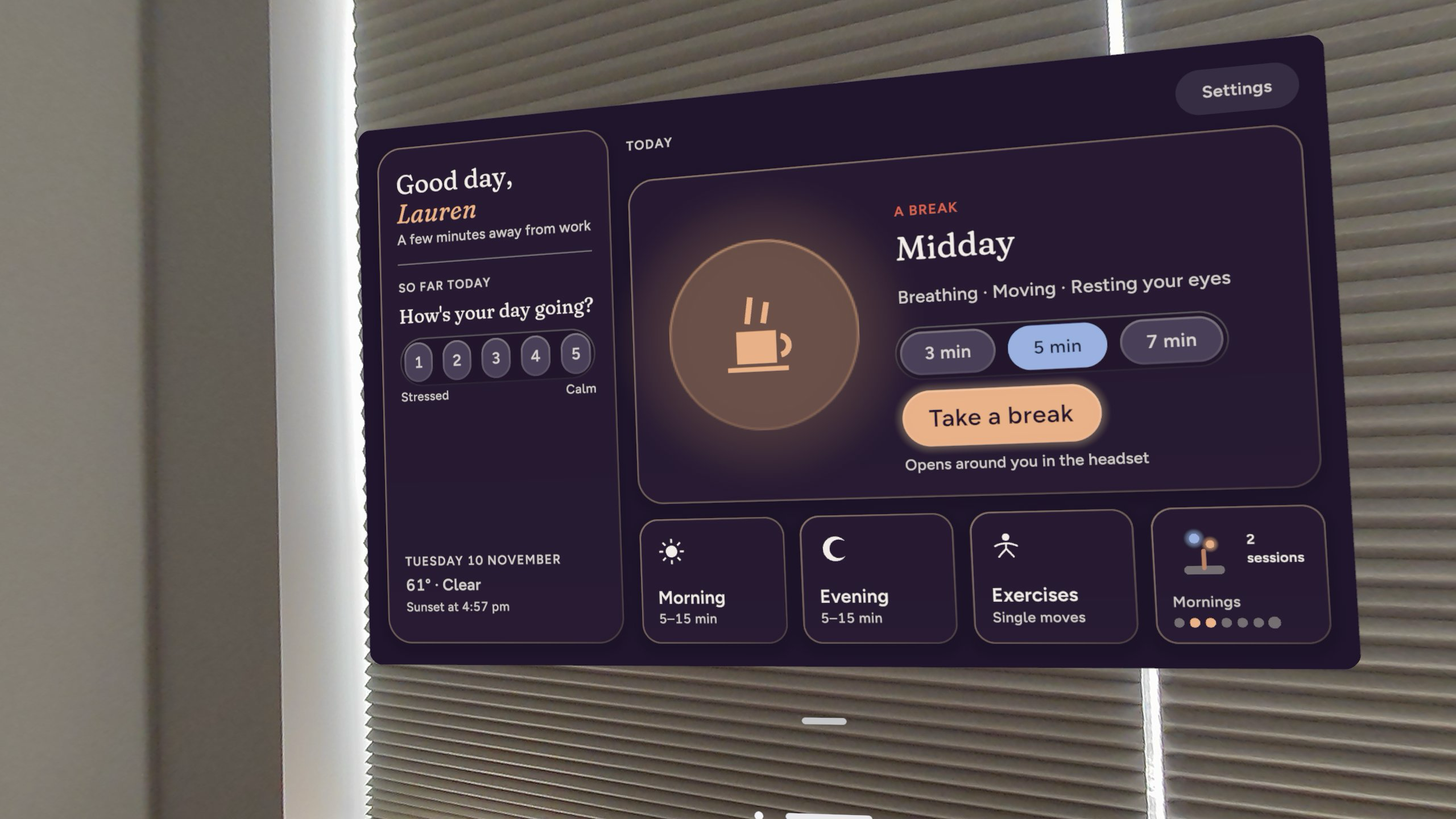
new hybrid app panel
-
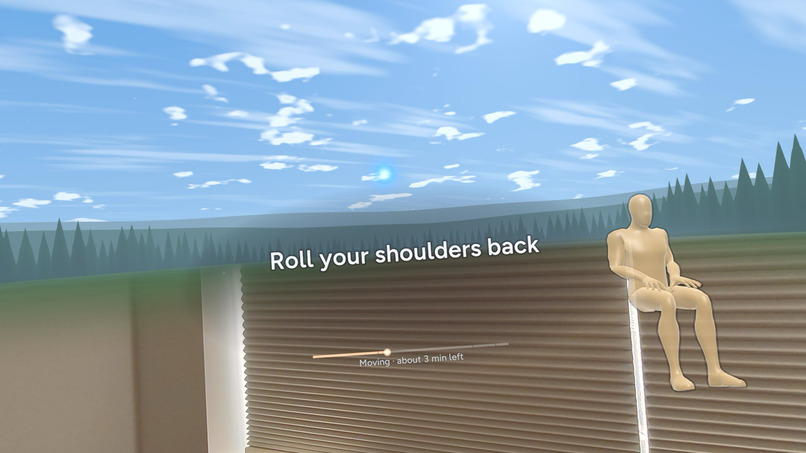
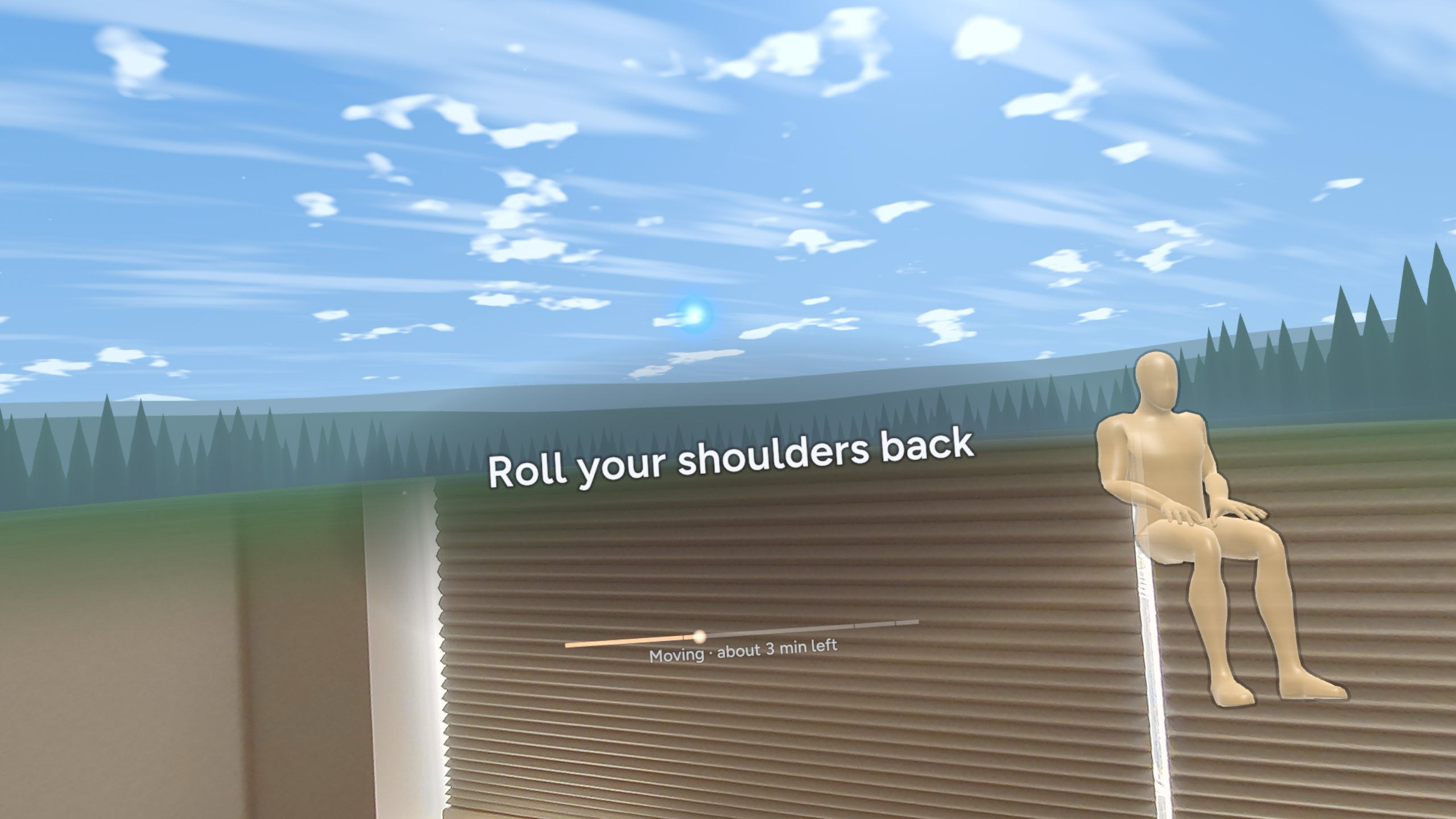
gradual immersion
-
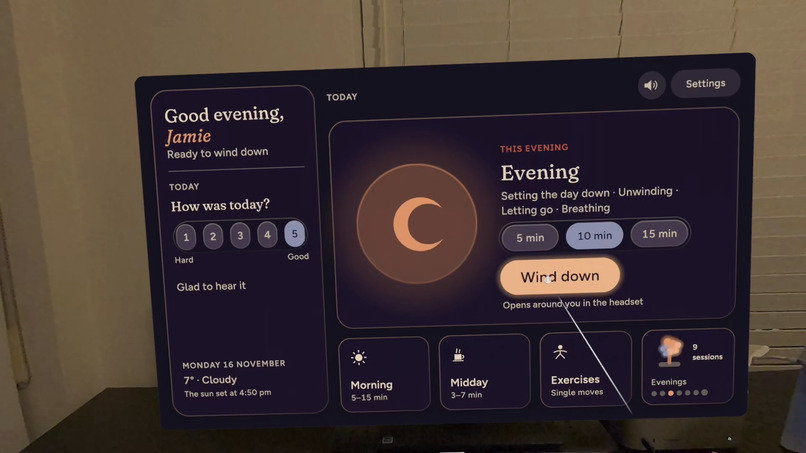
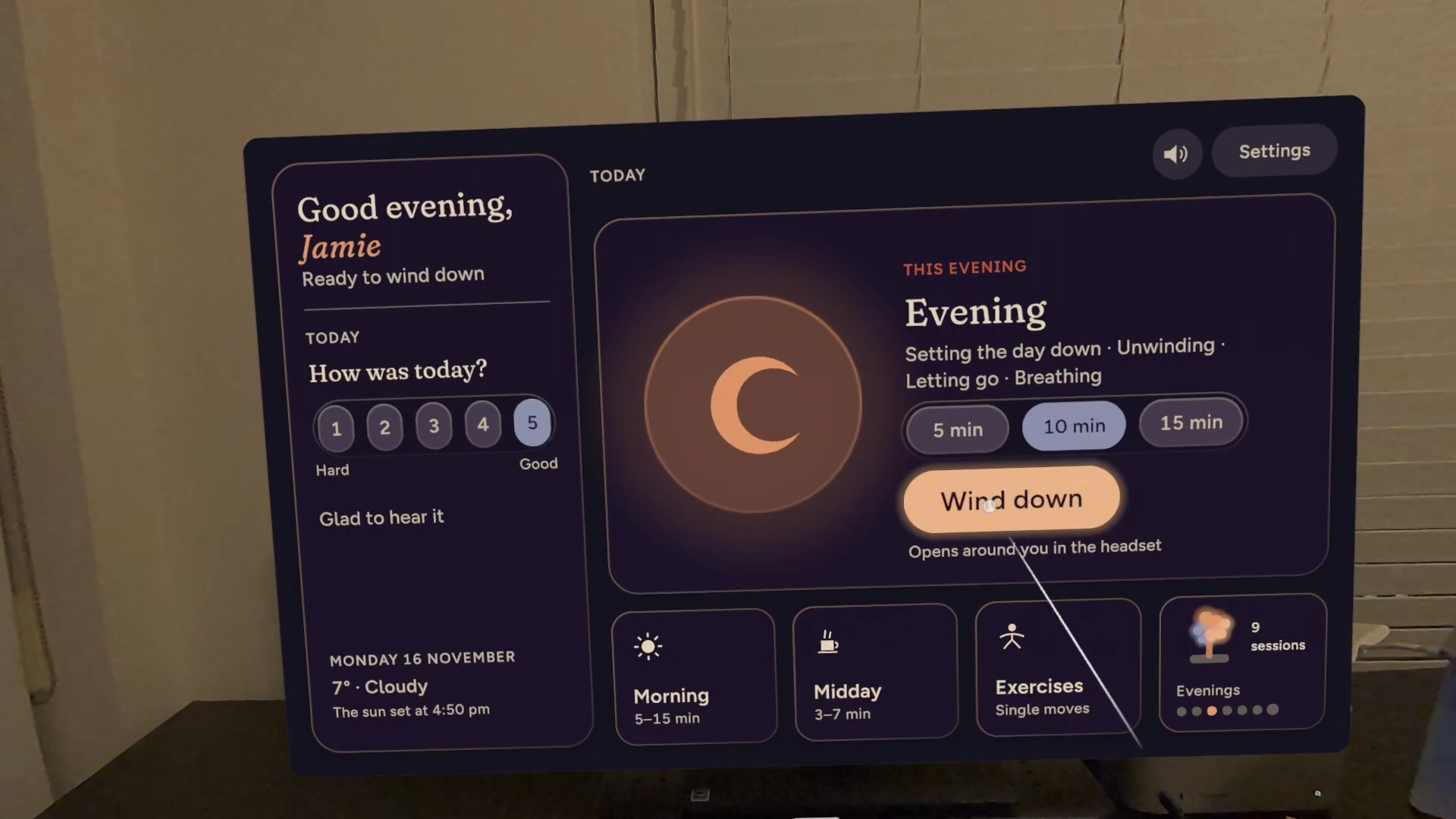
time-aware menu
-
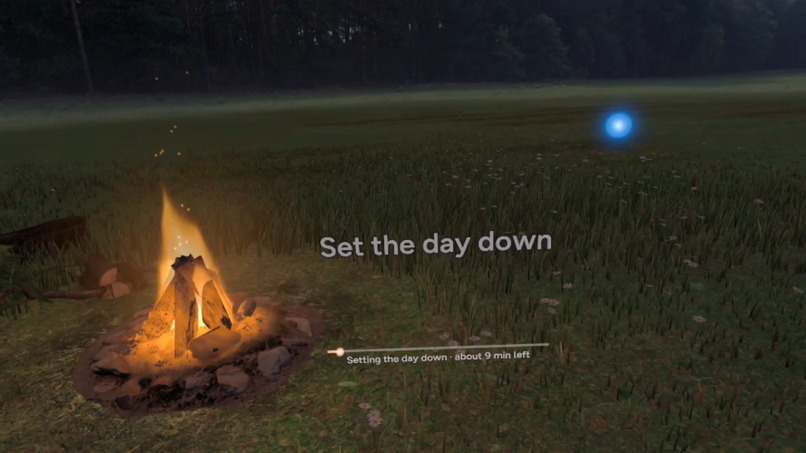
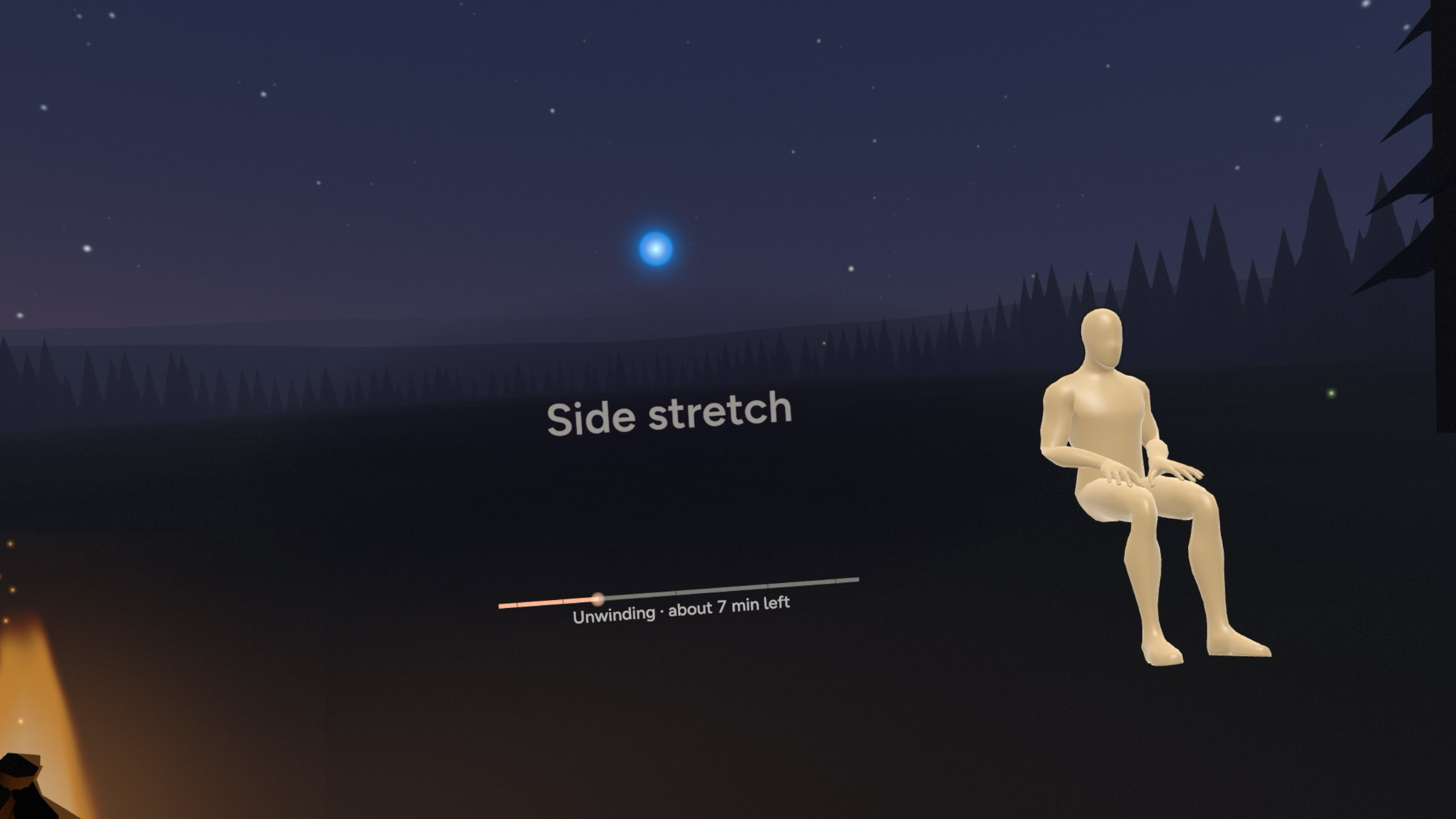
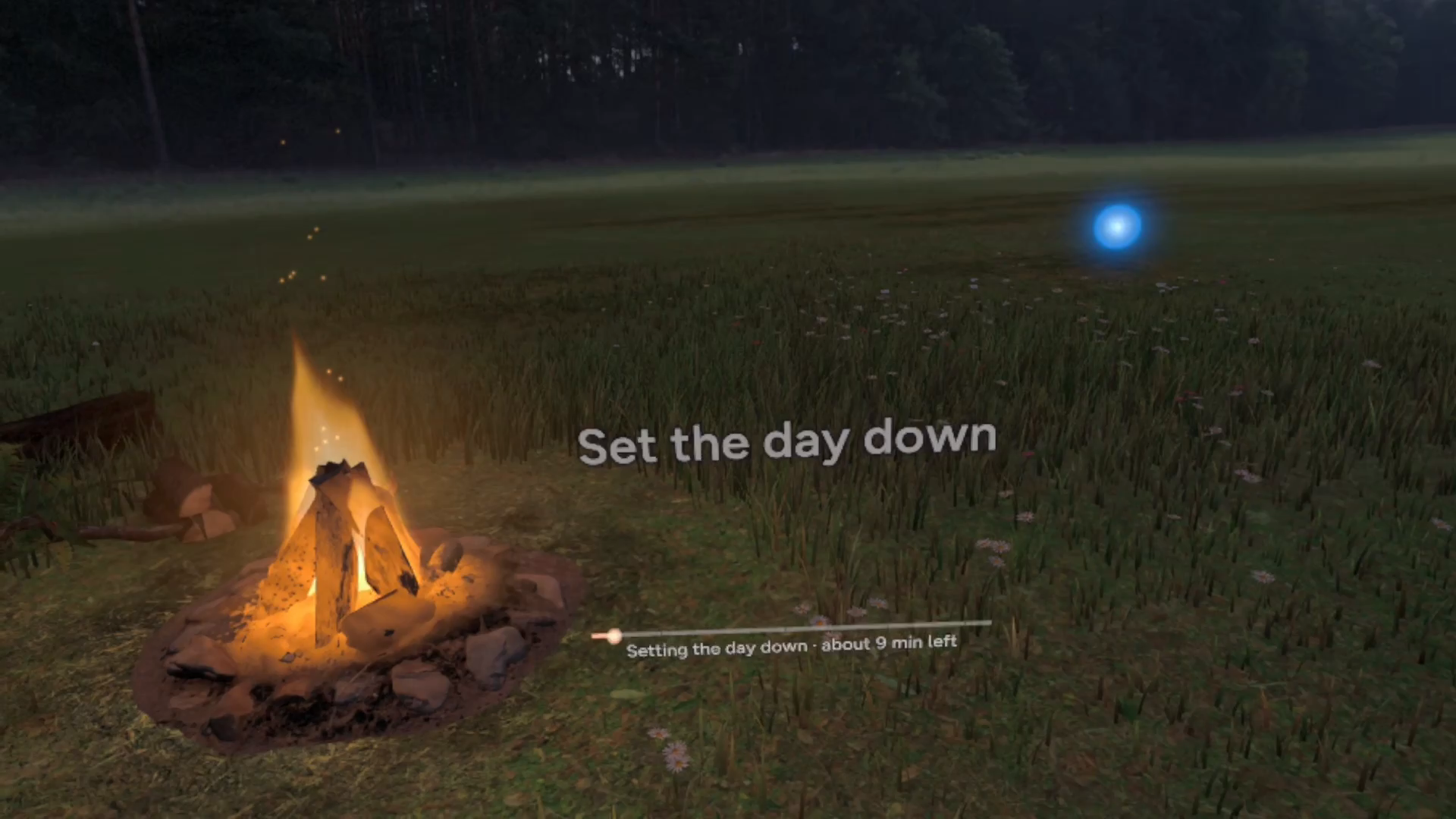
wind-down
-
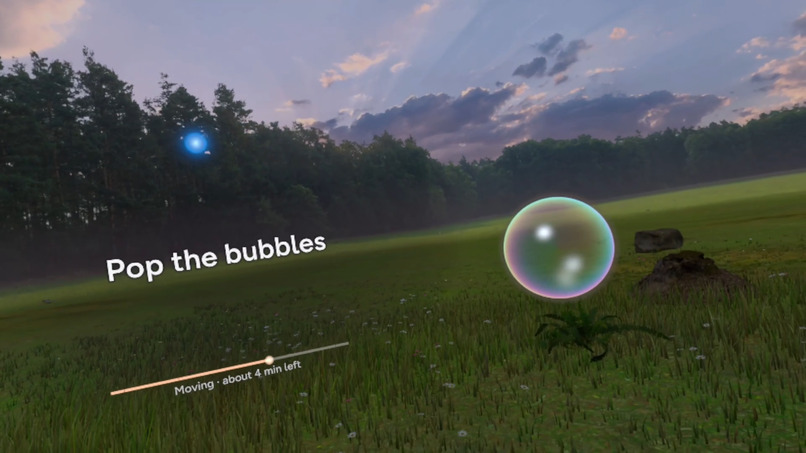
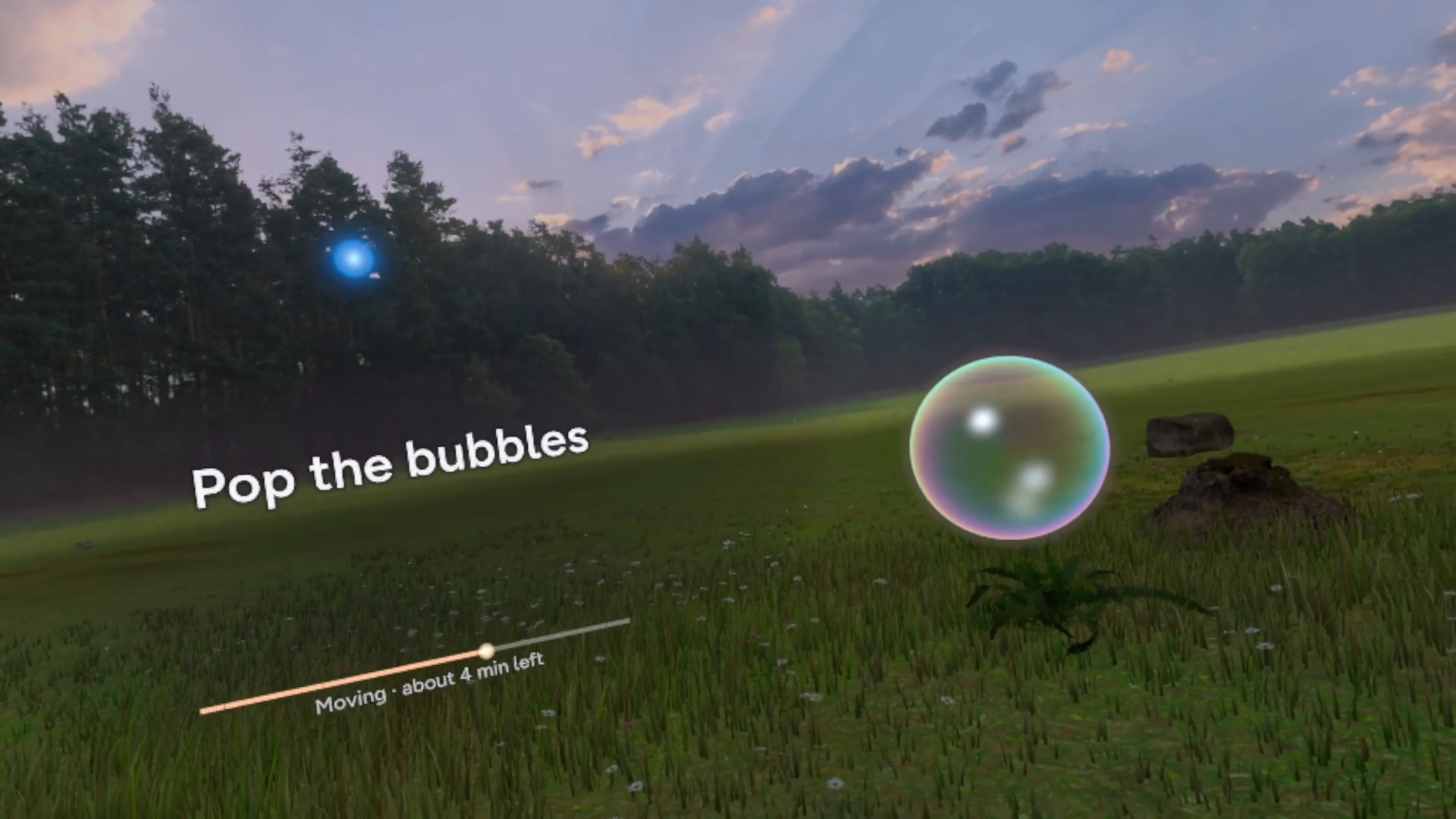
bubble popping in full immersion
-
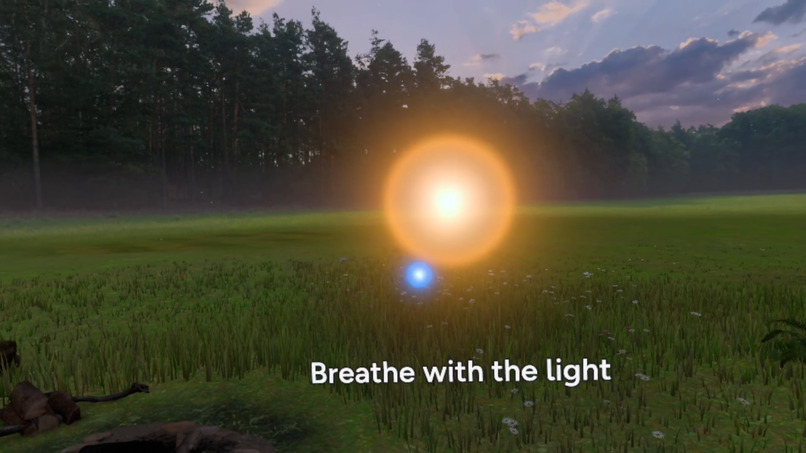
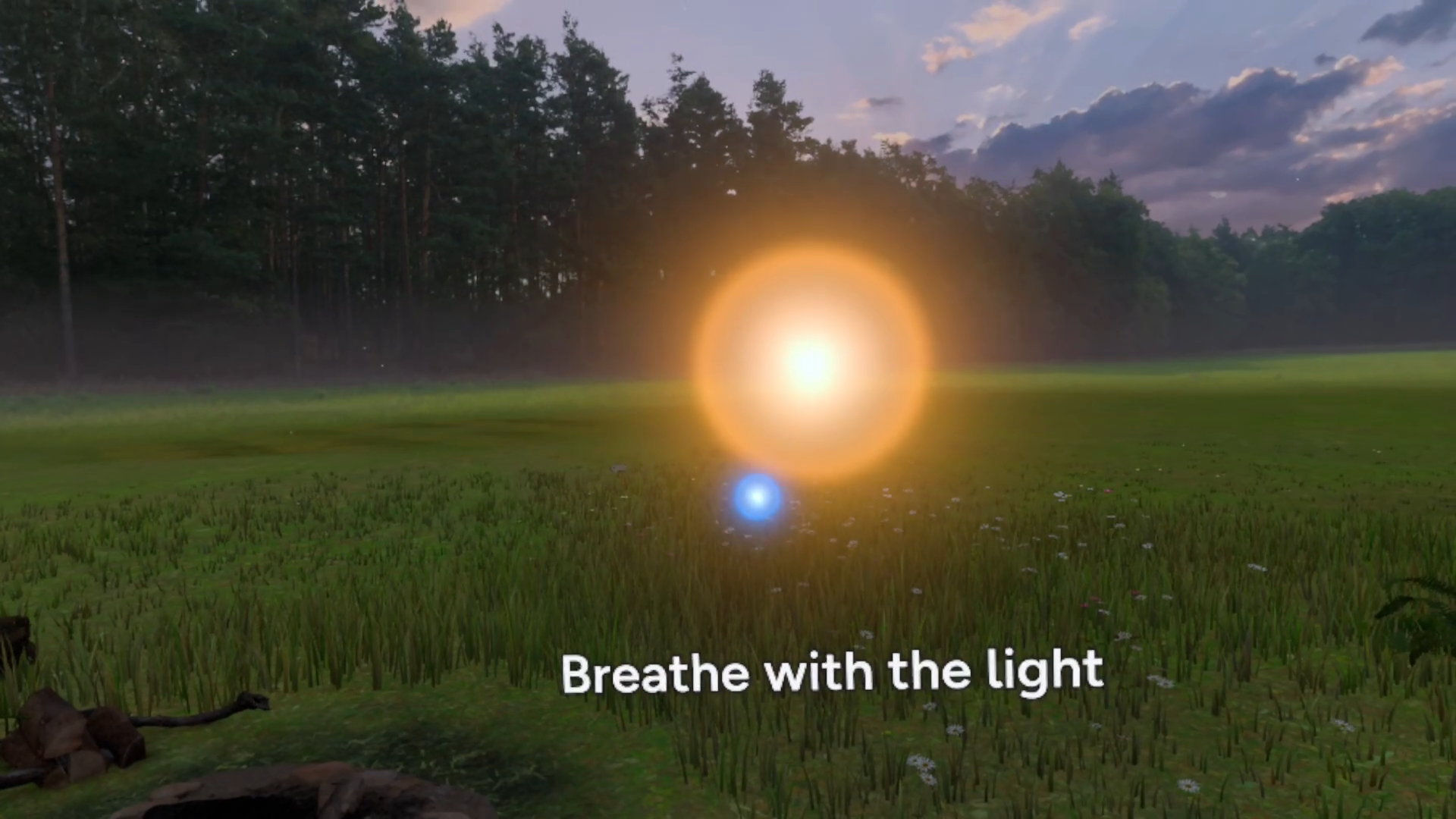
meditative breathing with full immersion
-
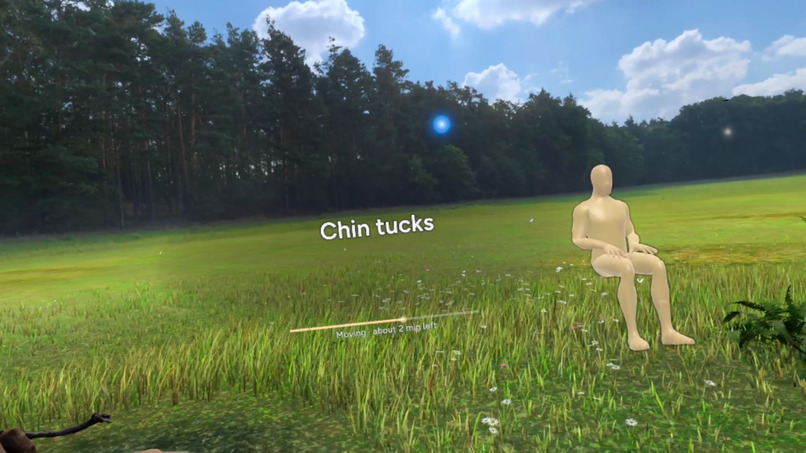
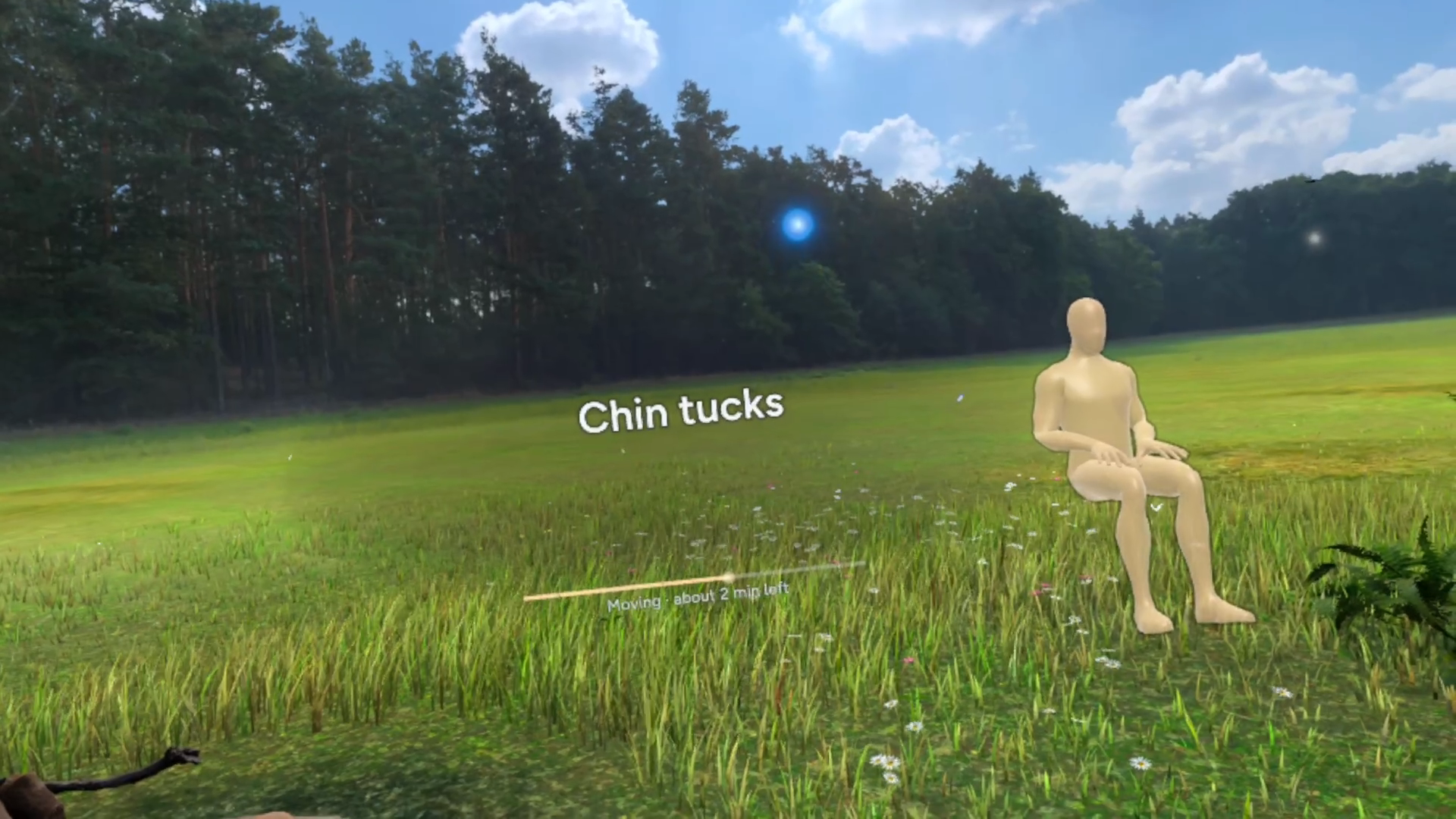
chin tucks to undo bad posture during midday
Inspiration
How you start and end your day can make or break your ability to focus, mood and overall happiness at work. Far too often, we jump into our phones as soon as we wake up and get pulled into email and news before our feet touch the floor. Then, we'll sit at a desk for eight hours and wonder why our neck hurts and can’t focus by mid-afternoon. We believe that beginning a morning with intent can significantly improve your productivity and mood for the rest of the day.
We were motivated by two questions:
- Can we augment someone's reality in a way to enable the best start to a morning, through breathing + movement + light?
- What would make Meta VR Glasses an essential part of someone’s morning routine?
We also wanted think of ways in which we could make XR more appealing to women. With more than 70% of the paying subscriber base for a well-known health wearable ring being women, health/wellness/productivity was a good category to be targeting to address this.
What it does
Interlude is your morning, mid-day and evening coach to help turn your sedentary workday into a series of small resets. The home screen will display the right one depending on the time of day.
In the morning (before 11 AM), Interlude guides you through a series of breathing and stretching exercises to alleviate any sleep inertia and help you start the day in a calm and focused state. A warm fairy light guide will talk you through breathing and a few seated stretches with hand tracking, all under ten minutes.
During the workday, Interlude stays open beside your virtual display in its hybrid windowed mode. Set your work aside as the app moves you through shoulder rolls, chin tucks, and wrist and neck stretches, then pick your work back up where you left it, refreshed.
In the evening (after 5 PM), Interlude will walk you through a wind-down session, which helps you relax. You will be guided through techniques backed by sleep research: tense-and-release muscle relaxation, a short reflection for you to set down your thoughts, and slow breathing.
How we built it
We built Interlude (with the help of AI) on Unity 6 with OpenXR, using: passthrough, Meta’s Interaction SDK, MRUK for the room scan, and the Depth API. We also used the Meta Spatial SDK for the hybrid app and spatial audio. ElevenLabs provided the pre-recorded narration, the audio for which is all built into the app. We also used licensed third-party assets for the environment.
Challenges we ran into
The first big challenge was having the body measurements properly calibrated to be comfortable yet not too slow. We also wanted to make sure the visual card guide in front of the user was readable in a real room, especially if the wall colours were lighter and similar to the text colour.
Accomplishments that we're proud of
We’re really happy with how all of the different sessions came out, and were surprised by how pleasant it was to have guided stretches. We also think that we were able to find a balance between clarity and gentleness in the voice guide, that did not stress the user.
What we learned
We learned that we needed to spend a lot of time doing user testing to ensure the movements and the timings of the movements felt natural for as many users as possible. We also learned that early playtesters found this genre of app very appealing, especially because they had seen the Quest headsets as mainly being for gaming.
What's next for Interlude
- We are currently listed as “Coming Soon” on the Meta Horizon Store, with a targeted launch date of December 1, 2026.
- Interlude for teams, that could offer employers a way to boost the productivity of their employees by helping them start their days
- Adding integrations for wearables to be able to fetch health and sleep data directly.
- We’d like the app to be able to notice natural breaks in your workday, like the gap before your next meeting, and gently invite you to take a reset.
Built With
- ai
- elevenlabs
- mruk
- openxr
- unity


