-
-
-
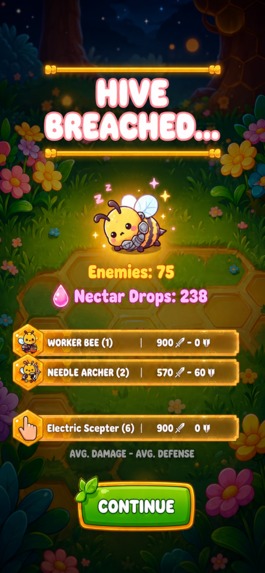
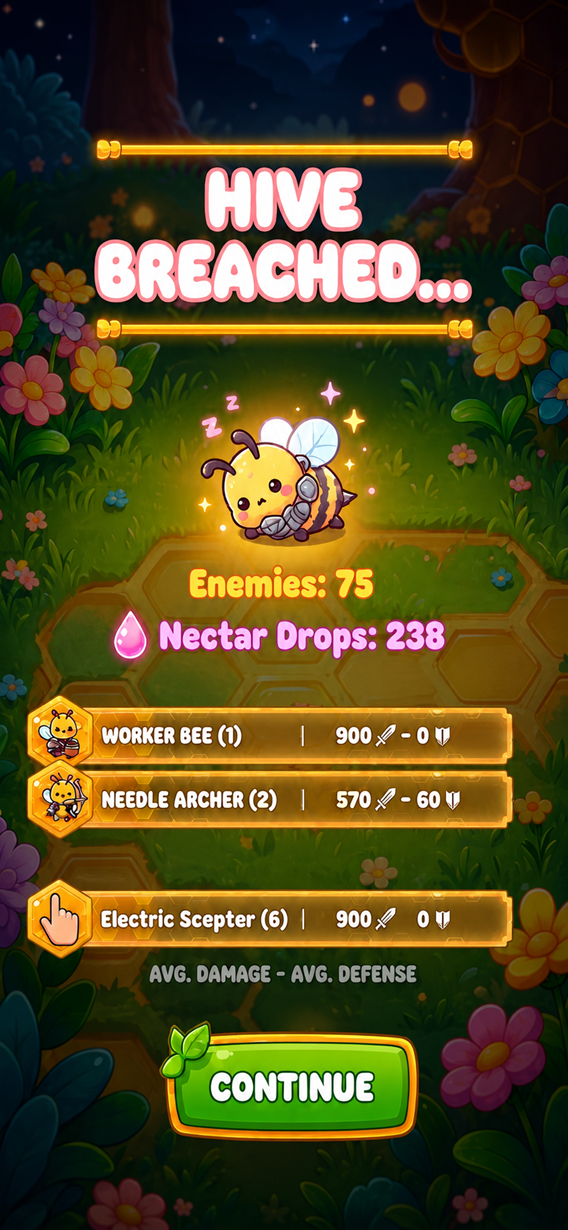
Defeat: Learn and iterate
-
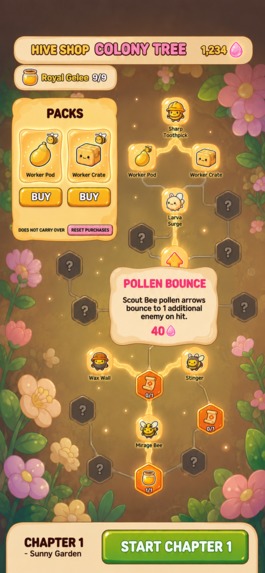
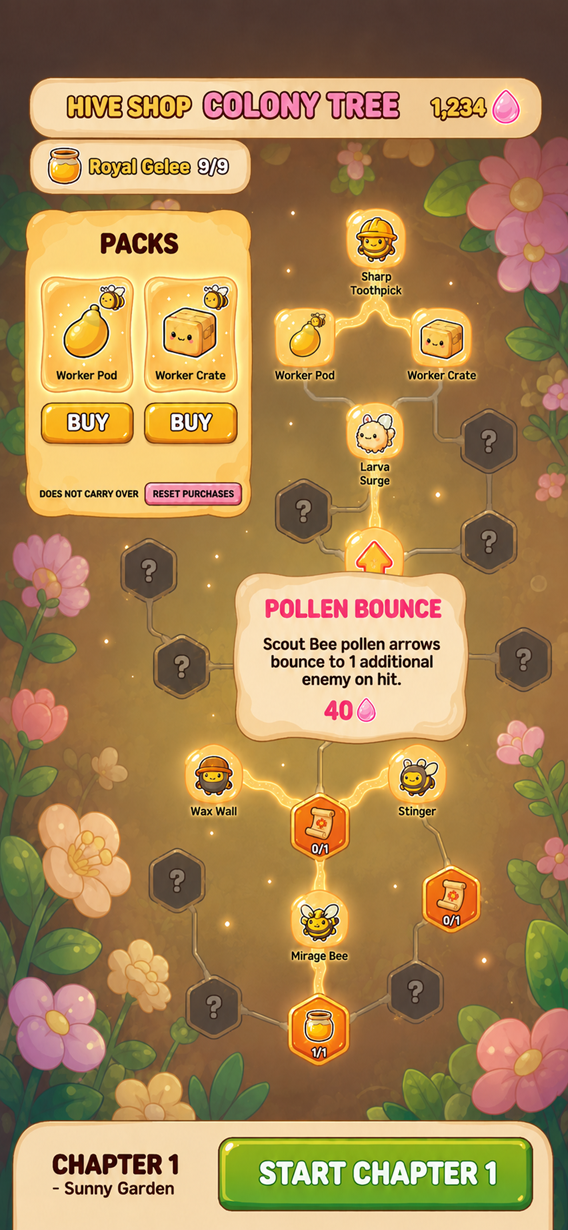
Shop Menu: Choose Upgrades
-
-
Inspiration
We wanted to challenge the status quo of modern mobile strategy games, which often lean heavily into stressful, hyper-competitive, or aggressively monetized loops. Inspired by the tactical joy of classic lane defense titles like Plants vs. Zombies, combined with the heartwarming, long-term ownership of cozy masterpieces like Stardew Valley and Animal Crossing, we envisioned a low-pressure alternative. We set out to create a world where players could experience the raw satisfaction of strategic unit deployment alongside the nurturing, beautiful progression of building a personal bee colony empire.
What it does
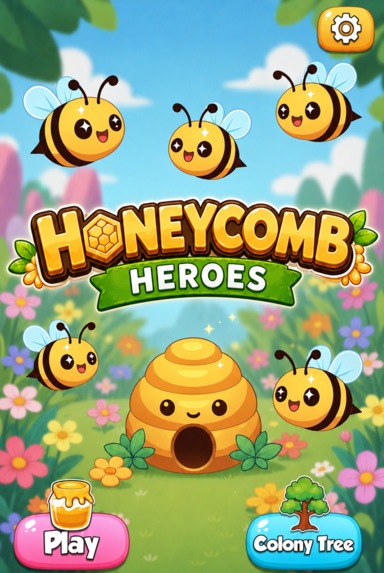
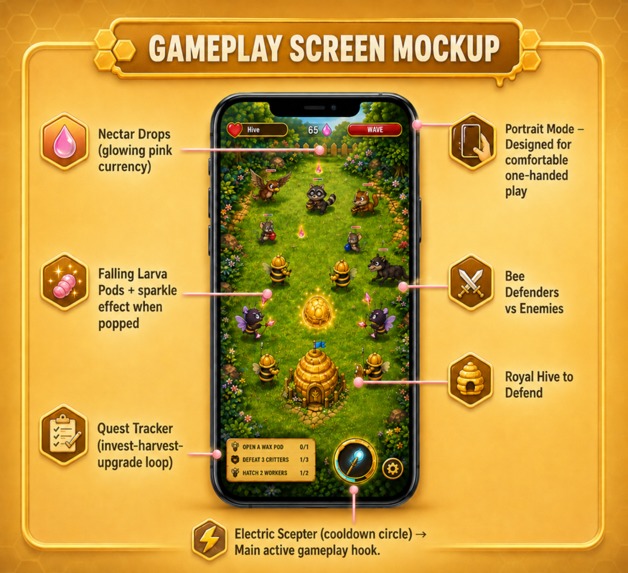
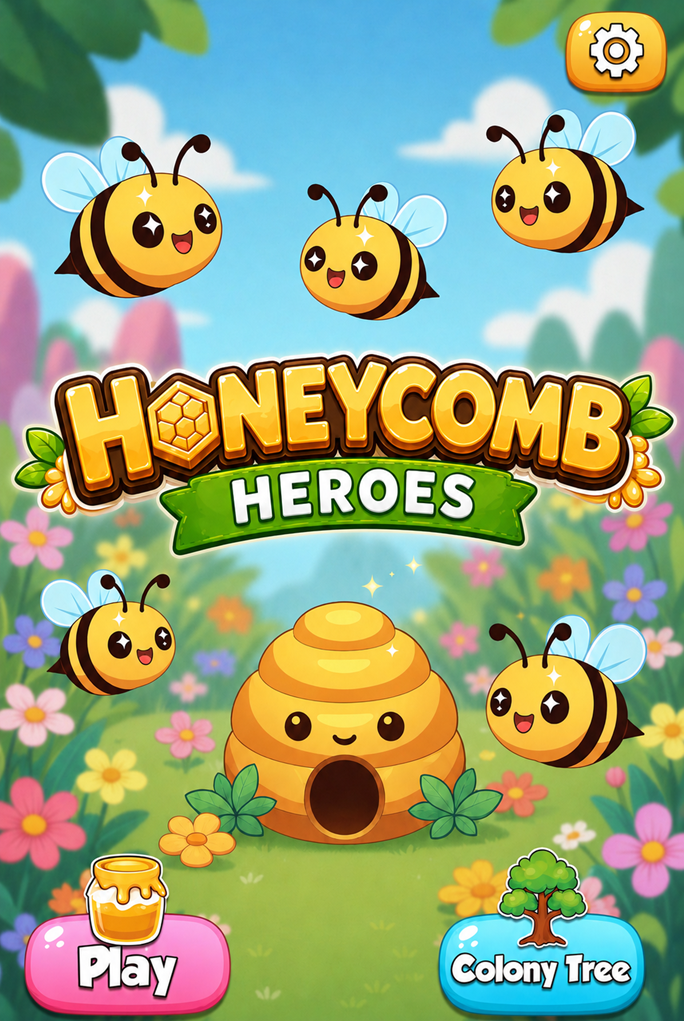
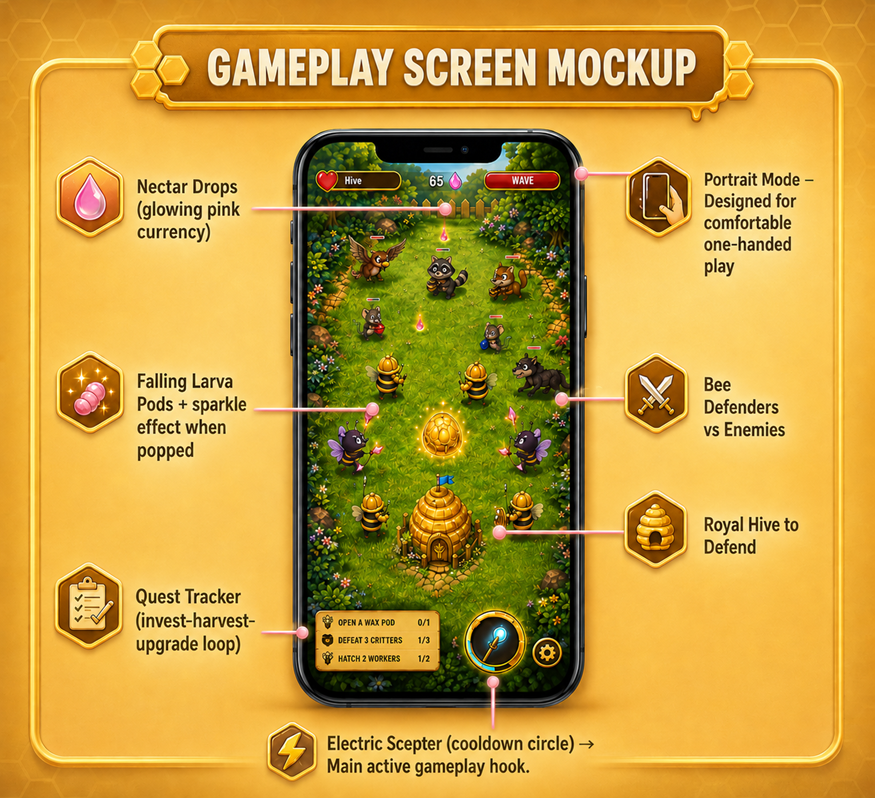
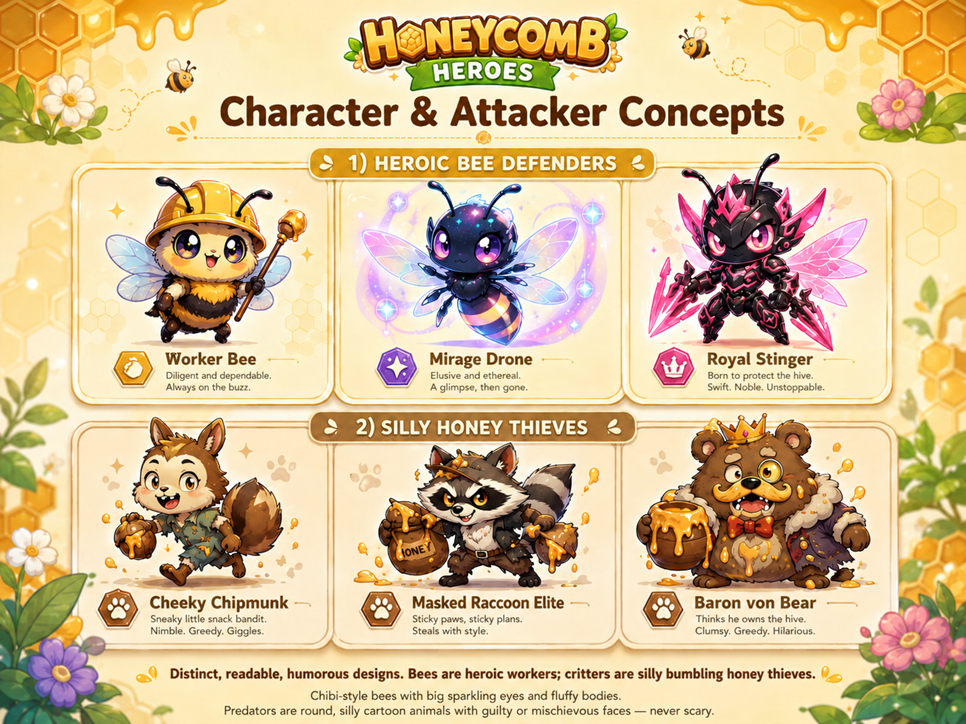
Honeycomb Heroes is a mobile portrait-mode tower defense and simulation game. Players operate on a tight "Invest, Harvest, Upgrade" loop. Before a wave begins, they spend a temporary currency called Royal Gelee to purchase Larva Pods in a cozy shop environment. During the defense phase, these pods drop onto a lush garden battlefield. Tapping the pods hatches randomized autonomous, chibi-style bee defenders—ranging from frontline Bumble Guards to long-distance Needle Archers—who defend the central hive. Players actively support their swarm using the "Electric Scepter," a cooldown-based area-of-effect tap attack. Defeated critters drop permanent pink Nectar Drops, which are spent back at the shop on a massive skill tree called the Colony Tree to unlock automated pod air-drops, unit baseline upgrades, and visual hive expansions.
How we built it
To respect mobile-first constraints, we architected the entire project blueprint around comfortable, single-handed portrait play. The design follows a strict, prioritized MVP framework to ensure a highly achievable production pipeline:
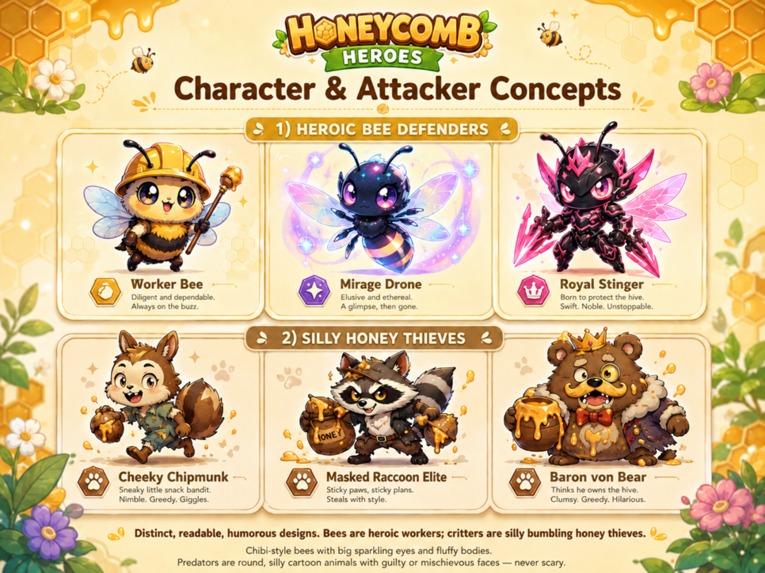
The Core Combat Architecture: We mapped out the lane navigation mechanics, pathing logic constraints for incoming waves of goofy critters (chipmunks, mice, raccoons), and the underlying mathematical balance behind the Electric Scepter's area damage and 0.5-second stun feedback loop.
The Shop & Hatching Mechanics: We explicitly defined the probability distribution logic dictating Larva Pod spawning tiers, conceptualized the tactile visual rules for the "pod-popping" mechanic with vibrant particle mockup layers, and designed a smart auto-repurchase menu framework to completely eliminate friction between rounds.
The Meta-Progression Blueprint: We structured the technical layout of the Colony Tree, utilizing structured progression arrays to smoothly link earned Nectar Drops to permanent stat nodes, including distinctive roadblock Quest Nodes designed to dynamically alter future game conditions once achieved.
Challenges we ran into
Balancing active touch engagement against a relaxed management fantasy proved to be our biggest conceptual tightrope walk during the design phase. In early design iterations, we found a high risk of the game tilting too far in either direction: players could easily face cognitive fatigue from excessive tapping, or conversely, feel completely disconnected while watching the bees auto-fight. We solved this purely through UI design by conceiving the circular cooldown indicator for the Electric Scepter's tap attack. This crucial balancing rule completely re-centered the intended gameplay loop: it discourages thoughtless button-mashing, rewards strategic patience (waiting for large critter swarms to group up inside the radius), and perfectly locks down the game's signature "cozy-yet-energetic" tone on paper.
Accomplishments that we're proud of
We are incredibly proud of creating a framework that we believe is a strong contender for Most Innovative Design. By taking historically separate genres—stressful tower defense and slow-paced idle simulation—and fusing them into a singular, cohesive "cozy-yet-energetic" mobile loop, we carved out a fresh mechanical space.
We successfully built a disciplined visual progression pipeline where player power growth perfectly mirrors world-building assets: watching a home base actively expand from a basic wooden structure into a multi-tiered, reinforced hive palace provides an unmatched emotional payout. Furthermore, our innovative, clear-cut layout division between warm/golden visual tones for safe zones and cooler/lavender tones for threat readability achieves a pristine, highly readable UI framework engineered specifically for small mobile screens.
What we learned
Designing Honeycomb Heroes taught our team the profound value of rigorous scoping and the beauty of drafting a tight MVP. Cutting highly enticing features from the launch scope—like rare 1% Spell Tomes (the neon-pink Sugar Rush effect or the Solar Flare laser) and multi-phase endgame bosses—was a tough but vital design exercise. We learned that proving a gameplay loop is fun and logically sound at its absolute smallest iteration is far more valuable than stacking unpolished mechanics. By focusing our design documentation exclusively on making the core act of cracking open a pod look and feel like a high-dopamine milestone, we successfully locked down an authentic, mathematically sound "one more defense" psychological hook.
What's next for Honeycomb Heroes
With the foundational design framework and core MVP loop successfully validated on paper, our roadmap looks incredibly bright. The immediate next step is translating this blueprint into a functional technical prototype, focusing first on the tactile game feel of the container-popping mechanics and responsive tap-attack cooldowns.
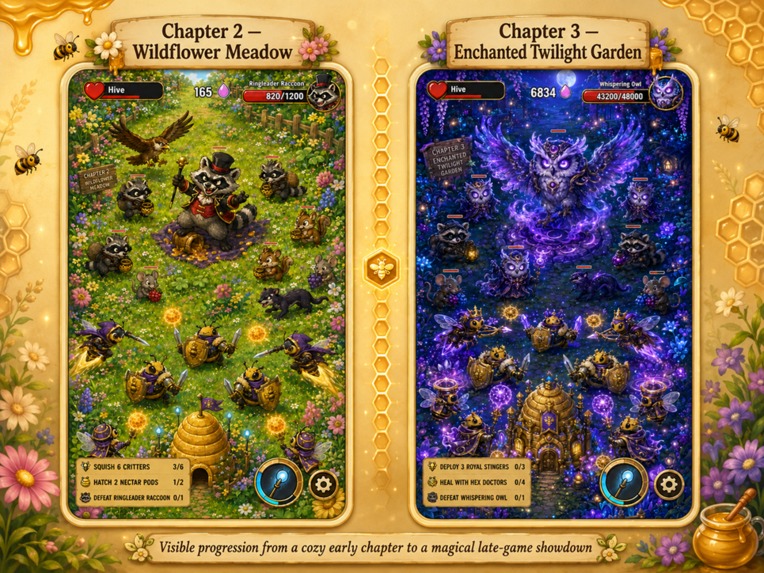
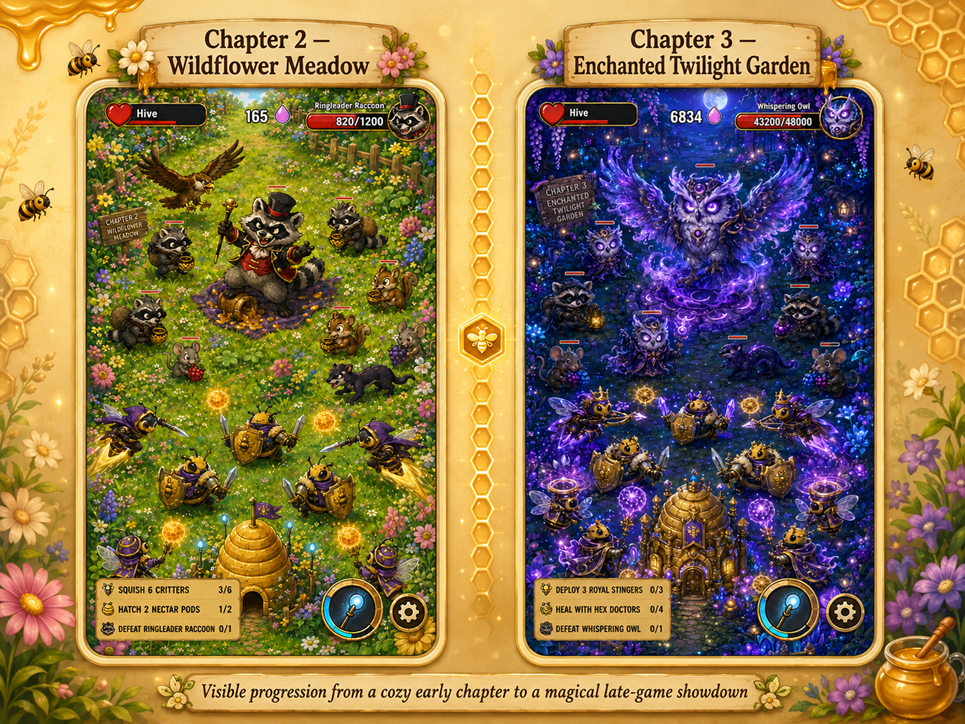
From there, we plan to expand the game ecosystem into Chapter 2: Lush Wildflower Meadow and Chapter 3: Enchanted Twilight Garden, which will allow us to fully implement the cooler lavender, sky blue, and twilight visual aesthetics from our color palette. We will also integrate the ultra-rare Screen Spells and Tomes system to create high-impact, dynamic combat variations, launch specialized automated progression nodes like Pod Cascade, and introduce a late-game Rebirth/Prestige System powered by a global "Eternal Nectar" currency. This roadmap ensures our master beekeepers can continuously optimize, protect, and expand their thriving empires for seasons to come.
Built With
- canva
- chatgpt
- gemini
- grok


Log in or sign up for Devpost to join the conversation.