Inspiration
What it does
Mwananchi Report: Turning Citizen Voices into Access to Justice
Inspiration
Mwananchi Report was inspired by the need for a more accessible way for people in Kenya to report incidents, preserve evidence, and seek support when they experience crime, abuse, or other violations. Reporting an incident should not be the end of the journey. People may also need to keep track of their cases, organize evidence, understand their rights, and find appropriate legal or support services.
I wanted to build a platform that brings these needs together instead of leaving citizens to navigate disconnected processes. My vision is to use technology and artificial intelligence to help people make their voices heard and make access to support easier.
What I Built
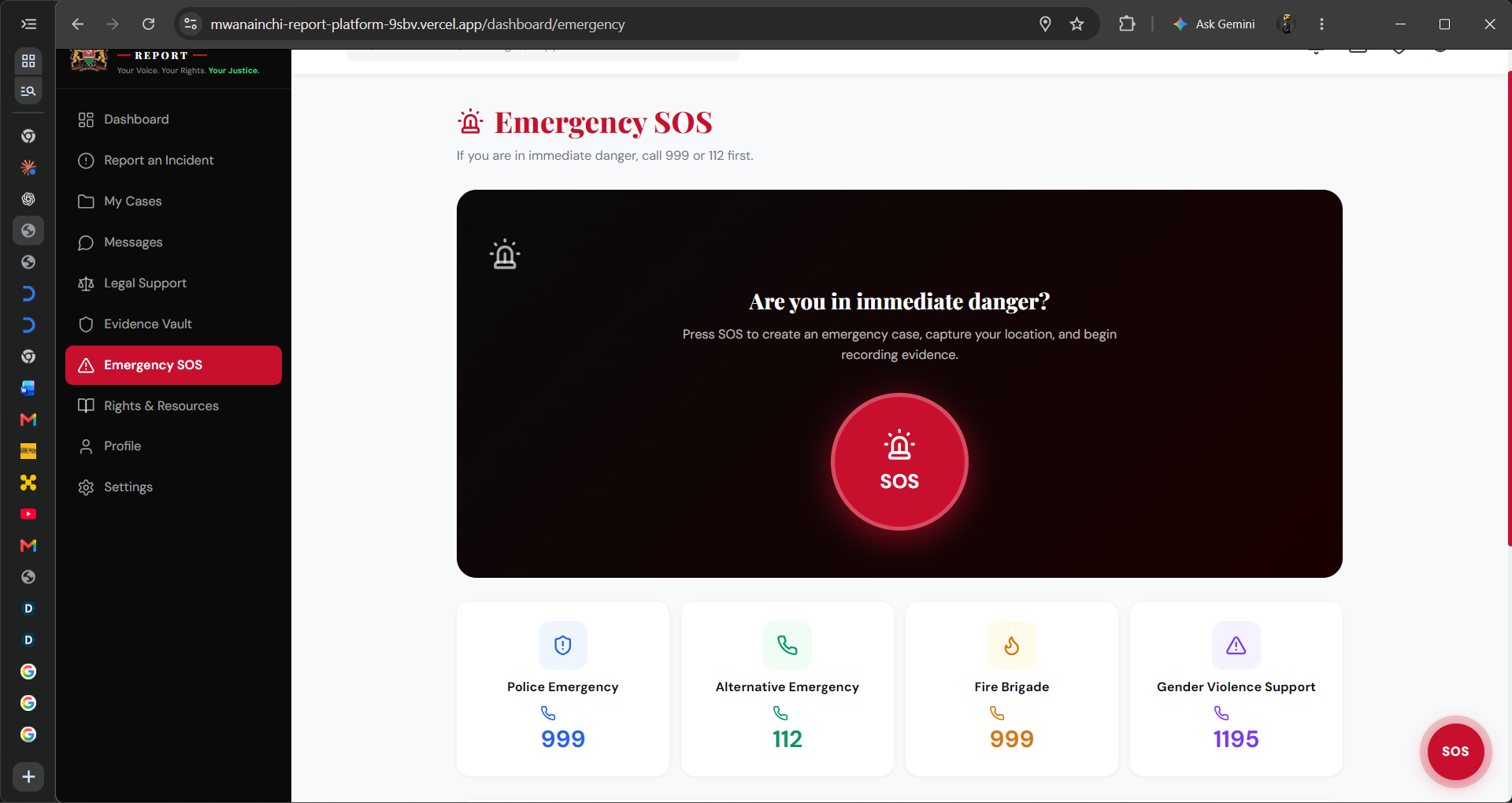
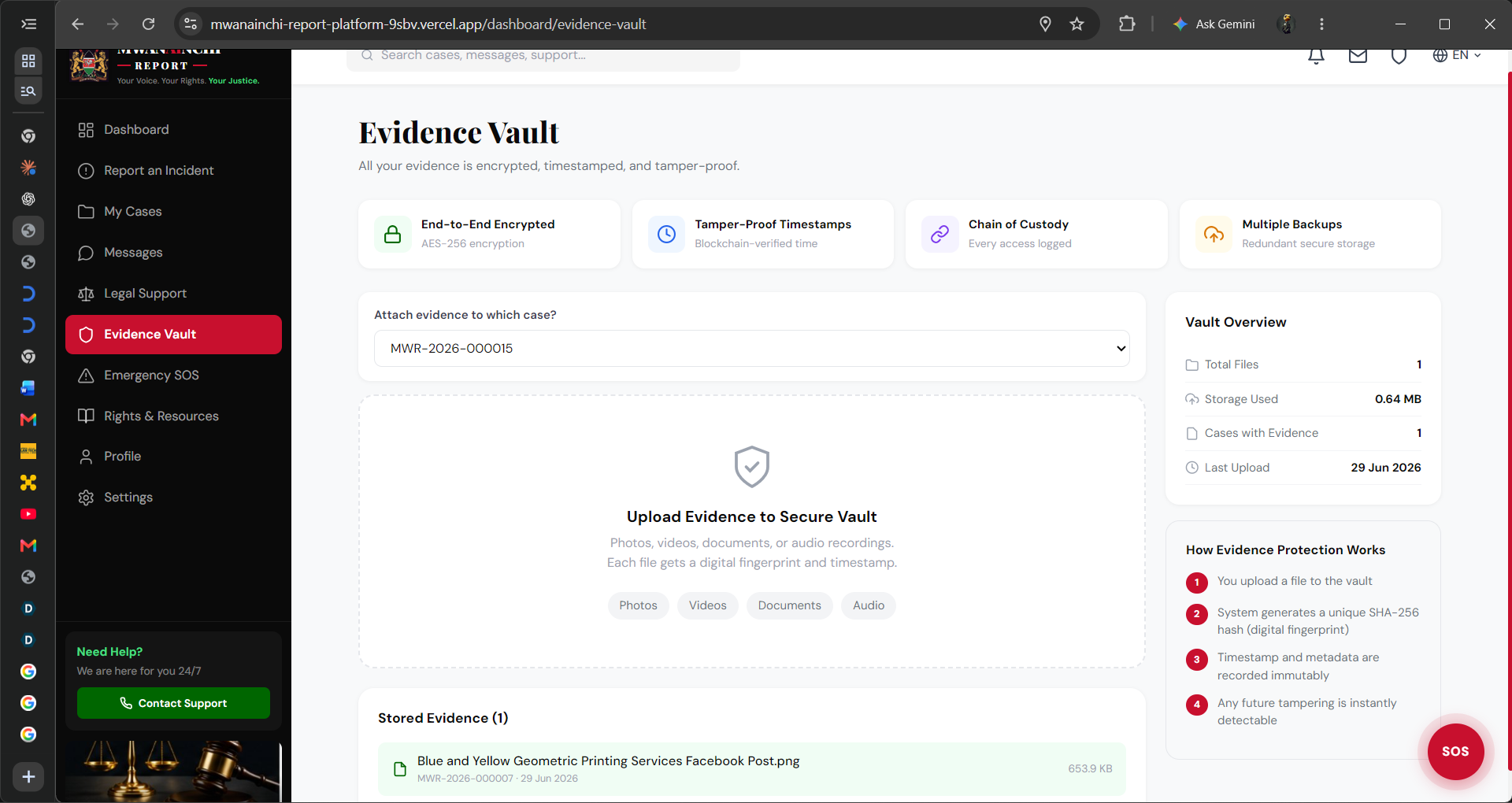
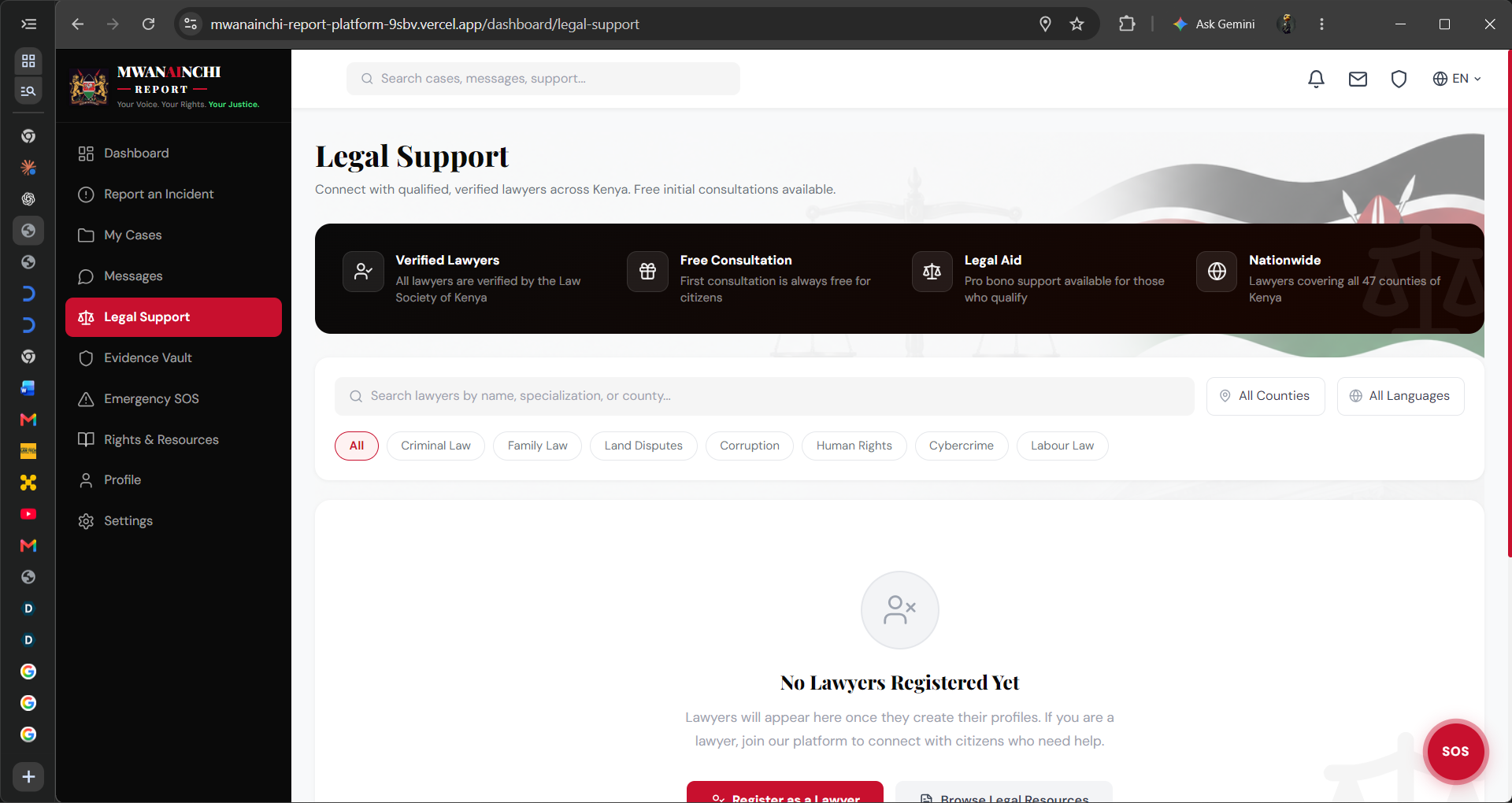
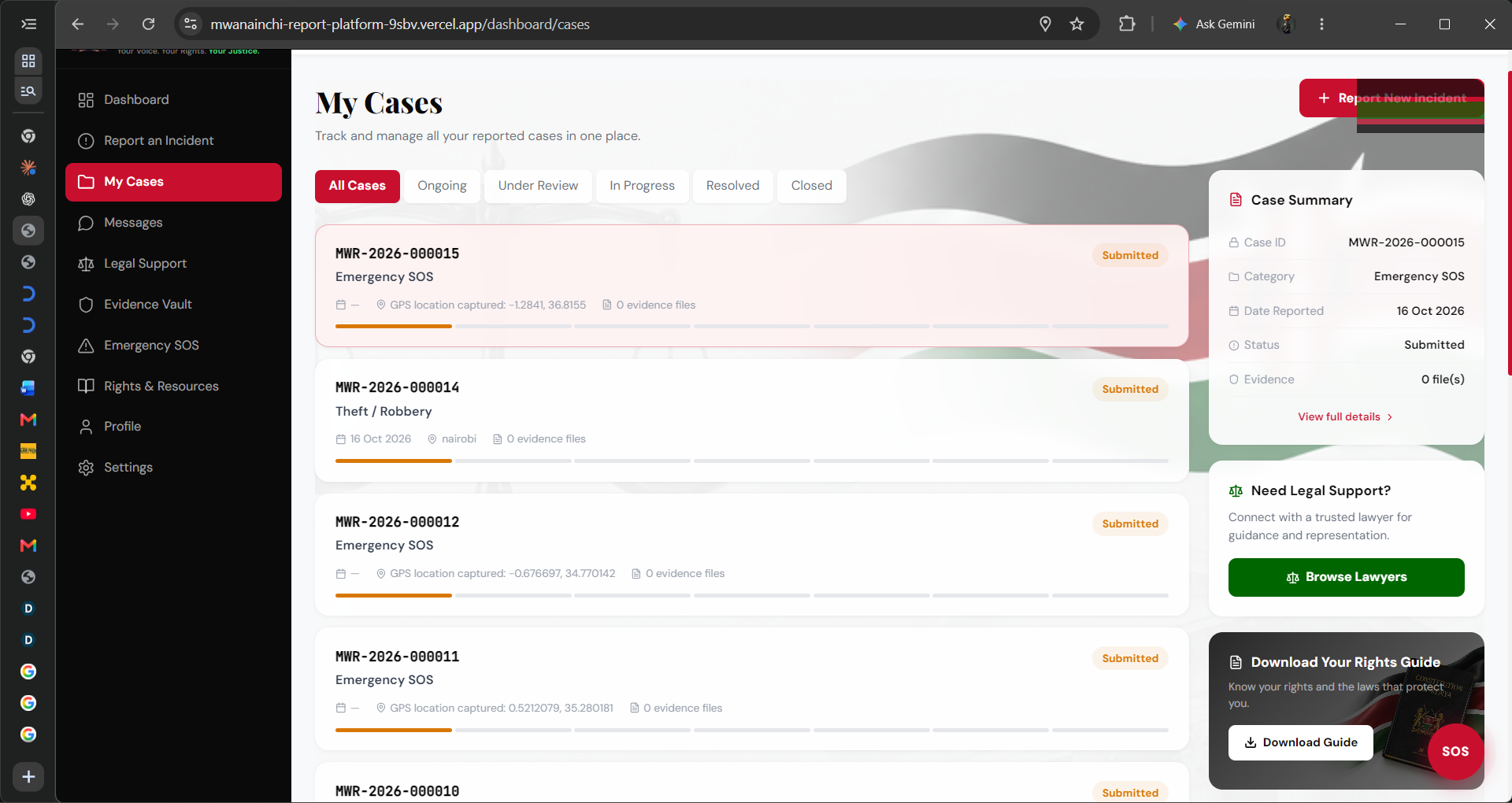
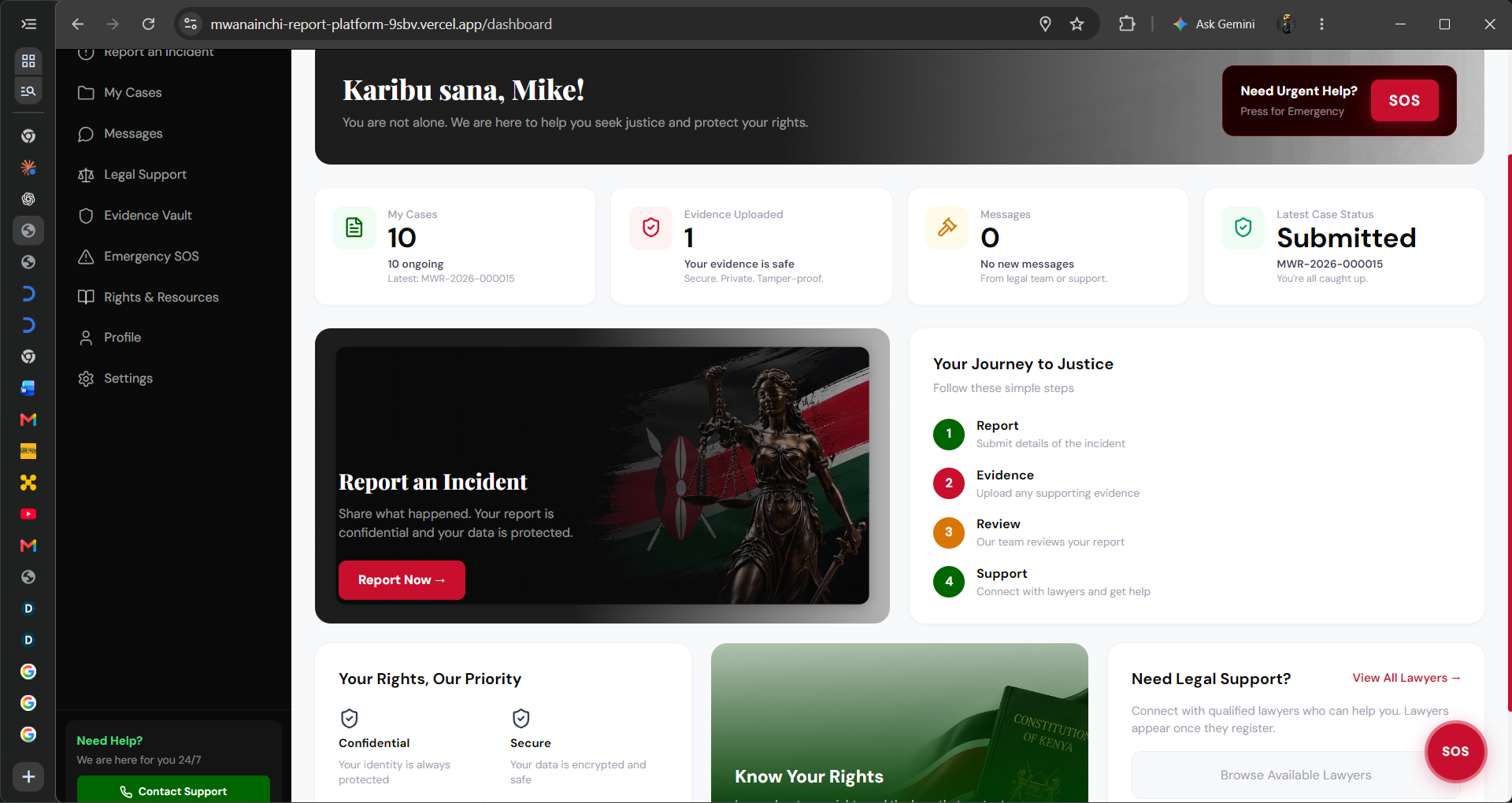
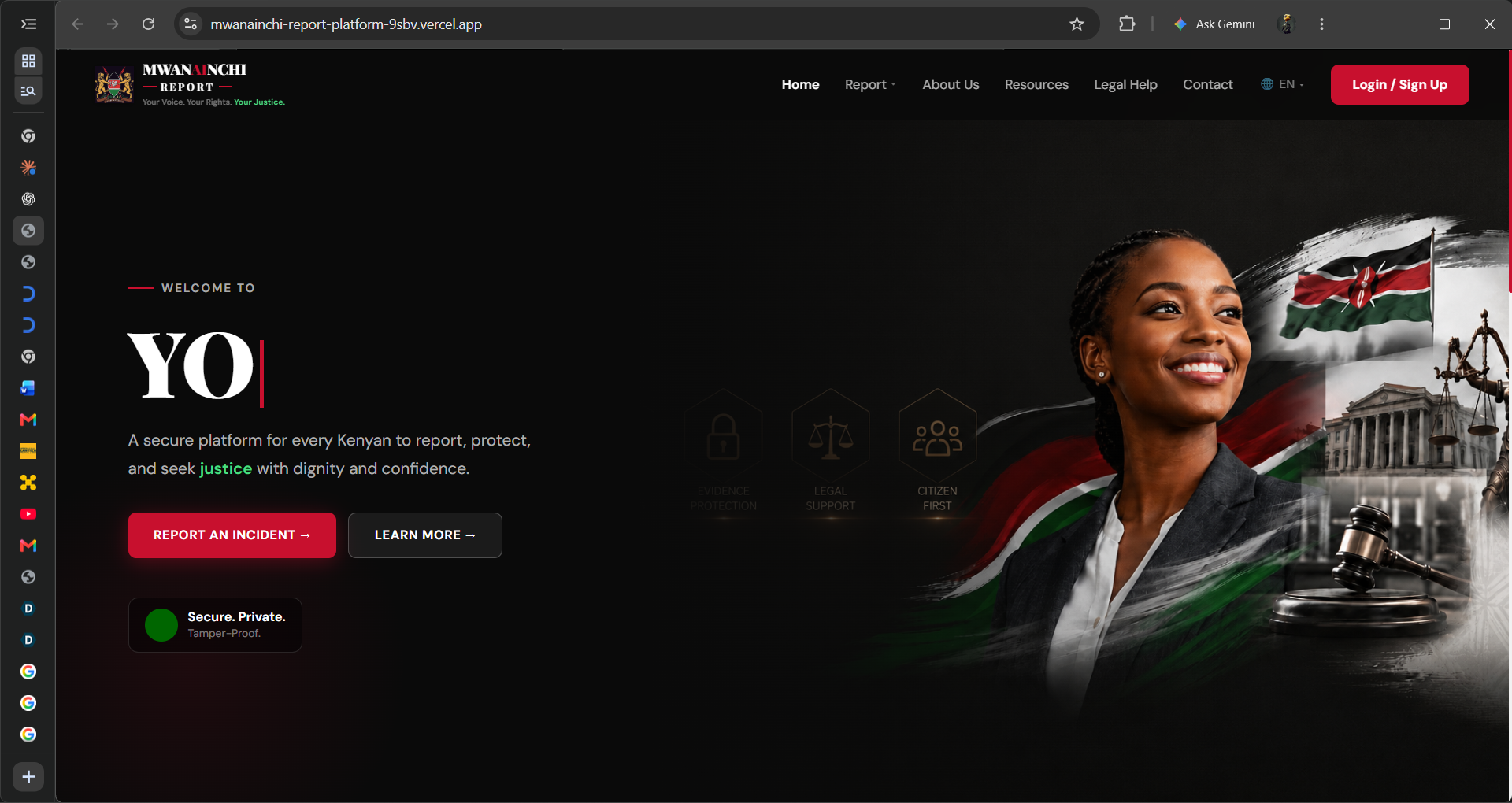
Mwananchi Report is an AI-powered citizen reporting and justice-support platform. It allows users to report incidents, preserve supporting evidence, track their cases, and access legal information and support features in one place.
I am also exploring how Meta's AI technologies, particularly Llama models, can improve the platform through conversational assistance, report summarization, classification, and multilingual guidance. My goal is to make the experience more accessible to people with different levels of digital literacy.
How I Built It
I developed the platform using Next.js, React, TypeScript, and Supabase. These technologies provide the foundation for the user interface, application logic, data storage, and authentication. I organized the application into features such as incident reporting, case management, an evidence vault, legal support, messaging, and emergency assistance.
Building the platform has involved designing the user experience, connecting the application to its backend, and working through technical issues involving database schemas, authentication, and TypeScript integration. I have also worked toward deploying the application online so that it can eventually be tested by real users.
What I Learned
This project has taught me that building a meaningful technology product involves much more than writing code. A solution must address a real problem, provide a clear user experience, protect sensitive information, and work reliably beyond a developer's computer.
I have learned to approach software development incrementally, troubleshoot backend and frontend integration issues, and think more carefully about how AI can support people without replacing human judgment. I have also learned that trust, privacy, and accessibility are essential when developing technology for sensitive situations.
Challenges and Next Steps
One of my biggest challenges has been integrating multiple features into a reliable application while working within limited resources as a student developer. Resolving database and typing errors, connecting backend services, and preparing the application for deployment have required persistence and continuous testing.
Mwananchi Report is still developing, and I have not yet established formal pilot results or measured its impact with real users. My next step is to validate the platform with users and relevant organizations, improve its reliability and security, and evaluate how AI can make reporting and access to support easier.
Through this project, I hope to demonstrate how technology developed in Kenya can address local challenges and grow into a solution that serves communities across the region.
How we built it
Challenges we ran into
Accomplishments that we're proud of
What we learned
What's next for mwanainchi report
Built With
- artificial
- css
- intelligence
- javascript
- next.js
- postgresql
- react
- supabase
- tailwind
- typescript
- vercel

Log in or sign up for Devpost to join the conversation.