-
-
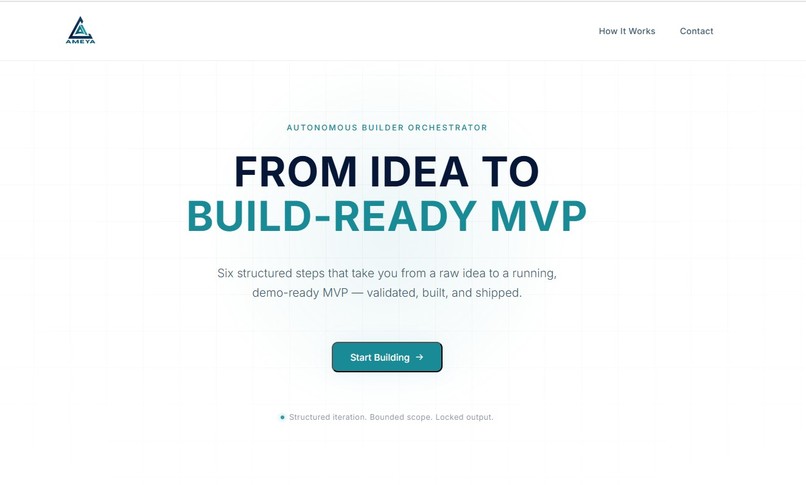
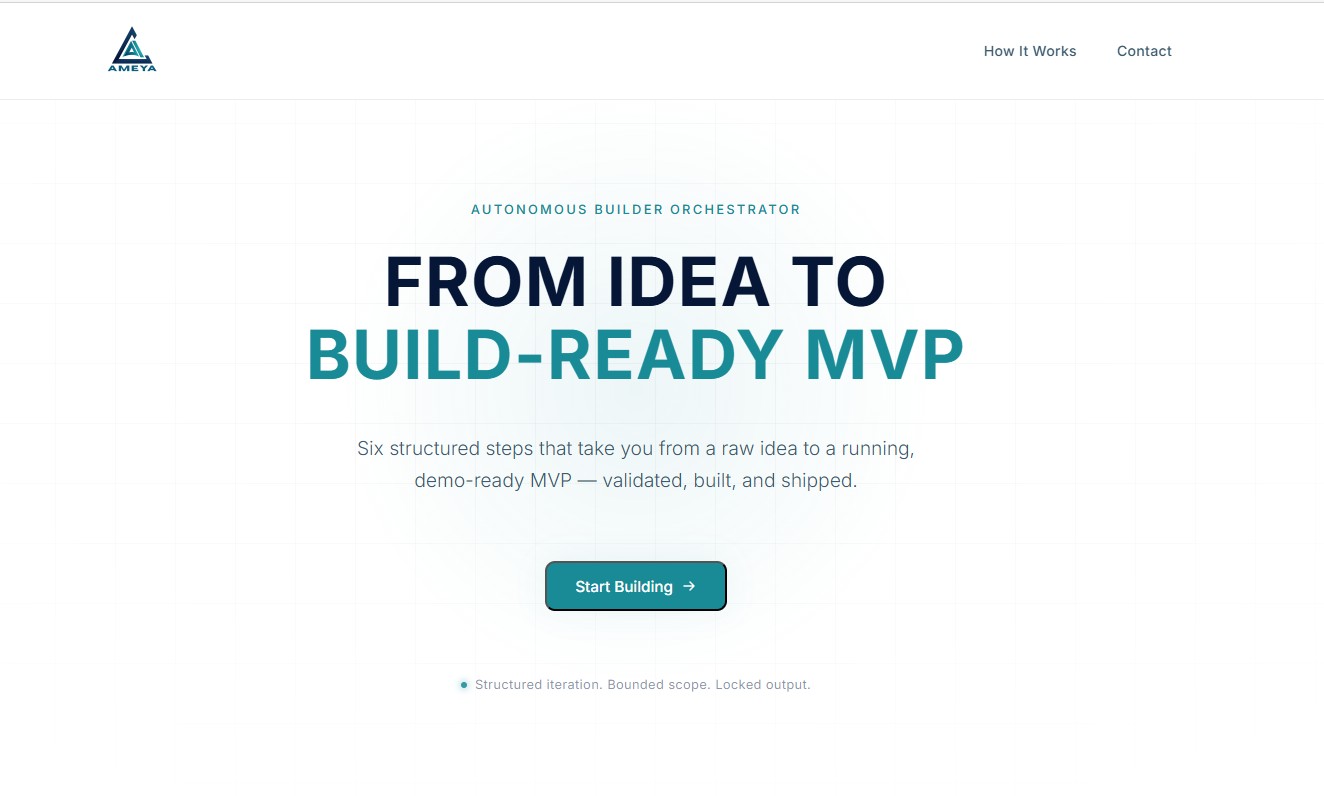
landingpage
-
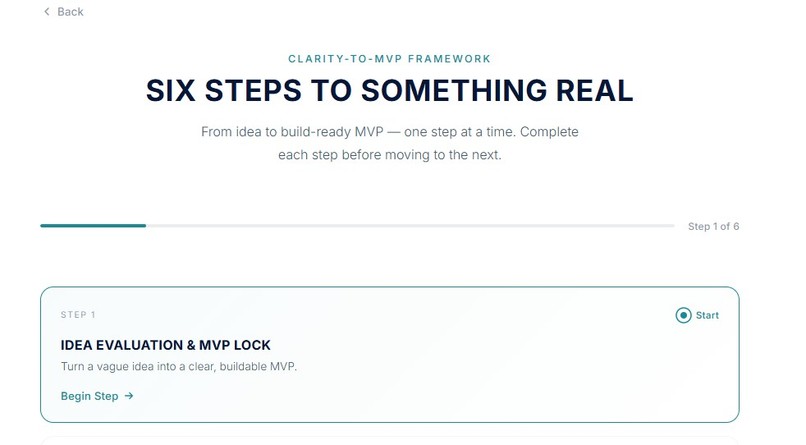
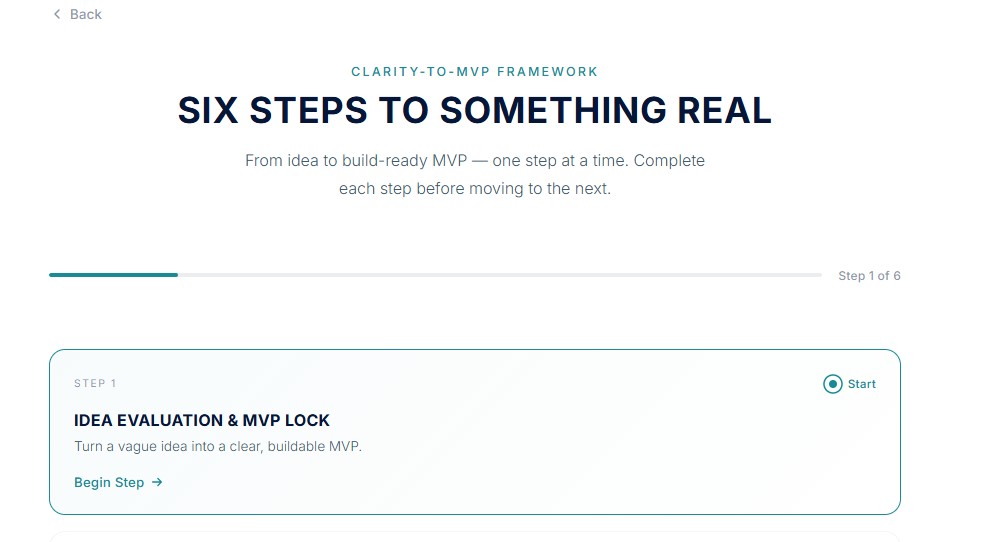
6 step framworkpage
-
-
-
Inspiration
The project was born out of frustration.
I found myself - and many others - stuck in conversations about ideas without real clarity. We had ambition. We had goals. But we lacked structure. Every discussion expanded the scope instead of narrowing it.
There was no disciplined path from: Idea -> Clarity ->Execution
That gap inspired me to create AI Builder Practice - a structured way to think, validate, and build. Over time, I realized the process itself could become autonomous. That insight led to building this multi-agent orchestration system.
What it does
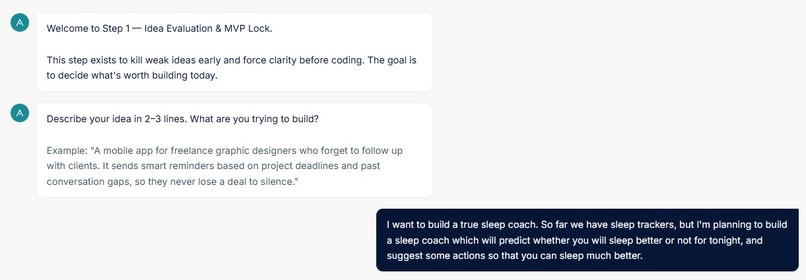
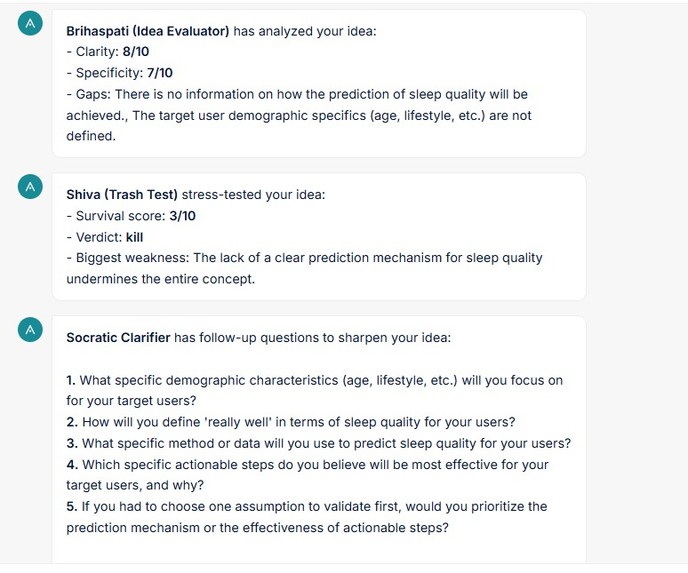
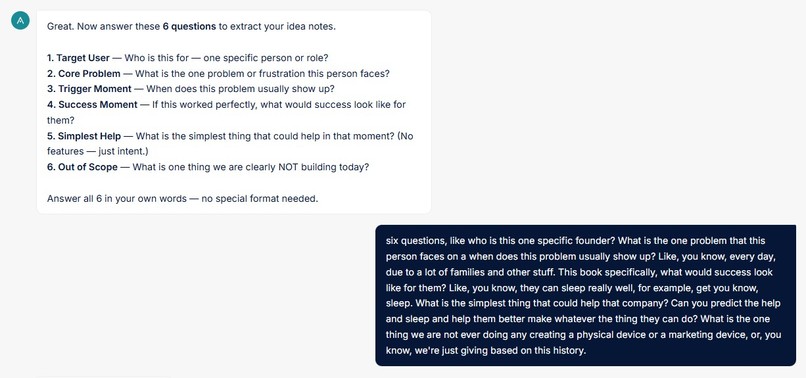
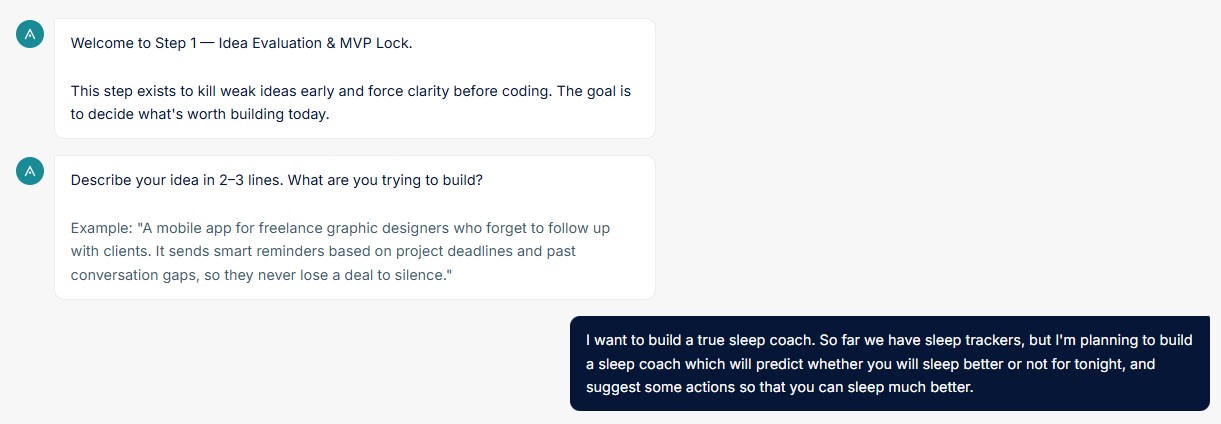
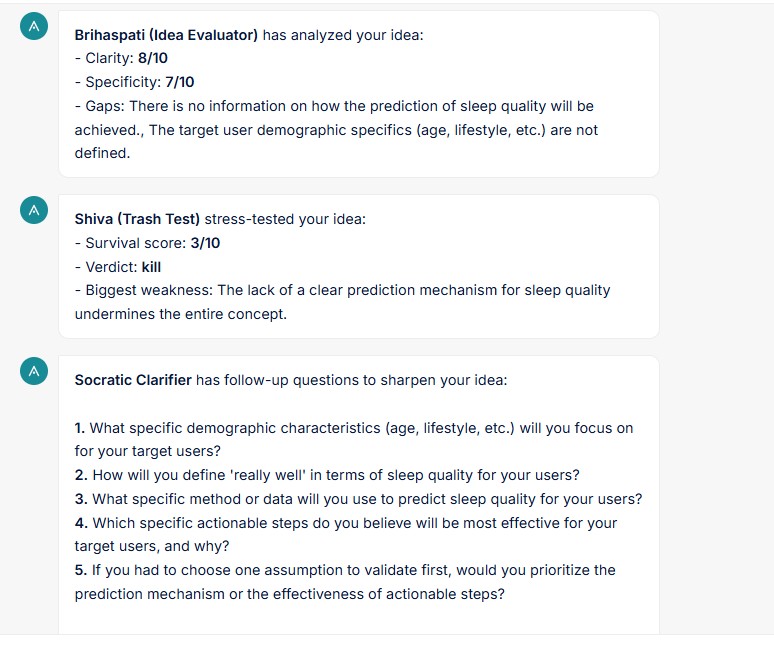
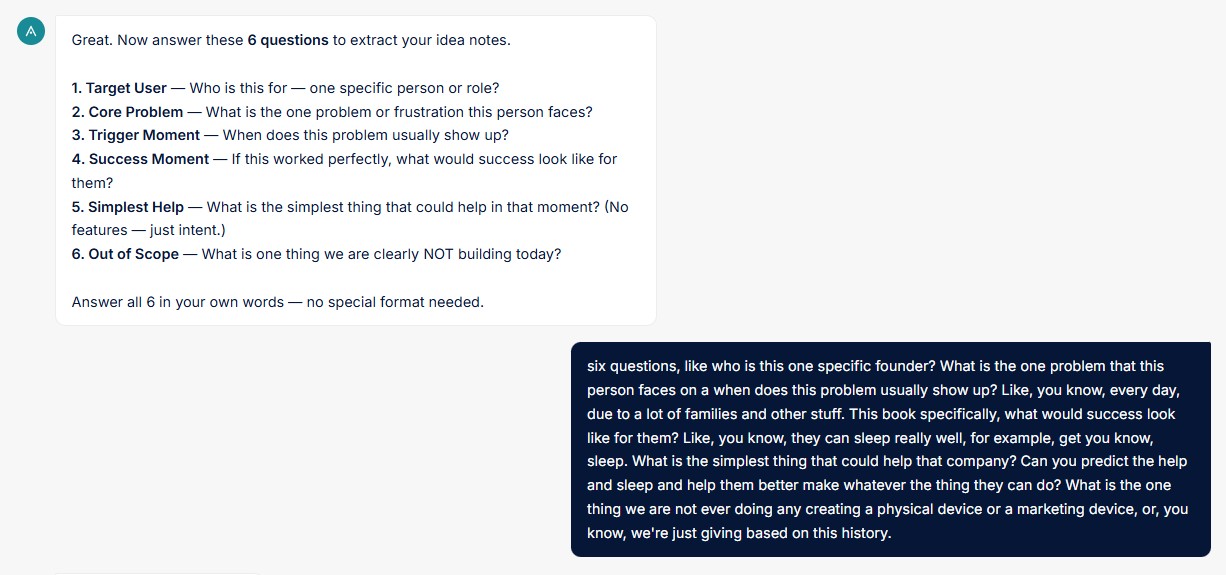
MVP Forge currently implements Step 1 of the six-step framework - structured idea validation. It turns vague startup ideas into tightly scoped, build-ready MVP definitions using disciplined evaluation and bounded refinement.
How I built it
Built it as a multi-agent system where each agent handles one thinking role - clarity scoring, stress testing, clarification, and MVP lock generation - coordinated by an autonomous orchestrator.
Challenges we ran into
Cloud deployment and service configuration were the biggest technical hurdles. Designing meaningful survival scoring without overcomplicating the system was another challenge.
Accomplishments that we're proud of
Successfully converted a manual builder practice into an autonomous validation engine. Step 1 is now structured, versioned, and iteration-controlled.
What we learned
Founders don’t need more ideas - they need enforced clarity. Limiting scope and refinement rounds dramatically improves execution readiness.
What's next for MVP Forge
Implement the remaining build steps (architecture, bootstrap, feature loop, stabilization, and demo) and simplify the framework into fewer, more powerful phases.
Built With
- css
- express.js
- javascript
- modulate
- mongodb
- node.js
- openai-api
- react
- render
- tavily-api
- vite

Log in or sign up for Devpost to join the conversation.