MutualGPU
Turn spare GPUs into shared opportunity.
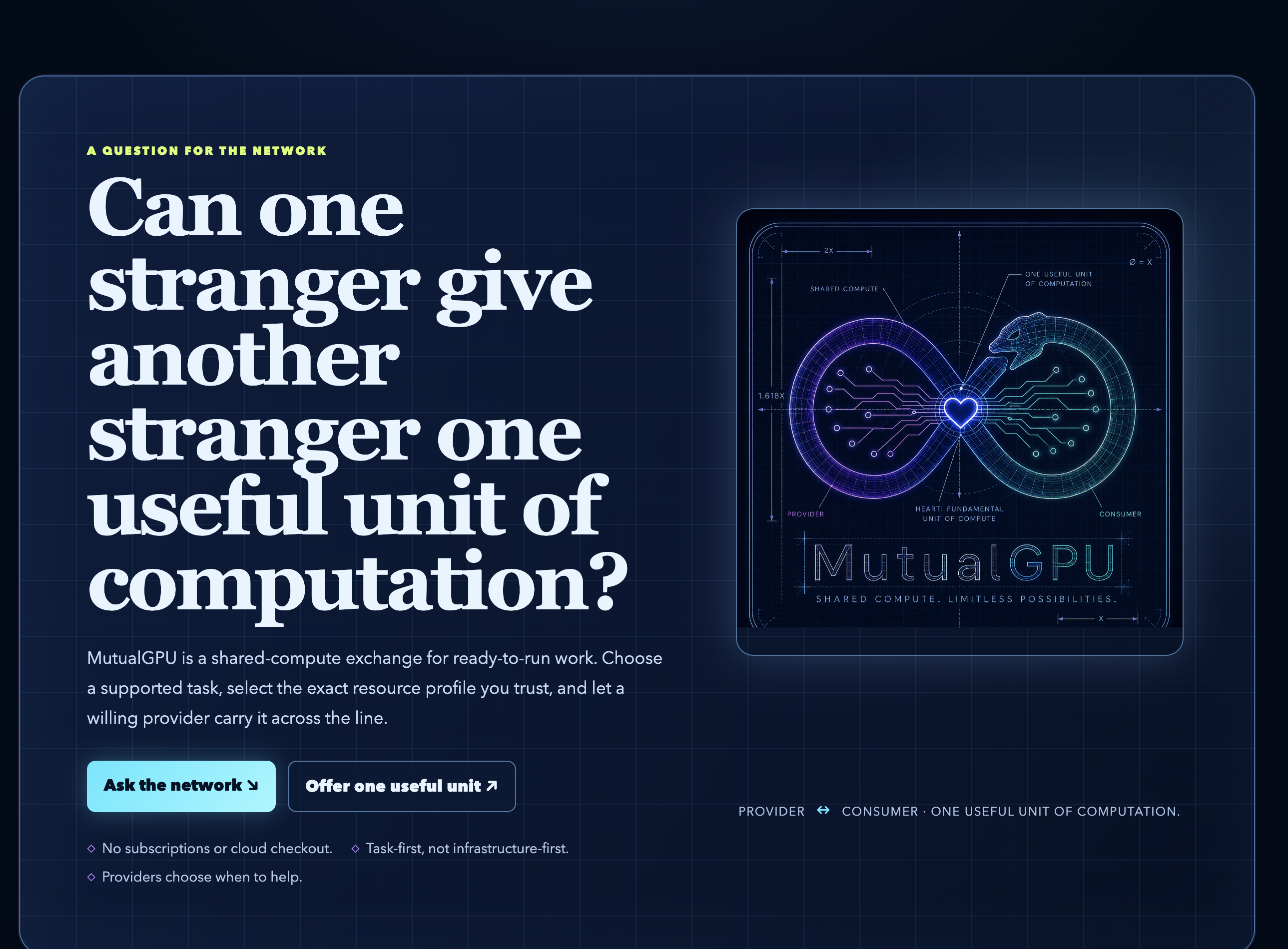
MutualGPU is a decentralized, opt-in compute network that lets people donate unused GPU capacity to help others create.
As AI workloads become more demanding, access to compute is becoming one of the largest barriers to creativity. Billions of people can imagine, design, and build—but many can’t afford the hardware needed to run modern AI models.
At the same time, millions of gaming PCs, workstations, and AI rigs sit idle for much of the day.
MutualGPU connects the two.
With a single click, users can either:
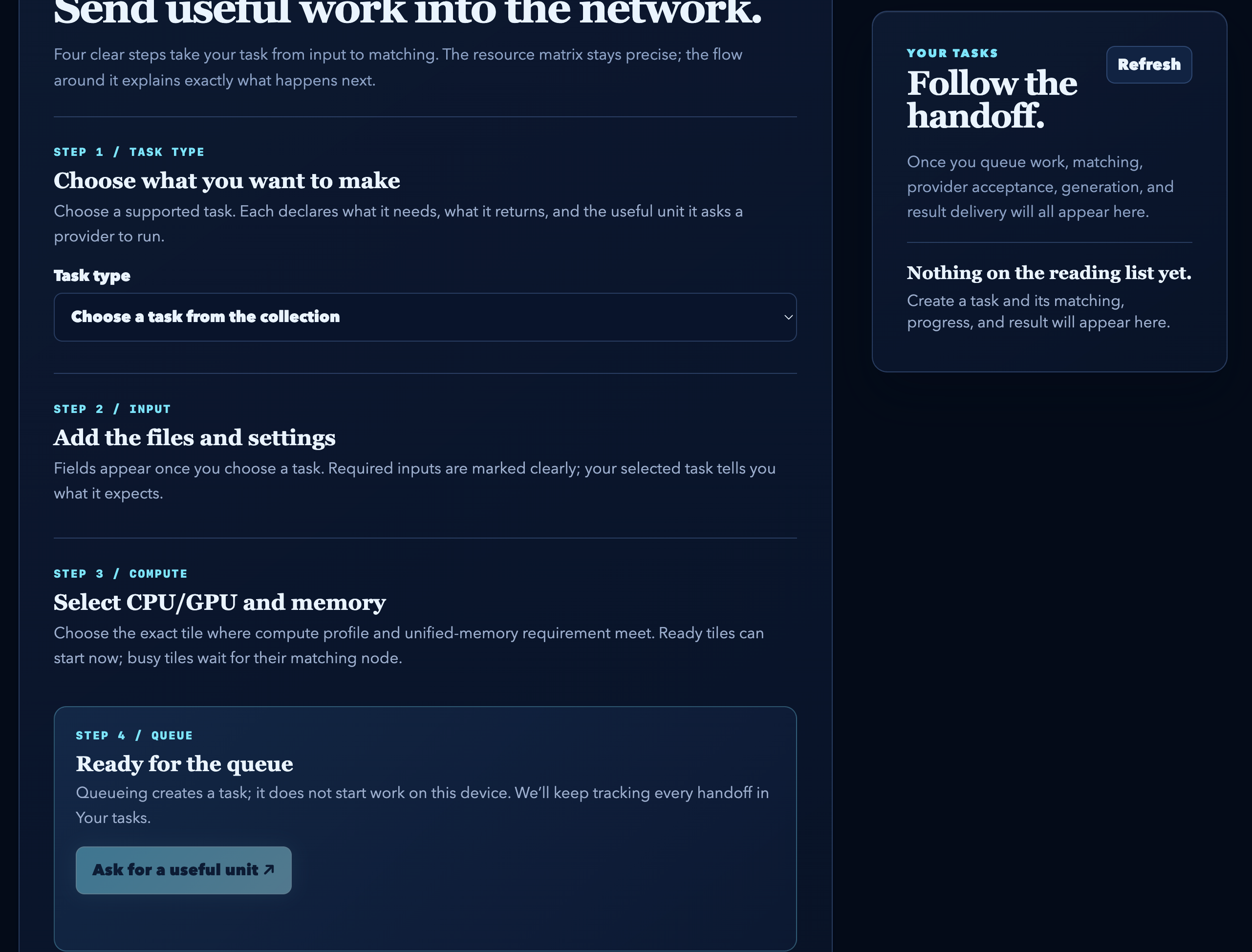
- Generate on MutualGPU when their own device isn’t powerful enough.
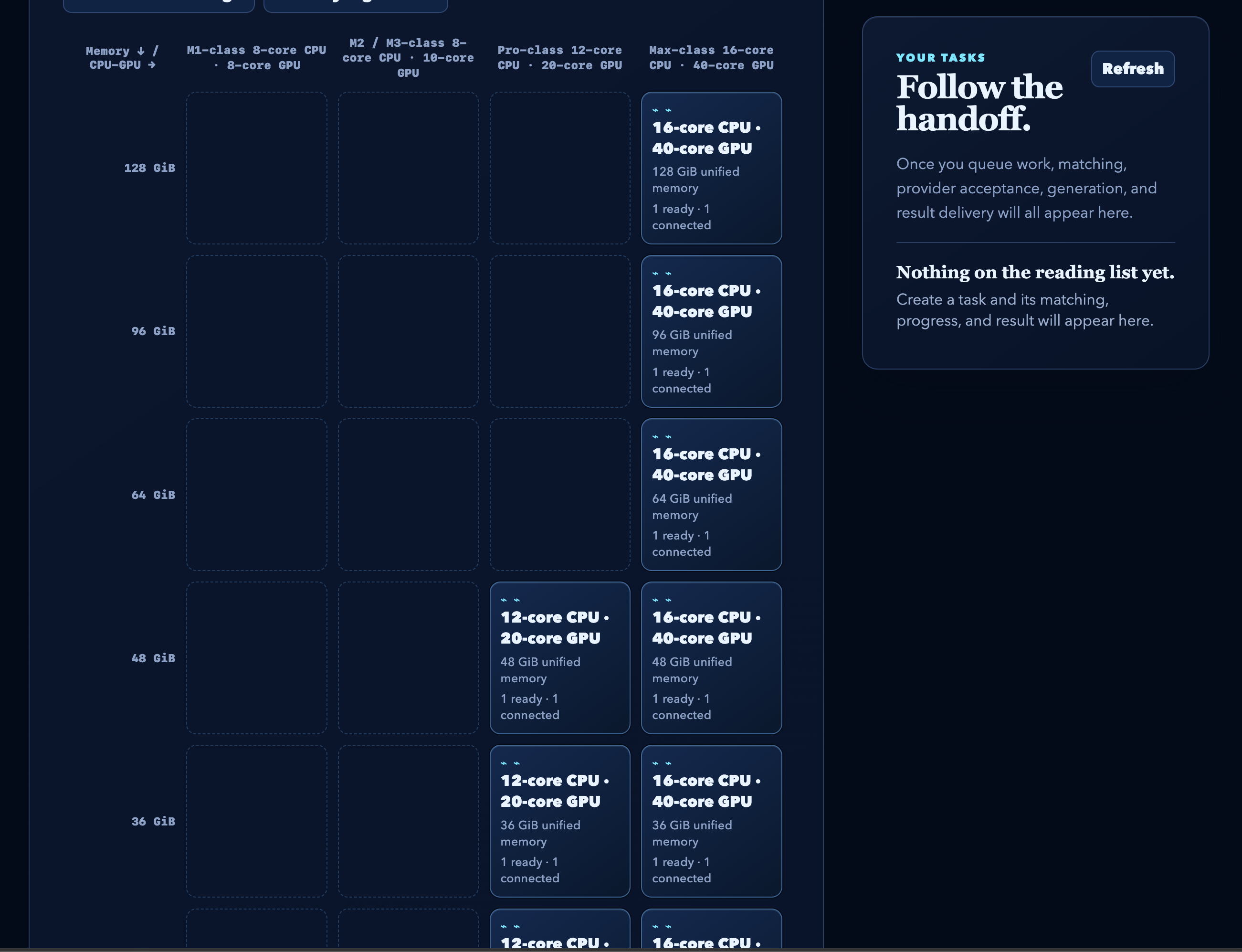
- Host on MutualGPU and donate spare compute to others whenever they’re away from their computer.
Our first integration powers AI3D’s browser-native 3D generation pipeline, allowing creators to generate complex 3D assets even on devices that couldn’t run the workload locally.
We believe the fundamental unit of compute shouldn’t be a datacenter—it should be people helping people.
By transforming idle GPUs into a global cooperative network, MutualGPU makes advanced AI creation more accessible, more sustainable, and more human.
One of the most surprising parts of building MutualGPU was how we used GPT-5.6.
Instead of asking it to generate large amounts of code from scratch, we treated it as a semantic compiler with extremely tight feedback loops.
For the NetCats integration, we first built a small, well-defined SDK with explicit lifetime semantics, scopes, fibers, and ownership rules. We then iterated with GPT-5.6 until every API was unambiguous and every concept had a single correct way to be used.
Because the interface was designed to minimize ambiguity, GPT-5.6 was able to integrate the SDK into real applications with essentially 100% reliability. Rather than hallucinating architecture, it consistently mapped existing asynchronous code onto the NetCats model, preserving logical lifetimes while making the runtime observable.
This changed how we think about AI-assisted software engineering.
The limiting factor wasn’t the model’s intelligence. It was the quality of the abstraction presented to it.
Once the SDK became sufficiently composable and self-consistent, GPT-5.6 behaved less like an autocomplete system and more like a highly reliable integration engineer.
That insight carries into MutualGPU itself.
Rather than building a bespoke integration for every AI application, we’re designing MutualGPU as a small set of composable primitives with explicit semantics. Our goal is for GPT-5.6 and future models to reliably integrate distributed compute into existing applications with minimal human effort, just as they now reliably integrate NetCats into asynchronous .NET applications.
In other words, we’re not just building infrastructure for humans to program. We’re building infrastructure that is easy for AI to understand, reason about, and extend. That design philosophy dramatically increases the leverage of both developers and AI agents.
Check out the functional programming tech which guarantees 100% reliability @ https://devpost.com/software/netcats
Built With
- gpt5.6


Log in or sign up for Devpost to join the conversation.