-
-
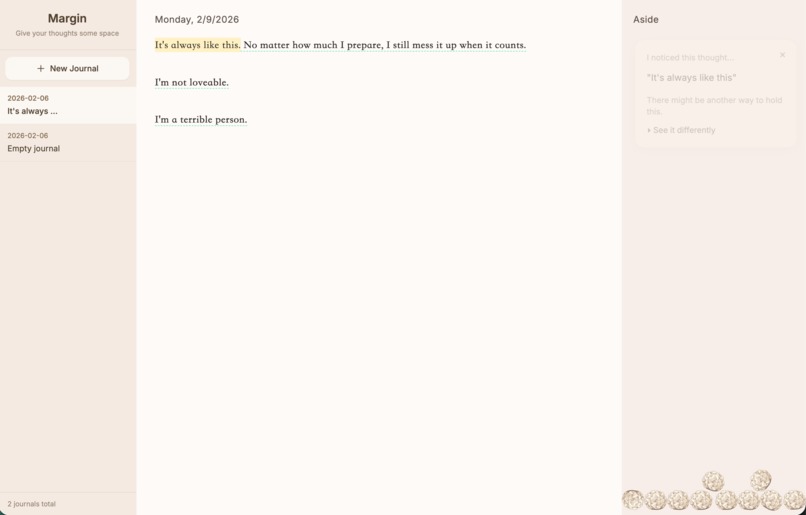
Interactive website
-
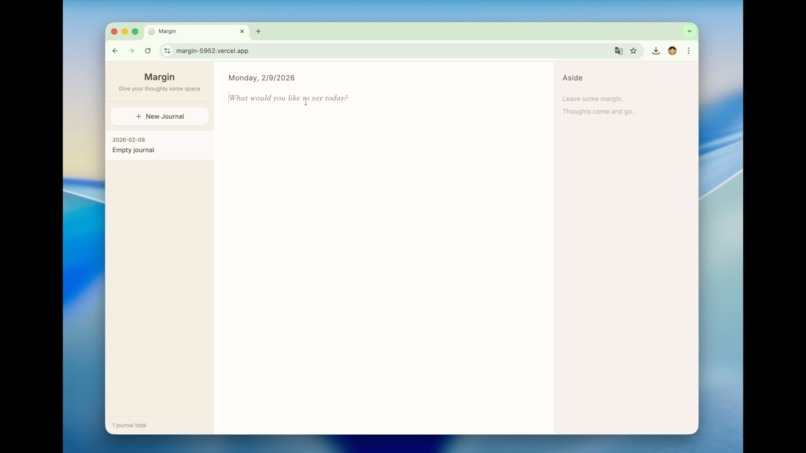 GIF
GIF
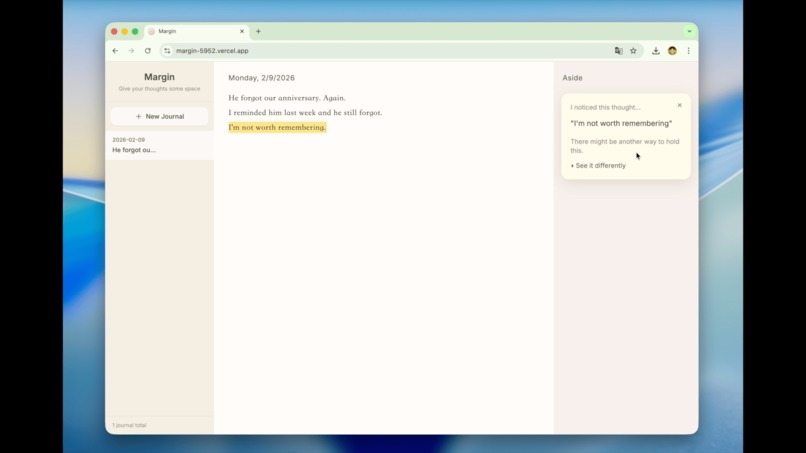
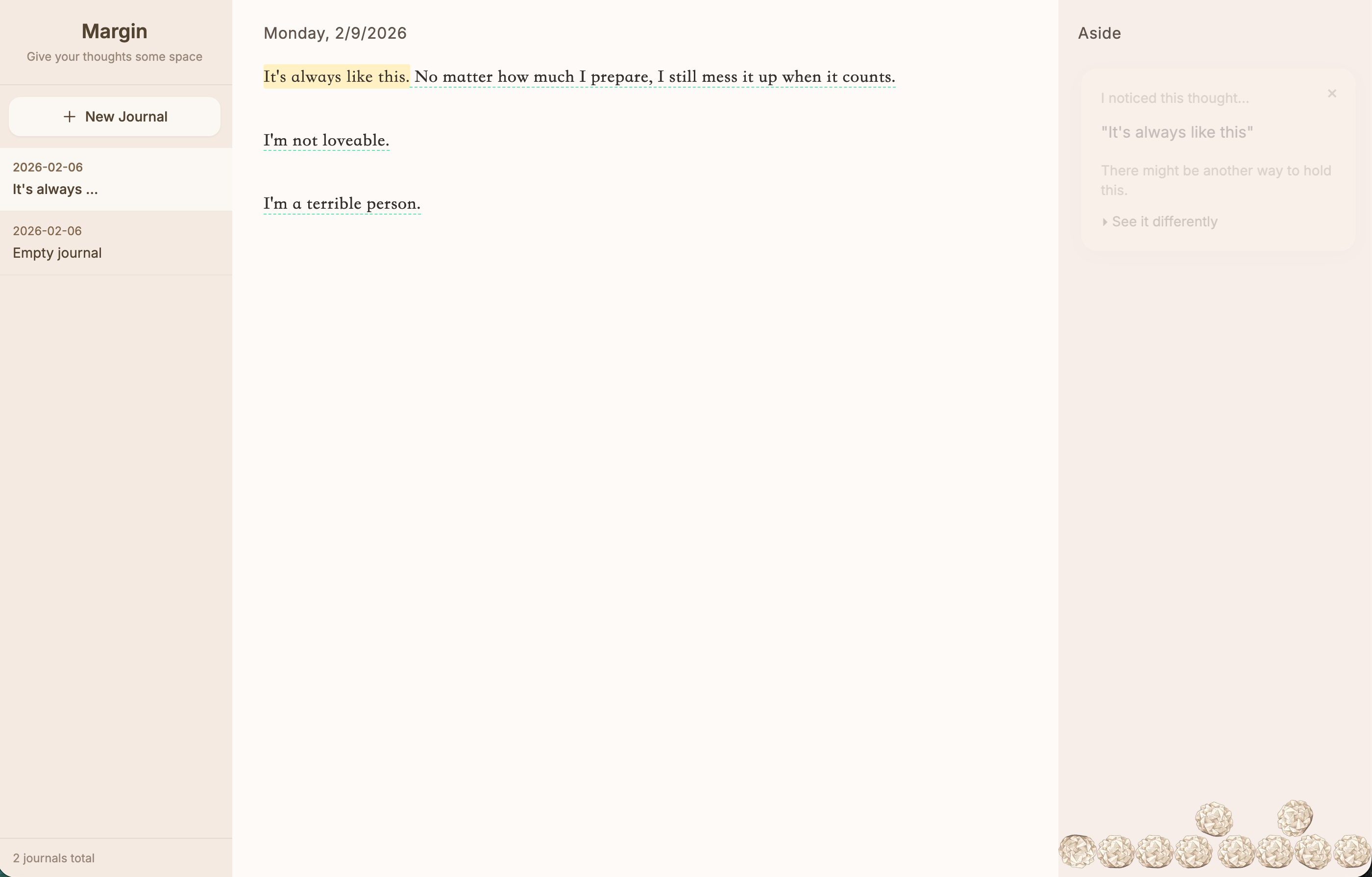
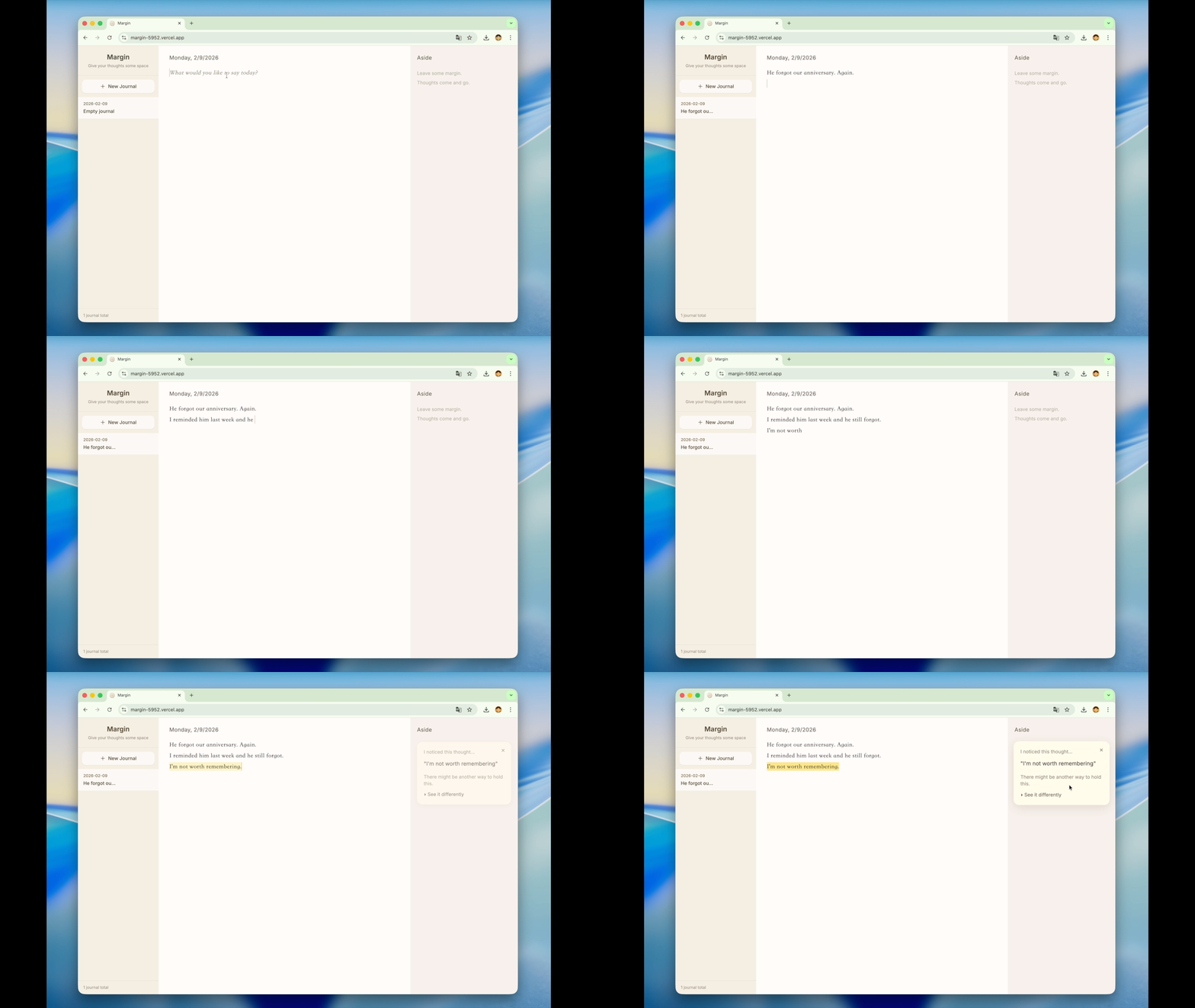
AI detects cognitive fusion in real time as you write. Fused thoughts are softly highlighted, and a Thought Observation Card appears
-
 GIF
GIF
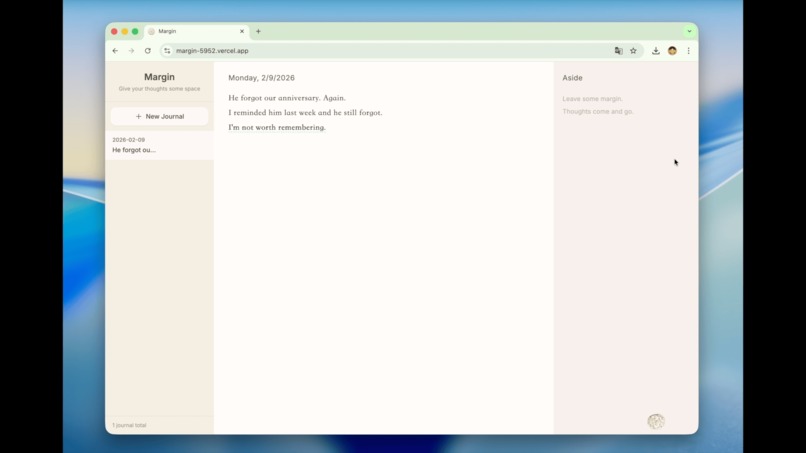
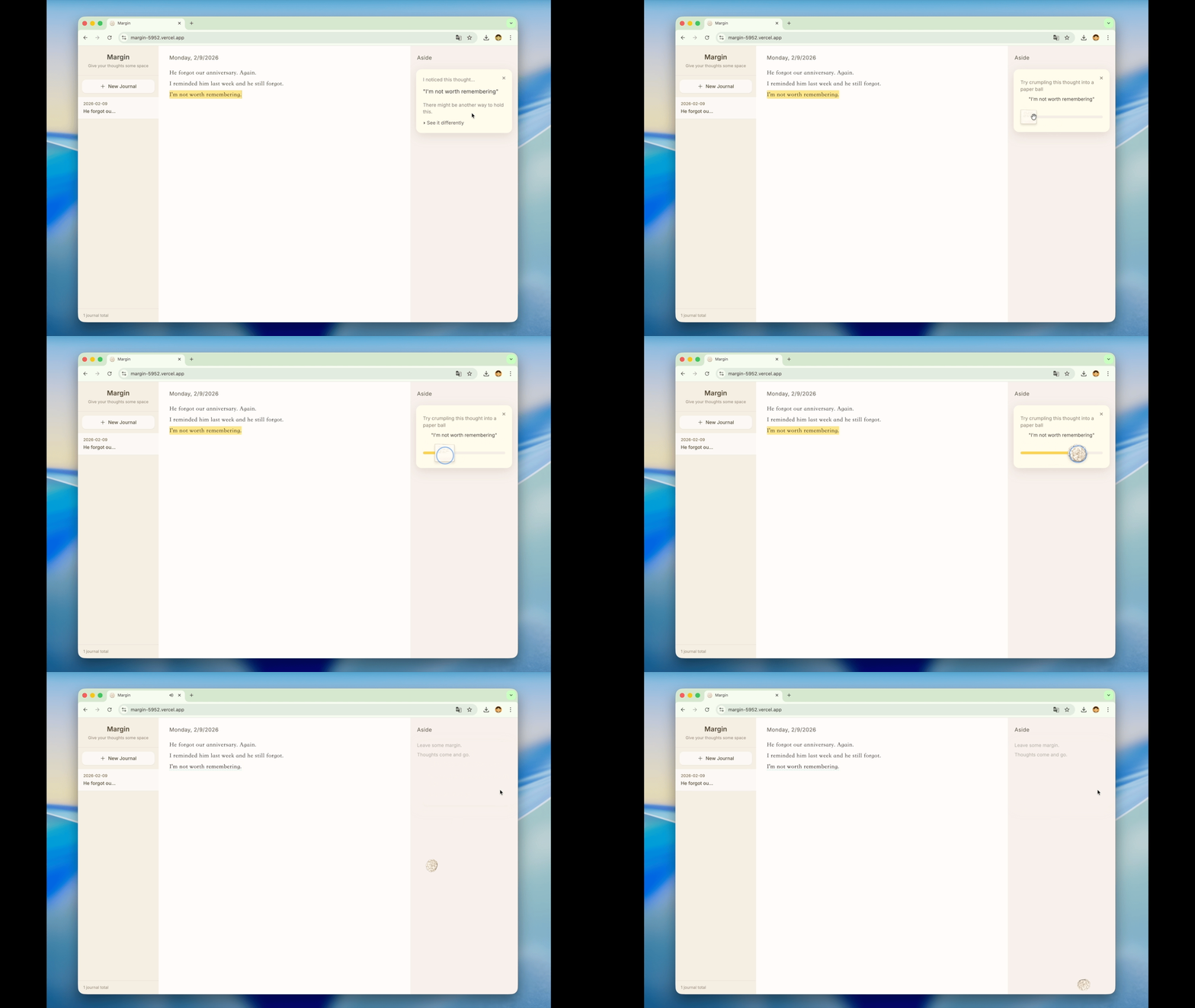
Turn that thought into something physical. Drag the crumple slider, hear the paper crush, and watch it bounce away.
-
 GIF
GIF
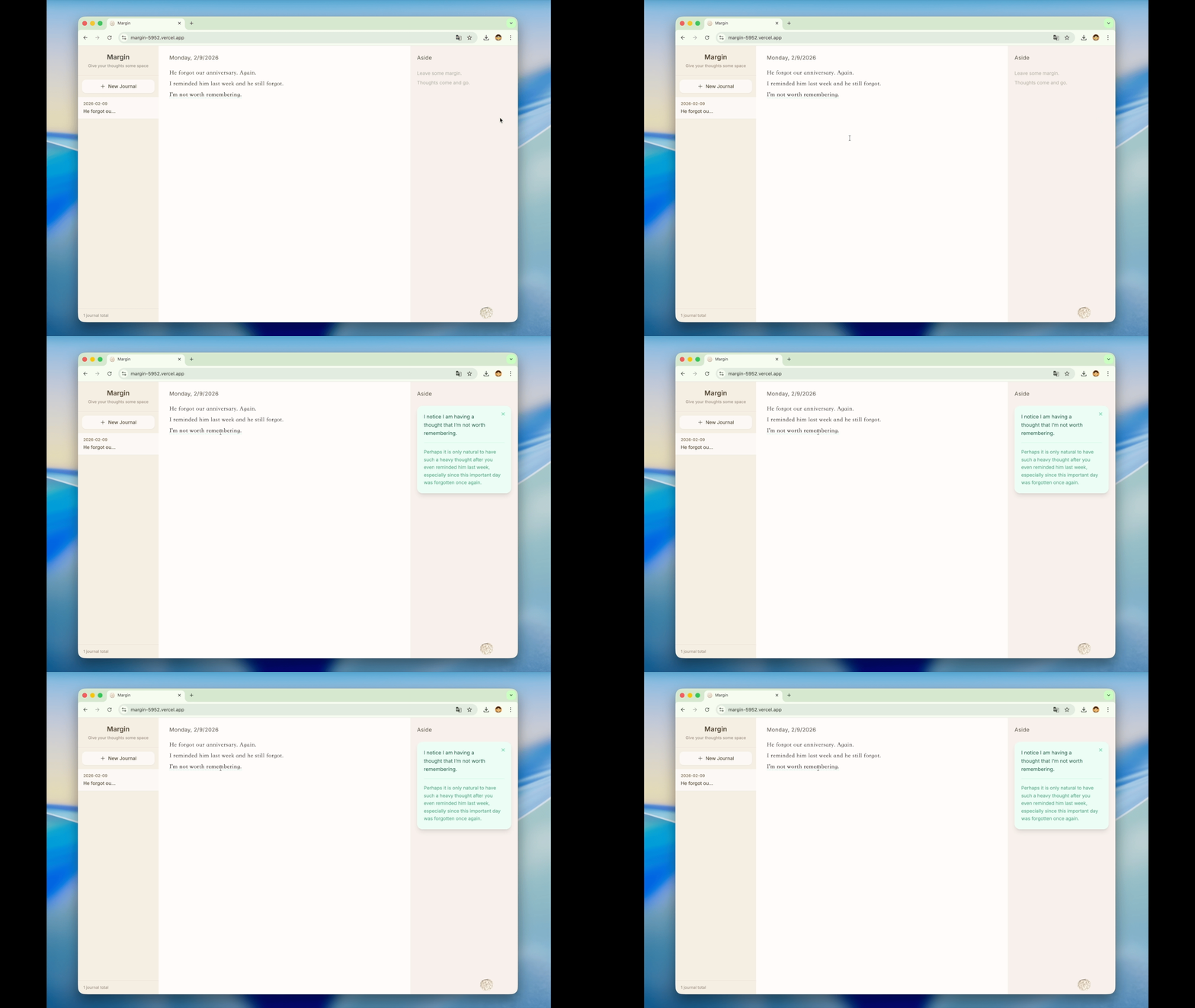
Completed thoughts become green anchors in your journal. Hover to reveal a Perspective Card.
Margin
A quiet companion for your thoughts · Built with Gemini · Local-first
The Problem
When someone writes "I'm a failure" in their journal, most apps just... save it. The thought sits there, permanent and heavy, reinforcing itself every time they read it back.
We wanted to build something different: a space where you can look at your thoughts, not from them.
What Margin Does
Margin is a journaling app that helps you notice when you're fusing with negative thoughts — and gently create distance from them. It's built on the concept of cognitive defusion: the ability to step back and see a thought as just a thought, not a fact.
Silent Detection
As you write, Margin quietly analyzes each sentence using Gemini. It distinguishes between everyday thoughts ("Remember to call Mom") and cognitive fusions ("I'm worthless"). No interruptions, no pop-ups — just a subtle highlight appears in the margin.
The Paper Ball
When you're ready, you can interact with a highlighted thought through a simple gesture: crumpling it into a paper ball. This isn't about deleting the thought — it's about changing your relationship with it. You drag, the paper crumples, and the original thought transforms into a reframed perspective:
"I'm a failure" → "I notice I'm having the thought that I'm a failure"
The paper ball then falls to the bottom of the screen, joining others — a growing collection of thoughts you've stepped back from.
Warmth, Not Advice
Powered by Gemini, Margin generates a single line of validation — not generic affirmations, but something that reflects what you actually wrote. The tone is inspired by Animal Crossing villagers: present, accepting, never preachy.
"Being criticized in front of everyone — that must have stung."
How We Built It
Stack: Next.js 14, Tailwind CSS, Gemini 3.0 Flash
Privacy: All journal entries stay in your browser (localStorage). Our API is stateless — we analyze and forget.
AI Architecture:
/api/detect  → Classifies sentences as fusion or not
/api/reframe → Generates defused perspective
/api/comfort → Creates contextual validation
Key Design Decisions:
- No streaks, no gamification, no confetti
- Ambient intervention (highlights appear silently)
- Physical metaphor (paper → crumple → ball → collection)
Challenges
Finding the Right Voice
Early versions sounded either too clinical or too fake-cheerful. We tuned prompts to find a voice that's warm but doesn't pretend to be human.
Validation Without Agreement
We wanted to acknowledge emotions without reinforcing distortions. The breakthrough: stop trying to "fix" thoughts, just see the situation behind them.
Making the Abstract Tangible
Cognitive defusion is powerful but invisible. The paper ball metaphor came from asking: what does it physically feel like to let go of a thought?
What We Learned
Psychological flexibility isn't about positive thinking. It's about holding thoughts lightly — seeing them as mental events rather than truths.
Small interactions matter. Dragging a slider, watching paper crumple, seeing a ball fall — these micro-moments create a felt sense of "letting go" that words alone can't achieve.
Margin — Leave Some Margin for Your Mind to Breathe.
Built With
- antigravity
- gemini
- matter.js
- next.js14
- react18
- tailwindcss
- typescript
- vercel


Log in or sign up for Devpost to join the conversation.