Inspiration
As a lifelong hobby musician self-teaching guitar, I grew frustrated with one-size-fits-all music theory resources. Most platforms ignored my instrument or learning pace, so I set out to build something that adapts to how I learn – and how millions of other self-taught musicians in North America and Europe learn too.
What it does
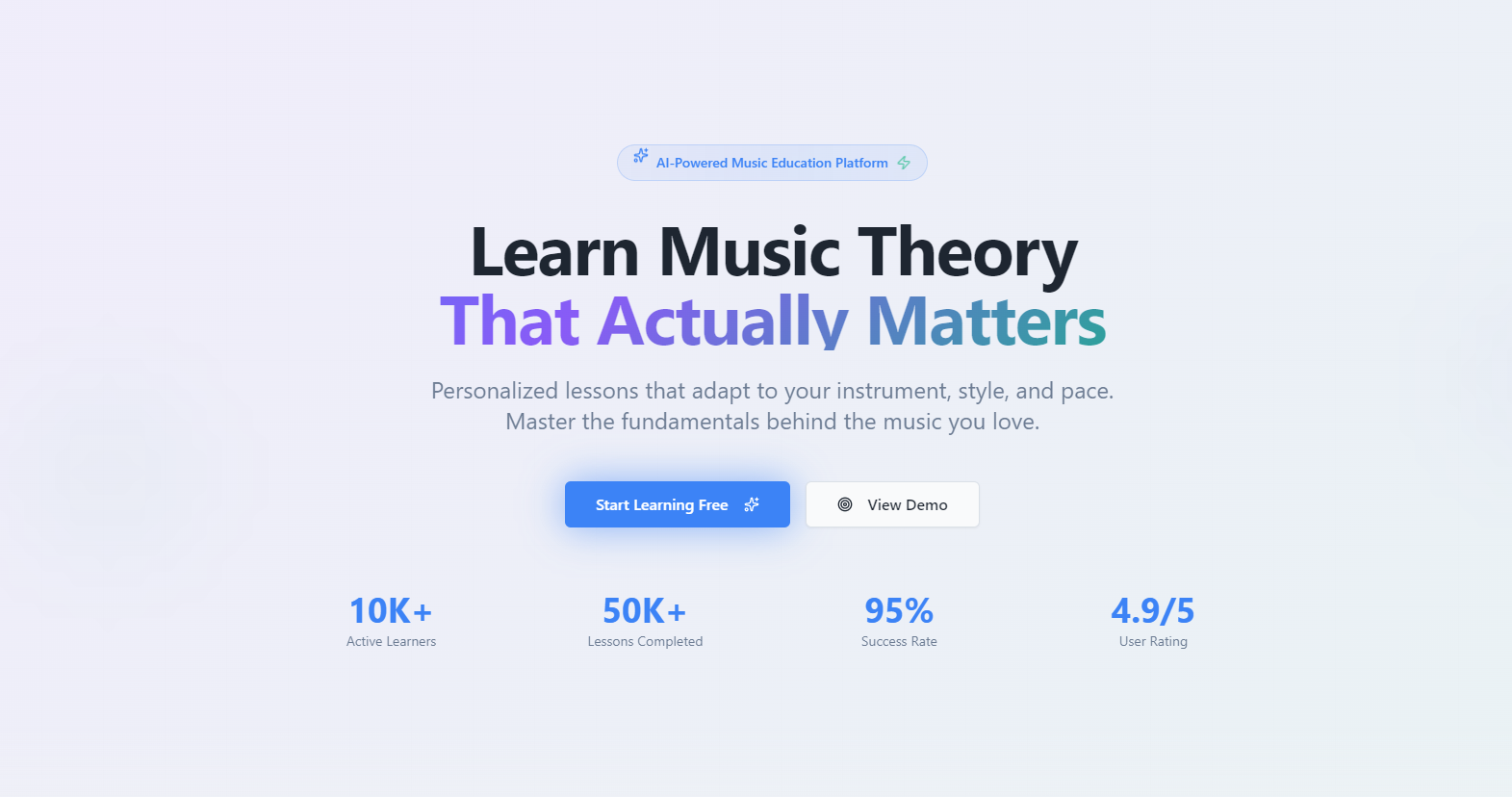
MusicTheory AI is an education platform that delivers personalized music theory lessons, interactive practice (intervals, chords, scales), AI-driven ear training, and real song analysis – all tailored to your instrument (guitar, piano, bass, ukulele) and skill level. Free and premium tiers fit every learner’s needs.
How we built it
We started with core user research to map pain points of self-taught musicians, then built a React frontend for instrument visualizations (piano keyboards, guitar fretboards) and Node.js backend for user progress tracking. We integrated TensorFlow for adaptive AI (adjusting difficulty based on performance) and Stripe for subscription management, with AWS hosting for scalability.
Challenges we ran into
The biggest hurdle was building accurate audio playback and recognition for ear training – ensuring pitch/chord detection worked across devices. We also struggled with balancing adaptive AI complexity (identifying weak areas) with performance, and limiting free-tier access without ruining user experience.
Accomplishments that we're proud of
We created a fully responsive platform that adapts to 4 instruments, built an AI system that truly personalizes learning paths, and launched a sustainable subscription model (7-day free trial, premium tier) that keeps the platform accessible while funding development.
What we learned
We deepened our understanding of music theory pedagogy (how adults learn theory best) and AI-driven adaptive learning systems. We also learned critical lessons in user retention – gamification (streaks, badges) drastically boosted daily practice engagement.
What's next for this project
We plan to add advanced genre-specific arrangement tools, expand instrument support (starting with violin), build offline access for premium users, and integrate real-time feedback for microphone-based pitch training. We’re also testing multi-language support to reach more learners across Europe.

Log in or sign up for Devpost to join the conversation.