Inspiration
As a group of musicians in STEM, we wanted to figure out a way to combine our love of music with the growing technology around us. We have noticed that beginner musicians often have trouble gaining an intuitive feel for music. They often tend to focus too much or too little on theory. We wanted to make a device that allows beginner musicians to understand the intersection between theory and musicality.
What it does
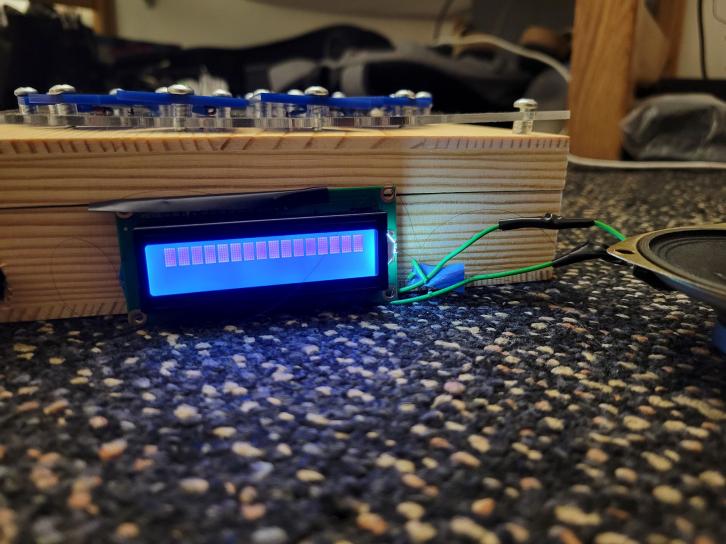
The Pandora's Music Box takes in touch input from the user through piezos. Based on which key is touched, the corresponding note is played on the speaker. From the notes played, the Arduino detects the frequencies of the seven mot frequently played notes and displays the closest key on an LCD.
How we built it
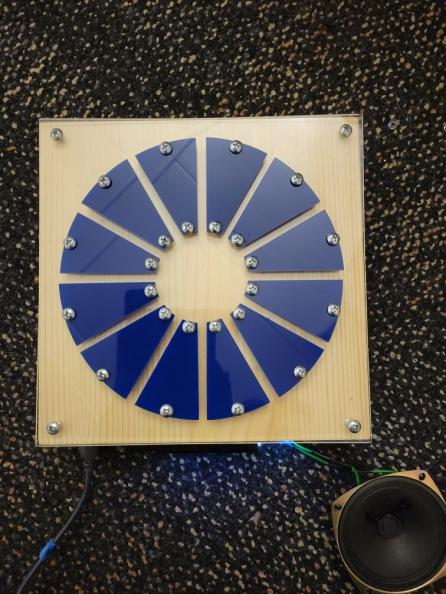
We used 12 piezos connected to a circuit and the arduino, each mapped to a blue acrylic "button" at the top of our instrument. We also connected a speaker to the arduino. When a specific button, or note, is pressed, a speaker will play a note of the specific frequency. Lastly, we connected the arduino to an LCD for a visually appealing way of displaying output.
Challenges we ran into
We were generally unaware of how circuits work, let alone how to incorporate that with an arduino, in addition to the 3 main components connected to the arduino. Learning how piezos, speakers, and LCD interact with various inputs and outputs and the arduino itself was very difficult.
What we learned
We learned how important keeping track of complicating wiring is to maintaining interwined circuits. Even one wire out of place can stop the hardware from working as intended.
What's next for Pandora's Music Box
As we continue to learn more we, as team, hope to add more features to the current code, allowing it to detect more features


Log in or sign up for Devpost to join the conversation.