-
-
front
🎨 Feeling Map — Visual Emotional Annotation for Artists As AI becomes more creative, we face a question: how do we teach machines to feel?
Artists often experience music in a deeply personal, nuanced way—through sensations, colors, and emotional undercurrents. But most datasets used to train emotional recognition models reduce this richness into simple tags: "happy," "sad," "angry."
Feeling Map is a tool built to change that.
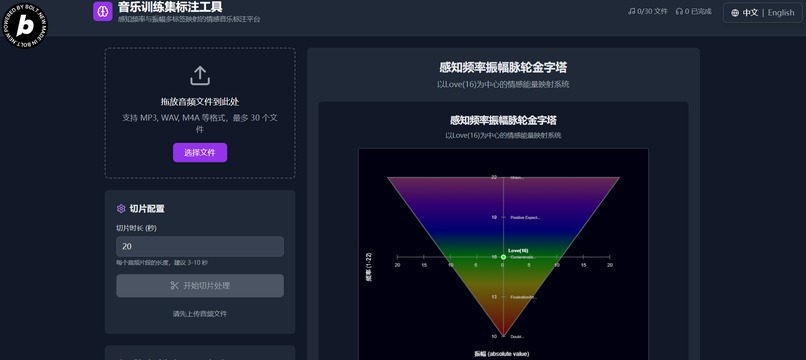
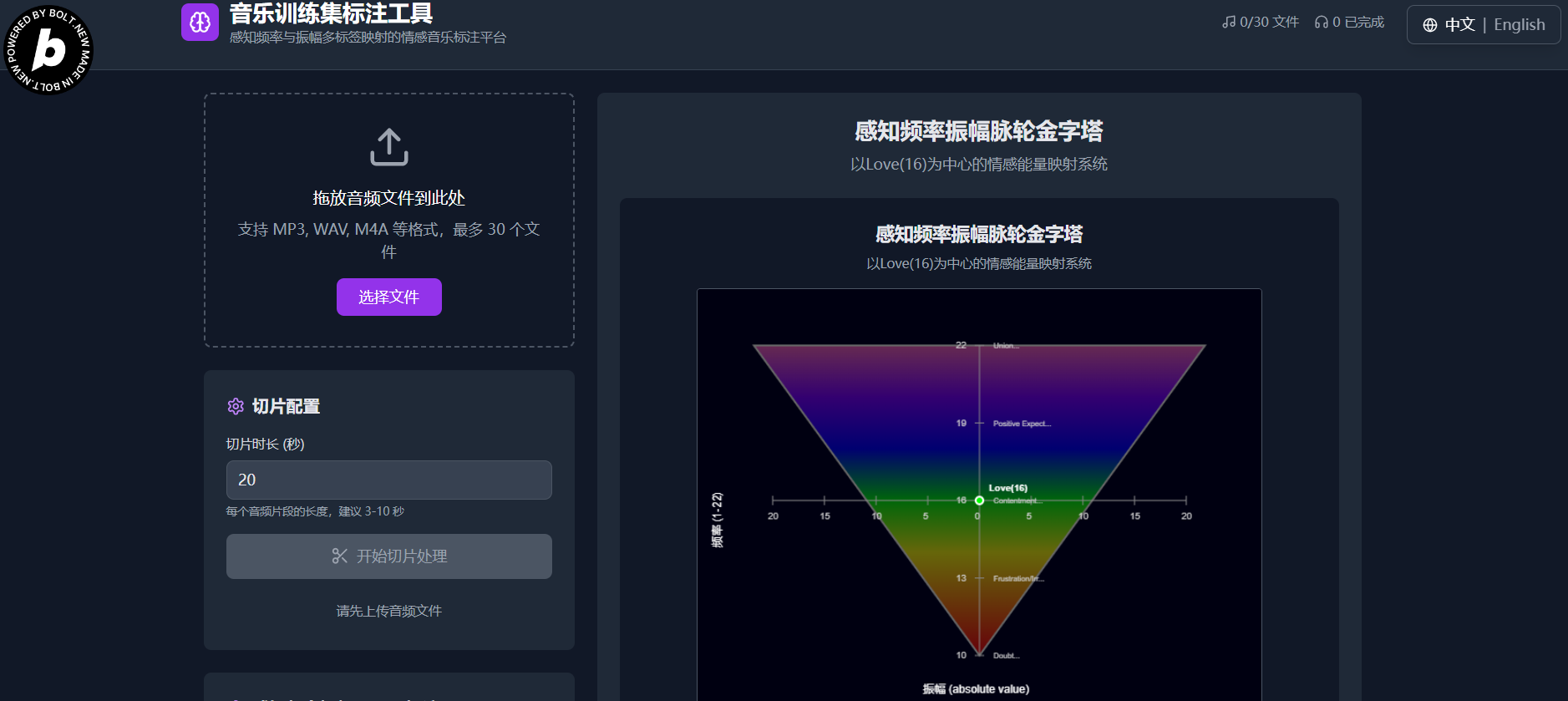
💡 What it does Feeling Map helps artists and creators visually annotate their emotional response to music clips. Using a color-based emotional triangle interface, users can:
Upload or choose a music snippet
Use the triangle to place emotion points, representing how they feel at a given moment
Add optional text descriptions for nuance
See their annotations reflected in visual gradients and emotional paths
Export the annotations as structured data—for training, sharing, or reflection
It’s a bridge between artistic expression and structured data, designed to be intuitive, flowing, and honest.
🎯 Why it matters If we want AI to understand art, we need to give it data that comes from the artist’s heart, not just from statistical models.
This project turns the act of labeling into a kind of creative reflection—a moment where artists are invited to feel, map, and share the emotional journey inside their music. It lowers the barrier to dataset creation, while preserving the depth and subtlety of human emotion.
🛠 How we built it Built an interface based on the Plutchik emotion wheel and chakra color spectrum
Created a color triangle UI for emotional selection
Integrated music slicing + playback + emotional annotation sync
Designed an export format (JSON) that captures timestamped emotion points + comments
🔥 What's special It’s not just a labeling tool—it’s a canvas for emotional experience, aimed at giving the artist full agency over how they express, record, and transmit emotion.
🔮 What’s next We hope to:
Add collaborative tagging features (multiple users map one track)
Connect it with downstream emotion-model training pipelines
Let users create their own “emotional maps” of albums, movies, or performances
Enable AIGC systems to learn from human-submitted feeling paths
This is a small step toward a bigger vision:
Teaching machines not just to imitate emotion, but to learn it—from real human feeling.
Built With
- bolt

Log in or sign up for Devpost to join the conversation.