-
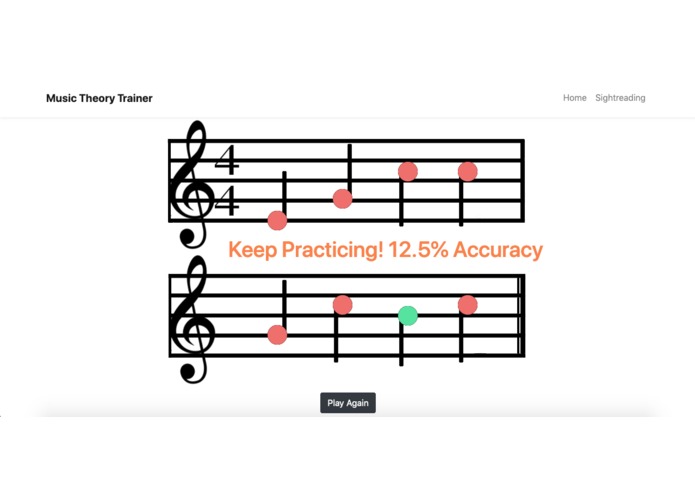
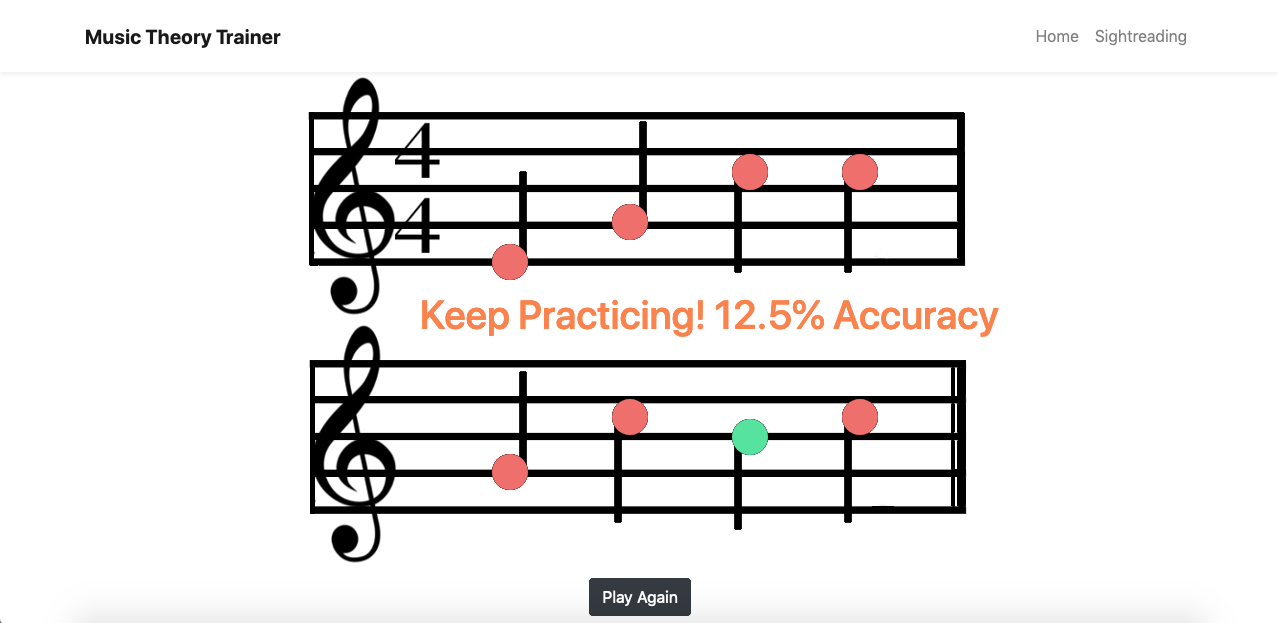
Sight Reading Activity Test Result
-
Home Page

Inspiration
Chelsea had the original idea of making a training app, then Genesis expanded on this and suggested Music Theory as a topic to use within this idea.
What it does
Provides activites, and games that will help musicians with their music theory through vocal input and touch.
How we built it
We build it with HTML, and Javascript within Visual Studio Code.
Challenges we ran into
Music theory is complicated, hence the need for this tool; so, we ran into a few bumps in the road. We weren't sure how we were going to show music notation, and we spent several hours looking at different APIs and algorithms before deciding to code it on our own. We also scrapped our back end because we didn't have enough time to complete it.
Accomplishments that we're proud of
Getting the sightreading activity working and adding feedback to our users on their vocal notes demonstrated as they use our program. There were a lot of moving parts to this which is why we kept it simple and decided to scrap some ideas to make the important ones more prevalent in our project. However, we are still proud of having a finished example we can demo and express our reasons for this idea.
What we learned
We learned more about the HTML canvas and Paper.js, including objects and interactions with the users notes they sound. We also gained more experience with Javascript and development.
What's next for Music Theory Trainer
Expanding on our music notation code, so that we can have more examples and so that they can be randomly generated. Creating user profiles, and storing data about them so that the games/activities that they play/do are specific to them. Creating more activities and games pertaining to Music Theory allowing for our users to have more of an expanded experience with our helpful program.
Built With
- bootstrap
- css
- html
- javascript
- paper.js
- phaser.js
- pitchdetectgithublibrary


Log in or sign up for Devpost to join the conversation.