Inspiration
As a lifelong musician and educator, I saw too many people quit music because learning felt rigid and lonely—no fun, no real-time support, no connection. I wanted to build something that made music learning feel joyful, efficient, and communal—something that fit how we learn: at our own pace, with tools that feel like a friend, not a textbook.
What it does
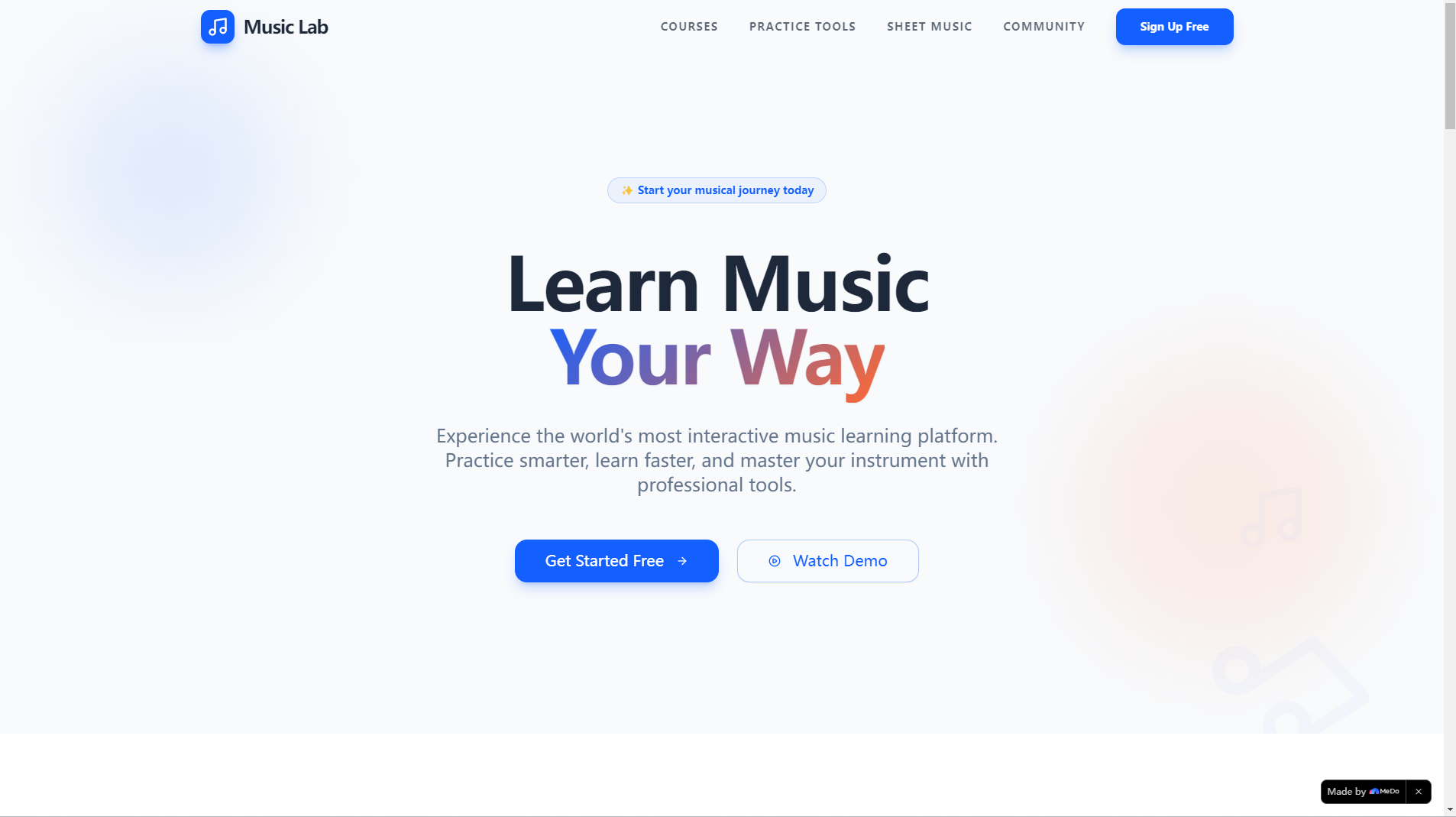
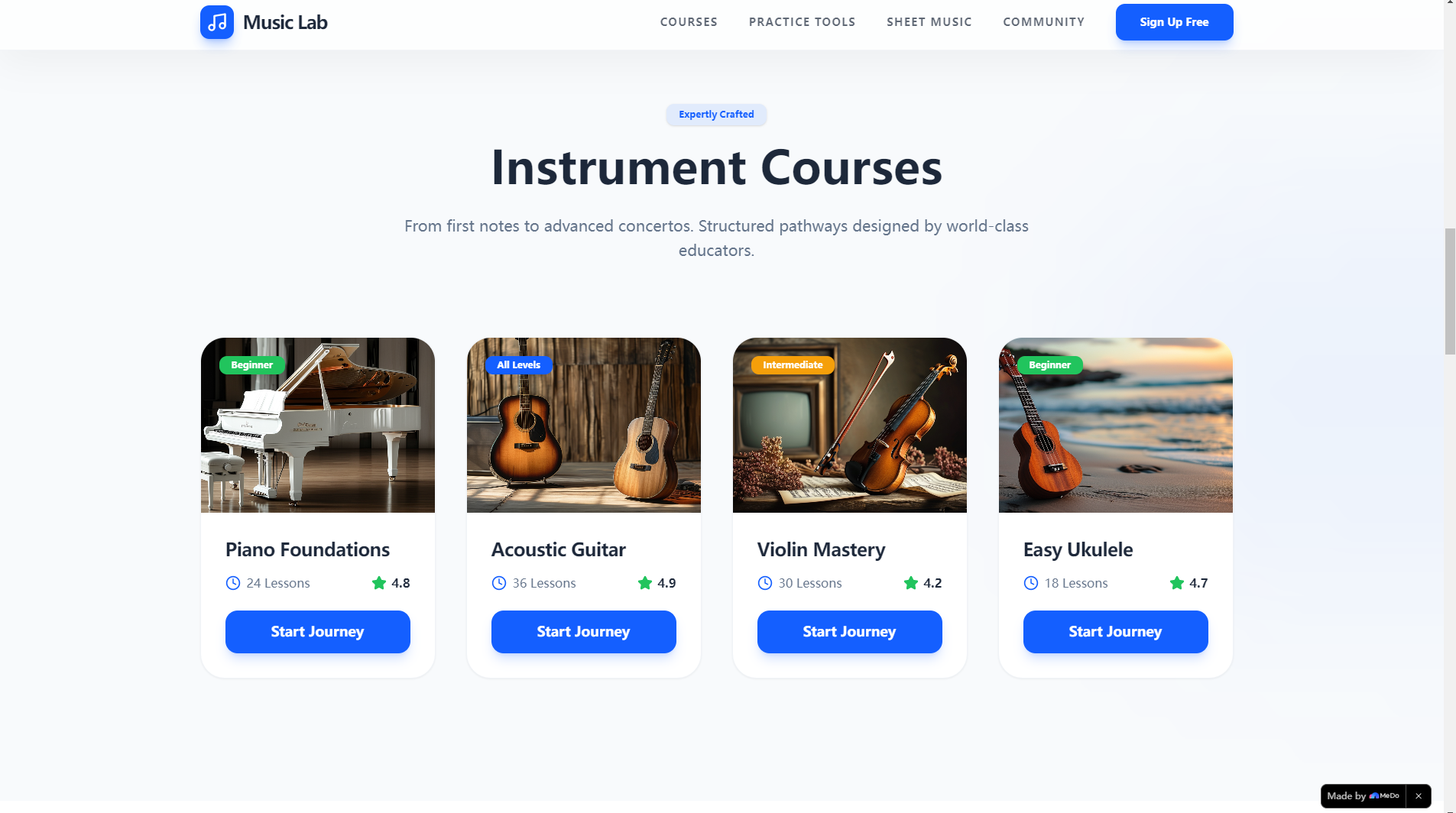
Music Learning Lab is a web-based hub for music learners of all ages and skill levels. It offers structured courses for piano, guitar, violin, and ukulele, all-in-one practice tools (metronome, tuner, recorder, pitch detection), a sheet music library, and a community space to share performances and join challenges. Every element is designed to keep motivation high and progress steady.
How we built it
I started with Figma to craft a dark-mode-first, immersive UI—blending glassmorphism, neon accents, and fluid animations to match the energy of music. I built the core with HTML5/CSS3 and React, using TailwindCSS for responsive design and GSAP to bring animations (particle effects, scroll-triggered card entrances, hover micro-interactions) to life. Canvas API powered the hero’s floating music notes and waveform visuals, making the platform feel dynamic and alive.
Challenges we ran into
The biggest hurdle was balancing visual flair with performance—especially on tablet devices. Animations that looked stunning on desktop risked lagging on smaller screens, so I had to optimize Canvas particle counts, simplify mobile animations, and ensure scroll-triggered effects only fired once to save resources. I also struggled to make glassmorphism work consistently across browsers, requiring fine-tuning of backdrop-blur and opacity values.
Accomplishments that we're proud of
Creating a UI that feels premium and musical—every animation, color, and layout choice ties back to the joy of making music. The responsive design works seamlessly across desktop and tablet, and the micro-interactions (hover glow on tool cards, zooming course images) make the platform feel intuitive and alive. Most importantly, it captures the spirit of “learning your way”—no one-size-fits-all, just personalized, engaging music education.
What we learned
I deepened my mastery of animation performance and responsive design, and learned to prioritize user experience over flashy visuals—animations should enhance, not distract. I also gained a better understanding of how to translate emotional goals (joy, connection) into design choices, like warm gradient accents and community-focused sections that feel welcoming.
What's next for this project
First, expand the course library to include more instruments (cello, drums) and advanced skill tracks. Then, add real-time feedback features for practice tools (like pitch detection for vocalists) and build out the community with live virtual jam sessions. Finally, optimize for mobile and add offline access so learners can practice anywhere, anytime.

Log in or sign up for Devpost to join the conversation.