



Motivation and Structure of the Project
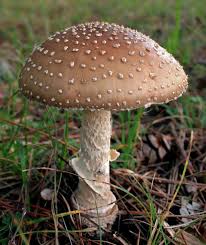
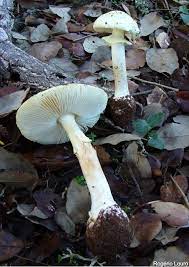
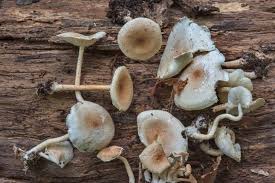
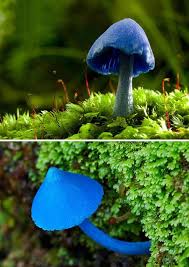
Space is an infinite void that contains many different planets, stars, galaxies, and other objects that are a mystery to humans. Some intriguing questions arise involving these mysteries, such as what resources are available for human use, since resource scarcity is an urgent concern on Earth. Another question involves whether there is a possibility of other life forms on other plants. These questions inspired us to build an ML model to recognize and categorize images of mushrooms to help with space exploration of possible edible food that may exist on new planets. If an astronaut is looking for space mushrooms that are edible or poisonous, Mushroom Reserve will provide them with the image and its classification. Additionally the image and its classification is forever stored on the database so they can refer back to it in the future in case they encounter the same mushroom again. Mushroom Reserve consists of an option to register if they are a new user or log in to their user profile stored through MongoDB and the Cloud.
What We Learned and The Challenges We Faced
This project truly pushed the limits of our knowledge and capabilities in ML, web development, and cloud storage, teaching us new technologies and their implementation. For example, MongoDB and storage on the Cloud are relatively new technologies that Devrim never used before. Specifically, he had to figure out how to create user clusters, store images, and integrate the classification model in one application. For the look and functionality of the website, Devrim utilized Streamlit, creating buttons and displays for image upload and display. Learning both Streamlit and MongoDB while implementing them both presented a challenge for Devrim, however he was able to accomplish this and create a user friendly and reliable application for Mushroom Reserve.

Since Bogdan worked on the ML model, one main issue he faced was the dataset size and time it trained. While training the model, he achieved a 70% accuracy rate, however train time would take long, as he used a Deep Convolutional Neural Network with multiple layers. Although Neural Networks are more robust and functional with the more layers that they have, it also takes more time to train and they require more data. Because of the time constraint of BostonHacks, he could not add as many layers and train the model as much as he had hoped. Despite these challenges Bogdan faced, he was able to make and deploy a Deep Convolutional Neural Network that had a 70% accuracy in classifying images of Mushrooms to their respective categories.


Log in or sign up for Devpost to join the conversation.