-
Mushroom Identification og
-
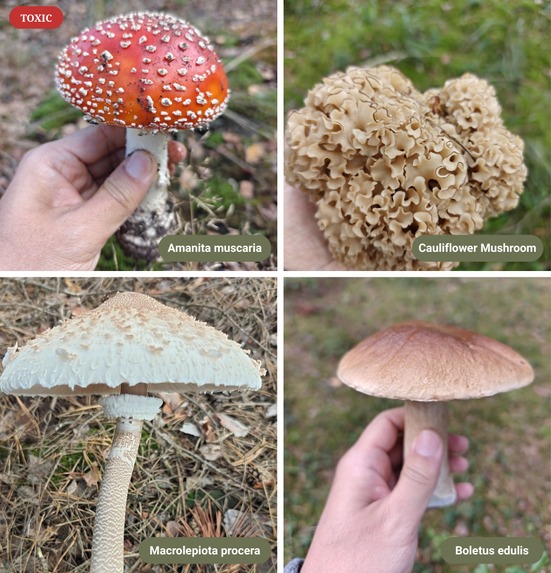
Mushrooms
-
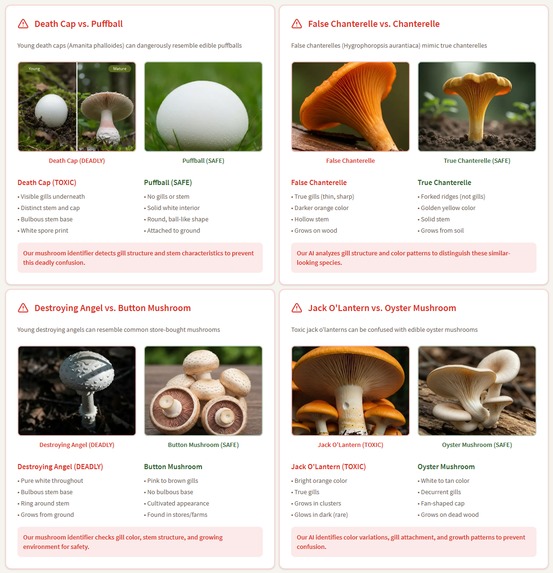
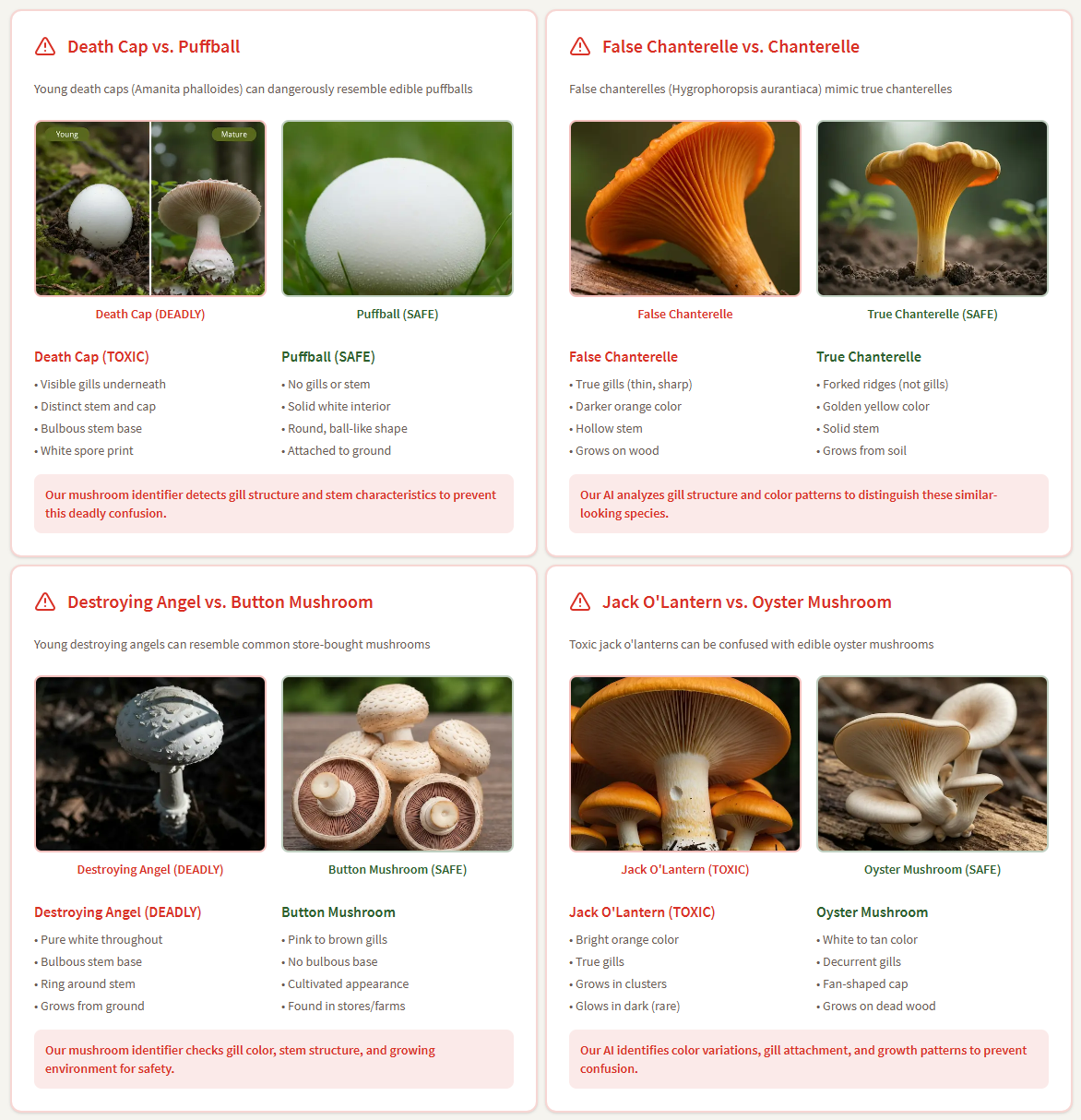
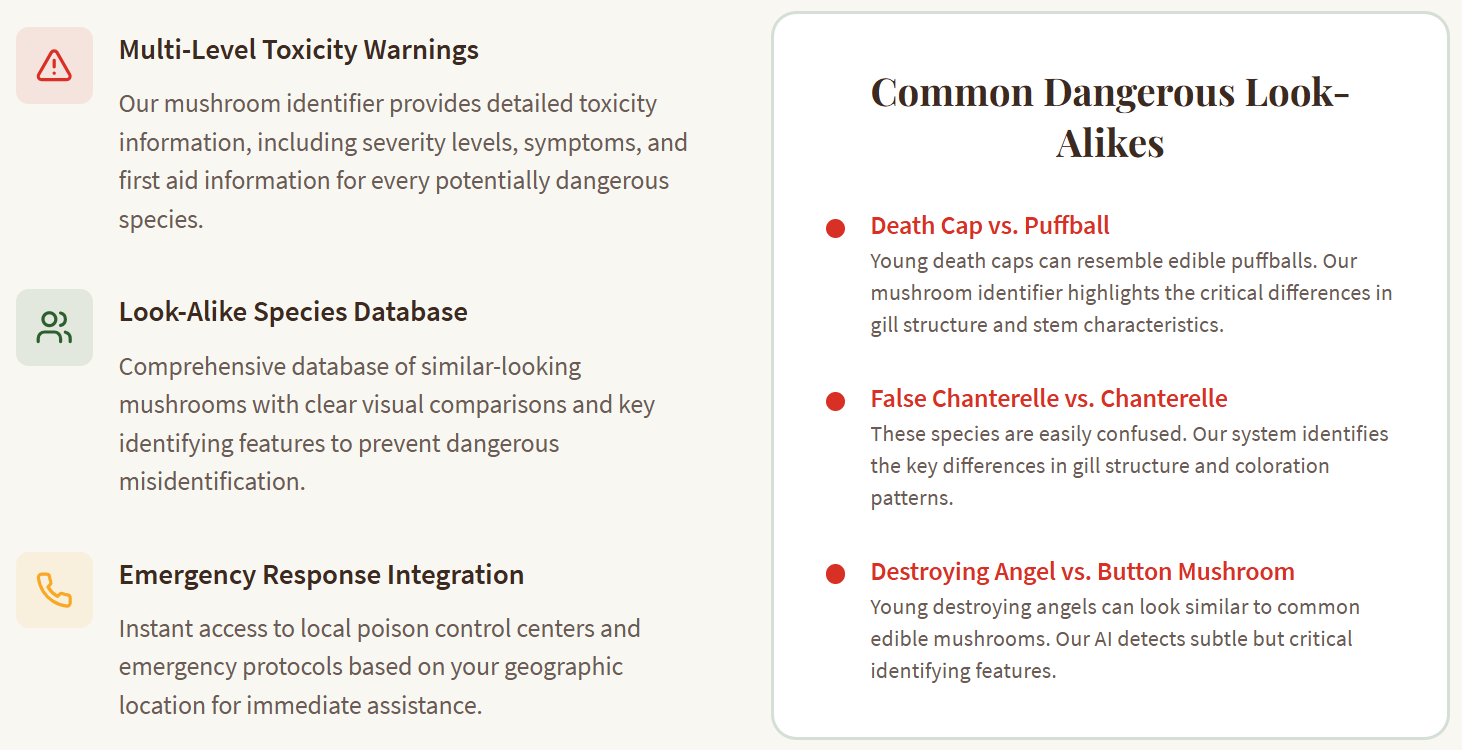
common similar species
-
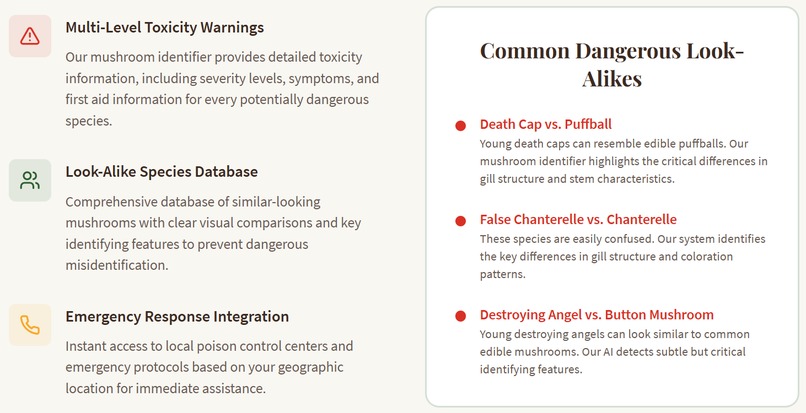
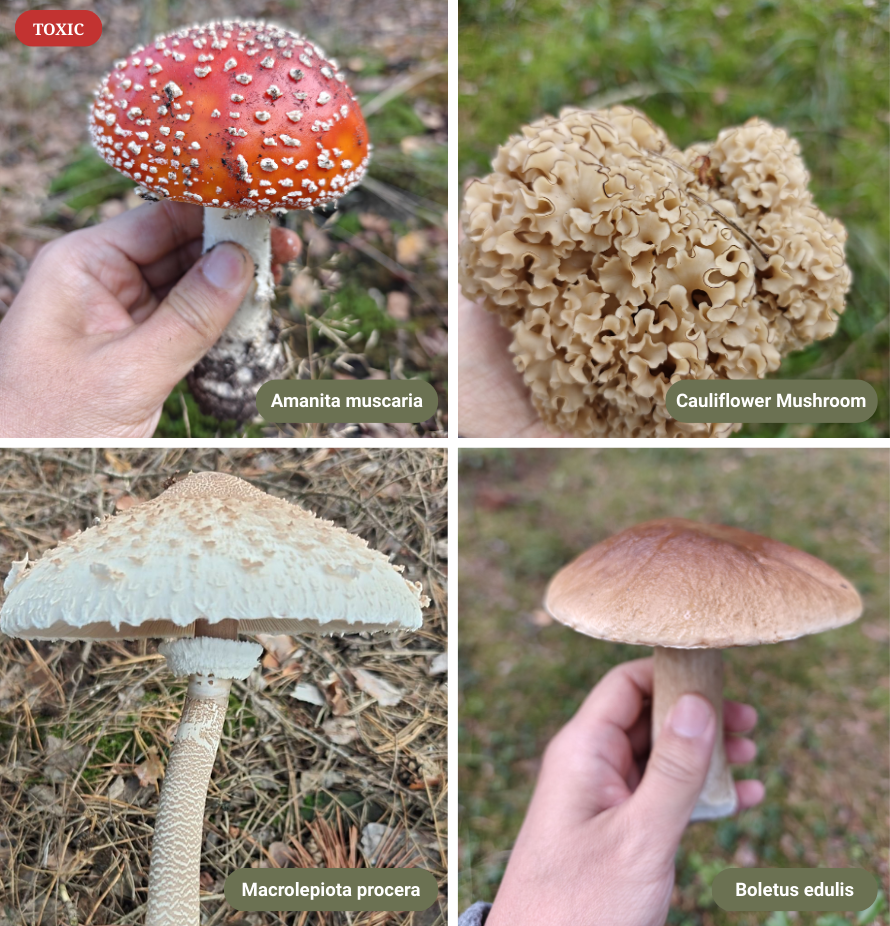
mushroom identifier features
-
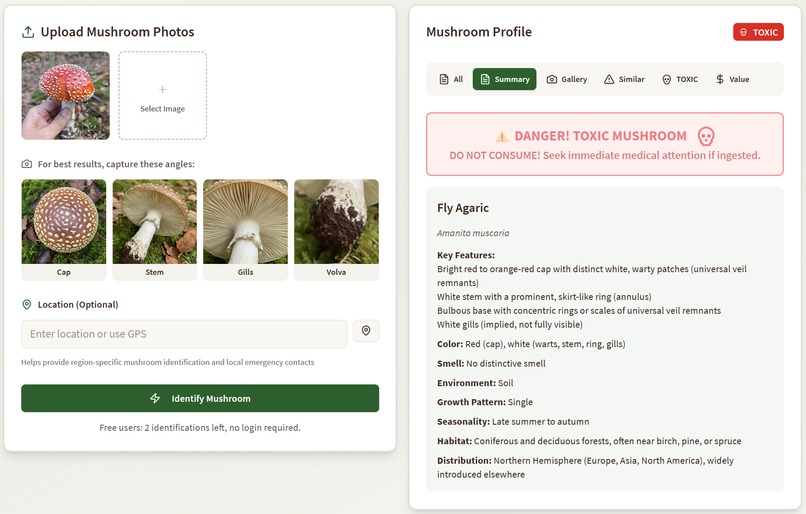
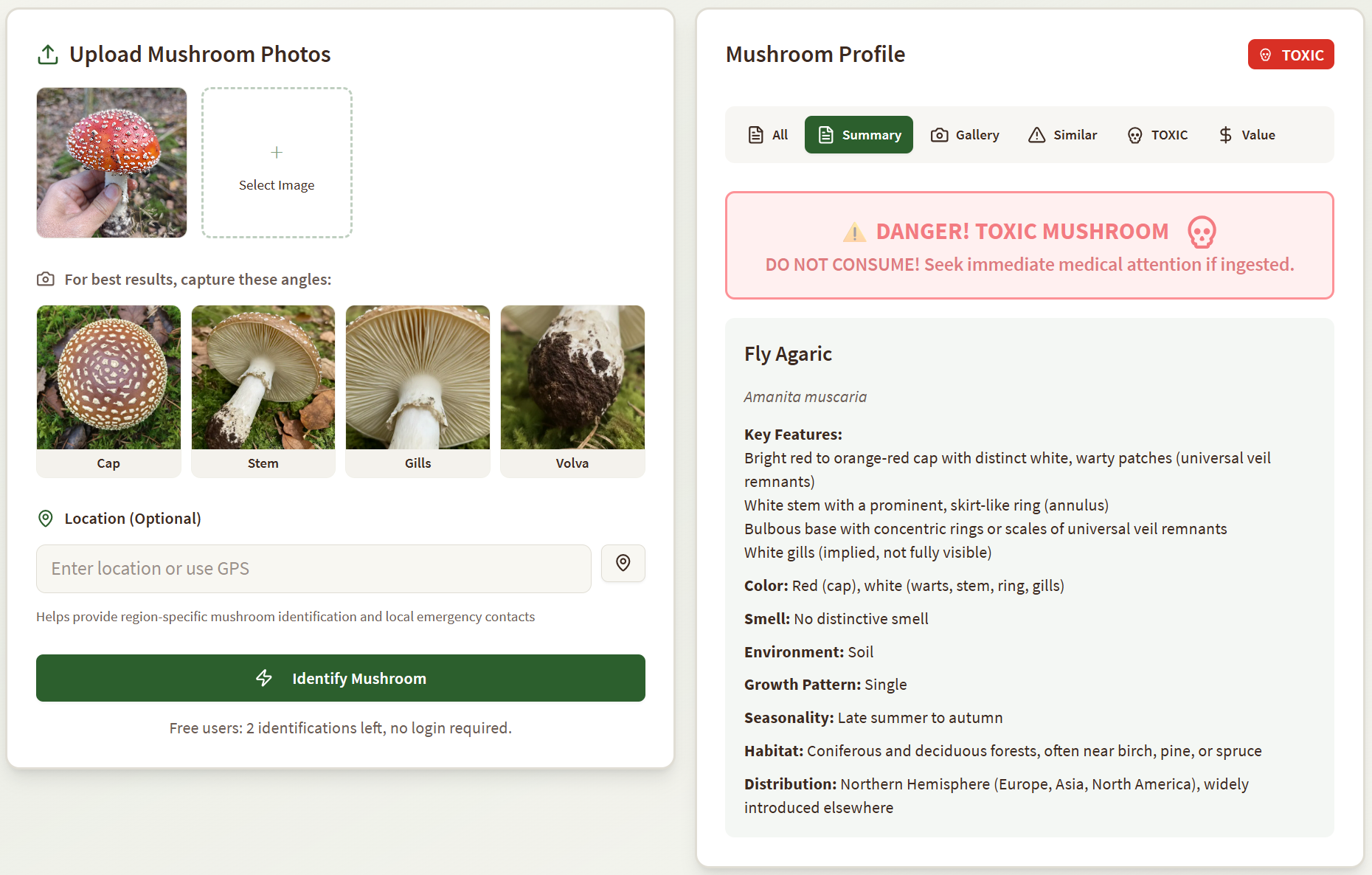
mushroom identification result
Inspiration
I'm an amateur mushroom enthusiast who loves spending weekends photographing fungi in local parks. Like many hobbyists, I often found myself curious about what species I was looking at, but carrying field guides wasn't always practical. One day, while experimenting with AI language models for another project, I wondered if I could create a simple mushroom identifier that could give me quick reference information during my nature walks. Nothing fancy or authoritative – just a handy tool that could point me in the right direction when I spotted an interesting specimen.
What it does
The tool at mushroom identifier is basically a quick reference assistant for mushroom identification. You upload photos of a mushroom you've found, and it uses AI language model capabilities to suggest possible species matches based on visible characteristics. It's like having a fellow hobbyist who's read a lot of field guides giving you their opinion – helpful for getting started, but definitely not the final word. The mushroom ID process analyzes features like cap shape, color, and visible structures, then provides general information about potential matches and similar-looking species. It's meant to be a starting point for further research, not a definitive identification system.
How I built it
The implementation was surprisingly straightforward. I connected a web interface to AI language model APIs that can process images and provide mushroom identification suggestions based on visual features. The frontend handles multiple photo uploads since different angles help the AI make better educated guesses. I added basic safety reminders throughout the interface because, as any mushroom enthusiast knows, proper identification requires much more than just photos. The whole system runs as a lightweight web application – no complex databases or specialized training, just leveraging existing AI capabilities to help fellow hobbyists get quick reference information.
Challenges I ran into
The main challenge was managing expectations. AI models can provide impressively detailed responses, but they're not specifically trained mycologists. I had to design the interface to clearly communicate that this is just a reference tool, not scientific identification. Another issue was handling the variations in photo quality – phone cameras in forest shade don't always capture the detail needed for accurate mushroom identification. I also struggled with how to present the AI's responses in a way that was helpful but appropriately uncertain, since the model might suggest several possible species based on limited visual information.
Accomplishments that I'm proud of
I'm happy that I managed to create something useful with relatively simple technology. The tool has become a helpful companion for my own mushroom photography hobby, and other enthusiasts have told me they enjoy using it as a quick reference during their walks. The multi-photo upload feature works smoothly, which wasn't trivial to implement. Most importantly, I'm proud that the tool is honest about what it is – a mushroom identifier powered by general AI, useful for casual reference but not for making important decisions.
What I learned
This project taught me a lot about the practical applications and limitations of AI language models. They're remarkably good at recognizing patterns and providing relevant information, but they're not specialized experts. I learned that even simple tools can be valuable if they're transparent about their capabilities. Working on mushroom identification also deepened my appreciation for the complexity of fungi – there are so many subtle variations that even experts debate about. Most importantly, I learned that there's value in building modest tools that solve specific problems without overpromising.
What's next for Mushroom Identification
I'm planning some simple improvements to make the tool more useful for casual mushroom enthusiasts like myself. Adding a history feature so users can keep track of their finds would be helpful for building personal reference collections. I'm considering adding links to established mycology resources and field guides for users who want to verify the AI's suggestions. Maybe a simple journal feature where people can add their own notes about where and when they found different specimens. The goal is to keep it simple and honest – a handy mushroom ID assistant for curious naturalists, nothing more, nothing less.
Built With
- cloudflare
- neon
- nextjs
- redis
- vercel

Log in or sign up for Devpost to join the conversation.