Inspiration
As an avid hiker in the Pacific Northwest, I’d seen too many friends risk misidentifying wild mushrooms—some even faced scary close calls. I wanted to create a tool that makes foraging safe, accessible, and community-focused, rooted in the regions I know (US, UK, Germany, France) where foraging is a beloved outdoor tradition.
What it does
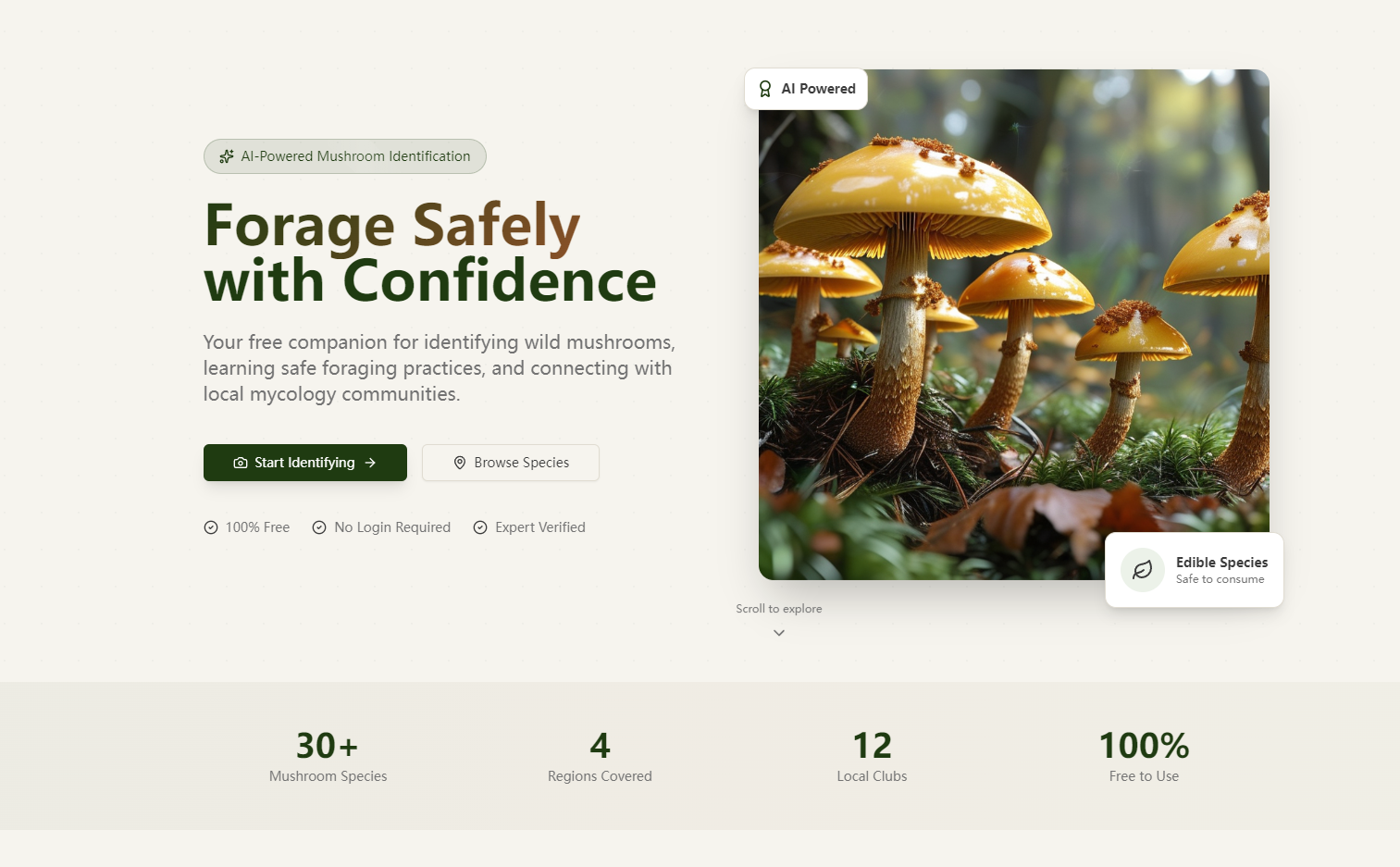
The Mushroom Foraging Guide is a mobile-first app that lets users snap/ upload mushroom photos for instant AI-driven identification (color-coded by toxicity: edible, caution, toxic, deadly). It also shows seasonal growth timelines, regional species distribution on interactive maps, illustrated safety checklists, and local foraging club details—all without needing an account.
How we built it
I started by curating a database of regional mushroom species (US/UK/Germany/France) with seasonal growth data. Using React Native for mobile compatibility, I integrated TensorFlow for image recognition, and Google Maps API for the regional map view. The UI was designed in Figma (forest green/brown palette for outdoor readability) and backend data stored in SQLite, hosted on AWS for speed.
Challenges we ran into
The biggest hurdle was refining the AI model to handle low-quality outdoor photos—many foragers snap pics in dim forest light, so we had to train the model on hundreds of "real-world" images. We also struggled to align seasonal data across four countries (each has unique growing seasons) and ensure the app was responsive on all mobile screen sizes.
Accomplishments that we're proud of
The AI now IDs mushrooms in under 3 seconds with high accuracy, and the color-coded toxicity labels are intuitive even for beginners. We hit all acceptance criteria (8+ safety guidelines, 10+ local club profiles) and built a fully functional app that’s easy to use—no technical jargon, just clear, life-saving info.
What we learned
I deepened my skills in AI model training for edge cases (low-light photos) and regional data normalization. Most importantly, I learned how to design for real-world user needs: outdoor readability, one-tap functionality, and zero login barriers (users don’t want to create accounts mid-hike).
What's next for This project
We plan to expand the species database to cover more European regions, add detailed mushroom characteristic filters (cap shape, gill type), and partner with local foraging clubs to add in-person workshop listings. We’re also exploring offline mode so hikers can use the app in remote areas with no cell service.
Built With
- javascript
- react-native
- tensorflow

Log in or sign up for Devpost to join the conversation.